
Welding gas cost has two separate parts: the gas contents and the cylinder that holds it. In national retail listings rechecked on August 11, 2026, argon contents cost $59.99 for 40 CF, $69.99 for 80 CF, and $87.99 for 125 CF. The same retailer lists owner argon cylinders at $399.99, $529.99, and $589.99 for those sizes. Your out-the-door cost can be higher after rental, exchange, delivery, taxes, and hazardous-material or handling fees.
By Logan Barrett · Last updated: August 11, 2026
Quick Answer
As of August 11, 2026, Tractor Supply lists argon contents at $59.99 for 40 CF, $69.99 for 80 CF, and $87.99 for 125 CF—about $1.50, $0.87, and $0.70 per cubic foot. Its owner-cylinder listings are $399.99, $529.99, and $589.99 for the same nominal sizes. Compare the full invoice because rental, exchange, delivery, taxes, and hazardous-material or handling fees can change the real total.
Key Takeaways
- Larger cylinders usually lower the gas-only cost per cubic foot, but they cost more to buy and are harder to move.
- Use the gas and flow rate specified by the welder manual or welding procedure; the cheapest gas is not always suitable.
- For compressed argon, helium, and argon blends, divide usable cubic feet by CFH to estimate theoretical arc-on time.
- Do not use the pressure gauge to estimate remaining liquid CO2; weigh the cylinder and subtract its stamped tare weight.
- Compare the complete invoice, including cylinder rent or purchase, exchange fees, delivery, taxes, and surcharges.
At a Glance
| Time Required | About 10–15 minutes to collect quotes and calculate unit cost |
| Difficulty | Easy |
| Tools Needed | Supplier quote, calculator, cylinder label, pressure gauge, and flowmeter |
| Cost | Gas-only examples range from about $0.70–$1.50 per CF for 40–125 CF argon contents; owner-cylinder examples range from $399.99–$589.99 |
This page is the broad welding-gas cost guide. For narrower price breakdowns, see welding gas refill costs, welding gas cylinder purchase costs, and 75/25 C25 welding gas costs.
Common Welding Gases and Typical Uses
Match the shielding gas to the welding process, base metal, transfer mode, and approved procedure. A low price does not help if the gas causes an unstable arc, excess spatter, porosity, or an unacceptable weld profile.
| Process and material | Common gas choice | What to know |
|---|---|---|
| TIG on steel, stainless, or aluminum | 100% argon | Argon gives reliable arc starting and stable shielding for most TIG work. |
| TIG on thick, heat-hungry material | Argon/helium blend | Helium increases heat input and penetration but usually costs more and may require a higher flow rate. |
| MIG on mild steel | 75% argon/25% CO2 (C25) | C25 is a common short-circuit choice with a smooth arc, good bead shape, and less spatter than straight CO2. |
| MIG on mild steel | 100% CO2 | CO2 is often economical and gives strong penetration, but it can create more spatter and a harsher arc. |
| MIG on aluminum | 100% argon | Do not use C25 or straight CO2 for aluminum MIG welding. |
| MIG on stainless steel | Procedure-specific argon/CO2, argon/O2, or helium-rich blend | Use the blend listed by the wire maker, welder chart, or welding procedure specification. |
Miller Electric’s MIG gas guide identifies C25 as a common mild-steel blend and 100% CO2 as a cost-effective alternative. Its TIG shielding-gas guide recommends 100% argon as the best all-around TIG gas and explains when argon/helium blends help.
Note: Gas purity and blend tolerance should match the welding procedure, code, or customer specification. Buying ultra-high-purity gas without a procedure requirement can add cost without improving an ordinary shop weld.

These Stanley MaxSteel straight aviation snips are built for clean, controlled cutting through sheet metal and other tough materials. Serrated cutting edges help prevent slippage for more accurate results, while the double pivot action delivers increased cutting power with less effort. Designed for dependable performance, they are a practical choice for metalworking, HVAC tasks, and general workshop use.

This versatile cookware set equips home cooks with essential pots, pans, and a steamer insert for everyday meals and larger gatherings. The aluminum-encapsulated base promotes quick, even heating, while Cool Grip handles and tight-fitting glass lids support comfortable, controlled cooking. Designed for stovetop, oven, broiler, and dishwasher use, it offers reliable performance across a wide range of recipes.

This versatile Cuisinart cookware set provides essential pots and pans for everyday cooking, from sauces and soups to sautéing, simmering, and frying. The aluminum-encapsulated base promotes fast, even heating, while cool-grip handles and tight-fitting glass lids support comfortable, efficient cooking. Designed for broad compatibility, it is dishwasher safe and oven safe for flexible use across many recipes.
How Much Does Welding Gas Cost Right Now?
There is no dependable national price per cubic foot for every welding gas. Suppliers use different cylinder programs, and the posted amount may cover gas contents only, a cylinder purchase, a lease, an exchange, or a deposit. Helium and specialty blends are often quote-only. CO2 is commonly sold by weight rather than by cubic feet.
The table below is a dated retail snapshot, not a national average. These contents-only prices were rechecked on Tractor Supply on August 11, 2026. A compatible exchange cylinder is still required, and local stock, taxes, and fees may differ.
| Gas and size | Listed gas price | Gas-only cost per CF |
|---|---|---|
| 40 CF argon contents | $59.99 | About $1.50/CF |
| 80 CF argon contents | $69.99 | About $0.87/CF |
| 125 CF argon contents | $87.99 | About $0.70/CF |
| 125 CF C25 contents | $87.99 | About $0.70/CF |
How These Prices Were Checked
For this update, prices were taken from live retailer listings that identify the gas volume and whether the listing is for contents or a cylinder. Gas-only cost per cubic foot is the listed contents price divided by the stated cubic feet. Cylinder purchase prices are kept separate. Delivery, tax, rental, deposits, exchange rules, and hazardous-material or handling charges are excluded unless a listing explicitly includes them.
In this retail snapshot, moving from a 40 CF to a 125 CF argon fill cuts the gas-only unit price by more than half, from about $1.50 to $0.70 per cubic foot.
Use these figures only as a benchmark. Ask at least two local welding suppliers for a written, out-the-door quote that separates the gas, cylinder, rental or deposit, delivery, testing, and hazardous-material charges.
Tank Sizes, Purchase Costs, and Refill Prices
Retail welding cylinders are often sold in 20, 40, 80, and 125 CF sizes. Industrial suppliers also use larger sizes, but a supplier’s size name does not always equal its exact gas capacity. For example, an Airgas “125” argon cylinder contains approximately 126 CF. Confirm the product’s actual contents, service pressure, dimensions, and valve before comparing quotes.
Common Cylinder Capacities
| Nominal size | Best fit | Trade-off |
|---|---|---|
| 20–40 CF | Portable repairs and occasional hobby work | Easy to move, but usually highest cost per CF and most frequent exchanges |
| 80 CF | Home shops and light fabrication | Useful balance of portability, run time, and purchase cost |
| 125 CF | Frequent hobby use and small-shop production | Lower gas cost per CF, but heavier and more expensive to own |
| 250–330+ CF | Production shops and high consumption | Fewer changeovers, but supplier delivery, rental, and handling rules become more important |
Upfront Purchase Costs
Buying a cylinder can remove recurring rent, but it ties up cash and may limit where you can exchange it. As of August 11, 2026, Tractor Supply lists owner argon cylinders at $399.99 for 40 CF, $529.99 for 80 CF, and $589.99 for 125 CF. Those cylinder prices are much higher than the contents-only examples.
Before buying, ask whether the supplier will fill your exact cylinder or only exchange cylinders in its own program. Verify that the cylinder has an accepted DOT specification, a current requalification mark, the correct valve, and no ownership stamp that prevents exchange.
What Does a Welding Gas Refill or Exchange Cost?
The current contents-only examples above are $59.99 for 40 CF argon, $69.99 for 80 CF argon, and $87.99 for 125 CF argon. Another supplier may charge less or more, especially after delivery, environmental, energy, or hazardous-material fees.
Track these items separately:
- Gas charge: the fill or exchange contents.
- Cylinder cost: purchase, lease, rent, deposit, or exchange-program fee.
- Service charges: delivery, handling, hazardous materials, testing, and after-hours service.
- Downtime: travel, waiting, and the cost of running out during a job.
- Equipment: regulator, flowmeter, hose, and any approved adapter.
Pro Tip: Ask suppliers to quote the same gas, purity, actual contents, cylinder arrangement, and pickup or delivery terms. A low “refill” price is not comparable with a delivered lease-cylinder price unless every fee is included.
Buy, Rent, or Exchange?
| Option | Advantages | Watch for |
|---|---|---|
| Own | No monthly or annual cylinder rent; convenient for steady long-term use | High upfront cost, requalification status, and supplier acceptance |
| Rent or lease | Lower upfront cost; supplier normally manages cylinder maintenance and testing | Recurring charges, contract terms, loss liability, and return requirements |
| Exchange program | Fast swap with no wait for your exact bottle to be filled | Brand or network restrictions and different cylinder condition at each exchange |
If you mainly use C25, compare local terms with this dedicated guide to 75/25 welding gas bottle rental costs.
How to Calculate Your Real Gas Cost for Projects
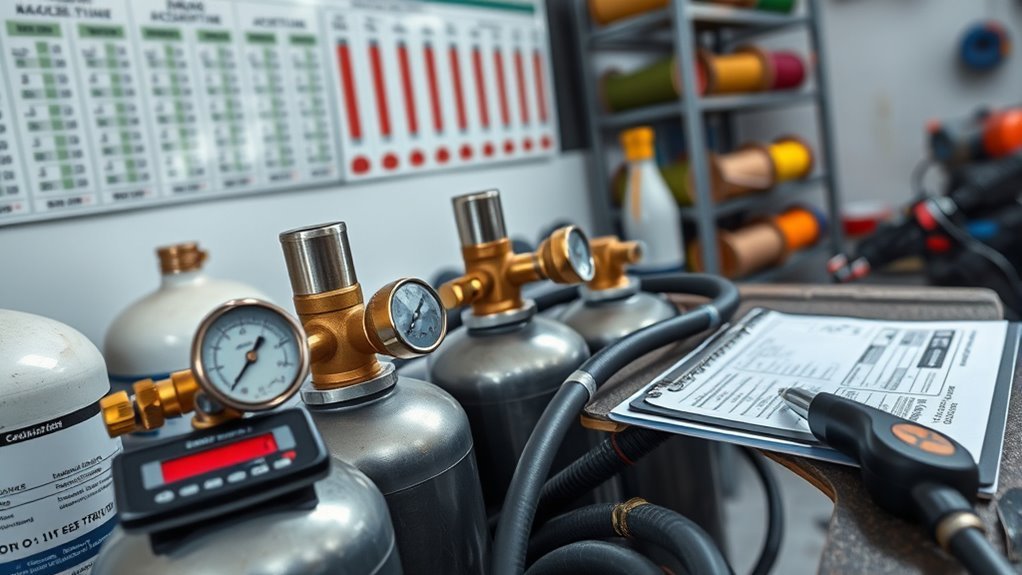
Use the complete invoice, not the advertised gas price alone. The following formulas work for compressed shielding gases when the supplier states usable cubic feet.
Step 1: Calculate Gas Cost per Cubic Foot
Gas cost per CF = (gas charge + fill-specific fees) ÷ usable CF
Example: An 80 CF argon fill at $69.99 costs about $0.87 per CF before tax or travel.
Step 2: Estimate Theoretical Arc-On Time
Arc-on hours = usable CF ÷ flow rate in CFH
Example: An 80 CF cylinder at 20 CFH provides about 4 theoretical arc-on hours.
Step 3: Calculate Gas Cost per Arc-On Hour
Gas cost per arc-on hour = fill-specific total ÷ theoretical arc-on hours
Example: $69.99 ÷ 4 hours is about $17.50 per arc-on hour.
Step 4: Calculate Project Gas Cost
Project gas cost = measured arc-on hours × gas cost per arc-on hour
Add your measured loss from pre-flow, post-flow, purging, starts, leaks, and cylinder changeovers. Do not guess a universal waste percentage; measure it over several jobs.
Step 5: Calculate First-Year and Ongoing Cost
First-year total = cylinder purchase or deposit + annual gas fills + rent + delivery + service fees + regulator equipment
Later-year total = annual gas fills + rent + delivery + service fees + maintenance
How Long Does a Welding Gas Cylinder Last?
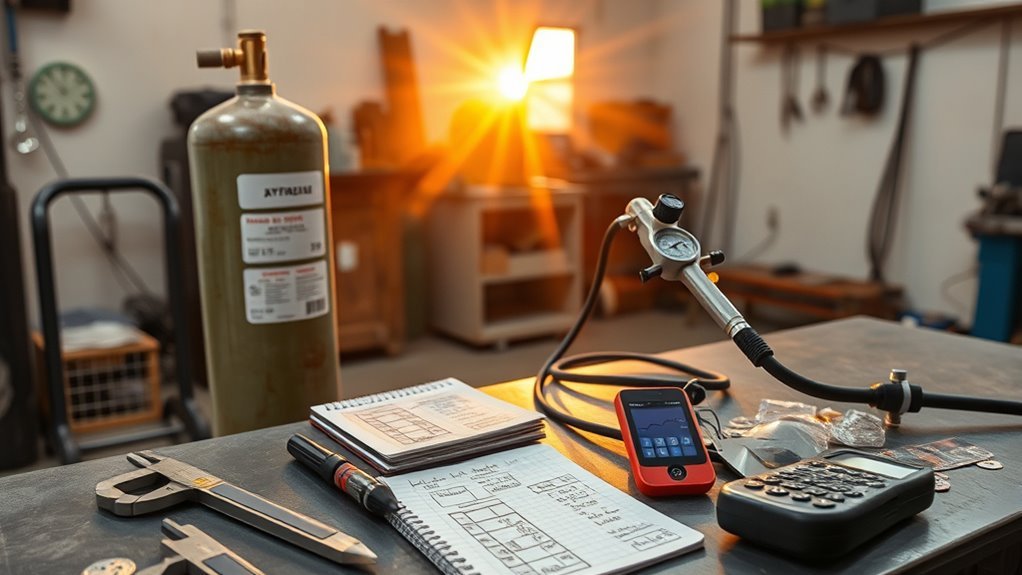
For argon, helium, and argon-based blends sold as compressed gas, divide usable cylinder contents by the set flow rate. The answer is theoretical arc-on time, not elapsed shop time.
Flow Rate Calculations
Set flow from the welder manual, consumable maker’s data, or welding procedure. Miller recommends about 15–20 CFH for flat-position aluminum TIG repairs and 20–25 CFH for drafty or out-of-position work. For short-circuit MIG welding, Miller recommends about 25–35 CFH and notes that other transfer modes may run somewhat above 35 CFH. Use these only as starting points; the approved procedure or machine guidance takes priority.
| Cylinder and flow | Theoretical arc-on time |
|---|---|
| 40 CF at 15 CFH | About 2.67 hours |
| 80 CF at 20 CFH | About 4 hours |
| 125 CF at 20 CFH | About 6.25 hours |
| 125 CF at 35 CFH | About 3.57 hours |
Note: Turning the flow too high can create turbulence and pull air into the shielding stream. More flow does not always mean better shielding.
Pressure-to-Time Estimation
For a permanent compressed gas at a similar temperature, you can make a rough remaining-volume estimate:
Estimated remaining CF = rated CF × current gauge pressure ÷ full gauge pressure
If an 80 CF argon cylinder read 2,015 psi when full and now reads 1,000 psi at a similar temperature, the estimate is about 39.7 CF remaining. At 20 CFH, that is about 2 theoretical arc-on hours.
This is only an estimate. Full pressure varies by cylinder specification, fill, and temperature. Use the actual full reading for that cylinder rather than assuming every bottle is full at 2,015 psi.
| Example gauge reading | Approximate contents in an 80 CF cylinder | Time at 20 CFH |
|---|---|---|
| 2,015 psi | 80 CF | 4 hours |
| 1,000 psi | About 39.7 CF | About 2 hours |
Why CO2 Must Be Estimated by Weight
A CO2 cylinder contains liquid and vapor. Its pressure changes mainly with temperature while liquid remains, so the high-pressure gauge does not show a useful “percent full.” Airgas likewise advises monitoring liquefied-gas contents by weight rather than cylinder pressure. To estimate remaining CO2, weigh the cylinder and subtract the tare weight stamped on the bottle. Keep the cylinder upright and use the correct CO2 regulator or approved setup. See the Airgas cylinder-scale guidance.
Practical Usage Examples
- Occasional TIG repair: A 40 CF argon cylinder at 15 CFH gives about 2.67 arc-on hours. It is portable, but the current gas-only example costs about $22.50 per theoretical arc-on hour.
- Home-shop TIG: An 80 CF argon cylinder at 20 CFH gives about 4 hours. At the current $69.99 contents price, gas costs about $17.50 per theoretical arc-on hour.
- Small-shop MIG: A 125 CF C25 cylinder at 35 CFH gives about 3.57 hours. At the current $87.99 contents price, gas costs about $24.64 per theoretical arc-on hour.
Where Can You Buy, Refill, or Lease Welding Gas?
Start with local welding-supply companies, industrial gas distributors, farm and tool retailers with exchange programs, and the gas supplier recommended by your welding-equipment dealer. National suppliers may show cylinder specifications online but require a ZIP code or account for price and availability.
Before making a trip, ask:
- Do you refill my cylinder or exchange it?
- Do you accept customer-owned cylinders from another brand or supplier?
- Is the quote for contents only, a filled cylinder, a deposit, or a lease?
- What purity, blend tolerance, actual contents, service pressure, and valve are supplied?
- Are delivery, hazardous-material, energy, testing, or environmental fees added?
- Is the cylinder’s requalification date current?
Argon and many argon/CO2 shielding-gas cylinders use a CGA 580 connection, while CO2 commonly uses CGA 320. Confirm the connection before buying a regulator or adapter. Airgas lists these connections on its 80-size argon cylinder and 50-pound CO2 cylinder.

This hardcover book celebrates the art of gathering with inspiring table settings, thoughtful traditions, and practical ideas for hosting memorable meals. Written by Shea McGee, it offers beautiful design inspiration alongside approachable guidance for creating warm, welcoming spaces for family and friends. It's a charming resource for anyone who loves entertaining, home styling, and making everyday moments feel special.

The COOK'S CHOICE XL Better Breader Bowl makes coating chicken, fish, vegetables, and more fast, tidy, and consistent. Its extra-long tray helps prevent overcrowding, while the integrated sifter promotes even coverage with less waste. Designed for easy cleanup and convenient storage, it is a practical choice for home cooking, air frying, frying, and outdoor meal prep.

This heartfelt cookbook shares the kitchen wisdom of a Korean mom alongside 100 family recipes that bring comforting, authentic flavors to your table. Blending personal stories with practical guidance, it offers home cooks approachable ways to explore Korean cooking with confidence. The hardcover format and trusted editorial guidance make it a beautiful and reliable addition to any cookbook collection.
How Do You Store and Handle Welding Gas Cylinders Safely?
Warning: Shielding gases can displace oxygen without warning. Use adequate ventilation, keep cylinders secured upright, protect valves from impact, close valves when work is finished, and never use an unapproved or out-of-test cylinder.
For construction work, OSHA 29 CFR 1926.350 requires suitable cylinder trucks, chains, or other steadying devices to keep cylinders from being knocked over, and it addresses valve-protection caps during movement and storage. Keep cylinders away from heat, sparks, electrical contact, traffic, and physical damage. For other workplaces, follow the OSHA rules that apply to that operation, the supplier safety data sheet, and local fire-code requirements.
For cylinder transport in commerce, DOT rules cover cylinder design, marking, testing, and periodic requalification. You can check approved testing facilities with the PHMSA cylinder requalifier locator.
Alternatives to Shielding Gas and Cost-Saving Tips
Some welding processes avoid an external shielding-gas cylinder, but the process must still suit the joint, material, environment, and required weld quality.
- Self-shielded flux-cored welding: Uses flux in the wire to protect the weld and works well outdoors. Do not confuse it with gas-shielded flux-cored wire, which still needs gas.
- Stick welding: Uses flux-coated electrodes and no external shielding gas. It is practical for outdoor repairs, heavy steel, and less-clean material.
- Choose the smallest approved flow: Follow the procedure and fix drafts, leaks, damaged hoses, loose fittings, and excessive stickout before increasing CFH.
- Use pre-flow and post-flow wisely: Set enough time to protect the electrode and weld, but avoid needlessly long cycles.
- Move to a larger cylinder: This can lower gas cost per CF and reduce changeovers when consumption is steady.
- Keep a spare cylinder: A planned spare can cost less than an emergency exchange or a stopped job.
- Track arc-on time: Compare actual gas use with estimated use to find leaks, waste, or incorrect settings.
Plasma cutting and oxy-fuel cutting may replace a cutting step, but they are not direct substitutes for shielding gas in a weld that requires MIG or TIG. Compare the complete process cost, including electricity, fuel gas, oxygen, consumables, cleanup, and labor.
Frequently Asked Questions
How much does welding gas cost in 2026?
In the Tractor Supply listings rechecked on August 11, 2026, argon contents cost $59.99 for 40 CF, $69.99 for 80 CF, and $87.99 for 125 CF. That equals about $1.50, $0.87, and $0.70 per cubic foot. Owner-cylinder listings for the same nominal sizes are $399.99, $529.99, and $589.99. Local delivery, rental, exchange, taxes, and surcharges can change the total.
How do gas purity grades affect welding quality and certification requirements?
Use the purity and blend specified by the welding procedure, code, wire manufacturer, or customer. Poor shielding, leaks, moisture, or the wrong blend can cause oxidation and porosity. A higher laboratory purity grade is not automatically better for ordinary fabrication, but critical work may require certified composition and impurity limits.
Are rental terms and liabilities different for specialty gases?
They can be. Specialty-gas agreements may add minimum terms, cylinder deposits, demurrage, loss charges, delivery requirements, or certificate fees. Read the supplier contract and safety data sheet, and confirm return conditions before ordering.
What regulations govern welding gas storage and cylinder disposal?
Workplaces must follow applicable OSHA compressed-gas and welding rules, while transport and cylinder requalification fall under DOT hazardous-material rules. Local fire codes may add storage limits. Do not discard or scrap a pressurized cylinder yourself; close the valve and return it to the owner or an authorized gas supplier.
Do trade restrictions or tariffs affect welding gas prices?
They can affect imported cylinders, valves, equipment, and some gas supply chains, but local production, energy, transportation, cylinder availability, and supplier contracts may matter more. Use current written quotes instead of adding a fixed tariff percentage.
Can gas mixtures be custom ordered, and how does that change cost?
Yes. Cost can rise with blend complexity, tighter tolerance, higher purity, certification, small order volume, special cylinder preparation, and delivery. Ask for the exact composition tolerance, certificate type, minimum order, lead time, and cylinder fees.
How long does an 80 CF welding gas cylinder last?
Divide 80 CF by the set flow rate. It lasts about 5.3 arc-on hours at 15 CFH, 4 hours at 20 CFH, and 2 hours at 40 CFH. Real time is lower after pre-flow, post-flow, purging, leaks, and starts.
Is it cheaper to buy or rent a welding gas cylinder?
Buying often suits steady long-term use when local suppliers accept the cylinder. Renting or leasing can be better for large cylinders, short projects, or users who want the supplier to manage testing. Compare the purchase price with several years of rent, delivery, and exchange fees.
Can I use the same regulator for argon, C25, and CO2?
Argon and C25 commonly use CGA 580, while CO2 commonly uses CGA 320 and may require a CO2-rated regulator or an approved adapter. Check the regulator rating, inlet connection, gas service, and welder manual before connecting it.
Sources
- Tractor Supply 40 CF argon listing, 80 CF listing, and 125 CF listing — contents-only prices rechecked August 11, 2026.
- Tractor Supply 40 CF owner cylinder, 80 CF owner cylinder, and 125 CF owner cylinder — cylinder purchase-price examples rechecked August 11, 2026.
- Miller Electric: Best Gas for MIG Welding — C25 and CO2 use on mild steel.
- Miller Electric: Proper Shielding Gas in TIG Welding — TIG gas selection and flow principles.
- Airgas industrial argon and industrial CO2 — cylinder contents and CGA connections; Airgas cylinder-scale guidance — weighing liquefied-gas contents.
- OSHA 29 CFR 1926.350 — compressed-gas cylinder movement, securing, and storage requirements.
- PHMSA Cylinder Requalifiers — approved cylinder requalification resources.
Conclusion
Welding gas cost is more than the posted refill price. Compare the correct gas, usable contents, cylinder arrangement, and every added fee. Then divide usable cubic feet by your approved flow rate to estimate arc-on time and gas cost per hour. Larger cylinders can lower unit cost, but safety, supplier acceptance, portability, and downtime matter just as much as price. Before buying, get at least two out-the-door quotes for the same gas and cylinder arrangement; then compare them with the dedicated refill-cost guide or cylinder-cost guide if you need a narrower benchmark.

Built for demanding outdoor and survival tasks, this Special Forces Shovel combines a medium carbon steel blade with a sturdy hardwood hickory handle for dependable strength and control. Its broad flat blade and sharp edges make it useful for digging, chopping, and field work, while the rugged design supports a wide range of campsite and emergency applications.

This hardcover cookbook offers fast, approachable recipes designed for busy days and low-energy nights. Caroline Chambers focuses on simple, flavorful meals that help you get dinner on the table without overthinking it. It's a practical pick for home cooks who want quick weeknight inspiration and minimal-fuss cooking.

The ANCEL AD310 is a compact OBD II scanner designed to quickly diagnose check engine light issues by reading and clearing emission-related trouble codes. It also provides live data, freeze frame, I/M readiness, and vehicle information, making it a practical tool for drivers and home mechanics. With broad compatibility across many 1996 and newer OBD2 vehicles, it is a simple, fast, and portable way to check engine problems.
