For planning, a small leased welding shop may require about $30,000–$100,000 or more to open, while a lean owner-operator using an existing compliant home workspace may be closer to $10,000–$25,000. A mobile operation that needs a truck or trailer should budget that vehicle separately. Your welding shop startup cost should include equipment, electrical and ventilation work, fire protection, insurance, permits, materials, marketing, payroll, and enough working capital to operate before customers pay.
Last updated: August 11, 2026. Reviewed against current SBA, OSHA, AWS, BLS, IRS, EPA, and Google Business Profile guidance.
Quick Answer
A practical planning estimate is about $30,000–$100,000+ for a small leased welding shop. A lean owner-operator using an existing compliant home workspace may be closer to $10,000–$25,000. If you need a work truck, trailer, generator, or major site upgrades, add those costs separately because they can move the total well beyond these planning bands.
Key Takeaways
- Treat all cost ranges as planning allowances, not national averages; local rent, code requirements, and contractor quotes can change the total sharply.
- Budget separately for equipment, facility buildout, legal setup, insurance, launch marketing, and at least several months of operating cash.
- Do not sign a lease until zoning, electrical capacity, ventilation, compressed-gas storage, and hot-work requirements are confirmed in writing.
- Match MIG, TIG, stick, cutting, and material-handling purchases to the jobs you expect to sell during the first year.
- Set prices from direct costs, labor, overhead, and target profit—not from a competitor’s hourly rate alone.
At a Glance
| Planning Time | Varies by local permitting, financing, lease review, contractor scheduling, and buildout scope; major electrical or ventilation work can extend the opening timeline. |
| Difficulty | High; the project combines trade work, safety compliance, financial planning, and local approvals. |
| Planning Tools | Startup-cost worksheet, equipment and contractor quotes, cash-flow forecast, break-even calculator, insurance proposals, and permit checklist. |
| Estimated Startup Cost | About $10,000–$25,000 for a lean owner-operator using an existing compliant workspace; about $30,000–$100,000+ for a small leased shop. Vehicles, trailers, major service upgrades, CNC equipment, cranes, and similar additions are separate. |
How Much Does It Cost to Start a Welding Shop?
No government or industry source publishes one reliable national average for opening a welding shop. A mobile repair business using an existing compliant workspace has a very different cost structure from a leased fabrication shop with employees, extraction equipment, upgraded electrical service, and material-handling machinery.
Start with the U.S. Small Business Administration startup-cost framework: separate one-time expenses from monthly expenses, then include enough cash to cover early operating losses. The ranges below are practical planning allowances. Replace each one with local written quotes before committing money.
If your plan is primarily mobile rather than shop-based, use our welding business startup cost guide to separate truck, trailer, field-power, and travel costs from fixed-shop expenses.
| Startup category | Lean owner-operator | Small leased shop |
| Registration, professional help, permits | $300–$1,500 | $750–$4,000 |
| Lease deposit and initial occupancy | $0–$2,500 | $3,000–$15,000+ |
| Service vehicle or trailer, if needed | Not included; add the actual vehicle, trailer, registration, and setup quote | Not included; add any delivery or field-service vehicle separately |
| Electrical, ventilation, fire, and shop buildout | $500–$5,000 | $5,000–$30,000+ |
| Welders, cutting equipment, and fabrication tools | $4,000–$12,000 | $10,000–$35,000+ |
| PPE, first aid, fire protection, and gas setup | $800–$2,500 | $2,000–$8,000+ |
| Initial metal, wire, rods, gas, abrasives, and hardware | $1,000–$3,000 | $3,000–$12,000+ |
| Insurance deposits and initial premiums | $1,000–$4,000 | $2,500–$10,000+ |
| Website, signs, printing, and launch advertising | $500–$3,000 | $2,000–$10,000 |
| Working-capital reserve | $2,000–$10,000 | $10,000–$40,000+ |
Note: These are budgeting allowances, not quotes or published national averages. A vehicle, CNC plasma table, forklift, crane, paint booth, or major three-phase electrical upgrade can add tens of thousands of dollars.
Five Quotes to Get Before You Sign a Lease
- Electrical: get a written scope for service capacity, panel work, disconnects, receptacles, grounding, and any utility-side upgrade.
- Ventilation: price source-capture fume extraction for the processes, metals, coatings, and number of welding stations you expect to run.
- Fire and code work: confirm hot-work controls, extinguishers, alarms, cylinder storage, occupancy requirements, and any local fire-department conditions.
- Insurance: obtain a quote based on your actual services, payroll, vehicles, property values, subcontracting, and contract requirements.
- Occupancy and buildout: total the deposit, first rent, landlord work, tenant improvements, signs, permits, and contractor costs before deciding whether the bay is affordable.
Use those five written numbers as a go/no-go gate. If the installed site cost plus your opening cash reserve exceeds the financing you can safely carry, change the site, service mix, or launch scope before signing.
Create three versions of the budget: minimum viable launch, expected launch, and delayed-expansion launch. For each version, show the down payment, financed amount, monthly debt service, one-time expenses, monthly overhead, and cash remaining after opening.
The most dangerous startup budget is one that buys equipment but leaves no cash for rent, payroll, materials, insurance, and slow-paying customers.
What Equipment and PPE Does a Welding Shop Need?
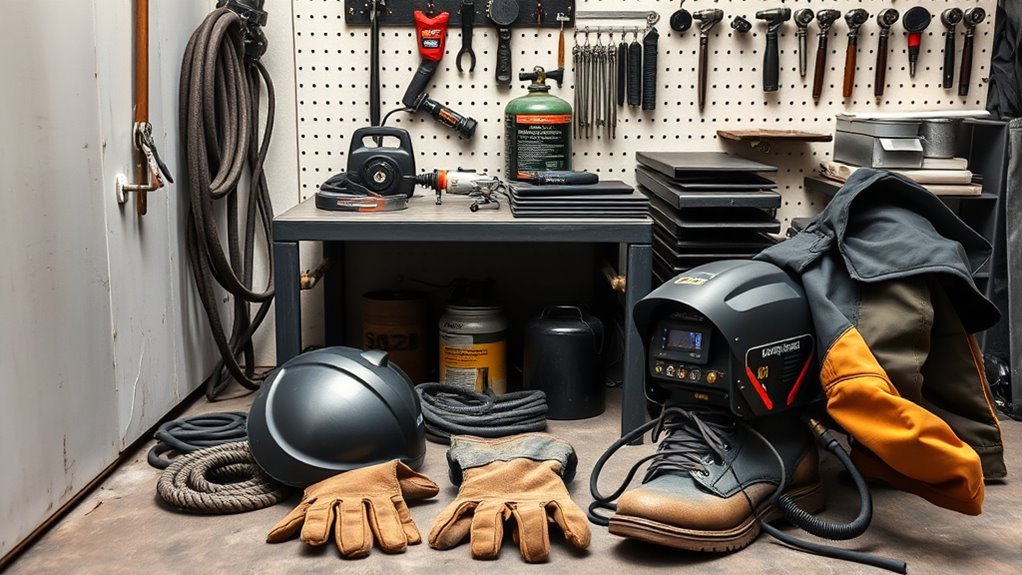
Choose equipment from the work you plan to sell, not from a wish list. A repair-focused shop may begin with a capable multiprocess machine, portable cutting equipment, grinders, clamps, and a service vehicle. A precision stainless or aluminum shop may need stronger TIG capability, cleaner material separation, better gas coverage, and more finishing tools.
For current price examples by machine type and capability, see our welding equipment cost guide.
Core Welding and Fabrication Equipment
- MIG or multiprocess welder: fast production for mild steel fabrication and general repair.
- TIG welder: controlled work on stainless steel, aluminum, thin material, and visible welds.
- Stick capability: useful for field repair, heavy sections, and less-controlled outdoor conditions.
- Cutting equipment: plasma cutter, oxy-fuel setup, cold saw, band saw, or chop saw based on material and finish needs.
- Preparation and finishing: angle grinders, bench grinder, drill press, abrasives, wire brushes, and dust control.
- Fit-up equipment: welding tables, vises, squares, magnets, clamps, fixtures, and measuring tools.
- Material handling: carts, racks, pallet jack, hoist, forklift, or crane only when loads and workflow justify them.
- Shop support: air compressor, extension leads rated for the load, gas regulators, hoses, cylinder carts, and secure storage.
A practical first-pass allowance is $4,000–$12,000 for a lean owner-operator tool package and $10,000–$35,000 or more for several commercial-grade stations. Get written prices that include leads, torches, regulators, consumables, freight, tax, setup, and warranty—not just the bare machine.
PPE and Safety Equipment
Every worker needs a welding helmet with the correct lens shade, safety glasses with side shields, hearing protection, flame-resistant clothing, welding gloves, work boots, and task-specific respiratory protection when required. Also budget for welding screens, fire extinguishers, first-aid supplies, eyewash equipment where corrosive hazards exist, cylinder restraints, signs, and housekeeping equipment.
Warning: PPE does not replace engineering controls. OSHA’s welding standard requires suitable ventilation and fire-prevention measures, and respirator use may trigger a formal respiratory-protection program.
Plan roughly $400–$1,500 per worker for an initial PPE kit, then create a replacement budget for lenses, gloves, clothing, respirator cartridges, hearing protection, and damaged gear. Actual costs depend on hazards and the equipment your written safety assessment requires.
Pro Tip: Phase equipment purchases by revenue. Buy the tools needed for the first six months of confirmed services, rent specialty equipment for occasional jobs, and add permanent capacity only after demand is proven.
What Facility, Rent, Power, and Ventilation Costs Matter?
Rent and square footage vary too much by market to support one useful national estimate. The important question is whether the site can legally and safely support your work without an unaffordable buildout.
Facility Due-Diligence Checklist
- Zoning and use: confirm that welding, fabrication, outdoor storage, noise, deliveries, and your expected operating hours are allowed.
- Lease permission: get written approval for exhaust ducts, roof penetrations, electrical upgrades, gas-cylinder storage, signs, and floor anchors.
- Electrical capacity: have a licensed electrician verify voltage, amperage, panel capacity, disconnects, receptacles, grounding, and the cost of any service upgrade.
- Fume control: price local exhaust ventilation that captures fumes near the source instead of simply moving contaminated air through the shop.
- Fire protection: review hot-work areas, combustibles, fire watch needs, extinguisher locations, alarms, and local fire-code requirements.
- Compressed gases: plan ventilated, protected storage and secure cylinders upright. Oxygen and fuel-gas separation rules may apply.
- Workflow: separate receiving, raw stock, cutting, fit-up, welding, finishing, finished goods, and office areas to reduce handling and cross-contamination.
- Access: check door height, loading space, trailer movement, parking, floor capacity, drainage, and snow or storm access.
- Environmental controls: account for grinding dust, coatings, solvents, metal-bearing waste, scrap, wastewater, and noise.
Monthly utilities may include electricity, natural gas, water, sewer, waste hauling, internet, alarm monitoring, cylinder rental, and heating or cooling. Heavy welding loads, compressors, fume extraction, and winter heating can make electricity and gas much more important than a generic “several hundred dollars” estimate.
Warning: Do not sign a lease based only on rent. Make the deal contingent on zoning approval and acceptable electrical, ventilation, fire-safety, and environmental quotes. A cheap bay can become the most expensive option after required upgrades.
What Licenses, Certifications, and Insurance Does a Welding Shop Need?
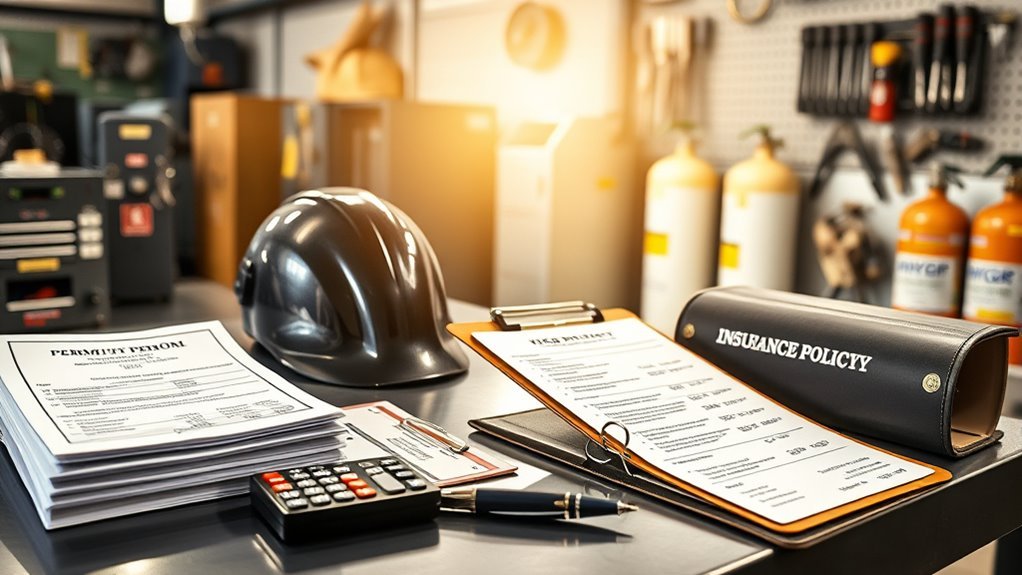
Business registration, trade licensing, welder qualification, and company certification are different items. Your requirements depend on location, project type, contract documents, building codes, and the materials or structures you fabricate.
Welding Certifications Cost
AWS Certified Welder testing prices are set by individual Accredited Test Facilities, so there is no single universal exam price. Advanced credentials cost more. The AWS price list effective January 1, 2026 shows the initial CWI/CAWI exams at $1,255 for members and $1,520 for nonmembers before optional training and related expenses.
Do not buy a certification simply because it sounds valuable. Start from the code, specification, customer requirement, or contractor prequalification standard that applies to the work you want. Your budget may need to cover:
- Welder performance qualification tests for specific processes, positions, materials, and thickness ranges.
- Written welding procedures, procedure qualification records, and outside testing or inspection.
- Inspector, educator, robotic arc welding, or other specialized credentials.
- Continuity records, renewals, retesting, training, travel, and lost production time.
Insurance and Permits
The SBA notes that licenses, permits, and fees vary by activity and location. Common startup tasks include registering the business, checking state or local contractor licensing, securing a certificate of occupancy or use approval, obtaining fire or environmental permits when required, and setting up sales-tax and employer accounts.
An Employer Identification Number is available directly from the IRS at no charge. Avoid third parties that charge merely to obtain an EIN.
Insurance pricing is also quote-specific. Ask a licensed commercial agent about general liability, commercial property, tools and equipment, inland marine coverage, commercial auto, workers’ compensation, umbrella coverage, and errors-and-omissions or professional liability when you provide design or engineering-related services. Customers may also require specific limits, additional-insured status, waivers, or bonds.
Note: Workers’ compensation is primarily state-administered, so a universal percentage of payroll is misleading. Rates depend on state law, payroll, job classifications, claims history, and insurer underwriting.
Choose a business structure after reviewing liability, tax, ownership, and administrative consequences. An LLC may provide liability separation under state law, but it does not automatically create a federal tax advantage; federal tax treatment depends on ownership and tax elections.
What Are the Ongoing Monthly Costs of a Welding Shop?
Payroll is more than the employee’s hourly wage. Your labor budget must also account for employer payroll taxes, workers’ compensation, benefits, paid leave, training, PPE, nonbillable shop time, supervision, overtime, and rework.
The U.S. Bureau of Labor Statistics reported a May 2024 median wage of $51,000 per year, or $24.52 per hour, for welders, cutters, solderers, and brazers. Local wages may be lower or much higher depending on skill, industry, travel, code work, shift, and labor market.
Monthly Operating-Cost Checklist
- Occupancy: rent, common-area charges, property pass-throughs, utilities, internet, alarm, and waste service.
- Labor: wages, payroll taxes, workers’ compensation, benefits, training, overtime, and temporary help.
- Direct materials: metal, purchased components, fasteners, outsourced cutting, machining, coating, and delivery.
- Consumables: wire, electrodes, shielding gas, contact tips, nozzles, tungsten, abrasives, saw blades, drill bits, and chemicals.
- Fleet and delivery: fuel, maintenance, registration, commercial auto insurance, trailer costs, and tolls.
- Maintenance: preventive service, torch repairs, calibration, filters, replacement cables, and unexpected downtime.
- Administration: software, bookkeeping, accounting, legal help, banking fees, phones, office supplies, and license renewals.
- Sales: advertising, estimating time, site visits, bid bonds when needed, customer entertainment, and association fees.
- Debt and taxes: loan payments, equipment leases, estimated taxes, sales-tax remittance, and local assessments.
Keep monthly and annual costs in separate columns. Build a cash-flow forecast that reflects customer payment terms. A profitable project can still create a cash shortage when you buy steel and pay payroll weeks before receiving the final payment.
Pro Tip: Build the operating reserve from your actual monthly cash burn. Three months may be a useful starting target, but shops with long receivable cycles, seasonal demand, or one dominant customer may need more.
How Much Should a New Welding Shop Budget for Marketing?
Marketing should explain what you weld, who you serve, where you work, and why a buyer should trust you. A general “we weld anything” message is weaker than clear service pages for mobile repair, structural work, handrails, stainless fabrication, aluminum repair, production runs, or custom projects.
Branding and Logo Design
A lean launch can use a simple professional identity, vehicle lettering, jobsite signs, estimate templates, and consistent photos. Plan roughly $100–$800 for a basic do-it-yourself or light-freelance package, or $1,000–$5,000 for a more complete professional identity. Make sure you receive:
- Vector and high-resolution logo files.
- One-color, horizontal, stacked, and small-format variations.
- A practical color palette and readable type choices.
- Files sized for estimates, invoices, uniforms, vehicles, signs, and social profiles.
Do not allocate a fixed percentage of the entire startup budget to branding. Spend enough to look credible, then protect cash for safety, capacity, and working capital.
Website Setup Costs
A basic service-business website may cost about $500–$5,000 depending on whether you build it yourself or hire a professional. Budget separately for the domain, hosting, maintenance, business email, photography, copy, accessibility, security, and future updates.
The first version should include service pages, service area, project photos, certifications or qualifications, insurance information when appropriate, a clear quote-request form, phone number, and privacy notice. Track calls and form submissions so you know which pages and campaigns produce qualified leads.
Local Advertising Budget
Start with a measured 90-day test rather than committing to a vague annual percentage. A $500–$5,000 yearly local-advertising allowance may be enough for a small shop, but the correct amount depends on job value, close rate, service area, and competition.
- Google Business Profile: creating or claiming the profile is free; you pay only if you hire someone to manage it or buy advertising.
- Local search and paid ads: build tightly focused campaigns around profitable services and geographic areas.
- Direct outreach: contact general contractors, property managers, manufacturers, farms, equipment dealers, and maintenance departments with a specific capability statement.
- Offline visibility: use vehicle graphics, jobsite signs, association events, supplier relationships, sponsorships, and referral requests.
- Portfolio proof: publish clear before-and-after photos, material details, tolerances, finish quality, and project outcomes with customer permission.
Measure cost per qualified lead, quote rate, close rate, average gross profit per job, repeat work, and referral source. Stop campaigns that produce poor-fit jobs even when the clicks appear inexpensive.
How Should a Welding Shop Price Jobs and Reach Break-Even?
Do not price from labor hours alone. Every quote must recover direct labor, materials, consumables, subcontracting, travel, overhead, equipment wear, risk, and profit.
Build a Shop Rate From Real Costs
- Estimate direct labor: include setup, fit-up, welding, cleanup, loading, travel, and documentation.
- Price materials: include purchase price, freight, cutting waste, minimum order charges, and a markup for handling and financing.
- Add variable job costs: shielding gas, abrasives, consumables, rentals, permits, subcontractors, and delivery.
- Allocate overhead: spread rent, utilities, office time, insurance, software, maintenance, and nonbillable labor across realistic billable hours.
- Add profit and risk: account for warranty exposure, schedule risk, rework, complexity, and the return needed to replace equipment and grow.
Use hourly pricing for troubleshooting or uncertain repair work, unit pricing for repeat production, and fixed project pricing when the scope is controlled. Written estimates should define material, finish, quantity, tolerances, exclusions, delivery, payment schedule, change-order rules, and quote expiration.
Calculate Break-Even Volume
The SBA break-even formula is fixed costs divided by the contribution from each sale. For example, if monthly fixed costs are $12,000, the average job sells for $2,500, and variable job costs average $900, each job contributes $1,600 toward fixed costs and profit:
$12,000 ÷ ($2,500 − $900) = 7.5 jobs
You would need to complete and collect payment for about eight similar jobs per month to reach break-even. Run the same calculation for your actual mix of small repairs, field calls, and fabrication projects using the SBA break-even calculator.
Note: Startup cost recovery is not the same as profit. A price that covers this month’s bills but cannot fund taxes, equipment replacement, and a return to the owner is not sustainable.
How Can You Finance a Welding Shop and Lower Startup Cost?
Finance long-lived assets only after confirming that expected cash flow can support the payment. Preserve cash for payroll, materials, insurance, and receivables instead of using every dollar for machinery.
Common Funding Options
- Owner savings: simple and flexible, but it concentrates personal financial risk.
- Equipment financing or leasing: spreads machine costs over time; compare total paid, down payment, early payoff, insurance requirements, and end-of-lease terms.
- Bank or credit-union loan: useful for qualified borrowers with a clear plan, collateral, and repayment capacity.
- SBA-guaranteed loan or microloan: the SBA lists 7(a), 504, microloan, and other funding programs delivered through participating organizations and lenders.
- Partner capital: can add money, customers, equipment, or shop space, but ownership, authority, exit rights, and profit sharing must be documented.
- Customer deposits or progress billing: may reduce material and cash-flow pressure when contracts and state law permit.
Warning: Do not build the plan around a general government startup grant. The SBA states that it does not provide grants for starting or expanding ordinary businesses. Specialized programs may exist, but eligibility is narrow and competitive.
Ways to Lower the Upfront Bill
- Buy inspected used equipment with a test weld, serial-number check, service history, and repair allowance.
- Rent specialty machines, lifts, generators, or cutting equipment until use is frequent enough to justify ownership.
- Begin with one profitable service line instead of buying for every possible process.
- Share compliant space or subcontract selected work under a written agreement that covers insurance, quality, scheduling, and customer ownership.
- Negotiate landlord contributions, free-rent periods, or capped buildout costs before signing.
- Delay nonessential office upgrades, elaborate branding, and low-use machinery.
- Use supplier accounts carefully and include payment timing in the cash-flow forecast.
Forming an LLC may be appropriate for liability and ownership reasons, but choose the entity with advice suited to your state and tax situation. The structure should support the business plan; it is not a substitute for insurance, contracts, safe operations, or adequate capitalization.
Frequently Asked Questions
How do I handle hazardous waste disposal from welding operations?
Identify each waste stream before disposal. Metal-bearing dust, spent chemicals, paint or solvent waste, contaminated absorbents, and some blasting or finishing residues may require hazardous-waste evaluation. Keep containers compatible, closed, labeled, and protected; document pickups; and use authorized transport and disposal services. EPA generator requirements are based on how much hazardous waste you generate each month, while state rules may be stricter.
What are common zoning restrictions for welding shops?
Common controls cover industrial use, noise, fumes, outdoor storage, deliveries, parking, setbacks, signs, fire safety, hazardous materials, and operating hours. Some locations require a conditional-use permit or certificate of occupancy. Confirm the proposed use with the zoning office, fire authority, building department, and landlord before signing a lease.
How do I secure work contracts from construction firms?
Prepare a capability statement, W-9, certificate of insurance, safety information, references, project photos, qualification records, and clear service limits. Register with contractor vendor portals, attend pre-bid meetings, quote the complete scope, identify exclusions, and respond quickly to requests. Some projects also require bonding, certified payroll, written procedures, inspections, or additional-insured endorsements.
What software is best for job estimating and tracking?
Choose software that matches job size and workflow. Buildertrend and Procore are oriented toward broader construction management, while Knowify focuses on trade contractors. A small shop may need only estimating, job costing, scheduling, time tracking, purchase orders, change orders, invoicing, and accounting integration. Test the full quote-to-cash process before signing a long contract.
How should I set up apprentice training and safety programs?
Use a written progression that covers orientation, PPE, fire prevention, ventilation, compressed gases, equipment inspection, material identification, fit-up, process practice, quality checks, and emergency response. Assign qualified supervision, define which tasks apprentices may perform, document competency, investigate near misses, and schedule refresher training. Budget paid training time, test materials, PPE, instructor time, and certification costs.
Can I start a welding business from home?
Possibly, but only when zoning, homeowner or lease restrictions, insurance, fire rules, electrical service, ventilation, noise, cylinder storage, parking, and customer traffic allow it. A mobile business that performs most hot work at customer sites may reduce facility costs, but it creates vehicle, travel, field-safety, and site-permission requirements.
How much working capital should a welding shop keep?
Calculate the amount from your monthly cash burn, customer payment terms, backlog, seasonality, and concentration risk. A three-month reserve is a useful starting model, but a shop that buys costly steel upfront or waits 60–90 days for payment may need a larger cushion or a properly structured line of credit.
Do I need a license to open a welding shop?
There is no single U.S. welding-shop license that covers every location and type of work. SBA guidance says license and permit requirements vary by business activity, location, and government rules. Depending on the shop and contracts, you may need business registration, zoning or use approval, a certificate of occupancy, fire or environmental permits, state or local contractor licensing, and tax or employer registrations. Confirm the exact requirements with your state, county, city, fire authority, and contract documents before opening.
What insurance does a welding shop usually need?
Coverage is quote-specific, but common policies include general liability, commercial property or tools-and-equipment coverage, commercial auto when business vehicles are used, workers’ compensation when required, and umbrella coverage for higher limits. Professional liability may also matter when the business provides design or engineering-related services. Customer contracts can require specific limits, additional-insured status, waivers, or bonds, so obtain a quote based on the work you actually plan to perform.
Conclusion
A welding shop can start lean, but the lease should come after the numbers. Define the work you will sell, get written electrical, ventilation, fire/code, insurance, and occupancy/buildout quotes, then add equipment, materials, payroll, marketing, and working capital. Calculate monthly cash burn and break-even revenue before committing to the site. Open with the capacity you can support safely, track job profitability, and expand only when demand and cash flow justify the next purchase.
About the Author
Logan Barrett is a manufacturing cost analyst at Get Cost Idea who focuses on welding and fabrication equipment, project scope, and cost trade-offs.
Sources
- U.S. Small Business Administration: Calculate Your Startup Costs — startup-cost categories, one-time expenses, monthly expenses, and funding preparation.
- OSHA 29 CFR 1910.252: Welding, Cutting, and Brazing — fire prevention, PPE, ventilation, and general welding safety requirements.
- American Welding Society 2026 Certification and Education Price List — current AWS program and CWI examination fees.
- U.S. Bureau of Labor Statistics: Welders, Cutters, Solderers, and Brazers — national wage data and occupation information.
- U.S. Environmental Protection Agency: Hazardous Waste Generator Categories — federal generator categories and quantity thresholds.
- U.S. Small Business Administration: Grants — limits on ordinary startup grants and the types of organizations generally eligible for SBA grants.
- U.S. Small Business Administration: Apply for Licenses and Permits — current guidance that requirements and fees vary by activity and location.
- OSHA 29 CFR 1910.134: Respiratory Protection — engineering controls, required respirator use, and written respiratory-protection program requirements.
- Internal Revenue Service: Get an Employer Identification Number — direct EIN application and no-fee guidance.
- Google Business Profile Help: Add or Claim Your Business Profile — confirms that eligible businesses can add or claim a profile at no charge.