You may use a radio scanner to follow compatible public-safety traffic, aviation communications, railroad activity, marine channels, weather information, or event radio traffic. The right model depends less on the number of channels it advertises and more on whether it can receive the radio system you actually want to hear.
This guide compares analog handheld, desktop, analog-trunking, and digital scanners so you can match the scanner to your local system, preferred form factor, and comfort level with programming.
Affiliate Disclosure: This roundup is reader-supported. When you click qualifying Amazon links, we may earn a commission at no extra cost to you.
Quick Verdict
Choose the Whistler TRX-1 when you need P25 Phase I/II, DMR, or NXDN support in a handheld. Choose the Uniden BCT15X when your target system uses compatible analog trunking and you want a base/mobile installation. The Uniden BC125AT, Whistler WS1010, and Uniden BC365CRS are better suited to conventional analog listening such as aviation, rail, marine, weather, events, and compatible non-digital public-safety channels.
Top Picks
|
Best For |
Product |
Signal Type |
|---|---|---|
|
⭐ Digital P25, DMR & NXDN |
Digital + Analog |
|
|
🚗 Analog Trunking & Base/Mobile Use |
Analog + Compatible Analog Trunking |
|
|
✈️ Close Call, Aviation & Events |
Conventional Analog |
|
|
💰 Simple Analog Handheld Use |
Conventional Analog |
|
|
🏠 Desktop & Bedside Monitoring |
Conventional Analog |
Before You Buy
- Check your local system first. An analog scanner cannot decode P25, DMR, NXDN, or other unsupported digital voice systems.
- Trunking and digital are not the same thing. The BCT15X handles compatible analog trunking but does not decode P25, DMR, or NXDN.
- Encryption changes everything. These scanners are intended for compatible unencrypted transmissions; buying a digital model does not make encrypted voice traffic readable.
- Reception depends on location. Distance, terrain, building materials, interference, antenna choice, and transmitter power can all affect what you hear.
- Do not rely on scanner traffic as your only emergency source. Use official emergency alerts and emergency services for time-critical safety information.
Selection Criteria
When evaluating scanners, signal compatibility comes first. If the services you want to hear use conventional analog VHF or UHF, an analog scanner may be all you need. If they use P25 or another supported digital format, you need a scanner that can decode that format. If a system is encrypted, these consumer scanners are not a way around that encryption.
Next consider form factor, programming, antenna options, memory organization, and the type of listening you plan to do. A lightweight handheld makes sense for aviation, rail, races, and events, while a desktop or base/mobile model may be easier to use for continuous home or vehicle monitoring. Features such as Close Call capture, weather alerts, service searches, database-driven programming, GPS filtering, and scan lists can also make a major difference in day-to-day use.
Whistler TRX-1
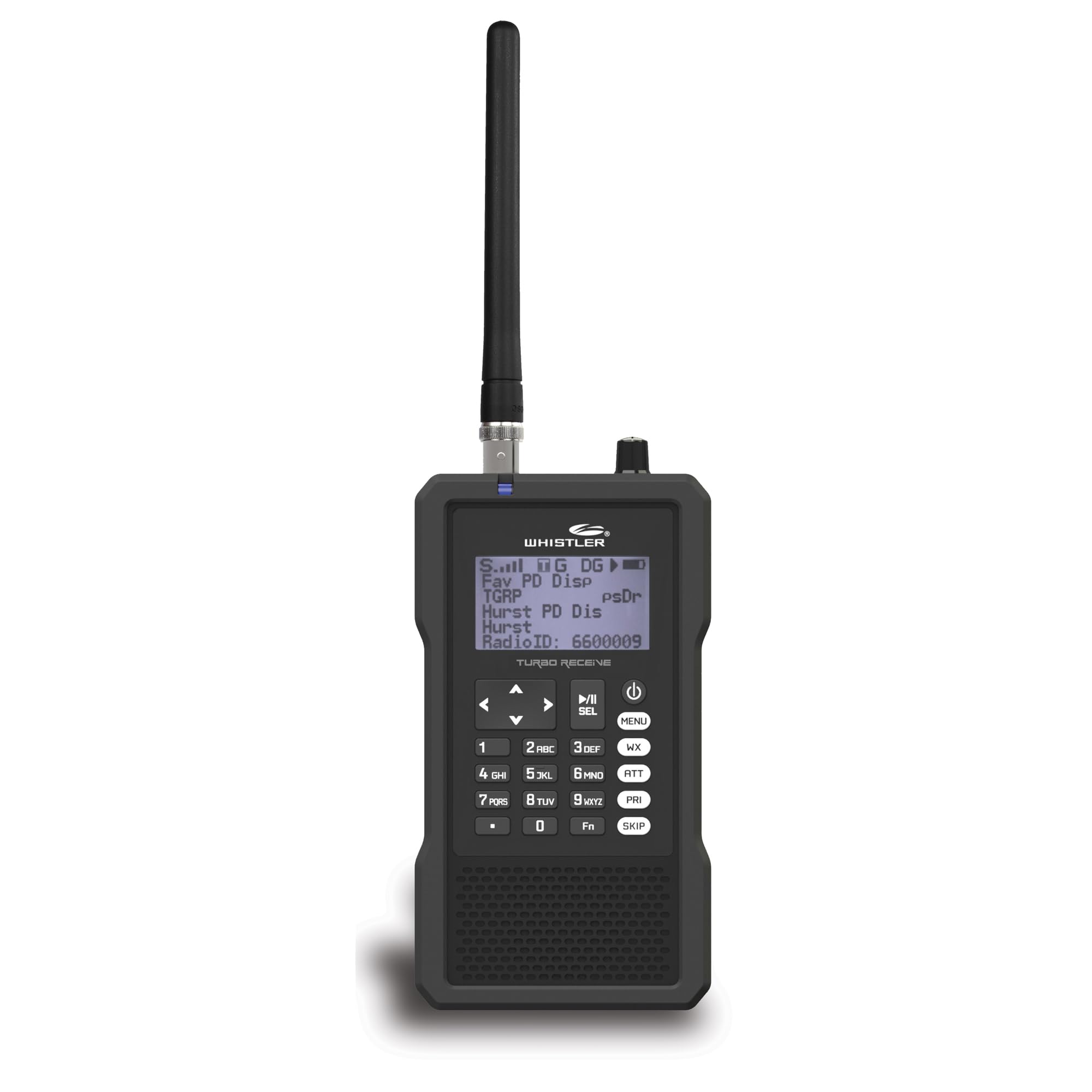
The TRX-1 is the strongest match in this group when you specifically need a handheld scanner for modern compatible digital systems. It supports APCO P25 Phase I and II along with DMR and NXDN, while also covering compatible analog and trunked radio traffic.
Its database-driven setup, scan lists, scan sets, and MicroSD-based storage give you much more flexibility than a basic analog scanner. That flexibility also means setup can take longer, so buyers should expect to learn the EZ-Scan workflow and confirm that their local system uses a format the TRX-1 supports.
Best For: Buyers who need P25 Phase I/II, DMR, NXDN, or a flexible handheld digital scanner.
Main Limitation: Digital capability does not mean encrypted communications can be decoded, and programming is more involved than with a basic analog handheld.
What People Say
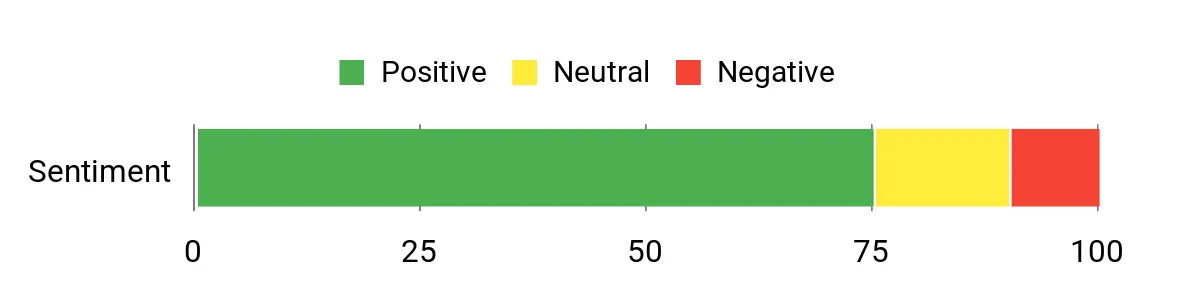
Common customer-feedback themes include appreciation for its digital decoding, flexible scan organization, and database-oriented setup. A recurring drawback is the initial learning curve, especially for buyers new to scanner programming.
Overall Sentiment: Positive
Where It Helps
|
Situation |
How It Helps |
|---|---|
|
Compatible P25 Systems |
It can receive compatible unencrypted P25 Phase I and II traffic that conventional analog-only scanners cannot decode. |
|
Digital Hobby Monitoring |
Support for DMR and NXDN broadens the range of compatible digital systems you can explore where those formats are used. |
|
Portable Monitoring |
The handheld form factor lets you carry a digital-capable scanner instead of being tied to a fixed base installation. |
|
Organizing Many Systems |
Scan lists, scan sets, and MicroSD-based storage make it easier to separate agencies, locations, and listening interests. |
Important Limitations
The TRX-1 is designed for compatible unencrypted systems. It cannot make encrypted public-safety voice traffic intelligible, and reception still depends on system type, signal conditions, antenna choice, and location.
Key Benefits
- APCO P25 Phase I & II decoding for compatible digital systems
- DMR and NXDN support for broader digital coverage
- Database-oriented EZ-Scan programming workflow
- Flexible scan lists, scan sets, and MicroSD-based storage
Check Current Amazon Availability
Uniden BearTracker BCT15X

The BCT15X is designed for buyers who want a feature-rich analog trunking scanner in a base or mobile format. TrunkTracker III supports compatible Motorola, EDACS, and LTR systems, while Close Call RF capture, GPS compatibility, and dynamic memory add flexibility for vehicle or fixed-location use.
The key buying limitation is important: this is not a digital scanner. It does not decode P25, DMR, or NXDN voice systems. That makes it a strong specialist choice where compatible analog conventional or analog-trunked systems are still in use, but a poor choice if your target agencies have moved to unsupported digital formats.
Best For: Base/mobile users monitoring compatible analog conventional and analog-trunked systems.
Main Limitation: No P25, DMR, or NXDN digital voice decoding.
What People Say
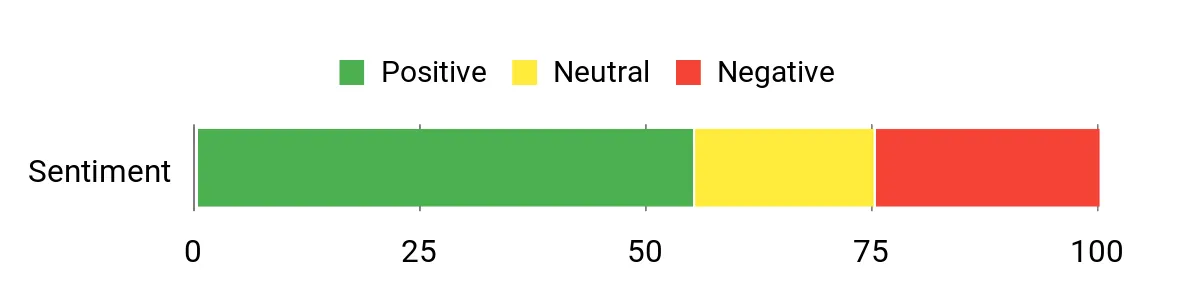
Common customer-feedback themes include appreciation for the BCT15X’s memory flexibility, analog trunking features, and usefulness as a vehicle or base scanner. The most common drawback is the learning curve involved in programming a feature-rich scanner.
Overall Sentiment: Neutral
Where It Helps
|
Situation |
How It Helps |
|---|---|
|
Vehicle Monitoring |
Its base/mobile format and GPS compatibility suit a permanent vehicle installation when the systems along your route are compatible. |
|
Analog Trunking |
TrunkTracker III can follow supported Motorola, EDACS, and LTR analog trunked systems instead of treating them like simple conventional channels. |
|
Nearby Signal Discovery |
Close Call RF capture can help identify strong nearby compatible transmissions without manually searching every frequency. |
|
Base Station Use |
Its dynamic memory and fixed installation format suit listeners managing many compatible conventional or analog-trunked channels. |
Important Limitations
Do not buy the BCT15X solely because your local system is described as “trunked.” First confirm whether that system uses a compatible analog format. P25 and other unsupported digital voice systems require a different scanner.
Key Benefits
- TrunkTracker III for compatible analog trunked systems
- Close Call RF capture for nearby signal discovery
- GPS compatibility for location-based scanning
- Up to 9,000 dynamically allocated channels
Check Product Details on Amazon
Uniden Bearcat BC125AT

The BC125AT is a compact conventional analog handheld that makes the most sense for aviation, railroad, marine, weather, races, events, and compatible non-digital public-safety traffic. Its Close Call RF Capture feature can automatically identify strong nearby compatible transmissions, while 500 alpha-tagged channels help keep frequencies organized.
It is portable and PC programmable, but it is not a digital scanner and does not support P25, DMR, or NXDN. That limitation should be checked before purchase if public-safety monitoring is your main goal.
Best For: Aviation, rail, marine, races, events, and nearby conventional analog signals.
Main Limitation: Conventional analog only; no P25, DMR, NXDN, or digital trunked voice decoding.
What People Say
Common customer-feedback themes include strong value for aviation and railroad listening, useful Close Call functionality, and convenient portability. Programming and the limitations of a compact stock antenna are recurring considerations.
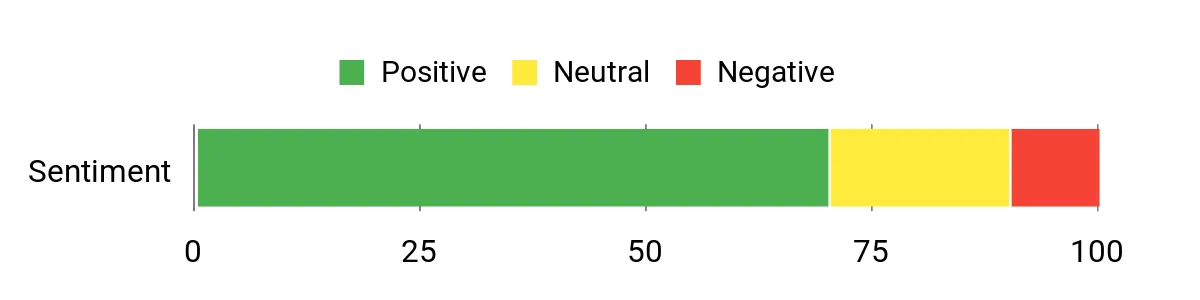
Overall Sentiment: Positive
Where It Helps
|
Situation |
How It Helps |
|---|---|
|
At a Car Race |
Close Call can help identify strong nearby compatible radio transmissions while the handheld design is easy to carry around an event. |
|
Planespotting |
Civilian and military aviation-band coverage makes the BC125AT a natural choice for monitoring compatible air communications. |
|
Weather Monitoring |
Weather scanning and alerts add another useful information source, although official emergency-alert channels should remain your primary warning source. |
|
Rail or Event Listening |
Alpha tagging and 500 channels help organize multiple frequencies by railroad, location, event, or monitoring interest. |
Important Limitations
The BC125AT cannot monitor P25, DMR, NXDN, or other unsupported digital voice systems. Confirm that the frequencies you want are conventional analog before buying it for local public-safety monitoring.
Key Benefits
- Close Call RF Capture for nearby compatible signals
- 500 alpha-tagged channels for organized monitoring
- Weather scanning and alert functions
- PC programming plus aviation, marine, and railroad coverage
Check Current Amazon Availability
Whistler WS1010
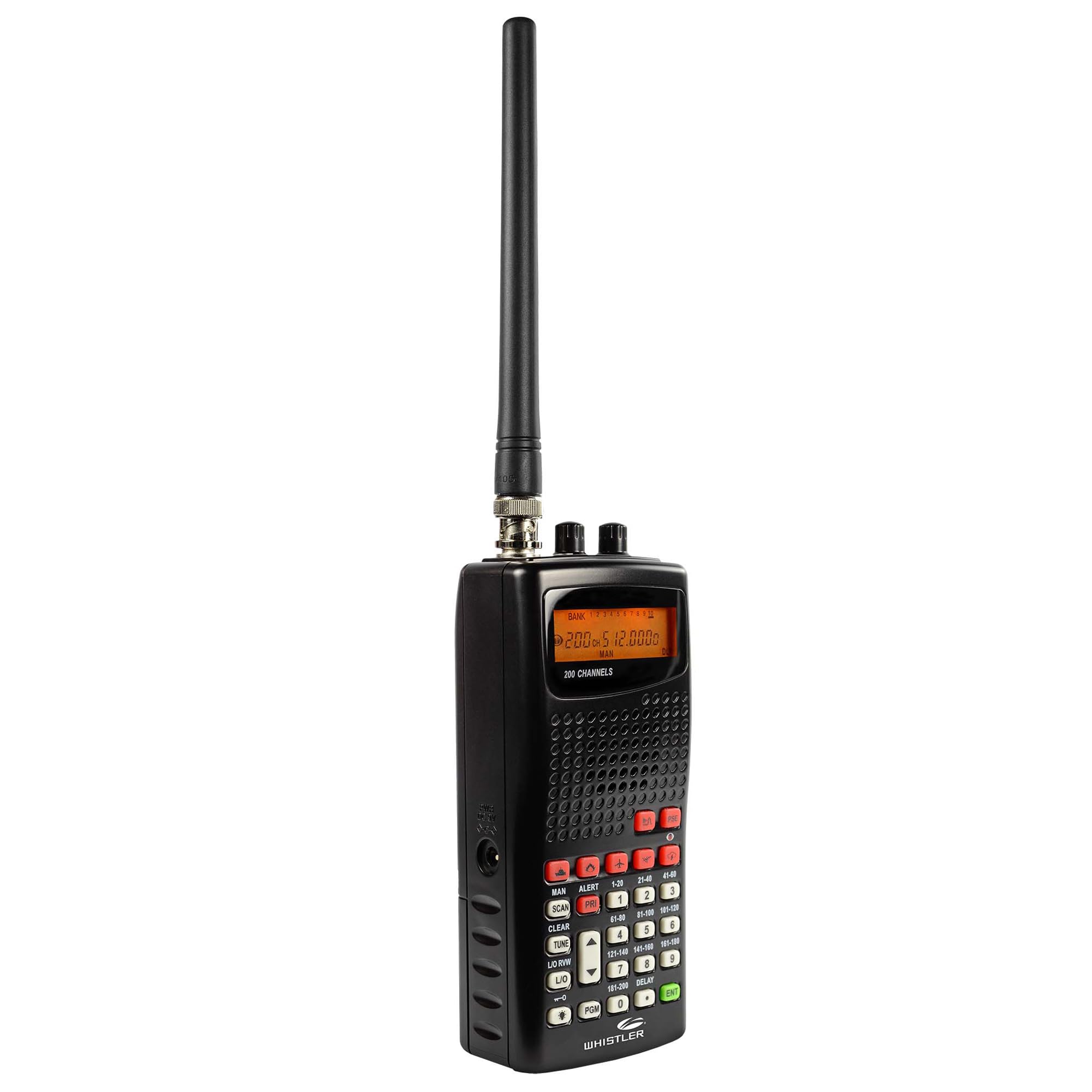
The WS1010 is a straightforward conventional analog handheld with 400 channels divided into ten memory banks. Service searches for categories such as fire/police, aircraft, marine, amateur radio, and weather make it easier to explore compatible analog activity without starting every search from scratch.
It also includes Skywarn functionality, weather alerting, Spectrum Sweeper, a BNC antenna connector, and optional PC programming using the appropriate cable and compatible third-party software. It is best considered a simple analog listening tool rather than a solution for modern digital public-safety systems.
Best For: Buyers who want an uncomplicated handheld for conventional analog listening.
Main Limitation: It does not provide the digital decoding needed for P25, DMR, NXDN, or similar digital voice systems.
What People Say
Common feedback themes include appreciation for its straightforward analog operation, clear speaker, service searches, and portability. Reception still depends heavily on antenna, terrain, distance, and local signal conditions.
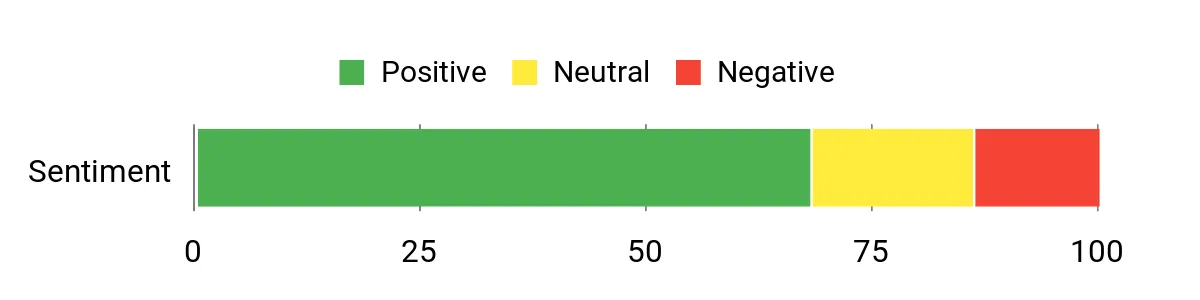
Overall Sentiment: Positive
Where It Helps
|
Situation |
How It Helps |
|---|---|
|
Compatible Local Analog Traffic |
Service searches and memory banks help organize local conventional analog frequencies where those systems remain in use. |
|
Small Events |
The handheld design makes it convenient for listening to compatible event communications and nearby analog activity. |
|
Planespotting |
The aircraft service-search capability makes nearby aviation traffic one of its more natural use cases. |
|
Hobby Listening |
Ten memory banks and multiple search functions help separate frequencies by interest or location. |
Important Limitations
The WS1010 is an analog scanner. Check the communication format used in your area before purchasing it for police, fire, or EMS monitoring, because many systems require digital-capable equipment.
Key Benefits
- 400-channel memory across ten banks
- Service searches for common analog radio categories
- Skywarn and weather alert functionality
- Spectrum Sweeper for finding strong nearby transmissions
Check Current Amazon Availability
Uniden BC365CRS

The BC365CRS is designed for stationary conventional analog monitoring and adds features that make sense on a desk, shelf, or bedside table. It stores 500 channels in ten banks and combines scanner functions with an FM radio, alarm clock, snooze function, service searches, and weather alerts.
That combination makes it convenient for aviation, marine, railroad, weather, and compatible non-digital public-safety listening at home. Its major limitation is the same one buyers must understand with other basic analog scanners: it does not decode P25, DMR, NXDN, or digital trunked voice systems.
Best For: Home or bedside users who want a conventional analog scanner combined with FM radio, clock, and weather functions.
Main Limitation: Conventional analog only; not suitable for unsupported digital or P25 systems.
What People Say
Common customer-feedback themes include appreciation for the desktop format, straightforward scanning functions, weather features, and clock-radio convenience. Reception and the lack of digital decoding are important considerations before purchase.
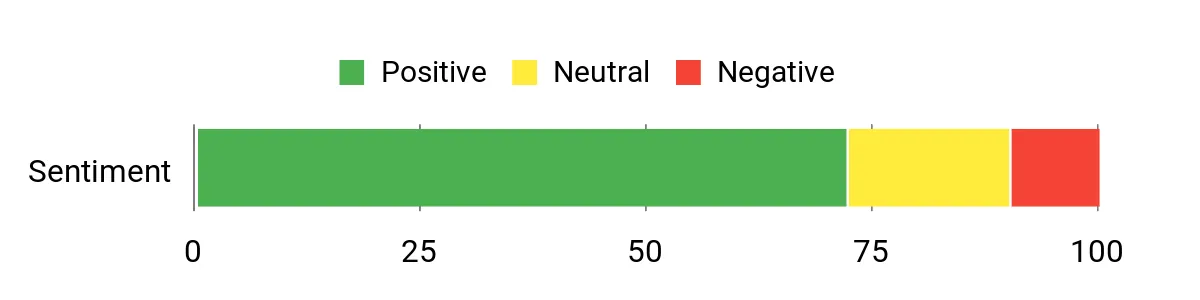
Overall Sentiment: Positive
Where It Helps
|
Situation |
How It Helps |
|---|---|
|
Home Monitoring |
You can organize compatible conventional analog frequencies into banks while keeping the scanner in a fixed location. |
|
Bedroom Use |
The integrated FM radio, alarm, snooze, and sleep functions make it more practical as a bedside device than a typical handheld scanner. |
|
Aviation or Marine Listening |
Built-in service searches help you explore compatible aircraft and marine frequencies from a stationary location. |
|
Weather Awareness |
Weather scanning and alert functions provide an additional source of weather information alongside official alert services. |
Important Limitations
The BC365CRS is not a digital scanner. Confirm your target frequencies and system type before choosing it for police, fire, EMS, or other public-safety monitoring.
Key Benefits
- 500 channels across ten banks
- FM radio with station presets
- Alarm clock with snooze and sleep functions
- Weather scanning and alert support
Check Current Amazon Availability
FAQ
Do I Need a Digital Scanner?
That depends on the radio system you want to monitor. Conventional analog aviation, railroad, marine, weather, event, and some public-safety communications can be received by compatible analog scanners. P25 and other supported digital systems require a scanner capable of decoding the specific digital format.
Check the current system type used by the agencies or services you want to hear before buying. Also remember that digital capability does not provide access to encrypted voice traffic.
What Is the Difference Between Digital and Trunking?
They describe different parts of a radio system. A trunked system dynamically assigns conversations to available frequencies, while “digital” describes how voice or data is encoded. A scanner can therefore support some analog trunked systems without being a digital scanner. The BCT15X is an important example: it supports compatible analog trunking but does not decode P25, DMR, or NXDN digital voice.
How Can I Improve Reception?
Start with placement and antenna choice. Moving the scanner higher, closer to a window, or farther from electronic interference can help. A compatible external antenna may improve reception when the stock handheld antenna is not well suited to the band or distance you are trying to receive.
Terrain, buildings, transmitter power, frequency band, and distance can all affect results, so no antenna or scanner can guarantee reception of every desired transmission.
Can a Digital Scanner Hear Encrypted Police Channels?
No scanner in this roundup should be purchased with the expectation that it will decrypt encrypted public-safety voice. Digital scanners such as the TRX-1 can decode compatible unencrypted digital formats, but encryption is a separate barrier.
Is It Legal to Monitor Police or Public-Safety Channels?
Scanner laws and restrictions can vary by country, state, locality, how the scanner is used, and the type of communication involved. Rules may also differ for mobile scanner use or for using information heard over a radio communication.
Before monitoring public-safety traffic, check the current laws that apply where you live and travel. Do not use intercepted communications to interfere with responders, commit an unlawful act, invade privacy, or attempt to defeat encryption.
Customer Preferences
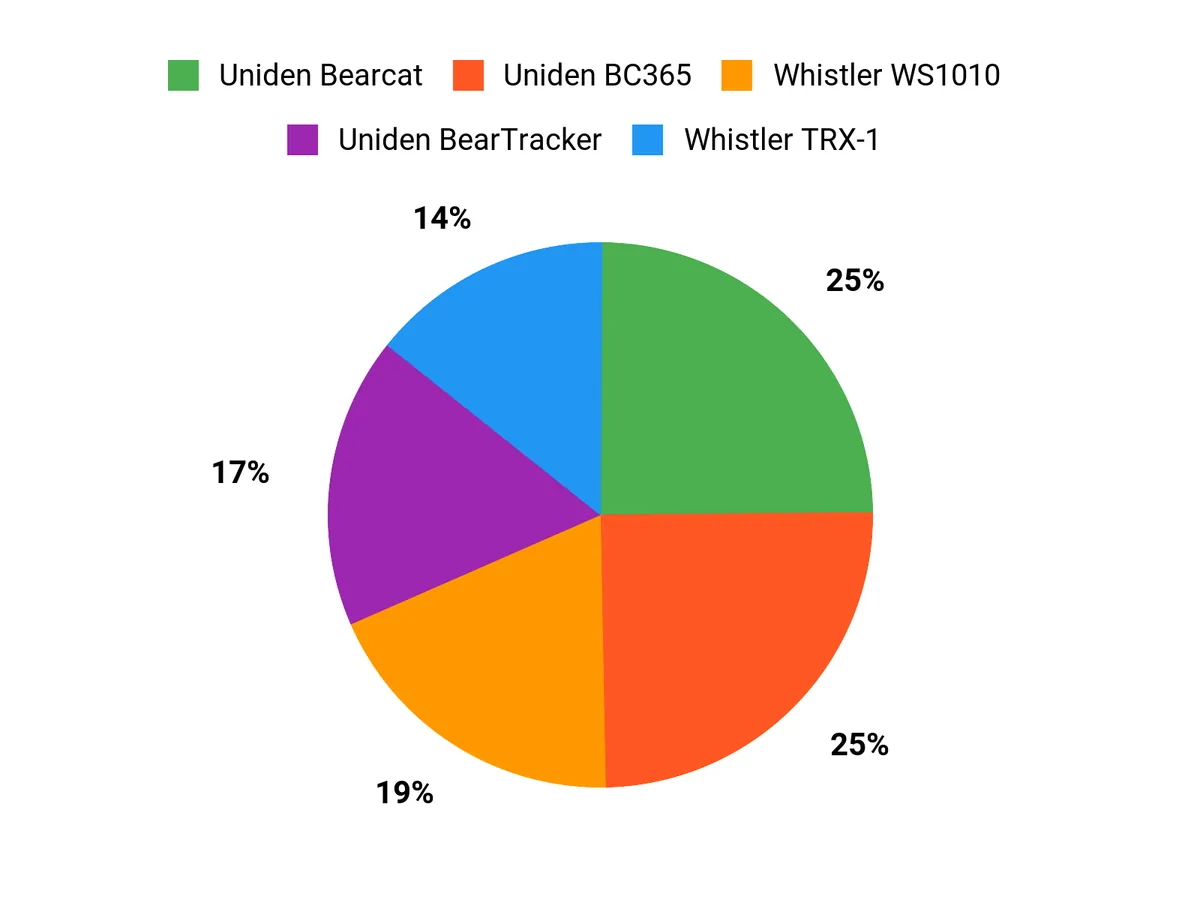
Your best choice depends primarily on signal compatibility and form factor. Choose the TRX-1 if compatible P25, DMR, or NXDN digital decoding is essential. Choose the BCT15X for a base/mobile setup when you specifically need compatible analog trunking. Choose the BC125AT for a portable analog scanner with Close Call and strong aviation/rail appeal, the WS1010 for straightforward analog handheld use, or the BC365CRS when a desktop format with clock, FM radio, and weather functions better fits your home setup.
Wrapping Up
Start with the radio system you need to receive, not the longest feature list. For compatible modern digital monitoring, the Whistler TRX-1 offers P25 Phase I/II, DMR, and NXDN support in a handheld format. For compatible analog trunking in a vehicle or base installation, the Uniden BCT15X offers TrunkTracker III, Close Call, GPS compatibility, and extensive dynamic memory.
For conventional analog listening, the Uniden BC125AT stands out for aviation, rail, events, and Close Call signal discovery; the Whistler WS1010 provides a simpler 400-channel handheld approach; and the Uniden BC365CRS combines 500-channel analog scanning with useful desktop features such as FM radio, alarm functions, and weather alerts.
Final Recommendation
Before clicking Buy, verify whether your target system is conventional analog, compatible analog trunking, P25, DMR, NXDN, or encrypted. That single compatibility check is more important than channel count, ratings, or extra features and can prevent buying a scanner that cannot receive the traffic you actually want.
| Product Name | Image | Signal Support | Memory | Best For | Main Limitation |
|---|---|---|---|---|---|
| Whistler TRX-1 Handheld Digital Scanner |
|
Analog plus compatible P25 Phase I/II, DMR, NXDN and supported trunked systems | MicroSD-based object storage | Digital handheld monitoring | Cannot decrypt encrypted voice; more setup than basic analog models |
| Uniden BearTracker Scanner (BCT15X) |
|
Conventional analog plus compatible Motorola, EDACS and LTR analog trunking | Up to 9,000 dynamic channels | Analog trunking and base/mobile use | No P25, DMR or NXDN digital voice decoding |
| Uniden Bearcat BC125AT Handheld Scanner |
|
Conventional analog | 500 alpha-tagged channels | Aviation, rail, events and Close Call | No digital voice decoding or digital trunking |
| Whistler WS1010 Analog Handheld Scanner |
|
Conventional analog | 400 channels in 10 banks | Simple handheld analog listening | No P25, DMR or NXDN digital voice decoding |
| Uniden BC365CRS Scanner and Alarm Clock |
|
Conventional analog | 500 channels in 10 banks | Desktop, bedside, aviation, weather and analog monitoring | No P25, DMR or NXDN digital voice decoding |
Important: Scanner system compatibility and retailer inventory can change. Verify your target radio system and current product details before purchasing.
This Roundup is reader-supported. When you click through qualifying links we may earn a referral commission on qualifying purchases.