

Current U.S. listings show new welding generators from about $2,749 for a light-duty 145-amp gasoline engine-driven stick welder to more than $50,000 for heavy-industrial, multi-operator diesel machines. Professional gasoline models commonly fall around $4,900-$14,000, while current 330-amp diesel and compressor-equipped examples are roughly $20,000 before optional packages. The final cost depends on welding output, duty cycle, auxiliary power, fuel type, compressor or battery features, included accessories, seller, freight, and rebates.
Last updated: August 10, 2026. Method: This is a specification-and-market comparison, not a hands-on product test. Prices were checked against live U.S. dealer listings, while model specifications were checked against manufacturer pages.
Quick Answer
A new welding generator can start around $2,750 for a light-duty gasoline stick unit. Professional gasoline machines commonly run about $4,900-$14,000. Current 330-amp diesel and integrated-compressor examples are around $20,000, while heavy-industrial and multi-operator machines can exceed $50,000. Compare exact stock numbers because dealer pricing, options, freight, and rebates can move the delivered cost by thousands of dollars.
Key Takeaways
- Light-duty gasoline stick welder-generators can start near $2,750; 225-amp professional gasoline units start near $4,900.
- Professional 260-330 amp gasoline machines commonly land around $8,000-$14,000, while current diesel and integrated-compressor examples move into the roughly $20,000 range.
- Compare continuous generator watts, welding amperage, duty cycle, supported processes, power quality, outlets, and simultaneous-load capability.
- Freight, tax, welding leads, remotes, running gear, trailers, fuel, and maintenance may not be included in the advertised price.
- Never operate an engine-driven welder in a garage, building, shed, or other enclosed space.
How Much Does a Welding Generator Cost?
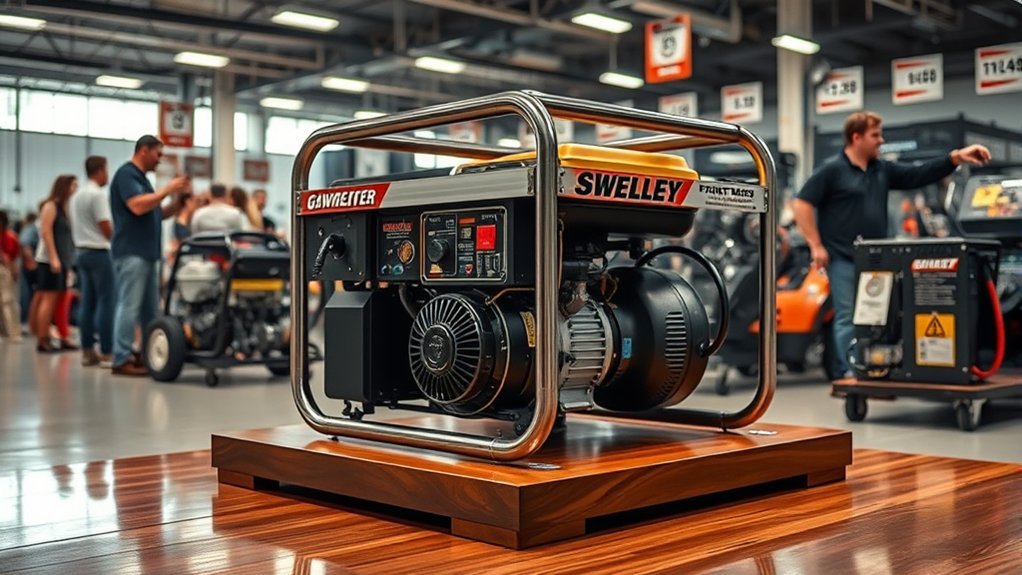
A welding generator, also called an engine-driven welder or welder-generator, combines a welding power source with an engine and an electrical generator. It can produce welding current in locations without utility power and may also run grinders, lights, plasma cutters, pumps, chargers, and other jobsite equipment.
The price depends heavily on the type of machine. A 145-amp light-duty stick welder with about 4 kW of continuous auxiliary power is not directly comparable to a 225-amp professional unit with 9.5 kW, a 330-amp multiprocess machine, or a large diesel system designed for multiple operators and industrial work.
Welding Generator vs. Generator for a Welder
An engine-driven welding generator creates welding output directly and also provides auxiliary AC power. A separate portable generator used to run a plug-in welder is a different sizing problem: match that generator to the welder’s input voltage, input amperage, continuous demand, and starting or surge requirements. Do not size a separate generator from the welder’s output amperage alone.
If you need a plug-in shop welder rather than an engine-driven unit, see our welding machine cost guide for MIG, TIG, stick, and multiprocess price ranges.
| Machine Category | Approximate New Price | Typical Use |
|---|---|---|
| Light-duty gasoline stick welder-generator, about 145 amps | About $2,750-$6,100 | Home, farm, ranch, light repair, maintenance, and modest auxiliary-power needs |
| Professional gasoline unit, about 200-230 amps | About $4,900-$7,000 | Farm, ranch, repair, maintenance, construction, and stronger jobsite power |
| Professional gasoline multiprocess unit, about 260-330 amps | About $8,000-$14,000 | Construction, mobile repair, fabrication, service trucks, and structural work |
| Gasoline unit with integrated air compressor | About $14,000-$20,000+ | Service trucks, field repair, pneumatic tools, battery service, and all-in-one work-truck setups |
| Professional diesel welder-generator | About $20,000-$30,000+ | High-hour commercial work, fleets, remote construction, structural work, and pipeline service |
| Heavy-industrial or multi-operator diesel unit | About $30,000-$70,000+ | Industrial fabrication, multiple operators, high-output gouging, pipeline, mining, rail, and major construction |
Market check, August 10, 2026: A Hobart Champion 145 was listed at about $2,749, while a Miller Big Blue 800 Duo Pro was listed above $54,000. Seller spread also matters: the same Miller Trailblazer 330 Diesel stock number 907849 was about $20,635 at Cyberweld and about $25,204 at Grainger. These examples show why advertised price is not a universal market price. Tax, freight, liftgate service, leads, running gear, trailers, remotes, and options may be extra.
Factors Influencing Cost
Welding Output and Duty Cycle
Higher maximum amperage generally increases the price, but maximum amperage is only part of the specification. Check the machine’s rated output and duty cycle. A unit rated for 225 amps at a 100% duty cycle can deliver that rated output continuously under the manufacturer’s test conditions, while a machine with a lower duty cycle needs cooling periods at its rated load.
Choose enough output for the welding processes, electrode sizes, wire diameters, and material thicknesses you expect to use. Paying for far more output than the work requires adds cost, weight, fuel use, and transport demands.
Supported Welding Processes
A basic engine-driven machine may focus on stick welding. More expensive models may support stick, MIG, flux-cored, DC TIG, spool guns, remote wire feeders, and air-carbon-arc gouging. Some processes require accessories that are sold separately.
Confirm whether the advertised machine includes only the power source or also includes leads, an electrode holder, work clamp, wire feeder, spool gun, TIG torch, remote control, or other equipment.
Auxiliary Generator Power
Generator output is normally stated as continuous power and peak power. Continuous watts are the better figure for equipment that will run for an extended period. Peak watts describe a short surge and should not be treated as the machine’s continuous capacity.
For example, the Hobart Champion Elite 225 is rated for 9,500 watts of continuous single-phase generator power and 10,000 watts peak. The Miller Trailblazer 330 EFI is rated for 10,500 watts continuous and 12,000 watts peak.
Power Quality and Sensitive Electronics
Do not assume every welding generator is suitable for laptops, electronic controls, chargers, or other sensitive devices. Look for a manufacturer-specified total harmonic distortion rating and confirm that the connected device is compatible with the generator’s voltage, frequency, waveform, and grounding arrangement.
Hobart lists 4% THD for the Champion Elite 225. Other models use different power-management technologies, so check the exact specification sheet rather than relying on the brand name alone.
Gasoline, Diesel, or LPG
Gasoline machines usually have a lower initial price and are common in farm, repair, and construction applications. Diesel models cost more upfront but may make sense for fleets, high-hour work, jobsites that already store diesel, or buyers who need heavier industrial equipment.
LPG models replace gasoline storage with LP-cylinder or bulk-fuel handling requirements and may suit some fleet or fixed fuel-management systems. Check fuel availability, permitted storage, output, cold-weather performance, and operating cost for the exact installation.
Fuel choice should match the expected engine hours, local fuel availability, service network, storage rules, and the fuel already used by the buyer’s trucks or equipment.
Weight, Noise, and Transport
Professional welder-generators commonly weigh several hundred pounds. The Champion Elite 225 is listed at 373 pounds, the Bobcat 265 at about 382 pounds, and the Trailblazer 330 EFI at about 400 pounds. Diesel and compressor-equipped machines may be substantially heavier.
Include the cost and payload effect of a service-body mount, crane, lift eye, cart, trailer, weather protection, theft prevention, and secure fuel storage. Also compare sound ratings when the machine will operate near crews, customers, homes, or occupied buildings.
Price Ranges for Engine-Driven Welders
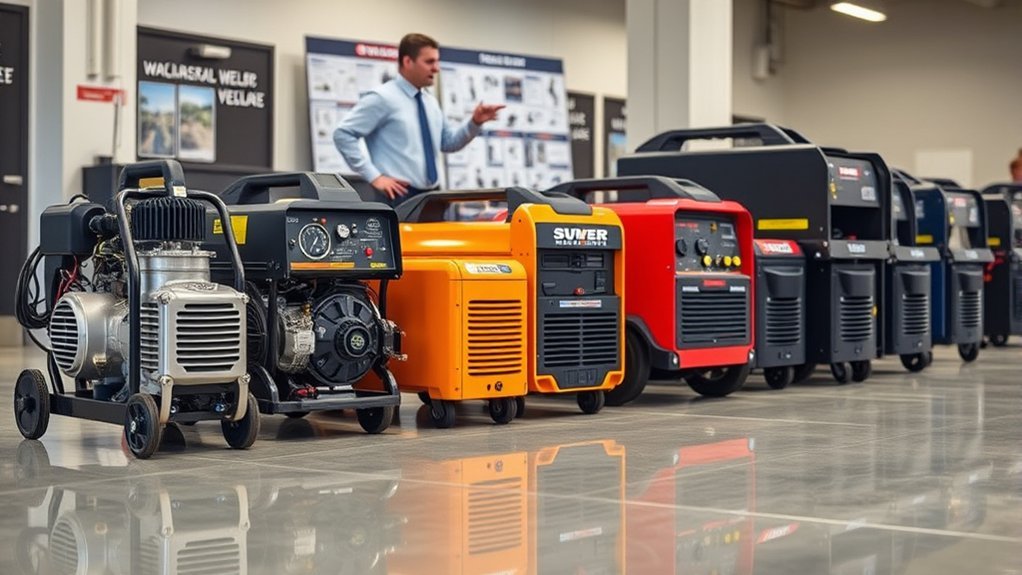
The table below shows representative U.S. seller listings checked on August 10, 2026. These are shopping snapshots, not manufacturer-set prices, and they can change without notice.
| Model and Configuration | Observed Price | Key Specifications |
|---|---|---|
| Hobart Champion 145, stock 500563 | About $2,749 | 40-145 amps, gasoline, 4,000 continuous watts, 4,500 peak watts |
| Hobart Champion Elite 225 | About $4,899 | 25-225 amps, gasoline, 9,500 continuous watts, 10,000 peak watts |
| Miller Bobcat 265 Vanguard | About $8,032 | Up to 265 amps, gasoline, 9,500 continuous watts, 11,000 peak watts |
| Miller Trailblazer 330 EFI with Excel Power | About $11,069 | Up to 330 amps, gasoline EFI, 10,500 continuous watts, 12,000 peak watts |
| Trailblazer 330 EFI with Excel Power, polarity reversing, and wireless control | About $13,293 | Higher-option gasoline configuration with remote-control features |
| Miller Trailblazer 330 Diesel, stock 907849 | About $20,635-$25,204 across checked sellers | 20-330 amps, diesel, 10,500 continuous watts, 12,000 peak watts, approximately 611 pounds |
| Miller Trailblazer 330 Air Pak, stock 907836 | About $19,727 | Up to 330 amps, gasoline, 10,500 continuous watts, integrated 30 CFM rotary-screw compressor |
| Miller Big Blue 800 Duo Pro, stock 907751 | About $54,527 | Up to 800 amps combined, diesel, dual-operator capability, 20,000 watts continuous three-phase power |
Seller pricing can differ substantially even for the same stock number. The Trailblazer 330 Diesel 907849 showed a spread of roughly $4,500 between two checked sellers. Compare the complete stock number, included equipment, freight terms, promotions, and delivery charges before deciding which quote is actually lower.
Pro Tip: Ask every dealer to quote the same manufacturer stock number and list freight, liftgate service, tax, leads, accessories, rebate eligibility, and warranty coverage separately. This prevents a low advertised price from hiding a more expensive delivered cost.
Products Worth Considering


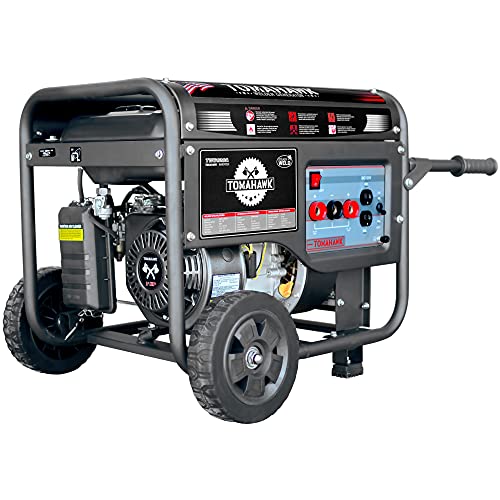
[120 AMP WELDER] Up to 120 amps of output with a 60% duty cycle
What Size Welding Generator Do You Need?
Start With the Welding Process
List the processes you will actually use: stick, MIG, flux-cored, DC TIG, spool-gun aluminum welding, or air-carbon-arc gouging. Then identify the required amperage, electrode or wire size, and expected duty cycle.
A 145-amp light-duty stick unit can cover smaller repair work, while a 225-amp stick-focused unit may better suit farm repairs and general steel work that demand more output and auxiliary power. A mobile fabricator who uses wire feeders, TIG, aluminum spool guns, or gouging may need a more capable multiprocess machine.
Add the Electrical Loads
Write down the running and starting requirements of every tool that may operate at the same time. Motors, compressors, pumps, and some plasma cutters can draw a much larger starting load than their normal running load.
Use the machine’s continuous-watt rating for sustained operation. Do not total loads against peak watts alone. Also check whether the welder can maintain full auxiliary power while welding, because simultaneous-output capability differs among designs.
Check Voltage, Outlets, and Protection
Confirm that the welder-generator has the required 120-volt and 240-volt receptacles, current capacity, circuit protection, and GFCI features. An adapter does not increase the generator’s capacity and may create an unsafe connection when used incorrectly.
Allow for the Work Environment
Consider altitude, temperature, dust, rain exposure, salt air, transport vibration, service access, and theft risk. Engine and welding output can be affected by environmental conditions, so use the manufacturer’s derating and installation guidance.
Discounts, Rebates, and Promotions

Manufacturer rebates, dealer discounts, bundle offers, and free accessories can reduce the final cost. However, every promotion should be checked against its purchase dates, eligible stock numbers, submission deadline, and participating-dealer rules.
As of August 10, 2026, Miller’s Build With Blue rebate advertises a $1,000 rebate plus a machine cover on eligible Bobcat 265 and Trailblazer 330 purchases made from July 1 through September 30, 2026. Eligibility is stock-number specific, and the offer can change or expire, so confirm the current terms before purchasing.
A rebate only saves money when the exact stock number qualifies, the claim is submitted correctly, and the discounted machine still matches the work.
Other ways to reduce the purchase cost include:
- Requesting quotes from several authorized dealers
- Comparing delivered prices instead of advertised prices
- Checking manufacturer promotions before ordering
- Buying a machine with only the processes and options you need
- Comparing dealer bundles with separately purchased accessories
- Considering a properly inspected used or factory-reconditioned machine
- Reviewing financing by total repayment cost rather than monthly payment alone
Products Worth Considering

【Size】The welding machine cover size is 62*27*45cm(24"x10.6"x18").Our welder cover fits for Diversion 165, 180 TIG Welder (300579).

TURE 4 AWG GAUGE POWER/GROUND WIRE- HiFind 4 gauge power/ground wire meets American Wire Gauge(AWG) standard, offering true-to-gauge quality that guarantees the necessary power flow for your wiring projects.

1.Specifications:NEMA L14-20P Inlet Generator Plug With Protective Box Power Socket.
Additional Costs for Accessories and Maintenance
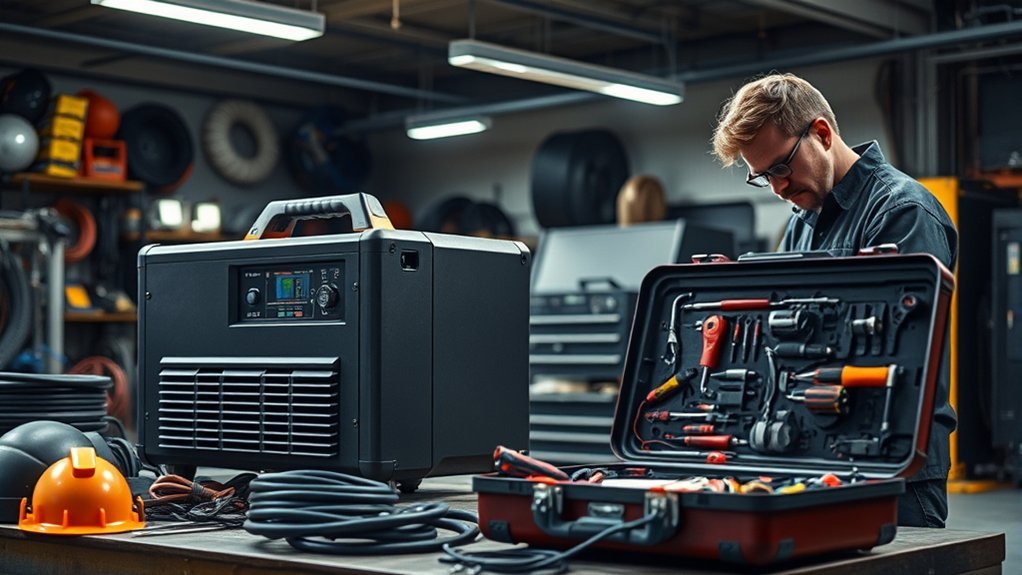
The machine price may be only part of the initial investment. Before ordering, confirm what the package includes and prepare a complete delivered-cost budget.
| Cost Category | What to Check |
|---|---|
| Freight and delivery | Truck freight, residential surcharge, liftgate service, appointment fees, unloading equipment, and damage inspection |
| Welding equipment | Leads, work clamp, electrode holder, wire feeder, spool gun, TIG torch, remote, consumables, and cable connectors |
| Transport and mounting | Cart, trailer, truck mounting, vibration isolation, crane access, secure tie-down points, weather cover, and theft protection |
| Safety equipment | Helmet, safety glasses, gloves, protective clothing, hearing protection, fire extinguisher, and suitable extension cords |
| Operating expenses | Fuel, engine oil, filters, spark plugs or diesel service items, battery replacement, cleaning, and scheduled inspections |
| Ownership expenses | Sales tax, insurance, registration where applicable, storage, financing interest, and downtime during repairs |
Maintenance should be planned by engine hours and the manufacturer’s schedule, not by a single annual dollar estimate. Dusty, hot, cold, wet, or high-load service may require more frequent attention.
Typical tasks include checking engine oil, changing oil and filters, servicing the air cleaner, inspecting the battery and cables, checking coolant on liquid-cooled engines, maintaining the fuel system, cleaning the machine, inspecting receptacles, and examining welding leads and connections for heat damage.
Products Worth Considering

Made in United States
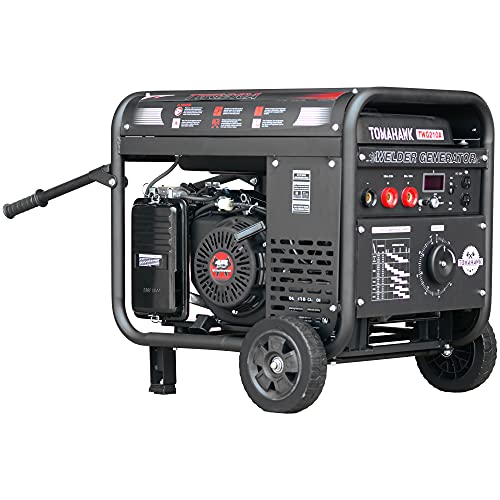
210 Amps of output with a 60% duty cycle

Comparison of Popular Brands and Models
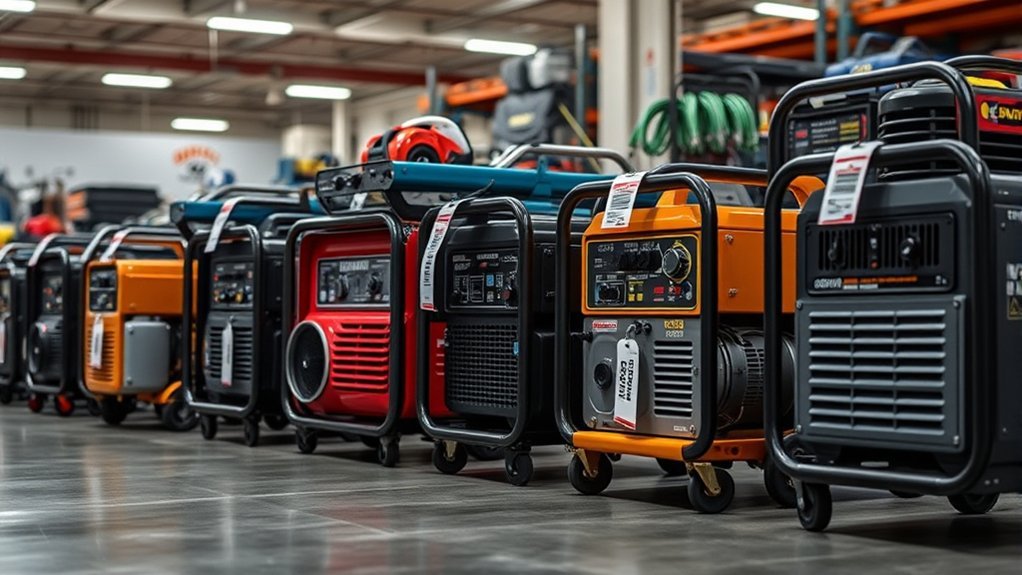
Current Model Comparison
This comparison is based on published specifications and current market positioning, not hands-on testing. Use it to narrow the class of machine you need before comparing exact stock numbers and dealer quotes.
| Model Family | Main Strength | Best Fit |
|---|---|---|
| Hobart Champion 145 | Low purchase price, 145-amp DC stick output, and 4,000 watts of continuous auxiliary power | Home, farm, ranch, light repair, and buyers who need a basic engine-driven stick welder more than high generator output |
| Hobart Champion Elite 225 | Straightforward 225-amp stick welding and 9,500 watts of continuous power at a comparatively accessible price | Farm, ranch, auto repair, maintenance, and buyers who do not require advanced multiprocess controls |
| Miller Bobcat 265 | Higher welding output, digital setup, separate weld and auxiliary power, and multiple configurations | Mobile maintenance, construction, farm work, repair fleets, and service trucks |
| Miller Trailblazer 330 | Up to 330 amps, multiprocess capability, 10,500 continuous watts, and advanced optional controls | Professional fabrication, structural work, process pipe, heavy equipment, and frequent mobile welding |
| Lincoln Ranger 260MPX | Compact multiprocess design, digital controls, CrossLinc capability, and 9.5 kW of clean continuous generator power | Service trucks, construction, repair, and buyers who value remote process control |
| Lincoln Ranger 330MPX | Up to 330 amps at a 100% duty cycle and 10 kW of continuous generator power | High-output mobile welding, structural fabrication, and demanding professional use |
Brand Comparison Insights
Miller: The Bobcat and Trailblazer families cover a wide range of mobile repair, construction, multiprocess, diesel, battery-assist, and compressor-equipped applications. Compare stock numbers carefully because optional features can change the price substantially.
Lincoln Electric: Current Ranger models emphasize compact packaging, digital controls, remote-adjustment technology, clean auxiliary power, and professional multiprocess performance. Review the Ranger 260MPX and Ranger 330MPX specifications for current capabilities.
Hobart: The Champion line spans the light-duty Champion 145 and the more powerful Champion Elite 225. The 145 lowers entry cost and auxiliary output, while the Elite 225 provides 225-amp stick welding and 9,500 watts of continuous power. Either can be better value when advanced multiprocess controls and specialized options are unnecessary.
The best brand is the one that provides the required processes, local service support, parts availability, suitable engine service, and a complete delivered package at a reasonable total cost.
New, Used, or Factory-Reconditioned
A used or reconditioned welding generator can cost much less than a new machine, but there is no dependable universal starting price. Value depends on age, engine hours, service history, model support, condition, included accessories, and whether the seller provides a written warranty.
Before buying a used welder-generator:
- Verify the model, stock number, serial number, and engine-hour reading.
- Start the engine cold and watch for smoke, difficult starting, warning lights, leaks, or unusual noise.
- Test welding output through the full control range with a suitable load.
- Load-test every required 120-volt and 240-volt receptacle.
- Check output stability while welding and powering a tool at the same time, when the design allows it.
- Inspect leads, receptacles, breakers, control panels, wiring, frame, fuel tank, battery, and exhaust system.
- Look for corrosion, improvised repairs, damaged lifting points, and evidence of outdoor storage.
- Request maintenance records and confirm that replacement parts and service remain available.
- Ask whether the machine has been recalled, modified, or used in a corrosive or flood-damaged environment.
- Calculate transport and repair costs before comparing it with a new machine.
Safety Before Using a Welding Generator
Warning: An engine-driven welder produces deadly carbon monoxide. Never operate it inside a home, garage, basement, shed, shipping container, trailer, or other enclosed or partly enclosed space. For portable generators, the U.S. Consumer Product Safety Commission recommends outdoor operation at least 20 feet from a home, with exhaust directed away from the building; also follow the welder-generator manufacturer’s placement instructions and jobsite rules.
Follow the manufacturer’s manual and applicable workplace rules. Important precautions include:
- Shut the engine off and allow it to cool before refueling.
- Keep fuel away from welding sparks, hot metal, exhaust components, and open flames.
- Protect the machine from rain and standing water without enclosing the exhaust.
- Use extension cords rated for the voltage, current, environment, and total load.
- Do not overload the generator or bypass circuit protection.
- Inspect receptacles, plugs, leads, insulation, and grounding conductors before use.
- Keep the generator away from welding sparks, slag, and hot work.
- Use suitable eye, face, hand, hearing, respiratory, and protective-clothing equipment.
Grounding and neutral-bonding requirements depend on the generator design and how it supplies equipment. Under specified conditions, OSHA permits a portable generator frame to serve as the grounding electrode when it supplies generator-mounted or cord-and-plug-connected equipment through receptacles bonded to the frame. Do not assume that every setup is identical. Follow the machine manual and use a qualified electrician when the installation supplies a structure or separately derived system.
Never connect a welding generator directly to building wiring unless a qualified electrician has installed an appropriate transfer system. Never use a male-to-male cord or attempt to backfeed a wall receptacle. Backfeeding can energize utility wiring and create electrocution and fire hazards.
Maintenance and Expected Service Life
A welding generator does not have a guaranteed 10-to-20-year lifespan. Two machines of the same age may have very different value because one has low hours and complete service records while the other has spent years operating at high loads in dust, moisture, or corrosive air.
Factors that influence service life include:
- Engine hours and average load
- Oil, filter, coolant, spark-plug, and fuel-system maintenance
- Cooling-air cleanliness and operating temperature
- Storage conditions and corrosion protection
- Battery condition and starting-system maintenance
- Welding-duty cycle and generator loading
- Quality of previous repairs
- Availability of engine and electrical replacement parts
Use the owner’s manual for the exact serial number and record every service by date and engine hours. A current machine may also need software updates, inspection of electrical connections, and service-timer resets in addition to normal engine maintenance.
Warranty coverage should also be checked by component. The welder-generator, engine, battery, accessories, and reconditioned equipment may have different warranty periods and exclusions. Miller states that engines in its engine-driven welders are warranted separately by the engine manufacturer, while Hobart publishes its 5/3/1 warranty and separate terms for reconditioned equipment.
Frequently Asked Questions
How much does a welding generator cost?
Current U.S. listings show light-duty gasoline engine-driven welders starting around $2,750. Professional gasoline machines commonly run about $4,900-$14,000. Current diesel and integrated-compressor examples are around $20,000, while heavy-industrial and multi-operator diesel units can exceed $50,000.
What is the difference between a welding generator and a regular generator?
A welding generator, or engine-driven welder, produces welding current directly and also provides auxiliary AC power. A regular generator only supplies AC power, so a separate plug-in welder must be sized from its input voltage, input current, continuous demand, and surge requirements.
What size welding generator do I need?
Start with the welding process, required amperage, electrode or wire size, and duty cycle. Then add the continuous and starting loads of tools that may run at the same time. Check voltage, receptacles, and whether the machine can maintain the required auxiliary power while welding.
How long do welding generators typically last?
There is no universal lifespan. Engine hours, maintenance, operating load, storage, corrosion, repair quality, and parts availability matter more than calendar age. A well-maintained commercial machine may remain useful for many years, while a neglected low-hour unit may require costly repairs.
Can I use a welding generator for other equipment?
Yes, when the equipment matches the generator’s continuous wattage, starting capacity, voltage, frequency, receptacle, grounding, and power-quality specifications. Do not exceed the rated load, and check whether welding changes the auxiliary power available to connected equipment.
Can a welding generator power sensitive electronics?
Some can, but suitability varies. Check the manufacturer’s total harmonic distortion rating and guidance for electronic loads. Also verify voltage, frequency, grounding, surge demand, and whether welding or other loads can affect output quality.
Can a welding generator power a house or building?
It may have enough electrical output for selected loads, but it must not be connected directly to building wiring. A qualified electrician must design and install an appropriate transfer system that isolates the building from utility power and complies with local requirements.
Is a diesel welding generator worth the extra cost?
It can be for high-hour fleets, remote work, or jobsites that already standardize on diesel. For lower-hour use, a gasoline machine may have a much lower purchase price. Compare expected engine hours, fuel logistics, service support, machine weight, and the exact processes and auxiliary power you need.
What warranty coverage do welding generators include?
Coverage varies by brand, model, component, country, and usage. The welder-generator and engine may have separate warranties, and batteries, accessories, labor, travel, wear items, and reconditioned machines may follow different terms. Read the written warranty for the exact stock and serial number.
How do I maintain a welding generator properly?
Follow the serial-specific owner’s manual. Check engine oil, cooling airflow, fuel, battery, leads, receptacles, breakers, and visible connections regularly. Replace oil, filters, plugs, coolant, and other service items at the required engine-hour intervals, with shorter intervals when operating in severe conditions.
Sources
- Hobart Champion 145 official product page — 145-amp output, 4,000 continuous watts, 4,500 peak watts, and included running gear
- Cyberweld Hobart Champion 145 listing — current U.S. price example for stock 500563
- Hobart Champion Elite 225 official product page — amperage, duty cycle, continuous and peak power, THD, and dimensions
- Miller Bobcat 265 Vanguard official product page — model features, welding output, auxiliary power, weight, and rebate eligibility
- Cyberweld Miller Bobcat 265 Vanguard listing — current U.S. price example for stock 907848
- Miller Trailblazer 330 EFI official product page — welding output, auxiliary power, weight, fuel, and current rebate information
- Cyberweld Trailblazer 330 EFI with Excel Power listing — current U.S. price example for stock 907832001
- Miller Trailblazer 330 Air Pak official product page — 330-amp class output, 10,500 continuous watts, and 30 CFM compressor specifications
- Cyberweld Trailblazer 330 Air Pak listing — current U.S. price example for stock 907836
- Cyberweld Trailblazer 330 Diesel listing — current U.S. price example for stock 907849
- Grainger Trailblazer 330 Diesel listing — second seller price and 611-pound weight for stock 907849
- Miller Big Blue 800 Duo Pro official product page — 800-amp combined output, dual-operator capability, and three-phase auxiliary power
- Cyberweld engine-driven welder listings — current cross-category price examples for gasoline, compressor-equipped, and diesel machines
- Cyberweld heavy-contractor welder listings — current Big Blue 800 Duo Pro and Air Pak price examples
- Lincoln Electric Ranger 260MPX — multiprocess and auxiliary-power specifications
- Lincoln Electric Ranger 330MPX — 330-amp rated output and continuous generator power
- Miller Build With Blue rebate — current July 1-September 30, 2026 eligibility and rebate terms
- U.S. Consumer Product Safety Commission carbon-monoxide guidance — outdoor generator placement and CO precautions
- OSHA 29 CFR 1926.404 — portable-generator grounding conditions and electrical safety requirements
- Miller warranty information — engine-driven welder and engine-manufacturer warranty separation
- Hobart warranty information — current 5/3/1 warranty reference
Conclusion
A realistic welding generator budget can begin near $2,750 for a light-duty gasoline stick unit. A 225-amp professional gasoline machine starts around $4,900, while higher-output professional gasoline models commonly run about $8,000-$14,000. Current 330-amp diesel and integrated-compressor examples are around $20,000, and heavy-industrial or multi-operator diesel machines can exceed $50,000.
Do not choose a machine from price or maximum amperage alone. Compare welding processes, rated duty cycle, continuous auxiliary watts, simultaneous-load capability, power quality, fuel, outlets, weight, local service, included equipment, freight, and warranty terms. The best value is the lowest complete delivered cost for a machine that safely performs the required work without being substantially oversized.
