
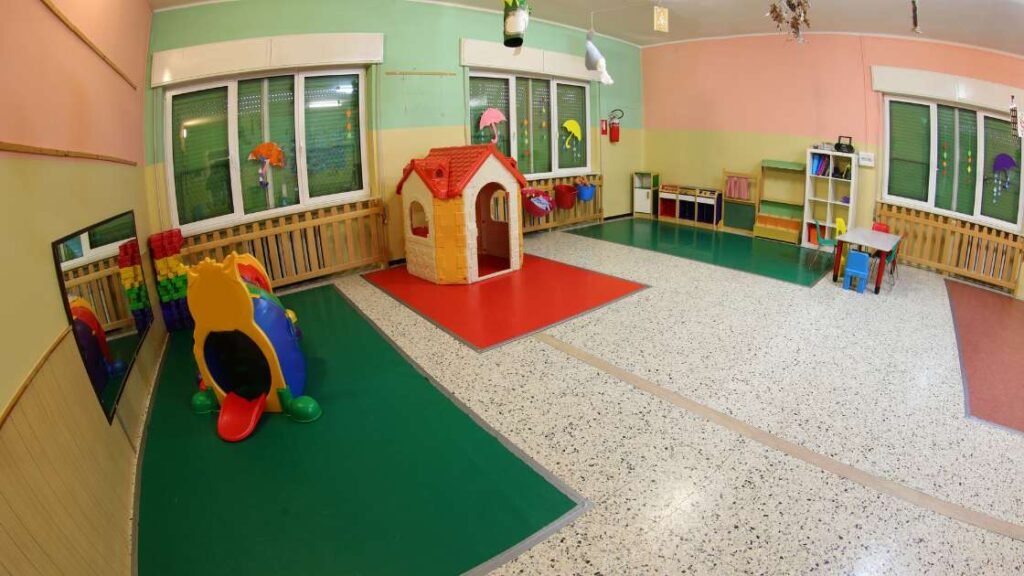
In the U.S., the cost to open a daycare can range from about $10,000–$50,000+ for a small home program to $100,000–$500,000+ for a leased child-care center with meaningful buildout and working-capital needs. These are planning scenarios, not official national averages. A property purchase, major renovation, or new build can push the total above $500,000 and sometimes beyond $1 million.
Published: January 19, 2024 · Last updated: September 8, 2026 — live search results, licensing guidance, wage benchmarks, SBA financing, FAQ coverage, and budgeting guidance reviewed.
Quick Answer
Use $10,000–$50,000+ as a planning range for a small home program and $100,000–$500,000+ for a leased center with meaningful buildout and working-capital needs. Move toward the higher end when the property needs major safety or accessibility work, staffing begins well before enrollment, or the project requires substantial equipment and reserve cash. Replace the range with local licensing, facility, staffing, and insurance quotes before committing money.
Key Takeaways
- A home-based daycare usually costs less because the owner already controls the operating space, but renovations, fencing, fire safety, and insurance can still be substantial.
- A center-based program may need a six-figure budget for deposits, design, permits, renovations, classroom equipment, playgrounds, payroll, and working capital.
- Staffing is normally the largest recurring expense, and child-to-caregiver ratios limit how far payroll can be reduced.
- Confirm zoning, licensing, fire, building, and insurance requirements before signing a lease or beginning construction.
- Keep enough operating cash to cover the enrollment ramp instead of assuming every licensed space will be filled on opening day.

How Much Does It Cost to Open a Daycare?
There is no official nationwide average that applies to every daycare. A program operated from an existing home has a different cost structure from a center that needs commercial rent, architectural work, fire-system upgrades, multiple classrooms, a playground, and several employees.
At a Glance
| Time Required | Several months; longer when zoning changes, renovations, or multiple inspections are required |
| Difficulty | Moderate for a small home program; high for a renovated or newly constructed center |
| Planning Inputs | Business plan, licensing checklist, local contractor quotes, staffing model, cash-flow forecast, and insurance quotes |
| Cost | Planning scenario: $10,000–$50,000+ for a home program and $100,000–$500,000+ for a leased center with meaningful buildout and working-capital needs |
Note: The ranges in this guide are planning estimates rather than reported national averages. Replace every estimate with local permit schedules, wage data, insurance proposals, lease terms, and written contractor quotes before committing money.

This daily devotional helps parents pray purposefully for their children through a full year of Scripture readings, reflections, and guided prayer prompts. Written to encourage faithful family discipleship, it offers practical, biblically grounded support for parents who want to shape their prayers around God's Word. A foreword by Sinclair B. Ferguson adds trusted theological insight and encouragement.

Q-tips Original Cotton Swabs are a versatile everyday essential for home, beauty, and first aid tasks. Made with 100% cotton and soft tips at both ends, they provide gentle care for sensitive skin while helping with makeup touch-ups, small cleaning jobs, and hard-to-reach spaces. Their trusted quality and recyclable packaging guidance make them a practical choice for daily use.

These colorful answer buzzers turn lessons, review games, and family activities into lively game-show style challenges that boost participation and make learning more interactive. Each buzzer has a distinct sound to clearly identify who buzzed in first, while the durable, palm-sized design makes them easy for kids and adults to use in classrooms, homeschools, and group settings.
What Determines Your Real Daycare Startup Budget?
Three numbers matter more than any national estimate: (1) usable licensed capacity by classroom and age group, (2) the written cost to make the exact property compliant, and (3) monthly payroll at the staffing ratios required while enrollment ramps. A home program can stay near the low end when the existing property already meets safety and space rules. A leased center can move rapidly toward the high end when the site needs exits, plumbing, accessibility work, fire protection, outdoor-play improvements, or several pre-opening payroll cycles. Treat licensing fees, furniture, technology, and launch marketing as important but secondary until those three numbers are known. If capacity, buildout, or staffing is still based on an assumption rather than a regulator response or written quote, use the headline range only for orientation—not as your funding target.
How Much Does a Daycare Cost by Type?
Home-based programs are often regulated as family child care homes, while center-based programs follow a different licensing path. The exact categories, capacity thresholds, and licensing rules vary by state or territory.
| Business Type | Planning Range | Main Cost Drivers |
|---|---|---|
| Small home-based daycare | About $10,000–$50,000+ | Home modifications, fencing, exits, furniture, learning materials, insurance, training, and reserve cash |
| Leased child-care center | About $100,000–$500,000+ with meaningful buildout and working-capital needs | Deposits, design, permits, buildout, fire protection, classrooms, playground, payroll, and working capital |
| Purchased property or new build | Frequently above $500,000; major projects may exceed $1 million | Land or building price, financing, professional design, construction, site work, parking, utilities, and inspections |
How Do You Calculate Your Own Daycare Startup Cost?
A national range is useful for orientation, but your funding target should come from local quotes and a month-by-month cash-flow model. A practical formula is:
Total opening cash needed = one-time startup costs + enrollment-ramp cash shortfall + contingency
- Total the one-time costs: deposits, permits, design, renovations, safety work, furniture, playground equipment, technology, initial supplies, and pre-opening professional fees.
- Build the monthly operating budget: payroll, rent or mortgage, utilities, food, supplies, insurance, software, maintenance, debt payments, and administration.
- Model enrollment by classroom: forecast tuition collected each month and recalculate staffing when ratio rules require another employee. Add each projected monthly cash deficit to the funding need.
- Add a project-specific contingency: allow for construction changes, inspection corrections, delayed approvals, equipment replacement, or a slower enrollment ramp instead of using an arbitrary percentage without context.
This approach follows the same basic logic the U.S. Small Business Administration uses when it separates one-time and monthly startup expenses and calculates break-even from fixed costs, price, and variable costs. It turns a broad national estimate into a budget tied to your actual facility, staffing model, and opening schedule.
For a child-care-specific worksheet, Self-Help Credit Union publishes separate startup-cost, direct-cost, overhead, and cash-flow worksheets for in-home programs and child-care centers. Self-Help notes that its examples are illustrative and that actual costs vary by the size and location of the business and other program characteristics.
A home program is not automatically inexpensive. A property that needs a second exit, fencing, bathroom changes, electrical work, lead or environmental remediation, or a new outdoor play area can quickly move beyond a basic startup budget.
A center’s licensing fees may represent only a small part of the total. For example, Michigan’s official center-licensing page estimates specified application, inspection, and related costs at approximately $1,470–$4,830, while expressly excluding major expenses such as rent, employee wages, utilities, equipment, insurance, and repairs. Review your own state’s requirements rather than using another state’s fees as a quote.
What Could a $30,000 Home-Daycare Budget Include?
The following example shows one way a $30,000 startup budget could be allocated. It is a budgeting model, not a promise that these amounts will cover your local requirements.
| Category | Example Allocation |
|---|---|
| Licensing, background checks, training, and local permits | $1,000 |
| Childproofing, fencing, exits, alarms, and other home modifications | $7,000 |
| Furniture, cots, storage, toys, and learning materials | $8,000 |
| Insurance, legal, accounting, and business setup | $3,000 |
| Opening food, cleaning supplies, software, and marketing | $3,000 |
| Operating reserve | $8,000 |
| Total | $30,000 |
What Could a $250,000 Leased-Center Budget Include?
| Category | Example Allocation |
|---|---|
| Lease deposit and pre-opening occupancy costs | $25,000 |
| Design, permits, engineering, and inspections | $20,000 |
| Renovation, accessibility, fire safety, plumbing, and electrical work | $80,000 |
| Classroom furniture, learning materials, and playground equipment | $45,000 |
| Security, technology, kitchen, storage, and laundry equipment | $15,000 |
| Insurance, legal, licensing, staff training, and opening marketing | $15,000 |
| Pre-opening payroll and operating reserve | $50,000 |
| Total | $250,000 |
How Do Daycare Revenue, Costs, and Break-Even Work?
A daycare’s financial model is shaped by two competing realities: families need affordable care, while providers must maintain safe facilities and enough qualified employees to satisfy supervision and ratio requirements. Revenue can rise only when enrollment, fee collection, staffing, and licensed capacity work together.
How Do Daycare Revenue and Profit Margins Work?
Your operating margin is the amount left after payroll, occupancy, food, supplies, insurance, administration, taxes, maintenance, and other expenses. A daycare with a waiting list can still lose money if tuition is too low, rooms remain partly empty, or staffing schedules are inefficient.
Do not use a generic “daycare profit margin” percentage as your feasibility test. Margin changes with tuition, age mix, room occupancy, required staffing, rent, subsidies, discounts, unpaid balances, and owner compensation. Build the margin from your own room-by-room enrollment and payroll model instead.
The main revenue stream is usually tuition. Rates may vary according to:
- Location and local household demand
- Age group, because infants generally require lower child-to-caregiver ratios
- Full-time, part-time, or drop-in scheduling
- Operating hours
- Meals, transportation, enrichment, or other included services
- Public subsidies or employer-supported child-care arrangements
Additional services may include extended hours, school-age care, summer programs, or approved enrichment activities. Each service should be priced only after calculating its added payroll, insurance, transportation, supply, and administrative costs.
How to Estimate Break-Even Enrollment
A simple planning formula, adapted from standard contribution-margin break-even analysis, is:
Break-even enrollment = monthly fixed costs ÷ average monthly contribution per enrolled child
The contribution per child is tuition collected minus costs that rise directly with that enrollment, such as meals, consumable supplies, payment-processing fees, and any additional staffing triggered by ratio rules.
Staffing often behaves as a step cost rather than a smooth per-child variable cost. One additional enrollment may require another employee when a ratio threshold is crossed. Recalculate staffing at each classroom enrollment step instead of relying only on one center-wide average contribution figure.
For example, suppose fixed monthly costs are $32,000 and the average contribution after variable expenses is $1,100 per enrolled child:
$32,000 ÷ $1,100 = 29.1
The program would need approximately 30 consistently paying enrollments under that simplified model. The SBA’s standard break-even formula is fixed costs ÷ (price − variable costs); this daycare version treats an enrolled child as the planning unit and uses the average contribution per child. Taxes, vacancies, discounts, unpaid balances, and room-by-room ratio requirements can increase the real break-even point.
What Are the Biggest Ongoing Daycare Costs?
| Expense Type | What It Includes |
|---|---|
| Rent or mortgage | Base occupancy cost, common-area charges, property taxes where applicable, and pre-opening months |
| Staff compensation | Wages, overtime, payroll taxes, benefits, substitutes, paid training, and recruiting |
| Utilities and communication | Electricity, heating, cooling, water, waste service, phone, and internet |
| Food and supplies | Meals, snacks, cleaning products, diapers where supplied, art materials, and classroom consumables |
| Insurance | General liability, property, workers’ compensation, commercial auto where needed, abuse or molestation coverage, and other selected policies |
| Compliance and administration | Licensing, inspections, background checks, training, bookkeeping, software, legal work, and record retention |
Licensed capacity is not the same as paid enrollment. A sustainable budget should account for empty spaces, staggered classroom openings, late payments, employee absences, and seasonal changes.
What Startup Costs Should You Budget Before Opening?
The startup budget should include every expense required to reach opening day, plus enough cash to operate while enrollment builds. The U.S. Small Business Administration recommends separating one-time startup costs from monthly costs and using the full expense picture to plan funding needs; its break-even guidance uses fixed costs, price, and variable costs.
How Much Can the Facility Change Your Startup Cost?
The site affects licensed capacity, staffing needs, parent convenience, insurance, and construction costs. Before choosing a property, investigate:
- Zoning: Is child-care use permitted at the address?
- Occupancy: Can the building legally hold the planned number and ages of children?
- Fire protection: Are additional exits, alarms, sprinklers, emergency lighting, or fire-rated assemblies required?
- Accessibility: Will entrances, bathrooms, parking, and circulation need modifications?
- Indoor space: Does each classroom satisfy applicable usable-space rules?
- Outdoor space: Is a compliant play area available, and does it require fencing, surfacing, shade, or new equipment?
- Food service: Will the kitchen or food-preparation area require health-department approval?
- Environmental conditions: Does the property require testing or remediation for hazards that may apply to older buildings?
- Transportation and parking: Can parents safely arrive, park, and complete drop-off and pickup?
Warning: Do not sign a noncancelable lease based only on the landlord’s assurance that daycare use is allowed. Obtain written zoning, licensing, fire, building, and insurance guidance first, and negotiate a contingency that protects you if approvals or construction bids make the project unworkable.
A complete occupancy estimate should include the deposit, rent during renovation, utility deposits, common-area charges, property maintenance, parking, signage, professional design, permits, inspections, and the landlord’s rules for tenant improvements. There is no reliable nationwide monthly rent range for daycare space.
Purchasing a building introduces a different set of costs. The required down payment or borrower contribution depends on the loan program, lender, collateral, property, and borrower qualifications. Do not assume that every commercial purchase requires the same percentage.
What Licenses, Permits, and Insurance Do You Need?
There is no single national daycare permit. Depending on the program type and jurisdiction, you may need state or territory child-care licensing or registration plus local zoning, building, fire, health, food-service, and occupancy approvals. Some programs are legally license-exempt, so confirm the operation category before signing a lease or advertising care. Insurance is separate from licensing and should be quoted for the exact operation.
Licensing and voluntary accreditation are not the same:
- Licensing is the state or territory’s regulatory approval for covered child-care operations.
- Local approvals may include zoning, building, fire, health, food-service, and occupancy requirements.
- Accreditation is normally a voluntary quality designation offered by an independent organization.
- Insurance transfers selected business risks but does not replace compliance with safety or licensing rules.
| Requirement | How to Budget It |
|---|---|
| State licensing | Use the current fee schedule for your operation type and include application, annual, capacity-based, inspection, and background-check charges where applicable. |
| Local permits and inspections | Request written estimates from zoning, building, fire, health, and other local authorities. |
| Accreditation | Optional for many programs. Obtain the accreditor’s current application, assessment, membership, and renewal schedule. |
| Insurance | Obtain quotes based on licensed capacity, payroll, property, services, transportation, limits, deductibles, and claims history. |
Use Childcare.gov’s licensing directory to locate your state or territory’s regulator and confirm the rules that apply to your program.
What Furniture, Equipment, and Technology Do You Need?
Equipment needs vary by age group and services. A complete opening inventory may include:
- Age-appropriate tables, chairs, shelves, cots, cribs, and changing equipment
- Books, manipulatives, dramatic-play materials, art supplies, and outdoor toys
- Locked storage for medication, chemicals, records, and staff belongings
- First-aid supplies, fire extinguishers, alarms, emergency kits, and evacuation equipment
- Refrigeration, food storage, serving equipment, and sanitation supplies
- Laundry equipment or a commercial laundry service
- Computers, tablets, phones, printers, attendance software, billing software, and secure internet
- Access control, cameras where permitted, intercoms, and visitor-management tools
- Playground fencing, surfacing, shade, and age-appropriate equipment
Budget for delivery, installation, assembly, sales tax, replacement parts, warranties, and routine inspection rather than using the product price alone.
Licensing, Safety, and Staffing Requirements
Every state and territory sets its own minimum child-care requirements. Childcare.gov identifies common licensing areas such as criminal-background checks, staff qualifications and training, sanitation, emergency planning, building safety, and supervision. Your regulator may also set rules for safe sleep, medication handling, ratios, group sizes, and other program details.
How Do Capacity and Ratios Affect Staffing Cost?
A facility’s licensed capacity does not mean every room can accept any combination of children. Ratios and group-size limits are often stricter for infants and younger children. Staffing schedules should therefore be built room by room and age group by age group.
Before estimating tuition revenue, confirm:
- The maximum licensed capacity for the facility
- The usable capacity of each classroom
- The ratio and group-size rule for each age group
- Whether directors, cooks, drivers, or office staff may count in ratio
- Rules for opening, closing, breaks, nap periods, field trips, and mixed-age groups
- Substitute and absence coverage
What Should You Budget for Background Checks and Training?
Include the cost of checks for owners, employees, substitutes, household members where applicable, and other people covered by local rules. Also budget for first aid, CPR, orientation, safe-sleep training, child-abuse reporting, food safety, transportation training, continuing education, and wages paid while employees attend required training.
How Long Does It Take to Open a Daycare?
| Stage | Main Work |
|---|---|
| Feasibility | Research demand, tuition, competitors, age groups, staffing availability, and funding. |
| Regulatory review | Confirm licensing category, capacity, zoning, building, fire, health, and insurance requirements. |
| Site control and design | Negotiate the lease or purchase, complete plans, and obtain contractor bids. |
| Applications and construction | Submit applications, complete renovations, install equipment, and correct inspection findings. |
| Hiring and enrollment | Recruit staff, complete checks and training, market the program, and collect enrollment documents. |
| Opening | Open only after required approvals are issued and staffing, records, supplies, and emergency procedures are ready. |
As one official benchmark—not a national rule—Michigan says a child-care center licensing process can take up to six months after a complete application packet is submitted, with the actual timeline depending on required approvals and compliance documentation. Major construction, zoning changes, or local permitting can extend the overall project beyond the licensing window.
What Are the Ongoing Costs of Running a Daycare?

Startup money gets the doors open, but recurring costs determine whether the daycare remains financially stable. Separate fixed costs, which continue even when enrollment falls, from variable costs that change with the number of children served.
How Much Should You Budget for Daycare Staffing?
Your staff is usually the largest recurring expense. A 2021 U.S. Department of the Treasury report on child-care supply says provider wages account for at least 50%–60% of expenses in U.S.-average examples, with labor taking a larger share for younger children. The U.S. Bureau of Labor Statistics reported the following national wage estimates for May 2025:
| Occupation | Median Hourly Wage | Mean Annual Wage |
|---|---|---|
| Childcare workers | $16.82 | $35,030 |
| Preschool teachers, except special education | $18.34 | $43,030 |
| Education and childcare administrators, preschool and daycare | $28.51 | $64,800 |
Source: U.S. Bureau of Labor Statistics, May 2025 Occupational Employment and Wage Statistics. The hourly figures shown above are medians; the annual figures are means.
These are national occupational benchmarks, not quotes for a specific city. Your budget should use local wage research and include:
- Employer payroll taxes
- Workers’ compensation
- Health, retirement, leave, or other benefits offered
- Overtime and opening or closing coverage
- Substitute and temporary staff
- Paid meetings and training
- Background checks and credential renewals
- Recruiting, onboarding, uniforms, and turnover
Trying to reduce payroll below the staffing level required for safe supervision and legal ratios can threaten children, employees, and the business license.
What Recurring Supplies and Maintenance Costs Should You Expect?
Day-to-day operating supplies may include:
- Toys, books, art materials, and educational resources
- Soap, paper products, disinfectants, gloves, and cleaning supplies
- Meals, snacks, drinks, and food-service disposables
- Diapers, wipes, linens, bedding, and laundry where provided
- Replacement furniture, storage, and playground parts
- Pest control, landscaping, waste removal, and snow removal where applicable
- Heating, cooling, plumbing, electrical, appliance, and security-system repairs
Set a replacement schedule for high-use items. Waiting for furniture, appliances, playground components, or safety equipment to fail can create an unexpected closure or compliance problem.
What Administrative Costs Are Easy to Miss?
Administrative costs are easy to underestimate. Include child-care management software, electronic attendance, payment processing, bank fees, bookkeeping, tax preparation, payroll service, legal advice, website hosting, phone service, internet, printing, office supplies, record storage, and marketing.
Payment-processing charges should be included in the contribution margin for each child because they reduce the amount of tuition retained by the program.
How to Build a Realistic Daycare Budget

These MathLink Cubes make early math hands-on and engaging for children ages 5 and up, helping turn counting, addition, subtraction, patterns, and comparison into interactive learning. The colorful linking cubes connect on all sides and feature geometric cutouts for shape recognition and more advanced patterning, while also building fine motor skills, spatial reasoning, and problem-solving through play.

The Fullstar Pro Original Vegetable Chopper is a large-capacity kitchen tool designed to speed up everyday meal prep with fast, consistent dicing. Its compact, dishwasher-safe design features sharp stainless steel blades, a non-skid base, and a built-in catch tray for cleaner, easier cooking. Built for convenience and versatility, it helps make healthy dinners and family meals quicker and more enjoyable.

The Little Tikes First Slide is sized just right for younger children, making it a fun and confidence-building choice for indoor or outdoor play. It helps promote fitness, balance, and coordination while giving parents a simple setup with no tools required. The removable steps also make it easy to store when playtime is over.
1. Confirm Capacity Before Forecasting Revenue
Start with the number of children the regulator and facility will permit, not the number you hope to enroll. Divide that capacity by classroom and age group, then apply the required staffing ratios to each room.
2. Collect Local Quotes
Obtain written quotes or official fee schedules for:
- Rent, deposits, or property financing
- Architectural, engineering, and contractor work
- Zoning, building, fire, health, and licensing costs
- Insurance
- Furniture, security, technology, and playground equipment
- Local wages, payroll service, and workers’ compensation
- Utilities, food, cleaning, waste, and maintenance
3. Separate Startup and Monthly Costs
Startup costs include deposits, renovations, professional fees, initial equipment, opening supplies, pre-opening payroll, and launch marketing. Monthly costs include payroll, occupancy, utilities, food, supplies, insurance installments, software, maintenance, and administration.
4. Model a Gradual Enrollment Ramp
Do not budget as though every room will be full on the first day. Build monthly enrollment assumptions for the first year and hire employees in stages when legally and operationally possible.
Pro Tip: Create at least three forecasts: a conservative case with slow enrollment, a target case, and a stronger-demand case. In each case, model enrollment by classroom and month, then recalculate staffing and cash burn instead of assuming 100% occupancy immediately.
5. Add Working Capital and Contingency
Working capital covers payroll, rent, utilities, food, and other bills before tuition reaches the level required for break-even. A contingency covers construction changes, failed inspections, delayed approvals, equipment replacement, and other unexpected costs.
The appropriate reserve depends on your fixed expenses, financing terms, enrollment pipeline, and risk tolerance. A center with substantial payroll and rent usually needs more reserve cash than a small owner-operated home program.
Daycare Lease Go/No-Go Check
Before signing a noncancelable lease or committing to major construction, you should be able to answer yes to all five questions below:
- Has the regulator confirmed the operation type and the capacity you are planning around?
- Have zoning, building, fire, health, and occupancy requirements been documented for the exact site?
- Do written contractor and equipment quotes fit inside committed funding rather than an optimistic estimate?
- Does the room-by-room staffing model still work under a conservative enrollment ramp?
- Does the cash-flow forecast remain funded through the projected ramp-up period with a project-specific contingency?
Sample Monthly Operating Budget Categories
| Budget Group | Items to Include |
|---|---|
| Payroll | Wages, payroll taxes, benefits, overtime, substitutes, training, and recruiting |
| Occupancy | Rent or mortgage, common-area charges, property expenses, maintenance, and security |
| Program delivery | Food, classroom materials, cleaning, laundry, field trips, and enrichment |
| Administration | Software, bookkeeping, banking, payment processing, phone, internet, printing, and legal work |
| Risk and compliance | Insurance, licensing, inspections, background checks, training, and emergency supplies |
| Reserves | Repair reserve, equipment replacement, cash-flow reserve, and contingency |
How Can You Fund a Daycare Startup?

Daycare funding may come from owner savings, investor equity, loans, grants, community programs, or a combination of sources. Availability, eligibility, permitted uses, repayment terms, and reporting duties vary.
What Grants and Subsidies May Be Available?
Government agencies, foundations, local organizations, employers, or community-development programs may offer grants or stabilization support. Grants normally do not require repayment when the recipient follows the award terms, but they may restrict how the money can be spent and require reports, receipts, performance measures, or continued operation.
Applications may evaluate:
- Local need for additional child-care capacity
- The ages, neighborhoods, or populations served
- Program quality and staff qualifications
- Financial sustainability
- Readiness to open or expand
- Community impact
Never include a grant in the base budget until an award has been confirmed in writing.
What Daycare Loan and Financing Options Can You Consider?
| Financing Type | Possible Use | Main Consideration |
|---|---|---|
| Conventional business loan | Property, renovation, equipment, or working capital | Approval, collateral, rate, term, and borrower contribution depend on the lender. |
| SBA-backed loan | Eligible real estate, equipment, supplies, renovation, or working-capital needs | Borrowers apply through participating lenders and must meet program and lender requirements. |
| Business line of credit | Short-term cash-flow gaps and eligible operating expenses | Variable rates, fees, renewal terms, and repayment requirements can affect cost. |
| Equipment financing | Furniture, appliances, vehicles, technology, or other eligible equipment | The financed asset may secure the loan, and total interest must be compared with a cash purchase. |
The SBA 7(a) program permits several business uses, including eligible real estate, working capital, equipment, furniture, fixtures, and supplies. It does not guarantee approval or one standard interest rate.
For smaller financing needs, the SBA Microloan program can provide less than $50,000 through approved intermediary lenders. Eligible uses include working capital, inventory, supplies, furniture, fixtures, machinery, and equipment. Microloan proceeds cannot be used to pay existing debt or purchase real estate.
Can Food Reimbursement Reduce Daycare Operating Costs?
Eligible providers may receive reimbursement for qualifying meals and snacks through the USDA’s Child and Adult Care Food Program. Eligibility, meal patterns, recordkeeping, reimbursement rates, and sponsor arrangements must be confirmed before including reimbursement in the budget.
How Can Daycare Owners Control Startup and Operating Costs?
Opening a daycare can be costly, but careful purchasing, staged hiring, and disciplined cash-flow management can reduce waste without weakening safety or program quality.
How Can You Control Daycare Cash Flow?
- Use a realistic startup budget: Include permits, professional fees, pre-opening rent, construction changes, opening payroll, and reserve cash.
- Forecast cash flow monthly: Track when tuition is collected and when payroll, rent, insurance, food, and loan payments are due.
- Compare budget with actual spending: Investigate every significant variance and update later forecasts.
- Track enrollment by classroom: A nearly full preschool room cannot always offset an underfilled infant room because staffing rules differ.
- Collect fees consistently: Use written payment policies, automatic billing where appropriate, and prompt account follow-up.
- Maintain reserves: Set aside cash for repairs, delayed enrollment, staff turnover, and temporary closures.
Can Partnerships Reduce Daycare Costs?
Local provider networks can help owners compare vendors, locate training, exchange nonconfidential operational knowledge, and arrange lawful group purchasing. Possible strategies include:
| Strategy | Potential Benefit |
|---|---|
| Join local provider networks | Access training information, referrals, operational advice, and community resources. |
| Coordinate group purchasing | Seek volume pricing on approved supplies, food, training, or professional services. |
| Use shared professional services | Access bookkeeping, training, consulting, or substitute networks more efficiently. |
| Coordinate community resources | Connect families with libraries, parks, health programs, and approved enrichment opportunities. |
Note: Do not share licensed child-care space, employees, transportation, records, or equipment merely to reduce expenses. Obtain written approval from the regulator, landlord, insurer, and relevant local authorities whenever a shared arrangement could affect licensing or liability.
What Hidden Daycare Costs Should You Plan For?
Unexpected costs can appear before opening and throughout operation. A contingency line should be part of the original budget rather than an afterthought.
Which Hidden Costs Can Disrupt a Daycare Budget?
- Repairs: Furniture, plumbing, heating, cooling, appliances, security systems, and playground components may fail without warning.
- Staff turnover: Advertising, screening, background checks, onboarding, training, and substitute coverage add cost.
- Inspection corrections: Fire, building, health, or licensing inspections may identify work that was not included in the original estimate.
- Delayed approvals: Rent, utilities, insurance, and loan payments may continue even when opening is postponed.
- Enrollment changes: Withdrawals, seasonal demand, unpaid balances, or slower-than-expected enrollment can reduce cash receipts.
- Temporary closures: Weather, building damage, illness policies, utility failures, or regulatory actions may interrupt revenue.
How Does Scaling Change Daycare Costs?
| Scaling Area | Cost Implication |
|---|---|
| Larger facility | Higher rent or financing, new deposits, design, construction, moving, permits, and inspections |
| More staff | Higher payroll, taxes, benefits, recruiting, supervision, and training costs |
| Additional classrooms | Furniture, learning materials, storage, technology, and age-specific equipment |
| Transportation | Vehicles, commercial insurance, maintenance, fuel, inspections, driver qualifications, and child restraints |
| Marketing and enrollment | Website work, advertising, tours, enrollment administration, and community outreach |
A scalable business model includes documented procedures, dependable financial records, consistent training, a staffing pipeline, and technology that can support more classrooms without weakening security or family communication.
What Tax and Professional-Service Costs Should You Include?
Include business registration, bookkeeping, payroll administration, tax preparation, legal review, employment compliance, and any state or local taxes that apply. A qualified accountant and attorney can help identify obligations based on your business structure, employees, property, contracts, and jurisdiction.
Frequently Asked Questions
Is a daycare a good business to start?
A daycare can become a sustainable business when local demand, tuition, occupancy, fee collection, staffing, and facility costs support one another. Demand alone does not guarantee profit. Complete a local market study and a room-by-room financial forecast before committing funds.
What is usually the largest daycare expense?
Payroll is commonly the largest recurring expense because child-care programs require enough qualified adults to meet supervision, ratio, opening, closing, break, and absence-coverage requirements. Rent or facility financing may also be substantial, especially in expensive markets or heavily renovated centers.
How much reserve cash should a daycare have?
There is no universal amount. The reserve should reflect monthly payroll, rent, debt payments, utilities, food, insurance, the expected enrollment ramp, and possible delays. Model how long the business can operate under a conservative enrollment forecast and fund the resulting cash gap plus a contingency.
How long does it take to open a daycare?
A small home program may open faster than a center, but either can take several months. Zoning, background checks, construction plans, renovations, inspections, hiring, training, and licensing can extend the timeline. Major buildouts or property changes may take considerably longer.
How many children can you have in a home daycare?
There is no national number. States and territories set different limits for family child care homes, and the allowed number can depend on children’s ages and whether the program is licensed, registered, or legally license-exempt. Childcare.gov notes that some states require licensing once care exceeds one unrelated child, while others may not require it until six or more children. Check your state or territory’s current rules before setting capacity.
Do you need a degree to open a daycare?
Not always. Each state or territory sets qualifications based on the care setting and the person’s role. Requirements may include a minimum age, pre-service training, education, credentials, or separate director qualifications. Review Childcare.gov’s staff qualifications guidance, then confirm the exact owner, director, and staff requirements with your regulator.
Can you start a daycare with no money?
Usually not without outside funding because setup costs can arise before tuition is collected. If you need smaller-dollar financing, the SBA Microloan program can help eligible small businesses that need less than $50,000 for uses such as working capital, supplies, furniture, fixtures, machinery, and equipment. Microloan proceeds cannot be used to buy real estate or pay existing debt. Grants and loans are not guaranteed, so include only approved funding in the base budget.
Can I open a daycare in my home?
Possibly, but you must confirm state child-care rules, local zoning, homeowner or landlord restrictions, insurance, household-member background checks, parking, exits, indoor and outdoor space, sanitation, and capacity limits. Do not assume that ordinary babysitting rules apply to a regularly operated home daycare.
Conclusion
The cost to open a daycare depends less on one nationwide average than on the program you plan to operate. A small home daycare may fit within a five-figure budget, while a leased center with substantial renovations, equipment, and payroll can require several hundred thousand dollars. Confirm the legal capacity, obtain local quotes, separate startup and monthly expenses, model a gradual enrollment ramp, and maintain adequate reserve cash before opening.
Your next step: confirm the licensing category and usable capacity for your exact location, collect written facility and insurance quotes, build staffing by classroom, and calculate the cash shortfall until break-even. Do that before signing a noncancelable lease, ordering major equipment, or borrowing money. Regulations and fees change, so verify legal, tax, insurance, employment, and licensing requirements with the appropriate authorities and qualified professionals in your jurisdiction. For comparison with other startup models, browse our opening-cost guides.
Sources
- Childcare.gov: Child Care Licensing — state and territory licensing, health, safety, training, background-check, and supervision guidance
- Childcare.gov: Family Child Care Homes — state variation in licensing and home-daycare capacity
- Childcare.gov: Staff Qualifications and Required Training — state and territory qualification and training requirements by role and care setting
- U.S. Small Business Administration: Calculate Your Startup Costs — startup-cost categories, monthly expenses, and break-even planning
- Self-Help Credit Union: Child Care Business Resources — in-home and center startup-cost, overhead, direct-cost, and cash-flow worksheets
- Michigan LARA: Get Licensed as a Child Care Center — official licensing timeline and example application, inspection, and related startup-cost estimates
- U.S. Department of the Treasury: The Economics of Child Care Supply in the United States (September 2021) — evidence on labor intensity and the share of program expenses attributable to wages
- U.S. Bureau of Labor Statistics: May 2025 Occupational Employment and Wage Estimates — national wage benchmarks for childcare workers, preschool teachers, and administrators
- U.S. Small Business Administration: 7(a) Loans and Microloans — eligible business uses and smaller-dollar startup financing
- USDA Food and Nutrition Service: CACFP Child Day Care Centers — meal and snack reimbursement information for eligible providers

This colorful three-piece sandwich container set is designed to keep lunches fresh, organized, and easy to transport. Each container features easy-locking clips and a flexible inner seal to help protect sandwiches during storage and travel, while the stackable square design helps save space in the kitchen, fridge, or freezer. Made for everyday meal prep, these containers are safe for the dishwasher, microwave, fridge, and freezer.

The Crayola Inspiration Art Case is a complete 140-piece creative set designed to spark imagination in young artists. It includes crayons, washable markers, colored pencils, and drawing sheets neatly organized in a durable space-themed carrying case with compartments, locking latches, and a handle for easy portability. Safe, nontoxic, and ideal for beginners, this art kit supports school projects, crafts, and creative play at home or on the go.

This 100-piece magnetic tile set inspires kids to build colorful 3D structures while developing creativity, shape recognition, and early STEM skills. Designed for open-ended play, it encourages solo exploration or shared family fun and is easy to build with, store, and reuse for countless imaginative creations.

1 thought on “How Much Does It Cost to Open a Daycare?”
Pingback: How Much Does It Cost To Open A Convenience Store?