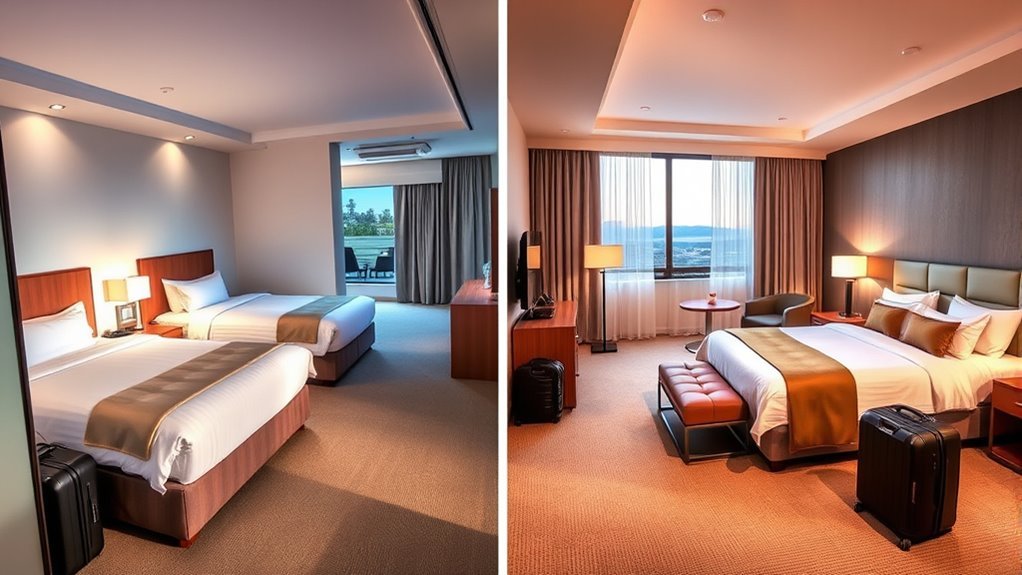
For families comparing two hotel rooms vs. one suite, neither option is automatically cheaper or better. A suite usually wins when it legally fits everyone and adds useful shared space or a kitchen; two rooms often win when you need more permanent beds, two bathrooms, or stronger privacy. Compare the same dates, guests, cancellation terms, and final checkout totals, then verify occupancy, bed layout, and connecting-room status before booking.
Quick Answer
Neither option is automatically cheaper. Choose one suite when it legally fits everyone and the shared living area or kitchen has real value. Choose two rooms when permanent beds, two bathrooms, privacy, or separate schedules matter more. Compare the final checkout total and confirmed occupancy—not the room label—because layouts, guest limits, fees, and included amenities vary by hotel.
Last updated: August 11, 2026. FTC fee guidance, Premier Inn occupancy terms, Hilton connecting-room rules, and Hyatt House amenities were rechecked.
Key Takeaways
- A suite is not automatically cheaper, larger, or approved for more guests than two standard rooms.
- Two rooms usually provide more sleeping flexibility and privacy, but connecting or adjoining placement must be confirmed.
- Check the listed maximum occupancy, bed types, sofa-bed size, bathroom count, kitchen equipment, and child-age rules before paying.
- Compare the complete stay cost, including taxes, mandatory property fees, parking, breakfast, rollaways, pet charges, and cancellation terms.
- For a family of five, the best value is the least expensive legal layout that gives everyone a suitable place to sleep.
Two Hotel Rooms vs. One Suite at a Glance
| Feature | Two Hotel Rooms | One Suite |
|---|---|---|
| Privacy | Usually highest, especially with two bathrooms | Good only when sleeping areas are separated by a door |
| Togetherness | Best when rooms connect; otherwise gathering space is limited | Often includes a shared living area |
| Bathrooms | Usually two | Often one; verify the listing |
| Kitchen | Usually limited to a minibar, microwave, or minifridge | May have none, a kitchenette, or a full kitchen |
| Placement risk | Rooms may be separated unless connecting placement is confirmed | Everyone stays behind one room door |
Cost Comparison: Two Hotel Rooms vs. One Suite
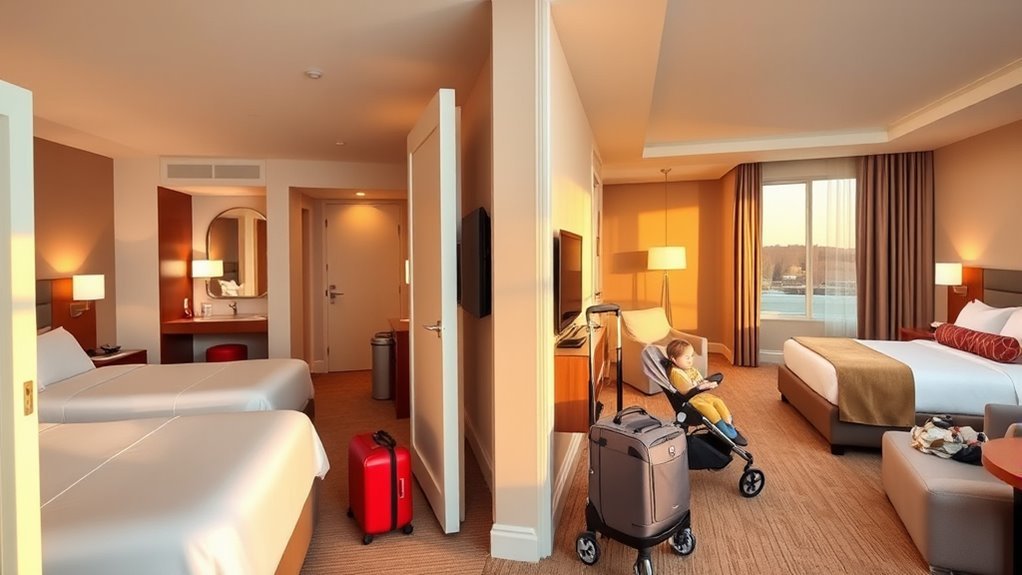
There is no reliable rule that a suite always costs less than two rooms. Hotel prices change by destination, dates, demand, room type, refund rules, and booking channel. A basic suite may cost less than two upscale rooms at one property, while a premium one-bedroom suite may cost far more at another.
Use the same dates, guest ages, and cancellation terms for both options. Then compare the final amount for the whole stay:
- Two-room total: both room rates, mandatory fees for each room, taxes, parking, breakfast, and any rollaway or extra-person charges.
- Suite total: suite rate, mandatory fees, taxes, parking, and any added guest, sofa-bed, or housekeeping charges.
- Trip-level savings: possible meal savings from a usable kitchen, plus the value of included breakfast, laundry, or parking.
The cheaper room rate is not always the cheaper family stay. Compare the complete checkout price and the expenses each layout can prevent.
How to Calculate the Break-Even Suite Price
Use this rule: break-even suite total = two-room checkout total + costs you avoid by choosing the suite − extra costs created by the suite. Costs you may avoid include separate breakfast spending or restaurant meals when a usable kitchen changes your plan. Suite-only costs may include an extra-bed fee or another charge that applies only to that room type.
If the suite’s final checkout total is below your break-even figure, the suite is cheaper overall. If it is above the break-even figure, two rooms cost less unless the suite’s shared space or convenience is worth paying extra for. Count only savings you realistically expect to use.
In the United States, the Federal Trade Commission’s Rule on Unfair or Deceptive Fees requires covered short-term lodging sellers that advertise a price to show the total price upfront, including mandatory charges they know and can calculate in advance. Taxes, other government charges, and optional services may be disclosed separately before payment, so review the final checkout screen rather than relying on a search-result rate.
Space and Comfort: Hotel Rooms vs. Suites for Families
A suite can be more comfortable when it has a real bedroom separated by a door, a living room, and enough seats for everyone. That layout lets one person sleep while others talk, watch television, or prepare food. However, some properties use “suite” for a larger open-plan room with no bedroom door. Always check the floor plan and room description.
Two rooms can offer more total beds, two climate-control zones, and often two bathrooms. They may work better for families with teenagers, adults who keep different schedules, light sleepers, or relatives who need personal space. The tradeoff is less shared living space unless the rooms connect.
Count usable sleeping surfaces, not advertised capacity alone. A room approved for five guests may include one king bed, one sofa bed, and a rollaway, which may not suit every family. Check the sofa-bed dimensions, whether a rollaway is allowed, and whether a crib counts toward the room limit.
Privacy Matters: Comparing Rooms and Suites
Two separate rooms usually provide more personal privacy than one suite. A one-bedroom suite offers a middle ground: adults can use the bedroom while children use the living area, but everyone may still share one bathroom and one entrance. An open-plan studio suite offers little more privacy than a large standard room.
Connecting rooms have an interior door between them. Adjoining rooms are nearby but may not connect. A request for rooms “near each other” is not a guarantee. Some hotels offer confirmed connecting-room bookings; otherwise, contact the property and ask whether the connection is guaranteed in writing.
Pro Tip: When two rooms are essential, book a rate or feature that explicitly confirms connecting rooms. Hilton, for example, offers Confirmed Connecting Rooms at participating properties and notes that the rate may be higher.
What Amenities Do Hotels and Suites Offer Families?
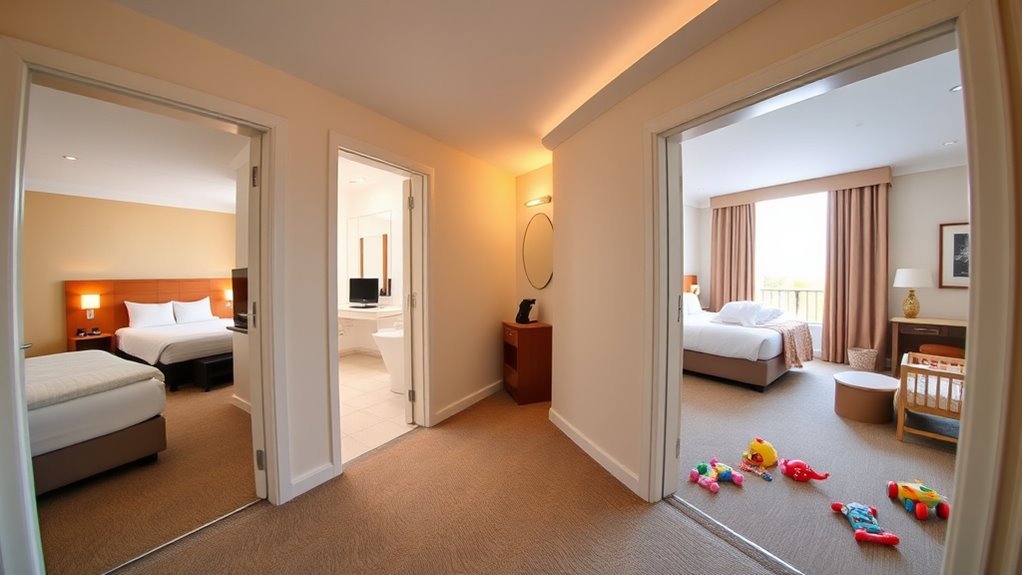
Do not assume that every suite has a kitchen, multiple bathrooms, a jacuzzi, free breakfast, or laundry facilities. Amenities vary by brand, property, and room category. Extended-stay brands are more likely to provide cooking facilities. For example, Hyatt House describes apartment-style accommodations with a well-equipped kitchen suite and living area, while also noting that breakfast and other features have location-specific exceptions.
Before booking, verify these details on the exact room page:
- Sleeping setup: number and size of permanent beds, sofa bed, rollaway eligibility, and crib availability.
- Room separation: a bedroom door, privacy wall, or open studio layout.
- Bathrooms: one full bathroom, two full bathrooms, or a split vanity and shower area.
- Kitchen equipment: refrigerator size, freezer, microwave, stovetop, oven, dishwasher, cookware, dishes, and dining seats.
- Family conveniences: breakfast, laundry, pool, high chairs, blackout curtains, and childproofing options.
- Accessibility: step-free access, roll-in shower, grab bars, accessible connecting rooms, and suitable bed clearance.
Note: “Kitchenette” can mean anything from a microwave and minifridge to a small stovetop and sink. Ask for the appliance list when meal preparation is part of your budget plan.
Hidden Fees: What Hotels Charge vs. Suite Rates
A suite does not necessarily have a flat price for every occupant, and two rooms do not necessarily trigger extra-person fees. The hotel may price by room, by occupancy, or by a combination of both. Enter every guest—including each child’s age—when searching so the quoted room is legal for the group.
Compare these charges for both layouts:
- Mandatory resort, destination, facility, or service fees
- Taxes and other government charges
- Parking or valet fees
- Breakfast charges and child-pricing rules
- Extra-person, rollaway, crib, or sofa-bed fees
- Pet fees and deposits
- Wi-Fi, laundry, housekeeping, or kitchen-supply charges
- Early check-in, late checkout, and cancellation penalties
For bedding-specific charges, see our guide to rollaway-bed costs at U.S. hotels. If child pricing affects the comparison, review our kids-stay-free age limits and policies.
The FTC’s Rule on Unfair or Deceptive Fees, effective May 12, 2025, requires covered U.S. short-term lodging businesses that advertise a price to show the total price upfront, including mandatory charges they know and can calculate in advance. The rule does not ban fees; taxes, government charges, and optional services may still be disclosed separately before payment.
Warning: Never exceed the hotel’s stated occupancy, even if the room appears large enough. Occupancy rules can depend on bed configuration, hotel policy, and local safety requirements. The property may refuse check-in or require another room.
Cooking Together: Kitchen Advantages in Suites
A working kitchen can reduce restaurant spending and make travel easier for families managing allergies, medical diets, picky eaters, or early bedtimes. The actual savings depend on local food prices, the meals you prepare, grocery access, and whether the hotel already includes breakfast.
A kitchen is most valuable when you will use it. For a short stay with a full sightseeing schedule, a refrigerator and microwave may be enough. For a longer stay, a stovetop, cookware, dishes, and a table can provide more practical value.
Shared Meal Experiences
Cooking together can create relaxed family time without waiting for a restaurant table. It also lets you serve meals on your own schedule. Keep the plan simple: breakfast, sandwiches, reheated leftovers, and one-pot dinners usually make better vacation meals than recipes that require many ingredients.
- Dietary control: You choose the ingredients and reduce cross-contact risks, though a hotel kitchen is not guaranteed allergen-free.
- Schedule flexibility: Children can eat before an evening activity or after an early wake-up.
- Less food waste: A refrigerator gives you a place for drinks, snacks, leftovers, and infant food.
- Shared space: A dining table can double as a place for games, planning, or schoolwork.
Cost-Effective Dining Options
Estimate meal savings with your own numbers instead of using a fixed percentage. Add the expected cost of restaurant meals for the group, subtract the grocery budget, and include transportation or delivery charges. Then compare that amount with any price premium for the kitchen suite.
Check whether cookware, utensils, dish soap, coffee, and basic supplies are included. A “full kitchen” that lacks the items you need can lead to extra purchases and reduce the expected savings.
Choosing Between Two Rooms or One Suite Based on Group Size
Group size matters, but ages, relationships, bed preferences, and supervision needs matter just as much. Use the following guide as a starting point, then confirm the exact property rules.
| Group | Often Better | Reason to Check Carefully |
|---|---|---|
| Two adults and one or two young children | One standard room or suite | Confirm bed sizes, crib rules, and whether a suite premium adds useful space. |
| Family of five | Occupancy-approved suite or two rooms | Many family rooms cap occupancy at four; verify five legal sleeping places. |
| Family with teenagers | Two connecting rooms | Check the hotel’s minimum-age and adult-supervision rules. |
| Two couples or multigenerational adults | Two rooms or a two-bedroom suite | A one-bedroom suite may force one couple onto a sofa bed and provide only one bathroom. |
| Travelers needing accessibility features | The layout with confirmed accessible features | Do not assume the connecting room or suite bedroom has the same accessible setup. |
For the Premier Inn example in the original question, the chain’s current UK booking terms state that a family room can accommodate up to two adults and two children under 16. Therefore, two adults and three children exceed the stated family-room limit and require another approved arrangement.
Best Choice for Family Gatherings: Hotels vs. Suites
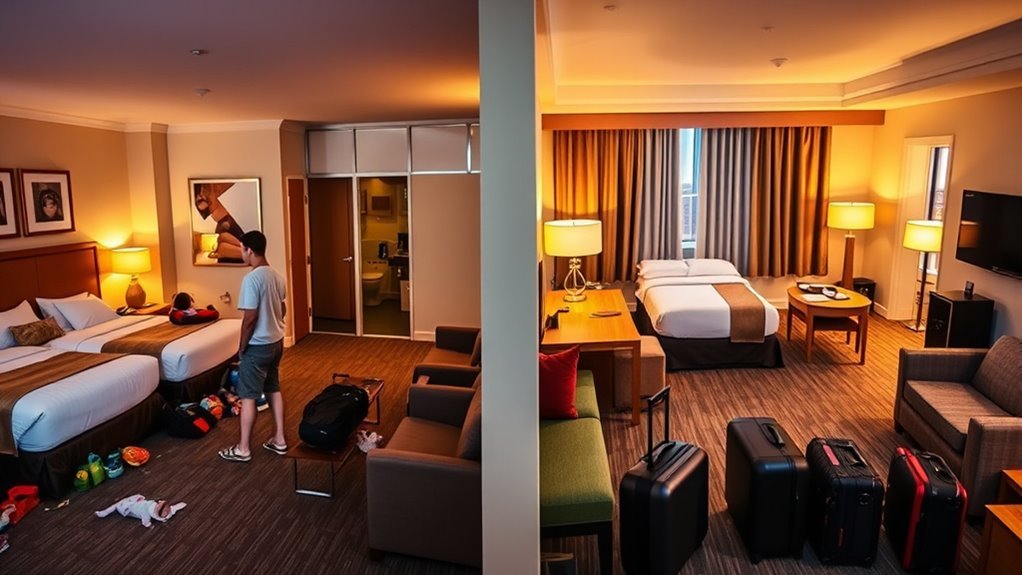
For a gathering-focused trip, a suite often wins when it has enough seats, a dining table, and a living room that can be used without disturbing sleepers. Two connecting rooms may be better when privacy and bathrooms matter more than one large common area.
Cost Efficiency Comparison
Compare like with like. A refundable suite should be compared with two refundable rooms, not with a nonrefundable promotional rate. Include all room-level fees twice when they apply to each of two rooms. Then subtract only the savings you realistically expect from included breakfast, a kitchen, laundry, or parking.
Loyalty points and upgrade certificates can change the result, but do not assume an upgrade will clear. Book a room category that legally fits the family even if no upgrade is available.
Space and Comfort Levels
Check square footage, but focus on layout. A long open room may be less useful than a smaller one-bedroom suite with a closing door. Two rooms can provide quiet zones for naps, work calls, or different bedtimes. A suite can provide the central gathering area that separate rooms lack.
Family-Focused Amenities Offered
The most valuable family amenities are the ones that remove daily friction:
- A second bathroom or separate vanity
- A refrigerator large enough for family food
- Free or reasonably priced breakfast
- Laundry access for longer stays
- Blackout curtains and doors between sleeping areas
- A table with enough chairs
- A pool, play space, or safe common area
- Cribs, high chairs, and accessible features confirmed before arrival
Booking Strategies: How to Maximize Your Stay
- Enter the complete party. Include every adult, child, and child’s age so the search returns legal room options.
- Compare identical terms. Match dates, refundability, payment timing, loyalty eligibility, and breakfast inclusion.
- Open the room details. Record the maximum occupancy, exact beds, sofa-bed type, bathroom count, and square footage.
- Confirm the layout. Look for a floor plan or ask whether the bedroom closes with a full door.
- Verify connecting rooms. Treat adjoining, nearby, and requested connecting rooms as different promises.
- List every added cost. Review mandatory fees, taxes, parking, meals, rollaways, pets, and cancellation penalties.
- Call the property for critical needs. Confirm accessibility, cribs, rollaways, kitchen equipment, and room placement directly with the hotel.
- Save written proof. Keep the booking confirmation, room description, and any email confirming connecting rooms or special arrangements.
Pro Tip: Build a simple two-column cost sheet before booking. One side should show the full cost of two rooms; the other should show the full suite cost plus or minus realistic meal, parking, and amenity differences.
Wrapping Up: How to Pick the Best Option for Your Family Trip
Start with safety and legality: both options must accommodate every guest under the hotel’s rules. Next, eliminate layouts that do not provide acceptable beds, supervision, privacy, or accessibility. Only then compare the full price.
Cost Analysis Comparison
Choose the suite when its total cost is lower or when the added living area, kitchen, or single-door setup is worth the premium. Choose two rooms when they provide better beds, two bathrooms, stronger privacy, or confirmed connecting access at a reasonable total price.
A practical comparison should include:
- Total checkout price for the complete stay
- Refund and change terms
- Parking and transportation costs
- Breakfast and expected meal spending
- Bed suitability for each person
- Value of a second bathroom or kitchen
Space and Comfort Considerations
| Choose one suite when | The approved occupancy fits, the bedroom is truly separate, and the shared living or kitchen space will be used. |
| Choose two rooms when | Privacy, bed count, two bathrooms, or separate schedules matter most. |
| Do not book until | You have checked the final price, guest limit, bed layout, bathroom count, and connecting-room status. |
Frequently Asked Questions
Is it cheaper to get a suite or two rooms?
Either option can be cheaper. Compare the final price for the same dates and cancellation terms, including mandatory fees, taxes, parking, meals, and extra-bed charges. A kitchen or included breakfast may make a suite cheaper overall, while two discounted rooms may cost less than a premium suite.
Can a family of five stay in one hotel room?
Sometimes. A family of five can stay in one room or suite only when the hotel’s listed occupancy allows five guests and the approved bedding works for the group. Some properties offer rooms or suites for five or more, while others cap a family room at four. Enter all guests and children’s ages before booking and confirm the exact bed setup.
Can two adults and three children stay in one Premier Inn room?
Not under Premier Inn’s current UK family-room limit. Its booking terms allow up to two adults and two children under 16 in a family room. A party of two adults and three children needs another occupancy-approved arrangement, such as two rooms.
Are adjoining and connecting hotel rooms the same?
No. Connecting rooms have an interior door between them. Adjoining rooms are near each other and may share a wall, but they do not necessarily connect. Ask for written confirmation when an interior connection is essential.
Do hotel suites always have kitchens and two bathrooms?
No. Some suites are open-plan rooms with a wet bar or minifridge, and many have only one bathroom. Review the exact room description, photos, floor plan, appliance list, and bathroom count before booking.
Can children stay in a separate hotel room?
Hotel rules vary by property and country. Some hotels require an adult in each room, while others allow older children in a connecting or nearby room under a parent’s responsibility. Ask the property about minimum-age, supervision, and room-placement rules before booking.
What should I confirm before booking a family suite?
Confirm maximum occupancy, bed sizes, sofa-bed type, bedroom door, bathroom count, kitchen equipment, accessibility, breakfast, parking, mandatory fees, and cancellation terms. Save the room description and any written promises about connecting rooms or special requests.
Conclusion
One suite is usually the better choice when your family values a shared living area, a usable kitchen, and staying behind one door. Two hotel rooms are often better when you need more permanent beds, two bathrooms, stronger privacy, or separate schedules. Before booking, open both options for the same dates and guests, compare the final checkout totals, assign a legal sleeping place to every traveler, and confirm any connecting-room promise in writing.
Sources
- Federal Trade Commission: Rule on Unfair or Deceptive Fees FAQ — U.S. total-price disclosure requirements for short-term lodging.
- Premier Inn Booking Terms and Conditions — family-room occupancy, child-age, pricing, and special-request rules.
- Hilton Confirmed Connecting Rooms — how participating properties confirm connecting rooms.
- Hyatt House Brand Overview — examples of apartment-style rooms, kitchen suites, breakfast, and laundry amenities with location-specific exceptions.