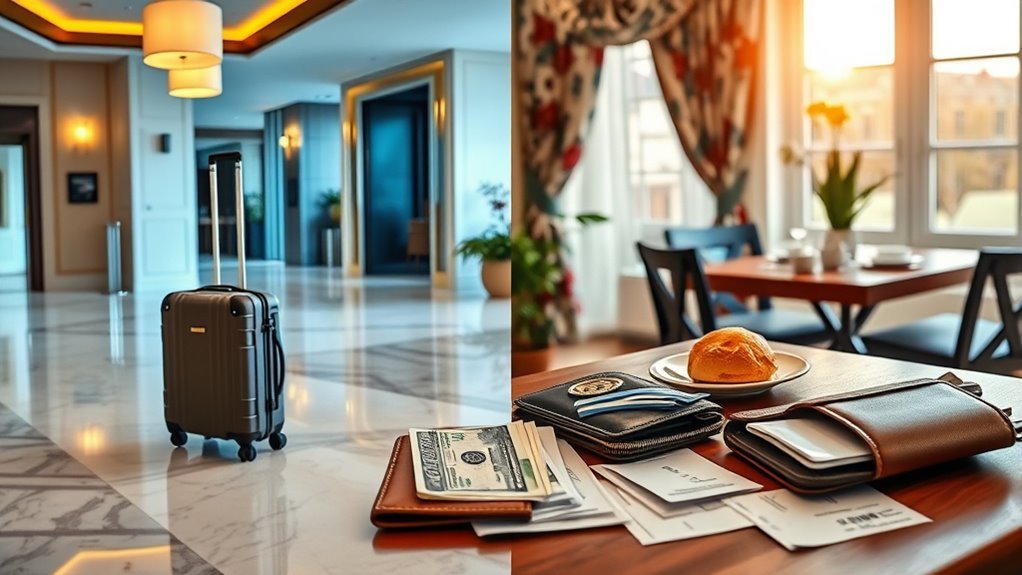
Hotels and bed-and-breakfasts can both be affordable, but neither option is always cheaper. The better value depends on your destination, dates, number of guests, transportation needs, cancellation terms, and which services are included. To make a fair comparison, look beyond the nightly rate and calculate the complete cost of the stay.
Last updated: July 28, 2026.
Quick Answer
Neither hotels nor B&Bs are always cheaper. Compare the total for the same dates and guests, including mandatory fees, taxes, parking, breakfast, pet charges, and cancellation terms. Hotels often win on convenience and flexibility, while B&Bs can offer better value when breakfast, parking, and personal service are included.
Key Takeaways
- Compare the final cost for the entire stay, not only the advertised nightly rate.
- Known mandatory lodging fees must generally be included in the upfront total price under current U.S. federal rules.
- A B&B may provide better value when breakfast, parking, and local service are included.
- A hotel may be better for late arrivals, one-night stays, loyalty benefits, business facilities, or predictable accessibility features.
- Review occupancy limits, minimum stays, cancellation terms, child and pet policies, and accessibility details before paying.
Hotels vs. B&Bs: Which Is More Affordable?
There is no dependable national price range that proves hotels or B&Bs are consistently cheaper. Lodging rates change according to the city, neighborhood, season, day of the week, local events, room category, number of guests, and cancellation policy.
A basic hotel may be the least expensive choice for a one-night road trip. A B&B may provide the better total value for a couple when breakfast and parking are included. In another destination, a hotel with free breakfast, free parking, and a member discount may cost less than a nearby inn.
The most reliable approach is to compare properties that offer a similar location, room quality, guest capacity, and cancellation policy.
| Comparison Point | Hotels | B&Bs |
|---|---|---|
| Room pricing | Wide range, with frequent changes based on demand, room type, and loyalty rates | Varies by property, room style, season, breakfast service, and minimum-stay rules |
| Breakfast | May be included, sold separately, or unavailable | Often included, but the menu, schedule, and availability vary |
| Parking | May be free, paid, valet-only, or located off-site | Often available at smaller properties, but spaces may be limited |
| Check-in | Front desk or automated check-in may support late arrivals | May require arrival during a set window or advance notice |
| Service style | Usually standardized, with more staff and on-site facilities at larger properties | Usually smaller and more personal, often with direct host interaction |
| Best-value situations | Short stays, business trips, late arrivals, loyalty redemptions, and travelers needing predictable facilities | Couples, leisure trips, included breakfast and parking, and travelers seeking local hospitality |
Compare the final trip total, not the first nightly rate you see.
How to Compare the Total Cost of a Stay
Use the same dates, number of guests, room requirements, and cancellation terms for every property. Then calculate the cost of the full stay using this formula:
Total lodging cost = displayed lodging total + government taxes + optional services you expect to use + transportation and meal costs not included
Your comparison should include:
- Displayed lodging total: The cost for all rooms and nights, including known mandatory property fees.
- Government taxes: Hotel, sales, occupancy, tourism, or local taxes shown before payment.
- Parking: Self-parking, valet parking, off-site parking, or public transportation costs.
- Breakfast: The cost for every guest and every morning when it is not included.
- Other meals: Consider whether the location gives you practical access to affordable restaurants or a kitchen.
- Pet charges: Include nightly fees, one-time cleaning charges, and deposits.
- Extra-person charges: Check whether the listed rate covers every traveler.
- Internet or facility access: Confirm whether the service is included or optional.
- Cancellation risk: A lower nonrefundable rate may cost more if your plans change.
- Transportation: A cheaper property outside the center may require a rental car, rideshares, or daily transit fares.
Pro Tip: Divide the final total by the number of nights only after adding the expenses you will actually pay. This gives you an effective nightly cost that is more useful than the first rate displayed in search results.
Hotel and B&B Fees to Check Before Booking
Travelers should still review every charge, but U.S. price-display rules have changed. The FTC’s Rule on Unfair or Deceptive Fees, effective May 12, 2025, requires sellers of short-term lodging to display the total price including mandatory charges they know and can calculate upfront.
The rule applies broadly to hotels, motels, inns, vacation rentals, home shares, and similar short-term lodging. A property may itemize a mandatory resort, destination, cleaning, or service fee, but that itemization cannot be more prominent than the total price.
Government taxes and genuinely optional services may be excluded from the initial total, but they must be disclosed before the customer is asked to pay.
Note: Upfront pricing does not mean every service is free. It means known mandatory charges should be included in the prominent total. Optional parking, breakfast, room upgrades, pet services, and other choices may still cost extra.
Mandatory Fees and Government Taxes
A mandatory property fee should generally be included in the total price displayed upfront. Taxes and other government charges may appear later in the booking process, but the amount must be disclosed before payment.
Check whether the final total includes every night and every room. Also confirm whether a displayed total is quoted for the full stay or only for one night.
Parking and Transportation Costs
Parking can change which property is cheaper. A downtown hotel with paid parking may cost more overall than an inn with free on-site spaces. However, a remote B&B may require a rental car or repeated rideshare trips, while a centrally located hotel may let you walk or use public transit.
Before booking, verify:
- Whether parking is free or paid
- Whether the charge is nightly, daily, or per entry
- Whether parking is on-site or off-site
- Whether valet service is required
- Whether oversized vehicles are accepted
- Whether an electric-vehicle charger is available and separately priced
Breakfast and Dining Costs
Breakfast can make a meaningful difference, especially for couples and families. Many B&Bs include a morning meal, while hotel breakfast policies vary. Some hotels provide a complimentary buffet, some include breakfast only with certain rates, and others sell it separately.
Do not assume that every B&B breakfast will meet your schedule or dietary needs. Ask about serving times, early departure options, allergies, vegetarian choices, and whether breakfast is included for every registered guest.
Other Optional Costs
Review the property’s policies for:
- Pet fees and refundable or nonrefundable deposits
- Rollaway beds, cribs, and extra guests
- Early check-in and late checkout
- Laundry services
- Room service or minibar purchases
- Spa, activity, or equipment charges
- Damage deposits or temporary card holds
Warning: Do not complete a reservation until you have reviewed the final payment amount, cancellation deadline, deposit terms, guest count, room type, and every optional service you expect to use.
When B&Bs Can Offer Better Value
A B&B may offer better value when its included services replace expenses you would otherwise pay separately. The strongest savings often come from a useful breakfast, free parking, a convenient location, and direct advice from a knowledgeable host.
A B&B may be a good fit when:
- You are taking a leisure trip as a couple or solo traveler.
- Breakfast is included and served at a useful time.
- You would otherwise pay for parking.
- You value a quiet property with fewer rooms.
- You want local dining, attraction, or transportation recommendations.
- The property is close to the places you plan to visit.
- The cancellation and minimum-stay rules fit your plans.
Unique Local Experiences
B&Bs often occupy historic homes, converted buildings, rural properties, or small inns. Rooms may have individual decor instead of a standardized chain design. This can give travelers a stronger connection to the destination.
The experience varies widely. Read recent guest reviews and study current room photos to confirm that the property’s atmosphere, soundproofing, bathrooms, climate control, and shared spaces match your expectations.
Personalized Hospitality Services
Smaller properties may provide more direct contact with an owner or host. That can be useful when you need local restaurant suggestions, help planning a route, or information about nearby attractions.
Personal service is not guaranteed, however. Some inns use self-check-in or have limited staff hours. Confirm the service model when direct assistance matters to you.
When Hotels Can Offer Better Value
Hotels may provide the better value when convenience, flexibility, facilities, or loyalty benefits matter more than a personalized atmosphere.
A hotel may be the stronger choice when:
- You need a room for only one night.
- You expect to arrive late or leave very early.
- You need a 24-hour front desk or luggage storage.
- You want an elevator, fitness center, pool, meeting space, or business center.
- You have hotel points, elite benefits, a member rate, or a corporate discount.
- You need several rooms with similar layouts.
- You want daily housekeeping or on-site dining.
- You need detailed accessible-room information and specific accessible features.
- You prefer predictable brand standards across different destinations.
Hotels also tend to offer more room inventory. This can make them easier to book for weddings, conferences, family gatherings, and last-minute trips.
Amenities B&Bs May Include
B&Bs can offer features that are less common at standard hotels, although no amenity should be assumed without checking the property listing.
Possible inclusions include:
- Cooked or continental breakfast
- Free on-site parking
- Homemade snacks, coffee, or tea
- Shared lounges, porches, gardens, or libraries
- Locally inspired room decor
- Direct recommendations from the host
- Limited kitchen or refrigerator access
- Evening refreshments or social hours
These features can improve value when you will genuinely use them. A large breakfast is not a financial benefit if you leave before it is served, and a shared lounge may not matter if you plan to spend little time at the property.
Policies and Practical Differences to Review
Minimum Stays and Deposits
Some B&Bs require two-night stays during weekends, holidays, weddings, festivals, or peak travel periods. Hotels can also set minimum stays during major events. A property with the lower nightly rate may become more expensive if it requires an extra night.
Check whether the property charges a deposit at booking, places a temporary hold on your card, or requires full payment before arrival.
Cancellation and Refund Rules
Compare rates with similar flexibility. A fully refundable hotel rate should not be compared directly with a lower B&B rate that becomes nonrefundable weeks before arrival.
The FTC’s travel guidance recommends getting the cancellation and refund policies before paying. Save your confirmation, receipt, property contact details, and a copy of the terms that applied when you booked.
Children, Pets, and Room Occupancy
A B&B may be comfortable for families, but some properties are designed mainly for adults or couples. Confirm child-age rules, maximum room occupancy, bed arrangements, stair access, quiet hours, and whether connecting rooms are available.
Pet-friendly does not always mean every room accepts pets. Verify the permitted animal type, size limits, designated rooms, deposits, cleaning charges, and whether pets can remain unattended.
Check-In and Late Arrival
Hotels commonly support a broader arrival window, while smaller inns may require guests to arrive at a scheduled time. Contact the property before booking when your flight, train, or road trip could cause a late arrival.
Accessibility
Do not rely only on an “accessible” label. Ask about the specific features you need, such as a roll-in shower, bathtub seat, grab bars, step-free route, elevator, doorway width, accessible parking, visual alarms, or communication equipment.
Under the ADA Title III lodging-reservation rules, covered lodging businesses must identify and describe accessible features in enough detail for travelers to assess whether a room meets their needs. Actual room features still vary, so confirm them directly before paying.
When Is the Best Time to Book for Savings?

There is no universal booking window that guarantees the lowest hotel or B&B price. The best timing depends on the destination, season, local events, and how quickly rooms are selling.
Book earlier when:
- Your trip falls during a holiday, festival, graduation, wedding season, or major sporting event.
- You need a specific room type or accessible feature.
- You are traveling with a group.
- The destination has a small supply of B&Bs.
- Your plans are fixed and the cancellation terms are acceptable.
You may find lower demand during weekdays or shoulder seasons, but savings are not guaranteed. A convention, concert, weather event, or local celebration can raise rates even during a normally quiet period.
Last-minute prices can fall when rooms remain empty, but they can also rise sharply when supply is limited. Travelers who need certainty should not rely on a last-minute discount.
Pro Tip: When a refundable booking is available at an acceptable price, reserve it and recheck the same dates periodically. Before changing reservations, confirm that the new rate has equal room features and cancellation protection.
Hotels vs. B&Bs by Traveler Type
| Traveler or Trip | Likely Starting Point | What to Verify |
|---|---|---|
| Couple seeking a local experience | B&B | Breakfast, privacy, bathroom type, minimum stay, and check-in time |
| Business traveler | Hotel | Desk, Wi-Fi, receipt format, late arrival, fitness facilities, and loyalty credit |
| Family with children | Compare both | Child policy, room occupancy, bed setup, breakfast cost, pool, stairs, and connecting rooms |
| Road-trip stop or late arrival | Hotel | Front-desk hours, parking, highway access, breakfast hours, and cancellation cutoff |
| Traveler with specific accessibility needs | Property-specific comparison | Exact room and route features, accessible parking, elevator access, and reservation guarantee |
| Large group | Hotel or whole-property inn booking | Room block, common space, group deposit, cancellation schedule, and meal capacity |
| Loyalty-program member | Hotel | Member rate, point value, upgrades, breakfast benefits, parking, and direct-booking rules |
Hotel and B&B Booking Checklist
Before confirming either type of accommodation, check the following:
- The final total for every room and night
- Government taxes and any charges shown before payment
- Number of guests included in the rate
- Bed type, bathroom type, and exact room category
- Breakfast inclusion, menu, and serving time
- Parking availability and cost
- Check-in deadline and late-arrival procedure
- Minimum-stay requirement
- Deposit and temporary card-hold policy
- Cancellation deadline and refund amount
- Child, pet, smoking, and quiet-hour policies
- Stairs, elevators, and required accessible features
- Air conditioning, heating, Wi-Fi, and housekeeping schedule
- Distance from the places you plan to visit
- Whether you are booking directly or through a third-party service
- Recent reviews that discuss cleanliness, noise, service, and billing
When comparing a direct rate with a third-party listing, make sure the room type and cancellation terms are identical. Booking directly may make changes easier and may qualify for hotel loyalty benefits, but a third-party platform can sometimes offer a useful package or different cancellation option.
Final Thoughts on Choosing a Hotel or B&B
Choose based on the complete experience you need, not a stereotype about which property type is cheaper. A B&B may provide excellent value through breakfast, parking, atmosphere, and personal service. A hotel may provide better value through flexible arrival, loyalty benefits, facilities, room availability, and standardized service.
Compare similar rooms for the same dates and guests. Add every expected expense, review the policies, and confirm any feature that is essential to your trip. The accommodation with the lowest advertised rate is not necessarily the one with the lowest final cost.
Frequently Asked Questions
Are U.S. hotel prices dropping in 2026?
Not across every timeframe or destination. The Bureau of Labor Statistics reported that the U.S. lodging-away-from-home index fell 2.3% from May to June 2026 on a seasonally adjusted basis. However, it was still 4.9% higher than in June 2025. Local hotel rates can move differently, so check your exact city and dates.
Are B&Bs always cheaper than hotels?
No. A B&B may cost less when breakfast and parking are included, but a hotel may offer a lower total through a member rate, free breakfast, loyalty points, or a more convenient location. Compare the final cost for matching dates, guests, and cancellation terms.
Is breakfast always included at a B&B?
Breakfast is commonly part of the B&B experience, but the format and policy vary. Confirm whether it is included for every guest, what is served, the breakfast hours, and whether the property can accommodate allergies or an early departure.
Can hotels still charge resort or destination fees?
Yes, the FTC rule does not ban a type or amount of fee. It generally requires known mandatory fees to be included in the prominent total price displayed upfront. Government taxes and optional services can be shown later, but they must be disclosed before payment.
How do short-term rental prices compare with hotels?
Neither category is always cheaper. A short-term rental may offer better value for a group, multiple bedrooms, or a longer stay with a kitchen. A hotel may cost less for one or two travelers and may include housekeeping, reception, breakfast, or loyalty benefits. Compare the final total, capacity, location, cleaning requirements, and cancellation rules.
Are B&Bs good for families?
Some are, but policies vary. Check the minimum guest age, maximum room occupancy, bed arrangement, private bathroom, stair access, breakfast options, quiet hours, and whether the property has connecting or family-size rooms.
Is it better to book lodging directly?
Direct booking can make communication, changes, and loyalty benefits easier. A third-party platform may offer different prices or package options. Compare identical room types and cancellation terms, and confirm which company will handle a refund or reservation problem.
How should I verify an accessible room?
Ask for the exact features you need rather than relying only on the word “accessible.” Confirm the room type, step-free route, bathroom setup, elevator, parking, doorway access, alarms, and whether the specific room will be held for your reservation.
Conclusion
A hotel is not automatically more expensive, and a B&B is not automatically the better value. Hotels often excel in convenience, flexibility, facilities, inventory, and loyalty benefits. B&Bs can stand out through included breakfast, parking, atmosphere, and personal hospitality.
Calculate the complete cost for the same dates and number of guests. Then compare the location, cancellation rules, room features, check-in process, and services you will actually use. That approach will reveal which property offers the best value for your trip.
Sources
- Federal Trade Commission: Rule on Unfair or Deceptive Fees FAQ — requirements for displaying mandatory short-term lodging fees and total prices.
- Federal Trade Commission: Avoid Scams When You Travel — booking, price-display, cancellation, and refund guidance.
- U.S. Bureau of Labor Statistics: Consumer Price Index — current national lodging price-change data.
- ADA.gov: Title III Regulations — lodging reservation and accessible-feature information requirements.
- USAGov: Complaints About Travel — steps for handling unresolved hotel, motel, and booking-service complaints.