
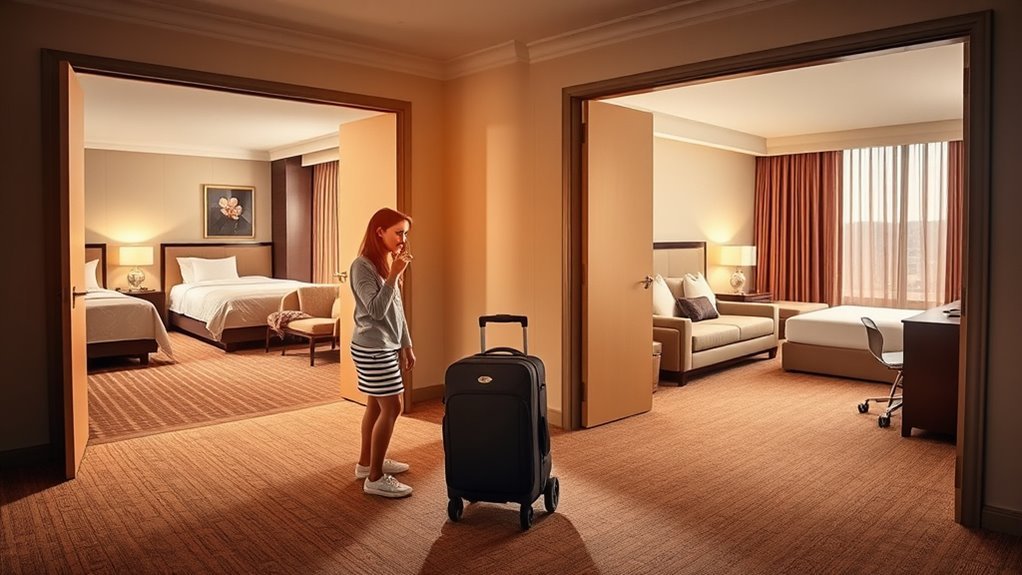
For families, neither one suite nor two hotel rooms is always cheaper. The lower-cost choice is the option with the smaller complete stay total after matching the same dates, guests, cancellation terms, taxes, mandatory charges, parking, breakfast, and bedding costs. A suite often wins when it replaces a second room and adds a kitchen or included breakfast; two rooms often win when discounted standard rates, real beds, two bathrooms, or privacy are worth more.
Quick Answer
Compare the same dates, guests, room rules, and cancellation terms. A suite is cheaper when its final stay cost, after realistic meal or amenity savings, is below the combined cost of two rooms. Two rooms are the better value when their total is lower or when extra beds, two bathrooms, and privacy justify the difference. Confirm legal occupancy before comparing price.
Last updated: August 11, 2026.
Key Takeaways
- A suite is cheaper only when its full stay cost is below the total for two comparable rooms after all relevant extras are included.
- Two rooms usually provide more privacy, more real beds, and two bathrooms, but connecting rooms must be confirmed rather than merely requested.
- A kitchen, mini-fridge, microwave, or included breakfast can reduce meal costs, especially during a longer stay.
- Compare identical dates, guest counts, bedding, cancellation terms, taxes, parking, and mandatory fees.
- Check maximum occupancy, minimum check-in ages, and whether an adult must be registered in each room.
At a Glance
| Best For | Families comparing one suite, two separate rooms, or confirmed connecting rooms |
| Main Cost Test | Compare the complete stay totals after room charges, fees, taxes, parking, breakfast, groceries, and bedding costs |
| When a Suite Wins | Its final total is lower and it provides enough beds, suitable privacy, kitchen features, or included breakfast |
| When Two Rooms Win | Discounted standard rooms, two bathrooms, multiple adults, real beds, or stronger privacy outweigh the suite’s shared amenities |
| Decision Order | First confirm occupancy and workable beds; next compare privacy and bathroom needs; then choose the lower complete stay cost |
Is a Suite Cheaper Than Two Hotel Rooms for a Family?
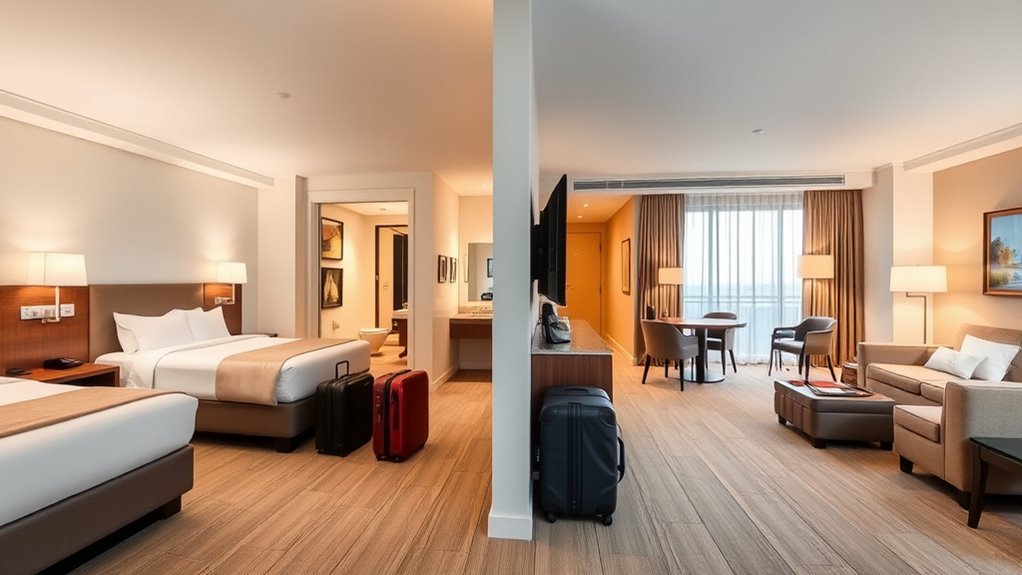
The cheapest choice depends on the property, dates, guest count, room inventory, and included benefits. Two standard rooms may have low individual rates but create a higher combined lodging total. A suite may carry a premium rate yet replace two bookings and reduce food spending.
Make the comparison with the same travel dates, number of guests, cancellation policy, and payment terms. A refundable suite should not be compared directly with two deeply discounted, nonrefundable rooms unless you also account for the value of flexibility.
Start with the complete lodging total shown at checkout. Then account for costs that differ between the two options, including:
- Parking charged per room, reservation, night, or vehicle
- Breakfast that is included, discounted, or purchased separately
- Rollaway, crib, sofa-bed, or extra-person charges
- Groceries and restaurant spending
- Resort, destination, cleaning, or service fees
- Pet fees, laundry, Wi-Fi upgrades, and transportation
- The cost of changing or canceling the reservation
- Incidental authorization holds that may affect available credit or cash flow during the stay
A suite may also make the stay easier by keeping bags, chargers, snacks, and bedtime routines in one place. Two rooms may justify a higher price when they provide better sleep, two bathrooms, or private space for teenagers, grandparents, or another adult couple.
Pro Tip: Open both booking options in separate browser tabs and stop at the final payment page. Record the complete total, cancellation deadline, bed types, breakfast terms, and parking policy before comparing them.
Use This Cost Formula Before Booking
Use the same formula for both arrangements:
Displayed lodging total + taxes or government charges + optional parking + meals + bedding or guest extras + transportation differences + expected change or cancellation cost = estimated stay cost.
Track refundable incidental authorization holds separately from the stay cost. A temporary hold can reduce your available credit or bank balance, but it is not a final expense unless the hotel converts part of it into a charge.
| Option | What to Include |
| Two rooms | Combined displayed room totals + taxes + separate breakfast + applicable parking + per-room or per-person extras + transportation changes |
| One suite | Displayed suite total + taxes + parking + groceries + paid breakfast + rollaway or extra-person charges + transportation changes |
The suite is the cheaper option when:
Suite lodging and suite-only extras are less than the two-room lodging total and two-room-only extras.
You can also calculate the maximum suite premium worth paying:
Maximum extra suite price worth paying = two-room-only costs avoided + realistic amenity savings − suite-only extra costs.
For example, count a second per-room fee only if it truly applies to both rooms, and count breakfast savings only if your rate actually includes breakfast for the registered guests. This keeps the break-even number tied to costs you can verify rather than a generic percentage.
What Is the Difference Between a Suite, Connecting Room, and Adjoining Room?
Hotels do not use room labels in exactly the same way. Read the full room description and floor plan instead of relying on the word “suite.”
- Suite: A larger room or multi-room layout that may include a living area, sofa bed, kitchenette, or closed bedroom.
- Studio suite: Usually one open room with sleeping and living areas but no bedroom door.
- One-bedroom suite: Normally includes one closed bedroom and a separate living area, although layouts vary.
- Family suite: A family-oriented layout that may include bunks, a sofa bed, extra beds, or more than one bedroom.
- Connecting rooms: Separate rooms joined by an interior door that guests can open during the stay.
- Adjoining rooms: Rooms located near or beside each other, but the label does not always guarantee an interior door.
Connecting rooms can provide the privacy and two bathrooms of separate rooms while keeping the family together. However, a request in the reservation notes is not a guarantee.
Hilton’s Confirmed Connecting Rooms program allows guests to book and instantly confirm eligible connecting rooms at participating properties through Hilton’s website or app. Hilton also notes that a confirmed connecting-room rate can be higher and that an ordinary request remains subject to availability.
Note: A “suite” does not guarantee a closed bedroom, full kitchen, second bathroom, or comfortable bed for every guest. Verify each feature separately.
Can Children Stay in a Separate Hotel Room?
Do not assume children can occupy a second room by themselves. Hotels may set minimum check-in ages, require an adult to be registered in each room, or limit which minors can stay in a separate room.
Policies differ by brand, property, and country. For example, Premier Inn’s current UK terms state that a standard family room can accommodate two adults and two children under 16. Its terms also allow children aged 16 or 17 to stay in separate rooms under the responsibility of a parent or guardian who remains at the hotel.
That policy should not be treated as a rule for other hotels. Before reserving two rooms, ask:
- What is the minimum age to check in?
- Must an adult be registered in each room?
- Can minor children stay in a connecting room?
- Will the hotel guarantee the rooms are connected or next to each other?
- Does the property require identification for every guest?
Warning: Never exceed the room’s stated maximum occupancy or assume an unconfirmed room arrangement will be available at check-in. The hotel may refuse the setup or require another room.
Which Gives Families More Space and Privacy?
Square footage matters, but the layout matters more. A large open studio may offer less practical privacy than two smaller connecting rooms. Before booking, count closed bedrooms, actual beds, bathrooms, doors, and places where someone can sit after another guest goes to sleep.
Separate living and sleeping areas can help families with different sleep schedules. A younger child may need an early bedtime while parents or older children want to talk, watch television quietly, or plan the next day.
A shared living space also gives families a place for snacks, games, homework, or downtime. It can reduce the feeling that everyone must sit on a bed whenever they are in the room.
Two rooms are often more comfortable when the group includes:
- Teenagers who need greater privacy
- Grandparents or another adult couple
- Light sleepers or people with different schedules
- Guests who need two bathrooms during busy mornings
- Travelers who prefer standard beds over sofa beds
A suite may be more practical when the family includes toddlers, needs a central place for naps, or wants to keep everyone’s belongings and routines together.
Which Hotel Amenities Matter Most for Families?
The right amenities can be worth more than a small difference in room price. Focus on features your family will actually use rather than a long general amenity list.
Check the room description for:
- The number and size of standard beds
- Whether the sofa bed is included in the listed occupancy
- A closed bedroom door
- One or two bathrooms
- A bathtub or walk-in shower
- A crib or rollaway and any fee
- A refrigerator with enough space for food
- A microwave, sink, stovetop, and cookware
- A table or counter for meals
- Guest laundry or an in-room washer and dryer
- Elevator access and distance from the lobby
- Accessible-room and connecting-room combinations
Also consider noise. Rooms near elevators, ice machines, pools, bars, or breakfast areas may be convenient but louder. A distant suite may be quieter but harder to reach with children, luggage, or mobility equipment.
Space and Privacy Needs
A suite offers the best balance when it has enough beds and a genuinely separate sleeping area. Parents may be able to use the living room after children go to sleep, while everyone still remains in one connected accommodation.
Flexible beds such as bunks and sofa beds can help a larger family fit within the listed occupancy. Comfort varies, however, and a sofa bed should not automatically be treated as equal to a standard mattress.
For a family of five or more, verify the exact sleeping plan before paying. Count every guest and assign each person a bed, bunk, crib, rollaway, or sofa bed. Do not rely on the maximum occupancy number alone because a room can legally fit the group yet still provide an uncomfortable layout.
Two confirmed connecting rooms offer a useful middle ground. They can provide two bathrooms and several standard beds while allowing family members to move between rooms without using the hallway.
Kitchen and Dining Options
A kitchen or kitchenette can lower food spending and make family routines easier, but hotel descriptions vary.
- Mini-fridge and microwave: Useful for drinks, leftovers, oatmeal, frozen meals, and baby food.
- Kitchenette: May include a sink and microwave, but it does not always include a stovetop or cookware.
- Full kitchen: Commonly includes a refrigerator, stovetop, sink, microwave, and basic preparation space, although equipment still varies.
- Dining area: A table or counter can make meals easier than eating on beds.
Kitchen access is particularly useful for toddlers, picky eaters, allergies, dietary restrictions, and long stays. Even a refrigerator and microwave can reduce restaurant spending by allowing the family to store breakfast food, snacks, drinks, and leftovers.
Note: Read the equipment list, not just the room name. Confirm whether cookware, dishes, utensils, a freezer compartment, and a dining table are included.
What Hotel Fees Should Families Compare?
For covered short-term-lodging offers in the United States, the FTC’s Rule on Unfair or Deceptive Fees took effect on May 12, 2025. When a covered seller advertises a price, the upfront total must include mandatory charges the seller knows about and can calculate.
Taxes, government charges, and optional services may be excluded from that first displayed total, but covered sellers must disclose applicable excluded charges before asking for payment. The rule covers short-term lodging such as hotel rooms and vacation rentals.
When comparing prices, do not automatically add a resort or destination fee again if it is already included in the displayed total. Instead, review the checkout breakdown and identify which costs remain outside the advertised price.
Possible additional costs include:
- Taxes and government charges
- Optional parking or valet service
- Breakfast and other meals
- Pet fees
- Rollaway beds or extra guests
- Early check-in or late checkout
- Optional Wi-Fi upgrades
- Cancellation or change costs
The effect of booking two rooms depends on how each charge is assessed. A fee may apply per room, per reservation, per night, per person, or per vehicle. Taxes depend on the taxable amount and local rules, not simply on the number of confirmation numbers.
Outside the United States, pricing and disclosure rules may differ. Always use the final booking page and the property’s written terms for the destination where you are staying.
Save on Meals: Cook or Dine Out?
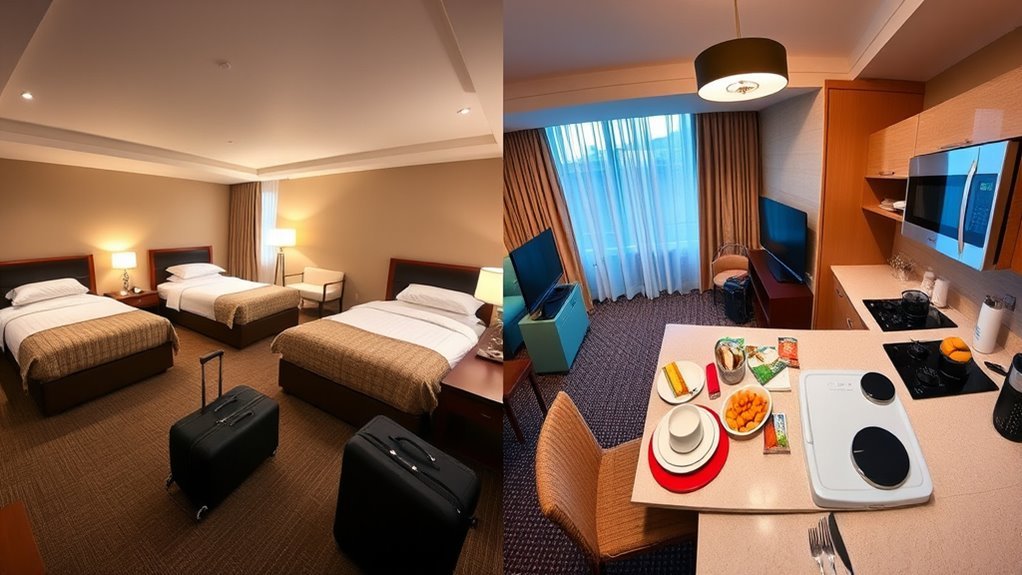
Meal savings can change which room arrangement is cheaper. A suite with a refrigerator, microwave, or kitchen may let your family prepare breakfast, store leftovers, and handle snacks without buying every item from a restaurant.
Included breakfast can also have significant value for a larger family. Confirm that breakfast is included in your specific rate and that it covers every registered guest. Some benefits depend on the booking channel, membership status, room rate, or number of people.
The suite’s room rate is only part of its value. Breakfast, groceries, leftovers, and flexible meal times can change the total cost of the stay.
Easy room-based meals may include cereal, fruit, yogurt, sandwiches, oatmeal, eggs, pasta, salads, or reheated leftovers. Choose food that fits the equipment provided and requires little cleanup.
A kitchen may provide the greatest value when:
- The stay lasts several nights
- Restaurant prices near the hotel are high
- The family eats breakfast in the room
- Children need snacks at unpredictable times
- A guest has an allergy or special diet
- Restaurant waiting times would disrupt naps or bedtime
Cooking every meal is not necessary. Replacing breakfast and one or two restaurant meals can still make a meaningful difference. Include groceries in the suite total so the comparison remains fair.
How Should Families Compare and Book These Options?
Search both hotel websites and reputable booking platforms, but compare identical products. A lower listing may use different cancellation terms, exclude breakfast, show a different bed type, or require immediate nonrefundable payment.
Check whether a hotel’s direct rate includes member pricing, parking credit, breakfast, a room upgrade, or more flexible cancellation. Then compare the actual value of those benefits rather than assuming direct booking or a third-party platform is always cheaper.
Cost Analysis Strategies
- Search one room and two rooms separately: Inventory and pricing can change when the number of rooms changes.
- Enter every guest’s age: Occupancy results and breakfast benefits may depend on child ages.
- Compare the same cancellation policy: Flexible and nonrefundable rates carry different risk.
- Check every available suite type: A studio, one-bedroom suite, and two-bedroom suite may have very different layouts.
- Price confirmed connecting rooms: Do not compare a guaranteed suite with only an unconfirmed request.
- Review loyalty benefits: Points, upgrades, breakfast, and late checkout vary by program, status, property, and rate.
- Call for unclear details: Ask the property to confirm beds, doors, occupancy, cribs, rollaways, parking, and connecting-room status.
Save screenshots or confirmation emails showing the room name, guest count, included benefits, and connecting-room guarantee. This gives you a written record if the displayed details later change.
Group Size Considerations
Group size affects both occupancy and comfort. A family of five may not fit in a standard room, but that does not automatically make a suite cheaper than two rooms. Search all legal arrangements and assign a sleeping place to every traveler.
If you are specifically pricing a five-person stay in the United States, see our family-of-five hotel cost guide for a deeper look at occupancy and budgeting.
Suite-focused brands provide useful examples of what may be included. Embassy Suites by Hilton describes its accommodations as two-room suites and includes free made-to-order breakfast. Its suites generally include a separate bedroom and living area, microwave, and mini-fridge.
Residence Inn by Marriott highlights spacious suites with separate living, working, and sleeping areas, full kitchens, and free breakfast.
These examples show why a higher suite rate can still provide value. They do not mean every hotel suite includes the same layout or benefits, so verify the individual property and rate.
When Should You Choose a Suite, Two Rooms, or Connecting Rooms?
Use the following decision table after calculating the complete totals.
| Choose | Best Fit |
| One suite | The all-in total is lower, the layout has enough beds, one bathroom is workable, and the family values shared space, breakfast, or a kitchen. |
| Two separate rooms | The combined price is competitive and the group needs private bedrooms, standard beds, two bathrooms, or separation between adults. |
| Confirmed connecting rooms | The family needs two rooms but also wants an interior door and written confirmation that the rooms connect. |
| Apartment-style stay | A longer stay makes multiple bedrooms, laundry, a full kitchen, and home-style living space more valuable than daily hotel services. |
For a short trip spent mostly outside the hotel, basic rooms may be enough. For a longer stay with naps, groceries, laundry, and downtime, layout and amenities have greater value.
Which Room Setup Fits Different Family Types?
The better option can change from one date to the next. A hotel may have many standard rooms left but only one suite, making two rooms cheaper. On another date, a suite promotion or included breakfast may reverse the result.
Consider these common scenarios:
- Parents with two young children: A one-bedroom suite may work well when the children can share a sofa bed and the parents want a closed bedroom.
- Parents with teenagers: Two confirmed connecting rooms may provide better sleep, privacy, and bathroom access.
- Three-generation family: A two-bedroom suite or two rooms may be more suitable than one open studio.
- Long stay in an expensive dining area: A full kitchen and included breakfast may offset a higher suite rate.
- One-night stop: Two discounted standard rooms may cost less because kitchen and living-space benefits have little time to create savings.
Location can also change the result. Paying slightly more for a suite near the main attraction may reduce parking, rideshare, transit, and travel time. Include those differences only when they genuinely vary between the options.
What Does a Three-Night Cost Comparison Look Like?
The following three-night example is hypothetical. It shows the method rather than typical national prices. The example assumes one vehicle and a 12% lodging tax applied to the room charges and mandatory fees. Actual rates, taxes, and taxable items vary.
| Cost Item | Two Rooms | One Suite |
| Room charges | $155 × 2 rooms × 3 nights = $930 | $285 × 3 nights = $855 |
| Mandatory fees | $20 × 2 rooms × 3 nights = $120 | $25 × 3 nights = $75 |
| Hypothetical 12% tax | 12% of $1,050 = $126 | 12% of $930 = $111.60 |
| Parking | $30 × 3 nights = $90 | $30 × 3 nights = $90 |
| Breakfast or groceries | Purchased breakfast: $50 × 3 days = $150 | Breakfast included; groceries and snacks = $75 |
| Estimated total | $1,416 | $1,206.60 |
Under these assumptions, the suite saves $209.40. The result would change if the two rooms included breakfast, the suite charged for parking twice, the tax treatment differed, or the standard rooms were discounted.
The calculation also shows the approximate break-even point: the suite could cost up to $209.40 more in other charges before losing its advantage in this example.
When a Vacation Rental or Apartment-Style Hotel May Win
A suite is not the only alternative to two hotel rooms. An apartment-style hotel or vacation rental may provide several closed bedrooms, a living room, a full kitchen, and laundry.
This arrangement can work well for a long stay, a multigenerational family, or a group that plans to prepare several meals. Compare the complete cost, including cleaning charges, service fees, deposits, parking, utilities, extra guests, and cancellation terms.
Also compare services. Hotels may provide a staffed front desk, daily breakfast, luggage storage, elevators, maintenance help, and a predictable check-in process. A rental may offer more private space but fewer on-site services.
Check the location carefully. A lower-priced rental far from the attractions may create extra transportation and parking costs that erase its savings.
Use This 10-Minute Booking Checklist
- Enter the same dates, guest count, and child ages for both searches.
- Confirm the maximum occupancy of every room.
- Count standard beds, bunks, sofa beds, cribs, and rollaways.
- Check whether the suite has a closed bedroom and a real kitchen.
- Verify whether connecting rooms are guaranteed or only requested.
- Compare final totals using the same cancellation terms.
- Record taxes, parking, breakfast, and optional bedding charges.
- Estimate groceries and restaurant spending for each arrangement.
- Check minimum check-in ages and adult-supervision requirements.
- Save the written confirmation and room description.
Questions to Ask Before Booking
- How many guests are legally allowed? Use the listed occupancy, not an estimate based on room size.
- How many standard beds are included? Confirm the size of every bed and whether a sofa bed is required.
- Is there a closed bedroom? A studio suite may not provide visual or sound separation.
- How many bathrooms are included? A large suite may still have only one.
- Is breakfast included for every registered guest? Check the specific rate and benefit terms.
- What does the kitchen contain? Verify the refrigerator, freezer, microwave, stovetop, cookware, dishes, sink, and table.
- Are connecting rooms guaranteed? Get written confirmation rather than relying on a request.
- Can children occupy the second room? Ask about minimum ages, adult registration, and supervision.
- Are cribs or rollaways available? Confirm availability, size, occupancy effect, and cost.
- Which charges are outside the displayed total? Review taxes, optional parking, meals, pets, and bedding.
- What is the cancellation deadline? Family plans can change, making flexibility worth a higher rate.
- Are accessible rooms available in the required layout? Confirm bathroom features and connecting-room availability directly.
Frequently Asked Questions
What is a 2-bedroom family suite?
A 2-bedroom family suite normally has two separate sleeping rooms and a shared living space. It may also include a kitchen, dining area, sofa bed, or second bathroom. Layouts vary, so verify the floor plan, bed types, bathroom count, and maximum occupancy before booking.
Can you have 2 adults and 3 children in a Premier Inn room?
Usually not in one standard UK Premier Inn family room. Premier Inn’s UK terms state that family rooms, where available, can accommodate two adults and two children under 16. A family of five should search for two rooms or another approved arrangement.
Is it cheaper to get a suite or two rooms?
Either option can be cheaper. Compare the final totals for the same dates, guests, bedding, and cancellation terms. A suite may win when one rate replaces two room charges and creates real breakfast or kitchen savings. Two rooms may win when standard-room discounts are strong or the suite carries a large premium.
Are connecting hotel rooms better than a suite?
Connecting rooms are often better when the family needs two bathrooms, several standard beds, and more privacy. A suite may be better when the group wants one living room, a kitchen, or a lower total price. Only treat rooms as connecting when the hotel confirms the arrangement.
Are adjoining and connecting hotel rooms the same?
No. Connecting rooms have an interior door between the rooms. Adjoining rooms are next to or near each other, but the label does not necessarily mean there is an interior door. If your family needs direct access between rooms, confirm a connecting-room arrangement in writing.
What should families look for in a hotel suite?
Check the number and size of beds, closed bedrooms, bathrooms, maximum occupancy, sofa-bed comfort, kitchen equipment, breakfast coverage, laundry, parking, noise, accessibility, and cancellation terms. Confirm every feature in the specific room description.
Do hotel suites usually have kitchens?
Some suites have full kitchens, while others provide only a mini-fridge, microwave, or coffee maker. Extended-stay properties are more likely to include full kitchens. The word “suite” alone does not guarantee cooking equipment.
Can children stay alone in the second hotel room?
It depends on the hotel’s age, registration, and supervision policies. Some properties require an adult in each room, while others allow older teenagers in a nearby or connecting room under parental responsibility. Ask the property and obtain the arrangement in writing.
Are mandatory hotel fees included in the advertised U.S. price?
For short-term-lodging offers covered by the FTC rule, the upfront total must include mandatory charges the seller knows and can calculate. Taxes, government charges, and optional services may appear later, but applicable excluded charges must be disclosed before payment.
Conclusion
Start with legal occupancy and workable sleeping arrangements, not price. Once both options safely fit the group, compare the complete stay totals and the comfort differences your family will actually use. A suite is not automatically cheaper than two hotel rooms, and two rooms are not automatically more comfortable.
Choose a suite when its total is lower and your family benefits from shared living space, kitchen access, breakfast, or simpler routines. Choose two rooms when privacy, standard beds, two bathrooms, or separate adult space justify the price. When possible, confirmed connecting rooms can combine privacy with convenient access.
Before paying, compare identical dates and terms, review the final checkout totals, confirm the room layout, and ask about children, beds, connecting doors, parking, breakfast, and cancellation. That process gives you a more reliable answer than the nightly rate alone.
Sources
- Federal Trade Commission Consumer Alert — explains the May 12, 2025 effective date and upfront short-term-lodging fee disclosures.
- FTC Rule on Unfair or Deceptive Fees FAQ — explains covered sellers, mandatory fees, taxes, government charges, and optional services.
- Premier Inn UK Booking Terms — supports family-room occupancy, age, supervision, and breakfast-policy statements.
- Embassy Suites by Hilton Fact Sheet — supports two-room suite layouts, microwaves, mini-fridges, and free made-to-order breakfast.
- Residence Inn by Marriott — supports separate living and sleeping areas, full kitchens, and free breakfast.
- Hilton Confirmed Connecting Rooms FAQ — explains instant confirmation, participating properties, ordinary requests, and possible rate differences.

1 thought on “Two Hotel Rooms Vs One Suite for Families (2026) | Cost Comparison”
Pingback: Hotel Bellman Tip Guide 2026: How Much Per Bag?