

Welding school prices vary widely because a short continuing-education certificate, a private intensive program, and a two-year college degree are not the same product. Published 2026 examples range from about $1,930 before books and fees for one continuing-education certificate to more than $26,000 including specified equipment and training materials for an intensive private program. Housing, transportation, tools, testing, and lost work time can raise your total cost.
Quick Answer
Published welding-program examples range from roughly $2,000 for a part-time continuing-education certificate to about $17,000–$26,500 for intensive private training. College tuition depends heavily on residency and credit hours. Add tools, PPE, shop fees, certification testing, transportation, housing, and lost income before comparing your final net cost.
Key Takeaways
- A short certificate may cost a few thousand dollars, while an intensive private welding program can exceed $20,000 before living expenses.
- Community-college prices depend on residency, required credits, lab fees, and whether general-education courses are included.
- Tools, PPE, books, consumables, testing, travel, and housing may not be included in advertised tuition.
- AWS Certified Welder testing prices are set by individual test facilities; inspector credentials have different and substantially higher fees.
- Compare each school’s net price, hands-on hours, completion data, employer relationships, and written placement results before enrolling.
Typical Tuition Ranges by Program Type

Welding programs come in several formats with very different prices. The right option depends on whether you need basic shop experience, preparation for an entry-level job, college credit, or advanced technical and management education.
| Program example | Published price | What to know |
| Austin Community College continuing-education certificate | $1,930 | A 28-week, part-time certificate. Books and fees are not included. |
| Austin Community College credit course | $391 per four-credit course for an in-district student | The same course costs more for out-of-district and out-of-state students. Tools, PPE, insurance, and course fees may be extra. |
| Hobart Structural Welding Program | $16,828 projected total | A 24-week program with published tuition, equipment, and training-material charges. |
| Hobart Pathways Welding Program | $26,485 projected total | A 40-week, 1,400-hour program with equipment and training materials listed separately from tuition. |
| Private career-school welding programs | $17,500–$22,700 tuition in one published example | The quoted range does not necessarily include every tool, fee, living expense, or financing charge. |
Certificate and continuing-education programs are usually the shortest route. A single-process course may last only a few weeks, while a complete entry-level certificate can run for several months. Confirm whether the classes provide college credit and whether they qualify for federal aid.
Diploma and intensive trade-school programs commonly provide more shop time and coverage of multiple processes, such as SMAW, GMAW, FCAW, and GTAW. These programs may cost more because they use substantial amounts of metal, gas, filler material, electricity, and instructor-supervised lab time.
Associate degrees usually take about two academic years and combine welding courses with blueprint reading, mathematics, metallurgy, communication, and general education. Public-college tuition may be relatively low for an in-district student but much higher for an out-of-district or out-of-state student.
Bachelor’s degrees in welding engineering, welding engineering technology, manufacturing, or related fields are different from entry-level welder training. They can prepare students for engineering, automation, inspection, supervision, or management roles, but the total price depends on the institution and residency. The U.S. Bureau of Labor Statistics does not list a bachelor’s degree as the typical entry-level requirement for welders.
Note: These are published examples, not guaranteed national price ranges. Tuition and fees can change between application and enrollment. Request a dated, written cost sheet directly from every school you are considering.
Products Worth Considering

🧲 Sticks to Toolboxes & Welders – Heavy-duty magnetic welding chart adheres to metal surfaces like your welding table, toolbox, or wall for instant reference while working.
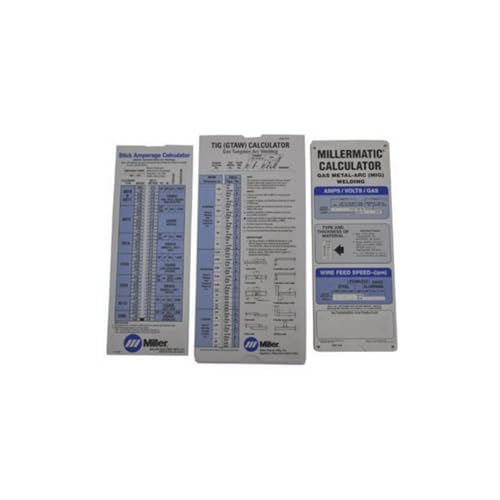
Comprehensive 3‑in‑1 reference pack covers MIG, TIG and Stick welding parameters—ideal for welders who work across multiple processes

Richard Finch, Welder's Handbook: A Complete Guide to MIG, TIG, Arc & Oxyacetylene Welding, "Completely Revised and Updated Edition!" paperback
Additional Costs: Tools, PPE, and Certification Fees

Tuition may cover instruction and use of the school’s welding machines, but it does not automatically cover the equipment and expenses needed to finish the program. A temporary planning allowance of $500–$1,500 for personal tools and PPE may be useful until you receive the school’s required-equipment list, but actual costs can fall below or above that amount.
For comparison, Hobart’s published 2026 program costs include a separate $1,525 equipment charge plus more than $1,100 in training materials. Other schools lend equipment, include consumables in lab fees, or require students to buy individual items.
- Personal protective equipment: Welding helmet, safety glasses, hearing protection, gloves, flame-resistant jacket or sleeves, work pants, and suitable boots.
- Hand tools: Welding pliers, chipping hammer, wire brush, soapstone, tape measure, combination square, clamps, files, and inspection gauges.
- Books and digital materials: Textbooks, codebooks, online access, blueprint-reading materials, and calculator costs.
- Shop and lab charges: Metal, electrodes, wire, shielding gas, test coupons, grinding wheels, abrasives, and machine-use fees.
- Administrative expenses: Application, registration, insurance, background-check, transcript, graduation, and parking fees.
- Travel and living costs: Fuel, public transportation, relocation, rent, food, utilities, childcare, and time away from paid work.
Products Worth Considering

A quick-install shielding set with a magnetic base: You will receive a quick-install shielding set with a magnetic base

Crafted with precision, our steel plates are laser-cut, offering unparalleled edge smoothness and dimensional accuracy compared to stamped and sheared parts.

How Much Do Welding Certifications Cost?
There is no single welding-certification price. For the AWS Certified Welder program, the Accredited Test Facility sets the performance-test and retest charges according to the welding process, position, material, procedure, and applicable code.
Under the AWS fee schedule effective January 1, 2026, the Certified Welder application fee is $70 and the yearly maintenance subscription is $105. The test-facility charge is separate. Advanced credentials have different prices: initial CAWI and CWI examinations are listed at $1,255 for AWS members and $1,520 for nonmembers.
Ask the school whether tuition includes practice coupons, destructive testing, visual inspection, certification paperwork, the first test attempt, and retesting. A school saying that it “prepares students for certification” is not necessarily promising that the certification test is included.
Warning: Welding PPE must be selected for the actual process and hazard. OSHA identifies metal fumes, ultraviolet radiation, burns, eye damage, electrical shock, fire, noise, and other risks. A helmet and gloves do not replace ventilation, hazard assessment, fire prevention, or supervised safety training.
Pro Tip: Ask the school to mark every required item as included, borrowed, rented, optional, or purchased by the student. That one document can reveal hundreds or thousands of dollars that are missing from the advertised tuition.
Funding Options: Scholarships, Grants, and Loans

Scholarships, grants, employer support, veterans’ benefits, workforce funding, payment plans, and loans can reduce or spread out the amount you pay. Eligibility depends on the student, institution, program, enrollment level, and funding source.
FAFSA and Federal Student Aid
Submitting the Free Application for Federal Student Aid can provide access to federal grants, work-study, and federal student loans for eligible college, career-school, and trade-school programs. However, not every welding school or short course participates in federal student-aid programs.
Before assuming that a Pell Grant or federal loan will apply, ask the financial-aid office for the school’s federal school code and confirm that your specific welding program is eligible. An institution may offer both aid-eligible programs and short courses that do not qualify.
Scholarships and Workforce Assistance
Welding associations, foundations, unions, manufacturers, employers, schools, and local organizations may offer scholarships. Apply early, follow every instruction, and verify whether an award can pay for tuition only or can also cover tools, PPE, books, testing, transportation, and living expenses.
Eligible students may also receive assistance through state or local workforce programs. The Workforce Innovation and Opportunity Act can support approved occupational training and, in some cases, related expenses such as tools, books, uniforms, transportation, or childcare. Contact your local American Job Center before enrolling because approval may be required in advance.
GI Bill Benefits
Veterans and eligible dependents should verify the school and the exact program through the GI Bill Comparison Tool. GI Bill approval does not automatically mean that every program at the institution is covered, and VA cautions that approval and accreditation are not the same thing.
Student Loans and Payment Plans
Use loans after reviewing grants, scholarships, employer reimbursement, veterans’ benefits, and workforce assistance. Compare the amount borrowed, interest rate, origination fee, repayment start date, monthly payment, and total amount repaid. A payment plan can spread tuition across the term, but it does not reduce the underlying price.
Note: An aid offer is not the same as free tuition. Separate grants and scholarships from loans, then calculate how much cash and debt remain after all aid is applied.
Comparing Schools: What Affects Total Price and Value
Compare the full cost of completing each program, not just the headline tuition. A cheaper program may become expensive if it excludes tools, consumables, testing, or transportation. A higher-priced program may offer more supervised booth time, more processes, included equipment, or stronger employer connections, but those benefits must be verified.
Products Worth Considering

Complete Beginner-Friendly Welding Project:Everything You Need to Start; This all-in-one kit includes pre-cut 201 carbon steel plates designed to form an impressive deer head sculpture; It's the perfect hands-on way to practice and master TIG, MIG, Arc, or Stick welding techniques, turning theory into a tangible piece of art

Premium welding kit training steel, makes 1 dice and 1 Cube

Unleashing Your Creativity: crafted meticulously from sturdy, solid low carbon steel, the kit allows you to assemble and weld into an aesthetic deer head fulfilling your passion for welding; Experience magical artistry with your style creation, truly making this kit an emblem of your welding skills
Calculate Your Total Welding School Cost
Use this formula for every school:
Net welding-school cost = tuition + mandatory fees + tools and PPE + books and consumables + testing + transportation and living costs + financing charges − grants, scholarships, employer payments, and benefits.
Also consider opportunity cost. A full-time daytime program may prevent you from working normal hours, while an evening community-college course may let you keep more of your current income.
Verify Accreditation and School Status
Use the U.S. Department of Education’s Database of Accredited Postsecondary Institutions and Programs to check institutional accreditation. You can also use College Scorecard to review available cost, completion, field-of-study, and outcome information.
Accreditation is not the only quality measure, and some legitimate noncredit training providers may not appear in the database. Still, accreditation and state authorization can affect federal-aid eligibility, credit transfer, employer acceptance, and complaint options.
Questions to Ask Before Enrolling
- What is the complete price from enrollment through graduation?
- Which tools, PPE, books, consumables, test coupons, and certification fees are included?
- How many supervised hands-on welding hours will I complete?
- Which processes, materials, positions, and joint types will I practice?
- Does the program include blueprint reading, welding symbols, fabrication, fit-up, metallurgy, inspection, and safety?
- Which credentials or qualifications can I earn, and who issues them?
- What percentage of the most recent cohort completed the program?
- How does the school define job placement, and how many graduates obtained welding-related jobs?
- What was the median starting wage for placed graduates, not the highest reported wage?
- Which employers hired recent graduates?
- What is the refund policy if I withdraw or the school closes?
- Can credits transfer to another recognized institution?
Warning: Treat claims such as “guaranteed job,” “100% placement,” or “six-figure welding career” cautiously. Ask for the reporting period, number of graduates, job definition, wage measure, exclusions, and written supporting data.
Lower-Cost Alternatives to Full-Time Welding School
A full private program is not the only route into welding. Depending on local employers and your existing experience, one of these paths may cost less:
- Continuing-education courses: Take one process at a time while keeping your current job.
- Community-college certificates: Pay by the credit and qualify for lower in-district tuition where available.
- High-school or dual-enrollment programs: Eligible students may earn training or college credit before graduation.
- Employer-sponsored training: Some manufacturers, shipyards, fabricators, and contractors hire helpers or trainees and provide structured instruction.
- Related-trade apprenticeships: Boilermaking, ironworking, pipefitting, sheet-metal work, and other skilled trades may include welding as part of paid on-the-job training.
- Targeted certification preparation: An experienced welder may need practice and testing rather than a complete beginner program.
The U.S. Department of Labor explains that registered apprenticeships combine paid work, structured on-the-job learning, classroom instruction, mentorship, and progressive wages. Search current opportunities through Apprenticeship.gov, but confirm the actual occupation, sponsor, training content, and credential before applying.
Career Outcomes and Return on Investment

Welding training can provide a practical route into manufacturing, construction, repair, shipbuilding, energy, and other industries, but no school can guarantee a specific wage or a quick payback.
In the latest BLS Occupational Employment and Wage Statistics release for May 2025, welders, cutters, solderers, and brazers had a median hourly wage of $25.84 and an annual mean wage of $56,760. Mean and median are different measures, and neither represents a guaranteed starting wage.
The latest national wage figure is useful for context, but your local entry-level wage, expected hours, overtime, benefits, and net school cost are better measures of personal return.
Specialized skills in pipe, aerospace, code work, automation, inspection, or difficult materials may improve access to certain jobs. Higher compensation can also reflect overtime, travel, per diem, hazardous conditions, union agreements, or remote work rather than the welding process alone.
Underwater welding should not be treated as a simple add-on that guarantees more than $100,000. It is part of commercial diving and requires diving training, medical fitness, safety preparation, and employer-specific qualifications. BLS reported a May 2025 annual mean wage of $88,320 for commercial divers, but individual earnings vary widely.
How to Estimate Your Return
- Calculate your net program cost after grants, scholarships, benefits, and employer support.
- Find realistic entry-level welding wages in your city and target industry.
- Subtract taxes, commuting, union dues, tools, and other work-related expenses from expected pay.
- Compare that amount with what you would likely earn without the training.
- Divide the net training cost by the expected monthly increase in take-home earnings.
- Run a conservative scenario that assumes a slower job search, lower starting wage, or one certification retest.
A program may still be worthwhile even with a longer payback period if it provides transferable credit, broad fabrication skills, recognized credentials, strong safety training, and a clear path to advancement.
Frequently Asked Questions
What is the typical duration of a welding program?
A single welding course may last a few weeks, while a complete certificate or private career program commonly lasts several months. Current examples include a 28-week Austin Community College continuing-education certificate, a 24-week Hobart structural program, and a 40-week Hobart pathway. Associate degrees generally require about two academic years.
Can prior metalworking experience reduce tuition or course length?
Possibly, but it is not automatic. A school may offer advanced placement, competency testing, transfer credit, or instructor approval to skip an introductory course. Ask for a written prior-learning policy before enrolling. A portfolio or previous certification may help document your experience but does not guarantee a tuition reduction.
Are online or hybrid welding courses respected by employers?
Online instruction can work well for safety theory, welding symbols, blueprint reading, metallurgy, and code study. However, welding is a physical skill that requires supervised practice and performance testing. A strong hybrid program should include substantial in-person lab time, documented hands-on hours, and assessments that match industry work.
How often does an AWS Certified Welder credential need renewal?
AWS Certified Welder status remains active as long as the required continuity is maintained. Welders generally submit documentation every six months confirming that they continue to use the process for which they qualified. The governing code may have additional requirements, and a lapse can require requalification.
Do welding schools offer job placement or apprenticeship partnerships?
Some schools provide resume help, interview preparation, employer visits, job leads, or relationships with local contractors and manufacturers. Availability varies. Ask for recent welding-related placement data and the names of employers that hired graduates. Related-trade apprenticeships and employer-sponsored training may also be available outside the school.
Can FAFSA pay for welding school?
FAFSA can help determine eligibility for grants, work-study, and federal loans at participating institutions and eligible programs. Not every welding course or school qualifies. Confirm the institution’s federal school code and the eligibility of the exact program before enrolling.
Do I need a college degree to become a welder?
Not usually. BLS lists a high school diploma or equivalent as the typical entry-level education, along with technical and on-the-job training. A certificate, diploma, or associate degree may improve your preparation, while a bachelor’s degree is more relevant to engineering, technology, automation, supervision, or management roles.
Is welding school worth the cost?
It can be worthwhile when the program provides substantial hands-on practice, relevant processes, recognized qualifications, strong safety instruction, reasonable net pricing, and verified connections to local employers. Compare the program’s net cost with realistic local starting wages and lower-cost training alternatives before deciding.
Conclusion
The best welding program is not automatically the cheapest or the longest. Compare the complete cost, supervised booth hours, processes taught, equipment included, certification arrangements, safety instruction, completion results, and employer connections. Verify accreditation or authorization where relevant, calculate your price after aid, and use realistic local wages rather than exceptional salary claims. A written side-by-side comparison will help you choose training that fits both your career goal and your budget.
Sources
- U.S. Bureau of Labor Statistics, May 2025 Occupational Employment and Wage Statistics — current national welding and commercial-diver wage data.
- American Welding Society Certification and Education Price List — 2026 application, maintenance, inspector-exam, and endorsement fees.
- American Welding Society Certified Welder Program — test-facility pricing and six-month continuity requirements.
- Federal Student Aid: FAFSA Steps for Students — federal aid for eligible colleges, career schools, and trade schools.
- U.S. Department of Veterans Affairs: Choosing a GI Bill-Approved School — program approval and benefit-comparison guidance.
- Occupational Safety and Health Administration: Welding Hazards and Solutions — welding fumes, radiation, electrical, burn, eye, and PPE hazards.
