Last updated: August 24, 2026 | Reviewed for 2026 CDFW Regulations Compliance
California does not require or sell a standard state youth fishing license. Under California law, all youth anglers age 15 or younger can fish for free without purchasing a California Department of Fish and Wildlife (CDFW) sport fishing license. The moment an angler turns 16, a regular annual or short-term California sport fishing license is required. However, children under 16 must still follow all state bag limits, size restrictions, open seasons, gear rules, and species-specific report card requirements, as well as separate daily permits charged by locally managed lakes.
Quick Answer: California Youth Fishing Rules
Anyone under age 16 fishes for $0 in California without a state fishing license. At age 16, anglers must purchase a standard license ($64.54 for California residents or $174.14 for nonresidents in 2026). Report cards are still mandatory for certain species (sturgeon, steelhead, spiny lobster, salmon) regardless of age. Local lakes (such as Lake Cuyamaca, which charges $7 for youth ages 6–15) require separate local permits.
Key Takeaways for Parents & Young Anglers
- Under 16 Years Old: No California state sport fishing license is required on any public waters, ocean shores, or rivers.
- Turning 16: A standard sport fishing license is required starting on the angler’s 16th birthday ($64.54 resident / $174.14 nonresident in 2026), valid for 365 days from purchase.
- Parent Supervision Rule: An unlicensed parent can supervise and unhook a child’s landed fish, but cannot cast, retrieve, hold the rod while trolling, or set the hook without an adult license.
- Free Second-Rod Privilege: Youth under 16 may fish with two rods in inland waters where allowed without buying the $19.44 Second-Rod Validation.
- Species Report Cards Apply to All Ages: Kids must carry a physical report card when fishing for steelhead, sturgeon, salmon (in select rivers), or California spiny lobster.
- Local Water Permits Are Separate: City, county, or district lakes (like Lake Cuyamaca) charge local day-use fishing fees independent of state license rules.
California Fishing License & Youth Permit Summary (2026)
| Angler Category / Item | 2026 Cost | Legal Requirement & Conditions |
|---|---|---|
| Youth Age 15 or Younger | $0 (Free) | Exempt from state license under FGC § 7145. Must follow all seasons, bag limits, and report-card requirements. |
| Resident Angler (Age 16+) | $64.54 | Mandatory beginning on 16th birthday. Valid for 365 consecutive days from date of purchase. |
| Nonresident Angler (Age 16+) | $174.14 | Annual license for non-California residents age 16 and older. Short-term options also available. |
| Report Card Species | Varies by species | Required for all ages (including under 16) when taking sturgeon, steelhead, salmon, or spiny lobster. |
| Lake Cuyamaca Daily Permit | $7 (Youth 6–15) $12 (Age 16+) |
Local park district fee required for all anglers in addition to state licensing rules. Ages 0–5 fish free. |
Is There a Youth Fishing License in California?
There is no specific reduced-fee “youth fishing license” in the state of California. Instead, the state provides an outright statutory exemption: under California Fish and Game Code section 7145, any person under the age of 16 is legally authorized to sport fish without purchasing a California state fishing license.
This exemption applies equally to California residents and nonresidents visiting the state. A child who is 15 years and 364 days old does not need a license. However, the moment that youth celebrates their 16th birthday, California law requires them to obtain a standard sport fishing license before casting a line into any inland or ocean waters.
While the state license requirement is waived for youth under 16, all other fish and game laws remain strictly in force. Young anglers must obey:
- Daily Bag and Possession Limits: Minors have the exact same daily catch and possession limits as adult anglers.
- Size Restrictions and Gear Rules: Minimum and maximum length limits, single-barbless hook designations, and artificial-lure-only zones apply to children just like adults.
- Seasonal and Water Closures: If a river or reservoir is closed to protect spawning runs, minors cannot fish there.
- Mandatory Report Cards: Tagging and reporting requirements for specific species must be in the child’s physical possession.
The key age is 16: younger anglers are exempt from the state license, but nobody is exempt from the fishing regulations, size limits, and species report cards that apply to California waters.
How Much Does a California Youth Fishing License Cost?
For an angler age 15 or younger, the California state sport fishing license fee is $0.00. At age 16, the angler transitions directly to the adult fee schedule.
Official 2026 CDFW Sport Fishing License Fees
According to the California Department of Fish and Wildlife, the 2026 sport fishing fee schedule is as follows:
| Angler or License Type | 2026 Fee | Validity Period |
|---|---|---|
| Youth Angler (Age 0–15) | $0.00 | Until 16th birthday |
| Resident Sport Fishing License (Age 16+) | $64.54 | 365 days from date of purchase |
| Nonresident Sport Fishing License (Age 16+) | $174.14 | 365 days from date of purchase |
| One-Day Sport Fishing License (Resident/Nonresident) | $21.09 | 1 specific calendar day |
| Two-Day Sport Fishing License (Resident/Nonresident) | $32.40 | 2 consecutive calendar days |
| Ten-Day Nonresident Sport Fishing License | $64.54 | 10 consecutive calendar days |
California annual fishing licenses operate on a rolling 365-day validity period from the date of purchase, rather than expiring on December 31. For comprehensive details on adult licensing packages and optional stamps, refer to the 2026 California fishing license cost guide.
Can You Buy a Lifetime Fishing License for a Child?
Yes. While children under 16 do not need an annual license, California residents can invest in a lifetime license for a young child, locking in permanent fishing privileges for life regardless of future fee increases or whether the child moves out of state later in life. In 2026, the CDFW lifetime fishing license fee schedule is:
- Ages 0–9: $709.00
- Ages 10–39: $1,160.25
- Lifetime Fishing Privilege Package (Optional Add-on): $465.75 (includes second-rod validation, ocean enhancement, and inland validations for life).
Buying a lifetime license for a child is an optional investment, not a legal requirement for youth fishing. See the California lifetime fishing license guide for complete long-term valuation details.
Local Permits: Lake Cuyamaca Example
Many city, county, and regional park districts manage public reservoirs and stock them privately with game fish. These entities are legally permitted to charge their own daily fishing permits in addition to state regulations. At Lake Cuyamaca in San Diego County, current daily fishing permits are:
- Adults (Age 16 and older): $12.00 per day (must also have a valid California state fishing license).
- Youth (Ages 6 to 15): $7.00 per day (no state license needed).
- Children (Age 5 and younger): Free when accompanied by a paying adult.
- Military Youth (Ages 6 to 15 with qualifying ID): $3.00 per day.
Always review local facility rules via the Lake Cuyamaca official notice or your local lake authority before packing gear, as local fees operate independently of CDFW licensing.
Key Distinction: A local lake permit is not a California sport fishing license. A 16-year-old fishing at Lake Cuyamaca must possess both the CDFW state fishing license ($64.54) and the local Lake Cuyamaca daily permit ($12.00).
Who Needs a California Fishing License by Age?
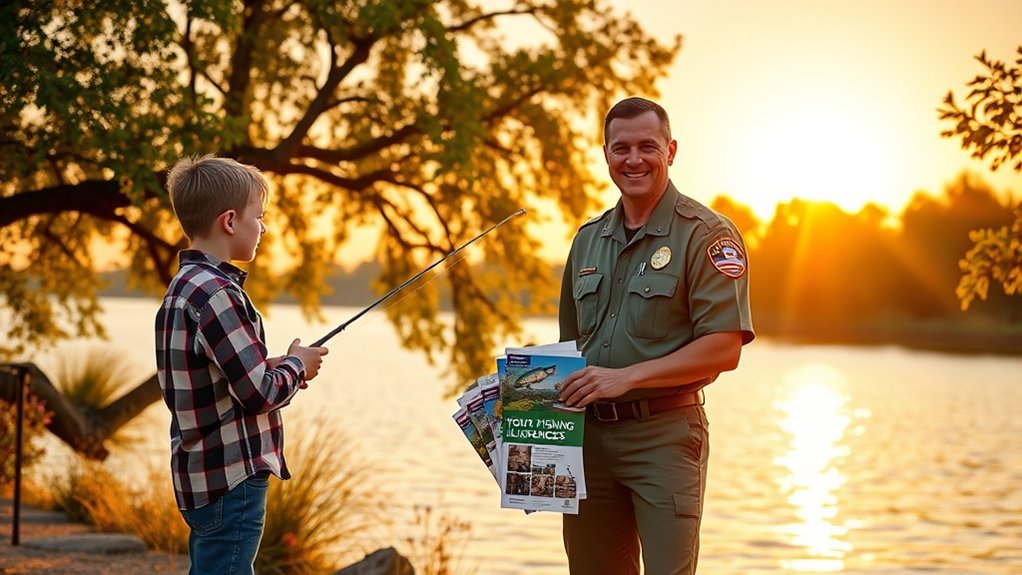
To determine what credentials a young angler or accompanying adult needs on the water, use this decision framework:
- Under Age 16: $0 state license required. May fish any public water open to the public.
- Age 16 and Older: Must purchase an adult California sport fishing license before wetting a line.
- Report-Card Regulated Species: Every angler (regardless of whether they are 5 or 50 years old) must purchase and carry a species-specific physical report card when fishing for steelhead, sturgeon, California spiny lobster, or salmon in designated river systems.
- Two-Rod Inland Fishing: Youth under 16 may fish with two rods in inland waters where authorized without purchasing a Second-Rod Validation. Adults age 16+ must purchase the validation ($19.44 in 2026).
- Parent Accompanying a Child: An adult who simply watches or guides does not need a license. However, if the adult performs any hands-on fishing action (casting, retrieving, setting the hook), that adult must hold a valid sport fishing license.
Important: The CDFW “Parent Hands-On” Enforcement Rule
Under California Fish and Game regulations, “take” is legally defined as hunting, pursuing, catching, capturing, or killing fish, or attempting to do so. If an unlicensed parent casts the lure, reels in the bait, or holds the rod while trolling, wildlife officers consider that active fishing. An unlicensed parent may verbally coach, help untangle line, or assist in netting/unhooking a fish that the child caught entirely on their own line.
Report Cards Required for Youth Anglers
A child’s state-license exemption does not excuse a missing report card. CDFW uses report cards to track harvest rates on sensitive fisheries. Young anglers must carry physical report cards for:
- Steelhead Trout: Required in all anadromous waters where steelhead fishing is permitted.
- White Sturgeon: Required across all waters. Anglers must also follow emergency barbless-hook and catch-and-release rules.
- California Spiny Lobster: Required in all ocean waters for any person taking lobster with hoop nets or by hand.
- Klamath, Trinity, and Smith River Salmon: Required when fishing for salmon in designated North Coast river basins.
Report cards must be physically marked immediately upon landing/retaining the species and returned to CDFW (or reported online) by the deadline printed on the card, even if zero fish were caught.
Warning: Failure to possess or return a required species report card carries misdemeanor fines in California. Ensure your child’s physical card is signed and kept in their tackle box or pocket on the water.
Where Young Anglers Can Fish Without a State License
While children under 16 fish free anywhere in California, older teens (16+) and parents can also take advantage of legal license-free locations:
- California Free Fishing Days: CDFW designates two days each year (typically the Saturday of Fourth of July weekend and the Saturday of Labor Day weekend) when anyone of any age can fish without a state license. In 2026, the remaining Free Fishing Day is Saturday, September 5, 2026. All size limits, gear restrictions, and report-card rules still apply.
- Public Ocean and Bay Piers: Under California law, anglers of all ages can sport fish without a fishing license from any public ocean pier, jetty, or breakwater built directly on the open ocean or a contiguous bay. This exemption does not extend to private piers, freshwater piers, or adjacent beaches.
- Enclosed Private Farm Ponds: A narrow exemption under FGC § 7035 permits fishing without a license on completely enclosed, off-stream private ponds that have no inflow or outflow connecting to state waters, provided the angler has the landowner’s permission and no commercial fees are charged.
How a Teen Age 16 or Older Buys a California Fishing License
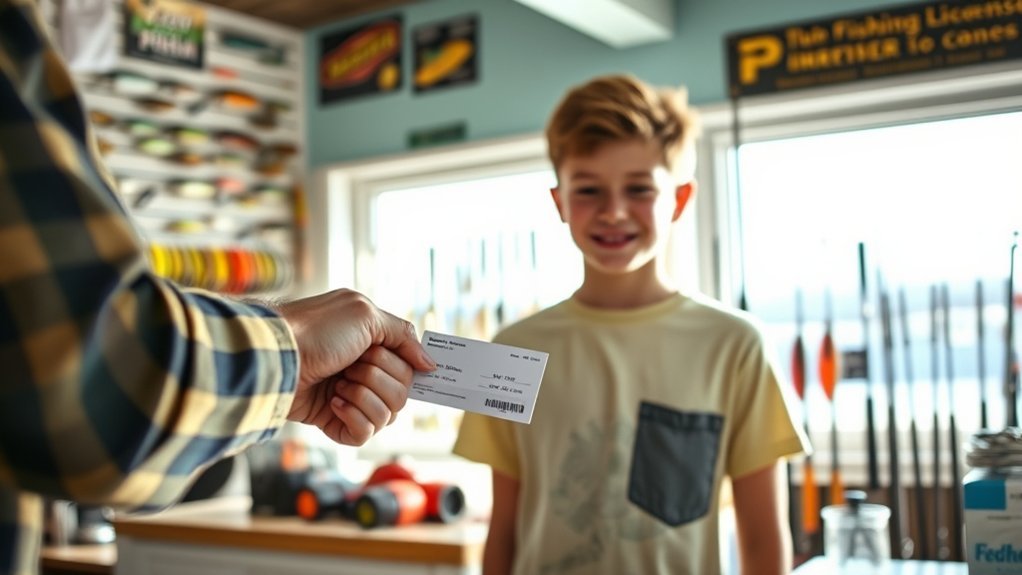
When a young angler reaches their 16th birthday, follow these steps to set up their CDFW profile and secure their license:
- Establish a CDFW GO ID: All anglers in the Automated License Data System (ALDS) are assigned a unique 10-digit GO ID. If the 16-year-old does not yet have a California Driver’s License or state ID card, the online system allows a parent or guardian to register them using their Social Security Number or birth certificate verification.
- Select the License Duration: Choose the standard 365-day resident sport fishing license ($64.54) or a short-term 1-day or 2-day license for single outings.
- Add Validations & Endorsements: Add necessary stamps such as the Second-Rod Validation ($19.44), Ocean Enhancement Validation (for ocean waters south of Point Arguello), or species report cards.
- Purchase Through Official Channels: Buy via the CDFW Online License Portal, at a local tackle shop/authorized license agent (such as Big 5, Bass Pro Shops, or Walmart), or by calling (800) 565-1458.
- Download to the CDFW License App: Anglers can display valid licenses electronically via the official CDFW License App on iOS or Android. Note: Screenshots or photos are not legally valid; the app must be logged in and stored for offline access.
- Carry Physical Report Cards: The mobile app cannot replace physical report cards. Physical cards must be on your person while fishing.
Pro Tip: Sync your license inside the CDFW License App while connected to home Wi-Fi before heading to remote mountain streams or coastal coves where cellular coverage is unavailable.
Benefits of California’s Under-16 Fishing Exemption
The state’s under-16 exemption encourages youth participation in outdoor conservation without financial barriers. Introducing young anglers to fishing fosters physical coordination, biological curiosity, and environmental ethics.
Skill Building and Outdoor Health
Fishing teaches children essential outdoor competencies, including patience, environmental awareness, and manual dexterity:
- Active Exploration: Bank fishing, surf casting, and lake hiking promote functional movement and screen-free outdoor recreation.
- Technical Knot & Rigging Skills: Tying improved clinch knots, measuring leader lengths, and weighting rigs develop spatial problem-solving skills.
- Water Safety Awareness: Kids learn respect for fast-moving currents, slippery bank edges, cold-water hazards, and tides.
Conservation Stewardship for Young Anglers
Every fishing trip provides an opportunity to teach conservation ethics that sustain California fisheries:
| Conservation Practice | Practical Lesson for Youth |
|---|---|
| Check Regulations Before Casting | Teaches that fishery rules change dynamically by season, water level, and fish migration. |
| Accurate Fish Measurement | Demonstrates how slot and minimum size limits protect juvenile and breeding-age fish stocks. |
| Wet-Hands Fish Handling | Protects the delicate protective slime coat of catch-and-release fish to prevent fungal infections. |
| Pack-It-Out Tackle Ethics | Prevents monofilament line, soft plastics, and lead sinkers from endangering water birds and aquatic life. |
Fishing Regulations for Youth Anglers
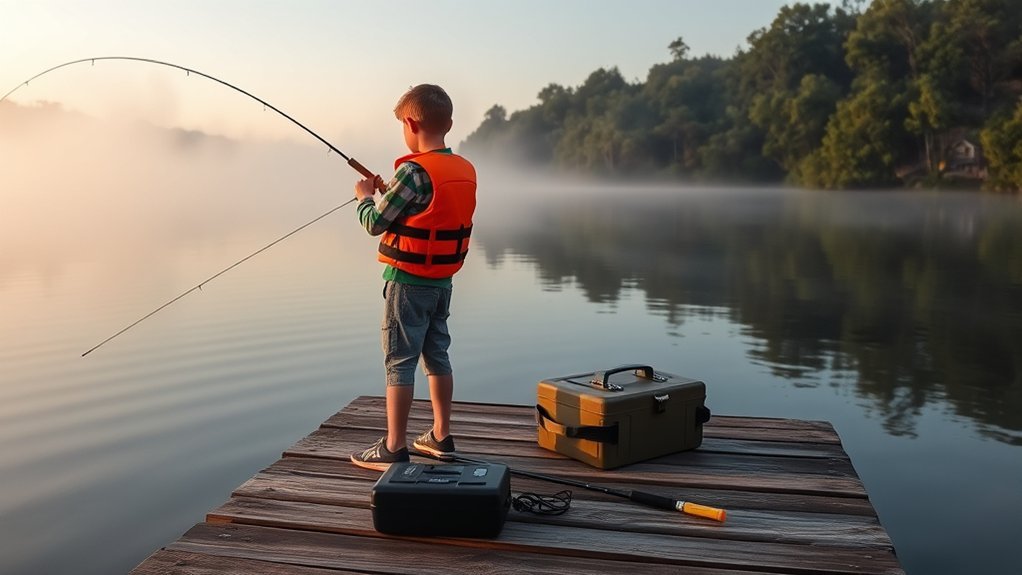
Youth anglers must strictly follow CDFW freshwater and ocean fishing regulations for the specific body of water they are fishing. Always review the current CDFW Fishing Regulations Booklet before heading out.
General Youth Safety Checklist
- Personal Flotation Devices (PFDs): California law requires all children under 13 years of age to wear a properly fitted USCG-approved life jacket while on a moving recreational vessel of any length. PFDs are strongly recommended along steep, slippery riverbanks.
- Eye and Sun Protection: Polarized sunglasses protect young eyes from errant hooks during casting while cutting surface glare to spot fish.
- Pliers and Hook Removers: Carry long-nose pliers for safe hook removal, minimizing handling time for released fish and keeping young fingers away from sharp teeth or spine rays.
- Local Fish Advisories: Check the California Office of Environmental Health Hazard Assessment (OEHHA) guidelines for water-specific fish consumption limits, especially for pregnant women and young children.
Special Programs for Young Anglers
California offers several community and statewide initiatives to help kids learn to fish:
- CDFW Fishing in the City: Offers structured youth fishing clinics in major metropolitan hubs (Sacramento, San Francisco Bay Area, Los Angeles, and Fresno). Tackle and rods are loaned for free, and lakes are stocked specifically for the events.
- Free Fishing Days: Held semi-annually (July 4 and September 5, 2026), providing an ideal entry point for unlicensed parents and teens to fish together legally.
- Community Service Permits at Lake Cuyamaca: Recognized youth organizations (scouts, youth sports, church groups) can fish for free at Lake Cuyamaca after completing a pre-arranged one-hour lake conservation cleanup project.
- Tackle Loaner Programs: Many California public libraries and state park visitor centers maintain rod-and-reel loaner programs for families trying the sport for the first time.
Resources for Parents and Guardians
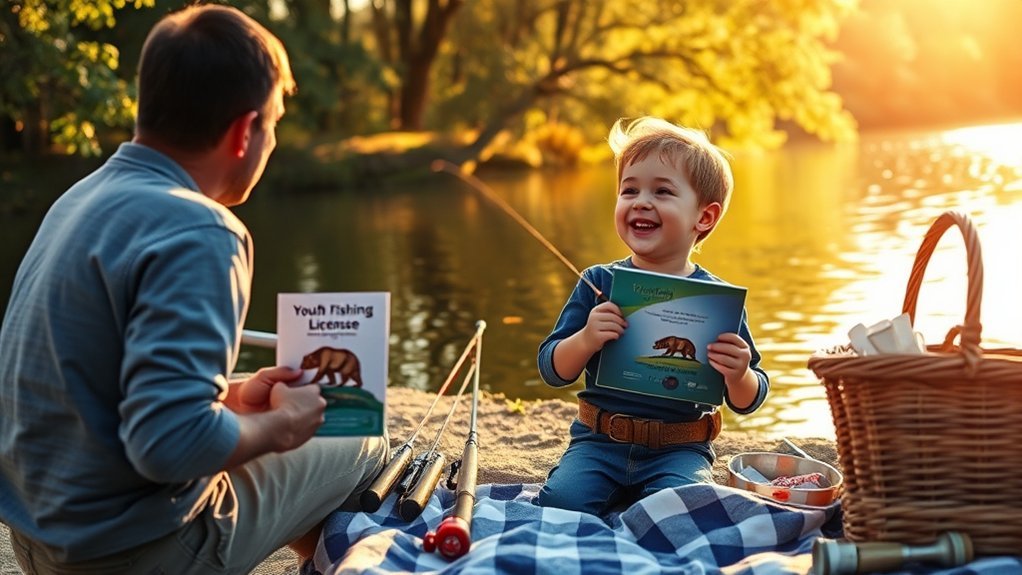
Before launching your family outing, verify your trip details against these five checkpoints:
- Age Verification: Confirm if any youth in your group will turn 16 during the trip window.
- Specific Water Jurisdiction: Confirm whether the lake is a state water, private concession, or municipal reservoir requiring a separate local day pass.
- Species Seasons & Report Cards: Verify if your target species (steelhead, sturgeon, salmon, lobster) requires a physical report card.
- App Credentials: Make sure all adult licenses are downloaded and visible offline in the CDFW License App.
- Tackle & Safety Pack: Bring first aid supplies, hook removers, life vests, and sun protection.
Frequently Asked Questions
Is there a youth fishing license in California?
California does not sell a discounted youth sport fishing license. Instead, all children age 15 or younger are exempt from state fishing license requirements and may fish for free. Anglers must purchase a standard adult fishing license beginning on their 16th birthday.
Can a parent help a child fish without a license in California?
A parent may supervise, coach, bait hooks, and help unhook landed fish without a license. However, if an unlicensed parent casts the rod, reels in the lure, holds the rod while trolling, or sets the hook, CDFW considers this active fishing and can issue a citation for fishing without a license.
Can youth anglers use two rods in California without a validation?
Yes. Under CDFW inland regulations, youth under 16 years of age may fish with two rods in inland waters where two-rod fishing is legally permitted, without having to purchase the Second-Rod Validation that adults must buy.
Can I buy a lifetime fishing license for a child in California?
Yes, provided the child is a California resident. In 2026, CDFW offers lifetime sport fishing licenses at $709.00 for ages 0–9 and $1,160.25 for ages 10–39. This is an optional investment that grants lifetime fishing rights after the child turns 16.
Can an unused California fishing license be refunded?
No. CDFW regulations state that all sport fishing licenses, stamps, and report cards are considered active upon purchase and are non-refundable and non-transferable under any circumstances.
Do youth need a fishing license for private ponds?
Youth under 16 are already exempt statewide. For anglers 16 and older, fishing without a license is permitted only on private, wholly enclosed, off-stream ponds with no public water connection, provided they have owner permission and no commercial fees apply.
Does a 15-year-old need a license after turning 16?
Yes. The state exemption expires on the angler’s 16th birthday. To continue fishing legally in California, a 16-year-old must purchase a valid California sport fishing license ($64.54 resident annual in 2026).
Can a child fish on a California public ocean pier without a license?
Yes. Children under 16 are exempt on all public waters, and qualifying ocean/bay piers are license-free for anglers of all ages. All catch limits, size limits, and species restrictions still apply.
Conclusion
California makes introducing children to the outdoors straightforward by eliminating state license fees for everyone under 16. There is no need to purchase a youth license—kids simply head out and fish. However, remember the crucial dividing lines: the exact day an angler turns 16 requires an adult license ($64.54 resident in 2026), regulated species require physical report cards regardless of age, and municipal facilities like Lake Cuyamaca require separate local permits. By confirming local water rules and keeping an eye on the 16th birthday threshold, families can enjoy California’s premier fisheries with complete confidence and compliance.
Sources
- California Department of Fish and Wildlife: Sport Fishing Licenses and Report Cards — 2026 fees, age thresholds, license duration, second-rod exemptions, and refund policies.
- California Department of Fish and Wildlife: Fishing Regulations — Official freshwater and ocean sport fishing regulation booklets.
- California Department of Fish and Wildlife: Free Fishing Days — 2026 schedule and applicable rules.
- California Department of Fish and Wildlife: Public Pier Fishing — Ocean and bay public pier fishing exemptions.
- Lake Cuyamaca Recreation and Park District: Fishing Fees and Catch Limits — Local daily permit fees, operating hours, and catch limits.
- Lake Cuyamaca Recreation and Park District: 2026 Price Changes — 2026 fee structure and age categories.
- California Department of Fish and Wildlife: Lifetime Licenses — Lifetime license pricing and privilege package details.
- California Department of Fish and Wildlife: CDFW License App — Mobile license validation, offline display rules, and physical report card requirements.
- California Fish and Game Code § 7145 — Statutory authority establishing sport fishing license age thresholds and exemptions.