
Alaska makes sport fishing accessible to young anglers, but a license exemption does not remove every paperwork requirement. The documents a child needs depend on residency, age, the species being targeted, annual harvest limits, and any special rules for the exact water being fished.
Quick Answer
Alaska residents younger than 18 and nonresidents younger than 16 do not need a sport fishing license or king salmon stamp. They need a free harvest record card when fishing in a fishery with an annual limit, and they must record any retained qualifying fish immediately. Local permits and emergency orders may add requirements.
Key Takeaways
- Resident youth: No Alaska sport fishing license is required until age 18, unless the person is proxying or guiding.
- Nonresident youth: No sport fishing license is required until age 16.
- King salmon stamp: Resident anglers under 18 and nonresident anglers under 16 are exempt.
- Harvest record: A free card is needed when an exempt angler fishes in a fishery with an annual harvest limit.
- Current rules: Always check the regulation booklet and emergency orders for the exact area before fishing.
At a Glance
| Alaska Resident | No sport fishing license while younger than 18 |
| Nonresident | No sport fishing license while younger than 16 |
| King Salmon Stamp | Not required for youth within the age exemptions |
| Harvest Record Card | Free; required when fishing in a fishery with an annual harvest limit |
| Basic Youth Cost | $0 for the exempt license, stamp, and harvest record card |
Who Qualifies for an Alaska Youth Fishing License Exemption?
Under the Alaska Department of Fish and Game licensing rules, an Alaska resident younger than 18 does not need a sport fishing license. A nonresident younger than 16 is also exempt.
The same age rules apply when sport fishing in Alaska’s fresh water and marine waters. Fishing from shore instead of a boat does not change the license threshold.
- Resident ages 0–17: No sport fishing license is required.
- Resident age 18 or older: A resident sport fishing license is required.
- Nonresident ages 0–15: No sport fishing license is required.
- Nonresident age 16 or older: A nonresident sport fishing license is required.
Alaska’s youth exemption is based on both residency and age: residents are exempt through age 17, while nonresidents are exempt through age 15.

This kid-friendly cookbook helps young chefs build confidence in the kitchen with more than 100 recipes designed for fun, learning, and delicious results. Created by America's Test Kitchen Kids, it offers approachable instructions, helpful guidance, and a wide range of dishes that make cooking and eating an engaging family activity.

This daily devotional helps parents pray purposefully for their children through a full year of Scripture readings, reflections, and guided prayer prompts. Written to encourage faithful family discipleship, it offers practical, biblically grounded support for parents who want to shape their prayers around God's Word. A foreword by Sinclair B. Ferguson adds trusted theological insight and encouragement.

SET is a fast-paced family card game that challenges players to spot patterns and make matches by color, shape, shading, or number. Easy to learn yet mentally engaging, it works well for solo play, group game nights, travel, and classroom fun. Its quick rounds and educational value make it a favorite for kids, teens, and adults alike.
How Alaska Residency Is Determined
For fish and game licensing, a resident is generally someone who has lived in Alaska for the previous 12 consecutive months, intends to remain in Alaska, and is not claiming residency or receiving resident benefits elsewhere. Military provisions and other special cases can differ, so families with an uncertain status should review the current ADF&G residency guidance before relying on resident rules.
Resident youth under 18 normally do not need a sport fishing license, but the exemption does not apply when the person is acting as a fishing guide or fishing by proxy.
Alaska Youth Fishing License Costs
The standard cost for a qualifying young angler is $0. Alaska does not require resident youth under 18 or nonresident youth under 16 to buy a sport fishing license. Their annual harvest record card is also free when one is needed.
The following 2026 statewide license and king salmon stamp fees become relevant when the angler reaches the applicable age:
| Document | 2026 Cost |
|---|---|
| Resident annual sport fishing license | $20 |
| Resident annual king salmon stamp | $10 |
| Nonresident 1-day license or king salmon stamp | $15 each |
| Nonresident 3-day license or king salmon stamp | $30 each |
| Nonresident 7-day license or king salmon stamp | $45 each |
| Nonresident 14-day license or king salmon stamp | $75 each |
| Nonresident annual license or king salmon stamp | $100 each |
Annual licenses are valid from the purchase date through December 31. Short-term nonresident licenses are valid for their stated number of consecutive days.
King Salmon Stamps and Harvest Records for Young Anglers
Resident anglers under 18 and nonresident anglers under 16 do not need a king salmon stamp. This exemption applies even though most older anglers must have a current stamp when fishing for king salmon.
King Salmon Stamp Requirements
An angler who has reached the applicable licensing age generally needs both a sport fishing license and a king salmon stamp when fishing for king salmon in fresh or salt water. This includes catch-and-release fishing. King salmon in stocked landlocked lakes are an exception to the stamp requirement.
Youth who fall within the resident or nonresident age exemption do not buy the stamp. They may still need a harvest record card or a fishery-specific permit.
When a Youth Needs a Harvest Record Card
A free Sport Fishing Annual Harvest Record Card is required when an exempt youth participates in a sport fishery that has an annual harvest limit. Many king salmon fisheries and some trout, lingcod, and other fisheries use annual limits.
Having the card does not mean every fish must be written down. Immediately after landing and retaining a fish covered by an annual limit, the angler must record:
- The harvest date
- The water where the fish was harvested
- The fish species
Entries on the paper card must be made in ink. Each child needs a separate card completed with that child’s information; one family card cannot be shared among several anglers.
Note: The standard annual harvest record card is not submitted at the end of the season. Carry it while fishing, show it when requested, and retain it through the fishing season. A separate fishery permit may have its own reporting deadline.
If the card is lost, obtain another card and transfer every previous harvest entry to the replacement. Failure to possess the required card or immediately record a qualifying fish can result in a citation, and fish or gear may be subject to forfeiture.
Where to Obtain a Harvest Record Card
The verified statewide sources for the free card are:
- The printable PDF on the ADF&G website
- Participating fishing-license vendors
- Alaska Department of Fish and Game offices
Some special fisheries use a permit instead of the standard card. For example, the Upper Copper River king salmon permit has its own recording and reporting rules. Read the regulation section for the exact drainage before deciding which document to carry.
Warning: Published regulation booklets can be changed by emergency order. Check the current ADF&G emergency orders for the species and area immediately before each trip.
Where and How to Get Alaska Fishing Documents
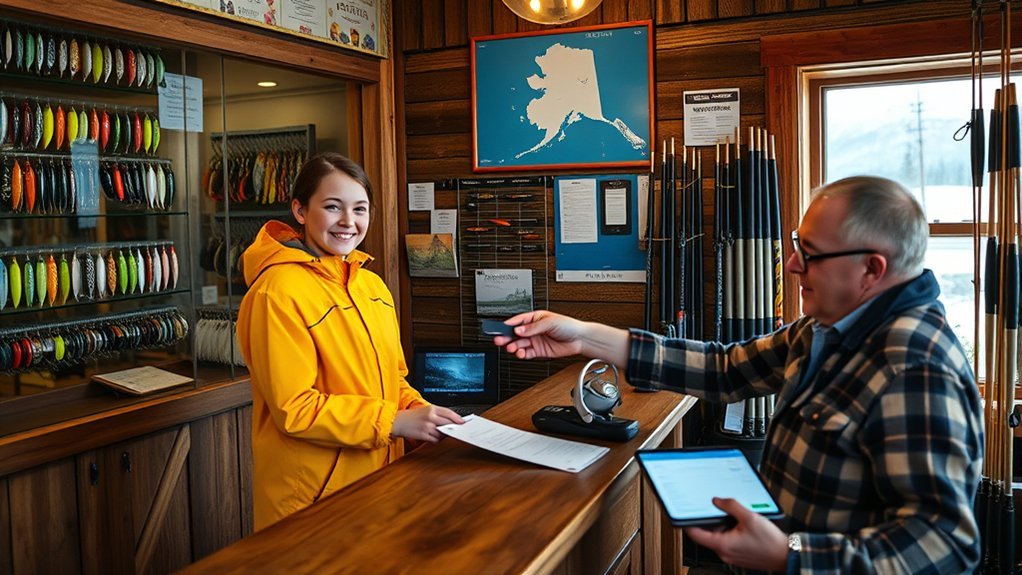
A qualifying youth does not need to purchase an optional youth sport fishing license. Instead, determine whether the planned fishery has an annual limit and obtain the free harvest record card when required.
- Confirm residency and age. Use the resident-under-18 or nonresident-under-16 rule.
- Open the correct regional regulations. Choose Northern, Southwest, Southcentral, or Southeast Alaska, then find the exact management area or drainage.
- Look for an annual limit or special permit. Obtain the free card or permit before fishing.
- Check emergency orders. Confirm that the season, retention rules, gear restrictions, and limits have not changed.
- Carry the document. Keep it available for inspection and record qualifying retained fish immediately.
Licenses and stamps for anglers who have reached the required age are available through the ADF&G online store, most sporting-goods license vendors, Fish and Game offices, and the ADF&G mobile app.
Pro Tip: Print and complete the free youth harvest card before leaving home. Keep it in a waterproof license holder so the card remains readable when fishing in rain, spray, or remote areas without cellular service.
Digital vs. Printed Alaska Fishing Credentials
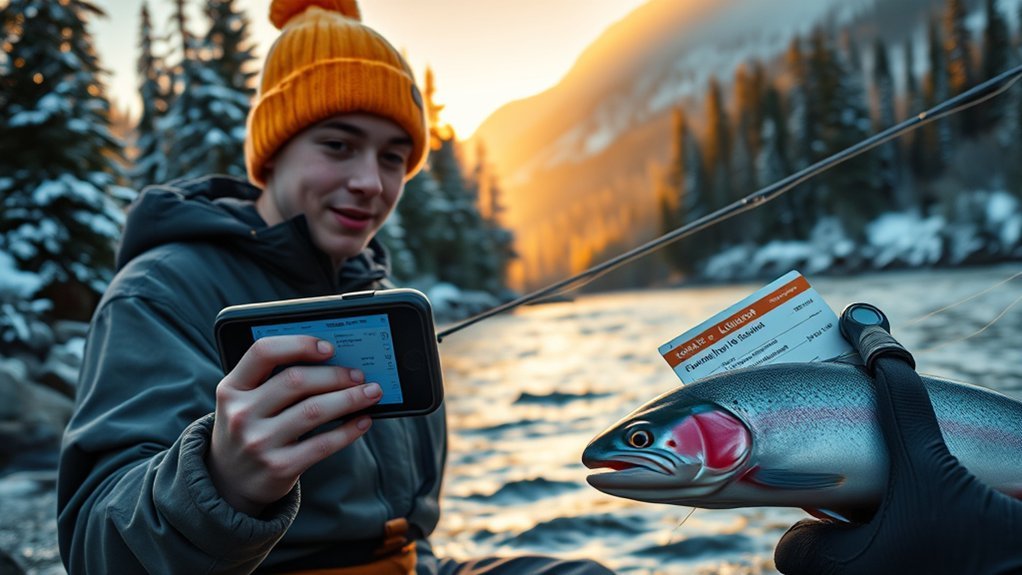
Alaska accepts several license formats for anglers who need a paid license. A printed or electronic PDF license may be physically or electronically signed. An angler may also carry a photo of the signed license. Licenses purchased through a personal ADF&G account can be eSigned and displayed on a device.
The free ADF&G mobile app can display licenses and permits, provide regulations for offline use, and support field harvest recording. However, the exact recording method accepted for a particular fishery should be confirmed in that area’s current regulations.
- Electronic license: Convenient and accepted when properly signed or eSigned.
- Printed license: Reliable when a phone is lost, wet, damaged, or out of power.
- Paper harvest card: Free, easy to print, and completed in ink.
- Carbon-copy license: A lost carbon-copy license requires a $5 duplicate.
- Lost harvest card: Obtain a new free card and copy all previous harvest entries onto it.
Downloading credentials and regulations for offline use is safer than depending on a cellular signal. A waterproof printed backup is still useful on remote trips.

This colorful toy boat fleet gives toddlers fun, screen-free water play during bath time, pool days, beach trips, and water table adventures. Designed for little hands, the boats are easy to grip and float well while encouraging imaginative storytelling, pretend ocean journeys, and sensory play.

This advanced Hidden Pictures puzzle book challenges kids ages 8-12 with ultra-difficult seek-and-find games designed to sharpen focus and problem-solving skills. With over 1,500 hidden objects to discover, it delivers hours of engaging brain-teasing fun for independent play, travel, or quiet time.

This ROCKBROS bicycle front frame bag gives riders convenient storage and easy phone access on every ride. It features a high-sensitivity TPU touchscreen window, waterproof construction, reflective details, and a secure multi-strap fit to help keep essentials organized and visible while cycling. Designed for phones up to 7 inches with slim cases, it also includes a hidden earphone hole and quick-release installation for everyday commuting and long-distance riding.
Special Rules and Exemptions for Kids Fishing in Alaska
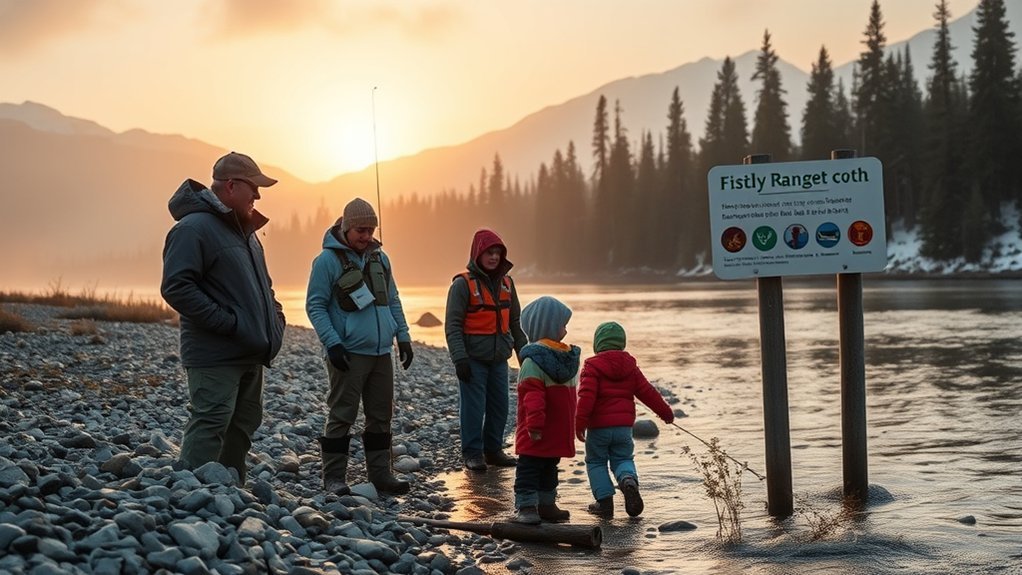
The youth license exemption applies to ordinary sport fishing, but it does not replace species limits, seasons, gear rules, special permits, or emergency orders. The exact water and fishery type matter.
| Situation | What the Youth Angler Should Do |
|---|---|
| Ordinary sport fishing with no annual limit | Follow age exemption and area bag, size, season, and gear rules; a harvest card may not be needed. |
| Fishery with an annual limit | Carry a personal harvest record card and immediately record retained qualifying fish. |
| Fishery with a special permit | Obtain the permit and follow its recording, possession, and reporting instructions. |
| Youth-only fishing event | Check the event’s exact age definition, dates, boundaries, and adult-assistance rules. |
| Shellfish or crabbing | Review the regional shellfish rules because some crab, shrimp, and clam fisheries require separate permits. |
| Personal-use or subsistence fishing | Do not rely solely on sport fishing rules; these are separate resident-only fisheries with different license, permit, and reporting requirements. |
The ADF&G sport fishing regulations page provides current regional booklets. Select the region first, then review the general rules and the section for the exact management area.
Personal-use and subsistence fishing are separate from ordinary sport fishing. Only Alaska residents may participate in those fisheries, and some require household permits or online harvest reports. Review the official personal-use and subsistence guidance before participating.
Frequently Asked Questions
Do youth license exemptions cover saltwater fishing from shore or boats?
Yes. The resident-under-18 and nonresident-under-16 exemptions apply in Alaska’s fresh and marine waters. Fishing from a beach, dock, charter boat, or private boat does not change the age threshold. Area seasons, bag limits, gear restrictions, and charter rules still apply.
Are parental signatures required to obtain a youth fishing license?
A qualifying youth does not apply for a paid sport fishing license. A parent or guardian may print and help complete the child’s free harvest record card, including the youth’s name, age, and birthday. ADF&G’s public harvest-card instructions do not list a separate parental-signature requirement for that card.
Can youth participate in Alaska fishing tournaments?
Usually, yes. The state license exemption does not prevent a qualifying youth from entering an event. The angler must still meet the tournament’s age and registration rules and comply with all current state and area fishing regulations.
Is an unused Alaska fishing license refundable?
Simply deciding not to fish normally does not qualify for a refund. ADF&G considers written requests only in limited cases, such as a death, serious disabling illness or injury, total cancellation of all applicable seasons, or a qualifying catastrophic event. Scheduling and transportation problems generally do not qualify.
Do youth need separate permits for shellfish or crabbing?
Sometimes. The youth sport fishing license exemption may still apply, but certain crab, shrimp, clam, personal-use, or subsistence fisheries require a separate permit. Requirements vary by region, species, season, and fishery type.
Do young anglers need a king salmon stamp for catch-and-release fishing?
Resident anglers under 18 and nonresident anglers under 16 are exempt from the stamp, including when targeting king salmon. Anglers who have reached the applicable age generally need a stamp even for catch-and-release fishing, except when fishing for king salmon in stocked landlocked lakes.
Does a youth need to return the annual harvest record card?
No. The standard annual sport fishing harvest record card is carried in the field and retained through the fishing season, but it is not turned in. A separate area permit may have a mandatory online report or deadline, so read that permit carefully.
What happens when a young angler reaches the license age?
An Alaska resident must possess a sport fishing license beginning at age 18. A nonresident must possess one beginning at age 16. If the angler targets king salmon, a stamp is also generally required after the exemption ends.
Conclusion
Alaska residents under 18 and nonresidents under 16 can sport fish without buying a license or king salmon stamp. The key remaining duty is to carry a free harvest record card when fishing in a fishery with an annual limit and immediately record any qualifying fish that is retained. Before each trip, check the exact regional regulations, special permits, and current emergency orders.
Sources
- ADF&G Sport Fishing Licenses, King Salmon Stamps, IDs and Harvest Record Cards — youth license and stamp exemptions and harvest-card requirements
- 2026 ADF&G Sport Fishing Licensing Summary — current license fees, king salmon stamp fees, residency guidance, and age rules
- ADF&G Sport Fishing Annual Harvest Record Card — recording, possession, replacement, and retention instructions
- ADF&G General License Information — electronic formats, duplicate licenses, age rules, and refund conditions
- ADF&G Sport Fishing Regulations — statewide and regional regulation booklets
- ADF&G Emergency Orders and Press Releases — current changes to seasons, limits, areas, and fishing methods

Celebrate birthdays, anniversaries, and other special moments with this handcrafted set of number candle holders from 1 to 10. Made from recycled aluminum in Mexico, each piece offers a distinctive handmade finish and lasting keepsake quality. Presented in a petite box, it makes a thoughtful gift and a charming addition to home décor.

These colorful answer buzzers turn lessons, review games, and family activities into lively game-show style challenges that boost participation and make learning more interactive. Each buzzer has a distinct sound to clearly identify who buzzed in first, while the durable, palm-sized design makes them easy for kids and adults to use in classrooms, homeschools, and group settings.

Capri Sun Roarin' Waters Fruit Punch offers a kid-friendly flavored water beverage in convenient, mess-free pouches for school lunches, sports, and travel. Made with natural flavors, stevia, and just 1g of sugar per pouch, it delivers refreshing apple, orange, and cherry flavor with no artificial colors, flavors, or preservatives. This multipack is ideal for families looking to stock up on an easy hydration option kids will enjoy.
