
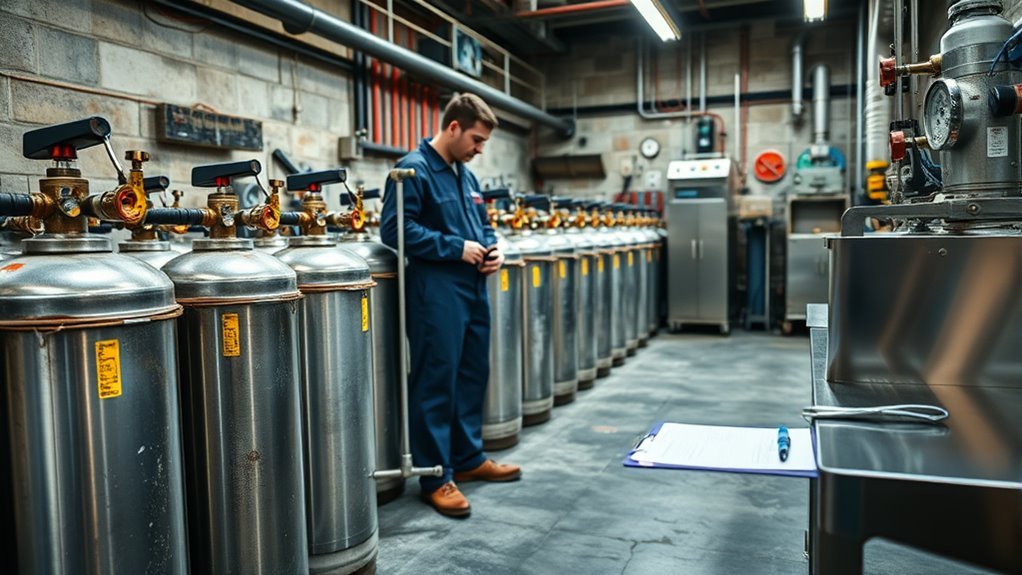
Recertifying a welding gas cylinder typically costs you $20–$60, with most shops charging about $40 per bottle for hydrostatic testing, inspection, and stamping. The process fills the tank with water, pressurizes it (usually ~1.5× service pressure), holds and inspects for leaks or deformation, then issues a new certification date if it passes. Some suppliers offer free exchanges or mobile testing. Comparing options can save you money and downtime. The next section explains how to choose.
Quick Answer
- Recertification costs $20–$60 per cylinder, often around $40 for hydrostatic testing.
- The test involves filling with water, pressurizing to about 1.5 times service pressure, and checking for issues.
- Most cylinders need retesting every 5 years, or 10 if specially marked.
- Options include local shops, suppliers, or exchanges to avoid fees.
- Check stamps for dates and always confirm with providers.
How Hydrostatic Testing Works for Welding Tanks
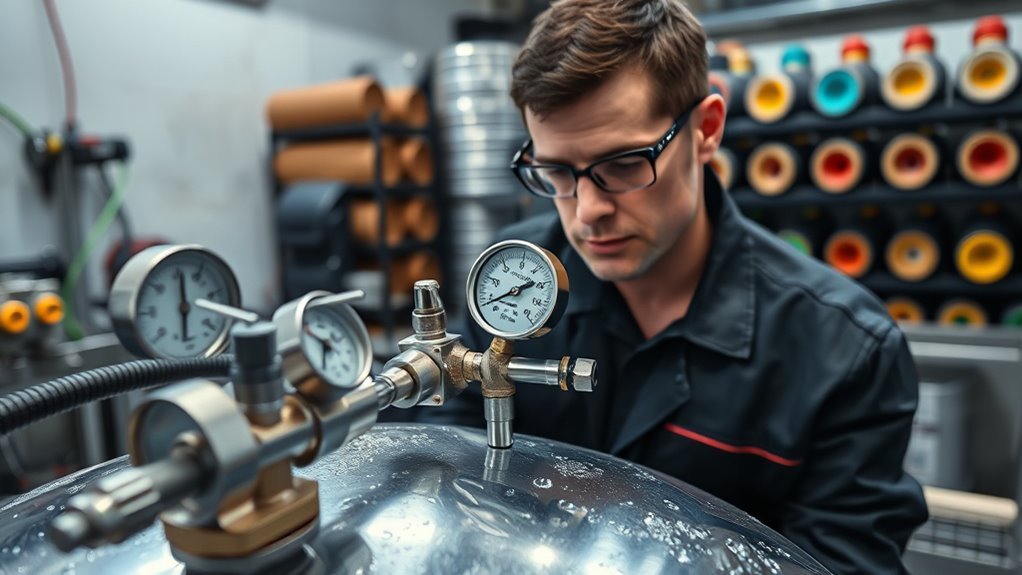
When you need to confirm a welding tank’s safety, hydrostatic testing checks its integrity. It fills the cylinder with water and pressurizes it, usually to about 1.5 times its service pressure. Then it holds that pressure to watch for leaks, permanent deformation, or other failures.
Hydrostatic testing verifies a welding tank’s safety by filling it with water, pressurizing to ~1.5× service pressure, and checking for leaks or deformation.
You drain and inspect the tank before filling to spot obvious defects. During the hold period, you monitor pressure stability and the exterior for seepage or bulging. Any change indicates failure.
After a successful test, you receive certification. It documents test parameters, condition, and next recertification date (typically 5 or 10 years). You must check the stamped certification date before refilling or exchanging a tank.
Providers’ policies on retesting and fees vary. Confirm terms in advance.
Typical Recertification Fees and Price Ranges
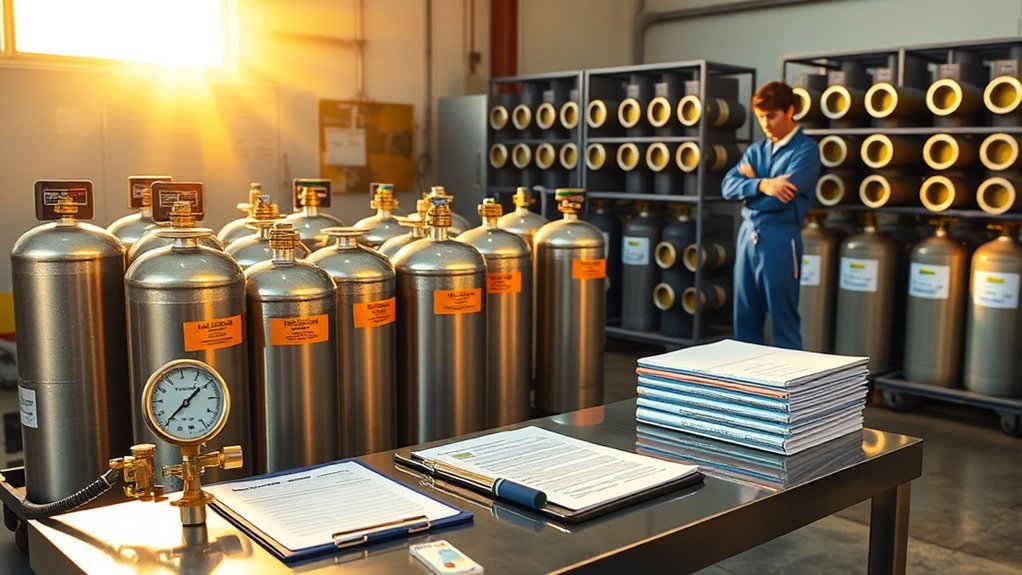
Typical recertification fees for high-pressure welding cylinders generally fall between $20 and $25 per bottle. Some suppliers charge $40–$60 depending on gas type and bottle size. Local fire protection companies and specialty shops can vary widely by region and policy.
You’ll find pricing variations tied to turnaround time, gas type, and whether a bottle is expired or overdue. Some vendors, like Majestic Hydrotest, list same- or next-day service at about $40 per bottle. Others keep base rates near $20–$25.
Given new bottles cost $200–$375, the recertification process is usually more economical for older tanks. Always confirm whether quoted fees include inspection, testing, and any reconditioning or additional charges for out-of-service cylinders.
Which Tanks Require Retesting and When
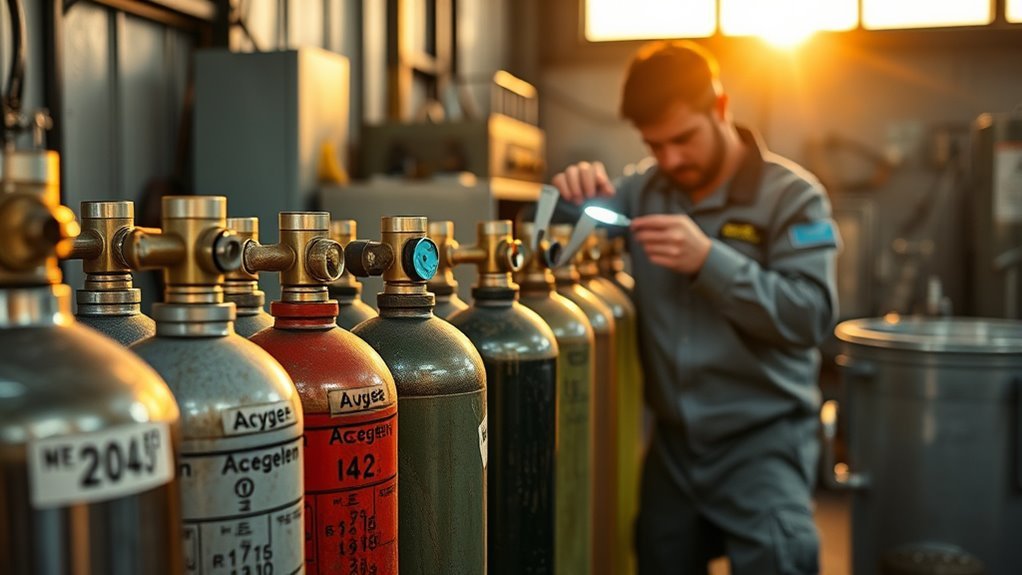
Alongside costs, you’ll want to know which cylinders actually need testing and on what schedule.
You must retest common welding tank types, oxygen and acetylene cylinders, every 5 years per DOT regulations. Some qualify for 10 years if marked with a star. The certification date stamped on the tank shows that timeline.
If a bottle’s stamp is expired, don’t fill or exchange it until it’s recertified. While there is no strict age limit, tanks older than 50 years or those with pressed-on footrings are typically scrap and ineligible for recertification.
Suppliers may refuse very old bottles (examples: dates like 1946 or 1977), so monitor recertification timelines regularly.
Keep an inventory of certification dates and remove expired or non-recappable cylinders from service to guarantee safety and regulatory compliance.
Products Worth Considering

Welding Gas to Your Door - Get PrimeWeld's industrial grade 75 %Argon 25% CO2 gas cylinder delivered right to your door. We offer different mixtures for any application, and you can purchase a tank without worrying about costly rental fees or wasted trips out to your local welding supply shop.
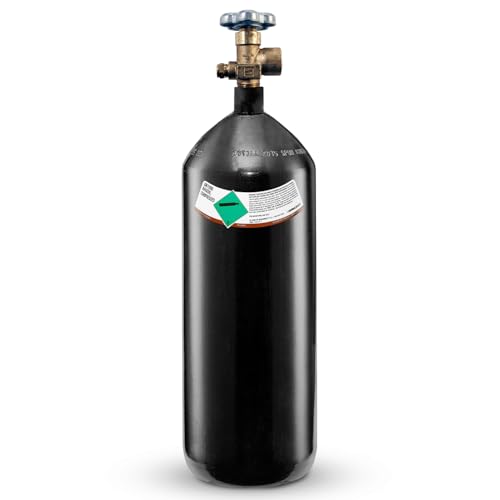
Welding Gas to Your Door - Get PrimeWeld's industrial grade Argon welding gas delivered right to your door. We offer different mixtures for any application, and you can purchase a tank without worrying about costly rental fees or wasted trips out to your local welding supply shop.

Welding Gas to Your Door - Get PrimeWeld's industrial grade Argon welding gas delivered right to your door. We offer different mixtures for any application, and you can purchase a tank without worrying about costly rental fees or wasted trips out to your local welding supply shop.
Recertification Intervals for Different Cylinder Types
For oxygen cylinders, typically DOT 3AA, the standard interval is 5 years. But if the cylinder has a plus sign (+) and a star, it can go 10 years between tests, as explained in this cylinder markings guide.
Acetylene cylinders, often DOT 8 series, require shell inspection every 10 years and porous filler checks varying from 5 to 20 years, depending on manufacture date.
Always verify the specific type and markings on your cylinder to determine the exact interval.
Products Worth Considering

20 CU FT OXYGEN CYLINDER - Compact steel oxygen tank for oxy-acetylene welding, cutting, torch work, medical use, and small industrial applications. 2015 PSI service pressure. Ultra-portable with 5.25" diameter x 18" height, 13.67 lb tare weight. Ideal for mobile welders, small shops, home workshops, and portable medical oxygen needs

125 CU FT OXYGEN CYLINDER - Large-capacity steel oxygen tank for extended oxy-acetylene welding, metal cutting, medical use, and industrial operations. 2265 PSI service pressure. 7" diameter x 46" height, 58 lb tare weight. Letter designation: M. Substantial oxygen supply reduces refill frequency for high-volume professional operations

80 CU FT OXYGEN CAPACITY - Mid-size cylinder delivers extended run time for oxy-acetylene welding and cutting operations, medical oxygen use, and industrial applications. Balances generous capacity with manageable portability for professional welders, shops, and healthcare facilities.
Where to Get Your Tank Recertified
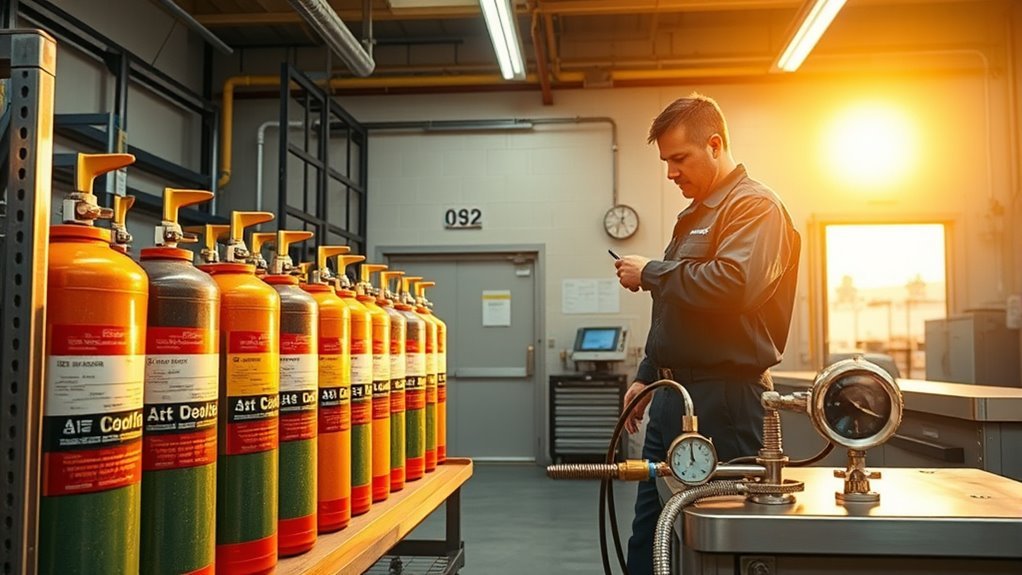
If you need a recertification, you’ve got several practical options: local fire protection companies, specialty hydrotest shops, gas suppliers, and mobile testers.
Check certification dates on bottles. Recertification is required every 5 or 10 years. Compare service comparisons among providers for price, turnaround, and bottle type handling.
- Local fire protection companies: often $20–$25 for high-pressure cylinders, convenient and familiar.
- Majestic Hydrotest: $40 per bottle with same- or next-day turnaround; expect higher rates for welding gas and acetylene.
- Gas suppliers: some let you exchange outdated tanks free; others bundle fees or recertification.
- Mobile testers: onsite convenience but vary widely in price and availability.
You should contact multiple recertification locations to get precise quotes and policy details.
Products Worth Considering

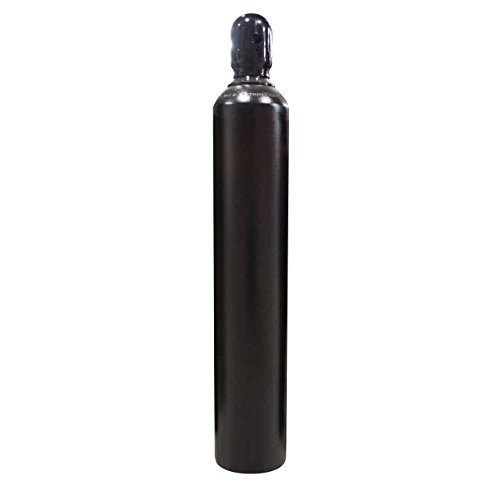
All HP cylinders come with a 10 year hydrotest date stamped.

All HP cylinders come with a 10 year hydrotest date stamped.
Ownership, Exchanges, and Deposit Policies
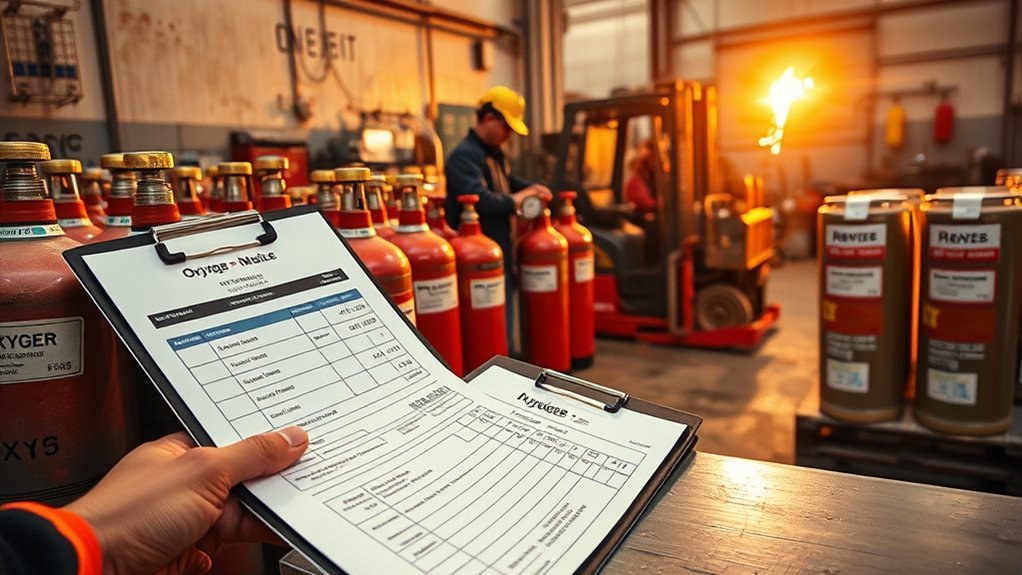
Because ownership and labeling determine what you can do with a cylinder, check stamps and markings before you try to exchange or recertify it.
If a bottle is stamped leased or shows a private owner’s mark, you can’t swap it under tank ownership rules. Privately owned tanks must be returned to their owner.
Follow exchange policies precisely: tanks must be empty and have a valid test within nine years to avoid extra fees.
Expect deposits (example: argon around $270 refundable on return) and typical refill charges after deposit (about $139).
Hydrostatic testing may cost extra, roughly $55 if the test has expired or will within 12 months. Some suppliers recertify high-pressure cylinders for about $20–$25.
Cost-Saving Alternatives: Exchanges, Buying New, or Scrapping
You’ll want to weigh exchange programs against recertification costs. Some suppliers will swap an acceptable tank at no extra charge while recert fees typically run $20–$50 or more.
Buying new tanks ($200–$375) can be cheaper than repeated recertification, and scrapping an unusable cylinder may net roughly $30 to offset a replacement.
Compare local prices and policies. Petrol station exchanges, supplier offers, and scrap rates vary enough to change the cheapest option.
Products Worth Considering

All HP cylinders come with a 10 year hydrotest date stamped.
All HP cylinders come with a 10 year hydrotest date stamped.

All HP cylinders come with a 10 year hydrotest date stamped.
Exchange vs. Recertify
Deciding whether to exchange, recertify, buy new, or scrap a welding tank comes down to comparing clear costs and the bottle’s condition. Recertification usually runs $20–$60. New tanks cost $200–$375. Scrap yards may pay about $30. Some suppliers or local shops offer free or low-cost exchanges for older bottles.
You’ll weigh exchange benefits versus recertification processes based on time, acceptance, and condition.
Consider:
- Cost: exchanges often avoid the $20–$60 fee and save downtime.
- Acceptance: some suppliers won’t accept older recertified bottles; exchanges guarantee compatibility.
- Condition: corroded or damaged tanks should be retired, not recertified.
- Convenience: local shops or petrol stations can simplify swaps.
Buy New or Scrap
If your tank’s age, condition, or downtime costs make recertification look expensive, compare three cost-saving alternatives: exchanging, buying new, or scrapping.
You’ll weigh recertification fees ($20–$60) against replacement and disposal. New tank options run about $200–$375, which often beats repeated recertification for older, high-maintenance cylinders.
Many suppliers accept exchanges regardless of contents, letting you swap instantly and avoid inspection delays.
If a cylinder is very old or fails inspection, scrapping benefits become real. Local scrap yards commonly pay about $30 per tank, and you eliminate future liability.
Evaluate age, service history, and downtime cost. Choose exchange for convenience, new tank options for long-term value, or scrapping for unusable, end-of-life cylinders.
Reading Test Stamps and Certification Dates
One clear way to confirm a tank’s recertification is to read the test stamp on its shoulder or collar. The stamped letters and numbers show the last hydrostatic test date, typically the first two digits indicate the year the test was performed.
Check the tank’s shoulder stamp. Its stamped letters and numbers show the last hydrostatic test date, usually starting with the test year.
You should practice accurate test stamp interpretation because certification dates determine refill eligibility and safety compliance. Note certification markings differences for tanks made before 1980. Formats can vary and affect how you read the year and agency codes.
Follow these steps when inspecting a tank:
- Locate the shoulder/collar stamp and clean dirt or paint obscuring characters.
- Read the first two digits as the test year, confirm the full sequence.
- Check for agency or inspector codes signaling valid testing.
- Replace or scrap tanks older than the accepted testing interval.
Frequently Asked Questions
Can Recertification Affect My Insurance Premiums?
Yes, recertification can lower insurance implications by proving compliance and reducing risk. Insurers may apply premium adjustments accordingly. You’ll want documented proof and timely recertification to maximize potential rate reductions and avoid surcharges.
Do Welding Tanks From Other Retailers Get the Same Free Retest?
Usually not. You’ll find retailer policies vary. Some offer free retests but others don’t. Welding tank regulations may limit who’s authorized to recertify. Check each retailer’s policy and local regulatory requirements before relying.
Is Transportation to the Test Site Included in the Fee?
Like a bridge you don’t build, transportation to the test site usually isn’t included. You’ll cover transportation logistics and guarantee test site accessibility yourself. Some providers may offer pickup for an extra fee. Confirm explicitly beforehand.
Are There Environmental Disposal Fees for Failed Tanks?
Yes, you’ll sometimes pay environmental disposal fees for failed tanks. Fees vary by disposal regulations and facility. You’ll be charged for hazardous material handling, but many shops offer tank recycling options to reduce costs and paperwork.
Can Certification Be Transferred to a New Owner?
About 60% of tanks pass first reinspection. Yes, you can often transfer certification during ownership changes if paperwork’s complete. You’ll need transferable certification language, proof of inspection history, and records to satisfy the registrar’s requirements.
Conclusion
If your welding tank’s certification’s about to expire, getting it hydrostatically tested and recertified usually costs less than the surprise of being turned away when you need it most. That often happens right before a big job. You’ll pay a modest fee or choose an exchange. Knowing when retests are required, reading test stamps, and picking the right service saves time and money. Act now so you’re ready when opportunity knocks.
