
If you’re a Nevada resident 12 or older you’ll need a fishing license and you’ll pay $40 for the standard annual resident license (ages 18+); youth combination and senior specialty options are $15 yearly, and disability specialty permits are $10. One-day resident permits run $18. Residency requires six months’ Nevada domicile with proof. Licenses support fisheries work and you must carry your permit while fishing. Continue for full details on exemptions, purchases, and qualifications.
Who Needs a Resident Fishing License in Nevada?
If you plan to fish in Nevada, anyone aged 12 or older must hold a valid fishing license and residents qualify only after domiciling in the state for at least six months.
You’re required to follow specific license requirements: both residents and non‑residents must possess a current license to fish Nevada waters, regardless of how often you fish.
If you’re 12–17, you can obtain a Youth Combination License that covers fishing and hunting, aligning with state fishing regulations for minors.
If you’re a resident aged 65 or older, you can get a reduced‑fee Senior Specialty Combination License for $15, reflecting senior-specific fee structures under the regulations.
You should establish residency by meeting the six‑month domicile rule before applying for resident rates; otherwise you’ll be charged nonresident fees.
Maintain your license on your person while fishing and comply with season, bag, and gear limits set by Nevada authorities to avoid civil or criminal penalties.
Who Is Exempt From a Resident Fishing License?

You don’t need a resident fishing license in Nevada if you’re under 12; children may fish without a permit and non-resident children under 12 may take up to half the legal limit.
On the second Saturday in June — Free Fishing Day — anyone can fish without a license, though all other regulations still apply.
Note that exemptions are limited and other groups (disabled anglers, qualifying veterans) may have reduced-fee or specialty licenses rather than full exemptions.
Under-12 Exemption
Anyone under 12 is exempt from Nevada’s resident fishing license, letting children fish without a permit while still requiring compliance with all size and catch limits. Nonresident children under 12 are likewise license-exempt but may only harvest half of the legal daily limit.
You should note the exemption exists to promote youth participation and expand access to outdoor recreation. You must still follow fishing regulations: size limits, seasonal restrictions, and reporting where required. Keep identification available if asked by wardens.
The exemption is statewide and applies equally to residents and nonresidents regarding license requirements, with the harvest limit difference for nonresident minors.
- Bring appropriate gear and follow posted limits.
- Expect enforcement checks; carry ID if available.
- Teach size and catch rules to the child.
Free Fishing Day
Having covered the under-12 exemption, note that Nevada also designates a single Free Fishing Day each year — the second Saturday in June — when residents and visitors may fish without a license while still following all size, creel, and seasonal rules.
You can use standard fishing gear and enjoy waters statewide without purchasing a license that day, but you must obey all applicable limits and seasons. Young anglers under 12 already qualify for year-round exemption, and nonresident children under 12 are likewise exempt on Free Fishing Day.
Don’t assume broader waivers exist; Nevada offers few exceptions compared with other states. Carry knowledge of local regulations, verify season dates and creel limits, and ascertain your equipment and actions comply with enforcement standards.
Resident License Types and What They Cover
Because residency status determines eligibility, Nevada offers several resident license types that specify age, cost, duration, and covered privileges. You’ll need to meet residency requirements (domiciled in Nevada at least six months) to qualify.
Each option states clear license validity and permit coverage so you know what activities are allowed and for how long.
- Resident Fishing License: $40, age 18+, valid one year, covers standard fishing privileges.
- Youth Combination License: $15, ages 12–17, valid one year, covers both hunting and fishing.
- Senior & Specialty Options: Senior Specialty Combination License $15 (65+), and Disability Specialty License $10 (severe disability), each valid one year and covering fishing; senior combo includes hunting.
You must present proof of residency and age when applying.
Fees and categories are explicit; select the license type that matches your age and status to guarantee compliance with state regulations and to confirm the exact permit coverage you require.
Products Worth Considering
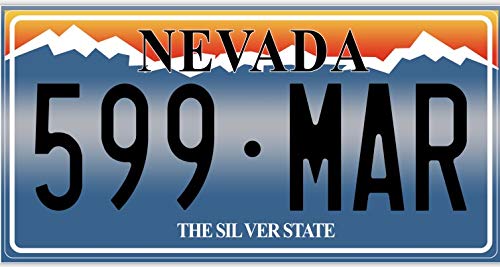
Authentic replica of an existing or existing plaque

Showcase your passion for fishing with intricately etched designs
Team colored license plate measures 6-inches by 11.5-inches
Annual Resident Fishing License Fees and Variations

Now that you’ve reviewed resident license categories, it’s important to understand the fee structure and available variations for annual resident fishing privileges.
You’ll see a clear annual fee comparison: the standard annual resident fishing license is $40 and covers individuals 18 and older for one year from purchase. Youth residents aged 12–17 qualify for a Youth Combination License at $15, which covers both hunting and fishing for the same one-year period.
License validity durations are uniform for these annual products—each listed annual or combination license runs for 12 months from issuance.
You should also note alternatives: one-day permits cost $18, with options to extend consecutive days for incremental fees, useful for short-term anglers.
Reduced-fee specialty licenses exist for certain categories at $10–$15, but those discounted permit specifics are addressed elsewhere.
You’re expected to select the product that matches age, residency, and intended use while observing stated validity durations and fee differentials.
Products Worth Considering

FISHING LICENSE HOLDER W/ZIP CLOSURE

【MATERIAL】: oFloral License plate frame is made from premium quality aluminum, which can provide long-lasting protection from corroding, rusting and aging, durability for long lasting usage.Personalized Car Frame Can Perfect to Put on Your Front of Car or for Decorative Purposes Around the House Like in Your Bedroom, Garage, Basement, Ect.

Add a touch of humor and flair to your car with this funny "Weekend Hooker" front license plate. Perfect for the bass fishing enthusiast, this custom car tag is a great gift for men, especially for dads, husbands, or any fishing fanatic. Whether you're an outdoorsman or just enjoy a good laugh, this novelty license plate is sure to bring a smile to your face and enhance your fishing-themed car decor. Let your personality shine on the road with this fun and unique accessory.
Senior, Veteran, and Disability Discounted Permits
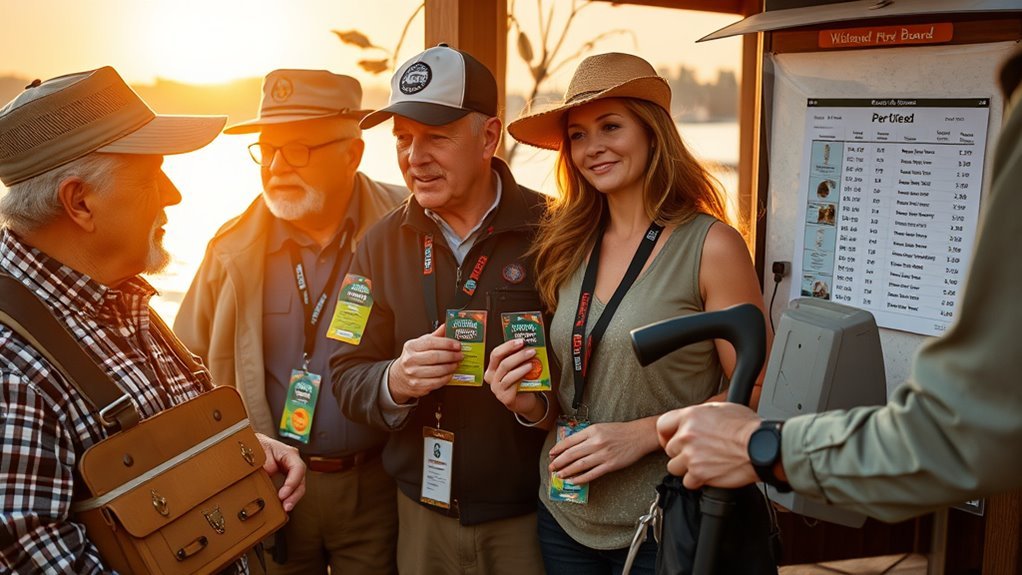
1 clear priority is guaranteeing discounted permit access for seniors, veterans, active military, and people with disabilities, so you can verify eligibility and choose the correct reduced-fee license quickly.
You’ll find clear fee points: the Senior Specialty Combination License for residents 65+ is $15 and valid one year; disabled veteran reduced-fee licenses typically run $10–$15 depending on type; active military and their families qualify for fee reductions on certain licenses.
Specialty licenses for severe disabilities are offered at low cost to promote inclusivity. Check documentation requirements and renewal periods before purchase.
- Senior discounts: one-year Senior Specialty Combination License, $15, renews from purchase date.
- Veteran benefits: disabled veteran licenses usually $10–$15; confirm veteran disability status and license type.
- Disability access: specialty low-cost licenses for severe disabilities; active military family reductions apply to specified licenses.
Follow state forms and ID verification procedures precisely to claim the appropriate reduced-fee permit.
One-Day and Short-Term Resident Permits

When you need fishing access for just a day or a few consecutive days, the One‑Day Resident Fishing Permit provides a simple, cost‑effective option: it costs $20 and is valid until midnight of the purchase date, and you can add consecutive days for an additional fee instead of buying a full annual license.
You’ll use this permit for short term fishing when you don’t require year‑round coverage. Purchase and display requirements mirror annual licenses: you must carry proof of purchase and comply with season, bag, and gear regulations.
Permit extensions are available at the point of sale; each added day is charged separately and ties to the original issue date sequence. Administrative records will reflect consecutive‑day purchases as linked transactions rather than separate annual licenses.
Compare costs: the annual Resident Fishing License is $40, so repeat short visits beyond two days warrant evaluating an annual license.
Follow agency instructions for refunds, lost permits, and enforcement interactions.
How to Qualify for Nevada Resident Rates
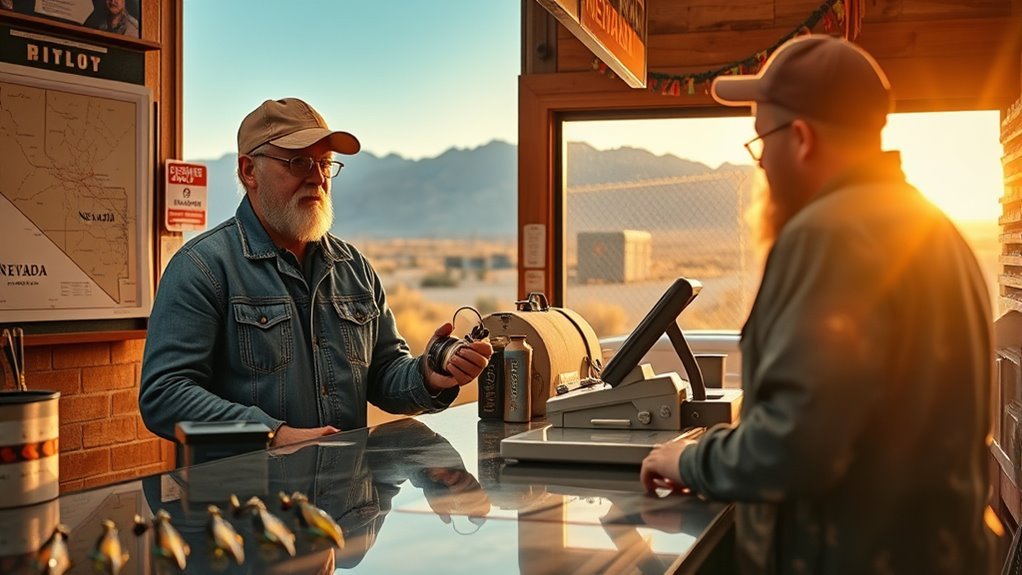
To qualify for Nevada resident rates, you must have your principal and permanent residence in Nevada for at least six months prior to applying and be a U.S. citizen or legally entitled to remain in the U.S.
You’ll need to provide proof of Nevada domicile and demonstrate continuous physical presence (temporary absences excepted), and you mustn’t have held hunting, fishing, or trapping privileges in another state during that six-month period.
Note exceptions: students physically present in Nevada for six months and eligible seniors or disabled veterans may qualify for reduced-fee licenses with required documentation.
Residency Duration Requirement
Although you may be a U.S. citizen or legally allowed to remain in the country, you must have maintained your principal and permanent residence in Nevada for at least six continuous months before applying to qualify for resident fishing rates.
You’ll need to follow residency verification processes and meet residency documentation requirements demonstrating physical presence, excluding temporary absences. Don’t obtain hunting, fishing, or trapping privileges from other states during the six-month period.
College students count if they’ve been physically present for six months.
- Maintain continuous Nevada presence, with only short, temporary absences.
- Avoid out-of-state wildlife privileges during the qualifying period.
- Prepare documentation tied to the six-month timeline for review.
Follow timelines strictly; incomplete records risk denial.
Proof of Nevada Domicile
Having established the six-month continuous presence requirement, you’ll now need to prove Nevada domicile with specific documents that show your principal and permanent residence.
Provide domicile documentation such as a Nevada driver’s license or ID, voter registration, utility bills, lease or mortgage statements, and vehicle registration.
Verify documents are current and list your Nevada address; multiple corroborating items strengthen your residency verification.
You must be a U.S. citizen or legally entitled to remain in the U.S., maintain physical presence in Nevada (temporary absences allowed), and not have applied for equivalent privileges in another state during the six months prior.
Present originals or certified copies when requested. Inspectors will compare dates and addresses for consistency; inconsistent records can delay or deny resident-rate approval.
Exceptions for Students/Vets
If you’re a college student or military-affiliated individual, Nevada provides specific exceptions so you can qualify for resident fishing rates without meeting the standard six-month presence rule under certain conditions.
You still must be a U.S. citizen or lawfully entitled to remain and provide proof of Nevada domicile, but student eligibility and veteran benefits create alternate pathways.
College students attending school in Nevada qualify if they’ve been physically present for six months, excluding temporary absences, and supply residency documentation.
Active military members and families can purchase resident licenses regardless of station; disabled veterans get reduced-rate special licenses.
Maintain clear, current proof (Nevada driver’s license, military orders, veteran ID) when applying to guarantee compliance with state regulations and avoid delays.
- College students with six months’ presence and documentation
- Active military and dependents per orders
- Disabled veterans’ reduced-rate licenses
Where to Buy Your Resident Fishing License

You can obtain a Nevada resident fishing license online through the NDOW licensing app, by phone during business hours, or in person at NDOW offices and authorized agents such as sporting goods stores.
Online purchases must be printed and phone sales issue a confirmation number until the physical license arrives, and NDOW staff will assist anyone needing help completing the process.
Use the NDOW licensing app for 24/7 access; follow prompts, verify residency, pay by card, then print the license immediately — carrying a printed license is required while fishing.
If you prefer in-person service, visit NDOW regional offices or authorized agents for same-day issuance and staff guidance.
To buy by phone, call during posted hours, provide payment details, note the confirmation number, and expect the mailed card within the stated timeframe.
Keep identification and payment method ready regardless of channel.
Choose the channel that matches your schedule and confirm that your printed or mailed license is valid before fishing.
Products Worth Considering

[Compliance] This license plate is a decorative craft item, not a real license plate. It is for interior decoration only and is prohibited from being installed on vehicles. Please comply with US laws and state regulations.

Durable .100" Thick Flexible Rubber Construction

Durable Material, Built to Last: Crafted from high-purity aluminum with a UV-protective film, it resists sun exposure, rain, fading, and rust. The tough material stays rigid and undamaged through daily use, maintaining a sleek appearance for years.
How License Revenue Supports Nevada Fisheries
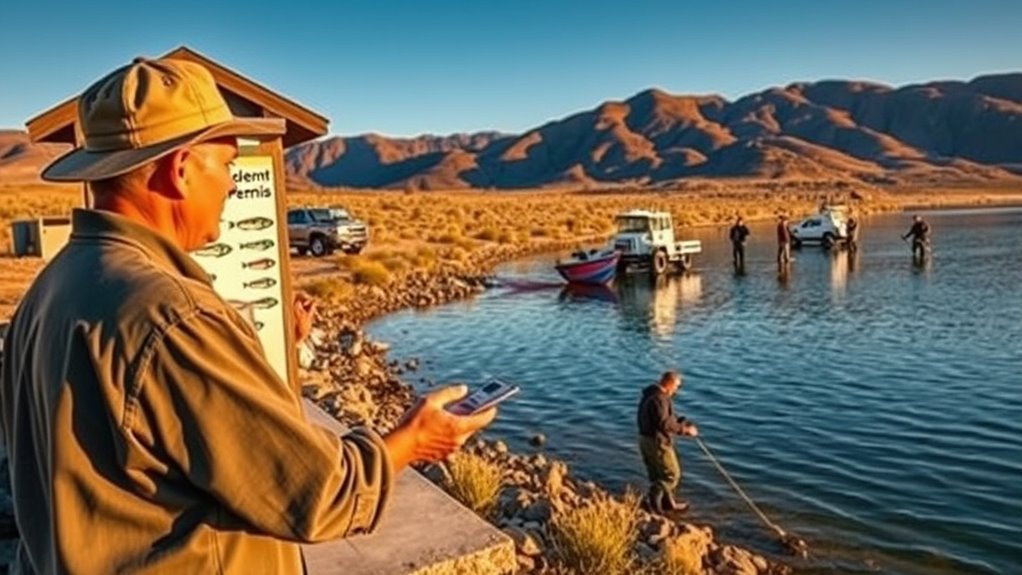
When you buy a Nevada fishing license, part of the fee funds habitat restoration projects that rebuild stream banks, replant riparian zones, and improve spawning grounds.
Those same revenues underwrite fisheries research funding so biologists can monitor populations, evaluate stocking strategies, and set science-based regulations.
Together these investments preserve habitat function and inform management decisions that sustain recreational fishing.
Habitat Restoration Projects
Because fishing-license revenue funds targeted habitat work across Nevada, you’ll see concrete improvements to spawning grounds, riverbanks, and lake shorelines that directly boost fish populations and angler opportunities.
You’ll notice habitat improvement projects prioritize measurable outcomes: restored spawning substrate, stabilized banks to reduce sedimentation, and native vegetation to support ecosystem balance.
License funds cover project planning, implementation, and post-restoration monitoring by the Nevada Department of Wildlife. You’ll also see coordinated efforts with local partners to guarantee long-term maintenance and community access.
These actions maintain sustainable fishing practices and protect recruitment rates. Compliance with regulatory standards guides site selection, permitting, and evaluation, so your license dollars generate accountable, trackable conservation results.
- Restored spawning gravel beds and riffles
- Bank stabilization and erosion control
- Native shoreline vegetation planting
Fisheries Research Funding
One key way license revenue supports Nevada fisheries is by directly funding targeted research and monitoring programs that inform management decisions and regulations.
You’ll see funds allocated to fish population monitoring, habitat development, and endangered species recovery, giving managers the data they need to set seasons, limits, and stocking schedules.
License fees underwrite conservation education that teaches anglers fishing sustainability practices, reducing harvest pressure and habitat damage.
Research grants support specific studies on population dynamics, invasive species control, and water-quality impacts, while ongoing monitoring validates management outcomes.
You can expect transparent allocation: program budgets, project timelines, and measurable objectives drive regulatory compliance and adaptive management.
This guarantees license dollars translate into quantifiable improvements in Nevada’s aquatic resources.
Tips for Choosing the Right Resident Permit
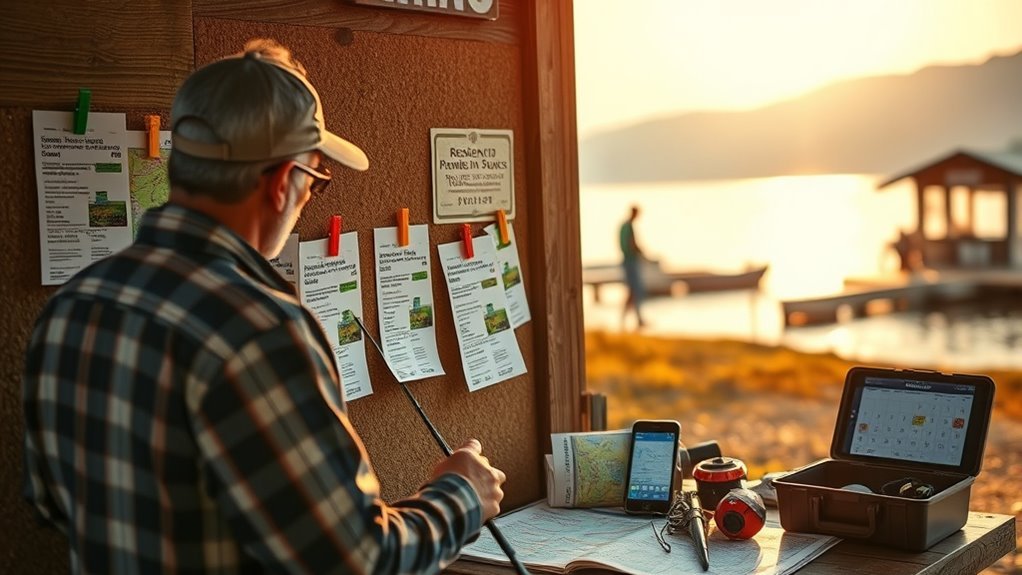
Start by matching the permit to your age, residency status, and planned frequency of fishing trips so you only buy what’s required and cost-effective.
You’ll compare the $40 annual Resident Fishing License (ages 18+), the $15 Youth Combination (ages 12–17), and the $15 Senior Specialty Combination (65+). If you’re a serviceman or disabled veteran, check $10–$15 specialty options.
For a single outing, a one-day permit costs $18. Account for the type of water, required fishing gear, and local regulations before purchase so you avoid citations and wasted expense.
- If you fish frequently, choose the annual $40 license for full-year coverage.
- If you fish once or twice a year, consider the $18 one-day permit to save money.
- If you qualify as youth, senior, servicemember, or disabled veteran, select the reduced-rate specialty that matches your eligibility.
Confirm residency proof and license validity dates at the point of sale.
Frequently Asked Questions
Do Nonresidents Ever Qualify for Resident Pricing Through Reciprocal Agreements?
Yes — you can qualify when reciprocal agreements apply; you’ll need proof of home-state residency and meet specific criteria. Agencies sometimes grant nonresident discounts under reciprocal agreements, but rules, documentation, and eligible activities vary by jurisdiction.
Can Residency Be Temporarily Established for Seasonal Workers?
Yes — you can establish temporary residency if you meet temporary residency requirements; you’ll need to document seasonal worker eligibility (employer letters, lease, tax records) and satisfy the state’s duration, intent, and registration criteria before qualifying.
Are Fishing Licenses Transferable Between Family Members?
No — license transferability between family members is generally prohibited; only about 12% of states permit any limited transfer. You should check statutes, confirm allowable exemptions, complete required forms, and retain proof of family fishing eligibility.
Do License Fees Vary by County or Waterbody Within Nevada?
Yes — you’ll see license fee differences; Nevada’s state fee is primary, but county regulations and specific waterbody stamps or permits can add costs, so check local agencies for required endorsements and exact pricing before you fish.
Is Commercial Guide Work Allowed on a Resident Fishing License?
No, you can’t use a resident fishing license for commercial guide work; commercial fishing regulations require a separate guide license. You’ll need to meet guide license requirements, reporting, and permit conditions before operating commercially.
Conclusion
You’ll want the correct resident fishing license to avoid fines and protect Nevada’s fishery resources. For example, a Reno angler switched from a basic annual permit to the joint state-trout stamp after learning his preferred lagoons required it, avoiding citations while supporting stocking programs. Check residency proof, discounts for seniors/veterans, and authorized vendors before you fish. Buy the precise permit for your activity and follow regulations to stay compliant and help sustain local fisheries.
