A one-day fishing license can be the cheapest legal option for a single trip, but there is no nationwide price or standard coverage. Each state sets its own fee, age rules, water types, exemptions, and extra permit requirements. The examples below use official fees and rules checked on July 28, 2026.
Quick Answer
A one-day fishing license costs $5 for a New York resident, $10 for a New York nonresident, and $21.09 for either resident or nonresident in California in 2026. Prices, covered waters, and eligibility vary by state, and some states, such as Florida, offer three-day rather than one-day options.
Key Takeaways
- There is no national one-day fishing license price; fees and available durations differ by state.
- A short-term license does not waive seasons, size limits, bag limits, gear rules, or access restrictions.
- Freshwater, saltwater, and all-waters privileges may be sold separately.
- Extra stamps, validations, report cards, or local access permits may still be required.
- Buy through the official state system and save acceptable proof before reaching the water.
At a Glance
| Time Required | About 5 to 15 minutes online, by phone, or at a license agent |
| Difficulty | Easy, once you know the state, water type, date, and target species |
| Tools Needed | Government ID or customer number, payment method, and a phone or computer |
| Cost | From $5 to $21.09 in the verified one-day examples below, before optional printing or required add-ons |
Note: License fees and fishing regulations can change during the year. Confirm the current price, selected date, covered waters, and required add-ons on the official state wildlife agency website before paying.
What a 1-Day Fishing License Covers
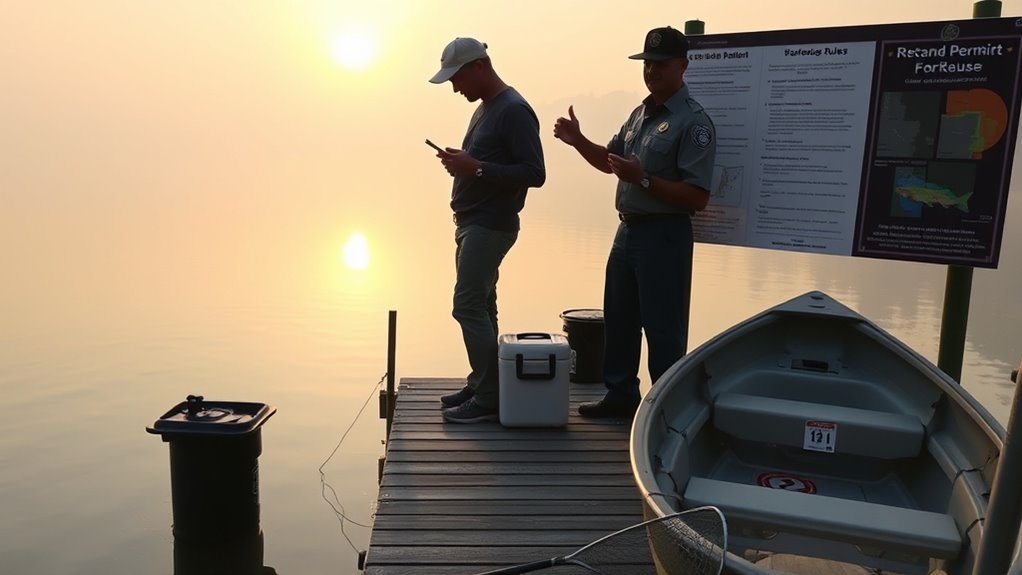
A one-day fishing license gives one person the fishing privileges listed on that state-issued license for the selected day. It does not create a universal right to fish every species, waterbody, or method.
Coverage may include freshwater fishing, saltwater fishing, or both. Some states sell separate products for inland and marine waters, while others sell a general sport fishing license. For example, a New York freshwater fishing license covers freshwater fish, certain frog-taking methods, and freshwater baitfish taken for personal use. California’s short-term sport fishing license covers inland and ocean fishing, but certain species still require report cards.
Before buying, check these five items:
- Validity: the exact date or consecutive-day period printed on the license.
- Water type: freshwater, saltwater, tidal water, or all waters.
- Species: whether trout, salmon, sturgeon, lobster, or other regulated species need an extra stamp, validation, or report card.
- Method: whether the license covers angling only or also permits legal spearing, bowfishing, tip-ups, bait collection, or other methods.
- Location: whether the waterbody has a special permit, reciprocal agreement, preserve fee, or access requirement.
Size limits, possession limits, closed seasons, tackle restrictions, and protected-species rules apply exactly as they do to annual license holders.
One-Day Fishing License Fees by State
States use different license structures, so comparing only the advertised price can be misleading. The table below shows selected official examples verified on July 28, 2026. It is not a complete list of all states.
| State | Resident short-term fee | Nonresident short-term fee | Important limitation |
|---|---|---|---|
| New York | $5 for one day | $10 for one day | Freshwater license; saltwater and migratory marine species use the free Marine Registry instead. |
| California | $21.09 for one specified day | $21.09 for one specified day | Some fisheries require a report card; the one-day license is exempt from the Ocean Enhancement Validation. |
| Florida | No regular one-day option; resident annual freshwater or saltwater license is $17 | No one-day option; a 3-day freshwater or saltwater license is $17 | Freshwater and saltwater privileges are separate unless included in a combination license or exemption. |
| Connecticut | Marine one-day: $3 at age 16-17 or $5 at age 18-64 | No regular one-day marine option; nonresident 3-day marine license is $8 | The normal one-day product is marine-only for residents; inland and all-waters products use different durations. |
Why the Price Varies
A lower fee does not necessarily mean a license covers less, and a higher fee does not guarantee access to every fishery. The price may depend on residency, license duration, water type, processing charges, and whether a state bundles multiple privileges into one product.
Compare the final checkout total and the actual privileges, not just the base fee. California states that most fees include agent handling and application charges, while New York may add a printing fee only when you request certain printed delivery options.
Eligibility and Exemptions Affect the Cost
You may pay less or nothing if you qualify for a youth, senior, disability, military, tribal, landowner, or free-fishing-day provision. These rules are narrow and state-specific. An exemption in one state does not automatically apply in another.
- Confirm the state’s residency definition and acceptable proof.
- Check the minimum age for a license.
- Review free or reduced-fee annual licenses before buying a day license.
- Check designated free fishing dates.
- Confirm whether an exemption applies to the species, water, and fishing method you plan to use.
Purchase Methods and Extra Charges
Most agencies sell licenses online and through authorized agents. Some also offer phone sales, mobile apps, or state offices. Printing, mailing, convenience, or agent charges may apply, so review the final amount before submitting payment.
Use an official state agency website or its authorized vendor. Avoid unofficial websites that charge unnecessary service fees or sell the wrong license for your trip.
Who Is Eligible for a One-Day License?
Eligibility depends on the state and the license product. Many states require a fishing license at age 16 or older, including New York, California, Connecticut, and Florida, but the exact exemptions and available short-term durations differ.
Age and Residency Rules
Residents usually need to meet a state-specific residency test and may need a driver’s license, state ID, vehicle registration, tax record, lease, military orders, or another accepted document. Tourists normally buy the nonresident product unless an official exception lets them pay the resident rate.
Do not assume that everyone age 16 or older can buy a one-day product. Florida, for example, offers nonresidents three-day and seven-day recreational licenses rather than a regular one-day license. Connecticut’s normal one-day marine license is limited to residents.
- Select the correct resident or nonresident status.
- Enter your legal name, birth date, and address accurately.
- Check whether a customer ID or account is required.
- Confirm that the license date matches the day you will fish.
- Review youth rules before buying anything for a child.
Special Exemptions and Reduced Fees
Common categories include children below the licensing age, qualifying people with disabilities, active-duty military members, disabled veterans, Indigenous or tribal members under specific rules, resident seniors, and designated free fishing days. Documentation may be required before the discount or exemption becomes active.
In New York, qualifying exceptions include fishing on a licensed fishing preserve, participating in a designated free fishing day or approved clinic, certain farming landowners and family members fishing qualifying farmland, Native Americans fishing on reservation land, and patients at qualifying Veterans Affairs facilities. New York also offers free or reduced-fee licenses to several documented groups.
How to Purchase a Daily Fishing Permit
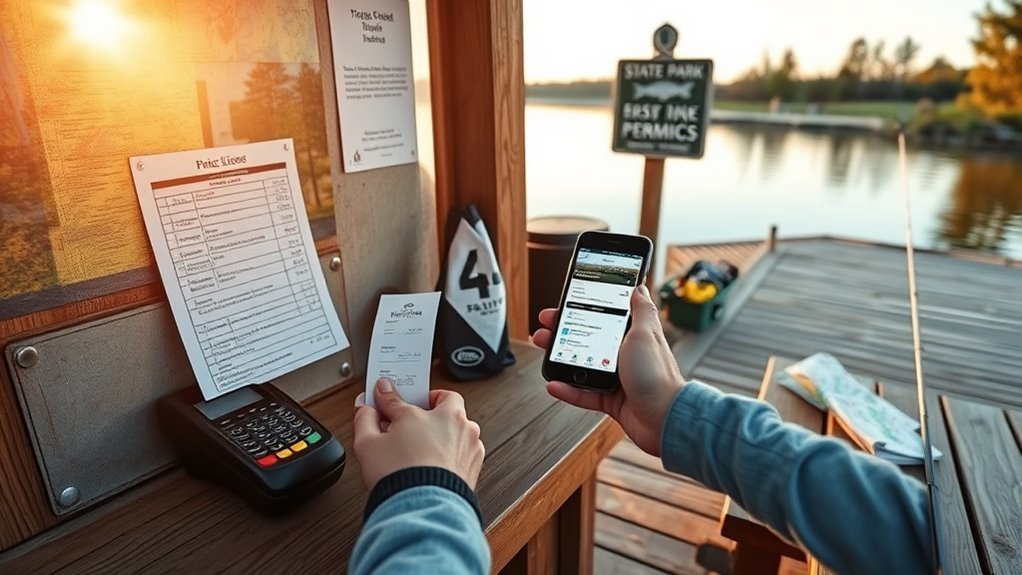
You can usually complete the purchase in a few minutes once you know the exact date, state, waterbody, and species you plan to fish.
- Find the official state wildlife agency. Start with the agency’s license page, not a general search result or third-party reseller.
- Choose the correct water type. Confirm whether you need freshwater, saltwater, all-waters, or a special border-water product.
- Check eligibility and add-ons. Review age, residency, exemptions, stamps, validations, report cards, and local access permits.
- Select the fishing date. Make sure the one-day or short-term license begins on the day you intend to fish.
- Pay and save proof. Download, print, or store the license in the format the state accepts, then save the current regulations for offline use.
For a New York example, the official 2026 price is $5 for a resident and $10 for a nonresident. You can buy online, through an authorized License Issuing Agent, or by phone at 1-866-933-2257.
Pro Tip: Take a screenshot or save an offline copy after purchase, but verify that your state accepts that format. Some states require an official app, signed digital license, printed copy, customer number, or physical license.
Rules and Restrictions for Day Licenses
A day license changes the duration of your fishing privilege, not the fishing rules. You remain responsible for all current statewide and waterbody-specific regulations.
- Date and identity: the license is valid only for the listed person and date or date range.
- Seasons and limits: closed seasons, minimum sizes, slot limits, daily bag limits, and possession limits still apply.
- Gear: hook, line, bait, trap, net, spearing, bowfishing, and number-of-rod rules remain in force.
- Species add-ons: trout stamps, salmon permits, lobster permits, sturgeon or steelhead report cards, and similar requirements may be separate.
- Access: a fishing license does not grant permission to enter private property, pay areas, preserves, or permit-controlled lands.
- Proof: carry the accepted license format and show it when an authorized officer requests it.
Warning: Buying a fishing license does not guarantee that a target species is open or legal to keep. Check emergency closures, waterbody rules, health advisories, and required stamps or report cards immediately before the trip.
The federal Sport Fish Restoration Program has generated more than $12 billion for sport-fish conservation, habitat work, boating access, and aquatic education since it began in 1950.
Exemptions and Special Cases
License exemptions are exceptions to the purchase requirement, not exemptions from fishing regulations. Unless the agency says otherwise, size limits, seasons, legal methods, protected-species rules, and private-access rules still apply.
Resident Landowner Exemptions
Landowner exemptions vary widely. In New York, the exemption is not for every person who owns any parcel. It applies to a resident landowner primarily engaged in farming, along with qualifying lessees and immediate family members, when fishing on farmland they occupy and cultivate. A farm fish pond license can create a separate exemption for covered waters.
Owning waterfront property does not automatically let you fish public or neighboring waters without the required license. Read the exact statutory or agency wording for the state where you will fish.
Military Members, Veterans, and Disability Programs
Some agencies provide free licenses, reduced-fee annual licenses, or resident pricing to qualifying service members and veterans. Eligibility may depend on residency, duty status, leave orders, service-connected disability percentage, or advance approval.
New York provides free fishing privileges to certain resident active-duty military members and reduced-fee licenses to resident veterans with a qualifying service-related disability. It also offers a free license to residents who are legally blind. California has separate free and reduced-fee programs with different eligibility standards. These programs are not interchangeable between states.
Licensed Preserve Exceptions
Some states exempt anglers from the state fishing license requirement when fishing on a properly licensed preserve or pond. The preserve may still charge its own admission or fishing fee and may enforce its own catch, tackle, stocking, or release rules.
A preserve exemption does not authorize fishing outside the licensed property. Confirm the preserve’s status and ask what proof or on-site permit you must carry.
Border Waters and One-Day License Use
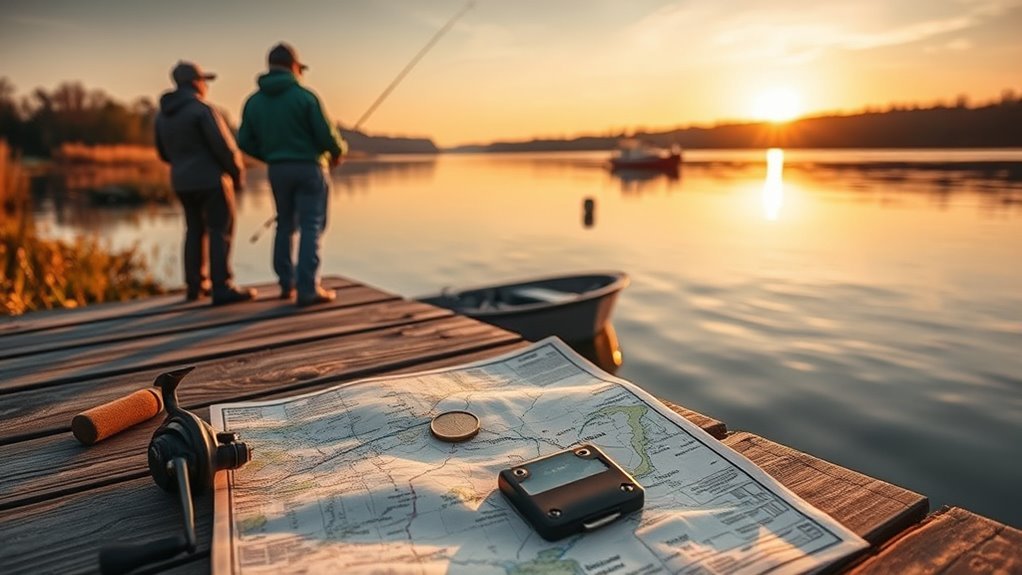
Border waters are especially easy to misunderstand because a license may be valid only on your state’s portion of the water. A reciprocal agreement can extend it, but the agreement may apply only to certain waters, fishing positions, species, or methods.
New York’s official guidance shows the differences:
- A New York license does not cover the non-New York portions of Lake Ontario, Lake Erie, the St. Lawrence River, or the Niagara River.
- The Delaware River and West Branch along the Pennsylvania boundary have reciprocal treatment under the listed rules.
- Greenwood Lake and Indian Lake have limited reciprocity from a boat or through the ice.
- Lake Champlain has a separate reciprocal-license map and instructions.
Use a GPS map only as a navigation aid, not as proof of legal jurisdiction. Check both states’ current regulations and any federal, tribal, park, or municipal rules that apply.
Alternatives to a Single-Day Permit
A one-day license is not always the best value. Compare the total cost for the number of days you will actually fish, not the theoretical cost per calendar day.
Using New York’s current fees:
- Resident: one day is $5, seven days is $12, and an annual license is $25. The seven-day license is cheaper than buying three separate day licenses. Five one-day licenses equal the annual price.
- Nonresident: one day is $10, seven days is $28, and an annual license is $50. The seven-day license is cheaper than buying three separate day licenses. Five one-day licenses equal the annual price.
Other alternatives may include a free marine registration, a shoreline-only license, a multi-day visitor license, a combination hunting and fishing license, a charter or licensed-pier exemption, a preserve fee, or a designated free fishing day.
In New York, the no-cost Recreational Marine Fishing Registry applies to covered migratory and saltwater species. It is separate from the freshwater fishing license. During designated free fishing days, the freshwater license requirement is waived, but all other fishing rules remain active.
Printing, Electronic Copies, and Carrying Your Permit
Accepted proof differs by state. Do not assume that a screenshot, email receipt, or payment confirmation is legally sufficient unless the agency says it is.
In New York, anglers may provide proof through the HuntFishNY app, a plain-paper printed copy, or their 12-digit DEC ID number. A License Issuing Agent may charge a $1 printing fee, while an online or phone order printed and mailed by the state may add $2. Those charges can be avoided by choosing email delivery or printing from the online account.
Connecticut permits a digitally signed license purchased through its online system to be kept on a smartphone, while agent-issued licenses must be printed and signed. California requires the sport fishing license to be in the angler’s immediate possession and provides state-specific instructions for license documents and its app.
- Confirm the acceptable proof format before leaving home.
- Keep the license legible and accessible without cellular service.
- Carry any required stamps, report cards, or validations.
- Check the name, date, license type, and customer number for errors.
- Never lend your license to another person.
Tips for First-Time Daily License Buyers
Use this checklist to avoid buying the wrong permit or arriving without a required document:
- Write down the state, exact waterbody, fishing date, and target species.
- Decide whether you will fish freshwater, saltwater, tidal water, or both.
- Check whether the state offers a true one-day license or only a multi-day visitor option.
- Confirm resident status, age rules, and any documented exemption.
- Review trout, salmon, sturgeon, lobster, crab, second-rod, bait, and access requirements.
- Buy only through the official agency or an authorized seller.
- Save accepted proof and the current regulation page for offline use.
- Ask the property owner or manager for permission before entering private land.
- Recheck emergency closures and consumption advisories on the day of the trip.
A few minutes of preparation can prevent a citation, an unnecessary purchase, or a trip to water where your license is not valid.
Frequently Asked Questions
Are refunds or transfers allowed for unused one-day permits?
Usually not. New York sporting licenses are nontransferable, and California and Florida state that license purchases or charges are generally nonrefundable. Review the state’s refund policy before paying and verify the selected date carefully.
Do one-day licenses include access to private fishing clubs?
No. A state fishing license gives fishing privileges under state law, but it does not grant entry to private land, clubs, pay lakes, preserves, or permit-controlled property. You still need the owner’s permission and any site fee or permit.
Are bait or tackle rules different with a day permit?
Normally no. The same legal-bait, hook, line, rod, net, trap, and method restrictions apply to short-term and annual license holders. Waterbody-specific rules can be stricter than statewide rules.
Can tourists buy a one-day fishing license online?
Often yes, when the state offers that product. Tourists normally select the nonresident option and may need to create a customer profile and provide identification details. Some states offer only three-day, seven-day, or annual visitor licenses.
Are reduced-rate day permits available for children?
Often a child below the state’s licensing age does not need a fishing license at all, rather than needing a discounted one-day permit. The cutoff is commonly 16, but guardians should verify the state and waterbody rules.
Does a freshwater day license cover saltwater fishing?
Not unless the license description clearly says it covers both. Some states issue separate freshwater, saltwater, shoreline, marine registry, or all-waters products. Check where tidal or marine boundaries begin.
Do free fishing days waive every fishing rule?
No. A free fishing day normally waives only the basic license requirement. Seasons, bag and size limits, legal methods, protected species, private-property rules, and any explicitly non-waived permits still apply.
Sources
- New York State Department of Environmental Conservation: Fishing Licenses – fees, covered activities, exemptions, purchase methods, and border-water rules.
- New York State Department of Environmental Conservation: Free and Reduced-Fee Sporting Licenses – eligibility, electronic proof, and printing or mailing charges.
- California Department of Fish and Wildlife: Sport Fishing Licenses and Report Cards – 2026 short-term fees, validations, and report-card requirements.
- Florida Fish and Wildlife Conservation Commission: Recreational Fishing Licenses – freshwater durations and fees; the agency’s saltwater page provides the matching marine options.
- Connecticut Department of Energy and Environmental Protection: Fisheries Licenses and Permits – current inland, marine, all-waters, and short-duration fees.
- U.S. Fish and Wildlife Service: Sport Fish Restoration – conservation, access, and education funding background.
Conclusion
A one-day fishing license is useful when your state offers it and you plan to fish only once. Start with the official agency, choose the correct date and water type, check resident status and exemptions, add any required stamp or report card, and carry acceptable proof. Compare multi-day and annual prices before paying, because the cheapest-looking option is not always the best value for your trip.