

You’ll pay $62.90 for a 365‑day California resident sportfishing license, valid for freshwater and ocean take and subject to seasons, size/bag limits and gear rules. One‑ and two‑day resident licenses run about $20.52 and $31.58; nonresident and ten‑day options cost more. Small fees apply for validations (second rod $19.70, ocean enhancement $7.05) and species report cards. Exemptions and reduced‑fee programs exist, and more specifics follow if you want details.
Who Needs a Sportfishing License in California
If you’re 16 or older and plan to take fish or other aquatic life in California—this includes mollusks, crustaceans, invertebrates, amphibians, or reptiles—you must hold a valid sportfishing license; the rule applies regardless of residency.
You’ll need the license any time you actively harvest or attempt to harvest these species from inland or ocean waters, which is the core requirement in this fishing regulations overview.
You must hold a valid license whenever you actively harvest or attempt to harvest aquatic species from any waters.
Exceptions are limited: you don’t need a license when fishing from public ocean piers or on designated Free Fishing Days, and children under 16 are exempt, though they must carry required report cards for certain species (e.g., salmon, sturgeon).
If you hire a guide or charter, your personal license remains mandatory; the guide’s license doesn’t cover you. These stipulations prioritize resource management and legal accountability.
Review specific season, bag, and gear restrictions separately, since possession of a license doesn’t override other species-specific regulations.
Resident Sport Fishing License Fees and What’s Included
You’ll pay $62.90 for an annual Resident Sport Fishing License (valid 365 days from purchase) which authorizes fishing in California’s covered waters.
Most transactions add a 5% handling fee plus a 3% nonrefundable application fee, and the license terms specify statewide access and duration.
Reduced-fee options include a $9.79 disabled-veteran or low-income senior license (agents may charge $10.29 for veterans) with required VA or SSI/CAPI documentation.
Products Worth Considering
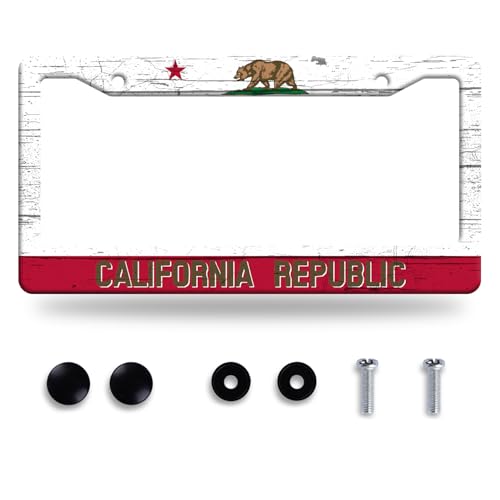
Product Material:made of Stainless steel. Personalized Car Frame Can Perfect to Put on Your Front of Car,Decorate your car to make it look more beautiful and unique,just wipe with a damp cloth
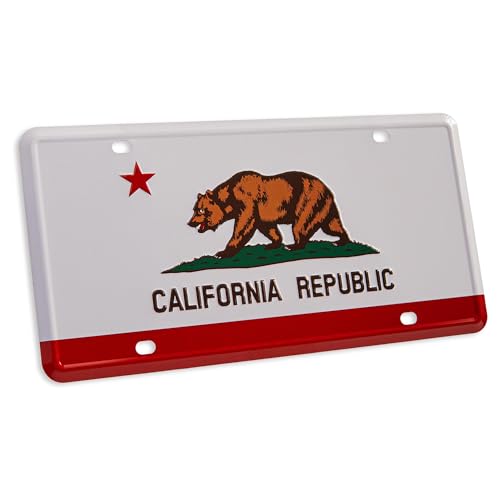
CALIFORNIA STATE FLAG DESIGN: Features a textured, raised California flag design for an authentic, high-end look and feel.

Made of high-grade durable, rust-free plastic frame. Use your existing screws from your plates. License plate is secured in the frame with its all-around groove that fits over your plate.
Annual License Cost
One annual Resident Sport Fishing License costs $62.90 for Californians aged 16 and older and remains valid for 365 days from the purchase date, permitting you to fish in state waters while meeting legal possession requirements for taking fish, mollusks, or crustaceans.
You should track renewal dates against annual fishing regulations and follow license purchasing tips to guarantee continuous compliance. The fee structure includes a 5% handling fee and a 3% nonrefundable application fee; reduced-fee options ($9.79–$10.29) exist for disabled veterans and low-income seniors.
You must carry the license while fishing; enforcement is mandatory and penalties apply for noncompliance.
- Fee: $62.90 base, plus standard fees
- Validity: 365 days from purchase
- Reduced rates: eligibility-based
- Requirement: carry license while fishing
What’s Included Coverage
The Resident Sport Fishing License ($62.90 for ages 16+) covers 365 days of fishing privileges in California’s freshwater and ocean waters and includes the legal authority to take fish, mollusks, and crustaceans subject to state regulations; most purchases incur a 5% handling fee and a 3% nonrefundable application fee, and certain activities require additional validations or mandatory report cards (for example, sturgeon and salmon) and may carry separate restrictions or bag limits.
You get statewide access under a single policy framework but must follow the fishing regulations overview: seasons, size and bag limits, gear restrictions, and area closures.
The license acknowledges aquatic life diversity and funds management programs; specific takes still require species-specific validations or required report cards and carry enforceable penalties for noncompliance.
Reduced-Fee Options
Looking for cost relief? You can access reduced-fee resident sport fishing licenses targeted to veteran access, recovering service members, and low-income seniors.
Eligibility hinges on documentation and specific benefit status; the program reduces barriers for those with financial or physical limitations.
- Disabled veterans: $9.79 via CDFW or $10.29 via agents; requires ≥50% disability rating and VA documentation.
- Recovering service members: $9.79 via CDFW or $10.29 via agents; requires medical treatment verification.
- Low-income seniors: $9.79 via CDFW or $10.29 via agents; for age 65+ receiving SSI or CAPI.
- Documentation: letters from the VA, treatment records, or proof of SSI/CAPI required for issuance.
These policies prioritize access while maintaining auditability and consistent fee collection.
Short-Term and Nonresident License Options
If you’re planning a short visit, a one-day sport fishing license costs $20.52 and a two-day license is $31.58, both available to residents and nonresidents and valid for the specified consecutive days; nonresidents also have a ten-day option at $62.90.
You should treat these short term licenses as transactional, time-bound permits designed to accommodate transient anglers and tourists. Policy-wise, one- and two-day permits are exempt from the Ocean Enhancement Validation, simplifying compliance for brief stays.
For comparative budgeting, note that an annual resident license is $62.90 while a nonresident annual license is $169.82, so nonresident fees scale substantially with duration. If you expect to fish beyond ten days, evaluate cost-effectiveness: two consecutive short-term purchases quickly exceed an annual resident rate but may still be lower than nonresident annual pricing.
When purchasing, confirm consecutive-day validity and exemption status to guarantee you meet statutory requirements and avoid enforcement actions.
Products Worth Considering


Product Material: Our license plate frame is made of premium quality aluminum, which ensures that the plate frame will never wear out. Corrosion resistant, Personalized Car Frame Can Perfect to Put on Your Front of Car,Decorate your car to make it look more beautiful and unique.

Enough to Use: you will receive 6 pieces of fishing license holders, and 6 pieces of safety pins, abundant in quantity, enough for you to choose and replace, can meet your different needs; You can also share them with your friends
Reduced-Fee and Free License Programs for Residents
To qualify for reduced-fee or free resident licenses you’ll need to meet specific eligibility criteria—examples include a 50%+ disability rating for Disabled Veterans, documented treatment status for recovering service members, or SSI/CAPI receipt for seniors 65+.
You’ll have to submit the required application forms and certifications (e.g., disability verification or benefit proof) and expect a review period of about 15 business days.
Renewal follows the same documentation standards and fee structure (reduced $9.79 CDFW / $10.29 agent rate where applicable) so keep records current to avoid gaps.
Products Worth Considering

FISHING LICENSE HOLDER W/ZIP CLOSURE
Eligibility and Documentation
Who qualifies for reduced-fee or free resident fishing licenses and what documentation will you need?
You must meet specific eligibility criteria and submit documentation requirements demonstrating status before issuance.
Reduced-fee licenses: low-income residents 65+ pay $9.79 with SSI or CAPI benefit proof; disabled veterans (≥50% rating) pay $10.29 with a Veterans Administration verification letter; recovering service members under medical treatment pay $10.29 with a commanding officer or physician verification letter.
Free sport licenses require disability verification matching program-defined conditions.
All applicants must complete the appropriate application; agencies review eligibility and documentation prior to issuing a license.
- Proof of SSI or CAPI benefits
- VA disability rating letter
- Commanding officer/doctor verification
- Disability verification documentation
Application and Renewal Process
When you apply for a reduced-fee or free resident fishing license, complete the designated application and submit required documentation so CDFW can verify eligibility and process issuance within 15 business days; you’ll adhere to a clear application timeline.
Reduced-Fee Licenses cost $10.29 for disabled veterans and recovering service members (VA letter or commanding officer/doctor verification required) and $9.79 for low-income seniors 65+ receiving SSI or CAPI.
Free Sport Fishing Licenses require certified documentation of specific disabilities. Submit applications for review and allow up to the 15-business-day processing period before issuance.
For ongoing access, use CDFW license agents or the CDFW online portal to follow the renewal process, maintain qualifying documentation, and renew within stated deadlines.
Validations and Report Cards You May Need
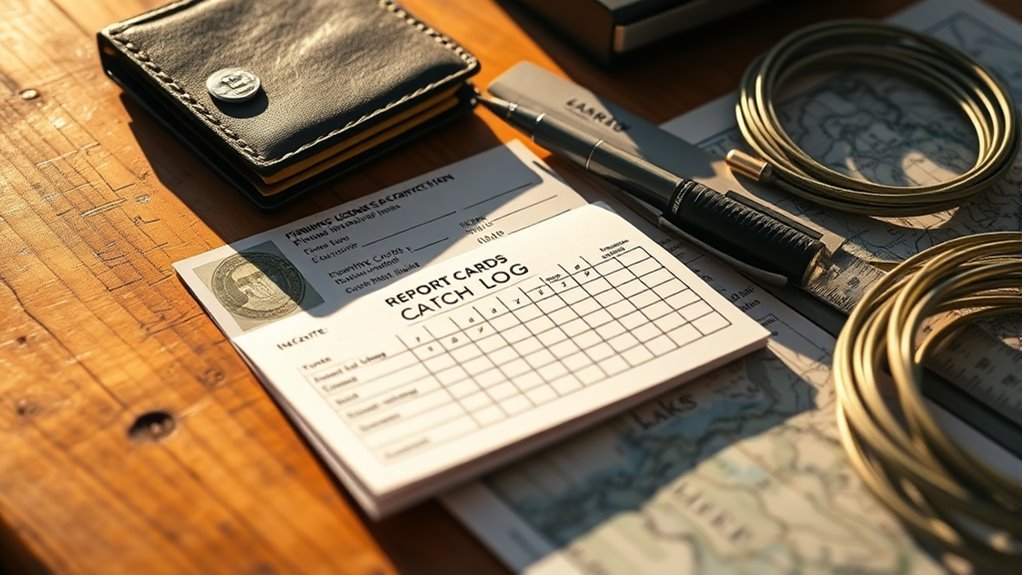
If you’re planning to fish, you’ll need specific validations and report cards beyond a base resident license. You should review validation requirements and report card costs before you go — each permit serves a defined regulatory purpose and has a fixed fee.
- Ocean Enhancement Validation: required for ocean fishing south of Point Arguello; cost $7.05.
- Second Rod Validation: allows two rods in inland waters; cost $19.70.
- Recreational Crab Trap Validation: mandatory to deploy crab traps; cost $2.98.
- Species Report Cards: examples include Sturgeon Report Card at $11.06 annually and Steelhead Report Card at $9.98.
You must purchase validations and report cards in addition to your resident license when applicable.
Keep receipts and comply with reporting deadlines for species-specific cards. These fees fund management, monitoring, and conservation programs; noncompliance can result in fines and permit revocation.
Check agency portals for current purchase and reporting procedures.
Lifetime Fishing Licenses and Cost by Age Group
Beyond one‑season licenses and individual validations, California offers lifetime fishing licenses with prices set by age bracket to provide a long‑term payment option and simplify renewal obligations.
You’ll evaluate lifetime license benefits against upfront cost and expected fishing years. Age group pricing is clear: ages 0–9 and 62+ cost $691.75; ages 10–39 cost $1,131.75; ages 40–61 cost $1,019.50.
If you plan frequent fishing or want to eliminate annual renewals, the lifetime option can be cost-effective compared with repeated short-term purchases. The Fishing Privilege Package, which bundles validations and report cards, is available separately for $467.25 and factors into total cost if you need those add-ons.
If you fish often or want to skip annual renewals, a lifetime license — plus the $467.25 Fishing Privilege Package — can pay off.
Use straightforward math: compare your anticipated years of activity and likely validation needs to determine break-even points.
Policy-wise, these fixed age brackets standardize access and reduce administrative churn from recurring renewals, so you’ll want to document your age eligibility before choosing.
Where and How to Buy or Renew Your License

Looking to buy or renew your California fishing license? You can complete transactions via online purchasing on the California Department of Fish and Wildlife (CDFW) website or at authorized license agents (Walmart, Big 5 Sporting Goods).
A resident sport fishing license (age 16+) costs $62.90 and is valid 365 days from purchase. One-day ($20.52) and two-day ($31.58) licenses are available to residents and non-residents for short-term needs.
- Use CDFW online purchasing for immediate issuance and electronic records.
- Visit license agents for in-person purchase; agents carry the same products as CDFW online.
- Pay attention to payment policy: CDFW offices don’t accept cash — use check, money order, or Visa/Mastercard debit/credit.
- Obtain duplicate licenses online or at CDFW offices for a $14.04 fee.
Follow agency procedures, retain transaction receipts, and verify license dates before fishing to guarantee compliance with state regulations.
Products Worth Considering

USA, License, plate, Vintage, tag, lot, set, plates, number, wall, decor, art, bar, restaurant, design, gift, cool, nice, american, america, hawaii, alaska, california, texas

PREMIUM QUALITY: Crafted from high-grade materials, our License Plate is built to withstand the elements and maintain its vibrant appearance over time. It is resistant to fading, cracking, and peeling, ensuring long-lasting performance.

CUSTOMIZE NOW – Select te finish, choose the size and add your personalized text. NOT embossed
Reporting Harvests and Returning Report Cards
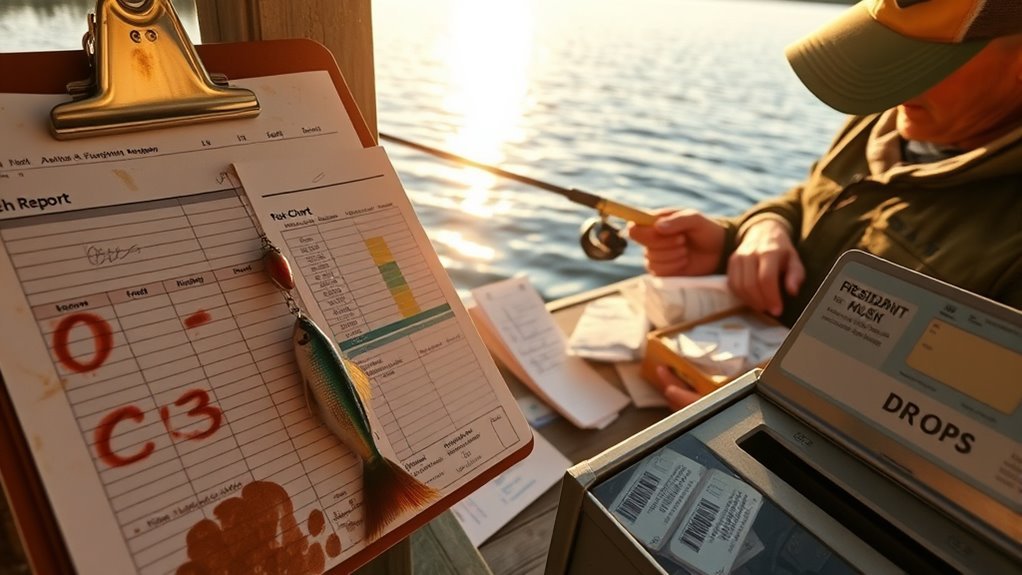
When you harvest regulated species such as sturgeon or spiny lobster, you must complete and return the appropriate report card by the stated deadline so agencies can document take and manage stocks; you’re required to follow specific submission rules.
For harvest compliance, submit the Spiny Lobster Report Card by January 31 for catch reporting or incur a non-return fee. If you keep sturgeon, you must report harvests on the Sturgeon Fishing Report Card; catch-and-release only carries no fee but harvest reporting is mandatory.
Children 16 and older must obtain and return report cards for designated species even if exempt from a fishing license. Agencies use returned cards to quantify take, assess population trends, and set regulations; report card importance is thus regulatory and conservation-critical.
Failure to return required cards can trigger penalties and may jeopardize future license renewals. Maintain records, meet deadlines, and retain copies until your submission is confirmed to guarantee compliance with reporting obligations.
Replacing Lost Licenses and Duplicate Copies
After you return required report cards, keep copies of your license documents and know the replacement options if they’re lost or stolen.
You’ll follow the duplicate license process for lost or stolen resident sport fishing licenses; the fee is $14.04. Validation replacement fees apply separately for add‑ons: Second Rod and Ocean Enhancement Validations each cost $3.81 to replace, and Recreational Crab Trap Validation replacements are $2.98.
- Duplicate license process: request online or at an agent; pay $14.04 for a sport fishing license duplicate.
- Validation replacement fees: pay $3.81 per lost Second Rod or Ocean Enhancement Validation.
- Crab Trap Validation: replace at $2.98 if lost or stolen.
- Sturgeon Fishing Report Card: replace only at CDFW sales offices for $18.28; not available online or through agents.
Do not heat laminate licenses; discoloration doesn’t invalidate them if text and signature remain legible.
Products Worth Considering

LPG Apparel Co. A Lobo Lures Company . Big Game Sport Fishing Vanity Front License Plate Tag | Made in the USA. Our plates feature famous marine artists sublimated on premium metal plates! to last years in front of your vehicle

Add a touch of humor and flair to your car with this funny "Weekend Hooker" front license plate. Perfect for the bass fishing enthusiast, this custom car tag is a great gift for men, especially for dads, husbands, or any fishing fanatic. Whether you're an outdoorsman or just enjoy a good laugh, this novelty license plate is sure to bring a smile to your face and enhance your fishing-themed car decor. Let your personality shine on the road with this fun and unique accessory.

This Largemouth Bass fishing license plate features a black background with silver design elements. Choose with our without the American flag faded into the background!
Frequently Asked Questions
Can I Fish on Tribal Lands With a California License?
Generally no—you’ll need tribal permission. Tribal fishing regulations, not just California fishing laws, govern tribal lands; obtain tribal permits or follow treaty terms, and coordinate with tribal authorities to avoid violating jurisdictional or resource-management rules.
Are Pier or Charter Anglers Treated Differently for License Enforcement?
Yes — you’re enforced differently: pier fishing regulations often treat public anglers like shore licensees, while charter fishing permits shift responsibility to the operator for client compliance, recordkeeping, and vessel-specific reporting and inspections under agency rules.
Do Children Under 16 Need Tags for Gear or Catches?
No, children under 16 typically don’t need tags for gear or catches; you’ll follow fishing regulations for youth anglers, but check specific state or local policy exceptions, bag limits, and reporting requirements before you fish.
How Do License Fees Support Habitat Restoration Projects?
Absolutely monumental impact: you see license fee allocation fund habitat improvement projects by directing specific percentages to restoration, monitoring, and enforcement; agencies report measurable gains in acreage restored, species rebounds, and water-quality metrics annually.
Are Digital Licenses Accepted During Offshore Enforcement Checks?
Yes — you can show digital licenses during offshore enforcement checks; digital license regulations and offshore enforcement protocols require accessible electronic proof, timestamped records, and matching ID, and officers will accept them per jurisdictional policy standards.
Conclusion
You’ll need a license to fish, you’ll need validations for certain species, and you’ll need to report harvests when required — these aren’t optional details but legal and data-driven responsibilities tied to resident rates, fee reductions, short-term options, lifetime choices, and replacement procedures. Follow buying and renewal rules, use reduced or free programs if eligible, and return report cards accurately; doing so protects fisheries, informs policy, and preserves access for you and your community.
