
Rhode Island uses separate licenses for freshwater and saltwater fishing, and the rules are not interchangeable. For the 2026 license year, a resident freshwater license costs $24 online, while an annual resident saltwater license costs $7. Age limits, exemptions, expiration dates, reciprocity, and add-on requirements depend on where and how you fish.
Quick Answer
In 2026, a Rhode Island resident freshwater fishing license is $24 online, and an annual resident saltwater license is $7. Freshwater anglers age 15 or older generally need a license; saltwater anglers generally need one at age 16. A $6 Trout Conservation Stamp applies in additional freshwater situations.
Key Takeaways
- The 2026 resident freshwater license is $24 online or $26 from a full-service vendor.
- The resident saltwater license remains $7 per year; a seven-day saltwater license is $5.
- A $6 online Trout Conservation Stamp is required to keep or possess trout, salmon, or charr and to fish designated catch-and-release or fly-fishing-only areas.
- Freshwater licenses run from March 1 through the last day of February; annual saltwater licenses expire December 31.
- Free or no-cost eligibility does not always mean you may fish without obtaining proof of the applicable license.
2026 Fees at a Glance
| Resident freshwater | $24 online; $26 at a full-service vendor |
| Resident saltwater | $7 annual; $5 for seven days |
| Resident hunting/fishing combination | $43 online; $45 at a full-service vendor |
| Trout Conservation Stamp | $6 online; $6.50 at a full-service vendor |
| Nonresident freshwater | $41 online; $43 at a full-service vendor |
| Nonresident tourist freshwater | $20 online or $22 at a full-service vendor for three consecutive days |
| Nonresident saltwater | $10 annual; $5 for seven days |
Who Needs a Rhode Island Fishing License?
Rhode Island has different age thresholds for freshwater and saltwater fishing:
- Freshwater: A license is generally required for anyone age 15 or older who catches or takes fish in a freshwater stream or pond.
- Saltwater: A license or another accepted form of registration is generally required for anglers and spearfishers age 16 or older in Rhode Island marine waters.
Saltwater anglers may satisfy the requirement with a Rhode Island recreational saltwater license, a NOAA Fisheries national saltwater angler registration, or a recreational saltwater license from a reciprocal state. Passengers on a properly licensed party or charter boat do not need their own Rhode Island saltwater license.
Freshwater and saltwater exemptions differ, so do not assume that an exemption for one type of water applies to the other.
Warning: A fishing license only gives you legal permission to fish. You must still follow current seasons, size limits, possession limits, gear rules, and special-area restrictions.
Types of Rhode Island Fishing Licenses

Choose the product that matches the water you will fish and the length of your trip:
- Resident annual freshwater license: For Rhode Island residents fishing inland streams, rivers, ponds, and lakes.
- Nonresident annual freshwater license: For nonresidents who expect to fish Rhode Island freshwater more than a few days.
- Nonresident three-day tourist freshwater license: Valid for three consecutive days.
- Annual recreational saltwater license: Available to residents and nonresidents for recreational finfish angling and spearfishing.
- Seven-day recreational saltwater license: Available to residents and nonresidents for a short coastal trip.
- Resident hunting-and-fishing combination license: Combines a resident hunting license with freshwater fishing privileges; it does not include a recreational saltwater license.
- Trout Conservation Stamp: An added freshwater privilege required in the situations explained below.
Note: A recreational saltwater fishing license does not replace licenses required for recreational lobster harvest. Rhode Island residents may take the resident recreational shellfish limit without a license, while nonresidents generally need a separate recreational shellfish license.
Products Worth Considering

[Compliance] This license plate is a decorative craft item, not a real license plate. It is for interior decoration only and is prohibited from being installed on vehicles. Please comply with US laws and state regulations.

REPRESENT YOUR STATE – Show off your state pride with custom license plate hats that are as unique as you are. Our men’s snapback hats are available in designs from all 50 states (including Puerto Rico) and will have everyone you meet asking where you got your hat from!

A-One-Of-A-Kind-Collectible – Be the first to own an exceptionally durable, fade resistant 12" x 6" car frame. Expertly made, using heavy-duty chrome which ensures your frame can survive the different seasons and extreme weather.
Resident Freshwater and Saltwater Fees for 2026
Products Worth Considering

Durable .100" Thick Flexible Rubber Construction
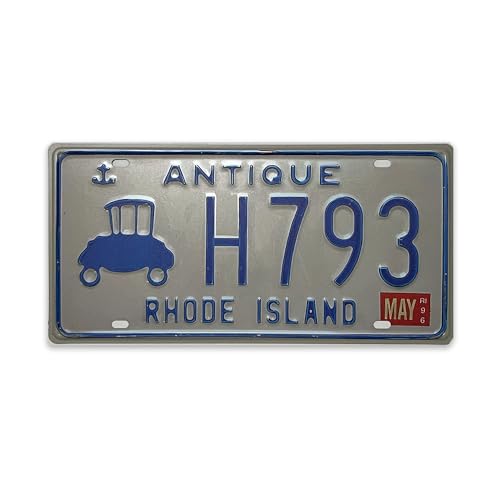
Decorative Item Only: This product is a vintage-style decorative license plate, crafted as a replica/artifact. It is NOT a real license plate and cannot be used as such. Please comply with all applicable laws—it must NOT be mounted on any vehicle to replace, cover, or imitate an official license plate. Use only for indoor or outdoor decoration where legally permitted.
Collectible Tag
Resident Freshwater Rate
The base online price for a 2026 resident freshwater fishing license is $24. A current member of the U.S. armed forces may purchase the same license at the resident rate. A full-service sales vendor charges $26, which includes the applicable vendor amount listed in the 2026–2027 freshwater guide.
The freshwater license year begins March 1 and ends on the last day of February. A license purchased late in the season is not extended for 12 months from the purchase date.
Resident Saltwater Fee
An annual Rhode Island resident recreational saltwater fishing license costs $7. A temporary seven-day saltwater license costs $5 for either a resident or nonresident. Annual saltwater licenses expire on December 31, while temporary licenses expire seven days after activation.
Rhode Island’s saltwater license page states that these statutory fees are not part of the freshwater fee-increase schedule.
Trout Conservation Stamp Charge
The 2026 Trout Conservation Stamp costs $6 online or $6.50 at a full-service vendor. It is required for anyone who:
- keeps or possesses trout, salmon, or charr caught in Rhode Island waters;
- fishes in a designated catch-and-release area; or
- fishes in a designated fly-fishing-only area.
The stamp expires on the last day of February. People younger than 15, anyone over 65, people with a qualifying 100% disability, and qualifying landowners or family members are among those exempt from the stamp requirement.
Pro Tip: Buy through Rhode Island Outdoors (RIO) when possible. Online purchases do not add an enhanced access fee, and you can reprint active license documents from your account.
Exemptions and License-Free Opportunities
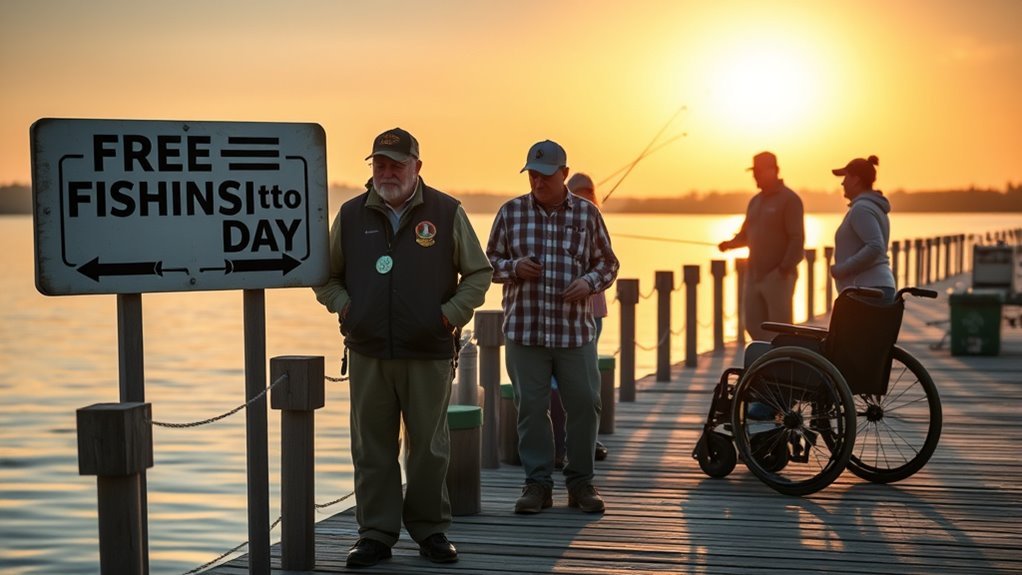
Freshwater Exemptions and No-Cost Licenses
A freshwater fishing license is not required for:
- children younger than 15;
- blind anglers;
- landowners and members of their family when fishing from property where they are actually domiciled; and
- anyone fishing during Rhode Island’s annual Free Fishing Weekend.
Rhode Island residents age 65 or older may obtain a no-cost permanent freshwater license. Veterans with a current 100% disability rating and individuals with qualifying 100% disability status may also qualify for no-cost licensing. Documentation rules apply, so eligible anglers should obtain the license rather than assuming no proof is needed.
Saltwater Exemptions and Free Licenses
Saltwater anglers younger than 16 do not need a license. Other exemptions include anglers on licensed party or charter boats, people with an accepted reciprocal-state license or NOAA registration, anglers on leave from active military duty, blind or permanently disabled anglers, and certain commercial or charter operators fishing under their commercial privileges.
Rhode Island residents over 65 and active military personnel stationed in Rhode Island may obtain a no-fee saltwater license. The free over-65 saltwater license must be renewed each year.
2026 Free Fishing Weekend
Rhode Island’s 2026 freshwater Free Fishing Weekend was May 2 and 3. Residents and nonresidents could fish freshwater without a freshwater license or Trout Conservation Stamp on those two days. All other fishing rules still applied. State regulations set Free Fishing Days as the first full weekend in May each year.
Where and How to Purchase Your License
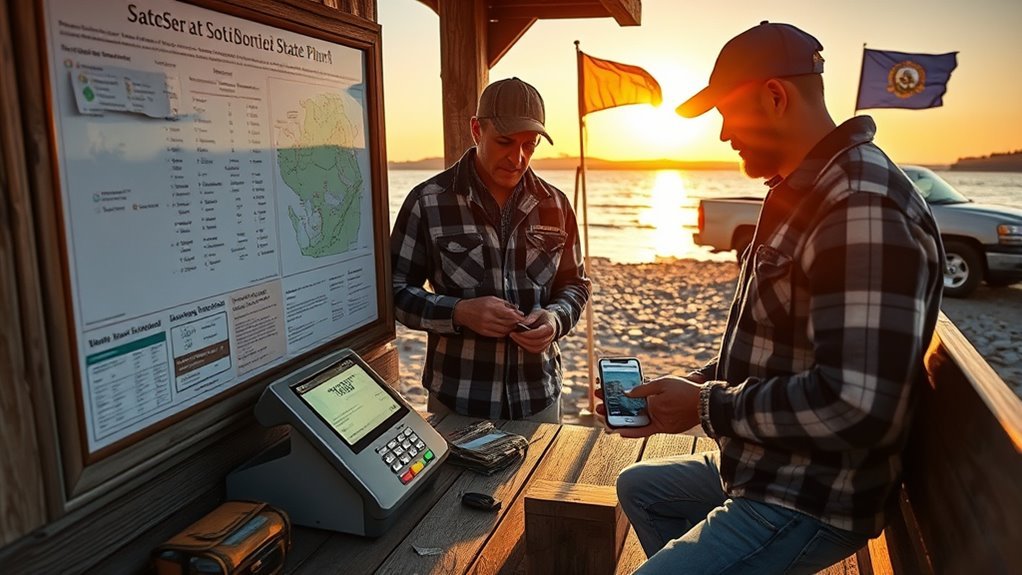
You can purchase Rhode Island fishing licenses and stamps in three main ways:
- Online: Use the official Rhode Island Outdoors licensing system.
- At an authorized sales agent: Participating bait shops, sporting-goods stores, city or town clerks, and other vendors can issue licenses in person.
- At a DEM office: DEM sells licenses at its Office of Boating Registration and Licenses in Providence and at the Division of Fish and Wildlife headquarters in West Kingston during posted business hours.
Online purchases do not carry an added access fee. The 2026–2027 freshwater guide lists the vendor totals shown in the fee table above. DEM also notes that enhanced access fees may apply at full-service sales agents, while resident recreational saltwater licenses and no-cost licenses are exempt. Review the final total before paying. At a DEM office, cash or personal-check purchases have no added fee, while card processing fees may apply.
After an online purchase, print and sign the license document. Keep it available while fishing and show it when requested. You can also reprint active documents from your RIO account.
Products Worth Considering
Authentic Rhode Island Detail: Emblazoned with Rhode Island's nickname "Ocean State" and featuring a classic anchor symbol for maritime charm.

Rhode Island license plate design for a unique and authentic look.

License Validity, Renewal, and Proof
- Freshwater license and trout stamp: March 1 through the last day of February.
- Annual saltwater license: Expires December 31.
- Three-day tourist freshwater license: Three consecutive days.
- Seven-day saltwater license: Seven days from activation.
Rhode Island does not publish a prorated recreational fishing license option for anglers who move during the license year. Buy the license that matches your residency status when you apply, and contact DEM if your status changes or your RIO profile needs correction.
Where Your License Works and Reciprocity
Freshwater reciprocity is limited to specific shared waters. Rhode Island recognizes reciprocal arrangements with Connecticut for Beach Pond, Killingly Pond, Hazard Pond, and Peck Pond, and with Massachusetts for Wallum Lake. Follow the regulations that apply to the particular border water.
Saltwater reciprocity is broader. Rhode Island honors recreational saltwater licenses from New York, Connecticut, Massachusetts, and Maine. A Rhode Island saltwater license also applies in Rhode Island marine waters and offshore federal waters, and it may be honored by reciprocal states. Check the destination state’s rules before traveling because reciprocity can depend on residency and the license you hold.
Fee Increases and How Revenue Supports Conservation
Gradual Freshwater Fee Increases
Rhode Island approved a three-step adjustment to many freshwater fishing and hunting fees, with increases effective in 2021, 2025, and 2028. Under the published schedule, the resident freshwater license is set to rise from $24 to $27 on July 1, 2028. The nonresident annual freshwater license is scheduled to rise from $41 to $44, the resident combination license from $43 to $48, and the Trout Conservation Stamp from $6 to $6.50.
The $7 annual resident saltwater license is separate from this freshwater fee schedule.
How License Revenue Supports Conservation
Freshwater fishing, hunting, permit, stamp, and tag revenue supports Rhode Island fish and wildlife conservation programs. DEM reported that the 2025 step was expected to generate more than $185,000 in added annual revenue, with the 2028 step expected to raise the total increase above $300,000 per year.
Rhode Island uses eligible state license revenue to help draw federal Wildlife and Sport Fish Restoration funding at a 3-to-1 federal match.
These funds support projects such as fisheries management, habitat and access improvements, research, stocking, education, and boating and fishing opportunities. Saltwater license revenue supports marine recreational fishing management and related conservation work.
Check Current Fishing Regulations Before Every Trip
License rules change less often than seasons and possession limits. Before fishing, review the current 2026–2027 Rhode Island Freshwater Fishing Guide or the latest marine minimum sizes and possession limits.
- Designated trout waters close from the end of February until 6 a.m. on the second Saturday in April unless a special rule says otherwise.
- Anglers using state management areas may need fluorescent orange during specified hunting-season periods.
- Freshwater wading gear with external felt or other absorbent soles is prohibited.
- Saltwater seasons, minimum sizes, and possession limits can change during the year.
Frequently Asked Questions
Can I fish in another state with my Rhode Island license?
Sometimes. Saltwater reciprocity currently covers New York, Connecticut, Massachusetts, and Maine. Freshwater reciprocity is limited to named border waters: Beach Pond, Killingly Pond, Hazard Pond, and Peck Pond with Connecticut, plus Wallum Lake with Massachusetts. Check the other state’s current rules before fishing there.
Are there discounts for veterans or seniors?
Rhode Island residents age 65 or older may obtain a no-cost permanent freshwater license and a no-fee saltwater license. Veterans with a current 100% disability rating may qualify for no-cost freshwater licensing. A general veteran discount does not apply to every veteran; eligibility and documentation matter.
How much is a nonresident Rhode Island fishing license?
A 2026 nonresident annual freshwater license is $41 online or $43 at a full-service vendor. A three-day tourist freshwater license is $20 online or $22 at a vendor. A nonresident annual saltwater license is $10, and a seven-day saltwater license is $5.
Do I need a fishing license when fishing from shore or my own property?
Saltwater shore anglers generally need a saltwater license, accepted registration, or exemption. The freshwater landowner exemption applies only to landowners and family members fishing from property where they are actually domiciled. It is not a general exemption for fishing from any privately owned shoreline.
Can I get a prorated license if I move mid-year?
Rhode Island does not list a prorated recreational fishing license. Purchase the product that matches your residency when you apply. Contact DEM or RIO support if you move and need to update your account or confirm which license applies.
Do I need a Trout Conservation Stamp for catch-and-release fishing?
Not for ordinary catch-and-release fishing in unrestricted water. You do need the stamp to fish in a designated catch-and-release area or fly-fishing-only area, even when you do not keep a fish. You also need it to keep or possess trout, salmon, or charr unless an exemption applies.
Does a saltwater fishing license cover shellfish or lobster?
Not automatically. Recreational lobster harvest requires a separate Rhode Island lobster license. Rhode Island residents may take the resident recreational shellfish limit without a license, while nonresidents generally need a separate recreational shellfish license and face additional restrictions.
Conclusion
A Rhode Island fishing license is inexpensive, but choosing the wrong product can still put you out of compliance. In 2026, residents pay $24 online for freshwater fishing and $7 for an annual saltwater license. Check your age, water type, trip length, trout plans, and exemption status before buying. Then carry valid proof and review the latest limits before every trip.
Sources
- Rhode Island DEM — Freshwater Fishing License Fees — current fees, license year, and no-cost eligibility.
- Rhode Island DEM — 2026–2027 Freshwater Fishing Guide — age requirements, trout stamp rules, vendor prices, exemptions, and Free Fishing Weekend.
- Rhode Island DEM — Recreational Saltwater Fishing Licenses — saltwater fees, reciprocity, exemptions, coverage, and expiration.
- Rhode Island DEM — Rhode Island Outdoors — purchase methods, printing, access fees, and no-cost license documentation.
- Rhode Island Department of State — Freshwater Fishing Regulations — current seasons, Free Fishing Days, special-area rules, and prohibited activities.
- Rhode Island DEM — Fishing and Hunting Fee Increase Notice — phased fee schedule, revenue estimates, and federal matching funds.
