

If you’re an out‑of‑state angler, you’ll need a non‑resident license to fish most public waters in North Carolina. Coastal annual and 10‑day licenses are $38; inland annual is $54 and the 10‑day inland is $28. You can’t buy a unified inland/coastal non‑resident license. Short‑term options, lifetime/special rates, tournament permits, vendor and online sales, and replacement procedures also apply. Keep your ID and be ready to follow local size, season and possession rules — more specifics follow.
Who Must Buy a Non‑Resident Fishing License
Who needs a non‑resident fishing license? You do if you’re 16 or older and plan to fish in North Carolina’s public waters but aren’t a resident.
For clear fishing license eligibility: non‑resident requirements mandate a license for any public‑water angling activity; private ponds on privately owned land are exempt, so you won’t need one there.
You should choose the duration that fits your trip — options span short terms to a full year — and understand which zone you’ll fish.
Coastal and inland waters have distinct rules; the Coastal Recreational Fishing License and Inland Fishing License apply to non‑residents according to where you fish.
Unified Inland/Coastal Recreational licenses exist, but they’re restricted to residents, so you can’t select that as a non‑resident.
Carry proof of your non‑resident license while fishing and comply with all area‑specific regulations to avoid penalties and guarantee legal, responsible angling.
Current Non‑Resident License Prices and Recent Increases
Although fees vary by zone and duration, non‑resident anglers should expect higher costs since the recent July 1 increases took effect: a Coastal Recreational Fishing License runs $38 (with a 10‑day Coastal also $38), the annual Inland Fishing License is $54 (the 10‑day Inland is $28), non‑resident lifetime Coastal licenses are $630, and related non‑resident season‑long and 10‑day hunting permits rose to $119 and $95 respectively.
| License type | Current cost |
|---|---|
| Coastal Recreational (annual) | $38 |
| Coastal Recreational (10‑day) | $38 |
| Inland Fishing (annual) | $54 |
| Inland Fishing (10‑day) | $28 |
You should use this license fee comparison to budget and comply. These fishing license adjustments are regulatory, permanent until further action, and apply statewide where specified. Agencies cite administrative and conservation funding needs as the basis. Check official state resources before purchase to confirm zone applicability and avoid penalties for noncompliance.
Products Worth Considering

Product Material: Our license plate frame is made of premium quality aluminum, which ensures that the plate frame will never wear out. Corrosion resistant, Personalized Car Frame Can Perfect to Put on Your Front of Car,Decorate your car to make it look more beautiful and unique.

Enough to Use: you will receive 6 pieces of fishing license holders, and 6 pieces of safety pins, abundant in quantity, enough for you to choose and replace, can meet your different needs; You can also share them with your friends

Enough to Use: you will receive 6 pieces of fishing license holders, and 6 pieces of safety pins, abundant in quantity, enough for you to choose and replace, can meet your different needs; You can also share them with your friends
Ten‑Day and Short‑Term Non‑Resident Options
If you won’t be staying long, the state offers 10‑day non‑resident options that keep you compliant without paying for a full season. You can choose a Coastal Recreational Fishing Ten‑Day License for $38 to fish designated coastal waters, or a 10‑Day Inland License for $28 to access inland waters.
These short term licenses are valid only for the indicated 10‑day period and must match the type of water where you fish. You’re required to follow all applicable fishing regulations while the license is active; possession of the correct short‑term license is part of legal compliance.
These 10‑day licenses are valid only for the specified period and water type; you must follow all fishing regulations.
Each license is nontransferable and assigned solely to the purchaser for that specific period. Before you fish, confirm the license type aligns with your planned activity—coastal or inland—to avoid violations.
These limited‑duration options provide a cost‑effective, regulatory‑compliant choice when your stay is brief.
Products Worth Considering

The size of the license plate frame is: 12.3" x 6.3" , it fits all standard size US and Canada vehicle license plates.the stylish design frame fits ly on your car license plate.

FISHING LICENSE HOLDER W/ZIP CLOSURE

UNIVERSAL DIMENSIONS:The Car License Plate Frame Is 12.3x6.3 Inches This Is The Standard Size Of Most Us License Plates Which Can Be Applied For Suvs Trucks Cars And Other Models
Where to Purchase Non‑Resident Licenses
When you need a non‑resident fishing license, you can buy one quickly online through the Go Outdoors North Carolina portal or in person at registered vendors like tackle shops and Walmart locations statewide; in‑store purchases are issued immediately, while online orders are mailed. You’ll follow regulatory steps: verify residency status, select the correct non‑resident product, and retain proof while fishing. Use online purchasing for convenience; expect physical delivery. Use vendor locations for immediate compliance.
| Purchase Method | Typical Outcome |
|---|---|
| Go Outdoors NC (online) | Mailed license; proof later |
| Tackle shops (vendor) | Immediate issuance |
| Walmart (vendor) | Immediate issuance |
| Phone/agent | Varies by county |
| Mobile/rescue | Not accepted |
Fees differ by product; for example, non‑resident coastal annual and ten‑day options are both $38. You must observe specific regulations tied to non‑resident licenses while fishing North Carolina waters; failure to carry valid proof can result in enforcement action.
Products Worth Considering
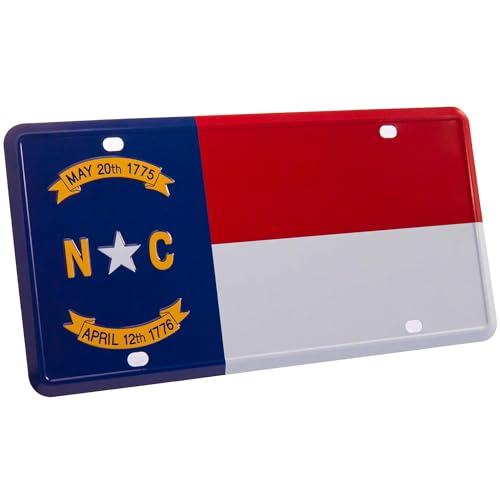
NORTH CAROLINA STATE FLAG DESIGN: Features a textured, raised North Carolina flag design for an authentic, high-end look and feel.

Decorative Item Only: This product is a vintage-style decorative license plate, crafted as a replica/artifact. It is NOT a real license plate and cannot be used as such. Please comply with all applicable laws—it must NOT be mounted on any vehicle to replace, cover, or imitate an official license plate. Use only for indoor or outdoor decoration where legally permitted.

LASTING PERSONALIZATION: Create your own personalized plate with custom name, number, or text on genuine aluminum plate material. Our high-quality finish won't fade or peel like cheaper alternatives. Suitable as a personalized attachment or customized plate for any collection. Each plate offers professional detailing at a compact size, making it versatile for displaying on bikes, toy cars, or as decorative signs.
Differences Between Coastal, Inland, and Unified Licenses
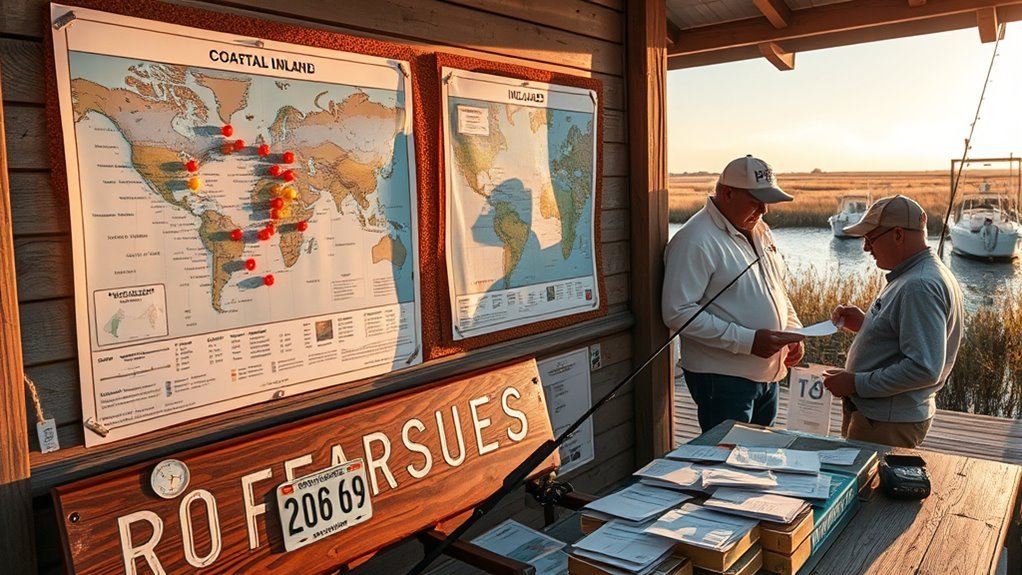
You’ll first need to know that coastal licenses cover saltwater and related tidal areas while inland licenses cover freshwater rivers and lakes, and the two aren’t interchangeable.
Expect different non-resident fees — coastal annual $38 (10-day $14) versus inland annual $54 (10-day $28) — and note lifetime coastal is $630 for non-residents while unified lifetime access isn’t available to non-residents.
If you fish both environments regularly as a resident, a unified license can be cost‑effective; for non‑residents you’ll choose coastal or inland based on where you’ll actually fish.
Products Worth Considering

【MATERIAL】: oFloral License plate frame is made from premium quality aluminum, which can provide long-lasting protection from corroding, rusting and aging, durability for long lasting usage.Personalized Car Frame Can Perfect to Put on Your Front of Car or for Decorative Purposes Around the House Like in Your Bedroom, Garage, Basement, Ect.

Bone fish license plate featuring a fish skeleton in silver accents across the center.

This Largemouth Bass fishing license plate features a black background with silver design elements. Choose with our without the American flag faded into the background!
Coastal vs. Inland Coverage
Although coastal and inland licenses both authorize recreational fishing, they cover distinct waters and cost different amounts: non-resident Coastal Recreational Fishing Licenses permit saltwater fishing and run $38 (including a 10-day coastal option at the same price), while non-resident Inland Fishing Licenses restrict you to freshwater and cost $54.
A combined inland/coastal (unified) license that grants both privileges exists only for residents at $49 and isn’t available to non-residents. You must buy the license matching the water type where you fish: coastal fishing requires the coastal license or resident unified license; inland fishing requires the inland license.
Short-term coastal permits give temporary legal access at the coastal rate. Check boundary definitions and possession requirements before you fish to guarantee compliance.
Residency Price Differences
Because license types and residency status directly affect what you can buy and how much you’ll pay, non-residents face different fee structures than residents for coastal, inland, and unified options.
You’ll note non-resident Coastal Recreational Fishing Licenses cost $38 versus Inland at $54; ten-day coastal is $14 and ten-day inland $28.
The Unified Inland/Coastal Recreational License is restricted to residents at $49 and as a result unavailable to you as a non-resident.
Lifetime coastal fees are $630 for non-residents compared with $315 for residents.
Recreational Commercial Gear Licenses show the largest gap: $501 non-resident versus $71 resident.
Confirm residency verification before purchase; check license validity periods and territorial coverage so you comply with regulatory requirements.
When Unified Makes Sense
If you plan to fish both inland and coastal waters, a unified license makes sense only if you’re a resident, since non-residents can’t buy the $49 Unified Inland/Coastal Recreational Fishing License and must instead purchase separate permits (coastal $38 annually or $14 for a ten-day coastal, inland $54 annually) to cover each jurisdiction.
You should evaluate trip frequency and locations: residents gain Unified License Benefits and consolidated compliance under one fee, reflecting Resident Fishing Privileges that include both coastal and inland rules.
Non-residents must buy the appropriate coastal or inland license based on where they fish, or the ten-day coastal if short-term.
Follow area-specific regulations and carry proof of the correct permit to avoid citations; unified coverage simply isn’t an option for out-of-state anglers.
Lifetime and Special‑Rate Non‑Resident Licenses
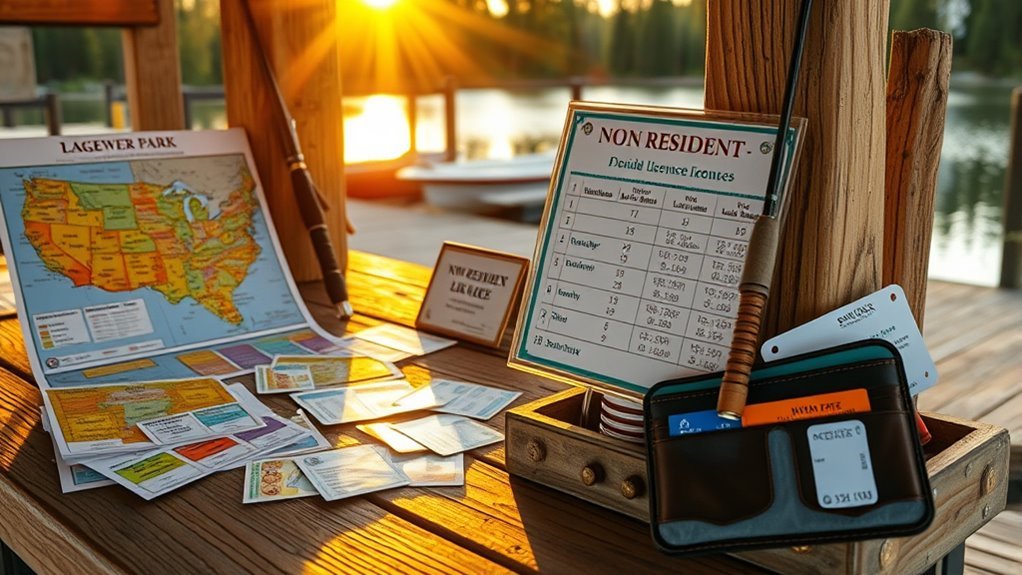
When you’re evaluating lifetime and special‑rate non‑resident fishing licenses, note that your options are limited but specific: the Coastal Recreational Fishing Lifetime License costs $630 and grants unlimited coastal fishing for life, while non‑residents can’t purchase Unified Inland/Coastal lifetime licenses or resident‑only special licenses (such as those for legally blind persons or adult care home residents).
You should weigh lifetime license benefits against frequency of visits; a one-time $630 cost removes annual renewals for coastal fishing.
Special rate eligibility for non‑residents is narrow but meaningful: the Disabled Veteran Coastal Recreational Fishing License is available at $14, and provides a low‑cost coastal option for qualified veterans.
You can also obtain a Recreational Commercial Gear License for $501 if you intend to use authorized gear for commercial recreational activity.
These provisions are statutory distinctions: resident‑only concessions remain restricted, and non‑resident purchase eligibility follows explicit categories.
Verify documentation requirements and eligibility before applying to ascertain compliance.
Products Worth Considering

Add a touch of humor and flair to your car with this funny "Weekend Hooker" front license plate. Perfect for the bass fishing enthusiast, this custom car tag is a great gift for men, especially for dads, husbands, or any fishing fanatic. Whether you're an outdoorsman or just enjoy a good laugh, this novelty license plate is sure to bring a smile to your face and enhance your fishing-themed car decor. Let your personality shine on the road with this fun and unique accessory.

【Material】Our License Plate Frame Is Made Of Stainless Steel, Strong And Durable.

Material :High-Quality Metal Aluminum With High Gloss Stamped Metal License Plate.Lightweight, Waterproof,Anti-Rust And Very Durable.
Permits, Tournament Rules, and Exemptions for Visitors
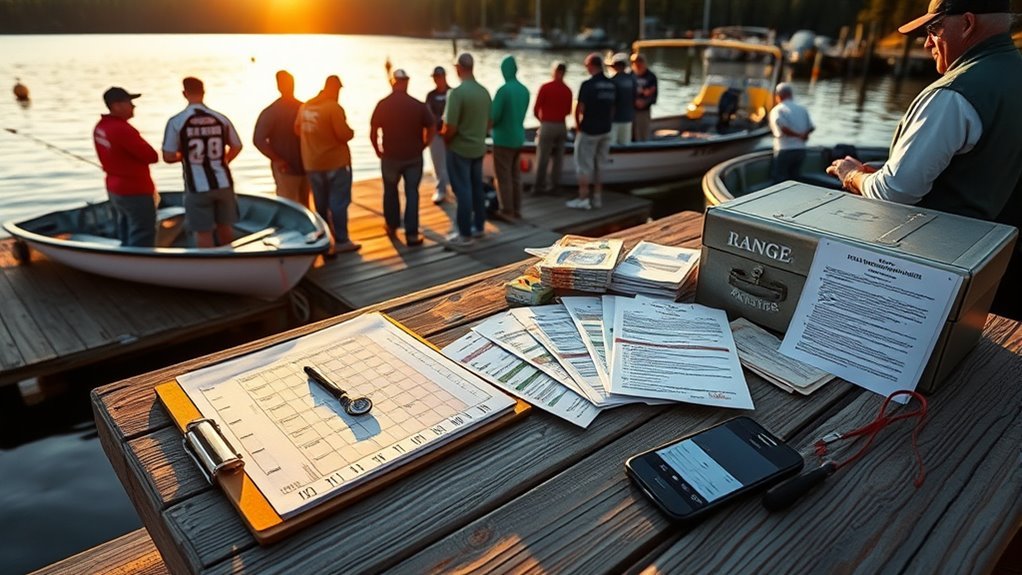
When you organize or enter a fishing tournament, you’ll need the Recreational Fishing Tournament License if any catch is sold to guarantee compliance with commercial regulations.
If you’re running an organized event, you can apply for a Coastal Recreational Fishing License Exemption Permit by submitting a written request at least 30 days before the event.
Even with an exemption, you’ll still follow all local size and possession limits and should consider short-term ten-day licenses for individual non-resident anglers.
Tournament License Requirements
Although tournament organizers must secure appropriate permits before holding an event, you also need to know which activities trigger a Recreational Fishing Tournament License versus an exemption permit.
Under tournament regulations and fishing event guidelines, you must obtain a Recreational Fishing Tournament License when the event permits sale of fish harvested during competition; that license covers commercial activity and monitoring of fish sales.
If you or your organization keep the event noncommercial, apply for a Coastal Recreational Fishing License Exemption Permit at least 30 days before the event. The exemption forbids seafood sales, requires adherence to local fishing laws, and mandates complete application information emphasizing conservation.
Coordinate with local authorities to guarantee compliance, prevent illegal sales, and secure timely approval.
Exemption Permit Process
If your event will remain noncommercial and you plan to bring in non-resident participants, you must submit a written application for a Coastal Recreational Fishing License Exemption Permit at least 30 days before the start date. You’ll follow clear exemption guidelines: submit organizer details, event dates, location, participant estimates, and conservation measures. The application process is procedural — timely filing guarantees review and helps avoid conversion to a Recreational Fishing Tournament License when sales or commercial intent appear. Exemption permits let you run regulated, license-free participant events in coastal or joint waters, but participants must obey local fishing rules. Follow submission checklists, allow processing time, and implement required conservation practices to maintain compliance and minimize enforcement risk.
| Requirement | Detail |
|---|---|
| Notice | 30 days |
| Submission | Written |
| Contents | Organizer, dates |
| Purpose | Noncommercial events |
| Compliance | Local rules |
Rules for Harvested Seafood
Because you’re harvesting seafood in North Carolina coastal waters, you must hold the appropriate permit or license and follow size, bag, and possession limits; non-residents can buy a Coastal Recreational Fishing License ($38 annual or $14 ten-day) or participate under a properly issued Exemption Permit for noncommercial, organized events submitted at least 30 days in advance.
You must comply with harvesting guidelines and seafood regulations: all anglers follow state size and possession limits to protect stocks.
If you organize or join a tournament that sells catches, obtain a Recreational Fishing Tournament License to document commercial activity and enable monitoring.
Exemption Permits apply only to noncommercial events; seafood taken under them can’t be sold.
Maintain permit paperwork onboard and adhere strictly to local rules and seasonal restrictions.
What to Do If You Lose or Need a Replacement License
When you lose your North Carolina fishing license, you can get a replacement for $10 through the online portal or at any authorized vendor; you’ll need to present a valid photo ID to verify your identity.
Follow the replacement process promptly: log into your account online for the fastest service or visit a vendor and request a printed copy. The vendor or portal will require identity verification via a current picture ID to confirm you’re the licensee.
If the loss occurs during an organized fishing event, report it to event coordinators immediately so they can document compliance and advise next steps.
Note that the replacement license keeps the original expiration date; it doesn’t extend or renew your privilege. Keep a digital or physical backup in a secure location to avoid repeat requests.
Paying the $10 fee completes the administrative action, restoring your legal authority to fish under the same terms as your original license.
Common Regulations and Possession Limits for Non‑Residents
Although non-residents follow the same species-specific size and possession limits as residents, you must know and comply with the exact rules for each waterbody and species you’re fishing.
You’re required to observe posted size limits and statewide catch regulations; failure to do so can result in fines or confiscation.
Buy the correct license for the water: the Coastal Recreational Fishing License costs $38 annually, or get a $14 ten-day coastal license if you’ll be in coastal waters briefly.
You can’t buy a unified inland/coastal license as a non-resident, so confirm jurisdiction on joint waters where both inland and coastal rules may apply.
All fish taken from public waters must be for personal use; selling is prohibited.
- Verify species-specific size limits and bag limits before fishing each site.
- Determine which jurisdiction’s catch regulations apply when fishing joint waters.
- Keep proof of your current license on you while fishing.
Frequently Asked Questions
Can Non-Residents Purchase Multi-State Reciprocity Licenses?
Yes — you can often buy multi-state reciprocity licenses where multi state agreements exist; you’ll need to verify each state’s fishing regulations, residency proofs, and covered species/waters before purchasing to guarantee lawful reciprocal privileges.
Do License Fees Fund Conservation Projects in Other States?
About 70% of state license revenue supports local projects; you won’t typically fund other states. You’ll see license revenue allocation detailed in regulations, and conservation funding sources are confined to the issuing state’s programs.
Are There Discounts for Military Non-Resident Spouses?
Yes — some states offer military discounts and recognize spouse eligibility for non-resident fishing licenses; you’ll need to present valid military ID or dependent ID and follow each state’s specific application, documentation, and residency exception rules.
Can Non‑Residents Buy Licenses Online the Same Day as Fishing?
Yes — you can complete a same day purchase via online application; you’ll need valid ID, payment, and any residency documentation, and you must comply with state rules and species-specific regulations before you fish.
Is Guide-Client Fishing Coverage Included With a Guide’s License?
No — guide-client fishing coverage usually isn’t included with a guide’s license. You’ll want to verify guide insurance policies and confirm client liability coverage separately, since regulations typically require separate commercial policies and documented proof.
Conclusion
You’ll want to verify rules, rates, and regional restrictions before you cast: confirm current costs, choose the correct coastal, inland, or unified license, and consider short-term or tournament permits if you’ll be visiting briefly. Keep licenses and limits clearly compiled to comply with possession and reporting requirements; replace lost credentials promptly. Staying smart, staying safe, and staying salt- or stream-savvy saves sanctions, secures satisfaction, and supports sustainable sportfishing stewardship.
