

Andorra can help you keep more of your income, with personal tax capped at 10% and no wealth, inheritance, or gift tax. You’ll also usually spend less than in major Western European cities, thanks to lower rents, modest utilities, and a 4.5% VAT. Housing can be tight, though, and buying often requires a large investment. If you want to judge whether the trade-offs fit your budget and lifestyle, there’s more to weigh next.
Why Andorra Can Lower Your Taxes

Andorra can lower your taxes because its system is built around low, simple rates and major exemptions. You can keep more of what you earn because Andorra caps personal income tax at 10%, and income up to €24,000 isn’t taxed at all. That creates real tax benefits for workers, freelancers, and retirees who want room to breathe.
You also avoid wealth tax, inheritance tax, and gift tax, which can protect your estate plans and reduce transfer costs. If you run a business, the corporate tax rate also tops out at 10%, and new ventures may qualify for reductions, so you can reinvest faster.
Investors gain too: capital gains from stocks and dividends from Andorran companies are tax-exempt. Andorra’s financial system stays credible because it follows international tax treaties, so you get a favorable setup without sacrificing legitimacy or security.
Andorra Cost of Living
Compared with major Western European cities, you’ll usually find that living in Andorra costs about 20–30% less, which can make day-to-day life more manageable for expats and residents.
Your cost of living stays relatively lean because VAT is only 4.5%, so groceries, dining, and many services can feel more affordable than in neighboring markets. Utilities and public services are also subsidized, helping you keep monthly expenses under control without sacrificing comfort.
If you need a two-bedroom apartment, expect roughly €900 to €1,200 a month, depending on location and amenities.
Andorra’s tax system adds another layer of relief: there’s no wealth tax, and no inheritance or gift tax, so more of your money stays with you and your family.
For anyone seeking financial breathing room, Andorra can be an affordable option that supports a freer, less burdened lifestyle.
Andorra Housing: Rent vs. Buy
Once you’ve looked at day-to-day expenses, the next big question is whether it makes more sense to rent or buy in Andorra. If you value flexibility, renting a two-bedroom apartment usually runs €900–€1,200 a month, which keeps your cost of living controlled while you test the market. If you want stability, buying can build real estate assets, but rising demand from expatriates and investors is pushing prices up.
| Option | Upfront Need | Best For |
|---|---|---|
| Renting | Lower | Mobility |
| Buying | €600,000+ | Residency permits |
| Market trend | Rising | Long-term planning |
| VAT on property transactions | 4.5% | Lower friction |
| Demand | High | Quality housing |
You’ll want to weigh freedom against commitment. Renting lets you move fast; buying can anchor you if you’re staying for years. Because property transactions are active and prices are climbing, act with clear goals, not pressure.
Jobs and Salaries in Andorra

When you start looking at work in Andorra, you’ll find a small but active job market where tourism, retail, and hospitality create most of the openings.
You can also target customer service and administrative jobs, where many expatriates land steady roles. Average gross salaries usually sit between €25,000 and €30,000 a year, but your pay will shift with sector and experience.
Customer service and administrative jobs often provide steady roles, with salaries typically ranging from €25,000 to €30,000 a year.
If you’ve got skills in finance or tech, you can push beyond €40,000, which gives you more room to build financial freedom. The unemployment rate stays low, around 3%, so employers often need reliable workers.
That demand can strengthen your bargaining position, especially if you bring language ability or specialized expertise. Andorra’s favorable tax environment can make your take-home pay feel stronger than the headline salary suggests.
If you want a practical path to work, look for sectors that match your skills and let you keep more of what you earn.
Healthcare and School Costs in Andorra
After you’ve sized up your earning potential in Andorra, the next big question is what daily life will cost, especially for healthcare and schooling.
You’ll find the health system is a strong point: it ranks 4th worldwide, and public healthcare is mainly tax-funded, so you usually face low out-of-pocket expenses. Average annual healthcare spending is about €3,500 per person, which is modest by Western European standards and helps you keep more of your income.
Education is just as practical for families. Residents can access free schooling through a trilingual system in Catalan, French, and Spanish, giving your children flexibility and broad skills.
If you want alternatives, private schooling typically costs €6,000 to €12,000 a year, depending on the school.
Because public services in healthcare and education get government subsidies, you benefit from lower overall costs and more room to live on your own terms.
How Andorra Residency Works
Andorra gives you two main residency paths: active residency if you plan to work, and passive residency if you won’t. Your choice shapes how you qualify, how long you must stay, and how you manage tax residency. Both residency permits start with a one-year grant, then three-year renewals, and after seven years you can extend to ten years if you stay compliant.
| Path | Main requirement |
|---|---|
| Passive residency | €39,000 annual income, €350,000 in Andorran assets, refundable deposit |
| Active residency | Job offer or self-employment, 183 days in Andorra, €50,000 company deposit |
| Shared rules | Clean police certificate, health insurance, local compliance |
Passive residency suits you if you want freedom without work ties. Active residency fits if you’re building a business or taking local employment. Either way, you’ll need solid documentation and patience, but the structure is clear: meet the conditions, keep them current, and you can anchor your life in a low-tax environment on your terms.
Living in Andorra as a Digital Nomad
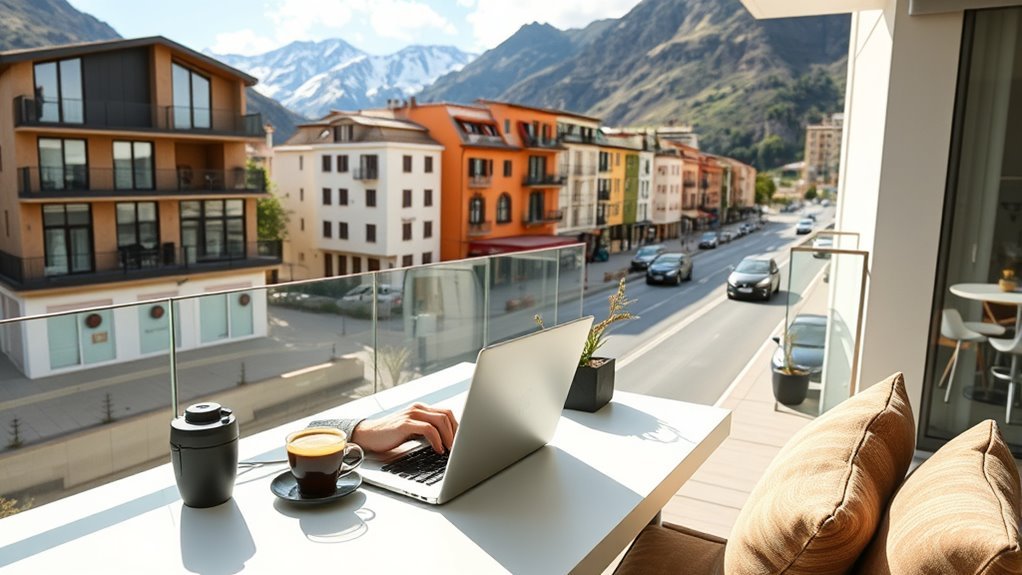
As a digital nomad in Andorra, you can explore residency pathways like the passive permit, which requires a €350,000 investment and proof of at least €39,000 in annual income.
You’ll also benefit from a low-tax setup, with personal income tax capped at 10% and no wealth, inheritance, or gift taxes.
The lower cost of living helps stretch your budget.
With strong infrastructure, a growing remote-work community, and plenty of sunshine and mountain scenery, you can maintain a practical work-life balance.
Residency Pathways
If you’re considering Andorra as a base for remote work, the passive residency route is the key pathway to explore. Among the main residency pathways, this option suits digital nomads, foreign investors, and entrepreneurs who want mobility without local employment ties. Andorra offers a clear structure: invest €350,000 in local assets and show at least €39,000 in annual income. You’ll also need health insurance, a clean police certificate, and annual permit renewal. To keep passive residency valid, you must stay 90 days a year in the country.
| Requirement | Detail |
|---|---|
| Investment | €350,000 |
| Income | €39,000+ |
| Presence | 90 days/year |
| Work rule | No local job |
This route keeps your tax burden and lifestyle flexible while supporting a lower-cost base, often 20-30% below major Western European cities.
Tax Advantages
One of Andorra’s biggest draws for digital nomads is its tax structure: personal income tax tops out at 10%, and you won’t pay anything on the first €24,000 of income.
That tax regime lets you keep more of what you earn, especially if you’re building remote income streams. If you meet the 183-day requirement, you can establish tax residency and access these benefits legally.
Andorra also caps corporate tax at 10%, which helps digital entrepreneurs and self-employed professionals reduce overhead.
There’s no wealth, inheritance, or gift tax, so your assets stay protected. Capital gains from stocks and investments aren’t taxed, either, making growth easier.
For practical guidance, Andorra Financial can help you align residency planning with permanent residence goals.
Work-Life Balance
Living in Andorra can give you a strong work-life balance because the country combines practical financial benefits with a calm, high-quality environment.
For digital nomads, Andorra pairs low taxes with real freedom: you can keep more of what you earn, since income tax tops out at 10% and there’s no wealth, inheritance, or gift tax. That means meaningful financial savings you can redirect into travel, savings, or better tools.
Andorra’s passive residency path, while demanding, supports a stable remote lifestyle. You’ll also find low crime, strong healthcare, and mountain scenery that invites skiing, hiking, and daily reset.
With Barcelona and Toulouse nearby, Andorra stays connected, making it an attractive destination for work, leisure, and a more liberated routine.
Starting a Business in Andorra
The corporate tax rate is capped at 10%, and some sectors may qualify for even lower treatment, so you keep more of what you earn. A VAT rate of 4.5% also helps you price competitively and protect margins.
Andorra’s 10% corporate tax cap and 4.5% VAT help you protect margins and stay competitive.
If you want to live and work there, you can explore residency permits, including active residency for entrepreneurs. That path lets you run your business on the ground while staying legally established.
You’ll also benefit from private banking options and Andorra’s location near Barcelona and Toulouse, which makes reaching European clients, suppliers, and partners much easier.
Is Andorra a Good Move for Expats?
So, is Andorra a good move for expats? If you want more freedom from heavy taxes, it can be. As a tax resident, you’ll face a personal income tax capped at 10%, and income up to €24,000 is tax-free. That means your money can stretch further, especially when the financial authority keeps the system stable and predictable.
| Factor | Andorra | Impact |
|---|---|---|
| Tax rate | 0%-10% | Strong savings |
| Cost of living | 20%-30% lower | More room in budget |
| Rent | €900-€1,200 | Rising, but manageable |
| Lifestyle | High quality | Safer, healthier living |
For expatriates, Andorra also delivers low crime, top-tier healthcare, trilingual schools, and 2,000+ hours of sunshine. The cost of living stays lower than in major Western European cities, though housing prices keep climbing. If you value autonomy, safety, and outdoor life, Andorra can be a smart, practical move.
Frequently Asked Questions
What Are the Disadvantages of Living in Andorra?
You’ll face housing challenges, cultural isolation, limited amenities, scarce job opportunities, and weather extremes in Andorra. You may need a car, accept fewer schooling choices, and adapt to a service-driven economy with seasonal activity.
Can a US Citizen Retire in Andorra?
Yes, you can retire there—because paradise needs paperwork. You’ll need a retirement visa, meet residency requirements, and manage lifestyle changes. In return, you get tax benefits, a welcoming expat community, and practical freedom.
How Much Money Do I Need to Live in Andorra?
You’ll need roughly €1,500–€3,000 monthly, depending on housing options and lifestyle choices. Your cost breakdown should cover rent, daily expenses, and tax benefits; Andorra’s low taxes and VAT can stretch your budget further.
Is Healthcare Free in Andorra?
No, healthcare isn’t fully free in Andorra. You’ll contribute through payroll taxes and mandatory insurance, but you’ll get strong healthcare access, public services, and top medical facilities, with most costs covered by the health system.
Conclusion
Living in Andorra can feel like opening a door to a quieter financial life. You may benefit from lower taxes, manageable living costs, and a stable environment, but you’ll still need to weigh housing, jobs, residency rules, and daily expenses carefully. If you plan well, Andorra can be a strong fit for your goals. Think of it as a compact toolkit: useful, efficient, and best when you know exactly which tools you need.
