

A lifetime fishing license is a one-time conservation investment that locks in current fees and removes annual renewals; in Ohio a resident pays $599.04 and seniors (66+) pay $84.24. It’s nontransferable, valid for life even if you move, and funds habitat and management programs. Compare that to a $25 annual license—your break-even is roughly 24 years, sooner with fee inflation. Keep going to see purchase, replacement, and strategy details.
What Is a Lifetime Fishing License and How It Works

A lifetime fishing license gives you permanent, non-expiring permission to fish in Ohio waters without annual renewals, with resident fees currently set at $599.04 and a senior rate (66+) at $84.24.
You get lifetime benefits that simplify long-term planning: no yearly administrative transactions, continuity of access even if you change residency, and predictable support for conservation programs funded by license revenue.
From a policy perspective, the license functions as a prepaid entitlement that shifts short-term fee collection into long-term capital for fish and wildlife management, aligning individual choice with sustained funding.
You’ll still follow fishing regulations—season, size, and bag limits remain enforceable regardless of license duration—so compliance obligations persist.
Financially, the estimated break-even versus annual permits is about 24–28 years, assuming fee inflation, which informs whether the upfront investment suits your projected angling horizon.
The model supports steady conservation funding and reduces recurring administrative burden for both anglers and agencies.
Lifetime License Pricing Breakdown by Age and Residency
Building on how lifetime licenses function as a prepaid conservation revenue stream, you’ll want to compare specific costs by age and residency to judge value. Ohio’s resident lifetime fishing license is $599.04; senior residents (66+) pay $84.24, reflecting steep license discounts for older adults. Lifetime licenses remain valid for life and keep working if you move out of state, so residency at purchase matters less for long-term access.
| Category | Ohio Price |
|---|---|
| Resident (adult) | $599.04 |
| Senior resident (66+) | $84.24 |
From a policy and fiscal perspective, you should consider the estimated 24–28 year break-even horizon versus annual fees, demographic patterns in participation, and targeted youth licenses or outreach that influence future revenue. If you plan multi-decade participation, the upfront cost and demographic discounts can stabilize agency funding while reducing administrative burdens from annual renewals.
Financial Comparison: Lifetime vs. Annual and Multi‑Year Licenses

When you compare lifetime, annual, and multi‑year licenses from a fiscal and policy perspective, the choice hinges on expected participation duration and fee inflation: you’ll evaluate upfront cost versus recurring payments and policy risk.
Ohio’s resident lifetime license is $599.04 versus a $25 annual license and multiyear options of 3, 5, or 10 years. From a data-driven long-term view, lifetime benefits include locking fishing expenses at a fixed rate and shielding you from future fee increases; that fixed payment favors younger or high-frequency anglers.
Ohio’s resident lifetime license is $599.04 versus $25 annually; it locks costs, favoring younger or frequent anglers.
Multiyear licenses reduce transaction friction and lock rates temporarily but still require renewals and don’t eliminate future price exposure. One-day licenses cost $14 and can credit toward an annual purchase, signaling policy mechanisms that nudge short-term users away from lifetime commitments.
Fiscal planning should weigh expected years of participation, likely inflation in license fees, and liquidity: lifetime is a strategic hedge against rising costs, while annual/multiyear choices preserve flexibility for lower-commitment anglers.
Products Worth Considering

Standard Size

Four universal mounting slots

Embossed aluminum license plate in team colors
How to Calculate the Break‑Even Point for a Lifetime License

If you plan to fish regularly over decades, calculate the break-even point by dividing the lifetime fee ($599.04) by the current annual license cost ($25), which yields roughly 24 years; factor in expected fee inflation and personal participation to adjust that horizon, since higher annual increases will shorten the payback period and make the lifetime option more attractive from a long‑term fiscal and policy standpoint.
Use this data-driven, policy-focused approach to assess license longevity and run a clear break even analysis for your situation.
- Confirm current annual cost ($25) and lifetime fee ($599.04).
- Compute base break-even: 599.04 ÷ 25 ≈ 24 years.
- Model fee inflation (e.g., 2–3% annually) to see earlier break-even.
- Adjust for participation rate (years you actually fish) and discounting.
This concise framework helps you project long-term costs, quantify savings versus annual renewals, and evaluate the fiscal rationale of a lifetime license across decades.
Products Worth Considering

Add a touch of humor and flair to your car with this funny "Weekend Hooker" front license plate. Perfect for the bass fishing enthusiast, this custom car tag is a great gift for men, especially for dads, husbands, or any fishing fanatic. Whether you're an outdoorsman or just enjoy a good laugh, this novelty license plate is sure to bring a smile to your face and enhance your fishing-themed car decor. Let your personality shine on the road with this fun and unique accessory.

Enough to Use: you will receive 6 pieces of fishing license holders, and 6 pieces of safety pins, abundant in quantity, enough for you to choose and replace, can meet your different needs; You can also share them with your friends

Enough to Use: you will receive 6 pieces of fishing license holders, and 6 pieces of safety pins, abundant in quantity, enough for you to choose and replace, can meet your different needs; You can also share them with your friends
Who Benefits Most From Buying a Lifetime License
Who stands to gain most from a lifetime fishing license depends on age, expected participation, and sensitivity to future fee increases: young anglers (16–18) lock in decades of access at current rates. Regular adult anglers who expect to fish for 24–28+ years reach the break-even point quickly. Seniors 66+ can buy in at a deeply discounted $84, and frequent travelers or relocators keep uninterrupted Ohio fishing privileges regardless of residency changes.
You’ll benefit if you’re a young angler: the upfront cost eliminates annual renewals and captures long-term value. If you expect steady annual participation, the expected 24–28 year horizon provides a clear financial metric for decision-making. Seniors gain defined senior savings at a fixed, low price, reducing lifetime outlays if you fish regularly.
If you move or travel frequently, a lifetime license preserves access without administrative churn. Use these parameters—age, participation frequency, relocation likelihood, and inflation risk—to evaluate whether the lifetime option aligns with your long-term recreational and fiscal goals.
How Lifetime License Revenue Supports Conservation Programs
When you buy a lifetime fishing license, a significant portion of that one-time payment is allocated to habitat restoration projects—streambank stabilization, wetland reconnection, and spawning-bed improvements—that have measurable outcomes for fish populations.
ODNR also channels parts of lifetime-license revenue into endowment accounts whose interest returns provide predictable, long-term funding for species management and education programs.
That combination of project funding and endowment income helps guarantee sustainable fisheries and measurable conservation gains for future anglers.
Funding Habitat Restoration
Because lifetime fishing license sales direct revenue into the N.C. Wildlife Endowment Fund, you fund measurable habitat preservation and long-term conservation funding.
You’ll see dollars invested in projects that restore streams, wetlands, and riparian corridors, improving fish populations and ecosystem services. Data show over $100 million since 1981 has been allocated to these efforts, creating durable outcomes.
- Target restoration: prioritize degraded waterways with monitoring metrics.
- Scale impact: leverage lifetime license capital to co-fund larger projects.
- Adaptive management: use measured results to refine restoration techniques.
- Long-term stewardship: secure sites for future protection and maintenance.
You can expect policy-aligned, transparent use of funds focused on sustaining aquatic and terrestrial habitat functions for decades.
Endowment Interest Returns
Although the lifetime license fees are placed into an endowment, their real power comes from the annual interest those funds generate—over $100 million in conservation spending since 1981—so your purchase continually finances targeted projects that protect and restore fish and wildlife habitat across North Carolina.
You benefit directly because interest proceeds, not principal, fund habitat restoration, species management, and recreational-fishing enhancements, ensuring perpetual support without depleting capital.
Policy-wise, sustained endowment growth translates to predictable budgets for multi-year projects and measurable conservation impact metrics like restored acres, improved fish populations, and increased angler access.
How to Purchase and Activate a Lifetime Fishing License
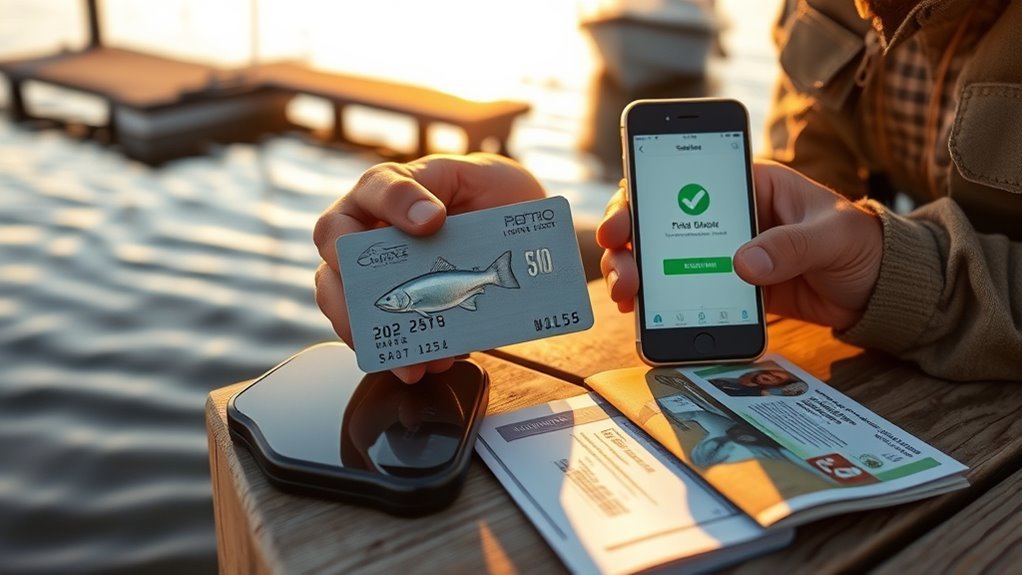
If you decide to secure a lifetime fishing license in Ohio, complete your purchase through the Ohio Wildlife Licensing System online or at any registered vendor, pay the resident fee of $599.04 (or the senior rate of $84.24 if you’re 66+), and you’ll get a temporary paper license immediately while your permanent Conservation Card is mailed within about four weeks.
You’ll follow a clear license activation process: the temporary paper is valid immediately, and the system links your purchase to state records so you don’t need annual renewals. Use the online purchase tutorial for step-by-step guidance and to verify residency eligibility and payment receipts.
This is a long-term policy choice: lifetime licenses remove recurring administrative burdens and lock in current rates despite future policy or residency shifts. If you hold an annual license, you can upgrade by paying the cost difference, which is data-driven savings for frequent anglers and aligns with statewide conservation funding structures.
- Confirm residency and ID
- Complete online purchase tutorial
- Receive temporary paper license
- Await mailed Conservation Card
Products Worth Considering

【PREMIUM QUALITY】-The black license plate frame was Crafted with high quality aluminum prevent Corrosion And Rust

Black LASER cut tag

Transferring, Replacing, and Managing Lifetime Licenses
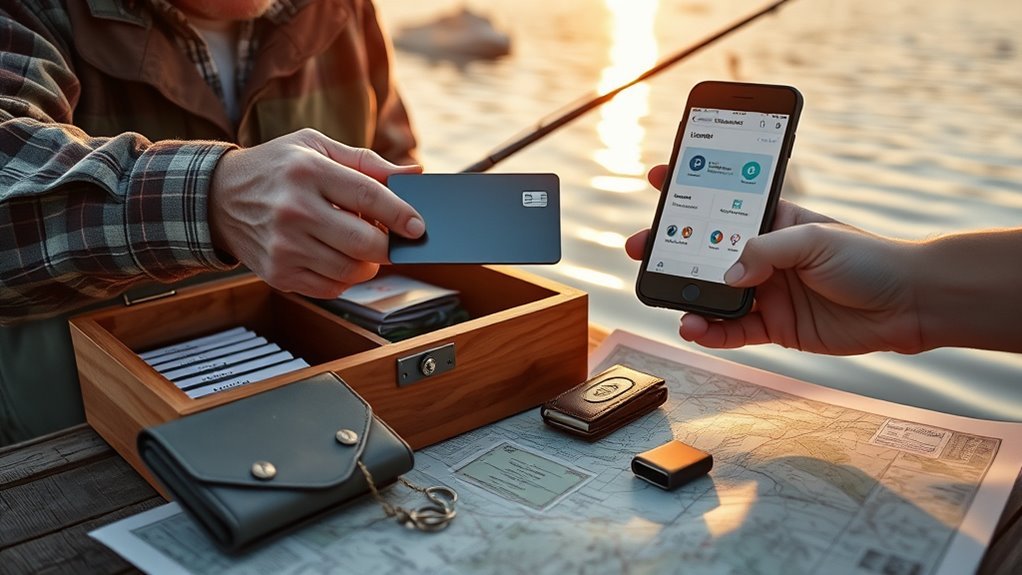
You should know Ohio lifetime fishing licenses are non-transferable and remain tied to the original purchaser for life, so plan ownership arrangements accordingly.
If your card is lost or damaged, you can promptly print a duplicate online after payment to avoid enforcement issues, and the ODNR maintains records to support that process.
Keep your license on hand while fishing and manage your account through the ODNR portal to guarantee long-term compliance and easy access to records.
Transferring Lifetime Licenses
Because Ohio’s lifetime fishing licenses are non-transferable, you can’t assign or sell your credential to another person, though the state does provide clear options for replacement and account management.
Holders who lose a license can print a paid duplicate online and can manage their record via the Ohio Wildlife Licensing System, and the license remains valid even if you change residency and never requires renewal.
You should understand transferring licenses in the context of non-transferable policies and long-term access.
Key operational points:
- Verify ownership and personal data in the Ohio Wildlife Licensing System.
- Request and pay for a duplicate online if the physical card is lost.
- Note that lifetime status is permanent and not contingent on residency.
- No mechanism exists to transfer or assign the license to another person.
Replacing Lost Licenses
Having covered that lifetime fishing licenses in Ohio can’t be assigned to someone else, let’s focus on what to do when the card goes missing and how to manage your credential over time.
You can initiate the replacement process through the Ohio Wildlife Licensing System or by contacting the Ohio Department of Natural Resources; a duplicate is printed after payment.
Maintain license security by keeping the card or a digital copy accessible while fishing, since you must possess proof of license. Use your online account to request replacements, review transaction history, and confirm current status.
If you prefer, Ohio residents may transfer their lifetime license to another individual under state rules, but transfers and replacements follow documented administrative steps handled by the licensing system.
Managing Online Accounts
When managing a lifetime fishing license online, create and use an Ohio Wildlife Licensing System account to view transaction history, print a paid duplicate for a lost or damaged card, and initiate transfers or other administrative requests through the Ohio Department of Natural Resources.
The system also shows current license status so you can confirm permanent coverage without annual renewals. You’ll rely on online account management for secure license information access and policy compliance.
Use the account to execute these actions based on documented procedures and eligibility rules:
- Log in to review transaction history and current license holdings.
- Print a duplicate after paying the prescribed replacement fee.
- Request a transfer following ODNR transfer policy and required documentation.
- Update contact details to maintain accurate license information access for long-term administration.
State‑by‑State Variations and How Ohio Compares

Although lifetime-license structures vary widely across the U.S., Ohio’s $599.04 resident rate places it among the higher-cost options, yet its 24–28 year break-even horizon shows it can be a fiscally sound choice for long-term anglers.
In state comparisons, you’ll see extremes—South Carolina offers a $9 resident senior rate—so policy context matters when you evaluate license benefits and cost-efficiency.
You should weigh Ohio’s higher upfront fee against multiyear options (3, 5, 10 years) many states use to reduce renewal friction and against absence of a non-resident lifetime option in Ohio.
Ohio’s lifetime validity irrespective of subsequent residency aligns with other jurisdictions’ portability practices, which affects long-term user mobility and revenue modeling.
From a policy perspective, purchasing a lifetime license in Ohio channels funds into local conservation programs, supporting sustainable fisheries.
If you plan decades of participation, the data-driven comparison favors lifetime purchase; otherwise shorter multiyear products may better match shorter planning horizons.
Products Worth Considering


[IDEAL FOR OHIO STATE BUCKEYES FANS] - This Ohio State University license plate frame is the perfect sports memorabilia for supporters and fans of the Ohio State Buckeyes. It is a stylish yet elegant way of showing your support, without being too flashy.

Alternatives to Lifetime Licenses and When to Choose Them
If you fish only occasionally or aren’t sure you’ll maintain the habit for decades, short-term options—1‑day, 1‑year, or multiyear (3, 5, 10) licenses—often minimize upfront cost and preserve flexibility.
Use the 24–28 year break-even range for lifetime licenses to assess whether a multiyear purchase or rolling annual renewals makes more sense for your age and expected participation.
For nonresidents or infrequent visitors, targeted choices like 3‑day permits or 1‑day credits toward an annual license can be the most cost-effective policy choice.
Products Worth Considering


Product Material: Our license plate frame is made of premium quality aluminum, which ensures that the plate frame will never wear out. Corrosion resistant, Personalized Car Frame Can Perfect to Put on Your Front of Car,Decorate your car to make it look more beautiful and unique.

FISHING LICENSE HOLDER W/ZIP CLOSURE
Short-Term License Options
You’ll often find short-term fishing licenses are the most cost-effective and flexible alternative to lifetime permits, especially if your fishing is occasional or seasonal:
You’ll evaluate options by usage frequency and entry barriers—short term fishing licenses suit fishing for beginners and infrequent anglers who want low upfront cost and policy flexibility.
Consider these Ohio-specific choices and implications:
- One-day resident $14 / non-resident $27.04 — ideal for trial trips; one-day credit applies to annual purchase.
- Annual resident $25 / non-resident $50.96 — a mid-term policy for regular seasonal anglers.
- Multiyear (3/5/10 years) — reduces renewal transactions and administrative costs for frequent fishers.
- Free Fishing Days — zero-cost access for newcomers, supporting recruitment without financial commitment.
Cost-Break-Even Analysis
When you crunch the numbers, the choice between lifetime and shorter-term Ohio fishing licenses comes down to how many years you expect to fish and how confident you’re about future participation and fee inflation.
Use a rigorous cost analysis: at about $599, the lifetime license breaks even roughly between 24–28 years versus a $25 annual fee.
For younger, frequent anglers, a 10-year license at $250 can be a pragmatic intermediate investment strategy, deferring lifetime commitment while capturing savings.
If you fish infrequently or seasonally, annual or multiyear purchases will likely remain the lower-cost path.
Factor projected fee increases and personal participation rates into scenario models to determine whether a one-time lifetime outlay aligns with your long-term fiscal and recreational objectives.
Frequently Asked Questions
Can a Lifetime License Be Used for Commercial or Charter Fishing Operations?
No — you can’t typically use a lifetime license for commercial or charter fishing operations; commercial fishing regulations and charter fishing permits usually require separate licenses or endorsements, reflecting long-term policy, compliance data, and operational permitting needs.
Are Lifetime Fishing Licenses Honored for Fishing in Neighboring States?
Absolutely — while you’ll find reciprocal agreements across many borders, they’re not universal; check state regulations, because policies vary by state, and long-term data-driven planning will prevent costly surprises and guarantee compliance.
Do Lifetime Licenses Cover All Species, Including Saltwater Game Fish?
No — you’ll find species restrictions vary by state, so license inclusivity isn’t guaranteed; review agency policy and long-term provisions to confirm whether a lifetime permit covers freshwater, saltwater, or specific game fish species statewide.
How Do Lifetime Licenses Affect Eligibility for Fishing Tournaments or Prizes?
Think of it as a gentle gatekeeper: you’ll typically retain tournament eligibility, but verify prize restrictions and specific event rules. Policy-driven data shows tournaments set eligibility via residency, age, or permit type, not lifetime status alone.
Are There Age or Competency Requirements to Purchase a Lifetime License?
Yes — you’ll face age restrictions and sometimes competency certifications: many states require minimum ages, proof of identity, or completion of safety/skills courses. Check long-term policy provisions and jurisdictional data before purchasing a lifetime license.
Conclusion
A lifetime fishing license can be a smart long‑term investment if you plan to fish regularly and stay in one state; think of it as an endowment that pays interest in freshwater access like a well‑tended fund yields steady returns. You’ll weigh upfront cost, age/residency discounts, and state rules against annual fees and inflation. Use break‑even calculations and policy details to decide, and pick alternatives if mobility, short‑term needs, or budget constraints matter.
