
The cost of living in Andorra in 2026 is driven mainly by rent. For a newcomer renting at current market rates, a practical starting budget is about €2,000–€3,400 a month for a single renter, €2,800–€4,800 for a couple, and €4,000–€6,500 or more for a family of four. These are planning ranges, not official averages, and they do not include large one-time residence investments or deposits. Low taxes, free national bus travel for qualifying residents, and reasonably priced fiber can help, but healthcare, insurance, parking, mobile service, childcare, schooling, and residence-route costs can raise the total quickly.
By Theo Ramirez · Last updated September 7, 2026
Data note: This guide was rechecked on September 7, 2026 against current Andorran government, tax, telecom, CASS, legal, and IRS sources. Crowd-sourced prices are used only as dated planning checkpoints because Andorra has small contributor samples and those figures can change quickly.
Quick Answer
Andorra can be expensive for a newcomer renting at current market rates. Start with about €2,000–€3,400 a month for a single renter, €2,800–€4,800 for a couple, and €4,000–€6,500 or more for a family of four. These are planning ranges, not official averages. Housing is the main variable. Keep ordinary monthly living costs separate from one-time immigration investments, deposits, and non-refundable contributions.
Key Takeaways
- New-contract rent is usually the largest part of an Andorran household budget.
- Older registered leases can be much cheaper than homes currently offered to newcomers.
- Andorra Telecom advertises 500 Mbps fiber for €41 a month, including IGI.
- The government fully subsidizes a monthly national bus pass for Andorran nationals and people with legal, effective, permanent residence; visitors still need to check current fares.
- Andorra has low taxes, not zero taxes: personal income tax can reach 10%, and the general IGI consumption-tax rate is 4.5%.
- Healthcare, private insurance, childcare, parking, and immigration requirements can add substantially to the headline budget.
- The minimum wage increased again on July 1, 2026, to €1,568.67 a month for the ordinary legal workweek.
- New passive-residence rules can involve major investment and contribution requirements that should be budgeted separately from monthly living costs.
How Much Is the Cost of Living in Andorra?
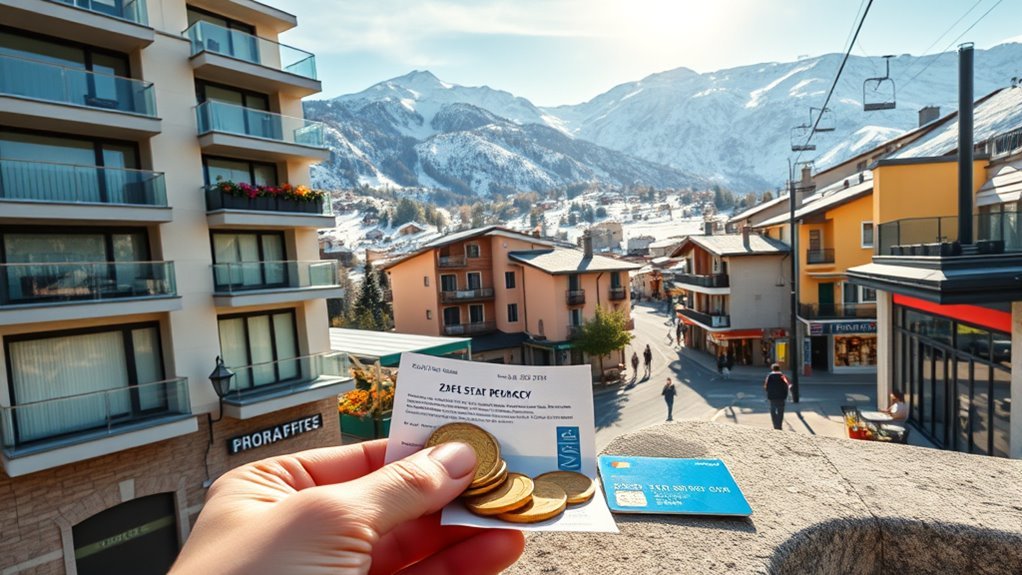
There is no official monthly amount that fits everyone living in Andorra. The result depends heavily on your lease, parish, household size, vehicle use, health coverage, and whether you pay for childcare or private education.
Third-party cost indexes can offer a rough reference, but their Andorran samples are small and volatile. Expatistan’s Andorra page warns that its estimates are based on only a few data points. For relocation planning, it is safer to use dated line-item checkpoints and replace them with confirmed quotes for your own home, insurance, transport, and family needs.
A safer approach is to build a range from the expenses you will actually face:
| Household | Practical Monthly Range | Main Variables |
|---|---|---|
| Single renter | About €2,000–€3,400 | Studio or one-bedroom rent, heating, insurance, parking, and dining habits |
| Couple | About €2,800–€4,800 | Apartment size, one or two vehicles, health coverage, and travel |
| Family of four | About €4,000–€6,500+ | Larger home, groceries, childcare, schooling, insurance, and transport |
These are planning ranges rather than government statistics. A household with an older low-rent contract may spend less, while a new arrival choosing a central furnished apartment, private childcare, and a car may spend much more.
What Does a Basic Single-Renter Budget Look Like?
The table below is an illustrative core-cost check, not an official Andorran average. It combines a current crowd-sourced 45 m² normal-area rent and utility checkpoint with official telecom and resident-bus pricing, plus this guide’s grocery planning allowance. It is designed to show what is included before you add personal costs.
| Core Cost | Illustrative Monthly Amount | Basis |
|---|---|---|
| 45 m² furnished rent, normal area | €878 | Crowd-sourced Andorra checkpoint |
| Utilities for one person in 45 m² | €61 | Crowd-sourced Andorra checkpoint |
| 500 Mbps fiber | €41 | Official Andorra Telecom rate |
| 3 GB mobile plan | €8 | Official individual contract rate |
| Groceries and household basics | €350–€500 | Planning allowance, not an official average |
| National bus travel | €0 if eligible for the free monthly pass | Government-subsidized resident pass |
| Illustrative core subtotal | €1,338–€1,488 | Before insurance, healthcare gaps, dining, clothing, parking or a car, leisure, savings, and immigration costs |
This subtotal is intentionally narrower than the €2,000–€3,400 single-renter planning range. It shows why a low core total should not be mistaken for a complete relocation budget: insurance, healthcare, parking or vehicle ownership, dining, personal spending, savings, and residence-route costs can add hundreds or much more.
2026 Budget Checkpoints for a New Arrival
Use current market checkpoints to test whether your personal budget is realistic. Expatistan’s Andorra page explicitly warns that its estimates are based on only a few data points, so this guide does not treat its aggregate household total as an official or stable benchmark. Its current housing snapshot is more useful for showing how widely rent can move by property size and area.
| Checkpoint | Current Reference | How to Use It |
|---|---|---|
| 45 m² furnished rent | About €878 in a normal area; €2,077 in an expensive area | Shows why one national rent average can mislead a single renter |
| 85 m² furnished rent | About €1,750 in a normal area; €3,178 in an expensive area | Useful as a larger-household market checkpoint, not an official average |
| Utilities | Crowd-sourced examples: €61 for one person in 45 m²; €139 for two people in 85 m² | Replace with the previous tenant’s winter bills before signing |
| Home fiber | €41 for 500 Mbps, €51 for 1 Gbps, or €58 for 2 Gbps; router €2/month | Official Andorra Telecom pricing with IGI included |
Do not add these figures together as if they were one standardized household. The dwelling sizes and household assumptions differ. Instead, start with a confirmed rent quote, then replace each planning allowance with the actual utility, insurance, school, transport, and residence costs that apply to you.
In Andorra, the age and type of your lease can matter as much as the size of your home.
Is Rent More Expensive Than Groceries?
Yes. For most renters, housing costs substantially more than groceries and has a greater effect on whether Andorra feels affordable.
The Andorran government’s rental-contract registry, SICAR, reported an average of about €13 per square meter across the contracts in its registry. Contracts signed during 2025 averaged €18.19 per square meter, while contracts more than five years old averaged €7.80 per square meter.
Those figures need an important caveat. When SICAR was presented in November 2025, the government said Escaldes-Engordany data were missing; that parish represented about 20% of Andorra’s rental housing in the cited household-budget statistics. The €13 figure is therefore a useful registry benchmark, not a complete national market average. A newcomer searching current advertisements may see prices well above it.
For a separate look at advertised-market pricing and parish differences, see our average rent in Andorra in 2026 guide. Keep advertised asking rents separate from the SICAR registered-contract average: they measure different parts of the market.
Warning: Do not build a 2026 relocation budget around the original €650 example for a two-bedroom apartment in La Massana. It may describe an old or unusual contract rather than the rent normally available to a new arrival.
How Rent Varies by Location and Property
Central areas such as Andorra la Vella and Escaldes-Engordany generally attract strong demand. Homes farther from the main commercial center may cost less, but price still depends on supply, condition, views, parking, and access to schools or ski areas.
Compare homes using the total monthly cost rather than the advertised rent alone. Check whether the price includes:
- Parking or a garage space
- Storage
- Furniture and appliances
- Community charges
- Heating or hot water
- Internet or other services
Upfront Housing Costs
Your first month can cost far more than an ordinary month. Depending on the agreement, you may need money for a security deposit, advance rent, agency services, moving, furniture, utility setup, and parking.
Ask for every charge in writing before signing. Also confirm the contract length, annual adjustment rules, notice period, inventory, repair responsibilities, and conditions for returning the deposit.
How Much Do Utilities and Internet Add?
Utility costs vary more than a single national average suggests. A small, efficient apartment may have low bills, while a larger home can cost much more during a cold mountain winter.
As a rough planning figure, allow about €100–€250 a month for electricity, heating, water, waste, and related household charges. Your actual bill will depend on the energy source, insulation, thermostat setting, household size, and whether any services are included in the rent.
Internet is easier to estimate. Andorra Telecom currently advertises:
- 500 Mbps symmetric fiber: €41 per month
- 1 Gbps symmetric fiber: €51 per month
- 2 Gbps symmetric fiber: €58 per month
- Optional router service: €2 per month
The advertised prices include IGI. Available equipment, installation conditions, promotions, and package terms can change, so confirm the final charge before ordering.
Mobile service is a separate recurring cost. Andorra Telecom’s current individual contract rates list 3 GB for €8 a month, 15 GB for €18, 50 GB Roaming for €28, and 100 GB Roaming Plus for €48. The advertised mobile-plan prices include IGI.
Pro Tip: Ask for the previous winter’s utility bills before renting. A low advertised rent can lose its advantage if the home has poor insulation or expensive electric heating.
What Do Food and Dining Out Cost?

Food is usually easier to control than housing. Shopping at supermarkets, cooking at home, and comparing imported products can keep the monthly total manageable.
Andorra does not publish a single official supermarket basket for every household. The examples below come from Expatistan’s crowd-sourced Andorra snapshot, captured and checked on August 10, 2026. The site warns that its Andorran sample is small, so treat these figures as orientation rather than guaranteed store prices.
Grocery Price Snapshot
- A dozen large eggs: about €4.34
- Tomatoes: about €2.40 per kilogram
- Apples: about €4 per kilogram
- A decent bottle of red table wine: about €7
- A fast-food combination meal: about €12
Brand, origin, store, package size, and season can move these prices. Imported specialty foods may cost much more than ordinary supermarket products.
For budgeting rather than as a claimed national average, a single adult who cooks most meals could start with a €350–€500 monthly allowance for groceries and household basics. A family of four could start with roughly €850–€1,200 or more, then replace that allowance with actual receipts after the first month. Age, diet, brands, imported foods, and restaurant habits can move the total materially.
Eating Out Costs
Current crowd-sourced examples put an ordinary lunch at roughly €21, a basic dinner for two at about €55, and an Italian dinner for two with drinks and dessert at about €60.
A cappuccino is around €3.50, while a beer in a neighborhood pub is roughly €2.90. Resort, hotel, and fine-dining prices can be considerably higher.
Dining out several times a week can therefore add hundreds of euros to a household budget. Comparing lunch menus and saving resort restaurants for occasional meals gives you more control.
Note: Consumer-price websites depend on voluntary submissions. Use them to create a starting budget, then check current supermarket menus and restaurant prices in the parish where you plan to live.
What Do Healthcare, Insurance, and Family Costs Add?
Healthcare costs depend on your work and residence status. Employees and self-employed residents may contribute to Andorra’s social-security system, CASS, while some immigration categories require proof of private health, disability, and old-age coverage.
For insured patients using the CASS preferred healthcare pathway, current reimbursement rules cover 75% of the CASS responsibility tariff for medical visits and prescribed tests or products, 65% for rehabilitation acts, and 90% for hospital admission. Outside the preferred pathway, CASS lists 33% for medical visits, 60% for prescribed acts, tests and products, 60% for rehabilitation, and 33% for hospital admission. Health providers must have a CASS agreement for these pathway rates; services outside the agreement framework can follow different reimbursement treatment. These percentages apply to CASS responsibility tariffs, not necessarily the provider’s full cash price.
Do not assume a general cost-of-living estimate includes insurance premiums, deductibles, uncovered treatment, dental care, or travel for specialist services. Obtain a written insurance quotation based on your age, household, medical needs, and planned residence category.
Families should also price childcare and schooling separately. Public education options differ from private and international choices, and after-school care, meals, transport, activities, and school supplies can materially increase the monthly total.
These family expenses vary too widely for one reliable national figure. Request current fees directly from the school or provider before committing to a move.
What Are the Biggest Transport Costs?
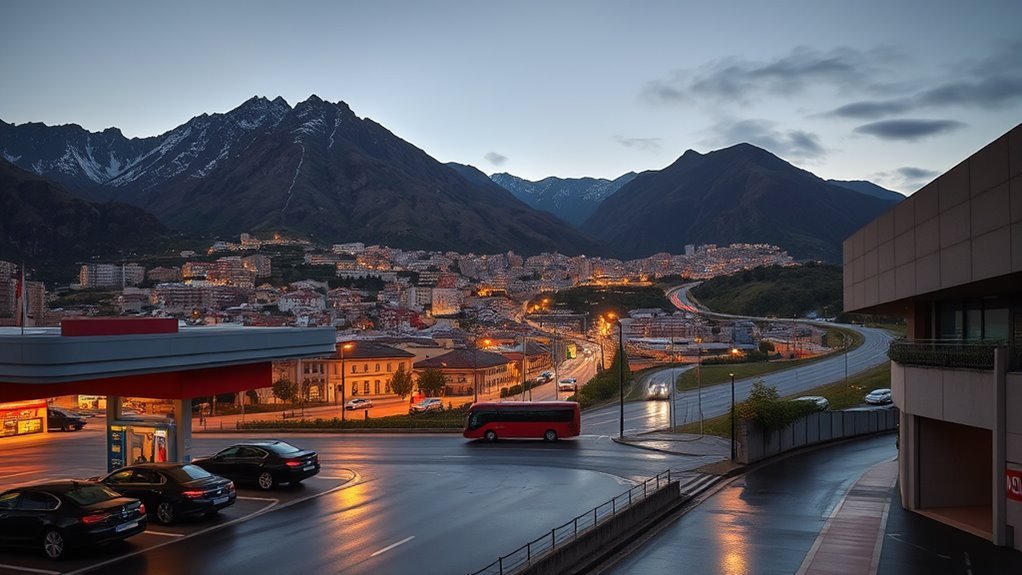
Daily bus travel can be inexpensive, but taxis, parking, fuel, vehicle ownership, and trips across the Spanish or French border can raise the total.
The Government of Andorra fully subsidizes the monthly national bus pass, providing unlimited travel on regular lines. To qualify, you must have legal, effective, permanent residence in Andorra when applying or be an Andorran national.
Note: Free resident transport does not mean every passenger rides free automatically. Visitors and people without the required pass should check the current zone fare and ticket rules before traveling.
Your main transport choices include:
- National buses: Potentially free with the eligible resident pass.
- Taxis: Convenient but expensive for repeated use; Numbeo’s current Andorra la Vella taxi estimator puts an 8 km standard-tariff trip at about €26 before route, time, toll, or operator differences.
- Private car: Adds fuel, insurance, registration, maintenance, tires, parking, and possible garage rent.
- Cross-border coaches or driving: Often needed for airports, rail stations, specialist services, or wider shopping choices.
A current crowd-sourced snapshot places gasoline near €1.60 per liter, but fuel prices move frequently. Check the live pump price instead of treating that amount as fixed.
Before choosing a cheaper home outside the center, test the actual commute at the time you expect to travel. A lower rent may not save money if it requires a second car, daily parking, or frequent taxis.
How Do Taxes Affect Living in Andorra?
Andorra’s tax rates are low by Western European standards, but the country is not tax-free. Your final bill depends on income type, deductions, household circumstances, tax residence, and any continuing obligations in another country.
Tax-Free Income Thresholds
The ordinary personal minimum for Andorran personal income tax, or IRPF, is €24,000. If a spouse or stable partner has little or no income included in the general tax base, unused personal-minimum relief can increase the other partner’s reduction. The combined personal-minimum reduction applied by both partners cannot exceed €40,000.
This means the original statement that everyone pays no tax on the first €40,000 was too broad. The higher amount is conditional, not an automatic exemption for each adult or every married couple.
Low Personal and Corporate Tax Rates
The Andorran Tax Department applies a general personal income-tax rate of 10%. For qualifying general-base income between €24,000 and €40,000, the official guidance describes an effective 5% rate through a maximum €800 tax credit. Other reductions, deductions, and double-tax relief can change the final amount.
| Tax | General Treatment | Budget Effect |
|---|---|---|
| Personal income tax | 10% general rate, with personal minimums, credits, and deductions | Usually lower than headline rates in many neighboring systems, but not automatically zero |
| IGI consumption tax | 4.5% general rate, with different rates for certain goods and services | Included in many consumer prices |
| Corporate income tax | 10% general rate | Relevant to a company or business, not an ordinary household expense |
Andorra Has IGI, Not “No Sales Tax”
Andorra charges an indirect consumption tax called Impost General Indirecte, or IGI. The general rate is 4.5%.
Some categories receive reduced or special rates, so the tax included in a purchase is not always identical. The accurate takeaway is that Andorra has a comparatively low general consumption-tax rate, not that purchases are free of sales or value-added tax.
Note: This article provides general budgeting information, not personal tax or legal advice. Cross-border income, investments, property, businesses, and family circumstances can change the result. Confirm your position with the Andorran Tax Department and a qualified adviser.
What One-Time Moving and Residency Costs Should You Expect?
A U.S. citizen or other non-Andorran national cannot simply arrive and remain indefinitely based on a household budget. You need the immigration authorization that fits your work, investment, business, family, or non-working residence circumstances.
Potential costs include:
- Government applications and supporting documents
- Criminal-record certificates, apostilles, translations, and notarization
- Medical examinations
- Private insurance or required social coverage
- Professional immigration or tax advice
- Travel and temporary accommodation
- Rental deposits, agency charges, moving, and furnishing
- Financial deposits or investments required by certain residence categories
Residency setup costs changed materially in 2026. Under Andorra’s Law 2/2026, residence without lucrative activity generally requires an investment of at least €1,000,000 in eligible Andorran assets. The law reduces that amount to €400,000 when the investment is made directly or indirectly, permanently and effectively in the Andorran Housing Fund. If the route uses real estate, more than €800,000 must be allocated to each property unit acquired.
The principal applicant must also make a €50,000 payment and €12,000 for each dependent. These payments become definitive and non-refundable after the authorization is granted; they are returned if the initial immigration authorization is denied. Treat these residence-route capital and contribution requirements separately from ordinary monthly living expenses.
Separate residence-without-work categories can have different rules. The government’s initial residence-without-work guidance currently lists a €47,500 AFA deposit for the principal applicant plus €9,500 per dependent for professionals with international projection and for certain scientific, cultural, or sports categories. Those categories also require at least 90 days of effective residence per year, among other conditions.
Warning: Do not use one residency figure for every applicant. Permit categories, quotas, investment rules, contributions, deposits, income tests, and insurance requirements differ. Verify the exact current route with the official immigration service before paying for housing or moving.
U.S. citizens should also remember that living abroad generally does not end U.S. worldwide-income reporting. Review the IRS filing requirements for citizens and residents abroad, including any foreign-account reporting that applies.
Is Living in Andorra Affordable for You?
Andorra may be affordable if your income comfortably covers current-market rent and you benefit from its lower taxes and free resident buses. It may feel expensive if you rely on a local entry-level salary, need a large home, or pay for childcare, private education, insurance, and a vehicle.
As of July 1, 2026, the Andorran minimum wage is €9.05 per hour, or €1,568.67 per month for the ordinary legal workweek, after an extraordinary mid-year increase. A newly advertised apartment can consume a large share of that amount, which helps explain why housing affordability remains a major public issue.
Before deciding, answer these questions:
- What rent can you confirm from current listings rather than an old national average?
- Does the home include parking, heating, furniture, or community charges?
- Will you qualify for the free resident bus pass?
- Do you need one car, two cars, or frequent cross-border travel?
- What will health insurance and uncovered treatment cost?
- Will you pay for childcare, private school, or after-school activities?
- Which residence permit applies, and what funds or deposits does it require?
- Will you continue to owe filing or tax obligations in another country?
- Can your income absorb a rent increase, winter utility spike, or currency-neutral emergency expense?
If those figures leave a comfortable emergency margin, Andorra can offer a manageable lifestyle with safety, mountain access, modern internet, and a relatively light tax burden. If rent uses most of your take-home pay, the lower tax rates will not make the overall budget comfortable.
Frequently Asked Questions
Is Andorra expensive to live in?
It can be expensive for a newcomer renting at current market rates. Housing is the main pressure point. A practical planning range is about €2,000–€3,400 a month for a single renter and €4,000–€6,500 or more for a family of four, but an older protected lease can produce a much lower total.
How much is rent in Andorra in 2026?
SICAR reported about €13 per square meter across its registered contracts, while contracts signed in 2025 averaged €18.19 per square meter and contracts more than five years old averaged €7.80. At presentation, SICAR lacked Escaldes-Engordany data, so treat €13 as a registry benchmark rather than a complete national market average. Compare live listings for your parish and property type before budgeting.
What are the disadvantages of living in Andorra?
Common drawbacks include high new-contract rents, limited housing supply, mountain traffic, dependence on cross-border airports and rail stations, and a smaller range of jobs and specialist services. Catalan is the official language, so relying only on English can also make administration and long-term integration harder.
Can I move to Andorra from the USA?
Yes, but you must qualify for an Andorran immigration authorization. The requirements depend on whether you will work, run a business, invest, join family, or live in Andorra without working. Some 2026 passive-residence routes now carry major investment and contribution requirements in addition to housing, insurance, records, and income tests. U.S. federal filing and foreign-account reporting may also continue after the move.
How much money do I need to live in Andorra?
A useful starting range is about €2,000–€3,400 a month for a single renter, €2,800–€4,800 for a couple, and €4,000–€6,500 or more for a family of four. Your rent, insurance, vehicle use, childcare, and residence category can move the amount outside these ranges.
Can I speak English in Andorra?
English is often useful in tourism, hotels, ski resorts, and some international businesses. However, Catalan is the official language and is important for government procedures, work, and long-term integration. Spanish and French are also widely used.
How much are utilities, internet, and mobile service in Andorra?
For planning, allow roughly €100–€250 a month for household utilities, then replace that allowance with the home’s actual winter bills. Andorra Telecom currently lists 500 Mbps fiber at €41 a month and individual mobile contract plans from €8 a month for 3 GB. Your heating system, insulation, home size, and chosen telecom plan can move the total.
What is the minimum wage in Andorra in 2026?
Since July 1, 2026, the minimum wage is €9.05 per hour, equivalent to €1,568.67 a month for the ordinary legal workweek. Rent at current market rates can therefore consume a large share of entry-level earnings.
Is public transport free in Andorra?
The government fully subsidizes the monthly national bus pass for Andorran nationals and people with legal, effective, permanent residence when they apply. The pass provides unlimited travel on regular lines. Visitors and passengers without the required pass should check current fares; taxis, cross-border coaches, parking, and private-car costs are not free.
Is Andorra tax-free?
No. Andorra has low rates rather than no taxes. The general personal income-tax rate can reach 10%, the general corporate rate is 10%, and the general IGI consumption-tax rate is 4.5%. Personal minimums, credits, deductions, and special rates affect the final amount.
Conclusion
Andorra is not automatically cheap, even though its tax rates are low. For a newcomer, rent is usually the deciding cost, and a current lease may be far more expensive than an older national average suggests.
A single renter should begin with roughly €2,000–€3,400 a month, while a family of four may need €4,000–€6,500 or more. Free qualifying-resident bus travel and reasonably priced fiber internet help, but insurance, mobile service, vehicles, childcare, schooling, winter heating, and immigration requirements can quickly widen the budget. For residence without lucrative activity, 2026 investment and non-refundable contribution requirements must be planned separately from monthly expenses.
Compare current homes, obtain written insurance and school quotes, identify the correct residence permit, and keep an emergency margin before moving. That gives you a more reliable answer than any single cost-of-living total.
Sources
- Government of Andorra — SICAR Rental Contract Indicators — registered and new-contract rent data.
- Andorra Telecom — Internet Plans — current fiber speeds, prices, router options, and included IGI.
- Andorra Telecom — Mobile Contract Rates — current individual mobile plan allowances, prices, and included IGI.
- Government of Andorra — Free Monthly Public Transport Pass — eligibility and unlimited regular-line travel.
- Andorran Tax Department — Personal Income Tax — IRPF rates, filing thresholds, and credits.
- Government of Andorra — Personal Minimum and Spouse/Partner Income — conditions for increasing the personal minimum and the €40,000 combined limit.
- Andorran Tax Department — IGI — general and special indirect-tax rates.
- Andorran Tax Department — Corporate Income Tax — general corporate tax rate.
- Government of Andorra — Initial Residence Without Work — residence days, insurance, income, housing, and category-specific AFA deposits.
- Government of Andorra — 2026 Immigration Quotas — 2026 residence-without-work quota and headline passive-residence requirements.
- Andorra Legal Portal — Law 2/2026 — passive-residence investment routes and non-refundable contribution rules.
- Government of Andorra — July 2026 Minimum Wage Increase — €1,568.67 monthly minimum wage effective July 1, 2026.
- CASS — Preferred Healthcare Pathway and Reimbursement — reimbursement percentages inside and outside the preferred healthcare pathway.
- Expatistan — Cost of Living in Andorra — crowd-sourced household, rent, utility, grocery, restaurant, and fuel estimates, with a small-sample warning.
- Numbeo — Andorra la Vella Taxi Fare Estimator — crowd-sourced taxi pricing benchmark.
- IRS — U.S. Citizens and Residents Abroad Filing Requirements — worldwide-income and foreign-account filing guidance.