
A practical 2026 salary for comfortable living in Liechtenstein is about CHF 70,000 to CHF 90,000 gross per year for a single employed renter. There is no official government “comfortable salary” threshold. The range is a planning target that allows for rent, mandatory health insurance, taxes, payroll deductions, everyday expenses, and savings. For context, Liechtenstein’s official 2024 median gross salary was CHF 7,401 per month, or CHF 88,812 when annualized. A family relying mainly on one income will usually need substantially more, especially with childcare, a larger home, or car ownership.
Last updated: September 7, 2026 — 2024 wage data, 2026 social contributions, health-insurance premiums, tax rates, LIEmobil fares, immigration rules, and current living-cost benchmarks rechecked.
How Much Salary Do You Need in Liechtenstein in 2026?

For a single person renting privately, CHF 70,000 to CHF 90,000 gross per year is a reasonable comfort-focused planning range rather than an official threshold. Someone with low rent and modest spending may manage below it, while a renter who wants a newer apartment, frequent dining out, a car, or aggressive savings may need more.
These salary targets are editorial planning estimates built from current housing, insurance, transport, wage, and household-cost benchmarks. They should not be treated as government-defined minimums. Your actual required salary depends on your municipality, tax situation, housing, employment benefits, household size, and savings goals.
| Household | Practical Monthly Budget | Comfort-Focused Gross Income Target |
|---|---|---|
| Employed single renter | About CHF 2,600-3,200 | About CHF 70,000-90,000/year |
| Single renter without employer health contribution | About CHF 2,800-3,500 | About CHF 75,000-95,000/year |
| Family of four | About CHF 5,500-7,500 before paid childcare | About CHF 120,000-160,000+ household gross income |
The official wage benchmark gives useful context. Liechtenstein’s Office of Statistics reported a 2024 median gross monthly wage of CHF 7,401. One-quarter of employees were at or below CHF 5,658 per month, while one-quarter were at CHF 10,000 or more. The official monthly measure is standardized to full-time work and includes a proportional share of 13th-month salary and other irregular payments.
That means a CHF 70,000 annual offer is below the latest national full-time median when compared on a simple annualized basis, while an offer close to CHF 90,000 is near the national median. Your spending and benefits still determine whether either amount feels comfortable.
Do not multiply the CHF 7,401 monthly median by 13. The Office of Statistics already includes one-twelfth of a 13th-month salary and other irregular payments in its standardized monthly wage figure. Multiplying CHF 7,401 by 12 gives the comparable annualized benchmark of CHF 88,812.
How to Test a Liechtenstein Salary Offer
Start with annual gross salary divided by 12. For salary up to the CHF 126,000 unemployment-insurance limit, subtract the 2026 employee AHV/IV/FAK/ALV baseline of 5.4%. The result is still not take-home pay because occupational pension contributions, relevant insurance deductions, health insurance, and income tax may reduce it further.
| Annual Gross Salary | Monthly Gross | 5.4% Basic Employee Social Deduction | Remainder Before Other Deductions |
|---|---|---|---|
| CHF 70,000 | About CHF 5,833 | About CHF 315 | About CHF 5,518 |
| CHF 90,000 | CHF 7,500 | CHF 405 | CHF 7,095 |
| CHF 120,000 | CHF 10,000 | CHF 540 | CHF 9,460 |
Next, subtract your actual pension and insurance deductions, your mandatory health-insurance premium after any employer contribution, and your municipality-specific income tax. Then compare the remaining cash with your real rent, transport costs, debt, and monthly savings target. This gives a more reliable answer than judging the headline salary alone.
How Much Is Rent in Liechtenstein?
Housing is usually the largest fixed expense. The latest Numbeo country snapshot available for Liechtenstein, updated April 19, 2026, puts a one-bedroom apartment at about CHF 1,193 per month in a central area and about CHF 1,189 outside a central area. A three-bedroom averages about CHF 2,342 centrally and CHF 2,078 outside central areas.
| Rental Type | Current Average | Reported Range |
|---|---|---|
| 1-bedroom, central area | CHF 1,193 | CHF 900-1,500 |
| 1-bedroom, outside central area | CHF 1,189 | CHF 1,067-1,300 |
| 3-bedroom, central area | CHF 2,342 | CHF 2,000-3,000 |
| 3-bedroom, outside central area | CHF 2,078 | CHF 1,800-2,500 |
These are market-orientation figures, not official rent quotations. Numbeo reported only 74 entries from 10 contributors for Liechtenstein when its country page was updated on April 19, 2026, so a small number of entries can move the averages noticeably. Liechtenstein’s latest detailed official rent-price publication still reflects the 2020 census, when the nationwide average gross rent across all dwelling sizes was CHF 1,747 per month. That older official figure is useful for context, not for pricing a 2026 lease.
A second 2026 crowdsourced benchmark, Expatistan, currently estimates total monthly living costs at about CHF 2,458 for one person and CHF 5,428 for a family of four, but it explicitly warns that the estimates are based on only a few data points. The agreement between these broad totals and this guide’s planning ranges supports using a range rather than one precise “required salary.”
Before accepting a job offer, compare the salary with real listings in the municipality where you expect to live. A CHF 1,200 apartment and a CHF 2,000 apartment can change the salary required for the same lifestyle by almost CHF 10,000 a year before considering other costs.
What Do Groceries, Utilities, and Transport Cost?
A single renter can use CHF 500 to CHF 700 per month as a practical grocery-and-household planning allowance, although actual food spending varies greatly with diet and restaurant use. Current crowdsourced prices put an inexpensive restaurant meal near CHF 30 on average, with reported prices ranging from about CHF 15 to CHF 40.
Basic utilities for an 85 m² apartment currently average about CHF 179 per month in crowdsourced data. Broadband internet averages about CHF 55 and a mobile plan with calls and at least 10 GB of data averages roughly CHF 34.
Public transport is unusually inexpensive compared with many other Swiss-franc markets. LIEmobil lists a standard all-zones monthly pass at CHF 45. Its adult all-zones annual pass costs CHF 370, which averages about CHF 30.83 per month before any municipal reimbursement.
If you own a car, build a separate budget for insurance, fuel, registration, parking, maintenance, tires, and depreciation instead of comparing only fuel with the bus fare.
How Much Do Taxes and Social Security Reduce Your Pay?

Your gross salary is not your spendable salary. According to the official 2026 AHV-IV-FAK rates, an employee contributes 4.9% of relevant pay to AHV, IV, and FAK. Unemployment insurance adds another 0.5% on salary up to CHF 126,000, making the basic employee AHV/IV/FAK/ALV deduction 5.4% within that limit.
That is not the full difference between gross and take-home pay. Occupational pension contributions, non-occupational accident insurance, other employment-related insurance, mandatory health-insurance premiums, and income tax may also affect what remains.
Employer Social Contributions
For 2026, the employer-side AHV/IV/FAK and administration contribution rates total 7.385%: 4.225% AHV, 0.675% IV, 1.9% FAK, and 0.585% administration/VK. Employers also pay 0.5% unemployment insurance on applicable salary up to the ALV limit.
| 2026 Contribution | Employee | Employer |
|---|---|---|
| AHV | 4.025% | 4.225% |
| IV | 0.675% | 0.675% |
| FAK | 0.200% | 1.900% |
| Administration/VK | — | 0.585% |
| ALV | 0.500% | 0.500% |
Employer costs can also include occupational pension, accident insurance, sickness-benefit insurance, and a contribution toward an employee’s mandatory health-care insurance. These costs should not be confused with deductions taken directly from your salary.
Employee Payroll Deductions
For most salary comparisons, start with the 5.4% AHV/IV/FAK/ALV baseline on salary within the unemployment-insurance limit. Then account for occupational pension, relevant insurance deductions, health insurance, and income tax.
Liechtenstein does not have one universal statutory minimum wage applying identically to every industry. However, minimum wage provisions are binding in sectors covered by generally applicable collective labor agreements. When evaluating a lower-paid offer, check whether a collective agreement applies to that industry.
Income Tax And VAT
Liechtenstein’s personal income-tax system should not be summarized as one universal percentage. The Fiscal Authority states that the state income-tax tariff has eight progressive steps, with a highest state rate of 8%. Municipalities then impose a surcharge equal to 150% to 250% of the calculated state tax.
Your actual liability therefore depends on taxable income, deductions, household circumstances, municipality, residence status, and other factors. Two people receiving the same gross salary can have different final tax bills.
The standard VAT rate is 8.1%. A reduced 2.6% rate applies to qualifying items including many foodstuffs and medicines, while accommodation has a special 3.8% rate.
What Are Typical Salaries by Sector in Liechtenstein?
The most reliable general salary benchmark is Liechtenstein’s official wage survey rather than an unsourced job-title estimate. In 2024, the overall median full-time-equivalent gross monthly wage was CHF 7,401.
| Industry | 2024 Median Gross Monthly Wage |
|---|---|
| Finance and insurance | CHF 10,209 |
| Education | CHF 9,179 |
| Legal, tax advice and auditing | CHF 9,145 |
| All employees | CHF 7,401 |
| Hospitality | CHF 4,926 |
| Agriculture and forestry | CHF 3,595 |
These are industry medians rather than guaranteed salaries for a particular job. Seniority, occupation, company size, qualifications, employment percentage, and individual contracts can produce large differences within the same sector.
The official figures also show why a single “good salary” is misleading. Finance and insurance had a median more than twice the hospitality median in 2024. Evaluate an offer against both your expected expenses and the relevant industry’s wage level.
For a more role-specific benchmark, the official Liechtenstein wage calculator estimates the median and wage quartiles for a selected profile. Its statistical model is based on wages actually paid in 2020, so use it as a profile-comparison tool rather than a stand-alone 2026 market quote. Cross-check the result with the 2024 industry medians above and current job offers.
Budget Examples for Singles and Families in Liechtenstein
A useful salary calculation starts with the household budget rather than the national average. The following examples are planning models built from current rent, utilities, health-insurance, transport, grocery, and ordinary spending benchmarks. They are not official government budgets.
| Expense | Employed Single Renter | Family of Four |
|---|---|---|
| Housing | About CHF 1,190-1,450 | About CHF 2,080-2,600 |
| Utilities | About CHF 150-220 | About CHF 220-350 |
| Internet and mobile | About CHF 75-100 | About CHF 110-180 |
| Groceries and household goods | About CHF 500-700 | About CHF 1,400-1,900 |
| Health insurance | About CHF 205-247 using 2026 adult premium benchmarks after a full employer contribution | Depends on adult coverage, employment percentage, and cost-sharing choices |
| Public transport | About CHF 31-45 | About CHF 62 when a CHF 740 family annual pass is averaged monthly |
| Leisure, clothing and miscellaneous | About CHF 300-500 | About CHF 900-1,500 |
| Planning Total | About CHF 2,600-3,200 | About CHF 5,500-7,500 before paid childcare |
For a more detailed expense-by-expense breakdown, see the full Liechtenstein cost-of-living guide. This article focuses on converting those costs into a useful salary target.
Single Living Budget
An employed single renter with moderate housing and spending can reasonably plan around CHF 2,600 to CHF 3,200 per month. A person who does not receive an employer contribution toward mandatory health insurance may need closer to CHF 2,800 to CHF 3,500.
For 2026, the National Administration reports an average standard adult health-insurance premium of CHF 427.13 per month. The average across available cost-sharing models is CHF 385.70. The full adult employer contribution is CHF 180.50 per month and is reduced proportionally for part-time employment. Using those two premium benchmarks, a full employer contribution leaves about CHF 205.20 to CHF 246.63 per month for the employee before any other plan-specific differences.
A gross salary near CHF 70,000 can therefore support a moderate single-person lifestyle when housing is controlled. Moving closer to CHF 85,000-90,000 provides more room for savings, travel, higher rent, or irregular expenses.
Family Budget Breakdown
A family of four should generally plan around CHF 5,500 to CHF 7,500 per month before paid childcare in a moderate budget. Larger housing, food, adult health-insurance costs, clothing, activities, and transportation create most of the difference from a single household.
Paid childcare, private or international schooling, frequent restaurant meals, and multiple cars can push the total substantially higher. Because of those variables, a family relying mainly on one income may want roughly CHF 120,000 to CHF 160,000 or more in gross household income for a comfort-focused plan.
That salary range is an editorial planning estimate rather than an official minimum. A two-income household should compare combined take-home income with the same expense categories instead of judging each salary independently.
Monthly Cost Comparisons
The most useful comparison is the amount left after fixed costs. A renter spending CHF 1,200 on housing has far more flexibility at the same salary than someone spending CHF 2,000. Health-insurance benefits from the employer can also materially change the monthly result.
- Single employed renter: roughly CHF 2,600-3,200 monthly planning costs.
- Single renter without employer health contribution: roughly CHF 2,800-3,500.
- Family of four: roughly CHF 5,500-7,500 before paid childcare.
- National wage benchmark: CHF 7,401 median gross monthly salary in 2024.
Living in Liechtenstein vs. Cross-Border Commuting
Working in Liechtenstein does not necessarily mean living there. Official employment statistics show that 57.4% of employees were inward commuters at the end of 2024. Of those commuters, about 61.2% lived in Switzerland and 34.6% in Austria, so neighboring housing markets are a major part of Liechtenstein’s labor market.
Cross-border living can provide access to a larger housing market, but lower rent does not automatically mean a lower total cost. Compare income-tax treatment, social-security rules, health insurance, residence and work permits, commuting time, fuel or public-transport costs, parking, and any restrictions affecting remote work.
If a Liechtenstein salary seems marginal for your preferred housing inside the country, comparing a legal cross-border commuting arrangement can be more useful than simply searching for a cheaper Liechtenstein apartment.
How to Stretch Your Salary in Liechtenstein
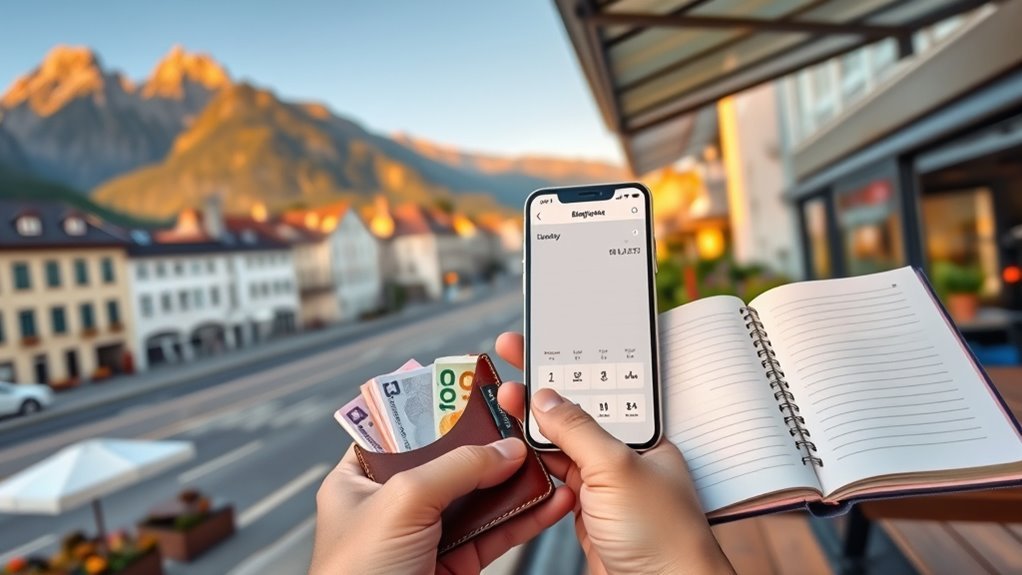
Start with housing because a few hundred francs of monthly rent has a larger annual effect than small savings on groceries. Compare real listings across municipalities and avoid assuming that a national rent average represents every available property.
Next, check your employment package. For an adult employee, the full 2026 employer health-insurance contribution is CHF 180.50 per month, or CHF 2,166 over a full year. Part-time employees receive a proportionally reduced contribution, so confirm the amount shown in your employment package.
Use public transport when it suits your commute. LIEmobil’s standard all-zones monthly pass costs CHF 45, while the adult annual pass costs CHF 370. Several municipalities may subsidize annual passes for residents, further lowering the effective cost.
Finally, negotiate salary using both the national median and your sector. A CHF 70,000 offer may be workable for one person, but the latest national full-time-equivalent median is closer to CHF 88,812 when the CHF 7,401 monthly figure is annualized. Sector medians can be substantially higher or lower.
Frequently Asked Questions
How Much Money Do I Need to Move to Liechtenstein?
There is no universal move-in amount because deposits, temporary accommodation, furnishings, travel, and lease terms vary. For a single renter, three months of the CHF 2,600-3,500 planning budget equals roughly CHF 7,800 to CHF 10,500. Keeping that amount available in addition to your lease deposit and relocation costs gives a more useful safety margin than relying only on the first month’s expenses.
What Is a Good Salary in Liechtenstein?
For a single renter, around CHF 70,000 to CHF 90,000 gross per year is a practical comfort-focused planning range. The latest official median is CHF 7,401 gross per month for a full-time-equivalent employee, so roughly CHF 88,812 annualized is a useful national benchmark. A “good” salary still depends on your sector, housing, taxes, insurance, and savings goals.
What Is the Minimum Salary to Be Financially Comfortable in 2026?
There is no official minimum salary for financial comfort. A single employed renter can often make a gross salary around CHF 70,000 work with moderate rent and spending, but CHF 80,000-90,000 gives more room for savings and irregular costs. Families generally need substantially more household income.
Is CHF 70,000 a Good Salary in Liechtenstein?
CHF 70,000 gross per year can be workable for one employed renter with moderate housing and spending, but it is below the latest national full-time-equivalent median of about CHF 88,812 when annualized. It leaves less room for high rent, a car, frequent travel, or aggressive savings than a salary closer to CHF 90,000.
Does Liechtenstein Have a Minimum Wage?
Liechtenstein does not have one universal statutory national minimum wage. Minimum remuneration can be binding in industries covered by generally applicable collective labor agreements. If you are evaluating a lower-paid offer, check whether a current collective agreement applies to your sector.
Can a US Citizen Live in Liechtenstein?
Yes, but residence is restricted. A U.S. citizen is treated as a non-EEA and non-Swiss national, and a residence permit for employment is not automatic. Under the official B-permit rules, permits for non-EEA/non-Swiss nationals can be issued to qualifying managers, specialists, and other qualified employees, and the appropriate permit must be granted before residence or employment begins.
Sources and Methodology
This guide separates official rules from market estimates. Salary, payroll, tax, health-insurance, immigration, and public-transport figures are based on official Liechtenstein or LIEmobil sources. Rent, utility, and broad household-cost estimates use crowdsourced market data from Numbeo and Expatistan and should be checked against actual listings and provider quotations before making a relocation decision. The figures were rechecked on September 7, 2026.
- Liechtenstein Office of Statistics — Wages 2024
- Liechtenstein Office of Statistics — Employment 2024 and inward commuters
- Liechtenstein AHV-IV-FAK — 2026 contribution rates
- Liechtenstein AHV-IV-FAK — unemployment insurance contribution rates
- Liechtenstein Fiscal Authority — direct taxes for individuals
- Liechtenstein Fiscal Authority — VAT rates
- Liechtenstein National Administration — 2026 health-insurance premiums and employer contribution
- LIEmobil — current passes and ticket prices
- Liechtenstein Migration and Passport Office — employment residence permit B
- Liechtenstein Office of Statistics — wage calculator
- Liechtenstein Office of Economic Affairs — generally applicable collective labor agreements
- Numbeo — current Liechtenstein rent and living-cost benchmarks
- Expatistan — 2026 Liechtenstein living-cost benchmark
- Liechtenstein Office of Statistics — official rental-price statistics
Conclusion
For a single employed renter, CHF 70,000 to CHF 90,000 gross per year is a practical 2026 salary target for comfortable living in Liechtenstein. CHF 70,000 can work with controlled housing and spending, while a salary closer to the latest national median of about CHF 88,812 annualized gives more flexibility.
Do not judge an offer from gross salary alone. Convert it to monthly gross, subtract the 2026 employee social-contribution baseline and your other actual deductions, then compare the remaining cash with rent, mandatory health insurance, municipality-specific tax, transport, and your savings target. Families should run the same calculation on combined household income and add childcare, larger housing, and car costs where applicable.