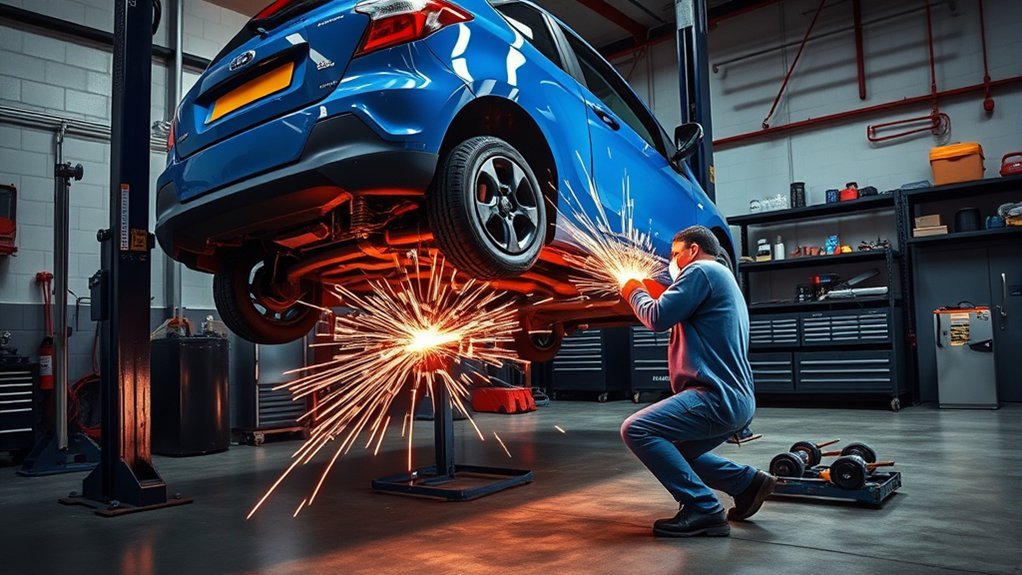
Ford Ka welding costs in the UK typically run about £125–£200 for a small rust patch, £200–£500 for a one-side sill repair, £500–£1,000 for defined chassis work, and £1,500–£5,000+ for major structural restoration. These are planning ranges, not Ford-set prices. Hidden corrosion, access, dismantling, paint, and corrosion protection can move the final bill sharply once weak metal is cut back.
Price note: The ranges below are planning estimates drawn from published UK guides and may have changed. For wider UK pricing see our UK welding cost guide and car frame welding costs.
Quick Answer
In the UK, a small Ford Ka rust patch may cost about £125–£200, a one-side sill repair about £200–£500, and a defined chassis repair roughly £500–£1,000. Full structural restoration can reach £1,500–£5,000 or more. These ranges follow MyBuilder’s UK welding guide, so check it for the latest figures. Hidden corrosion, access, finishing work, and MOT requirements determine the final price.
Key Takeaways
- A small visible rust hole does not reveal how far corrosion has spread behind the panel.
- Typical UK welding prices range from about £125 for a small patch to several thousand pounds for extensive structural restoration.
- Structural repairs must reach sound metal and meet DVSA standards; a cosmetic patch or body filler is not an acceptable substitute.
- Mobile welding suits some accessible repairs, but a workshop is often safer and more practical for underside or multi-panel work.
- Compare the complete repair bill with the Ka’s condition, MOT history, market value, and expected remaining use.
At a Glance
| Time Required | Same day for some small pre-booked patches; around one to three days for larger structural jobs; longer for extensive restoration and refinishing |
| Difficulty | Specialist work when the repair affects a sill, floor, chassis section, suspension mounting, seat-belt mounting, or other load-bearing area |
| Tools Needed | Vehicle lift or secure supports, cutting and fabrication tools, suitable welding equipment, fume extraction, fire controls, PPE, and corrosion-protection products |
| Cost | Approximately £125–£200 for a small patch, £200–£500 for a one-side sill repair, £500–£1,000 for defined chassis work, or £1,500–£5,000+ for major restoration |
What Is Automotive Welding?
Automotive welding joins new or repaired metal to the vehicle after weak, perforated, or heavily corroded material has been removed. On a structural repair, the new metal must connect to sound material and restore the strength and continuity of the affected area.
MIG welding is commonly used for mild-steel body and sill repairs because it is practical for thin automotive sheet metal. TIG welding offers precise heat control but is slower and is not automatically the best process for every Ford Ka repair. The correct method depends on the panel material, its thickness, access, and the vehicle manufacturer’s repair method.
A safe structural repair is judged by the sound metal, materials, joining method, and restored strength—not simply by how tidy the visible weld bead looks.
Vehicle welding also creates serious health and fire risks. The UK Health and Safety Executive recommends controlling welding fumes, removing or shielding flammable trim, and checking that fuel lines, fuel tanks, and hidden body-cavity materials will not be affected. See the HSE guidance on welding and flame-cutting in motor vehicle repair.
Warning: Do not drive a Ford Ka when corrosion may have weakened a suspension mounting, steering or braking support, seat-belt anchorage, sill, floor, subframe mounting, or another load-bearing area. Arrange a professional inspection or recovery instead.
How Long Does Ford Ka Welding Take?

The weld itself may take only a short time, but preparation normally controls the schedule. Current UK workshop examples advertise same-day completion for some small pre-booked patches and roughly one to three days for larger structural jobs. A Ford Ka can take longer when trim, fuel-system parts, corroded inner sections, paint, or replacement panels add work.
- Small accessible patch: may be completed the same day when the area is easy to reach and the scope is already known.
- Local sill or floor repair: may take part of a day to a full working day, depending on access and how much metal must be removed.
- Inner and outer sill repair: often needs more dismantling, fabrication, alignment, sealing, and refinishing, so allow longer than a simple patch.
- Several structural areas: commonly move into a multi-day repair.
- Restoration-quality work: can take several days or longer when fabrication, paint, cavity protection, and dismantling are required.
The quoted completion time should state whether it includes paint curing, underseal, reassembly, an MOT retest, and time needed to obtain replacement panels.
Note: A repairer cannot always give a final price or completion time until the affected area has been cleaned and cut back to solid metal. Ask how additional corrosion will be documented and approved before extra work begins.
Mobile Welding Cost
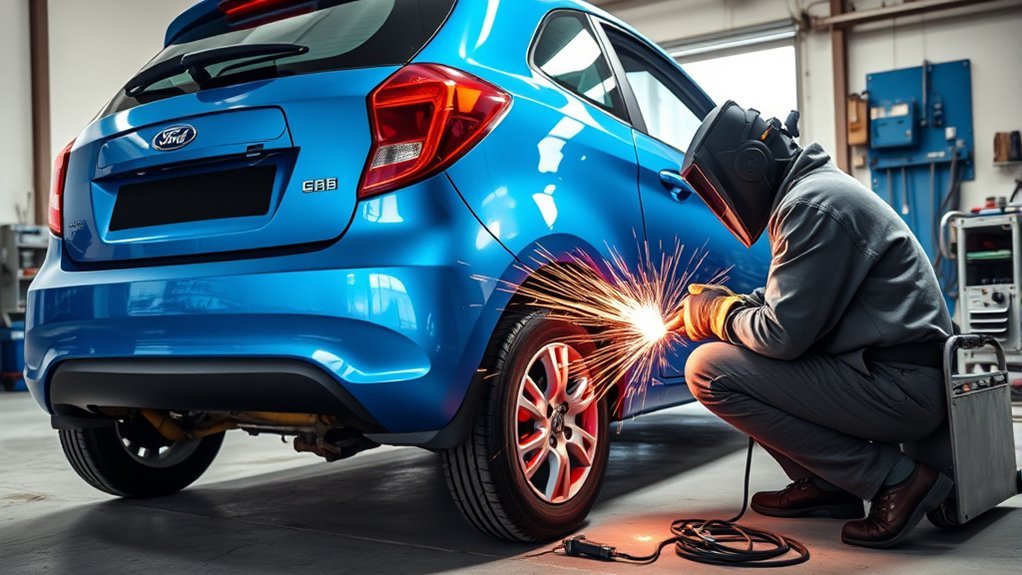
A mobile welder may be suitable for a small, accessible Ford Ka repair when the car is parked on a firm, level surface with enough working space. Mobile service is not automatically cheaper than a garage because travel, setup, weather protection, power, lighting, and safe vehicle access all affect the price.
There is no single UK-wide mobile welding tariff. MyBuilder’s guide puts general welding labour at about £50–£150 per hour, while mobile providers may add travel, setup time, minimum booking periods, or out-of-hours charges. Ask for the total call-out price in writing rather than assuming a national flat fee.
Factors Influencing Mobile Costs
A mobile quotation may change according to:
- The welder’s travel distance and minimum call-out charge
- Whether the car can be lifted and supported safely
- Access to the inner and outer faces of the damaged panel
- The availability of electricity, lighting, ventilation, and shelter
- Removal of seats, carpets, fuel-system parts, trim, or wheel-arch liners
- Whether replacement sections must be fabricated on site
- Primer, paint, seam sealer, cavity wax, and underbody protection
- Urgent, weekend, or evening attendance
A workshop is normally the better choice when the repair involves extensive underside corrosion, several panels, precise alignment, significant dismantling, or prolonged access beneath the vehicle.
Emergency Call-Out Charges
Before booking an urgent call-out, confirm exactly what the minimum charge covers. Ask whether it includes travel, inspection, a minimum labour period, materials, VAT, and any return visit.
A mobile welder may also decide that the repair cannot be completed safely at the vehicle’s location. In that case, you could still owe an inspection or call-out fee and need to arrange transport to a workshop.
Pro Tip: Send clear photographs of the outside, underside, surrounding panels, and MOT failure wording before requesting a mobile quote. Photos cannot reveal all hidden rust, but they can help the welder decide whether a driveway repair is realistic.
Typical Ford Ka Welding Prices
The following figures are UK market estimates rather than fixed Ford prices. A Ford Ka does not have a standard welding tariff because two cars of the same age can have very different corrosion beneath the visible surface. MyBuilder’s UK welding guide lists the same planning ranges for small patches, one-side sill repairs, floor pans, chassis work, and full structural restoration.
For broader pricing outside this model, see our UK car welding cost guide. If the damage is concentrated in the sill, compare the scope with our sill welding cost guide.
| Repair Type | Typical UK Estimate | What May Be Involved |
|---|---|---|
| Small rust hole or local patch | £125–£200 | Cutting out a small area, fitting a steel patch, welding, and basic finishing |
| One-side sill repair | £200–£500 | Local sill section or larger repair; inner-sill corrosion can increase the cost |
| Floor-pan repair | £300–£600 | Interior removal, cutting, fabricated or replacement steel, welding, sealing, and protection |
| Defined chassis or structural-section repair | £500–£1,000 | More extensive preparation, fabrication, access, structural welding, and corrosion protection |
| Full structural restoration | £1,500–£5,000+ | Several damaged areas, substantial dismantling, panel replacement, fabrication, paint, and finishing |
The visible rust is often the starting point of the estimate, not the final measurement of the repair.
A quote near the bottom of a range may cover functional welding only. A higher quotation may include replacement panels, removal of interior trim, shaped fabrication, grinding, primer, seam sealing, paint, cavity wax, underseal, and a written guarantee.
Factors Affecting Ford Ka Welding Costs
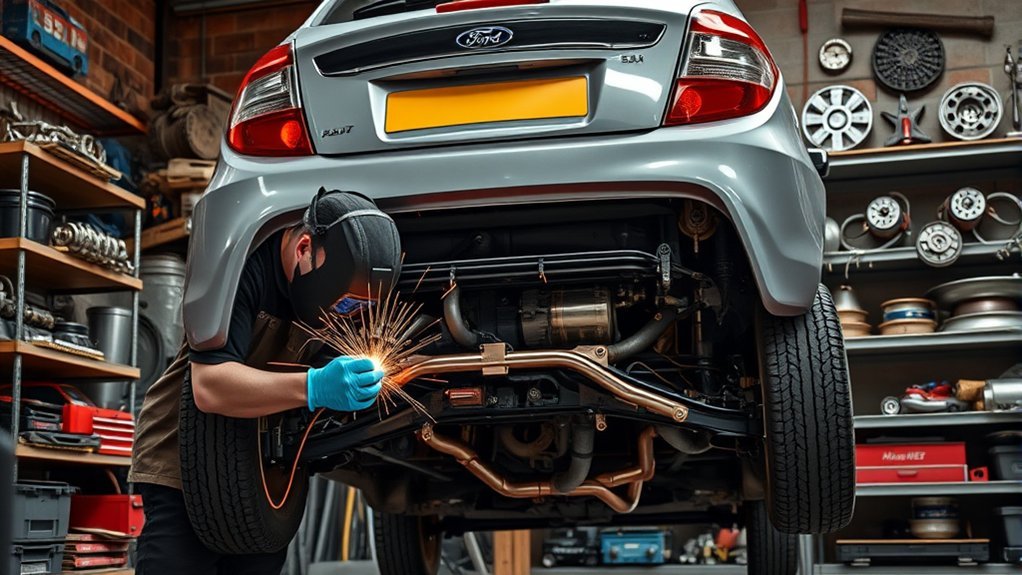
The main cost drivers are the amount of unsound metal and the time needed to reach it safely. Important factors include:
- Depth of corrosion: Surface rust may need treatment rather than welding, while perforation usually requires cutting and new metal.
- Inner-panel damage: An outer sill can hide corrosion in the inner sill, reinforcement, floor edge, or jacking point.
- Location: Work near suspension, steering, braking, fuel, electrical, or seat-belt components requires extra care.
- Access: Seats, carpets, trim, tanks, pipes, wheel-arch liners, or mechanical parts may need to be moved.
- Repair section: A ready-made panel can reduce fabrication time, but availability varies by Ford Ka generation and panel location.
- Finish required: An MOT-standard functional repair may cost less than a colour-matched, restoration-quality finish.
- Labour rate: Rates differ by region, workshop, bodyshop specialism, and mobile travel distance.
- Related faults: Corroded brake pipes, suspension parts, mounting hardware, or damaged trim can add to the bill.
Get at least two itemised quotations when the car is safe to move. Ask each repairer to describe the same scope so that you are not comparing a small plated patch with a full cut-out and panel replacement.
What a Ford Ka Welding Quote Should Include
A written quote should identify the affected area, expected repair method, finish, and procedure for approving extra work. This reduces disagreements when additional corrosion appears after dismantling.
| Quote Item | Why It Matters | Question to Ask |
|---|---|---|
| Inspection and dismantling | Rust may continue behind trim, underseal, or the outer panel. | Which parts will be removed before the final scope is confirmed? |
| Cut-out area and materials | The repair must extend to sound metal and use suitable material. | Are you removing all weak metal or plating over part of it? |
| Inner and outer sections | Repairing only the visible skin may leave structural corrosion behind. | Does the price cover the inner sill, reinforcement, or floor edge if affected? |
| Finishing and protection | Bare or poorly sealed metal can corrode again. | Are primer, seam sealer, paint, cavity wax, and underbody protection included? |
| Additional-work approval | Hidden damage can increase the cost after work begins. | Will you contact me with photographs and a revised price before continuing? |
| Guarantee and VAT | A low headline price may exclude tax, finishing, or workmanship cover. | Is the total inclusive of VAT, and what does the written guarantee cover? |
MOT Rules for Structural Welding Repairs
The MOT test does not fail every rusty mark. The concern is corrosion, damage, or an inadequate repair that affects a prescribed area, a load-bearing member, a component mounting, or the overall strength of the vehicle.
Under the DVSA structural-integrity and corrosion guidance, updated 1 June 2026, structural repairs must be properly carried out, use suitable materials, extend to a sound part of the load-bearing member, and appear as strong as the original structure. In most circumstances, patch repairs must be continuously seam welded.
Body filler, fibre reinforcement, soldering, and unsuitable bonding are not accepted as repairs to load-bearing metal. Welding a highly stressed steering or suspension component is also not normally acceptable unless the original component was designed as welded sections and the repair appears as strong as the original.
If the Ford Ka has already failed its MOT, read the precise defect wording and inspection location. You can also review the vehicle’s previous results through the official GOV.UK MOT history service. Repeated corrosion advisories can help reveal whether the problem has been developing across several test years.
Warning: Passing an MOT does not create a lifetime guarantee for the repair. The test records the vehicle’s condition at the time of inspection, and corrosion may continue in untreated adjoining sections.
Areas to Inspect on an Older Ford Ka
Corrosion varies by generation, storage, climate, previous repairs, drainage, road-salt exposure, and maintenance. The following are sensible inspection points on an older Ford Ka, but they are not proof that every vehicle has the same faults:
- Outer and inner sills: Check the full length, including seams, ends, and areas hidden by trim.
- Jacking points and floor edges: Damage or crushed protective coating can allow moisture to reach the metal.
- Front and rear wheel arches: Inspect both the visible lip and the metal behind liners or trim.
- Floor pan: Look around drain points, seat mountings, and areas beneath damp carpets.
- Suspension and subframe mounting areas: These are safety-critical and require professional assessment if corrosion is present.
- Seat-belt mounting areas: Corrosion near an anchorage can lead to an MOT failure and must not be treated as a cosmetic repair.
- Fuel-filler and nearby body seams: Bubbling paint can indicate corrosion beneath the surface.
- Previous welded patches: Check their edges and surrounding metal for cracking, swelling, rust staining, or lifting underseal.
Ford Ka Rust Areas by Generation
1996–2008 Ford Ka: used-car guides repeatedly flag the door sills and rear wings as corrosion points, while older owner and MOT discussions also report floor-to-sill and rear suspension-mounting corrosion. Treat forum reports as inspection clues, not proof that every first-generation Ka will rust in the same places.
2009–2016 Ford Ka: Carbuyer specifically advises checking the upper front suspension mounting areas for rust. It also notes that blocked windscreen drains or a poorly fitted pollen filter can cause damp footwells, so persistent interior moisture is a reason to inspect the floor and adjoining seams carefully.
Warning signs include bubbling paint, flaking underseal, swollen seams, rust staining, soft metal, visible holes, damp carpets, unusual creaking, or an MOT advisory referring to structural corrosion.
Pro Tip: Ask the repairer to inspect both sides of a sill or floor repair. A neat outer patch does not correct corrosion in an inner reinforcement or adjoining panel.
Repair Options and Vehicle Value Considerations
The cheapest repair is not always the best value. Compare the method, expected finish, amount of corrosion removed, written guarantee, and likelihood of more work appearing at the next MOT.
| Repair Option | When It May Suit | Main Limitation |
|---|---|---|
| Local cut-out and patch | A genuinely small area surrounded by solid metal | Unsuitable when corrosion continues through a larger inner structure |
| Larger sill or panel section | Corrosion extends beyond a small isolated patch | Costs more because of dismantling, fabrication, alignment, and refinishing |
| Workshop structural repair | Underside, multi-panel, or safety-critical work requiring controlled access | The complete bill can exceed the value of an older Ford Ka |
| Mobile repair | An accessible local repair where safe lifting and working conditions are available | Travel and call-out charges apply, and some work must be transferred to a workshop |
| Replace or retire the vehicle | Several structural areas are affected or major mechanical repairs are also due | A replacement car has its own purchase, inspection, insurance, and maintenance costs |
Decision rule: Compare the welding quote with the next 12 months of known repairs, MOT-related costs, and the price of a similar roadworthy Ford Ka. This gives a more useful keep-or-retire comparison than judging the welding bill on its own.
Use the following checks before approving a large repair:
- Add the welding quote to any tyres, brakes, suspension, exhaust, clutch, or engine work expected within the next year.
- Review recent MOT failures and advisories for evidence of corrosion in other areas.
- Compare the total with realistic local sale prices for cars of the same generation, mileage, condition, and MOT length.
- Consider how long you plan to keep the car and whether it otherwise meets your needs.
- Ask whether the repairer expects adjoining metal to need work at a future MOT.
Sentimental value, known maintenance history, low mileage, or rarity may justify spending more than the car’s immediate resale value. Those factors should not, however, justify a weak repair or continued use of an unsafe vehicle.
Protecting the Repair From Future Corrosion
A proper repair does not end when the welding stops. The exposed steel and adjoining seams need suitable finishing to slow future corrosion.
- Remove welding debris and prepare the repaired surface correctly.
- Apply a compatible primer and topcoat or underbody finish.
- Seal panel joints where the original construction requires seam sealer.
- Apply suitable cavity protection inside enclosed sill or box sections.
- Keep factory drain holes clear.
- Inspect chips, damaged underseal, and welded seams regularly.
- Wash road salt and trapped mud from the underside and wheel-arch areas.
Note: Fresh black underseal can hide poor preparation as easily as it can protect a sound repair. Ask for photographs of the cut-out area, fitted metal, and completed welds before they are covered.
Frequently Asked Questions
How much does it cost to weld a Ford Ka sill in the UK?
A one-side sill repair is a reasonable planning range at about £200–£500 in current UK welding guides. The price can rise if the inner sill, reinforcement, jacking point, or floor edge is also corroded, or if the quote includes paint and cavity protection.
Is it worth welding an older Ford Ka?
It can be worth welding an older Ford Ka when the corrosion is limited, the rest of the car is sound, and the total near-term repair bill is reasonable compared with a similar roadworthy replacement. If several structural areas are corroded or major mechanical work is also due, replacement may be the better-value option.
Does insurance cover welding repairs on a Ford Ka?
It depends on why the welding is required and what the policy covers. The Financial Ombudsman Service says insurers usually arrange and pay for accident repairs under most comprehensive motor policies. Rust or corrosion coverage depends on the individual policy, so check the wording and speak to the insurer before authorising work connected with a possible claim.
Can I perform welding repairs myself on a Ford Ka?
You should not attempt structural welding unless you are competent in automotive body repair and have suitable lifting equipment, fume controls, fire precautions, fabrication tools, and knowledge of the vehicle’s construction. Sills, floors, suspension mountings, seat-belt areas, and chassis sections are safety-critical. Practising on scrap steel is not equivalent to completing an MOT-standard vehicle repair.
What type of welding is best for Ford Ka repairs?
MIG welding is commonly used for thin mild-steel automotive panels because it is practical and efficient. TIG may be chosen for particular materials or precision work. The correct method depends on the metal, thickness, access, original construction, and manufacturer-approved repair process rather than the model name alone.
Are welding repairs covered by a warranty?
Warranty terms vary by repairer. Ask whether a written workmanship guarantee is included and whether it covers the weld, paint, corrosion protection, related labour, and rust returning at the repair edge. Also ask whether separate adjoining corrosion is excluded.
Could Ford’s corrosion warranty pay for the repair?
Ford states that bodywork may have corrosion-perforation protection for up to 12 years depending on the vehicle. Coverage is subject to the vehicle’s age, warranty terms, inspection requirements, maintenance history, type of corrosion, and exclusions for damage or outside causes. An older Ford Ka will often be outside the applicable period, but the vehicle’s warranty documents and a Ford dealer can confirm its position.
How can I find a qualified welder for my Ford Ka?
Look for a bodyshop or welder with documented automotive structural-repair experience. Ask to see similar sill or floor repairs, request an itemised written quote, read recent independent reviews, and confirm how hidden corrosion will be handled. The repairer should also explain the joining method, finishing products, MOT requirements, and workmanship guarantee.
Will welding automatically make a Ford Ka pass its MOT?
No. The repair must address the recorded defect and be adequate under the MOT inspection standards. The car can still fail for poor welding, remaining corrosion, unsafe sharp edges, or unrelated faults. Ask whether the quote includes an MOT retest and what happens if the repaired area does not pass.
Is a mobile welder or garage better for a Ford Ka?
A mobile welder can be convenient for a small, accessible repair where the vehicle can be supported safely. A workshop is normally better for extensive underside corrosion, inner-sill work, multi-panel repairs, major dismantling, controlled fume extraction, precise fabrication, or work requiring a vehicle lift.
Sources
- DVSA MOT Inspection Manual: Structural Integrity and Corrosion — acceptable structural-repair methods, prescribed areas, corrosion assessment, and continuous seam welding.
- Health and Safety Executive: Welding and Flame-Cutting — welding fumes, ventilation, eye protection, fuel-system precautions, and fire risks.
- GOV.UK: Vehicle Repairs and Restorations — structural bodyshell, chassis, sill, floor, and wheel-arch repair guidance.
- MyBuilder UK Welding Cost Guide — market estimates for patches, sill repairs, floors, chassis repairs, structural restoration, and UK welding labour rates.
- Ford UK Warranty Coverage — current corrosion-perforation warranty information and exclusions.
- Financial Ombudsman Service: Vehicle Repairs — insurance-funded accident repairs, guarantees, evidence, repair disputes, and write-off considerations.
- Carbuyer: Used Ford Ka Buying Guide (2009–2016) — Mk2 inspection points, including corrosion around the upper front suspension mountings and causes of damp footwells.
- Honest John Classics: Ford Ka (1996–2008) Buying Guide — first-generation corrosion warnings for sills and rear wings.
- DriftX: MOT Welding Repairs — current workshop examples for same-day small patches and multi-day structural repair timing.
Conclusion
Current UK planning ranges put a small Ford Ka rust repair at about £125–£200, a one-side sill repair at £200–£500, defined chassis work at £500–£1,000, and extensive structural restoration at £1,500–£5,000+. The most useful quote is still one based on inspected, exposed metal rather than a photograph of the visible rust.
Choose a repairer who will cut back to sound material, follow MOT structural standards, document hidden damage, protect the completed repair from corrosion, and provide written terms. Compare the complete cost with the car’s overall condition and expected remaining use—not only its current resale value.