
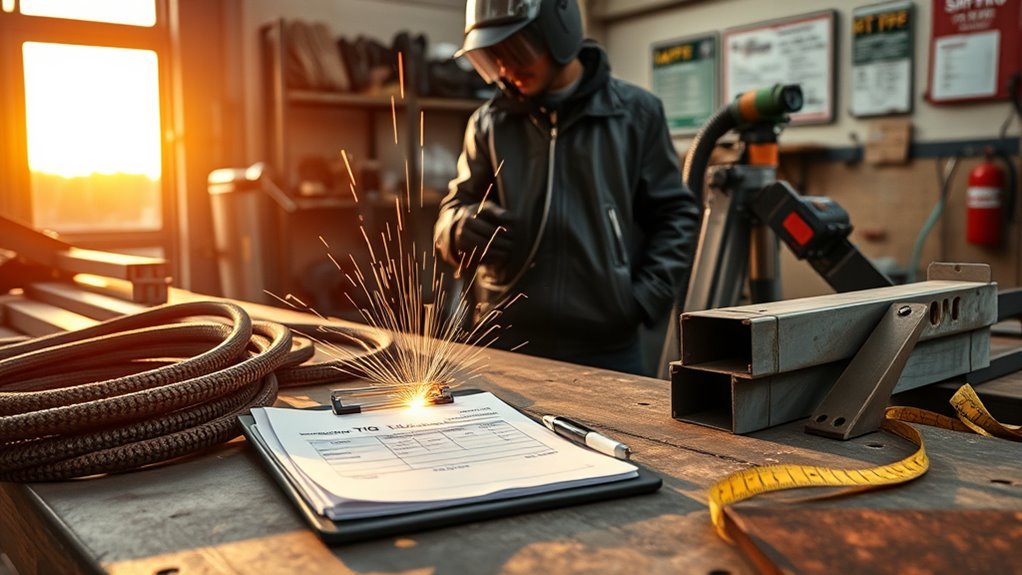
If you run a welding business, you need liability insurance to protect against accidents, property damage, and costly lawsuits. Basic coverage typically runs around $123 a month, with common limits of $1M/$2M. Costs can jump if you have heavy equipment, lots of foot traffic, or hire subs. Here’s what to check before you buy.
Quick Answer
- General liability for welders averages about $123/month ($1,479/year) with $1M/$2M limits.
- Workers’ comp averages around $254/month and is required when you have employees.
- Bundling a BOP with general and professional liability can cut total premiums by up to 10%.
- Rates vary by state, claims history, business size, and the type of welding work you do.
- Review your coverage annually to make sure limits match your current jobs and staff.
Why Welding Contractors Need Liability Insurance

Welding work involves open flames, hot metal, and heavy equipment. That means constant risk of injury and property damage. Liability insurance is what keeps a single accident from wiping out your business.
When accidents happen, this coverage pays legal fees, medical bills, and damages so you don’t absorb crippling costs. It also helps you set contract terms with confidence and meet client expectations.
In many states, carrying liability coverage is a legal requirement for licensure and permits. Without it, a single claim can force asset liquidation or business closure.
Choose a policy that fits your operations, and review limits and exclusions regularly. Your protection should keep pace with new contracts, equipment, and jobsite hazards.
Average Cost of General Liability for Welders

On average, general liability for welders runs about $123 a month ($1,479 a year). That gets you typical limits of $1 million per occurrence and $2 million aggregate, covering bodily injury, property damage, and related legal costs.
General liability for welders averages about $123/month ($1,479/year) for $1M/$2M limits covering injury, damage, and legal costs
Treat that figure as a starting point. Actual premiums vary with business size, foot traffic, subcontractor use, and the limits you choose. Raising limits above the average means higher costs. Bundling policies into a BOP often earns you a discount.
Higher-value jobs and frequent client visits raise claim probability and push premiums up.
Before a loss occurs, learn how the insurance claim process works. Prompt reporting, good documentation, and cooperation with your insurer reduce dispute risk and speed up resolution.
Rates also vary by state. Maine tends to run lower; New York runs higher. Get tailored quotes so you’re not underinsured or overpaying.
Workers’ Compensation and Its Impact on Premiums

Once you hire welders, workers’ compensation becomes a central cost. It pays medical bills and lost wages after on-the-job injuries. For welding contractors, the average runs about $254 a month ($3,054 a year).
Premiums scale with payroll size. Insurers typically charge roughly $7 to $18 per $100 of payroll, so adding staff or more hours raises your base cost directly. Job classification and state rules also factor in. High-risk welding tasks and stricter state requirements push rates higher. You can learn more about how these calculations work from the Insurance Information Institute.
You can reduce premiums by controlling claims. Following OSHA’s welding safety standards and implementing measures like mandatory PPE, confined-space protocols, hot-work permits, and documented training lowers injury frequency and improves your loss history.
A clean claims record often leads to discounts at renewal. Monitor incident trends, audit compliance, and keep detailed records so underwriters can verify your safety controls.
Combining payroll management with proactive safety practices keeps workers’ comp costs predictable and lean.
Bundling: BOPs, Professional Liability, and Cost Savings

Bundling a BOP with general and professional liability usually locks in lower rates and can shave up to 10% off total premiums.
Check for coverage overlaps like duplicate property or liability limits so you’re not paying twice for the same protection.
Get multiple quotes and consider higher deductibles to maximize savings while keeping the coverage you actually need.
Products Worth Considering



Bundle Discount Benefits
Bundling your Business Owners Policy with general and professional liability can trim total premiums by up to 10% and simplify your coverage.
A recommended bundle runs around $438/month, combining a BOP (about $98/mo) with workers’ comp and professional liability ($74/mo). That’s less than buying each policy separately.
Bundles also reduce administrative burden and give you more leverage when negotiating with insurers. You can pick limits and endorsements that fit welding risks without paying for features you don’t need.
After bundling, focus on any gaps that remain and check how adjustments to deductibles or limits affect your total cost.
Coverage Overlap Considerations
Combining a BOP, general liability, and professional liability can cut premiums by up to 10% and simplify administration. But you still need to check where coverages overlap and where gaps remain.
Review policy details carefully. Look at BOP property and business interruption, general liability bodily injury and property damage, and professional liability negligence defense.
Watch for exclusions specific to welding risks or completed-operations gaps. Confirm that workers’ comp complements rather than conflicts with your other policies.
Work with your broker to align limits and endorsements so the roughly $438 bundle stays affordable and each policy does what it’s supposed to do.
State-by-State Variations in Liability and Workers’ Comp Costs
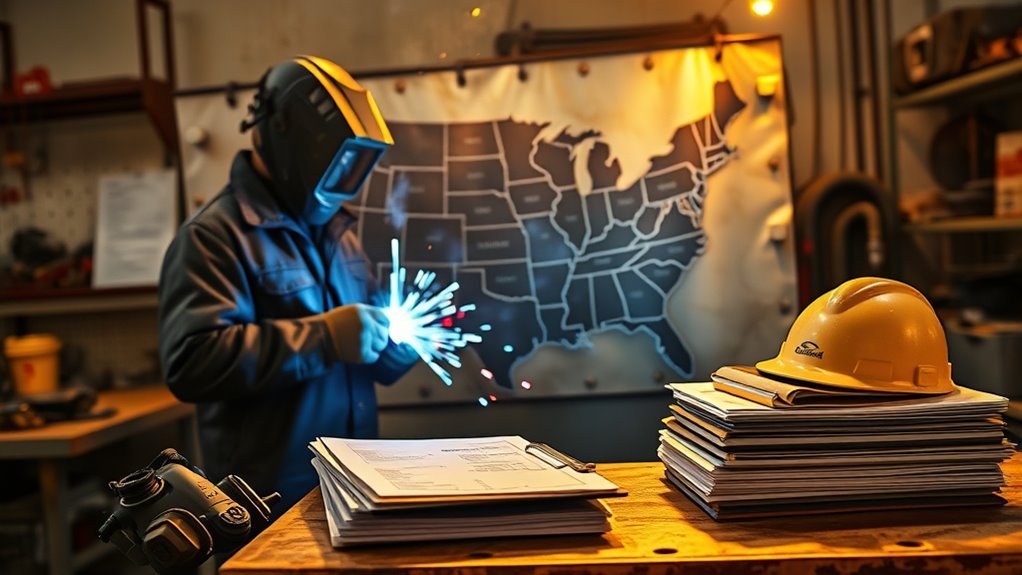
State rules and claims histories vary widely. That means your liability and workers’ comp premiums can look very different depending on where you operate. General liability runs about $144/month in Maine versus $193 in New York. Workers’ comp can be as low as $100 in North Carolina and around $137 in New York.
The national average for general liability sits near $166/month, shaped by state regulations and local claims history.
When shopping for coverage, compare quotes state by state. Regulatory frameworks and past claims can swing premiums significantly.
Workers’ comp pricing mirrors those same differences. States with higher medical costs or more frequent claims push rates up.
Use local agents who know your state’s rules. Verify the insurer’s experience with welding risks and check how employee counts and service scope will be treated.
Factors That Drive Up or Lower Your Insurance Rates
Several factors directly move your rates up or down.
Project types and coverage limits matter. Complex, high-exposure welding jobs raise premiums. Routine shop work costs less.
Business size counts too. More employees and higher payroll increase workers’ comp exposure, which pushes overall liability costs upward.
Your claims history is one of the biggest factors. A clean record signals lower risk. Past accidents make insurers charge more.
You can lower rates by bundling policies for up to a 10% discount, and by keeping coverage matched to your actual needs rather than overinsuring.
Documented safety measures reduce accidents and lower your perceived risk, which produces sustained premium savings over time.
Review your limits periodically. As your project mix or staff size changes, your premiums should reflect your current exposure, not outdated assumptions.
How to Get Fast, Affordable Quotes and Certificates of Insurance

Need a fast, affordable liability quote? Use online platforms that pull instant rates from multiple insurance providers so you can compare coverage and cost side by side. Comparing quotes that way helps you spot gaps and savings faster.
| Action | Benefit |
|---|---|
| Use online platforms | Instant multi-insurer quotes |
| Compare providers | Find best rate and limits |
| Bundle policies | Lower overall premium |
| Review annually | Adjust for business changes |
| Request COI via portal | Proof for clients fast |
Pick providers that show coverage details and exclusions upfront. Bundle general liability with commercial property or tools to reduce premiums. Review each quote for limits, deductibles, and exclusions. Cheap coverage that leaves gaps is a liability in itself.
Once you bind a policy, generate a certificate of insurance through the provider’s portal to meet contract requirements right away. Reassess your policies after business growth or new services to avoid being underinsured.
Frequently Asked Questions
Does Liability Insurance Cover Damaged Client Equipment During Welding?
Yes. Your liability policy can cover damaged client equipment from welding accidents, but you’ll need proper limits and endorsements. Expect exclusions, and review policy terms, deductibles, and subcontractor coverage carefully to avoid gaps.
Can Subcontractors Be Added to My Liability Policy?
Yes, you can add subcontractors to your liability policy, but you’ll need subcontractor coverage endorsements. Watch policy limits closely to avoid gaps, exclusions, or unexpected claim exposures.
Are Certifications or Training Discounts Available on Premiums?
Yes. Insurers often offer discounts for certifications and approved training programs. You’ll need documented certifications, approved safety courses, and a consistent safety record to qualify. Keep thorough proof of completed training to support your premium reduction.
How Long Does a Liability Claim Stay on My Record?
A liability claim typically stays on your insurance record for three to seven years, depending on your insurer and state. It can increase premiums, so document any corrective actions promptly after a claim.
Will My Personal Tools Be Covered Under My Business Policy?
Sometimes yes. Specific tool coverage can protect personal tools, but policies often exclude theft, mysterious disappearance, or offsite use. A scheduled inland marine policy or endorsement gives you better protection against replacement costs.
Conclusion
Most welders pay about $123 a month ($1,479 a year) for general liability insurance. The $1 million per-occurrence and $2 million aggregate benchmark is common, but higher limits cost more. Match your coverage to your actual risks. Add workers’ comp if you have employees, consider a BOP bundle to lower costs, and shop multiple insurers for quick quotes and certificates of insurance. Focus first on the gaps that could bankrupt you, not just the cheapest option.
