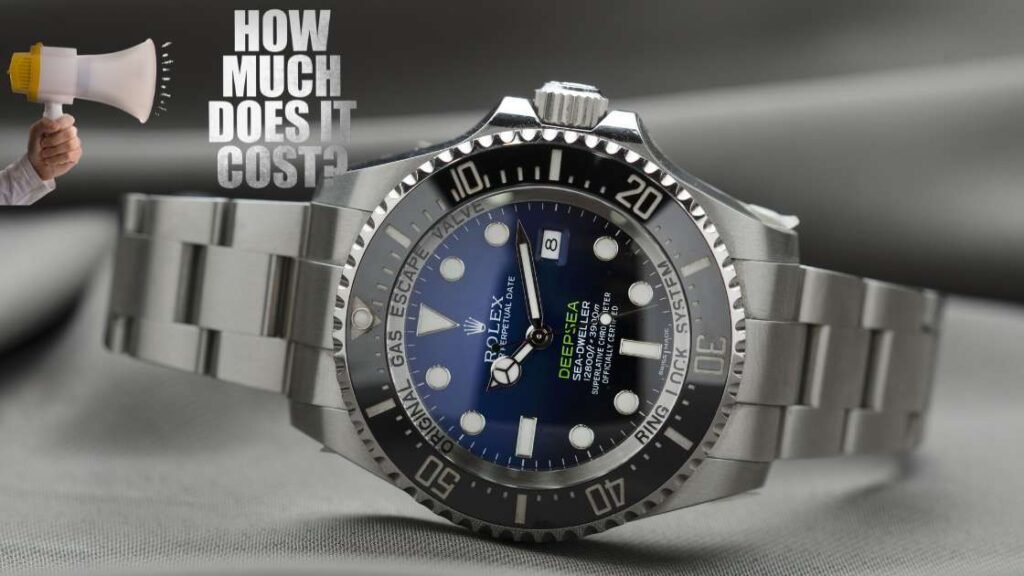
Rolex does not publicly disclose the exact cost to manufacture one watch, so any specific “cost to make a Rolex” number you see online is an estimate, not an official figure. What you can measure is the retail price and the major cost drivers behind it: materials, movement engineering, skilled labor, testing, distribution, scarcity, and brand value.
Last updated: July 7, 2026.
Rolex watches are expensive because they combine high-grade metals, in-house movements, strict quality control, and strong global demand. The parts alone do not explain the final price. A Rolex also carries the cost of engineering, certification, finishing, authorized retail distribution, and decades of brand equity.
Quick Answer
Rolex does not reveal its per-watch manufacturing cost. In the U.S., current Oyster Perpetual models start at about $6,200 for a 28 mm Oystersteel model and about $6,750 for a 36 mm Oystersteel model. The retail price reflects materials, movement engineering, labor, testing, distribution, scarcity, and brand value.
Key Takeaways
- Rolex does not publish a unit-by-unit manufacturing cost, so exact dollar estimates are speculative.
- Current U.S. retail prices for Oyster Perpetual Oystersteel models start around the low-$6,000 range, depending on size and configuration.
- Cost drivers include Oystersteel, 18 kt gold, platinum, gem-setting, in-house movements, hand assembly, certification, and finishing.
- Retail price is not the same as manufacturing cost; it also includes distribution, warranty support, demand, scarcity, and brand positioning.
- Some Rolex models hold value well, but resale appreciation is never guaranteed.

Rolex invests heavily in precision tools, materials research, testing, and watchmaker training to protect its reputation for reliability. Demand also stays strong because many buyers view a Rolex as both a luxury product and a long-term possession.
What Rolex Manufacturing Cost Really Means
The phrase “cost to make a Rolex” can mean three different things. It can mean the factory cost to produce one watch, the retail price you pay at an authorized Rolex jeweler, or the market value of a watch after purchase. Those numbers are not the same.
Note: Treat any exact online claim such as “Rolex costs $500 to make” or “Rolex costs $1,000 to make” as speculation unless Rolex itself publishes that figure. Rolex gives official retail prices and technical specifications, but it does not disclose per-watch manufacturing cost.
Manufacturing Cost Vs. Retail Price
The manufacturing cost covers materials, components, labor, machinery, testing, rejects, quality control, and factory overhead. Retail price adds more layers, including authorized dealer distribution, warranty support, demand, scarcity, marketing, taxes, and the brand premium.
| Cost Term | What It Means | Is It Public? |
|---|---|---|
| Manufacturing cost | The internal cost to make, finish, test, and approve a watch. | No. Rolex does not disclose it. |
| Retail price | The official price shown for a new watch in a market such as the United States. | Yes, for many current models on Rolex.com. |
| Secondary-market value | The price buyers pay for pre-owned or unworn watches outside the authorized retail channel. | Market-dependent and changes over time. |
The Legacy Of Rolex
The legacy of Rolex goes far beyond timekeeping. The value of a Rolex exceeds its parts cost because the brand has spent more than a century building a reputation for precision, durability, and status. Understanding the price starts with understanding that history.
From Humble Beginnings To Luxury Icon
Rolex’s journey began in 1905 with founder Hans Wilsdorf, who created a London company specializing in timepieces. Rolex later moved to Geneva, a city known worldwide for watchmaking. From the beginning, Wilsdorf focused on wristwatch precision at a time when many people still doubted wristwatches could be reliable.
Key milestones include:
- 1905: Hans Wilsdorf founded a London company specializing in timepieces, laying the foundation for Rolex.
- 1926: Rolex introduced the Oyster, described by Rolex as the first waterproof and dustproof wristwatch.
- 1931: Rolex invented and patented a self-winding mechanism with a Perpetual rotor.
- 1953: Rolex launched the Submariner, described by Rolex as the first divers’ watch waterproof to 100 metres / 330 feet.
- 1985: Rolex says it became the first watchmaking brand to use steel from the 904L family for its cases.
Defining The Rolex Brand
The Rolex brand is built on quality control and consistency. While the actual cost to make a Rolex varies by model, the pricing logic is similar across the range. Each watch reflects materials research, precise movement design, careful assembly, testing, and finishing.
A Rolex watch is built from three core areas:
| Component | Description | Why It Affects Price |
|---|---|---|
| Case and bracelet | Made from materials such as Oystersteel, 18 kt gold, platinum, or Rolesor combinations. | These parts require durable alloys, precise machining, polishing, and comfort testing. |
| Movement | In-house mechanical calibres with automatic winding and Rolex certification after casing. | The movement is the engine of the watch and requires tight tolerances. |
| Dial and finishing | Dials may include lacquer, applied markers, luminescent material, or precious stones. | Finishing affects readability, appearance, and perceived luxury. |
Craftsmanship Behind A Rolex
Rolex watches combine advanced production methods with human inspection and assembly. Machines can shape parts with extreme precision, but watchmakers and specialists still handle adjustment, assembly, inspection, and finishing tasks that affect the final result.
The Journey Of A Rolex Timepiece
Every Rolex passes through several controlled stages before it reaches a retailer. Rolex does not publish a universal per-watch production timeline, but its official technical pages show how much testing and certification sit behind the finished product.
- Design and engineering: Each model requires case, bracelet, dial, and movement development.
- Material preparation: Rolex uses materials such as Oystersteel, 18 kt gold alloys, platinum, ceramic, and gemstones depending on the model.
- Component production: Cases, bracelets, dials, bezels, and movement parts must meet strict tolerances.
- Assembly and adjustment: Watchmakers assemble and regulate the movement and finished watch.
- Testing and certification: Rolex lists Superlative Chronometer certification on current models, including official chronometer certification plus Rolex certification after casing.
Materials: Gold, Steel, Platinum, And Precious Stones
The choice of materials is a major driver of Rolex pricing. A steel Oyster Perpetual and a diamond-set Day-Date do not cost the same to produce because the metals, finishing, gem-setting, and movement features can differ significantly.
| Material | Role in Cost |
|---|---|
| Oystersteel | Rolex says Oystersteel belongs to the 904L steel family and is highly resistant to corrosion. |
| 18 kt gold | Rolex says it casts its own 18 kt gold in its Geneva foundry to control purity and consistency. |
| Platinum | Platinum models use a precious metal that raises material cost and requires careful finishing. |
| Precious stones | Gem-set watches require gemstone selection, alignment, hand setting, and additional inspection. |
Rolesor, Rolex’s combination of gold and steel, adds another layer of complexity because the watch must balance two different metals in one case or bracelet design. Gem-set models add even more labor because the stones must be selected, aligned, secured, and inspected.
Manufacturing Process

Understanding how a Rolex is made helps explain why the retail price is not just a simple markup on metal and parts. A watch has to look right, fit comfortably, resist daily wear, keep accurate time, and pass the brand’s internal standards before sale.
Products Worth Considering
UPGRADE COMPLETE 155 PCS WATCH REPAIR KIT suit for professional and general use, which can solution for most watch repair requirements
As an affiliate, we earn on qualifying purchases.
EFIXTK Watch Band Tool Kit Includes 60‑in‑1 Accessories:1 watch link pin remover with 6 extra tips, 1 plastic watch holder, 1 spring bar tool with 3 replacement pins, 1 double‑headed hammer, 4 watch punches, 20 spring bars, 20 cotter pins, 1 cleaning cloth, 1 instruction manual, all stored in a portable storage bag.
As an affiliate, we earn on qualifying purchases.
【Liftable platform】The liftable platform is designed for better alignment of the punch pin and the watch link pin hole, helping you to complete the adjustment of the strap more efficiently.
As an affiliate, we earn on qualifying purchases.
Precision Engineering: The Rolex Way
Each component, large or small, must fit within strict tolerances. Rolex uses advanced technology alongside skilled watchmakers to control the case, bracelet, dial, and movement.
- Computer-aided design helps engineers plan cases, bracelets, movements, and components.
- Precision machining shapes small parts that must fit together reliably.
- Material control helps keep metals, finishes, and surfaces consistent.
- Final testing checks performance after the movement is cased.
A modern Rolex price is not only a materials question. It is also a precision, testing, finishing, distribution, and demand question.
Rolex’s In-house Production
Rolex is highly vertically integrated, which helps it control quality and protect its production methods. For example, Rolex says it casts its own 18 kt yellow gold at its Plan-les-Ouates foundry in Geneva. Its current technical pages also list Superlative Chronometer certification, which combines official chronometer certification with Rolex certification after casing.
- Material control begins early, especially for metals such as Oystersteel and 18 kt gold alloys.
- Cases and bracelets are shaped and finished for durability, comfort, and appearance.
- Movements are assembled, regulated, and tested before the watch reaches an authorized retailer.
Rolex does not publish a per-watch production timeline. Assembly and testing span multiple stages before a watch reaches retailers. In-house production also helps Rolex preserve consistency and protect its horological methods.
Factors Affecting Rolex Pricing

Many elements contribute to the final price of a Rolex. Materials and labor matter, but the full price also reflects engineering, quality control, distribution, demand, and brand positioning.
Products Worth Considering
[Luxurious Mechanical Watch] High quality hollow mechanical watch appearance retro gorgeous, exquisite carving and design of the golden appearance of the European nobility more highlight your noble identity extraordinary taste, to bring you a pleasant luxury experience
As an affiliate, we earn on qualifying purchases.
⌚【Design Inspiration】This is an all-steel octagonal design with the characteristics of a classic sports adventure watch. The shape is exquisite and exquisite. Through amazing proportions, high-tech materials, and anti-magnetic structure,You can see the precise operation of each mechanical part, its unique masculine beauty injects new blood into the sports watch.
As an affiliate, we earn on qualifying purchases.
Case Thickness: 13 mm; Case Diameter: 43 x 51 mm; Band Width: 22 mm
As an affiliate, we earn on qualifying purchases.
Labor Costs: Skilled Craftsmanship
Making a Rolex requires trained specialists. The work includes movement assembly, regulation, polishing, visual inspection, bracelet fitting, dial work, and testing.
- Watchmakers assemble and adjust mechanical movements with small, sensitive components.
- Case and bracelet specialists shape, finish, and inspect visible metal surfaces.
- Gemologists and gem-setters handle precious stones on gem-set models.
- Quality-control teams reject or correct parts that do not meet standards.
That expertise is built into the final price. It also explains why two watches with similar case sizes can cost very different amounts when one uses precious metals, diamonds, or a more complex movement.
Marketing, Distribution, And Exclusivity
Rolex has a globally recognized image built through consistency, sponsorships, cultural visibility, and controlled retail distribution. That brand positioning affects price because buyers are not only paying for a timekeeping device. They are paying for a watch with recognized status, warranty support, and long-term brand demand.
- Authorized retail distribution keeps new Rolex sales inside an official dealer network.
- Brand demand can make some models difficult to buy at retail.
- Long product life cycles help many Rolex designs stay recognizable for decades.
This does not mean every Rolex is a guaranteed investment. It means the brand has unusually strong demand compared with many other luxury watchmakers.
The Retail Cost Of A Rolex
The price of a Rolex can turn as many heads as the watch itself. Retail price is the clearest public number because Rolex lists many current U.S. prices on its official website. Manufacturing cost, by contrast, remains private.
Products Worth Considering
⌚ Men Skeleton Watches : all mechanical skeletal components, more outstanding visual effect. Precision processing technology, more delicate and smoother touch, to meet men's high-quality pursuit of luxury dress watches.
As an affiliate, we earn on qualifying purchases.
Case Size: 41.00 mm, Band Width: 22, Case Thickness: 9.75 mm
As an affiliate, we earn on qualifying purchases.
⌚Mens Tourbillon Watches:The OLEVS Tourbillon watches stand out with their unique tourbillon skeleton dial. You can directly admire the complex movement of the gears inside the watch. 42 mm (1.65 inches) large face design with sparkling diamonds and Roman numerals combines classic fashion. The year, month, date and day multi-calendar displays make it easy to keep track of the time.
As an affiliate, we earn on qualifying purchases.
Entry-level To High-end Models
Rolex offers a wide range of watches, from Oystersteel models to precious-metal and gem-set pieces. In the U.S., the Oyster Perpetual line remains one of the more accessible entry points into the current Rolex catalog.
| Model Type | Current U.S. Retail Context |
|---|---|
| Entry-level Oystersteel | The Oyster Perpetual 28 in Oystersteel is listed at about $6,200 USD, and current Oyster Perpetual 36 Oystersteel models are listed at about $6,750 USD. |
| Popular steel and two-tone models | Many models move into higher four-figure and five-figure retail prices depending on size, collection, bracelet, bezel, and metal combination. |
| Precious-metal and gem-set models | Gold, platinum, and diamond-set models can reach tens of thousands or more than $100,000 at retail, depending on configuration. |
Deconstructing The Retail Price
A Rolex is not just a watch case, a bracelet, and a movement. Materials like 18 kt gold or platinum raise cost, but so do research, movement development, polishing, testing, distribution, and quality control. Brand prestige also carries a premium because Rolex has created global demand over many decades.
- Materials: Oystersteel, 18 kt gold, platinum, ceramic, and precious stones.
- Movement engineering: In-house calibres, automatic winding systems, shock protection, and precision regulation.
- Craftsmanship: Skilled assembly, finishing, adjustment, and inspection.
- Testing: Chronometer certification and Rolex testing after casing on current certified models.
- Distribution and support: Authorized dealers, warranty handling, and service infrastructure.
- Brand value: Recognition, demand, scarcity, and cultural status.
That is why the retail price can be much higher than the raw material value alone.
The True Cost Of A Rolex

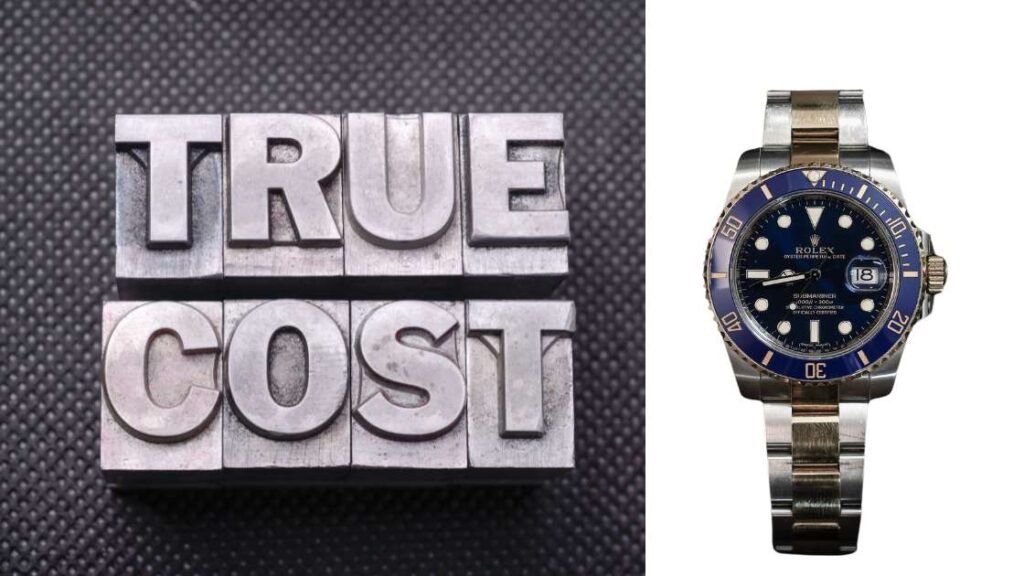
A Rolex is more than a timepiece. It is a luxury product, a precision object, and a status symbol. The true cost includes the money paid at purchase, the wait or availability challenge, servicing over time, and the opportunity cost of tying money into a luxury watch.
Investment Analysis
Some Rolex references have a strong history of resale demand, especially popular sports models and rare configurations. Still, a Rolex should not be treated as a guaranteed investment. Secondary-market prices can rise, flatten, or fall depending on the model, condition, box and papers, market cycle, and buyer demand.
- Value retention can be strong, but it differs by reference.
- Condition and originality matter heavily on the resale market.
- Retail availability can affect secondary-market premiums.
- Market timing can change the result for buyers and sellers.
Warning: Do not buy a Rolex only because you expect it to appreciate. Buy it because you want the watch and can afford the purchase, maintenance, insurance, and potential resale risk.
Cost Vs. Value: A Buyer’s Perspective
Buyers weigh the cost against perceived value. For many, the appeal comes from design, durability, precision, heritage, and brand status. For others, the attraction is long-term ownership and the possibility of strong resale demand.
| Consideration | Detail |
|---|---|
| Materials | Oystersteel, precious metals, ceramic, and gemstones depending on the reference. |
| Craftsmanship | Assembly, finishing, adjustment, and quality checks performed to strict standards. |
| Brand Legacy | More than a century of watchmaking history, design continuity, and global recognition. |
| Ownership Costs | Service, insurance, storage, and potential resale spread should be considered. |
Frequently Asked Questions
How much does it cost Rolex to make one watch?
Rolex does not publicly disclose the manufacturing cost of one watch. Any exact per-watch cost estimate is speculative unless Rolex releases that figure. The safest answer is that cost varies by model, material, movement, finishing, and testing requirements.
How long does it take to make one Rolex?
Rolex does not publish a single official production timeline for one watch. Production includes component manufacturing, movement assembly, casing, finishing, inspection, and Superlative Chronometer testing before delivery.
What is the profit margin of Rolex?
Rolex is privately held and does not publish detailed financial statements or official profit margins by model. Industry analysts estimate sales and market share, but those estimates are not the same as official Rolex margin data.
How much does it cost to make a steel Rolex?
Rolex does not disclose the manufacturing cost of a steel Rolex. For buyers, the public number is retail price. In the U.S., current Oyster Perpetual Oystersteel models start at about $6,200 for the 28 mm size and about $6,750 for the 36 mm size.
Why are Rolex watches so expensive if the materials alone cost less?
The price includes more than raw materials. Rolex pricing reflects movement development, precision manufacturing, hand assembly, testing, finishing, authorized distribution, warranty support, scarcity, and brand demand.
Is a Rolex a good investment?
A Rolex can hold value better than many luxury goods, but it is not a guaranteed investment. Model choice, condition, market timing, retail availability, and buyer demand all affect resale value.
Conclusion
Rolex does not reveal what it costs to manufacture one watch, so exact production-cost claims should be treated carefully. What you can see is why the watches cost so much at retail: premium materials, in-house engineering, careful assembly, strict testing, authorized distribution, scarcity, and one of the strongest names in luxury watches. A Rolex can be a meaningful long-term purchase, but it should be bought for ownership first and investment potential second.
Sources
- Rolex Oyster Perpetual models — current U.S. retail-price context for Oyster Perpetual models.
- Rolex Oyster Perpetual 28 technical details — Oystersteel, water resistance, movement, precision, and certification details.
- Rolex History: 1905–1919 — Hans Wilsdorf, Rolex founding history, and early precision focus.
- Rolex History: 1926–1945 — Oyster wristwatch and Perpetual rotor milestones.
- Rolex History: 1971–1992 — Rolex’s 904L-family steel milestone.
- Rolex Yellow Gold Materials — Rolex in-house foundry and 18 kt gold alloy control.


2 thoughts on “How Much Does It Cost to Make a Rolex? (2026 Guide)”
Pingback: How Much Does It Cost To Make A Rolex Submariner?
Pingback: How Much Does It Cost To Build A Tunnel Car Wash?