
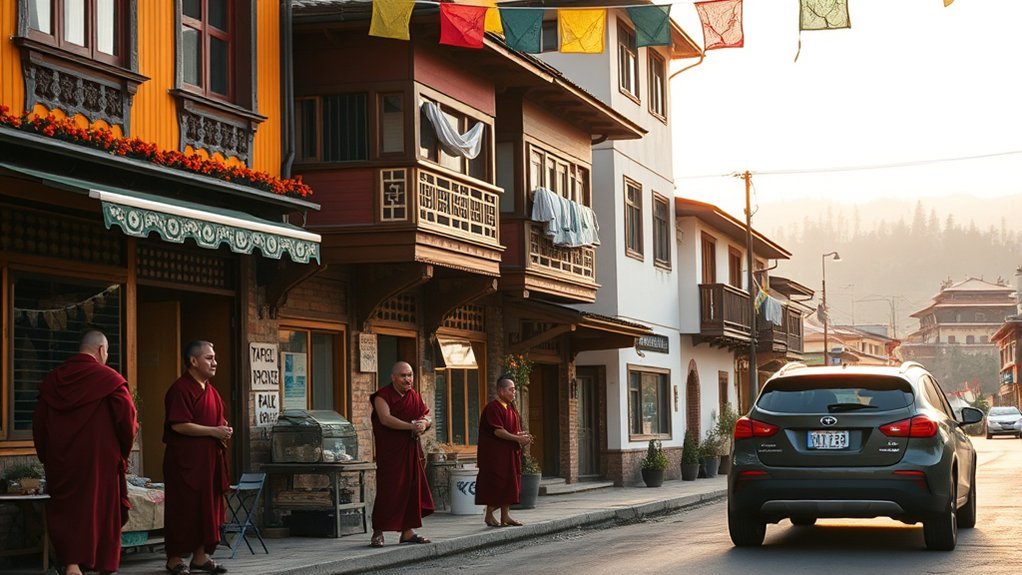
You’ll find living in Bhutan is far cheaper than in the U.S.—overall costs run about 65% lower. Rent for a one-bedroom downtown averages around $126, utilities near $27, internet $25, and basic meals $3.26. Public transit passes cost about $4.73 and private preschool around $272 monthly. Healthcare and groceries are generally lower too, boosting disposable income and purchasing power. Keep going to see itemized costs, housing options, and budgeting tips.
Quick Answer
- Overall living costs in Bhutan are about 65% lower than in the U.S.
- A downtown one-bedroom apartment runs roughly $126 a month.
- You’ll pay just $3.26 for a basic meal and $4.73 for a monthly transit pass.
- Groceries, dining out, and utilities follow the same pattern, so your money stretches much further.
- Even with a lower salary, your purchasing power is noticeably higher here.
Overview of Bhutan’s Cost of Living and Price Index
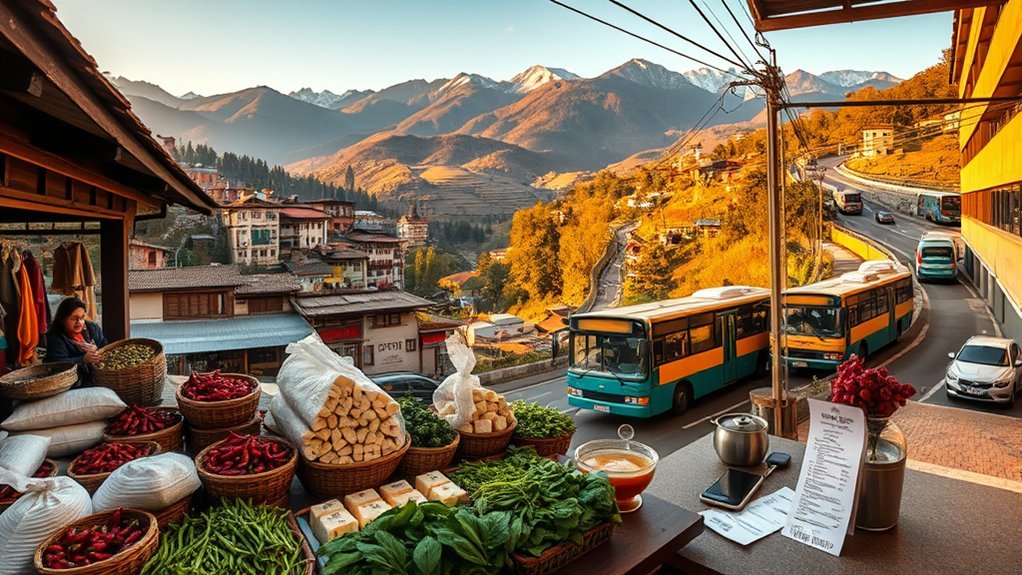
While Bhutan’s overall cost of living is substantially lower than in the United States, the difference shows up most in housing, dining, and transportation. A downtown 1‑bedroom runs about $126 versus $1,664.59 in the U.S., a basic restaurant meal costs roughly $3.26 compared with $19.45, and a monthly public transit pass is near $4.73 versus $65.85. Groceries follow the same pattern (a loaf of bread about $0.84 here versus $3.56 in the U.S.). These data points create a much lower consumer price index for everyday expenses according to Numbeo’s latest data.
Comparing itemized prices—rent, meals, transit, staples—lets you see the real purchasing power difference. Everyday baskets cost a fraction in Bhutan.
For budgeting or relocation, use these figures to set realistic expectations and compare salaries. Inflation can shift things, but baseline living costs stay consistently lower across key categories.
Housing and Utilities: Renting and Buying in Major Cities
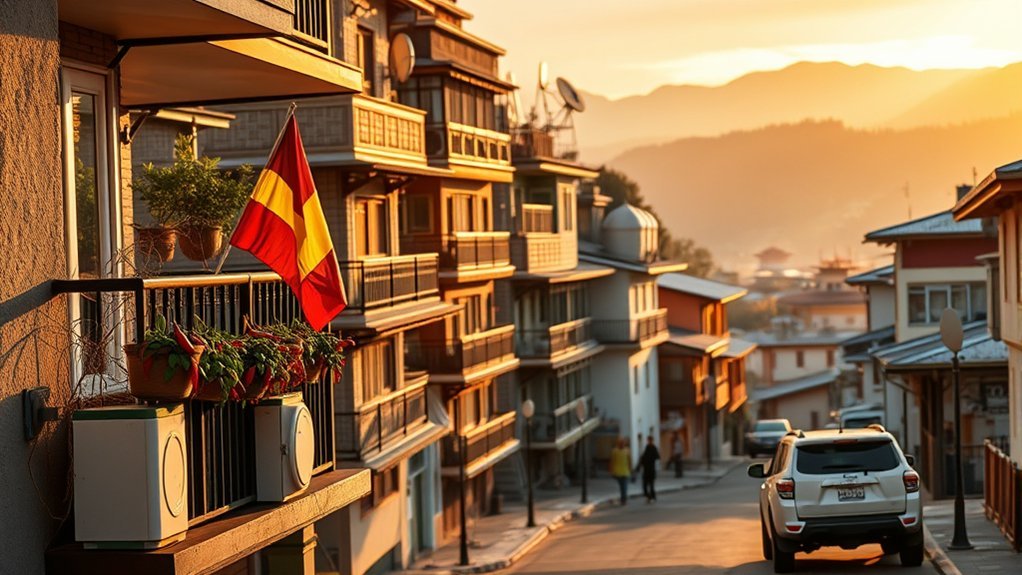
Bhutan’s housing market is compact, yet rents and utilities stay dramatically cheaper than in the United States. You’ll pay about $126 for a 1-bedroom downtown versus $1,664.59 in the U.S., and $90 outside the center versus $1,341.
Although compact, Bhutan’s housing is far cheaper than U.S. rents — about $126 downtown versus $1,664.59 stateside.
For a 3-bedroom downtown, expect roughly $203 compared with $3,124 stateside. Monthly utilities average $27 versus $124, and 50 Mbps internet is about $25 compared to $68.97.
- Downtown 1BR: $126 (Bhutan) vs $1,664.59 (U.S.)
- Outside 1BR: $90 vs $1,341
- Downtown 3BR: $203 vs $3,124
- Utilities & Internet: $27 utilities; $25 internet vs $124 and $68.97
Housing density limits supply and resale can be complex. Buying options are smaller and often tied to local regulations.
Read the Terms of Use for rental contract norms and compare listings when relocating. This snapshot helps you plan budget allocations sharply.
Food and Groceries: Typical Prices and Monthly Budgets
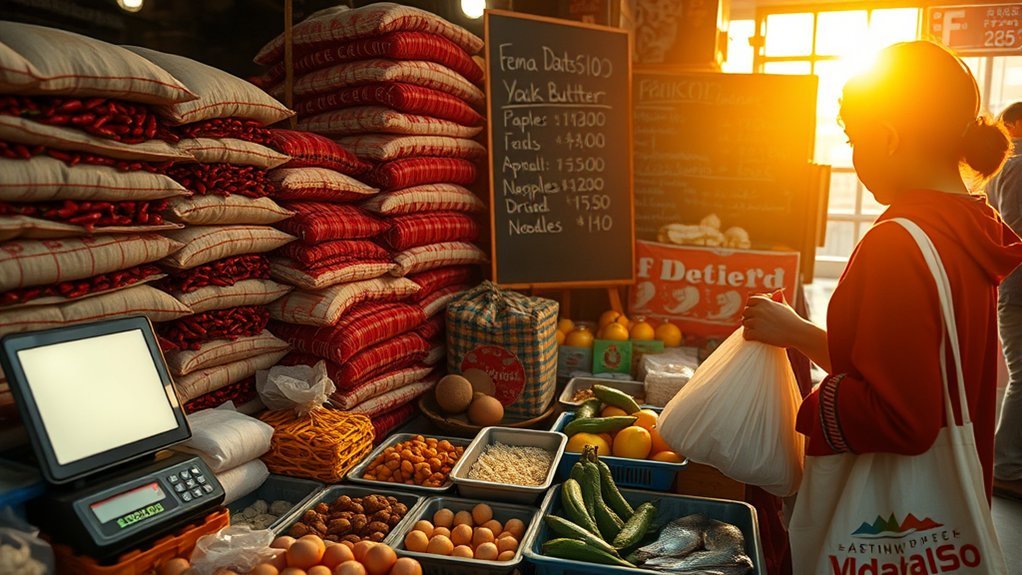
Food and groceries in Bhutan are noticeably cheaper than in higher-cost countries. A basic restaurant meal runs about $3.26 and a fast-food combo about $3.91. A loaf of bread costs roughly $0.84, 8 oz of local cheese about $1.66, and a dozen eggs around $2.20. You can budget monthly groceries for a single person at roughly one-third the cost you’d expect in the United States (U.S. groceries average about 3.5× higher).
Most savings come when you buy local food and staples at traditional markets rather than imported goods at supermarkets.
Bread, eggs, and local cheese are low-cost anchors. Pair them with seasonal vegetables from market stalls to drop the per-meal cost even further.
For grocery shopping, a conservative single-person monthly estimate includes occasional packaged items and some imports, but it still stays well below Western norms.
If you focus on market produce, rice, lentils, and dairy, you’ll see predictable, measurable savings that translate into a noticeably smaller monthly food budget.
Dining Out and Entertainment Costs
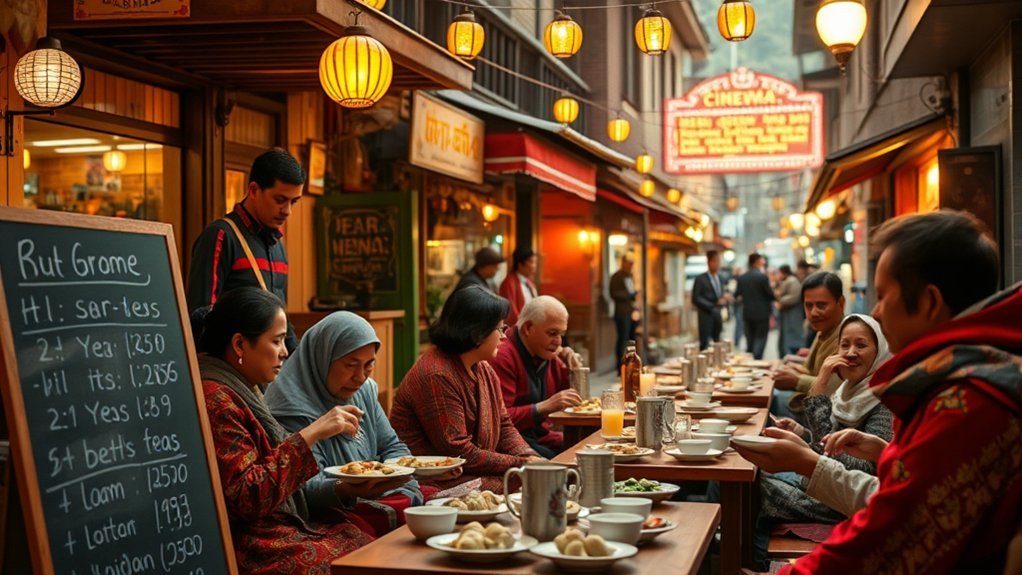
When you eat out in Bhutan you’ll see concrete savings. A basic meal with a drink costs about $3.26 versus $19.45 in the U.S., and a fast-food combo runs $3.91 compared to $11.12.
Nightlife and drinks are similarly inexpensive—a beer in a pub is roughly $3.26 and a cappuccino about $1.61, versus $6.20 and $5.25 in the U.S.
A typical dinner for two averages $19.53 here against $78.20 abroad, underscoring consistent cost advantages.
Typical Meal Prices
Anyone looking to eat out in Bhutan will find costs noticeably lower than in the United States. A basic meal with a drink runs about $3.26 versus $19.45 in the U.S., a fast-food combo is $3.91 compared with $11.12, and a mid-range dinner for two averages $19.53 against $78.20. A local beer costs roughly $3.26 (vs. $6.20) and a cappuccino about $1.61 (vs. $5.25). These figures show clear, substantial savings across casual dining, mid-range restaurants, and pub or coffeehouse spending.
Lower prices reflect local sourcing and simpler meal preparation tied to traditional cuisine and dining customs.
Key typical costs:
- Basic meal with drink: $3.26
- Fast-food combo: $3.91
- Mid-range dinner for two: $19.53
- Cappuccino: $1.61
Nightlife and Drinks
While Bhutan’s nightlife is quieter than in many countries, its drink and dining prices are strikingly economical. Expect a pub beer at about $3.26 (vs. $6.20 in the U.S.) and a cappuccino for roughly $1.61 (vs. $5.25).
You’ll find nightlife activities focused on small bars, cafés, and occasional live music rather than big clubs. Lunch averages $3.26 (U.S. $19.30) and dinner for two about $19.53 (U.S. $78.20), so social evenings stay affordable.
Drink varieties include local beers, spirits, and coffee-based options. Fast-food combos run roughly $3.91 (U.S. $11.20). If you explore local breweries, costs align with these low benchmarks and let you sample multiple offerings without high expense.
Transportation and Fuel Expenses
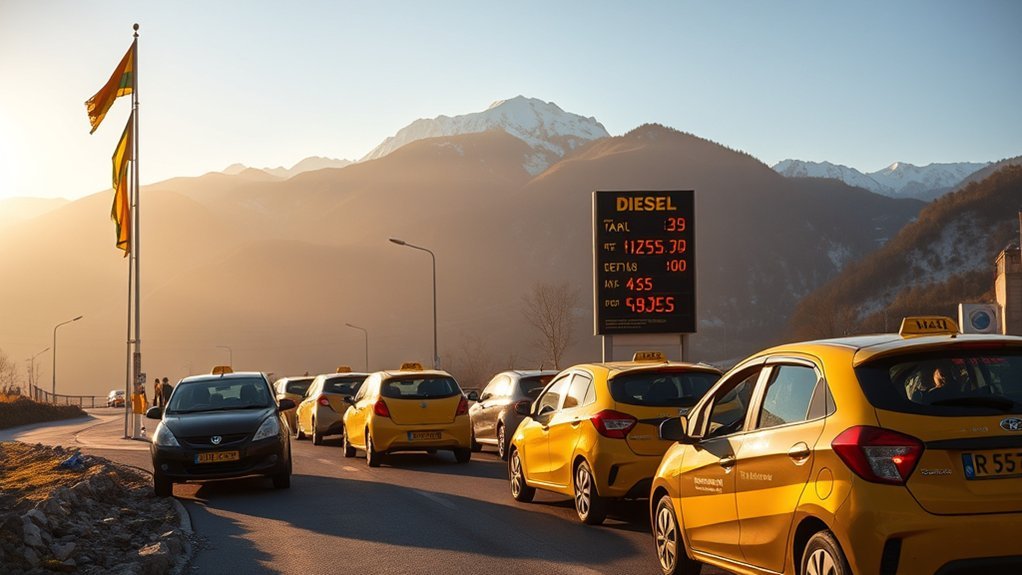
Public transit in Bhutan is exceptionally cheap at about $4.73 per month for a pass and $2.28 per local ticket, compared with roughly $65.85 and $2.35 in the United States.
Fuel trends are similar: gasoline runs about $0.92 per liter in Bhutan. This keeps household mobility costs low.
Public Transit Costs
One monthly transit pass in Bhutan costs about $4.73—a fraction of the U.S. average of $65.85.
If you rely on public transportation you’ll see immediate savings. Local tickets run roughly $2.28 versus $2.35 in the U.S., and gasoline is comparable at $0.92 per liter.
Taxi fares tell a different story—an average 5-mile downtown trip in Bhutan is about $18.89 versus $17.61 in the U.S.
Clear public transit benefits include lower fares that boost transportation accessibility and support eco-friendly commuting.
Key figures to weigh before moving or budgeting:
- Monthly pass: $4.73 (Bhutan) vs $65.85 (US)
- Local ticket: $2.28 vs $2.35
- Gasoline per liter: $0.92 vs similar U.S. levels
- 5-mile taxi: $18.89 vs $17.61
Fuel Price Trends
Gasoline costs about $0.92 per liter in Bhutan. Monthly commuting budgets stay predictable thanks to modest local price fluctuations.
Given a local transport ticket at roughly $4.73 monthly (vs. $69.30 in the U.S.) and single fares around $2.28 (vs. $2.35), most people rely on public transit to cut costs.
Transportation policy—subsidies, taxes, and limited road networks—keeps overall transport costs in Bhutan much lower than U.S. averages despite some pricier short taxi trips.
Childcare, Education, and Healthcare Costs

Although Bhutan’s childcare and schooling systems differ markedly from Western norms, families there face distinctly lower out-of-pocket costs for early childhood and basic healthcare services.
Childcare options are limited, so many families rely on extended relatives and reduce formal expenses. Private preschool runs about $272 per month per child versus the U.S. average of $1,387.27—a clear savings.
Public education is free, though you’ll pay for uniforms, supplies, and activities. Education quality varies by region and resources.
Healthcare accessibility is improving with more clinics and hospitals. Basic medical expenses are generally lower than in many Western countries, but specialized care can incur higher out-of-pocket costs.
- Private preschool: ~$272/month (Bhutan) vs $1,387.27 (U.S.)
- Public schooling: tuition-free; ancillary costs present
- Childcare options: informal family support common
- Healthcare accessibility: expanding, specialized care cost variable
These contrasts help you estimate household budgets in Bhutan.
Salary Adjustment and Purchasing Power Comparison With the United States
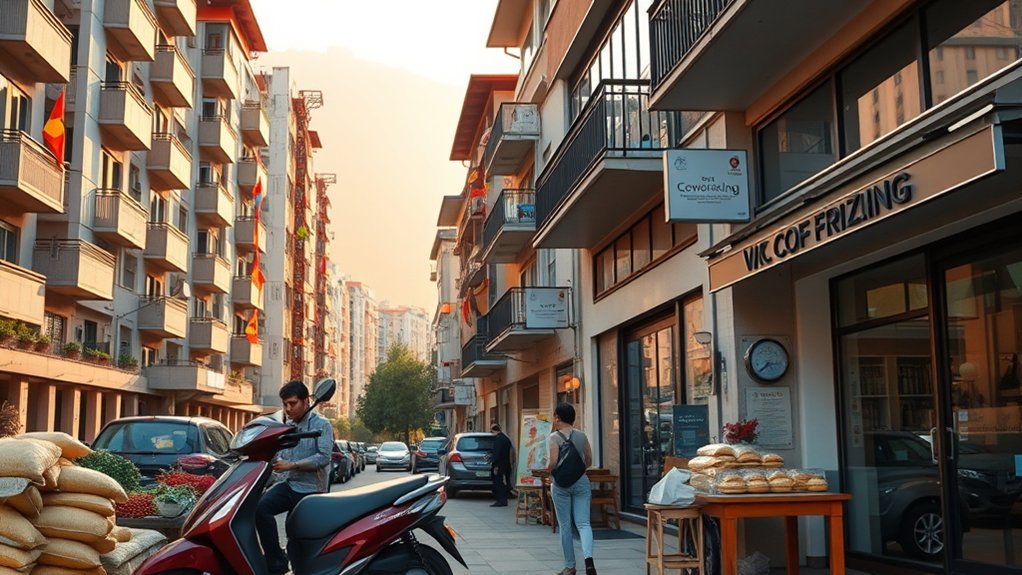
Because Bhutan’s overall costs are about 65% lower than in the United States, your salary will need adjustment to preserve purchasing power if you relocate. Use purchasing power analysis to set realistic targets. Compare core items quantitatively so you can apply salary negotiation strategies and expatriate budget planning effectively.
| Category | Bhutan (USD) | U.S. (USD) |
|---|---|---|
| 1-bed downtown rent | 126 | 1,664.59 |
| Basic meal w/ drink | 3.26 | 19.45 |
| Monthly transit pass | 4.73 | 65.85 |
From these data, your effective purchasing power increases in Bhutan even with a much lower nominal wage. For negotiations, convert U.S. salary needs into Bhutan-stable costs, then apply a safety margin for imports and schooling. Expatriate budget planning should model scenarios: maintain current U.S. living standard, accept proportional local standard, or hybrid. Use the table numbers to justify offers and to quantify expected disposable income under each scenario.
Tips for Saving Money and Managing Living Expenses in Bhutan
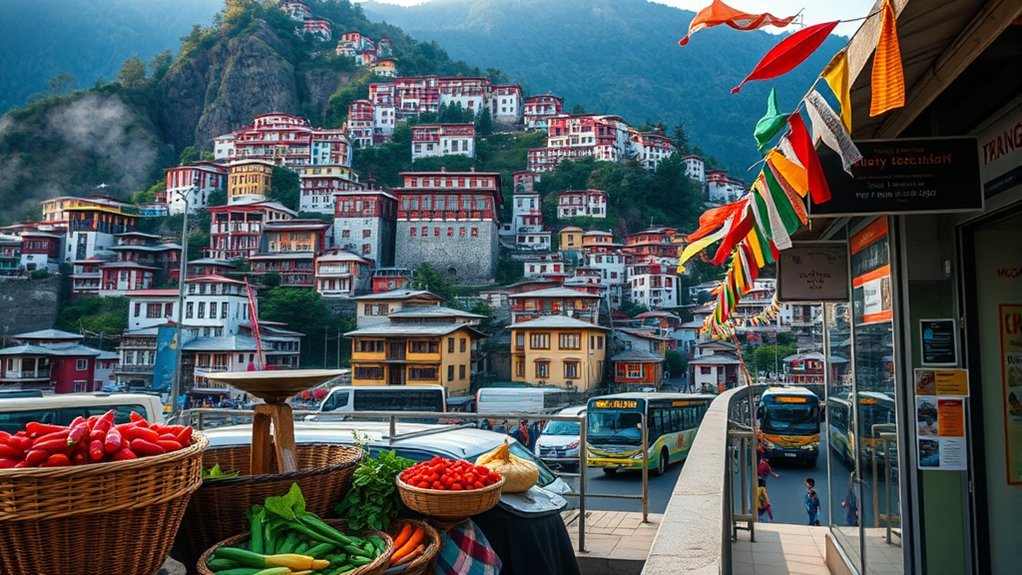
If you want to stretch income in Bhutan, prioritize housing, food, and transit—these categories are dramatically cheaper than in the U.S. Reallocating budget lines yields big gains. Targeted savings strategies and budgeting tips turn lower living costs into faster financial progress.
A one-bedroom in Thimphu averages $126 versus much higher U.S. rents. Groceries (bread $0.84, eggs $2.20/dozen) and dining out (~$3.26 per meal vs $19.45) free up cash for investment or emergency funds.
- Track fixed costs: allocate rent, utilities, and a $4.73 monthly transit pass first for reliable cashflow.
- Optimize food spend: combine cheap dining out with groceries to reduce per-meal cost.
- Prioritize childcare savings: private preschool ~$272 vs $1,387.27 in the U.S.; redirect the gap to savings.
- Formalize financial planning: set monthly targets, automate transfers, and measure progress quarterly.
These practical, data-driven steps let you convert Bhutan’s low prices into measurable wealth-building.
Frequently Asked Questions
Is Living in Bhutan Expensive?
No, it isn’t expensive. Cost factors like cheap housing, meals, groceries and transit are lower than in the U.S. Your lifestyle choices and expat experiences still matter, so compare budgets, preferences, and local data carefully.
How to Live in Bhutan as an American?
If you’re serious, investigate whether Bhutan’s strict visa requirements block long stays. Then plan cultural adaptation, compare housing options, secure sponsorship or employment, budget using local cost data, and arrange healthcare, permits, and reliable local contacts.
How Much Does a Meal Cost in Bhutan?
You’ll find meal prices in Bhutan very affordable. Local cuisine meals average $3.26–$3.91, lunch around $3.26, dinner for two about $19.53—offering budget-friendly dining experiences compared to U.S. costs.
Why Does It Cost $100 a Day to Visit Bhutan?
Curious why it’s $100 a day? You’re paying the Sustainable Development Fee that funds cultural experiences, data-driven preservation, free healthcare and education for Bhutanese, and environmental conservation. It delivers comparative value versus unmanaged, cheaper but disruptive alternatives according to the U.S. Department of State.
Conclusion
Concluding costs clearly: compared with the United States, Bhutan’s basic basket is broadly cheaper but benefits, bargains and burdens vary by city. You’ll pay less for local food and transport, more for imported goods, and see sharper rent ranges in Thimphu versus smaller towns. Use salary, savings and spending stats to strategize—seek subsidized services, split shared housing, compare grocery unit prices and cut commuting costs to conserve cash while conserving cultural capital.
