
The cost to get certified in welding can be a few hundred dollars when you already have the skills and only need a performance test. The total can rise to several thousand dollars or more if you also need hands-on training, tools, protective equipment, travel, and living expenses. The right budget depends on the credential your employer requires and what the school or testing facility includes.
Quick Answer
The AWS price list effective January 1, 2026 shows a $70 Certified Welder application, but the practical-test fee is set by the Accredited Test Facility. Full welding training can range from about $3,000 at some public colleges to more than $25,000 at private career schools. Tools, retests, travel, and certification maintenance can increase the total.
Key Takeaways
- A welding-school certificate and an AWS certification are different credentials with different costs.
- AWS lists a $70 Certified Welder application fee on its January 2026 price list, while the testing facility sets the practical-test price.
- The initial AWS Certified Welding Inspector exam costs $1,255 for eligible members or $1,520 for nonmembers.
- School, tools, PPE, transportation, living expenses, retests, and certification maintenance may all affect your total.
- Certification can meet an employer requirement, but it does not guarantee a job, raise, or specific salary.
Cost to Get Certified in Welding vs. a School Certificate
Before comparing prices, identify what you actually need. The words certificate, certification, and qualification are often used as though they mean the same thing, but they do not.
- School certificate or diploma: Shows that you completed a training program. It may cover several welding processes, blueprint reading, fabrication, safety, and job preparation.
- AWS Certified Welder credential: Shows that you passed a hands-on performance test using an approved Welding Procedure Specification. The AWS Certified Welder Program has no formal education, certification, or experience prerequisite.
- Employer or code qualification: Shows that you can make an acceptable weld for a particular process, material, position, thickness, or job requirement. A qualification may not cover every type of welding work.
- Professional certification: Credentials such as Certified Welding Inspector require knowledge, documented experience, examinations, and substantially higher fees.
Note: Certification is also different from a state or local contractor license. Check the rules in your location before offering welding services as a business.
Typical Tuition and Program Prices

Training prices vary widely because welding programs differ in length, credential level, residency rules, equipment, and the amount of laboratory time included. A short public-college certificate can cost a few thousand dollars, while an intensive private-school diploma can exceed $25,000.
| Official Program Example | Published Cost | What It Shows |
|---|---|---|
| Pima Community College Basic Welding Certificate | Estimated $2,983 for 2026–27 | In-state estimate including tuition, fees, about $200 in supplies, and an optional AWS D1.1 credential cost. |
| UTI San Antonio Welding Technology Diploma | $25,255 total for applicable 2026 enrollments | A 36-week private career-school program with tuition and listed registration, lab, and equipment fees. |
These are examples, not national averages, and published prices can change, so confirm current amounts with each school. Your cost can be lower or higher based on residency, school type, program length, financial aid, and the welding processes taught.
Before enrolling, request a written cost sheet showing:
- Tuition and registration fees
- Lab and shop fees
- Books and online learning materials
- Tools, welding hood, clothing, gloves, boots, and respirator expenses
- Metal, electrodes, wire, gas, and other consumables
- Certification preparation and testing fees
- Retest charges
- Transportation, housing, and food
- Refund and withdrawal policies
Pro Tip: Compare the total program cost, not tuition alone. A school with higher tuition may include tools and testing that another school bills separately.
Equipment, Materials, and Living Expenses
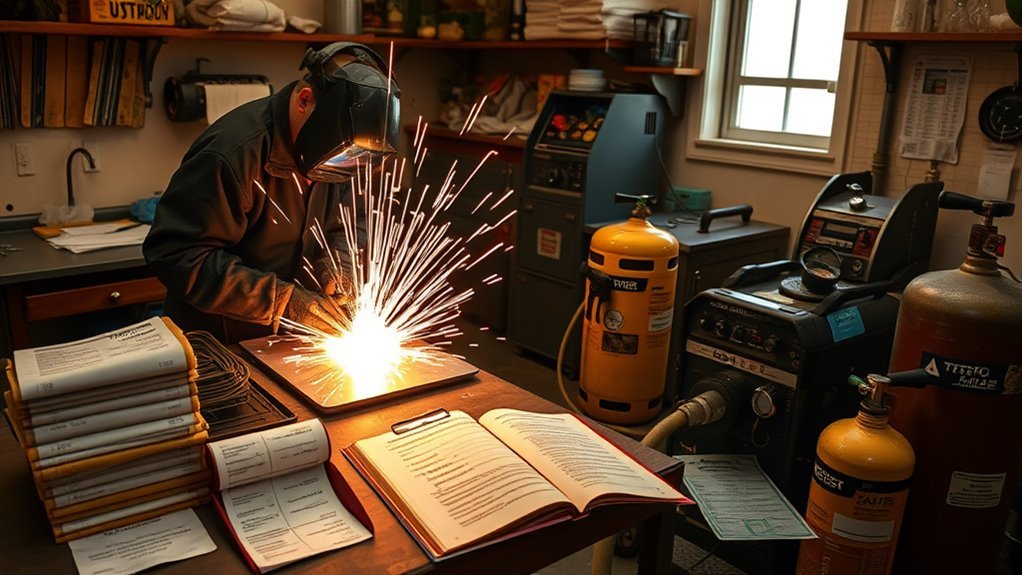
Equipment costs depend on what your school supplies. Some programs provide a helmet, jacket, gloves, hand tools, and classroom consumables. Others require students to purchase most or all of these items.
Common Non-Tuition Costs
- Personal protective equipment: Welding helmet, safety glasses, gloves, flame-resistant clothing, boots, hearing protection, and any required respiratory protection.
- Hand tools: Pliers, clamps, chipping hammer, wire brush, soapstone, tape measure, square, and grinders where required.
- Consumables: Electrodes, wire, shielding gas, grinding discs, contact tips, test coupons, and practice metal.
- Books and code materials: Textbooks, procedure documents, and any code book required for an inspector or endorsement exam.
- Transportation: Fuel, public transportation, parking, or travel to a separate Accredited Test Facility.
- Living expenses: Rent, food, utilities, childcare, and other costs during full-time training.
Do not buy equipment until you receive the school or testing facility’s current list. A program may require a particular helmet shade, boot type, clothing material, or tool specification.
Warning: Welding exposes you to arc radiation, fumes, hot metal, electrical hazards, burns, and fire risks. Practice only in a properly equipped area with suitable ventilation, fire controls, PPE, and qualified supervision.
Certification and Testing Fees
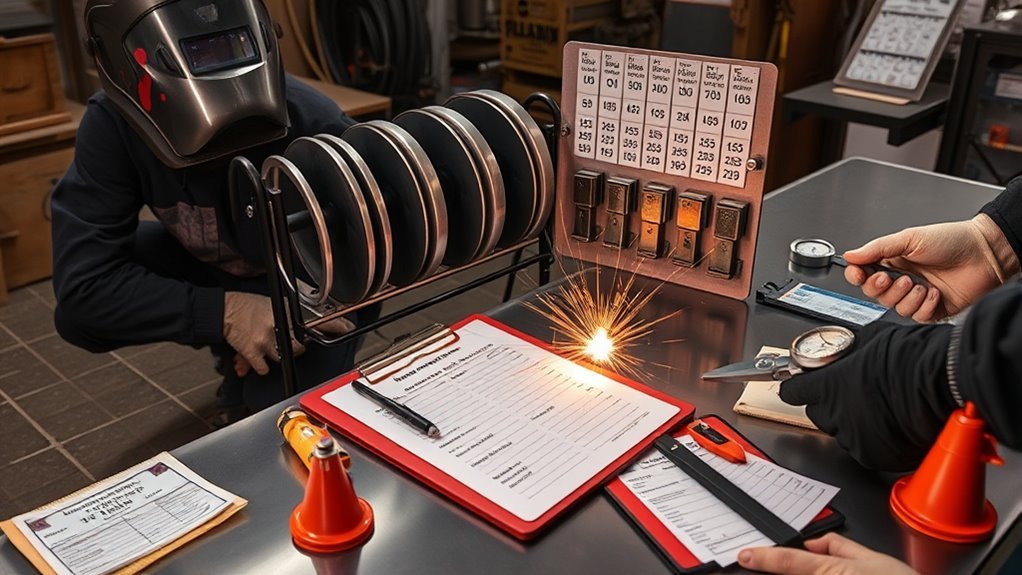
There is no single price for “welding certification.” The correct amount depends on whether you are taking a welder performance test, an inspector exam, an endorsement, or an employer-specific qualification.
Selected AWS Certification Prices for 2026
| AWS Item | 2026 Price | Important Detail |
|---|---|---|
| Certified Welder application | $70 | Same listed application price for members and nonmembers. |
| Certified Welder practical exam | Set by the ATF | Contact the Accredited Test Facility for a complete quote. |
| Certified Welder maintenance subscription | $105 per year | Provides unlimited maintenance renewals during the subscription period. |
| Initial CAWI or CWI exams | $1,255 member $1,520 nonmember |
Inspector certification is different from a welder performance test. |
| Initial CAWI or CWI exams with Part B training | $2,000 member $2,265 nonmember |
Includes the listed AWS exam and training package, subject to program terms. |
These figures come from the AWS Certification and Education Programs Price List effective January 1, 2026. AWS notes that prices can change, and additional testing-facility charges may apply.
Why the Practical-Test Price Varies
An Accredited Test Facility may base its quote on:
- The welding process, such as SMAW, GMAW, GTAW, or FCAW
- Plate versus pipe
- Pipe diameter and wall thickness
- Test position, such as 1G, 3G, 4G, or 6G
- Base metal, filler metal, and shielding gas
- Visual inspection, bend tests, radiography, or other examination methods
- Shop time, material preparation, and test-coupon costs
- Documentation and application processing
- Retesting after an unsuccessful attempt
Note: ASME BPVC Section IX is a qualification standard, not a nationwide individual certification sold for one fixed price. Ask the employer or testing organization which procedure, process, position, and code edition your test must follow.
Questions to Ask Before Booking a Test
- Does the quote include the AWS application fee?
- Are test coupons, filler metal, shielding gas, and inspection included?
- Which process, position, thickness, and material will the qualification cover?
- Will I receive a qualification record as well as an AWS credential?
- What happens if I fail the visual inspection or bend test?
- How much does a complete or partial retest cost?
- Can my employer pay the facility directly?
- What must I do to keep the credential current?
What Changes the Total Welding Certification Cost?
The test itself may be only one part of your budget. Your final amount can change based on your starting skill level and the job you are pursuing.
Skill and Practice Time
An experienced welder may be able to schedule a direct performance test. A beginner may need weeks or months of supervised practice before attempting the same qualification.
Number of Qualifications
One test does not qualify you for every process, metal, thickness, diameter, or position. A job requiring several qualifications can involve several test and documentation charges.
Retesting
A failed test may require another coupon, more shop time, fresh materials, and another inspection. Ask whether the facility charges for a full retest or only the failed portion.
Travel and Time Away From Work
The nearest suitable ATF may be outside your city. Include fuel, lodging, meals, parking, and lost work time where applicable.
Certification Maintenance
AWS states that most Certified Welder qualifications require continuity documentation every six months. The certification can remain valid when the required maintenance is submitted and the welder continues using the applicable welding process.
How to Estimate Your Total Budget
Use the following formula instead of relying on a single advertised price:
Total budget = training + school fees + tools and PPE + consumables + test-facility fee + application fee + travel + retest reserve + maintenance cost + living expenses.
Illustrative Direct-Testing Budget
Suppose an experienced welder receives a $500 ATF quote. The first-year budget might include:
- ATF practical test: $500
- AWS Certified Welder application: $70
- Required PPE or replacement items: $200
- Travel and meals: $100
- Annual maintenance subscription: $105
Illustrative total: $975. This is a budgeting example, not a national quote. Your ATF charge, equipment needs, travel, and maintenance timing may differ.
Training-Plus-Certification Budget
A student should add the school’s full published cost to the test and living expenses. For example, a $3,000 certificate, $500 test quote, $300 in extra PPE, $70 application fee, and $105 maintenance cost would total $3,975 before transportation, food, housing, or retesting.
Financial Aid, Scholarships, and Payment Options

You may not have to pay the entire training cost at once. Available help depends on the school, program, employer, location, and your eligibility.
| Option | How It May Help | What to Verify |
|---|---|---|
| Federal student aid | Eligible career-school students may qualify for grants, work-study, or federal loans after completing the FAFSA. | Confirm that both the school and program participate in the applicable aid program. |
| School or industry scholarships | Awards may cover tuition, fees, books, tools, or required equipment. | Check deadlines, enrollment rules, and permitted expenses. |
| Employer sponsorship | An employer may pay for a required qualification, test, renewal, or job-related course. | Ask about repayment requirements if you leave the company. |
| Registered apprenticeship | Combines paid work with structured training and may reduce the need for full-time school. | Review wages, classroom costs, tools, length, and qualification opportunities. |
| Workforce-development funding | State or local programs may help eligible job seekers pay for approved occupational training. | Confirm approval before enrolling or making a payment. |
| School payment plan | Spreads the bill across several payments. | Check enrollment fees, late fees, interest, and cancellation terms. |
The Federal Student Aid FAFSA guidance explains that the FAFSA can provide access to grants, work-study funds, and federal student loans for eligible college, career-school, and trade-school students. However, a short welding course is not automatically eligible simply because it is offered by a college.
Compare the school’s sticker price with its estimated net price after grants and scholarships. Treat loans as borrowed money that must be repaid, not as a discount.
Return on Investment and Career Outcomes

A useful welding qualification can improve your eligibility for jobs that require a specific process, position, code, or quality standard. However, certification alone does not guarantee employment, steady work, a raise, or a particular salary.
The U.S. Bureau of Labor Statistics reports that the median annual wage for welders, cutters, solderers, and brazers was $51,000 in May 2024. Actual pay varies by location, industry, experience, schedule, employer, union agreement, and job duties.
Estimate return on investment using real job information:
- Find local postings for the welding work you want.
- Write down the exact processes, positions, codes, and credentials employers request.
- Compare the offered wage with your current earnings.
- Add your training, testing, travel, maintenance, and lost-work costs.
- Choose the lowest-cost path that provides the skills and qualifications employers actually require.
A short performance test may offer strong value for an experienced welder who needs one documented qualification. A beginner may receive more value from a broader program that includes supervised practice, multiple welding processes, fabrication skills, and job preparation.
Frequently Asked Questions
Are prerequisite skills or certifications required before enrolling?
School admission requirements vary. Some beginner programs accept students with no welding experience, while advanced courses may require earlier classes or a skills test. The AWS Certified Welder Program itself has no formal education, certification, or experience prerequisite, but you must have enough practical skill to pass the performance test.
How long do welding certification programs typically take?
A direct welder performance test may be completed in one scheduled session if you are already prepared. Training can last from several weeks for a focused certificate to nine months or longer for a broad diploma. Associate-degree programs normally require more coursework and time.
Can credits transfer between welding schools or programs?
Possibly, but there is no universal transfer rule or reliable national acceptance percentage. The receiving school decides which credits it will accept. Provide official transcripts, course descriptions, syllabi, clock or credit hours, and laboratory competency records before enrolling.
Are online welding courses accepted for certification exams?
Online courses can teach theory, symbols, safety concepts, metallurgy, inspection topics, and code navigation. They cannot replace the hands-on ability needed for a welder performance test. AWS Certified Welder eligibility is based on passing the practical test, not on completing a particular online course.
What safety certifications are included with training?
Included safety instruction varies by school. A program may teach PPE, ventilation, hazard communication, fire prevention, hot-work procedures, electrical safety, and respirator awareness without issuing a separate OSHA card or other safety credential. Ask for a written list of the certifications or cards included in the tuition.
Do I have to attend welding school before taking an AWS Certified Welder test?
No. AWS states that the Certified Welder test is performance-based and has no required course, prior certification, or minimum experience level. School may still be the safer and more effective route if you do not yet have the skills to pass.
Does an AWS Certified Welder credential expire?
It can remain valid when you continue using the applicable welding process and submit the required continuity maintenance. AWS says most governing codes require maintenance every six months. Check the exact standard connected to your qualification.
Who pays for a welding certification retest?
The candidate commonly pays unless a school, employer, union, grant, or apprenticeship program covers the charge. Retest policies vary, so request the price and conditions in writing before the first attempt.
Conclusion
A basic welding certification should not automatically be confused with the price of welding school. The AWS price list effective January 1, 2026 shows a $70 Certified Welder application fee, but the Accredited Test Facility determines the practical-test charge. Training can range from a few thousand dollars at some public colleges to more than $25,000 at private career schools.
Build your budget around the exact job qualification you need. Add tuition, tools, PPE, test fees, travel, possible retesting, and maintenance, then subtract confirmed grants, scholarships, or employer assistance. Get all prices and included services in writing before paying.
Related Welding Certification and Training Cost Guides
- Welding license cost: exam fees, training and local rules
- AWS welding certification cost: CW and CWI fees
- Welding training cost by program type
- Cost to get coded in welding: fees, tests and extras
Sources
- American Welding Society Certification and Education Programs Price List — 2026 Certified Welder, maintenance, CWI, and training-package fees.
- AWS Certified Welder Program — eligibility, testing process, retesting, and continuity maintenance.
- Pima Community College Basic Welding Certificate Costs — 2026–27 public-college program-cost example.
- Universal Technical Institute San Antonio Catalog — 2026 private welding-diploma tuition and fee example.
- U.S. Bureau of Labor Statistics Occupational Outlook Handbook — current national welder wage figures.
- Federal Student Aid FAFSA Steps — grants, work-study, and federal loan access for eligible college and career-school students.