
If you are visiting Alaska for a short fishing trip, the main short-term option is the nonresident 3-day sport fishing license. The Alaska Department of Fish and Game currently lists this license at $30. Alaska does not list a resident 3-day sport fishing license; residents who need a paid license generally use the $20 annual resident license.
Quick Answer
An Alaska 3-day fishing license currently costs $30 for a nonresident. It is valid for the three-day period printed on the license. A separate $30 nonresident 3-day king salmon stamp is generally required if you plan to fish for king salmon outside stocked lakes.
Key Takeaways
- The nonresident 3-day Alaska sport fishing license costs $30.
- The $45 product is the nonresident 7-day license, not the 3-day license.
- Residents do not have a 3-day sport fishing option on the current ADF&G price list; the resident annual license is $20.
- Nonresidents generally need a license at age 16, while residents generally need one at age 18.
- Check regional regulations and emergency orders because fishery rules can change during the season.
Warning: A fishing license does not override bag limits, annual limits, size restrictions, closed waters, gear rules, or emergency orders. ADF&G emergency orders supersede the printed regulation summaries, so check the rules for your exact fishing area before each trip.
Who Needs a 3-Day Fishing License in Alaska?
The 3-day sport fishing license is intended for nonresident anglers age 16 or older who want to fish in Alaska for a short period. It applies to sport fishing in both fresh and marine waters, subject to all species, area, season, and gear restrictions.
Alaska residents follow a different age threshold. A resident generally needs a sport fishing license at age 18 or older. Residents who need a paid license normally purchase an annual resident license because the current ADF&G product list does not include a resident 3-day sport fishing license.
| Angler | General sport fishing license rule |
|---|---|
| Nonresident age 16 or older | Must purchase and possess a sport fishing license. |
| Nonresident younger than 16 | No sport fishing license is generally required, but a free Harvest Record Card may be needed in a fishery with an annual limit. |
| Alaska resident age 18 or older | Must possess a resident sport fishing license or a qualifying ADF&G Identification Card. |
| Alaska resident younger than 18 | No sport fishing license is generally required, but a free Harvest Record Card may be needed when annual harvest limits apply. |
Carry the license, stamp, Harvest Record Card, and any special permit required for your fishery. These documents must be available for inspection while you are fishing or possessing sport-caught fish.
3-Day License Costs: Resident vs. Nonresident Rates
The current ADF&G product price list shows that a nonresident 3-day sport fishing license costs $30. The $45 product is the nonresident 7-day license.
| License | Current price |
|---|---|
| Nonresident 1-day sport fishing license | $15 |
| Nonresident 3-day sport fishing license | $30 |
| Nonresident 7-day sport fishing license | $45 |
| Nonresident 14-day sport fishing license | $75 |
| Nonresident annual sport fishing license | $100 |
| Resident annual sport fishing license | $20 |
Note: Alaska does not currently list a resident 3-day sport fishing license. A resident who does not qualify for an exemption or reduced-fee product generally buys the $20 annual resident license.
Claim resident status only when you meet Alaska’s legal residency requirements. ADF&G generally requires a person to have maintained an Alaska domicile for the preceding 12 consecutive months and not claim residency benefits elsewhere. Military personnel and dependents have additional rules described by ADF&G.
Products Worth Considering

Includes Weight, Hook Size, Food Quality, And Coloring.

PERSONALIZED WITH YOUR CUSTOM TEXT: Create a one of a kind license plate magnet with your name, nickname, favorite phrase, or special message. Add a personal touch to your refrigerator, locker, office, or workspace with a unique keepsake.
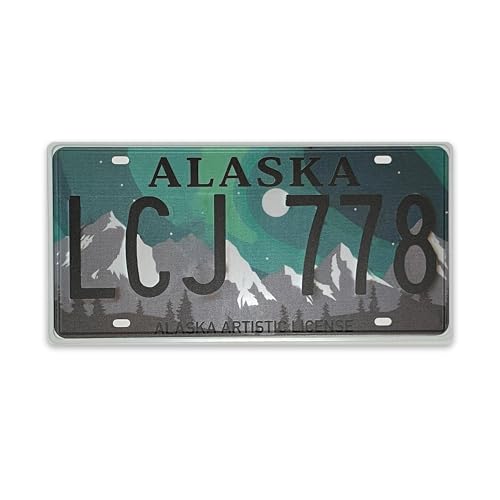
Decorative Item Only: This product is a vintage-style decorative license plate, crafted as a replica/artifact. It is NOT a real license plate and cannot be used as such. Please comply with all applicable laws—it must NOT be mounted on any vehicle to replace, cover, or imitate an official license plate. Use only for indoor or outdoor decoration where legally permitted.
What the 3-Day License Allows You to Do
A valid nonresident 3-day sport fishing license lets you participate in Alaska sport fisheries during the period printed on the license. It can be used in fresh and marine waters, but it does not create a right to fish in closed waters or keep every species you catch.
You must still follow:
- Regional and area-specific seasons
- Daily bag and possession limits
- Annual harvest limits
- Minimum and maximum size restrictions
- Hook, lure, bait, pot, and other gear restrictions
- Special permits, stamps, and harvest-record requirements
- Emergency orders issued after a regulation booklet was published
A nonresident sport fishing license does not make you eligible for Alaska’s resident-only personal-use fisheries. Personal-use fisheries have separate residency, permit, gear, and reporting rules.
Shellfish rules also vary. A sport fishing license may be required for recreational crab, shrimp, or other shellfish activity, but some fisheries require an additional permit. For example, Prince William Sound shrimp fishing uses a separate sport or subsistence permit, depending on the angler’s eligibility.
King Salmon Stamp Requirements and Pricing
An eligible angler must generally purchase a king salmon stamp in addition to a sport fishing license when fishing for king salmon. The main statewide exception is fishing for king salmon in stocked lakes.
For a nonresident three-day trip, the sport fishing license and matching king salmon stamp currently cost $30 each, for a total of $60.
| Nonresident king salmon stamp | Current price |
|---|---|
| 1-day stamp | $15 |
| 3-day stamp | $30 |
| 7-day stamp | $45 |
| 14-day stamp | $75 |
| Annual stamp | $100 |
Resident anglers younger than 18, nonresidents younger than 16, and qualifying resident senior or disabled-veteran ADF&G Identification Card holders do not need to purchase a king salmon stamp. However, they may need a free Harvest Record Card if the fishery has an annual harvest limit.
There is no single statewide “June through mid-July” stamp period. King salmon seasons, retention rules, size limits, and annual limits vary by region and may change through emergency orders. Check the exact water you plan to fish.
Products Worth Considering
Approximate Image Size: 3/4" x 1 1/2"

Clear material and easy to use transparent stamp "Ice Mark"

Approximate Image Size: 1 7/8" x 2 3/4"
Where to Buy a 3-Day Fishing License
You can purchase an Alaska sport fishing license through the ADF&G online store, at many sporting-goods stores and authorized license vendors, or at an ADF&G office.
Products Worth Considering

Heavy-duty automotive aluminum – Stop settling for thin metal that bends. Crafted from durable aluminum, this plate is built to withstand car washes and harsh weather without denting or rusting, making it a reliable choice for any vehicle.

6" x 12" aluminum license plate
Features a replica of an Alaska license plate, capturing the unique beauty and spirit of the state in a miniaturized form.
Online Through ADF&G
The online store issues the license after the transaction is completed. When buying for yourself through an ADF&G account, you can electronically sign the license and save it to your phone or another device.
A license that has not been electronically signed must be signed physically or with an approved electronic-signature method before it is valid. Save the file where you can reach it without cellular service, and keep your device charged.
Pro Tip: Download the signed license before leaving town and carry a printed backup. Remote fishing areas may have little or no mobile service.
Local License Vendors
Authorized vendors include many sporting-goods stores, bait and tackle shops, lodges, and other businesses approved to sell ADF&G products. Vendor hours, payment methods, and available license formats vary, so buy before traveling to a remote launch or fishing area.
Review the license before leaving the counter. Confirm that your name, residency status, license type, and validity period are correct, then sign the license if required.
Onboard Charter Purchases
Some guides or charter businesses may help clients obtain licenses, but the charter’s business or guide registration does not replace the client’s personal sport fishing license. A nonresident client age 16 or older must have a valid license issued in that client’s name.
Ask the operator before the trip whether license purchasing is available, whether a king salmon stamp is needed, and whether you must complete the purchase before arriving at the dock. Keep your personal license and stamp available during the trip.
License Formats, Delivery, and Carrying Requirements
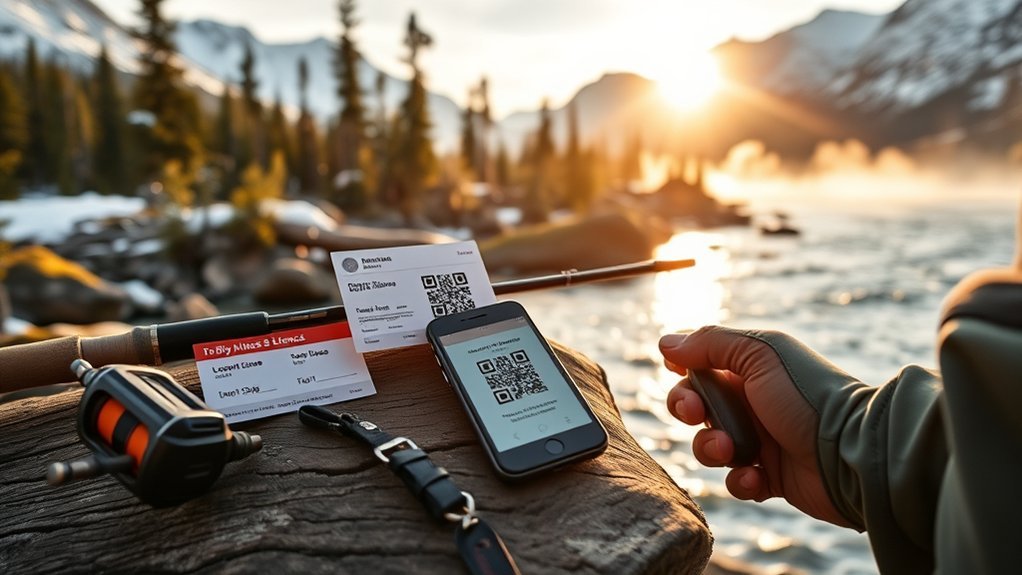
ADF&G recognizes printed or electronic licenses, eSigned licenses, and a declining number of handwritten carbon-copy licenses.
- Printed or electronic PDF: Print and physically sign it, sign the electronic file using your device, or carry a clear image of the signed license.
- eSigned license: Sign through your personal ADF&G account, save it to your device, or print the signed version.
- Carbon-copy license: Carry the physical copy. If it is lost, ADF&G requires a duplicate, currently subject to a $5 fee.
Electronic licenses can generally be downloaded or printed again, so the $5 duplicate fee should not be described as applying to every lost digital license.
All required documents must be in your possession and available for inspection. If you carry only an electronic copy, keep the device charged and make sure the license can be opened without an internet connection.
When fishing for a species with an annual limit, record the harvest immediately as required. Depending on your license format, you may record it on the signed license, in the ADF&G mobile system, or on an approved nontransferable Harvest Record Card.
Age, Residency, and Special Eligibility Rules
Age and residency determine which license or identification document you need. Do not claim Alaska resident status solely because you own property, work seasonally, or have stayed in the state for part of a year.
Residency and Age Limits
ADF&G generally defines a resident as someone who is physically present in Alaska with the intent to remain, has maintained an Alaska domicile for the preceding 12 consecutive months, and is not claiming residency or resident benefits in another state or country.
The main age thresholds are:
- Alaska residents generally need a sport fishing license at age 18.
- Nonresidents generally need a sport fishing license at age 16.
- Resident anglers younger than 18 and nonresident anglers younger than 16 may still need a free Harvest Record Card in fisheries with annual limits.
Military, Disability, Senior, and Reduced-Fee Options
| Person | Current rule or option |
|---|---|
| Resident age 60 or older | May apply for an ADF&G Permanent Identification Card and participate without buying a sport fishing license. |
| Qualifying resident disabled veteran | May apply for an ADF&G Identification Card rather than a free 3-day license. |
| Eligible low-income resident | May qualify for a $5 annual resident fishing, hunting, and trapping license. |
| Resident who is blind | May qualify for the reduced-fee resident annual sport fishing product shown on the ADF&G price list. |
| Active-duty military member stationed in Alaska for less than 12 months | May qualify for a special nonresident military annual sport fishing license. It is not a free 3-day license. |
| Military member or dependent meeting the 12-month residency standard | May qualify as an Alaska resident if all residency conditions are met. |
Apply for the correct identification card or reduced-fee product before fishing, and carry any supporting documentation required by ADF&G.
Additional Permits and Harvest Record Card Obligations
A basic license may not be the only document you need. Requirements depend on the species, fishing method, annual limit, location, and whether the activity is classified as sport, personal-use, or subsistence fishing.
A free Sport Fishing Harvest Record Card is generally required for license-exempt anglers when they participate in a fishery with an annual harvest limit. This commonly affects resident anglers younger than 18, nonresident anglers younger than 16, and qualifying resident senior or disabled-veteran Identification Card holders.
Licensed anglers may have harvest-record space on their license or use another approved recording method. When an annual-limit fish is retained, record the required species, date, and location immediately rather than waiting until the end of the day.
Depending on the fishery, you may also need:
- A king salmon stamp
- A shellfish or shrimp permit
- A personal-use permit available only to eligible Alaska residents
- A nontransferable harvest record
- Special gear or vessel markings
Review the ADF&G sport fishing regulations for your region and check current emergency orders before fishing.
Tips for Planning a 3-Day Alaska Fishing Trip
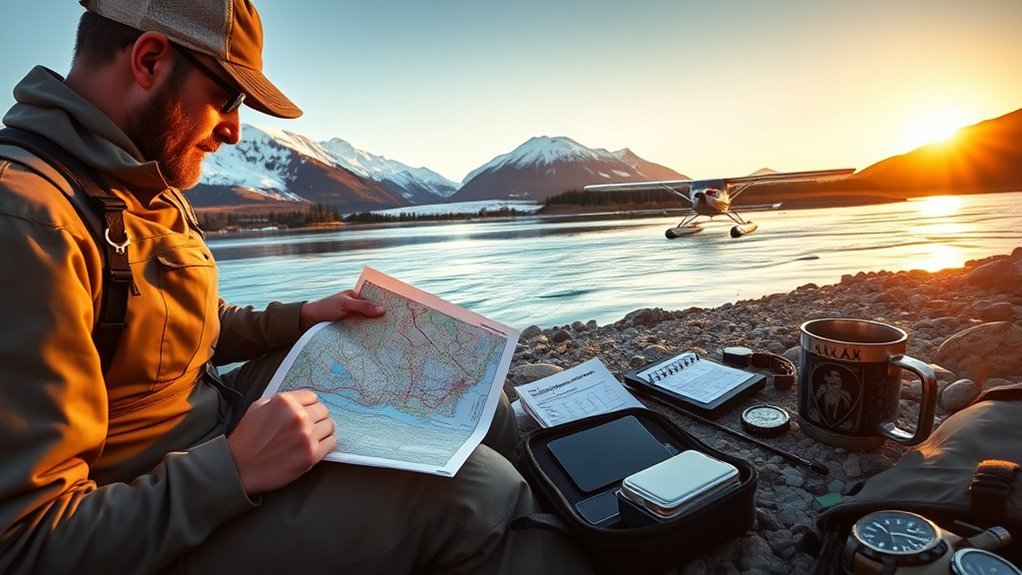
- Choose the exact fishing dates. Confirm that the three-day period printed on the license covers every day you plan to fish.
- Identify the region and specific water. Alaska’s Northern, Southwest, Southcentral, and Southeast regions have different regulations.
- Check emergency orders. These can change seasons, retention rules, size limits, or annual limits after a regulation booklet is published.
- Choose the correct products. A nonresident 3-day license costs $30. Add the $30 3-day king salmon stamp when required.
- Confirm harvest-record requirements. Determine whether your target species has an annual limit.
- Check shellfish or personal-use permits separately. A nonresident sport license does not authorize resident-only personal-use fishing.
- Download and sign your license. Save an offline copy and carry a printed backup for remote areas.
- Ask the guide specific questions. Confirm whether the charter helps arrange licenses, which stamps are needed, and what species rules apply on the trip date.
- Pack legal gear. Check hook, bait, pot, net, marking, and deepwater-release requirements for the target fishery.
- Record annual-limit fish immediately. Do not wait until returning to the dock or lodging.
Frequently Asked Questions
How much is a 3-day fishing license in Alaska?
The current ADF&G price for a nonresident 3-day sport fishing license is $30. The nonresident 7-day license costs $45.
Can an Alaska resident buy a 3-day fishing license?
ADF&G does not currently list a resident 3-day sport fishing license. Residents who need a paid license generally buy the $20 annual resident sport fishing license unless they qualify for an identification card or reduced-fee product.
Is the license valid for exactly 72 hours?
Do not assume a rolling 72-hour period. The short-term license is valid for the three-day period printed on the license. Review the start and expiration information before fishing.
Do guided charter anglers need their own license?
Yes. A charter’s business, vessel, or guide registration does not replace a client’s personal fishing license. A nonresident client age 16 or older must possess a valid license issued in that client’s name.
Do I need a king salmon stamp for a 3-day trip?
You generally need a king salmon stamp if you are required to hold a license and plan to fish for king salmon, except when fishing for king salmon in stocked lakes. The current nonresident 3-day stamp costs $30.
Can I extend a 3-day license after it expires?
A short-term license is not extended after its printed validity period. Purchase another appropriate license before continuing to fish.
Can I get a refund for an unused license?
Refunds are limited. ADF&G may approve a documented request in narrow circumstances such as a serious disabling illness, permanent cancellation of all seasons to which the license applied, or a qualifying catastrophic event. Scheduling problems, transportation issues, or an unsuccessful trip normally do not qualify.
Is the license valid throughout Alaska?
The sport fishing license is used statewide, but the fishing rules are not identical everywhere. Follow the regional and water-specific regulations, federal rules where applicable, and all current emergency orders.
Do fishing license fees support conservation?
Yes. ADF&G states that license purchases support the management and research of Alaska’s fish and wildlife resources.
Conclusion
A nonresident Alaska 3-day sport fishing license currently costs $30, not $45. Follow the validity period printed on the license, carry a properly signed paper or electronic copy, and add the $30 three-day king salmon stamp when required. Residents should use the appropriate annual, reduced-fee, or identification-card option rather than looking for a resident 3-day license.
Before fishing, confirm the rules for the exact water, species, and date. Regional regulations, annual harvest limits, shellfish permits, and emergency orders can change what you may catch and keep. Keeping the correct documents and recording annual-limit fish immediately will help you avoid violations and focus on the trip.
Sources
- Alaska Department of Fish and Game Product Prices — current resident and nonresident sport fishing license and king salmon stamp prices.
- ADF&G Sport Fishing Licenses, King Salmon Stamps, IDs, and Harvest Record Cards — age thresholds, stamp rules, identification cards, and harvest-record requirements.
- ADF&G Electronic Signature and Online License FAQ — signing, printing, electronic storage, and duplicate-license information.
- ADF&G Sport Fishing Residency Requirements — resident, nonresident, and military residency definitions.
- ADF&G Sport Fishing Regulations — regional regulations and the requirement to check current emergency orders.
- ADF&G General License Information — license validity and restricted refund circumstances.
