
Last updated: August 2026 •
Based on analysis of 100+ U.S. hotel market rate disclosures
Budget hotels in the U.S. typically range from $80 to $150 per night and focus on basic lodging essentials, while luxury hotels generally range from $350 to well over $1,000 per night for premium locations, personalized service, and high-end amenities. However, the cheapest advertised rate rarely reflects your final bill. Location, travel dates, mandatory resort fees, parking, and included meals change the true total substantially.
Quick Answer
Budget hotels trade room size, extensive facilities, and personalized service for a lower nightly rate. Luxury hotels charge a premium for central locations, spacious rooms, on-site dining, spas, and attentive staff. To find the true value, compare the total stay cost—including mandatory fees, parking, breakfast, and transit—rather than relying on the nightly room rate alone.
Key Takeaways
- The U.S. hotel average daily rate (ADR) reached $173.76 in June 2026 (up from $160.54 in 2025), though rates vary drastically by city and demand.
- “Budget” and “luxury” reflect market position in a specific location, not fixed nationwide price tags.
- Under the FTC fee rule effective May 12, 2025, mandatory lodging and resort fees must be included upfront in the displayed total price.
- Optional expenses like valet parking ($40–$90/night), breakfast ($25–$50/person), and resort amenities heavily impact final trip costs.
- A luxury hotel is worth the premium when central location savings, included perks, or on-site relaxation replace other planned trip expenses.
How Do Budget and Luxury Hotels Compare on Cost?
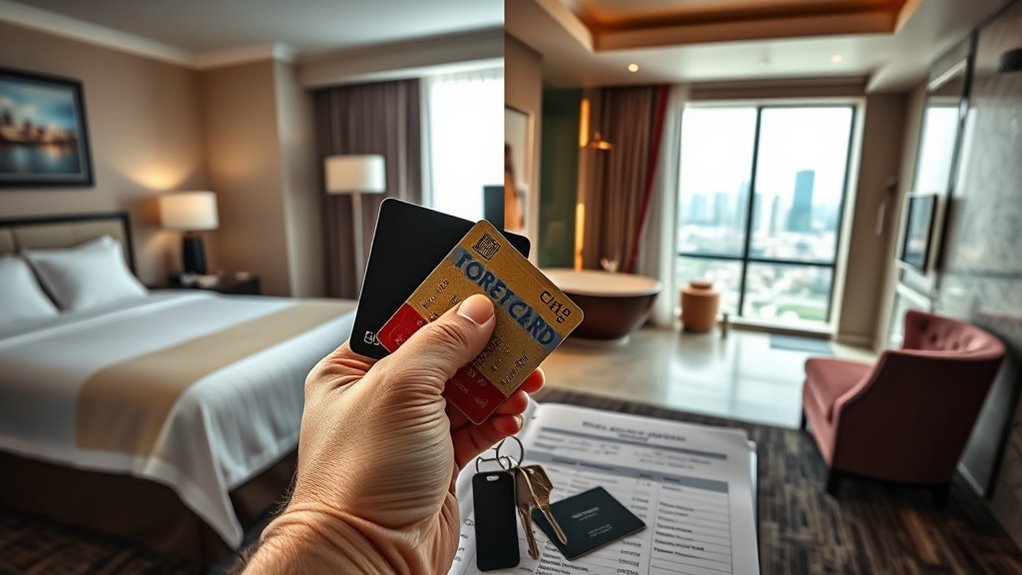
There is no official price threshold where a property automatically becomes budget, mid-range, or luxury. STR classifies hotel chains into economy, midscale, upper midscale, upscale, upper upscale, and luxury tiers based primarily on system-wide average daily rates from the previous year.
Consequently, a $200 nightly rate might buy a luxury room in a rural town but only a basic budget or airport room in major markets like New York City, Miami, or San Francisco. High-demand events or conventions can also drive economy hotel prices well above standard mid-range levels.
| Comparison Feature | Budget or Economy Hotel | Luxury Hotel |
|---|---|---|
| Rate Position | Positioned at the lower price bound in its local market ($80–$150 baseline) | Positioned at the top of its market ($350–$1,000+ baseline) |
| Room & Comfort | Functional room layout, standard bedding, compact desk, essential toiletries | High-end finishes, larger square footage, premium plush bedding, luxury bath items, scenic views |
| Guest Service | Self-service oriented, small front-desk staff, minimal specialized departments | Dedicated concierge, bellhop service, 24/7 room service, valet, personalized guest relations |
| Facilities | Vending machines, basic breakfast nook, small fitness corner or pool | Multiple signature restaurants, cocktail lounges, full-service spa, resort pools, executive lounges |
| Best Travelers For | Road trips, quick overnight stops, budget-conscious travelers active all day outdoors | Special celebrations, resort vacations, high-end business travel, trips focused on hotel relaxation |
As a broad shopping benchmark, budget rooms are frequently found under $150 per night in secondary cities, whereas luxury properties usually start around several hundred dollars and scale past $1,000 during peak seasons or major urban conventions.
The nationwide average daily rate across reporting U.S. hotels reached $173.76 in June 2026, but pricing for individual stays varies drastically based on location and season.
What Do Budget Hotels Provide for Your Money?
Budget hotels focus strictly on core lodging essentials. Inclusions vary by brand and location, so confirm details before booking:
- Private sleeping space: Standard economy hotels supply a private bedroom and bathroom (though hostels or micro-hotels may feature shared options).
- Extended-stay options: Many economy chains offer kitchenettes, stove rings, and full refrigerators that save substantial dining costs on multi-night stays.
- Basic connectivity: Free Wi-Fi is standard, though premium speeds or multi-device connections may incur fees.
- Simple complimentary breakfast: Options range from coffee and pastries to hot self-serve waffle bars.
- Accessible parking: Free surface lot parking is common at suburban and roadside motels, unlike downtown properties.
A clean, well-located budget hotel often delivers better real-world value than a luxury resort whose expensive amenities you never have time to use.
Note: Check room descriptions closely. Labels like “Economy Room” or “Run of House” may feature smaller layouts, limited views, or specific bed configurations.
Why Do Luxury Hotels Command Higher Prices?
Luxury pricing reflects far more than fancy decor. High rates cover prime real estate, expansive public lounges, high staff-to-guest ratios, high-end dining, wellness centers, and specialized guest services.
The AAA Diamond Program ranks properties from Approved (solid budget options) up to Four and Five Diamond levels, highlighting how luxury tier status is earned through elevated service standards, architectural detail, and guest amenities.
How Does Luxury Hotel Service Differ?
Luxury properties staff larger teams across front desk, housekeeping, bell service, valet, concierge, and guest relations. This enables fast request handling and personal attention throughout your stay.
Key service advantages include:
- Tailored preferences: Staff record guest pillow choices, room location preferences, and dining habits for future stays.
- Dedicated concierge support: Concierges handle hard-to-get restaurant bookings, event tickets, local tours, and private transport.
- Elevated housekeeping: Services include evening turndown, custom cleaning schedules, garment pressing, and shoe shines.
- Seamless arrival and departure: Valet parking, luggage assistance, and car service streamline complex travel schedules.
What Amenities Are Unique to Luxury Properties?
Luxury hotels often feature full-service spas, multiple fine-dining options, rooftop cocktail lounges, resort pools, executive lounges, and private shuttle services. However, access to specific facilities may require additional fees depending on room category or status level.
Breakfast is rarely free by default at independent luxury hotels. Spa access, valet parking, minibar items, and high-speed Wi-Fi can also carry extra charges unless included in specialized package rates.
How Much Does Location Impact Hotel Price?
Luxury properties usually hold prime real estate—beachfronts, historic city centers, financial districts, or mountain slopes. Room rates reflect the convenience and value of these central spots.
Central locations can also reduce transportation expenses. Staying steps from main attractions allows guests to walk or take short rides, avoiding car rentals, fuel, parking, and traffic. For context, CoStar reported a 2025 average daily rate of $333.71 across New York City hotels, compared to the overall U.S. average of $160.54.
Which Luxury Hotel Perks Elevate Your Experience Most?

High-end perks increase trip comfort, but their financial value depends entirely on how much you use them during your itinerary.
Do Luxury Linens and Rooms Improve Sleep Quality?
Luxury rooms feature custom mattresses, pillow menus, plush high-thread-count linens, blackout curtains, quiet soundproofing, and multi-zone climate control. These elements support better rest, though mattress preference remains subjective.
Before booking, check recent guest reviews for comments regarding sound insulation, HVAC noise, and bed firmness to verify real-world sleep quality.
Are On-Site Luxury Restaurants Worth the Extra Cost?
High-end hotels host chef-led restaurants, tasting menus, craft cocktail bars, and 24-hour gourmet room service. On-site dining provides extreme convenience after long travel days.
Review menu pricing, dress codes, service charges, and reservation availability ahead of time. Popular on-site venues frequently book out weeks in advance.
What Should You Expect from Luxury Spa Services?
Full-service hotel spas offer massages, facial treatments, hydrotherapy pools, saunas, and steam rooms. Some properties grant hotel guests complimentary access to thermal suites, while others require treatment bookings or day passes.
Confirm treatment costs, automatic gratuities (often 20%), and booking policies prior to arrival, particularly during peak weekend dates.
What Is the Average Daily Rate for U.S. Hotels in 2026?
The hotel industry’s standard benchmark is the Average Daily Rate (ADR)—total room revenue divided by total rooms sold. It aggregates thousands of properties across all tiers to track national cost movement:
- Full-Year 2025 ADR: $160.54 across all U.S. reporting hotels (a 0.9% increase over 2024).
- June 2026 ADR: $173.76 nationwide (a 6.7% increase year-over-year).
- Consumer Price Index Trend: The Bureau of Labor Statistics reported hotel and motel price indexes rose 4.8% year-over-year in mid-2026.
National averages blend low-cost highway motels with five-star luxury resorts. Use these numbers as industry context rather than quotes for specific cities.
Note: Pricing shifts rapidly based on local occupancy. Always run live date searches for your exact destination.
What Factors Cause Hotel Prices to Spike or Drop?
How Do Events and Location Drive Nightly Rates?
Rates surge when demand compresses room supply. Major sporting events, music festivals, conventions, holidays, and local construction shrink availability and push prices higher across all hotel tiers.
Neighborhood location within a single city also alters price dramatically. Hotels beside convention centers, beachfronts, or transit hubs command large premiums over identical properties just three miles away.
How Do Days of the Week Affect Hotel Rates?
Business-oriented city hotels see peak pricing Monday through Thursday, with substantial discounts on weekends. Conversely, resort destinations experience rate spikes on Friday and Saturday nights and during summer or holiday breaks.
How Do Cancellation Terms Impact the Price?
Prepaid, nonrefundable rates usually carry a 5% to 15% discount compared to flexible cancellation rates. Upgrades in room size, higher floors, scenic views, or club lounge access add incremental cost.
Pro Tip: Ensure you compare identical room categories, guest counts, and cancellation terms. A cheaper headline rate often hides nonrefundable penalties or excludes breakfast.
When Is the Best Time to Book a Hotel Room?
Hotel algorithms continuously adjust rates based on booking pace. Reserving early locks in availability under a flexible rate. If prices decrease later, you can rebook at the lower rate before the cancellation deadline.
What Mandatory Fees and Hidden Charges Should You Expect in 2026?
Under the FTC Rule on Unfair or Deceptive Fees (effective May 12, 2025), alongside state-level transparency legislation, short-term lodging providers must display the total price—including all mandatory resort or destination fees—upfront across search results.
While mandatory fees cannot be hidden from the initial total price, optional add-ons and local government taxes may still appear during final checkout. Watch for these common add-on costs:
- Government Taxes: State, county, and municipal lodging occupancy taxes (typically 10%–18%).
- Parking Fees: Self-parking ($20–$50/night) or valet parking ($40–$90/night) in dense urban centers.
- Pet Surcharges: Nightly pet fees or nonrefundable cleaning deposits ($50–$150 per stay).
- Extra-Person Charges: Added fees when exceeding standard double occupancy in a room.
- Early Check-in / Late Checkout: Variable fees charged for accessing rooms outside standard hours.
Warning: Always double-check line items listed under “Due at Property” on third-party booking sites to ensure no unexpected fees remain unpaid.
How Do Incidental Holds Work on Credit and Debit Cards?
Upon check-in, hotels place a temporary security hold on your payment card to cover potential room charges, damage, or incidentals (typically $50 to $150 per night).
While holds are refunded after checkout, debit cards hold actual bank funds, which can take several business days to clear. Using a credit card prevents cash flow disruptions during travel.
How Does City Type Influence Budget vs. Luxury Value?

In major downtown markets, high land and operational costs elevate budget hotel rates to prices that would buy luxury accommodations in smaller secondary markets. Suburban highway properties offer lower rates, free surface parking, and spacious rooms, but require driving or rideshares to central sights.
Consider these transit tradeoffs when evaluating hotel location:
- Daily parking costs vs. public transit accessibility
- Rideshare prices and peak travel times to attractions
- Proximity to restaurants and grocery options
- Shuttle service availability for airports or local hubs
When Does a Budget Hotel Offer Better Value?
Budget properties are the smartest financial choice when your itinerary leaves little time inside the room. They excel for:
- Road-trip overnight stops
- Early morning airport departures
- Action-packed sightseeing trips spent outdoors all day
- Extended multi-week stays where daily rate savings multiply
- Travelers prioritizing free parking and simple grab-and-go breakfasts
When Is a Luxury Hotel Worth the Extra Cost?
A luxury property justifies its price premium when the hotel experience directly enhances your trip goals or eliminates major logistics friction. Upgrading makes sense when:
- Celebrating special occasions (honeymoons, anniversaries, milestone birthdays)
- Central walking locations eliminate rental car, parking, and transit expenses
- On-site resort amenities (pools, kids’ clubs, private beach access) replace paid external activities
- Club lounge access supplies complimentary breakfast, afternoon snacks, and evening drinks
- Concierge support and business facilities are critical for seamless executive travel
How Do You Calculate Total Stay Cost? (Real Scenario)
To determine true value, use this complete stay cost formula:
Total Stay Cost = Base Room Rate (with mandatory fees) + Taxes + Parking + Daily Transit + Meals – Included Amenities Value
Consider this side-by-side comparison for a 3-night urban vacation (2 guests):
| Expense Line Item | Suburban Budget Hotel | Downtown Luxury Hotel |
|---|---|---|
| Nightly Rate (3 nights) | $120/night = $360 | $320/night = $960 |
| Taxes & Fees (15%) | $54 | $144 |
| Parking Fees | $0 (Free surface lot) | $165 ($55/night valet) |
| City Center Transit / Rideshares | $120 ($40/day roundtrips) | $0 (Walkable location) |
| Breakfast Expense (2 guests) | $0 (Complimentary) | $180 ($30/person/day) |
| Total Trip Lodging Expense | $534 Total | $1,449 Total |
In this scenario, the luxury option costs $915 more overall. However, if the luxury stay includes free executive lounge meals or saves 2 hours of daily commuting traffic, travelers can weigh whether that time and convenience is worth the extra $305 per day.
How Do You Pick the Right Hotel Tier for Your Trip?
- Establish your complete lodging budget: Factor in base rate, taxes, parking, transportation, and dining.
- Define your ideal location radius: Map distances to main sights, conference centers, or family.
- Filter by essential non-negotiables: Check for parking, pet policies, kitchenettes, pools, or workspace needs.
- Compare equivalent rate terms: Match flexible cancellation rules against prepaid discounts.
- Analyze recent reviews: Look for recurring notes on cleanliness, noise insulation, air conditioning, and staff responsiveness.
- Inspect the checkout summary: Verify mandatory fee inclusions and taxes before entering payment details.
Actionable Tips for Maximizing Your Hotel Budget
- Shift stay dates by 24–48 hours: Avoiding peak convention or weekend nights yields major rate drops.
- Compare central vs. suburban costs: Factor in transit costs—a slightly higher downtown rate often saves money overall.
- Check direct booking rates: Direct hotel bookings frequently offer price matching, free Wi-Fi upgrades, or flexible cancellation terms.
- Consider a split-stay strategy: Book a budget hotel for active sightseeing days, then upgrade to a luxury resort for your final relaxing days.
- Re-check flexible reservations: If prices drop before your stay, rebook at the lower rate and cancel the original reservation.
Frequently Asked Questions
What is the main difference between a budget hotel and a luxury hotel?
A budget hotel focuses strictly on functional sleeping space and core essentials at a lower rate. A luxury hotel provides larger rooms, high-end design, extensive staffing, fine dining, spas, and prime central locations. Tier status reflects overall service and amenities, not a single fixed price tag.
Have U.S. hotel prices dropped in 2026?
No, national averages have increased. The U.S. hotel Average Daily Rate (ADR) reached $173.76 in June 2026, a 6.7% increase compared to June 2025. However, individual city rates fluctuate dynamic based on seasonal demand and local event calendars.
What is the average daily cost of a hotel room in the USA?
According to industry reports from CoStar, the full-year 2025 U.S. average daily rate was $160.54, rising to $173.76 by mid-2026. Rates vary widely from $80 in secondary markets to over $350 in major metropolitan hubs.
Are resort fees legally required to be included in advertised prices?
Yes. Under the FTC Fee Rule effective May 12, 2025, lodging providers advertising short-term rentals must include all mandatory resort and destination fees in the prominently displayed total price upfront before checkout.
Is a luxury hotel worth the extra money?
A luxury hotel is worth the cost when you actively utilize the location, dining, wellness facilities, and concierge services to replace other planned trip expenses. If you only need a quiet place to sleep between busy days out, a budget hotel offers superior value.
Final Verdict: Which Hotel Tier Should You Book?
Choosing between a budget and a luxury hotel comes down to calculating total trip value rather than comparing room rates alone. A budget hotel is the smartest choice when your itinerary is centered on sightseeing, business meetings, or quick highway stops where you spend minimal waking hours in the room. A luxury hotel justifies its higher price tag when prime location, high-end dining, wellness amenities, and personal service are central to your vacation experience.
Always calculate your total lodging bill by adding base rates, mandatory fees, parking, transit, and expected meal costs. When both options deliver what you need, choose the property with the lower complete trip cost—and pay a premium only when the extra comfort and convenience directly enhance your journey.
Sources
- CoStar: U.S. Hotel Performance for June 2026 — June 2026 average daily rate, occupancy, and market trends.
- CoStar: Full-Year 2025 U.S. Hotel Performance — 2025 U.S. ADR and New York City market benchmark data.
- STR Chain Scales — Economy, midscale, upscale, and luxury hotel classification methodology.
- Federal Trade Commission: Rule on Unfair or Deceptive Fees — Federal lodging mandatory-fee upfront pricing requirements.
- U.S. Bureau of Labor Statistics: Consumer Price Index — Lodging and hotel price movement data through 2026.
- AAA Diamond Program — Diamond distinctions between budget, upscale, and luxury hospitality standards.