
As an Amazon Associate we may earn from qualifying purchases. This post may contain affiliate links, at no extra cost to you.
You handle heavy pulling, recovery, tensioning, and load-positioning jobs that demand dependable gear. This guide compares manual cable pullers and a corded electric alternative so you can choose based on working capacity, portability, control, and the type of work you actually do.
A higher advertised capacity does not automatically make a puller better for every job. Pay close attention to the manufacturer’s working load limits, permitted lifting applications, cable condition, anchor requirements, and operating instructions before putting any come-along or portable winch under load.
Quick Verdict
Maasdam 144SB is the strongest all-around manual choice here when you want a balance of 4,000-lb working capacity, manageable weight, and controlled letdown. Choose the Maasdam 8000SB when maximum manual pulling strength matters more than portability. The WARN PullzAll is the better fit when you have 120V power and want motorized control for repeated pulling or permitted lifting tasks.
Safety Note
A pulling-capacity number is not automatic permission for overhead or vertical lifting. Use each tool only for applications allowed by its manufacturer, stay within the stated working load limit, inspect the cable and hooks before every use, use properly rated anchor points, and keep people clear of a tensioned cable or load path.
Top Picks
|
Category |
Product |
Best For |
|---|---|---|
|
🏆 Best Heavy-Duty Manual |
Maximum manual pulling strength |
|
|
🔰 Best Overall Manual |
Balanced power and portability |
|
|
⚡ Best Corded Electric |
Repeated controlled pulling or lifting |
|
|
🎯 Best Portable High-Capacity |
Property work and portable recovery |
|
|
💰 Best Budget Manual |
Occasional pulling and tensioning |
Selection Criteria
We compared these pullers using the factors that matter most when choosing a come-along or portable winch. Rated pulling capacity and working load limits come first because the tool must be suitable for the load and application you plan to handle.
Construction, cable design, hooks, ratchet or gear control, power source, portability, and ergonomics also affect how practical a puller is in the field. Manual pullers favor simplicity and independence from electricity, while a powered tool can reduce hand effort and make repeated load positioning faster.
We also considered manufacturer-stated safety limitations, warranty coverage, control during letdown or reversing, and whether the tool is suited to frequent transport or better left for heavier stationary work.
Before You Buy
- Check the manufacturer’s working load limit, not only the largest number printed in marketing.
- Confirm whether your planned use involves pulling, vertical lifting, or overhead lifting and whether the specific model permits it.
- Make sure your anchor points, shackles, chains, straps, and other rigging are properly rated for the load.
- Consider cable travel as well as capacity; a powerful puller with short travel may require repositioning.
- Inspect wire rope, hooks, pawls, latches, guards, and anchor hardware before every use.
Maasdam 8000SB
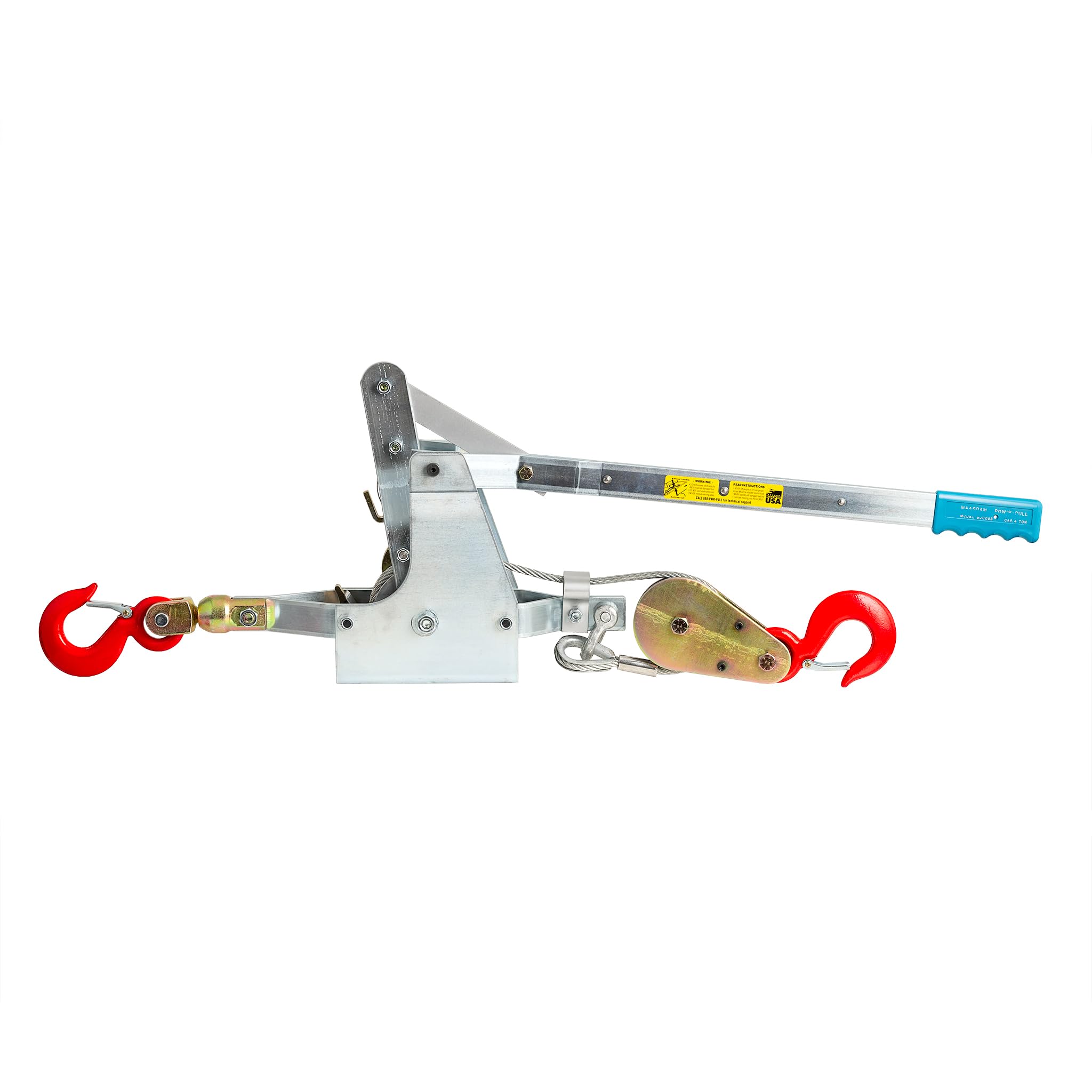
The Maasdam 8000SB is the heavy-duty manual choice in this group. Its 8,000-lb working load limit and high-leverage mechanism make it better suited to demanding pulling and load-positioning jobs where smaller manual pullers may not provide enough capacity.
The tradeoff is portability. At roughly 34 lb, this is a substantial piece of equipment, so it makes the most sense when pulling strength matters more than carrying the tool around a property or jobsite all day.
Buyer Feedback Snapshot
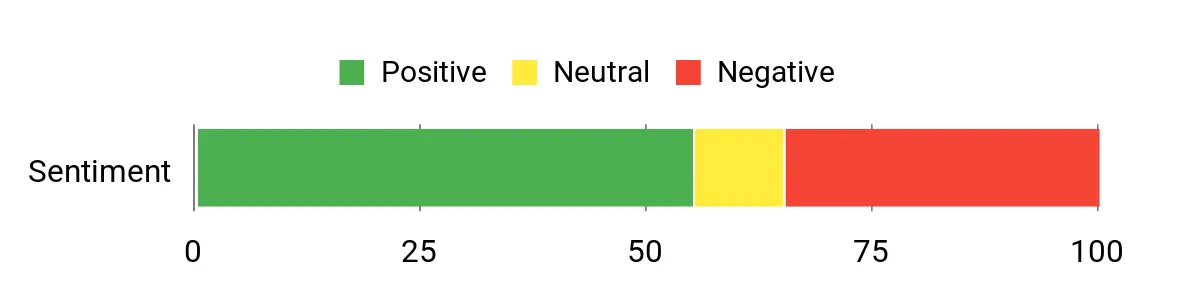
Buyer feedback commonly highlights the tool’s pulling strength, solid construction, controlled letdown, and sturdy hooks. The main cautions are its weight and the need to keep the mechanism maintained and inspected as it ages.
Best Uses
This puller suits heavy manual load shifting, construction and property work, equipment positioning, fence work, and other applications where an 8,000-lb working load limit is appropriate. Its weight makes it less convenient for frequent carry-and-go use.
Safety and Limits
The 8000SB uses a galvanized 5/16-inch cable, drop-forged hooks with safety latches, a reinforced mechanism, and notch-at-a-time letdown control. Use it only with properly rated anchors and rigging, stay within the manufacturer’s working limit, and do not assume that pulling capacity alone makes a tool suitable for overhead lifting.
Who Should Buy This
Choose the 8000SB if your priority is high manual pulling capacity and you are comfortable handling a heavier tool.
Who Should Avoid This
Choose something lighter if you regularly carry your puller long distances, and use a purpose-rated hoist instead when your job specifically requires overhead lifting.
Key Benefits
- 8,000-lb working load limit for demanding pulling jobs
- 65:1 leverage for high manual pulling force
- Galvanized cable and drop-forged steel hooks
- Notch-at-a-time letdown for controlled load movement
- Lifetime manufacturer warranty
Check Product Details on Amazon
Maasdam 144SB
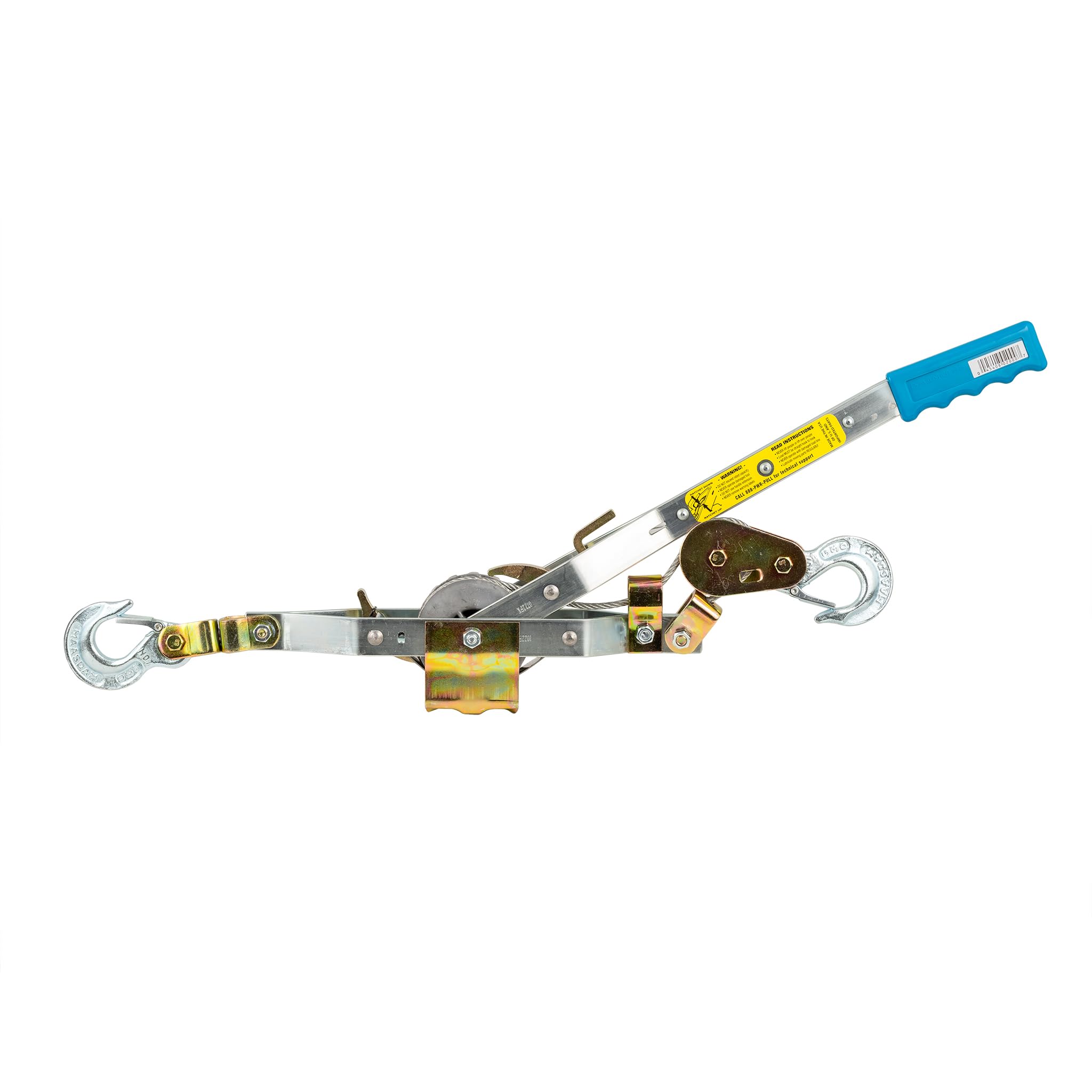
The Maasdam 144SB is the most balanced manual puller in this comparison. It combines a 4,000-lb working load limit with a 30:1 leverage ratio and approximately 8.75-lb tool weight, giving you meaningful pulling power without the bulk of the 8000SB.
Its 12-ft cable provides a 6-ft cable lift in the 2-ton configuration, and the notch-at-a-time letdown helps with controlled load positioning. It is made in the USA using U.S. and imported components and is backed by a lifetime warranty.
Buyer Feedback Snapshot
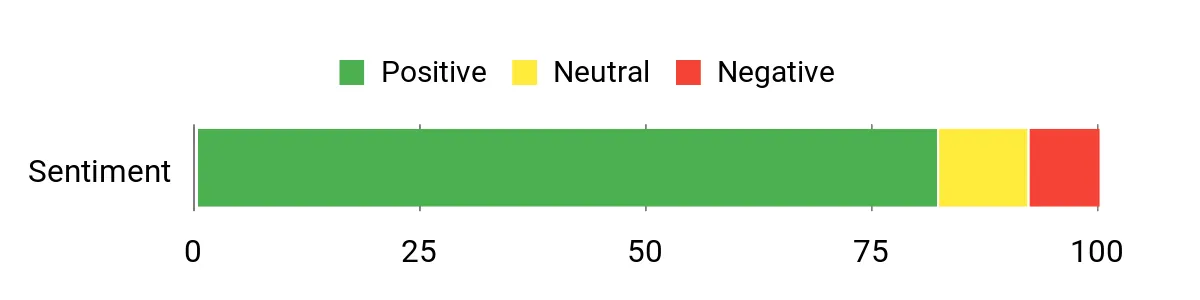
Buyer feedback tends to favor the 144SB’s build quality, manageable size, strong cable, comfortable grip, and predictable letdown action. As with any cable puller, long-term performance depends on correct loading, inspection, and maintenance.
Best Uses
This model works well for fencing, landscaping, stump pulling, farm and property maintenance, controlled load shifting, and other manual pulling jobs within its rated limits.
Safety and Limits
The 144SB uses galvanized aircraft-quality cable, drop-forged hooks with safety latches, a reinforced ratchet guard, and controlled notch-at-a-time letdown. Specialist specifications list this model as not overhead-lifting rated, so do not substitute it for an overhead hoist.
Who Should Buy This
Choose the 144SB if you want a manual cable puller that balances useful capacity, portability, simple operation, and controlled load movement.
Who Should Avoid This
Skip it if you specifically need overhead-lifting equipment or if repeated manual ratcheting would make a powered tool more practical.
Key Benefits
- 4,000-lb working load limit with 30:1 leverage
- Approximately 8.75-lb tool weight for easier field transport
- Notch-at-a-time letdown for controlled movement
- Galvanized aircraft-quality cable and reinforced ratchet guard
- Made in the USA with U.S. and imported components
- Lifetime manufacturer warranty
Check Product Details on Amazon
WARN PullzAll
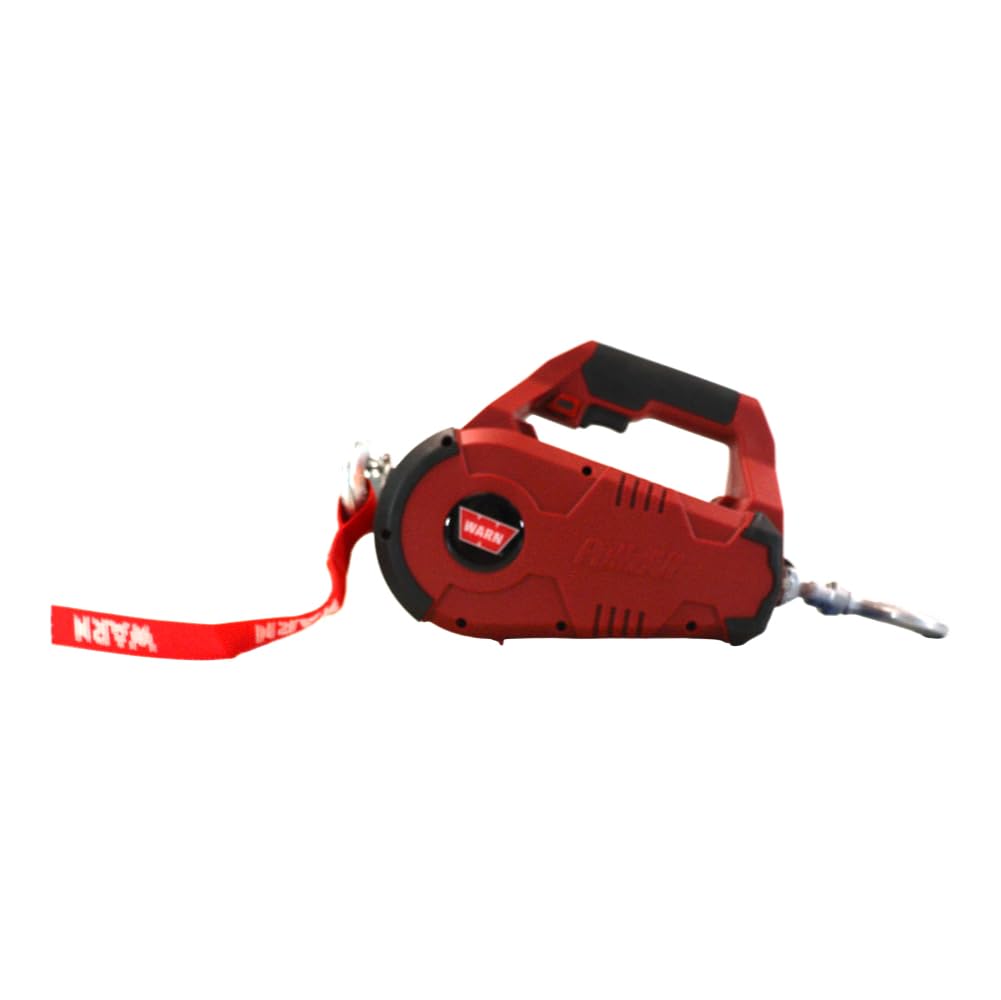
The WARN PullzAll replaces hand ratcheting with powered, trigger-controlled movement. The corded 885000 model runs on 120V AC and is rated to pull or lift up to 1,000 lb, making it useful when controlled positioning and repeatable operation matter more than maximum pulling capacity.
A variable-speed trigger and directional control let you make smaller adjustments than a traditional manual come-along. The 15-ft steel rope also gives you more line travel than the shorter high-capacity manual pullers in this comparison.
Buyer Feedback Snapshot
Buyer feedback commonly praises the PullzAll for saving manual effort and making controlled shop or property tasks faster. Users also note that powered pulling tools need sensible operating intervals and attention to the manufacturer’s operating instructions during demanding jobs.
Best Uses
The PullzAll is well suited to permitted engine lifting, equipment positioning, fence work, shop projects, loading tasks, and other jobs where you have a nearby 120V outlet and the load stays within its 1,000-lb rating.
Safety and Limits
WARN equips the corded PullzAll with a load indicator, electronic overload protection, forged hooks, directional control, and 15 ft of 7/32-inch steel rope. Stay within the 1,000-lb rating and follow the operator’s manual for rigging, load control, inspection, and operating limits.
Who Should Buy This
Choose the PullzAll if reducing manual effort and making frequent, precise load adjustments are more important than having several tons of pulling capacity.
Who Should Avoid This
Choose a manual field puller if you regularly work away from AC power, and choose a higher-capacity tool if your load exceeds the PullzAll’s 1,000-lb rating.
Key Benefits
- Pulls or lifts up to 1,000 lb within manufacturer-approved applications
- 120V corded power eliminates hand ratcheting
- Variable-speed trigger for precise positioning
- 15 ft of 7/32-inch steel rope
- Load indicator and electronic overload protection
- Limited one-year manufacturer warranty
Check Product Details on Amazon
TR 4-Ton

The TR Industrial Portable Power Puller is designed for users who want substantial maximum pulling force without moving to a very heavy manual unit. The manufacturer lists up to 8,000 lb of maximum pulling power while specifying a 4,000-lb safe working load.
That distinction matters: treat 4,000 lb as the working limit rather than assuming the 8,000-lb maximum figure is appropriate for routine loading. The maker also describes the puller as weighing under 10 lb and includes a storage case for transport.
Buyer Feedback Snapshot
Buyer feedback commonly highlights sturdy construction, portability, and useful performance for occasional property or recovery work. Reported drawbacks include limited cable travel and a mechanism that may feel stiff when new.

Best Uses
This tool fits off-road recovery setups, trailer loading, fence work, log or stump pulling, and general farm or property maintenance when properly rigged within its safe working limit.
Safety and Limits
The dual-gear and dual-locking-pawl design distributes pulling force through the mechanism, while the puller uses 1/4-inch braided steel cable and drop-forged hooks with safety latches. Most importantly, the manufacturer states an 8,000-lb maximum pulling figure but a 4,000-lb safe working load; do not treat those numbers as interchangeable.
Who Should Buy This
Choose the TR Industrial puller when portability matters but you still need a substantial manual safe working load for property, recovery, or trailer-related jobs.
Who Should Avoid This
Skip it if your application requires an 8,000-lb working load rather than an 8,000-lb maximum-pull figure, or if you need long cable travel without repositioning.
Key Benefits
- 8,000-lb maximum pulling power with a stated 4,000-lb safe working load
- Portable design marketed by the manufacturer as weighing under 10 lb
- Dual gears and dual locking pawls
- 1/4-inch braided steel cable
- Drop-forged hooks with safety latches
- Storage case included for transport
Check Product Details on Amazon
BIG RED 2-Ton
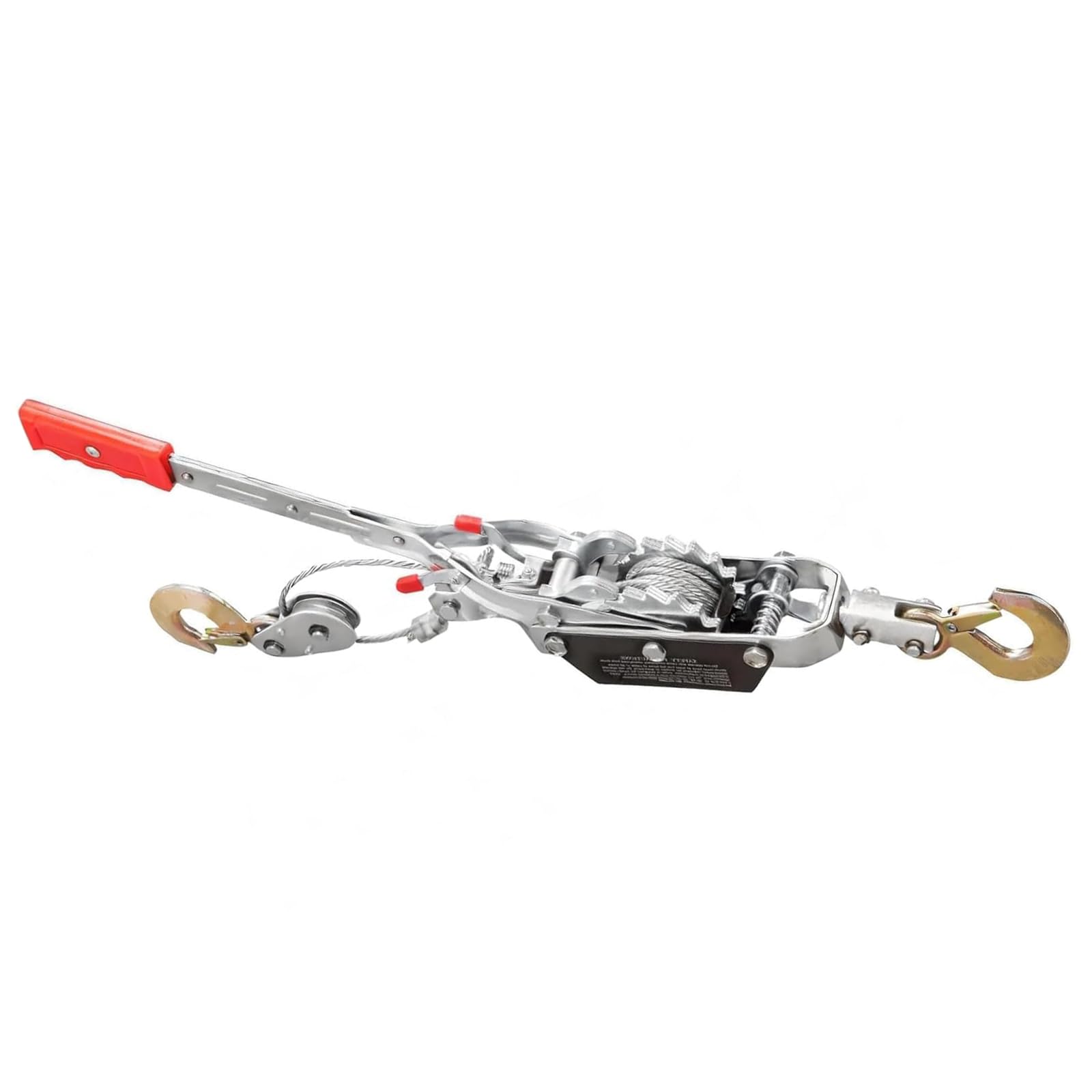
The BIG RED T32052 is a straightforward 4,000-lb cable puller for occasional manual pulling, tensioning, stretching, and horizontal load-positioning jobs. Its double-ratchet mechanism and 15:1 leverage keep the design simple and familiar for workshop, farm, home, and automotive-related pulling tasks.
Its biggest limitation is important: the operator’s manual warns against using this model for vertical lifting. Treat it as a cable puller, not as a replacement for a purpose-rated vertical or overhead hoist.
Buyer Feedback Snapshot
Buyer feedback generally favors the simple mechanics and useful pulling ability for occasional jobs. Criticisms focus on inconsistent release operation, quality-control variation, and limited instructions for first-time users.
Best Uses
Use it for appropriate horizontal pulling, cable tensioning, fence work, workshop positioning, farm chores, and similar jobs within the 4,000-lb rated capacity.
Safety and Limits
The T32052 uses a 3/16-inch cable, double ratchet, dual gears, hooks with spring latches, and controlled letdown. Inspect the cable and mechanism before use, avoid shock loading, stay clear of the tensioned line, and follow the manufacturer’s warning against vertical lifting.
Who Should Buy This
Choose the BIG RED when you want a basic manual cable puller for occasional horizontal pulling and tensioning without paying for powered operation.
Who Should Avoid This
Do not choose this model when your task requires vertical lifting, overhead lifting, or professional lifting equipment designed specifically for suspended loads.
Key Benefits
- 4,000-lb rated pulling capacity
- 15:1 leverage with double-ratchet operation
- 3/16-inch steel cable for routine pulling work
- Hooks with spring latches for more secure attachment
- Controlled letdown for load positioning
Check Product Details on Amazon
FAQ
How Do I Choose Come-Along Capacity?
Start with the manufacturer’s rated working capacity or safe working load and never exceed it. Do not choose a tool solely from the largest marketing number shown on the package. The load, pulling angle, anchor points, rigging hardware, friction, and possibility of shock loading can all affect the forces placed on the system.
When the job approaches a tool’s limit or involves complex rigging, use properly rated equipment and seek guidance from a qualified person rather than improvising with an undersized puller.
Manual Or Electric: Which Is Better?
Manual cable pullers make sense when portability, simple mechanics, and independence from electrical power are priorities. They are useful for property work, fencing, recovery setups, and occasional heavy pulls.
An electric portable winch such as the WARN PullzAll can make repeated pulling or permitted lifting faster and easier to control, but it has a lower 1,000-lb capacity and the corded version requires a suitable 120V power source.
Can I Use A Come-Along For Vertical Or Overhead Lifting?
Only when the specific manufacturer explicitly rates the exact model for that application. Pulling capacity alone does not prove that a cable puller is suitable for suspended or overhead loads. For example, the BIG RED T32052 manual warns against vertical lifting, while specialist specifications list the Maasdam 144SB as not overhead-lifting rated.
If your job involves a suspended load or people working below it, use equipment specifically rated for that lifting application and follow all manufacturer instructions and applicable workplace requirements.
How Do I Use And Maintain A Cable Puller Safely?
Inspect the wire rope, hooks, latches, pawls, ratchet wheels, guards, handles, and anchor points before every use. Do not use cable that is kinked, badly worn, crushed, corroded, or visibly damaged, and never exceed the manufacturer’s rated working limit.
Keep your body and bystanders out of the direct line of a tensioned cable, avoid sudden shock loads, use properly rated attachment hardware, and follow the manufacturer’s instructions for lubrication, storage, cable replacement, and operation.
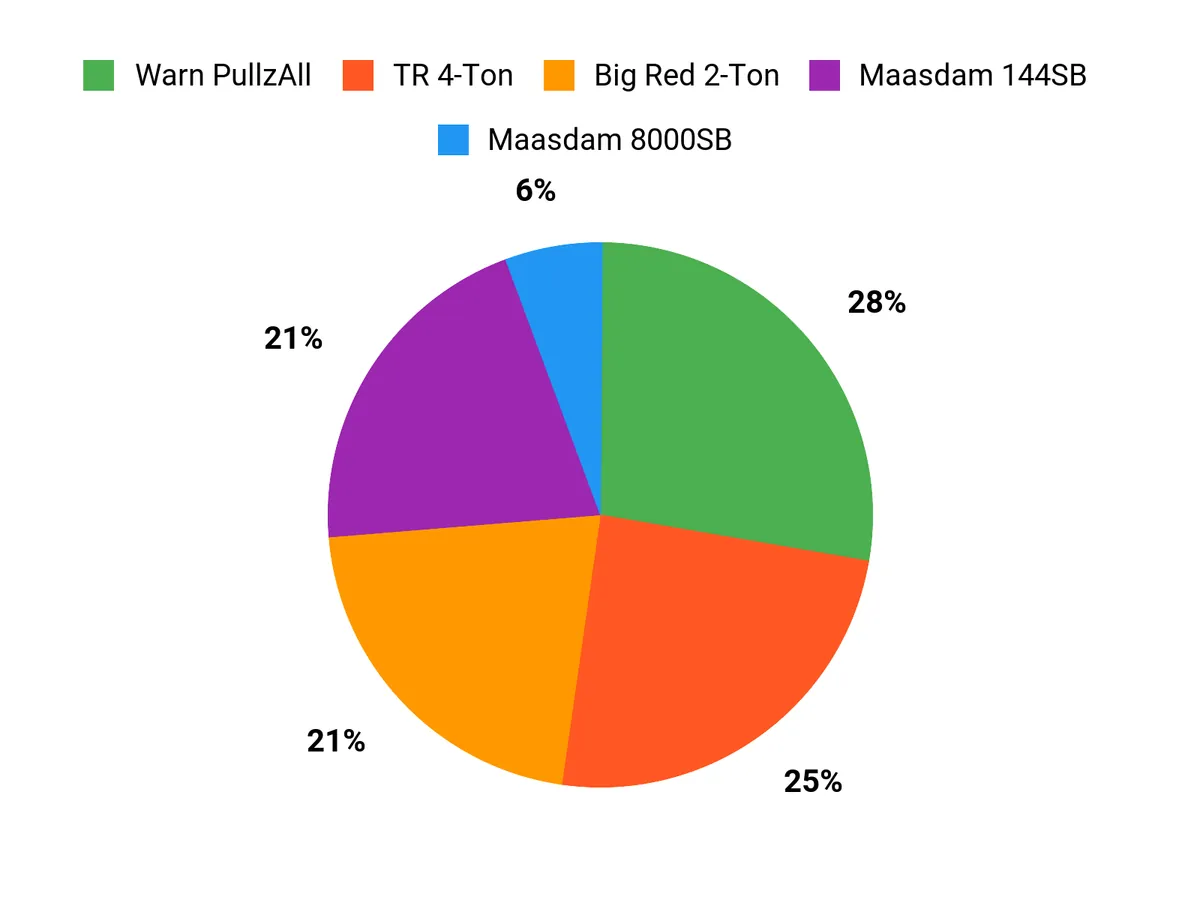
Customer Preferences
Your best choice depends less on one headline capacity number and more on how you intend to work. Choose the Maasdam 8000SB when an 8,000-lb manual working load is the priority and its 34-lb weight is acceptable. Pick the Maasdam 144SB when you want a more portable 4,000-lb manual puller with controlled letdown. Choose the WARN PullzAll when 1,000 lb is sufficient and powered variable-speed positioning will save time and effort.
The TR Industrial is attractive when you want a portable manual puller but understand the difference between its 8,000-lb maximum-pull claim and 4,000-lb safe working load. The BIG RED T32052 fits occasional budget-focused pulling and tensioning jobs, provided you respect its prohibition on vertical lifting.
Wrapping Up
Choose a come-along or portable winch by matching the manufacturer’s working limits to your real application. The Maasdam 144SB offers the strongest overall balance for manual pulling, while the Maasdam 8000SB is the better choice when you genuinely need an 8,000-lb manual working load.
If powered control matters more than multi-ton capacity, the WARN PullzAll reduces hand effort and provides variable-speed positioning for loads up to 1,000 lb. The TR Industrial and BIG RED models cover more budget- and portability-focused use cases, but their stated limitations deserve the same attention as their headline capacities.
Whichever tool you choose, inspect it before every job, use properly rated anchors and rigging, stay clear of tensioned cables, and never assume that a pulling-capacity number means the product is approved for vertical or overhead lifting.
| Product Name | Image | Rated Capacity | Power | Best For | Key Caution |
|---|---|---|---|---|---|
| Maasdam Pow’R Pull 8000SB 4-Ton Cable Puller |
|
8,000-lb working load limit | Manual | Heavy manual pulling and load positioning | Approximately 34 lb; use only for manufacturer-approved applications |
| Maasdam Pow’R Pull 144SB-6 2 Ton Capacity Pow’R Pull |
|
4,000-lb working load limit | Manual | All-around property and field pulling | Not overhead-lifting rated |
| WARN 885000 PullzAll 1/2 Ton Corded Electric Winch |
|
1,000-lb pulling/lifting capacity | 120V AC | Repeated controlled positioning near an outlet | Lower capacity and requires AC power |
| TR Industrial Portable 4-Ton Dual Gear Power Puller |
|
8,000-lb maximum pull; 4,000-lb safe working load | Manual | Portable property and recovery pulling | Do not confuse maximum pull with safe working load |
| BIG RED T32052 Torin Come Along Winch |
|
4,000-lb rated pulling capacity | Manual | Occasional pulling, stretching, and tensioning | Manufacturer manual warns against vertical lifting |
This roundup is reader-supported. When you click through qualifying affiliate links, we may earn a referral commission at no extra cost to you.