
By Theo Ramirez | Last updated: September 7, 2026
Living in Colchester is generally cheaper than living in London. The latest Office for National Statistics data puts average private rent in Colchester at £1,196 per month in July 2026, including £819 for a one-bedroom property, compared with £2,317 across London. A cost-conscious solo renter in Colchester should usually plan around £1,400–£1,700 per month if rent and bills stay near the lower-to-middle end, while higher asking rent, energy use, a car or regular rail commuting can push the total toward £2,000 or more. A student using shared accommodation or a standard university room may spend roughly £800–£1,350 per month, excluding tuition, while premium studios can cost more.
Quick Answer
For 2026 budgeting, use £819 per month as the latest ONS average for a one-bedroom private rental in Colchester and £1,196 as the average across all private property types. After council tax, energy, water, internet, food, transport and personal spending, a cost-conscious solo renter will commonly need about £1,400–£1,700 per month. Combining several higher-cost choices can push the total above £2,000.
Key Takeaways
- Rent is the biggest expense: ONS data for July 2026 shows £819 for one bedroom, £1,062 for two bedrooms and £1,299 for three bedrooms.
- Student housing varies widely: University of Essex 2026–27 rates range from £82.88 per person per week for a shared twin en suite to about £257.88 for selected studios, while contract lengths differ by accommodation and student type.
- Do not forget council tax: full-time student-only households are normally exempt, while a qualifying single adult private renter normally receives a 25% discount.
- Local buses are predictable: First Bus adult singles start at £2 and a Colchester four-week adult ticket costs £77.
- A practical solo salary target is about £30,000–£35,000 gross: this usually gives more room for bills, savings and irregular expenses than a strict rent-only affordability rule.
What Changed in This September 2026 Update?
- New ONS rent data: July 2026 average private rent is £1,196 across Colchester and £819 for one bedroom.
- New Ofgem price-cap figures: October–December 2026 average direct-debit unit rates have now been announced, including 26.32p/kWh for electricity and 7.97p/kWh for gas.
- 2026 renting rules: England’s assured periodic tenancy reforms took effect on May 1, changing tenancy and rent-in-advance rules for most private renters.
How Much Does it Cost to Live in Colchester Per Month?

The figures below are planning ranges rather than fixed prices. Rent data comes from the Office for National Statistics. Student benchmarks use current University of Essex budgeting and accommodation guidance. Food and personal-spending ranges reflect modest planning allowances rather than guaranteed prices. Your actual total will vary with property size, energy use, household size and travel habits.
| Monthly cost | Single private renter | Student in shared housing or halls |
|---|---|---|
| Rent or accommodation | £819 ONS one-bedroom average; allow roughly £819–£1,000+ for planning | About £359–£1,117 monthly equivalent in selected University halls; private shared-rent benchmark about £532 |
| Energy, water and internet | About £170–£250 as a planning range | University halls include specified household bills; University private-share benchmark is about £88 for bills |
| Council tax | About £93/month for Band A or £140/month for Band D after a 25% single-person discount in Colchester City; higher bands/parishes cost more | Usually £0 in a qualifying full-time student-only household |
| Groceries and household items | £150–£240 | About £144–£220 |
| Local transport | £30–£77 | £0–£77 |
| Phone, leisure and personal costs | £120–£250 | £100–£250 |
| Estimated total | About £1,400–£1,700 with lower-to-middle costs; £2,000+ when several higher-cost items apply | About £800–£1,350 for shared/standard options; premium studios can push the total above £1,500 |
Note: The ONS average of £1,196 covers all private rental property types. It is not the typical price of a one-bedroom flat. The July 2026 one-bedroom average is £819. Student totals also depend heavily on contract length and whether accommodation includes household bills.
What Are the Rent and Student Accommodation Costs in Colchester?
Private Rent by Bedroom Count
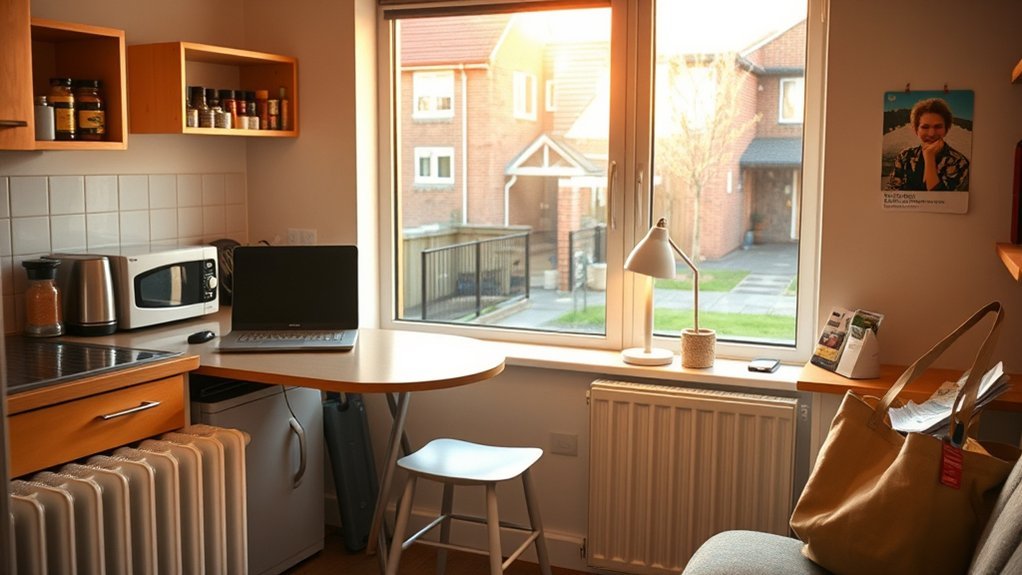
According to the latest ONS local housing data, average private rent in Colchester was £1,196 per month in July 2026, up 2.3% from July 2025. Average monthly rents by bedroom count were:
- One bedroom: £819
- Two bedrooms: £1,062
- Three bedrooms: £1,299
- Four or more bedrooms: £1,794
These are averages across existing private rents, not guaranteed asking prices for a newly advertised property. New listings may be higher or lower depending on condition, location, furnishings and proximity to the city centre, campus or railway stations.
For context, ONS data puts average private rent across London at £2,317 per month in July 2026. Colchester’s £1,196 city average is £1,121 lower, or roughly 48% below that London-wide figure. This is a broad comparison rather than a like-for-like quote for the same property type or neighbourhood. For more detail, see our cost of living in London guide.
University of Essex Accommodation
For the 2026–27 academic year, University of Essex accommodation rates cover a broad range. Examples include:
| Accommodation type | 2026–27 weekly rate | Typical contract comparison |
|---|---|---|
| South Courts shared twin en suite | £82.88 per person | 39 weeks: about £3,232 |
| North Towers single, shared facilities | £127.89 | Typical postgraduate 50-week comparison: about £6,395 |
| South Towers single, shared facilities | £142.87 | 39 weeks: about £5,572 |
| University Quays single en suite, 39 weeks | £188.93 | 39 weeks: about £7,368 |
| The Copse studio | £257.88 | 39 weeks: about £10,057 |
Contract lengths vary by accommodation and student type. Undergraduate contracts are commonly 39 weeks, while some postgraduate contracts run for 44 or 50 weeks. Always use the exact contract in your offer rather than multiplying every room by the same number of weeks.
University accommodation currently includes Wi-Fi, heating, hot water, electricity, contents insurance and cleaning of communal areas, according to the University’s Colchester accommodation information. Check your specific offer for the exact inclusions and conditions.
The University’s current cost-of-living guidance also uses a private shared-housing benchmark of about £532 per month for rent plus £88 for bills. Its wider student examples include roughly £144 for groceries, £65 for transport and £16 for mobile service, alongside course, leisure, shopping and wellbeing expenses. These are planning benchmarks based partly on earlier student-spending surveys, not guaranteed 2026 market prices, but they provide a useful check against a personal budget.
Upfront Renting Costs
Private renters should budget for more than the first regular rent payment. Since May 1, 2026, most private tenancies in England operate under the assured periodic tenancy framework. Under the current GOV.UK rent-in-advance and deposit rules, a landlord or agent must not require rent before the tenancy agreement is signed. After signing and before the tenancy starts, the amount that can normally be required for a monthly tenancy is up to one month’s rent, subject to the statutory rules and limited exceptions.
A holding deposit can be up to one week’s rent. A tenancy deposit is normally capped at five weeks’ rent when annual rent is below £50,000 and six weeks when annual rent is £50,000 or more. A qualifying tenancy deposit must be protected in a government-approved scheme, normally within 30 days of receipt.
Warning: Never transfer money for a private rental before verifying the landlord or agent, checking the property and tenancy terms, and confirming what each requested payment is for. Current rules also restrict when rent in advance can be requested.
How Much Are Utility, Internet, and Council Tax Bills in Colchester?

Energy and Water
Energy bills depend on usage, insulation, heating type, tariff and household size. For July 1 to September 30, 2026, Ofgem’s price cap uses average direct-debit rates of 26.11p per kWh for electricity and 7.33p per kWh for gas, plus standing charges. From October 1 to December 31, Ofgem has announced average direct-debit rates of 26.32p per kWh for electricity and 7.97p per kWh for gas. The headline October–December cap is £1,723 per year for a typical dual-fuel household paying by Direct Debit. It is not a maximum bill: households using more energy pay more.
A single renter in a small flat might plan roughly £100–£160 per month for gas and electricity averaged across the year, then add water. Poor insulation, electric heating or working from home can push the figure higher.
Council Tax
For 2026–27, Colchester City Council’s annual charges vary by property band and parish. In Colchester City, the published charge ranges from £1,493.96 for Band A to £4,481.88 for Band H, with Band D at £2,240.94. A qualifying single adult normally receives a 25% discount. That makes the annual Colchester City charge roughly £1,120.47 for a discounted Band A property, or about £93 per month, and roughly £1,680.71 for a discounted Band D property, or about £140 per month.
Full-time student-only households normally pay no council tax. A mixed household may still receive a discount because full-time students are disregarded when the council counts liable adults. Check the property’s band and current charge on the Colchester City Council website.
Broadband and Mobile
Allow about £25–£40 per month for standard home broadband, plus any installation or mid-contract price changes. Compare total contract cost, speed, exit fees and coverage at the exact address. People receiving certain benefits may qualify for a lower-cost social tariff; Ofcom lists current social-tariff options.
Pro Tip: Ask for the property’s recent energy performance certificate and, where available, previous utility usage before signing. A slightly cheaper flat can cost more overall if it is poorly insulated or heated only by expensive electric systems.
How Much Should You Budget for Groceries in Colchester?

A careful single shopper can often plan around £35–£55 per week for groceries and basic household items, or about £150–£240 per month. A larger allowance of £250–£300 may be more realistic if you buy convenience food, special-diet products, branded items or frequent household supplies.
The University of Essex’s current cost-of-living guidance uses about £144 per month for groceries in its student-planning figures, based on student-spending survey data. Treat that as a benchmark rather than a guaranteed 2026 grocery bill. Students who mainly cook at home can usually spend less than those regularly buying meals on campus or using delivery services.
- Plan four or five repeatable low-cost meals before shopping.
- Compare price per kilogram or litre rather than package price.
- Use frozen vegetables, dried rice, pasta, oats, beans and lentils to reduce waste.
- Shop with a list and avoid small daily convenience-store trips.
- Batch-cook and freeze portions for busy study or work days.
- Keep a separate allowance for toiletries and cleaning products so they do not distort the food budget.
A £30 weekly grocery budget equals about £130 per month, not £414. Multiply a weekly figure by 52 and divide by 12 for a realistic monthly average.
What Are Typical Eating Out and Leisure Costs in Colchester?

Restaurant, pub and entertainment prices change often, so treat fixed figures as planning snapshots rather than guarantees. A practical monthly leisure allowance might be £80–£150 for a tight budget or £180–£300 for regular meals, drinks and paid activities.
Meal Costs and Eating Out
For planning, allow roughly £8–£12 for a fast-food meal, £15–£25 for an inexpensive sit-down meal, and around £55–£75 for a three-course meal for two before extra drinks or service charges. These are approximate market ranges rather than official fixed prices. Check the current menu before visiting because city-centre, campus, takeaway and delivery prices can differ.
Nightlife and Drinks
A night out can become expensive once drinks, entry fees, food and a late taxi are combined. Set a total limit before leaving rather than budgeting only for drinks. Student-union events, early-evening offers and alcohol-free plans can reduce costs substantially.
Entertainment and Activities
Colchester offers free or lower-cost options such as parks, walking routes, museums, markets and community events. For paid activities, compare memberships with pay-as-you-go prices and cancel subscriptions you do not use. Students should also check which sports, media or campus facilities are included in accommodation or university access.
- Prioritise: choose one or two paid activities that matter most.
- Combine: plan social events around free attractions or low-cost student nights.
- Track: keep entertainment separate from groceries and transport so overspending is visible.
How Much Is Transport and Commuting in Colchester?
Local Bus Costs
From January 11, 2026, First Bus adult single fares across Essex are distance-based, starting at £2 for the shortest journeys and rising to the national £3 cap for longer eligible trips. Current Colchester ticket prices include:
- Adult day ticket: £5.80
- Adult weekly ticket: £22
- Adult 10-trip ticket: £25
- Adult four-week ticket: £77
Check the latest zones, validity and mobile-ticket rules on the First Bus Essex fares page.
Monthly and Four-Week Travel Passes
A £77 four-week pass becomes better value than £2.50 singles after roughly 31 one-way trips, or about 16 return commuting days. People who walk, cycle or work from home several days a week may spend less using single or 10-trip tickets.
Rail and Commuting to London
Colchester has rail connections from Colchester station, Colchester Town and Hythe. Direct Greater Anglia services connect Colchester with London Liverpool Street, and the operator currently advertises frequent weekday services, with some timetables offering up to four trains per hour. Journey time depends on the service and stopping pattern, so check the timetable for your normal commuting window rather than assuming every train takes the same amount of time.
Rail fares can add substantial monthly expenses. Regular commuters should compare annual season tickets, flexible season tickets, advance fares and station parking costs. Eligible travellers can save about one-third on many off-peak fares with a National Railcard.
What Are the Student Tuition Fees and Maintenance Support Amounts?

For eligible full-time undergraduate students in England, the maximum tuition fee loan for the 2026–27 academic year is £9,790. The loan is paid directly to the university or college. The amount charged can depend on the provider and course.
| Student finance item | 2026–27 maximum or range |
|---|---|
| Full-time Tuition Fee Loan | Up to £9,790 |
| Maintenance Loan, living at home | Up to £9,118 |
| Maintenance Loan, living away from home outside London | Up to £10,830 |
| Higher outside-London maximum for eligible students receiving benefits | Up to £12,345 |
Maintenance support is means-tested and depends on household income, living arrangements, eligibility and course details. Use the official student-finance guidance and calculator rather than assuming you will receive the maximum.
Also check University of Essex scholarships, bursaries, hardship support and accommodation discounts. International students should not assume they qualify for UK student finance; eligibility depends on nationality, residency status and other rules. The University’s cost-of-living guidance provides additional student budgeting benchmarks.
How Much Salary Do You Need to Live Comfortably in Colchester?

The required salary depends on rent, debts, pension contributions, childcare, commuting and savings goals. Using a one-bedroom rent near £819 and a total monthly budget of about £1,400–£1,700:
- About £25,000–£28,000 gross: possible for a careful solo renter with low transport costs, limited debt and controlled discretionary spending.
- About £30,000–£35,000 gross: a more practical planning target for a solo renter who wants room for savings, irregular bills and modest leisure spending. At £30,000 gross, standard 2026–27 Income Tax and employee National Insurance produce take-home pay of roughly £2,093 per month before pension contributions, student-loan deductions or other adjustments.
- £38,000+ gross: provides more flexibility for a higher-rent flat, regular rail travel, a car, larger savings or frequent leisure spending.
The £30,000 example assumes the standard 2026–27 Personal Allowance and ordinary employee National Insurance treatment. It is a budgeting illustration, not personalised tax or financial advice. Check current Income Tax rates and allowances and National Insurance rates if your circumstances differ.
Note: The common “30% of income” rule is only a screening tool. A budget based on take-home pay, fixed debts and actual bills is more useful than applying one percentage to everyone.
Which Colchester Neighbourhood Fits Your Budget?

Choose an area by comparing the full journey and monthly cost, not rent alone. City-centre locations may reduce bus or taxi use, while homes near Colchester station can suit London commuters. Hythe and areas toward the University of Essex may work well for students, and residential areas such as Highwoods, Lexden, Stanway, Greenstead and Wivenhoe offer different balances of space, transport and local services.
Before committing, check:
- walking time to work, campus, shops and the correct rail or bus stop;
- late-evening transport and taxi costs;
- the property’s council-tax band and energy performance certificate;
- whether parking, broadband, water or heating is included;
- flood risk, noise, road traffic and planned building work;
- the tenancy length, break terms and deposit-protection details.
ONS data shows that average private rent in Colchester increased 2.3% in the year to July 2026. Local figures can be revised and may move unevenly from month to month, so compare several current listings and avoid treating one citywide average as the price of every property.
Frequently Asked Questions
What is the average cost of living in Colchester per month with rent?
A cost-conscious single renter can use roughly £1,400–£1,700 per month as a lower-to-middle planning range, including a one-bedroom rent near the July 2026 ONS average of £819, basic bills, groceries, local transport and modest personal spending. Combining higher rent, car ownership or frequent rail commuting can push the total above £2,000.
Is Colchester cheaper than London?
Usually, especially for housing. ONS data for July 2026 puts average private rent at £1,196 in Colchester versus £2,317 across London. However, someone commuting to London several days a week should add rail fares, station travel and time costs before comparing the full budgets.
How much is a one-bedroom flat in Colchester?
The ONS reported an average private rent of £819 per month for one-bedroom properties in July 2026. Newly advertised flats can differ from this average based on location, condition, furnishings and included bills.
How much should a University of Essex student budget each month?
A student using shared or standard accommodation may plan roughly £800–£1,350 per month excluding tuition, depending on room type, food, transport and leisure. Premium studios can push the total above £1,500. Compare the full accommodation contract and check which bills are included.
Do students pay council tax in Colchester?
A household occupied only by qualifying full-time students is normally exempt. In a mixed household, students are disregarded when liable adults are counted, so a discount may apply. The household should confirm its status with Colchester City Council.
How much money do you need upfront to rent in Colchester?
For most monthly private tenancies under the rules in force from May 1, 2026, budget for the permitted rent payment after the agreement is signed plus any tenancy deposit. A holding deposit can be up to one week’s rent, while a tenancy deposit is normally capped at five weeks’ rent when annual rent is below £50,000 and six weeks at £50,000 or more. Check the exact statutory rules before paying.
What does a cost-of-living budget include?
Include rent, council tax, energy, water, internet, phone, groceries, household goods, transport, healthcare-related costs, insurance, clothing, leisure, debt payments, savings and irregular expenses such as deposits, moving costs or annual subscriptions.
Conclusion
Colchester can be manageable on a moderate income, but accurate budgeting starts with the exact property rather than a citywide average. For 2026, use about £819 as the latest ONS one-bedroom benchmark, then add the property’s actual council-tax band, household bills, food, transport and a buffer for irregular costs. Students should compare the full accommodation contract, included bills and council-tax status. Private renters should also use the post-May 1, 2026 tenancy rules when planning deposits and rent in advance.
Sources
- Office for National Statistics: Housing prices in Colchester — July 2026 private-rent averages, annual change and bedroom-level rent data.
- Office for National Statistics: Private rent and house prices, UK — current London-wide private-rent comparison.
- University of Essex: Colchester rent charges — official 2026–27 accommodation rates and contract information.
- University of Essex: Colchester accommodation — accommodation inclusions and campus-housing information.
- University of Essex: Cost of living — student private-rent, bills, groceries and other budgeting benchmarks.
- Ofgem: Energy price cap unit rates and standing charges — July–September and October–December 2026 energy-cap information.
- Colchester City Council: Council Tax bands and charges — 2026–27 local council-tax amounts.
- First Bus Essex: Fares — current Colchester single, day, weekly and four-week bus prices.
- GOV.UK: Rent in advance and deposits for assured periodic tenancies — current rent-in-advance, holding-deposit and tenancy-deposit rules.
- GOV.UK: Student finance for new full-time students — 2026–27 tuition-fee and maintenance-loan rules.
- GOV.UK: Income Tax rates and Personal Allowances — tax assumptions used in the salary example.
- GOV.UK: National Insurance rates — employee National Insurance assumptions used in the salary example.