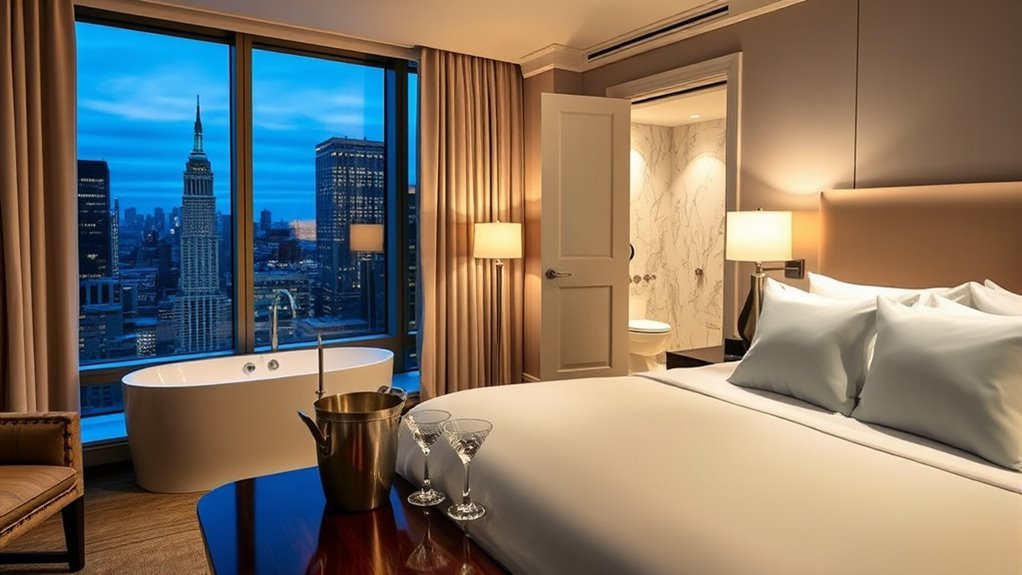
Five-star hotel prices in New York City can change sharply by date, neighborhood, room type, and demand. A single citywide “average” can therefore be misleading. For a 2026 luxury stay, the most useful approach is to start with current five-star trend data, add government taxes, and compare the same room, occupancy, cancellation terms, and included benefits across booking channels.
Quick Answer
In 2026, a practical base-rate budget for a five-star New York City hotel is roughly $600 to $1,000 per night before government taxes. Expedia’s current trend data ranges from $610 in January to $1,018 in September. Premium rooms, suites, holidays, and major-event dates can cost much more.
Key Takeaways
- Expedia’s current 2026 trend data for commonly viewed five-star NYC properties runs from about $610 in January to $1,018 in September before taxes and fees.
- There is no universal U.S. five-star standard. Check whether the label comes from a booking platform, Forbes Travel Guide, AAA, or another evaluator.
- For a standard one-room hotel unit priced at $40 or more, NYC and New York taxes generally add 14.75% plus $3.50 per night; multi-room suites can have a higher city room charge.
- January and February are lower in the current five-star trend data, while September and several fall and holiday-period months are much higher.
- Use refundable rates, flexible dates, and repeated all-in price checks instead of assuming last-minute booking will be cheaper.
What Is the Average Cost for 5-Star Hotels in NYC?
There is no authoritative government figure for the average cost of only five-star hotels in New York City. Hotel prices are dynamic, and star labels differ between booking platforms and professional rating systems. A useful price estimate should therefore name the data source, the date checked, the guest count, and whether taxes and mandatory charges are included.
As a current market snapshot, Expedia’s five-star New York price-trend page, rechecked August 10, 2026, reports average base rates for a one-night stay for two adults at commonly viewed five-star properties. Expedia says the trend data is based on rates found in the last seven days and excludes taxes and fees, so these numbers are planning benchmarks rather than guaranteed quotes.
| Month | Average Base Rate | Month | Average Base Rate |
|---|---|---|---|
| January | $610 | July | $698 |
| February | $646 | August | $674 |
| March | $679 | September | $1,018 |
| April | $777 | October | $868 |
| May | $969 | November | $893 |
| June | $749 | December | $892 |
These monthly figures are planning benchmarks, not guaranteed quotes. A standard room at a luxury property may fall below the monthly trend on a quiet date, while a suite, park-view room, holiday stay, or high-demand event date can cost far more. The final value also depends on occupancy, cancellation rules, breakfast, credits, parking, and other extras.
New York City’s overall hotel average daily rate was $334 in 2025, while luxury-hotel occupancy averaged 82.2%. Five-star travelers should expect to budget well above the citywide average.
What Counts as a 5-Star Hotel in New York City?
“Five-star” does not refer to one government-controlled U.S. standard. Online travel agencies can apply their own star classifications, while professional rating organizations use separate inspection systems. Forbes Travel Guide uses an independent Star Rating system based on anonymous inspections and up to 900 standards. AAA’s Diamond program is a different system; Five Diamond indicates its highest luxury level with superior services and amenities.
| Rating Source | What It Means | What to Check |
|---|---|---|
| Booking-platform stars | Platform-specific property classification | Exact criteria, recent reviews, room type, included amenities |
| Forbes Travel Guide | Independent luxury Star Ratings with strong emphasis on service | Current award level and property-specific facilities |
| AAA Diamonds | Independent Diamond inspections; Five Diamond is the top tier | Current Diamond designation and the services you will actually use |
Before comparing prices, confirm which rating system is being used. Also check recent guest reviews, renovation status, room size, service hours, and which amenities are included. A high rating does not guarantee that every room has a view, lounge access, breakfast, spa access, or the same cancellation policy.
Note: Compare like with like. A refundable king room with breakfast cannot be fairly compared with a prepaid entry-level room that excludes breakfast and has stricter cancellation terms.
What Influences 5-Star Hotel Pricing in NYC?
Luxury hotel prices change continuously because hotels adjust rates according to demand and remaining inventory. The most important factors are:
- Exact dates: Major conventions, fashion events, holiday weekends, concerts, the New York City Marathon, and citywide celebrations can lift demand.
- Neighborhood: Central Park South, Fifth Avenue, and prime Midtown locations can command a premium for access, prestige, and views.
- Room category: Entry-level rooms, suites, connecting rooms, terraces, and landmark views can have very different prices in the same hotel.
- Number and age of guests: Occupancy limits, extra-person charges, rollaway beds, and connecting-room needs can increase the total.
- Cancellation terms: Prepaid rates are often lower but less flexible than refundable rates.
- Included benefits: Breakfast, property credits, lounge access, late checkout, parking, and spa access can change the real value.
- Length of stay: Some luxury hotels periodically offer a complimentary third or fourth night. Compare the effective nightly cost across the full stay rather than the headline rate.
Luxury and location create a wide spread even within Manhattan. The Peninsula New York combines a Fifth Avenue address with a spa and indoor pool. Baccarat Hotel New York emphasizes design, crystal details, dining, Spa de La Mer, and a 55-foot indoor pool. Equinox Hotel New York centers its experience on fitness, recovery, an indoor saltwater lap pool, and a seasonal rooftop pool. The Whitby Hotel offers a design-led stay a few blocks from Central Park. These features can justify higher rates for guests who will use them, but they are not equally valuable to every traveler.
How Taxes and Fees Change the Final Cost
New York City hotel bills include government taxes and charges beyond the room rate. For most standard hotel rooms priced at $40 or more, the calculation generally includes 8.875% New York State and local sales tax, 5.875% New York City hotel room occupancy tax, a $2 city room charge, and a $1.50 New York State hotel unit fee. For a standard one-room hotel unit, that is 14.75% plus $3.50 per night, subject to exemptions and current rules. The city’s $2 charge is assessed per room, so a suite that legally consists of multiple rooms can have a higher city room charge.
For example, a $700 standard one-room rate would become about $806.75 after 14.75% tax and $3.50 in daily government charges, assuming no additional taxable or mandatory charges are added to the base.
Example Total Cost After NYC Hotel Taxes
| Base Rate | Approx. 1-Night Total | Approx. 3-Night Total |
|---|---|---|
| $600 | $692.00 | $2,076.00 |
| $800 | $921.50 | $2,764.50 |
| $1,000 | $1,151.00 | $3,453.00 |
These examples assume one standard room or unit, the 14.75% combined tax rate, and $3.50 in daily government charges. They do not include optional purchases such as parking, meals, spa treatments, gratuities, or other charges that may apply to a specific booking.
Warning: Never compare hotels using only the first nightly number you see. Review the final checkout total, exact room type, government taxes, cancellation policy, and included benefits before paying.
Under the FTC’s Rule on Unfair or Deceptive Fees, effective May 12, 2025, mandatory short-term lodging fees that a business knows and can calculate upfront must be included in the prominently displayed total price. Government taxes and optional add-ons may be excluded from that upfront total, but required disclosures must be made before payment.
Seasonal Trends for NYC Luxury Hotel Pricing
Winter often provides stronger value than fall. NYC Hotel Week 2026 ran from January 2 through February 12 and offered 25% off standard rates at more than 140 participating hotels. Not every five-star hotel participated, but the program supports the broader pattern that January and February can be useful months to check for winter value.
Current 2026 five-star trend data shows January as the lowest month at about $610 and September as the highest at about $1,018. February is about $646 and August about $674, while May, October, November, and December are much higher in the current dataset. These are platform trends, not guaranteed rates for every property or date.
- January and February: The current trend data is relatively low, and winter promotions can improve value on selected dates.
- Spring: The current trend rises from March through May, with May near the top of the yearly range.
- Summer: June, July, and August are below the fall peak in the current dataset, although event dates can still spike.
- September through December: September is the current high point, while October through December also remain elevated.
Day-of-week patterns are not fixed. A Sunday can be cheaper for one Midtown hotel but more expensive during a holiday weekend or major event. Search your exact dates rather than relying on a universal “cheapest day” rule.
5-Star Hotel Cost Comparison by NYC Location
Location affects both price and convenience, but a borough or neighborhood does not have one reliable five-star average. Inventory, hotel class, room size, and the exact date matter more than a simple location label. The table below is a qualitative planning guide, not a measured neighborhood price index.
| Area | General Price Tendency | Best For | Trade-Off |
|---|---|---|---|
| Central Park South and Fifth Avenue | Often among the most expensive luxury locations | Park access, shopping, classic luxury | Premium pricing and busy streets |
| Midtown East and Midtown West | High, with a wider range | Business, Broadway, transit, major sights | Event-driven spikes and congestion |
| NoMad, Flatiron, SoHo, and Tribeca | High boutique and lifestyle pricing | Dining, design, nightlife, downtown atmosphere | Fewer large-room options at some properties |
| Lower Manhattan | Variable by business and weekend demand | Financial District, waterfront, downtown sights | Longer trip to some Midtown attractions |
| Brooklyn | Not automatically cheaper; fewer five-star choices | Neighborhood feel, skyline views, local dining | Transit time and limited luxury inventory |
A cheaper room far from your planned activities may cost more after taxis, rideshares, or lost time. Compare the total trip cost, not only the hotel rate.
When to Book 5-Star Hotels in NYC for Savings
There is no reliable rule that booking exactly seven days ahead—or any single fixed number of weeks ahead—produces the lowest five-star rate. Last-minute prices can fall when rooms remain unsold, but they can also rise sharply when inventory is tight. A safer approach is to begin tracking once your dates are firm, book a refundable option when the total is acceptable, and recheck before the cancellation deadline.
Best Times to Book
- For ordinary dates: Start comparing as soon as your travel dates are firm, especially if you care about a specific room type or neighborhood.
- For September, holidays, major events, or an iconic hotel: Begin earlier because preferred room categories can sell out even if some inventory remains.
- For winter value: Watch January and February offers and check NYC Tourism for future winter promotions.
- For flexible travelers: Compare several date combinations, including different weekday and weekend patterns.
Advance Booking Strategies
- Search the same dates for the same number of guests on the hotel’s official site and at least one reputable comparison platform.
- Match the room name, bed type, occupancy, cancellation deadline, breakfast, credits, and government taxes.
- Book a refundable rate when the total meets your budget and the cancellation terms work for you.
- Set a price alert or calendar reminder and recheck periodically.
- Rebook only when the new all-in total is lower and the room and benefits are equal or better.
Pro Tip: Divide package prices by the number of paid nights. A “third night free” or “fourth night free” offer can beat a lower-looking nightly rate, but only when room type, government taxes, mandatory charges, and cancellation terms are comparable.
Amenities That Impact 5-Star Hotel Pricing
Luxury amenities can raise a hotel’s rate, but their value depends on whether you will use them. Common price-driving features include:
- Spas, pools, and wellness facilities: The Peninsula and Baccarat have indoor pools and spa programs; Equinox combines extensive fitness and recovery facilities with indoor and seasonal outdoor pools; Waldorf Astoria New York has a large Guerlain Wellness Spa. Four Seasons Hotel New York Downtown has a spa and indoor pool, while Four Seasons Hotel New York in Midtown emphasizes fitness, family services, and residential-style accommodations.
- Large rooms and suites: Extra space, separate living areas, terraces, kitchens, and connecting rooms can command substantial premiums.
- Views: Central Park, skyline, river, and landmark views usually cost more than lower-floor or less-scenic room categories at the same property.
- High-end dining and room service: On-site restaurants and 24-hour service add convenience but may increase total trip spending.
- Personalized service: Concierge planning, house cars, butler or attaché services, and elevated guest recognition can support premium rates.
- Family services: Children’s amenities, babysitting, connecting rooms, kitchens, and larger multi-bed rooms can improve value for families even when the nightly rate is higher.
Baccarat’s Spa de La Mer, Equinox’s performance-wellness concept, The Peninsula’s spa and pool, The Whitby’s art-focused design near Central Park, and Four Seasons’ service all create different luxury experiences. Do not pay for an amenity simply because it sounds exclusive. Choose the property whose benefits match your schedule.
Finding Deals on NYC 5-Star Hotels
The strongest savings usually come from combining flexible dates, transparent comparisons, and benefits you will actually use. A nominally cheaper room can be worse value if it lacks breakfast, has a strict cancellation policy, or requires two rooms for your group.
Use Seasonal Price Trends
Start with the monthly trend table, then search exact dates. January and February are currently lower than fall in Expedia’s five-star NYC trend data, but any month can contain expensive event nights. Moving a stay by one or two days can sometimes change the price more than switching hotels.
Treat Last-Minute Booking as a Gamble
Last-minute luxury deals exist, but they are not guaranteed and should not be presented as a standard ultra-low rate. Waiting can leave only suites, less desirable room types, or nonrefundable options. Last-minute shopping works best when you are flexible about the hotel, neighborhood, and room category.
Use Loyalty and Member Benefits Carefully
Hotel loyalty programs can provide member rates, points, upgrades, late checkout, breakfast, or credits, depending on the brand, property, status, and booking channel. Benefits are not universal, and a member rate is not always the lowest total. Compare the cash value of the benefits with the price difference.
Also check credit-card luxury hotel programs and travel-adviser packages when relevant. These may include breakfast, property credits, upgrades when available, or late checkout, but annual fees and booking restrictions can reduce the value.
5-Star Hotel Booking Checklist
- Dates and guests: Use the exact check-in/check-out dates and correct adult/child count.
- Room match: Compare the same bed type, view, room size, and occupancy limit.
- Price basis: Check whether the displayed amount is per night, per stay, before tax, or an all-in total.
- Mandatory charges: Confirm any required hotel charges are included in the displayed total and review government taxes before payment.
- Cancellation: Note the exact deadline and whether a deposit or prepayment is refundable.
- Benefits: Put a real value on breakfast, credits, upgrades, parking, lounge access, or late checkout only if you will use them.
Family-Friendly 5-Star Hotels and Their Rates

Families should compare total sleeping capacity and room layout before comparing rates. New York hotel rooms can be smaller than expected, and occupancy rules may prevent a family from sharing one standard room even when the beds appear large enough.
Four Seasons Hotel New York lists family services including children’s welcome amenities, babysitting, cribs, and rollaway beds. The Langham, New York, Fifth Avenue has a Family Room with two queen beds and published occupancy for up to five guests. The Peninsula New York promotes spacious rooms, connecting configurations, and dedicated children’s amenities. Warren Street Hotel is another design-focused family-friendly option, with children’s amenities and connecting-room options; exact live prices and occupancy rules should be checked for your dates.
For a family of three or four, compare these costs:
- One larger room with two beds
- A suite with a sofa bed or separate living room
- Two connecting or adjoining rooms
- Breakfast charges for adults and children
- Rollaway-bed, crib, or extra-person fees
- Babysitting, laundry, parking, and transportation
A room that costs more per night may still be the better value if it accommodates everyone under the hotel’s occupancy rules, includes breakfast, and avoids the need for a second room.
Which NYC Luxury Hotel Amenities Match Your Trip?
Distinctive amenities influence both pricing and the type of traveler a hotel attracts. Baccarat Hotel’s crystal-focused interiors, Spa de La Mer, and indoor pool appeal to design and spa travelers. Equinox Hotel’s fitness club, recovery facilities, indoor saltwater lap pool, and seasonal outdoor pool create a wellness-centered stay. The Peninsula combines a Fifth Avenue location with a spa, indoor pool, rooftop spaces, and family services. The Whitby focuses on art, design, dining, and a location close to Central Park and major museums.
These experiences can support premium pricing, but the price should be judged against your priorities. A guest spending most of the day sightseeing may receive better value from a well-located room with fewer facilities. A traveler planning spa appointments, pool time, in-room dining, fitness sessions, and concierge support may benefit more from a full-service property.
NYC Luxury Hotel Market Outlook for 2026
New York City entered 2026 with strong hotel fundamentals. NYC Tourism reported 84.2% overall hotel occupancy in 2025, including 82.2% in the luxury segment, and an overall average daily rate of $334. Its March 2026 annual forecast projected 66.3 million visitors for the full year.
More recent data gives a more current picture. In its July 2026 economic outlook, the New York City Comptroller reported that summer hotel bookings had not fully met expectations, occupancy was roughly on par with 2025 overall, and the citywide average daily rate for June was around $378—about 17% above June 2025. These are citywide figures, not five-star-only rates, but they show why luxury travelers should not assume softer demand automatically means cheaper rooms.
This does not mean every five-star rate will rise evenly. New hotel openings, economic conditions, international travel, major events, and hotel-specific promotions can all change availability. Travelers should use current exact-date prices rather than relying on an annual average published months earlier.
Frequently Asked Questions
How much is a 5-star hotel in New York City in 2026?
A practical base-rate budget is about $600 to $1,000 per night for many commonly viewed five-star properties. Expedia’s current 2026 trend data ranges from about $610 in January to $1,018 in September before taxes and fees. Premium rooms, suites, holidays, and major events can cost considerably more.
What is the cheapest month for a luxury hotel in NYC?
January is the lowest month in Expedia’s current 2026 five-star NYC trend data, followed by February and August. Exact dates still matter, and holiday weekends or special events can create expensive exceptions.
Do NYC five-star hotel prices include taxes?
Not always. Government taxes may be excluded from the first displayed total. For a standard one-room hotel unit priced at $40 or more, budget for 14.75% in combined taxes plus $3.50 in daily government charges. Multi-room suites can have a higher city room charge, so review the final checkout total before paying.
What does a $700 hotel room cost after NYC hotel taxes?
For a standard one-room hotel unit, a $700 base rate is about $806.75 after 14.75% combined tax and $3.50 in daily government charges. This estimate does not include optional spending or any other charge that may apply to a specific booking.
Is it cheaper to book a five-star NYC hotel at the last minute?
Sometimes, but not reliably. Unsold rooms may be discounted, while high demand can make remaining rooms much more expensive. A refundable booking that you recheck before the cancellation deadline is usually a safer strategy.
Are five-star hotels and AAA Five Diamond hotels the same?
No. Five-star labels can come from booking platforms or professional Star Rating systems, while AAA uses Diamonds. AAA Five Diamond is its top hotel tier, but it is not the same classification as a five-star label on an online travel site.
What are some well-known luxury hotels in New York City?
Well-known options include The Peninsula New York, The Langham New York Fifth Avenue, Baccarat Hotel New York, Equinox Hotel New York, Four Seasons Hotel New York, The Whitby Hotel, and Waldorf Astoria New York, which reopened in 2025. The best choice depends on location, room size, family needs, wellness facilities, and budget.
What is the hotel market outlook for 2026?
Pricing remains firm even though summer demand has been mixed. NYC Tourism projected 66.3 million visitors for 2026, while the NYC Comptroller’s July update said occupancy was roughly on par with 2025 overall and June’s citywide average daily rate was around $378, about 17% higher than a year earlier.
Conclusion
Five-star hotel pricing in New York City is best treated as a moving range, not one fixed average. Current 2026 trend data suggests budgeting roughly $600 to $1,000 per night before government taxes for many commonly viewed luxury properties, with much higher prices possible on premium dates and room categories. Compare the final total, confirm what “five-star” means on the platform you are using, choose the neighborhood and amenities that fit your trip, and use flexible or refundable booking terms when they provide enough value.
Sources
- Expedia: Five-Star Hotels in New York — current monthly five-star price-trend data and methodology.
- New York City Tourism + Conventions: 2025 Annual Performance and 2026 Forecast — 2025 occupancy, ADR, luxury performance, and the 2026 visitor forecast.
- New York City Comptroller: July 2026 Economic and Fiscal Outlook — the latest available summer hotel occupancy and June 2026 ADR context.
- NYC Department of Finance: Hotel Room Occupancy Tax — 5.875% hotel occupancy tax and the city’s per-room daily charge.
- New York State Department of Taxation and Finance: Sales Tax Rates and Hotel Unit Fee — sales-tax guidance and the $1.50 NYC hotel unit fee.
- Federal Trade Commission: Rule on Unfair or Deceptive Fees — upfront disclosure requirements for mandatory short-term lodging fees.