
New York City does not publish one official average specifically for 4-star hotels, and rates change by date, neighborhood, room type, cancellation policy, and demand. For 2026 planning, a realistic target is about $400 to $600 per night before taxes for many 4-star stays, with lower winter deals and rates above $600 on popular dates. Treat that range as a budgeting guide, not a guaranteed quote.
Quick Answer
Budget roughly $400 to $600 per night before tax for a typical 4-star hotel in New York City in 2026. A $450 room is about $519.88 after common NYC hotel taxes and government fees. Winter deals can cost less, while fall weekends, holidays, and major events may cost considerably more.
Key Takeaways
- There is no official citywide average limited to hotels labeled 4-star, so use current market data as a benchmark rather than treating one price as guaranteed.
- New York City’s overall hotel average daily rate was $334 in 2025 and approximately $378 in June 2026; upscale properties frequently cost more than the citywide average.
- A standard NYC room generally adds 14.75% in percentage-based taxes plus $3.50 per room per night in government charges.
- January and February often provide better value, while late spring, fall, holiday periods, and major events can raise rates sharply.
- Compare the final stay total, cancellation rules, deposit hold, room size, and bed configuration—not only the advertised nightly rate.
How Has the Average Cost of 4-Star Hotels Changed Over Time?
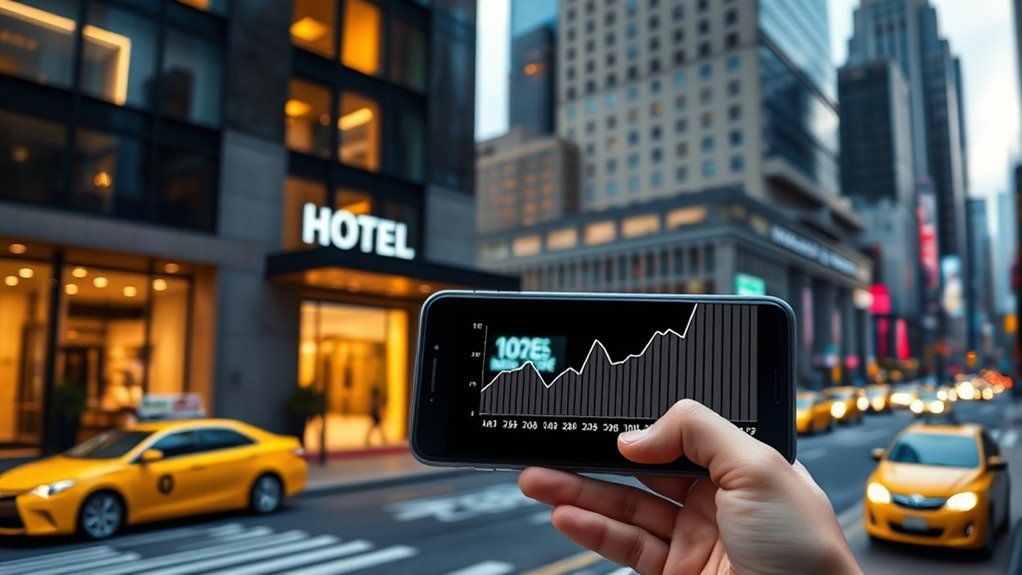
New York City hotel prices have remained high as visitor demand, operating expenses, and occupancy have strengthened. However, the most reliable official figures describe the entire hotel market rather than only properties listed as 4-star.
New York City Tourism + Conventions reported that the citywide average daily rate, or ADR, was $334 in 2025, up 5% from 2024. The same report said occupancy averaged 84.2%, including 87.5% for upscale hotels.
More recent data from the New York City Comptroller placed the citywide ADR at approximately $378 in June 2026. These are all-category market averages, so they include hotels priced below and above the typical 4-star level.
NYC’s citywide hotel ADR was $334 in 2025 and approximately $378 in June 2026. A well-located 4-star property may therefore cost more than the citywide average on many dates.
| Benchmark | Rate | How to Use It |
|---|---|---|
| NYC citywide ADR, full-year 2025 | $334 | Latest complete-year market baseline across hotel categories |
| NYC citywide ADR, June 2026 | About $378 | Recent monthly market indicator, not a 4-star-only average |
| Practical 4-star planning range | About $400–$600 before tax | Useful starting budget for ordinary dates; exact quotes may be lower or much higher |
Note: The United States does not use one mandatory nationwide hotel-star classification. A property may appear as 4-star on one booking site and in a different category elsewhere. Compare the actual room, services, recent guest feedback, and independent inspection programs such as AAA Diamonds.
Why Are Midtown Manhattan Hotel Prices So High?
Midtown Manhattan usually commands a premium because it combines heavy tourist demand, business travel, major transportation hubs, Broadway theaters, shopping, and quick access to attractions. Travelers are often paying for convenience as much as for the room itself.
High Demand Area
Midtown serves leisure travelers, conference attendees, corporate visitors, theatergoers, families, and international tour groups at the same time. Demand can remain strong on weekdays because of business travel and on weekends because of tourism.
| Pricing Factor | Why It Matters | Examples |
|---|---|---|
| Tourist demand | Keeps centrally located rooms in demand throughout the year | Times Square, Rockefeller Center, Central Park |
| Business travel | Supports weekday occupancy and higher flexible-rate bookings | Corporate offices, trade shows, conferences |
| Transportation access | Reduces travel time and increases the value of the location | Grand Central, Penn Station, major subway lines |
| Event demand | Can reduce available inventory within a small area | Parades, holidays, conventions, concerts |
Tourist Attractions Proximity
Hotels close to Times Square, Broadway, Fifth Avenue, Bryant Park, the Empire State Building, and Rockefeller Center allow many visitors to walk instead of spending additional time on the subway. That convenience can justify a higher price for a short trip, especially when several planned activities are nearby.
Location does not automatically make a room better, however. A smaller Midtown room may cost more than a larger room in Lower Manhattan, Queens, or Brooklyn. Compare the amount of usable space, bed size, noise level, and transit time before paying a location premium.
Limited Space Availability
Manhattan hotel rooms compete for costly real estate, and many buildings have compact layouts. A higher nightly rate does not guarantee a large room, a bathtub, a view, or space for several suitcases.
Travelers who do not need to be within walking distance of Midtown attractions may find better value in Lower Manhattan, Long Island City, Downtown Brooklyn, or another neighborhood with direct subway service. The savings vary by exact date, so a borough-wide percentage should not be treated as guaranteed.
How to Calculate the Total Cost of a 4-Star Hotel
The displayed nightly rate is not always the amount charged to your card. For a typical NYC hotel room costing at least $40 per night, the common government charges include:
- 8.875% state and local sales tax
- 5.875% New York City hotel room occupancy tax
- $2 per room per night in the NYC room charge
- $1.50 per unit per night in the New York State hotel unit fee
This usually equals 14.75% plus $3.50 per room per night. Multiroom suites may incur more than one $2 NYC room charge because that charge is calculated for each room making up the suite. The official details are available from the NYC Department of Finance and the New York State Department of Taxation and Finance.
Example: A $450 Nightly Rate
| Base room rate | $450.00 |
| 14.75% percentage-based taxes | $66.38 |
| NYC and state nightly charges | $3.50 |
| Estimated total for one night | $519.88 |
| Estimated four-night total | $2,079.50 |
The example does not include optional breakfast, parking, room service, late checkout, pet charges, or damage and incidental holds.
Warning: Check the final stay total and the amount of any temporary security or incidental hold before booking. A hotel may place a hold on your card at check-in even when the room has already been prepaid.
Under the Federal Trade Commission’s fee-disclosure rule, effective May 12, 2025, mandatory hotel fees must be included in the prominently displayed total price. Government taxes and optional services may be shown later, but the final payment amount must be disclosed before payment.
How to Find Affordable 4-Star Hotels in New York
An affordable 4-star stay usually comes from combining flexible dates, a wider neighborhood search, and careful comparison of the final total.
- Search with exact dates. NYC rates can change dramatically from one weekend to the next.
- Compare several neighborhoods. Check Midtown, Lower Manhattan, Long Island City, Downtown Brooklyn, Williamsburg, and residential parts of Manhattan.
- Use a map view. A lower-priced hotel may still provide a direct subway trip to the places you plan to visit.
- Compare the all-in total. Do not rank hotels using only the first nightly price shown.
- Check direct hotel rates. A hotel’s own website may include member rates, breakfast, credits, or more flexible cancellation.
- Read the cancellation deadline. A slightly higher refundable rate can be valuable when prices may fall later.
- Recheck after booking. When cancellation is free, compare the same room again before the penalty date.
Pro Tip: Reserve a reasonably priced refundable room first, then monitor the same dates. If the price falls before the cancellation deadline, confirm the new reservation before canceling the old one.
How Seasonal Trends Affect 4-Star Hotel Prices
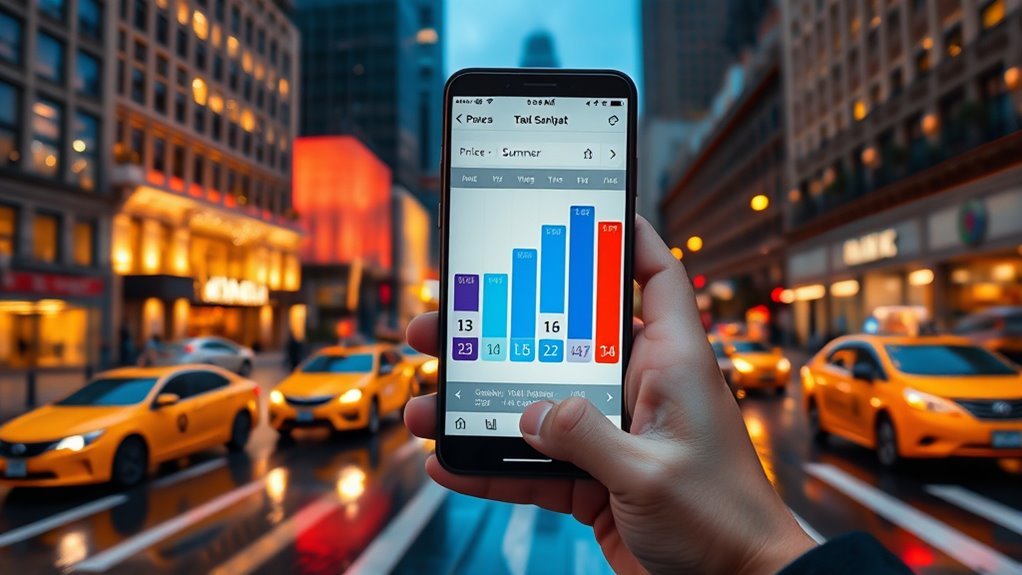
New York hotel prices follow demand rather than a fixed four-season formula. January and February commonly provide strong value, but exact weather, conventions, school holidays, and weekend events can still change rates.
| Period | Typical Pricing Pattern | What to Watch |
|---|---|---|
| January to February | Often one of the best-value periods | Cold weather, occasional storms, holiday-weekend demand |
| March to May | Rates often rise as weather improves | Spring break, graduations, conferences, Memorial Day |
| June to August | Variable; some weeks are expensive while hot-weather periods may soften | International tourism, family travel, concerts, major sporting events |
| September to October | Frequently expensive because of pleasant weather and business demand | Fashion events, conventions, festivals, fall weekends |
| November to December | Highly date-sensitive, with major holiday premiums | Thanksgiving, holiday shopping, Christmas, New Year’s Eve |
For example, the official NYC Hotel Week 2026 program offered 25% off standard rates at participating hotels from January 2 through February 12, showing why the post-holiday winter period can be attractive for value-focused travelers.
Which Neighborhoods Offer the Best Value for 4-Star Stays?
The best neighborhood is the one that balances room price with the transportation time required for your itinerary. A cheaper hotel can become less convenient if every day requires several transfers or expensive rides.
| Area | Value Profile | Best For | Possible Trade-Off |
|---|---|---|---|
| Midtown Manhattan | Usually carries a location premium | First visits, Broadway, short itineraries | Smaller rooms, noise, higher rates |
| Lower Manhattan | Can offer better weekend value on some dates | Financial District, Statue of Liberty, Brooklyn access | Farther from Central Park and many Broadway theaters |
| Upper East or Upper West Side | Variable, with a calmer residential setting | Museums, Central Park, quieter evenings | Fewer hotel choices in some sections |
| Long Island City, Queens | Often competitive for modern hotels near subway lines | Travelers prioritizing room value and quick Midtown access | Less tourist atmosphere outside the hotel |
| Downtown Brooklyn | Can provide larger rooms or better packages | Brooklyn attractions and multiple subway routes | Longer trip to Uptown Manhattan |
| Williamsburg | Boutique-focused rather than consistently inexpensive | Dining, nightlife, neighborhood experience | Weekend demand may erase expected savings |
How Do Major Events Influence Hotel Pricing in NYC?
Major events can raise room prices, reduce available bed types, and make flexible cancellation harder to find. The effect is usually strongest near the event venue and on nights immediately before and after it.
High-demand periods may include Fashion Week, the United Nations General Assembly, major conventions, Thanksgiving, the December holiday season, New Year’s Eve, and the New York City Marathon. The city’s official 2026 events update also identifies the 25th anniversary commemoration of September 11, the November 1 New York City Marathon, and the December Army–Navy football game as significant dates. See the NYC Tourism 2026 events update for current examples.
- Search before buying transportation. Check hotel availability before committing to nonrefundable flights.
- Book earlier for a fixed event date. Start comparing three to six months ahead when your schedule cannot move.
- Consider a nearby transit neighborhood. A hotel several subway stops away may offer more choice.
- Review the full cancellation policy. Event rates may become nonrefundable earlier than ordinary rates.
- Check the surrounding nights. Moving a stay by one day can sometimes reduce the total considerably.
What Amenities to Expect at 4-Star Hotels
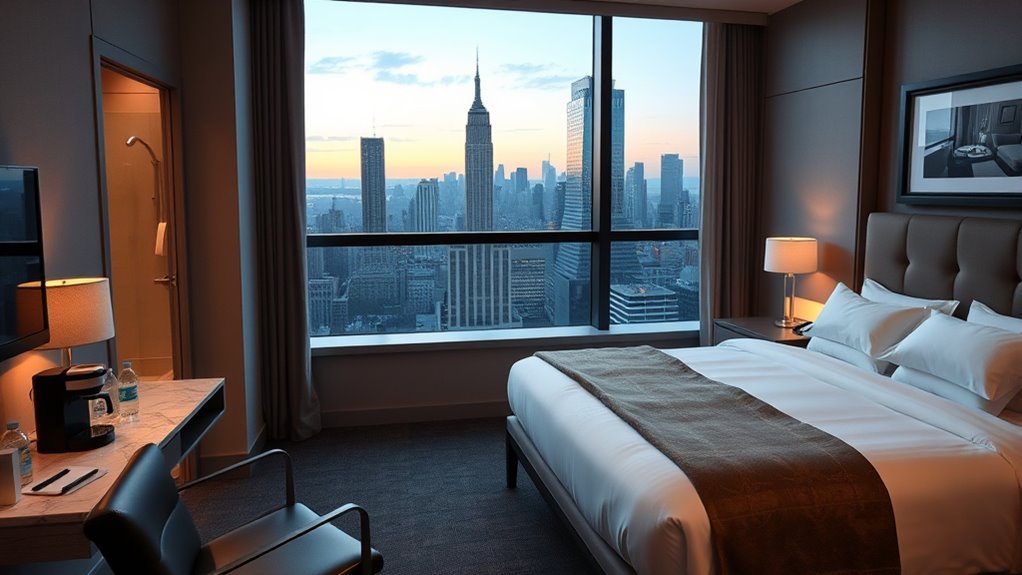
A 4-star listing usually suggests an upscale property with more services than a basic limited-service hotel. The exact package varies, so verify every amenity you care about before booking.
| Amenity | Common Expectation | What to Confirm |
|---|---|---|
| Wi-Fi | Usually available throughout the property | Whether it is included in the displayed total |
| Fitness center | Common but not universal | Hours, equipment, and whether it is off-site |
| On-site dining or bar | Common at larger properties | Operating days, breakfast cost, and reservation requirements |
| Front desk or concierge | Often available for extended hours or 24 hours | Luggage storage and late-arrival arrangements |
| Housekeeping | Usually provided regularly | Daily schedule and opt-in policies |
| Family rooms | Available at selected properties | Maximum occupancy, bed sizes, and rollaway charges |
| Accessible rooms | Properties should offer accessible options | Specific bathroom, doorway, hearing, and mobility features |
Do not assume breakfast, parking, a pool, a spa, a rooftop bar, or a large room is included simply because a hotel is labeled 4-star. New York properties often focus on location and service rather than resort-style facilities.
What Are the Most Popular 4-Star Hotels in New York Right Now?
No hotel remains permanently “most popular.” Rankings, guest scores, ownership, amenities, and nightly prices change over time. The following properties from the original shortlist are useful examples to compare, but you should verify their current star category, total price, room type, and recent reviews for your exact dates.
Hotel Options to Compare
- The Artezen Hotel: A Financial District option suited to travelers who want Lower Manhattan access, modern rooms, and hotel services without staying in Midtown.
- Broadway Plaza Hotel: Located near NoMad and the Flatiron area, with several room configurations that may work for couples or families.
- Hotel Scherman: A Hell’s Kitchen and Theater District property with rooms and suites near Broadway dining and entertainment.
- LUMA Hotel Times Square: A modern option near Times Square for travelers who prioritize central sightseeing access and accessible-room choices.
- Mint House at 70 Pine: An apartment-style Lower Manhattan property that may suit longer stays or travelers wanting more living space.
Compare Amenities, Not Only Star Labels
Look at the exact room description for fitness access, breakfast, kitchen facilities, housekeeping frequency, luggage storage, accessibility features, and bed configuration. Two hotels shown under the same star filter can provide very different experiences.
Apartment-style properties may offer a kitchenette or more space but provide different housekeeping and front-desk arrangements from a traditional hotel. Boutique hotels may provide more personal service but have smaller rooms or fewer on-site facilities.
Match the Location to Your Itinerary
The Artezen and Mint House at 70 Pine are practical for Lower Manhattan, the 9/11 Memorial area, ferries, and Brooklyn access. Broadway Plaza works well for NoMad, Flatiron, and Midtown South. Hotel Scherman and LUMA are more convenient for Broadway and Times Square.
A central location can reduce transportation time, but it may also increase the nightly rate and street noise. Check a map, nearby subway lines, and recent comments about room noise before deciding.
How to Secure the Best Deals on 4-Star Hotels in NYC
There is no single booking day or universal advance-purchase window that always produces the lowest price. A practical strategy is to begin monitoring one to three months before an ordinary trip and three to six months before a major event or holiday.
- Set a total-stay budget. Include taxes rather than focusing only on the nightly base rate.
- Search a flexible date range. Compare arriving one day earlier or later.
- Compare refundable rates first. This preserves the ability to rebook if prices fall.
- Check the hotel’s official site. Look for member offers, breakfast packages, credits, or longer-stay discounts.
- Compare identical room types. A standard queen, city-view king, and double-queen room are not equivalent.
- Check occupancy rules. A low advertised price may apply to two guests and increase for additional adults.
- Read fee and deposit terms. Note parking, pet, early-check-in, late-checkout, and incidental-hold policies.
- Recheck before the cancellation deadline. Rates may rise or fall as inventory changes.
A nonrefundable rate may save money, but the discount should be large enough to justify losing the entire payment if your plans change. Travel insurance may cover certain unexpected situations, but coverage and exclusions differ by policy.
What to Check Before Booking
- Room size: NYC rooms can be compact even at upscale properties.
- Bed type: A “double” bed is smaller than a queen, and two-bed rooms may cost more.
- Maximum occupancy: Confirm whether children count toward the room limit.
- Bathroom layout: Check whether the room has a walk-in shower, bathtub, or accessible features.
- Noise: Request a high floor or room away from elevators, bars, and major avenues when available.
- Cancellation deadline: Note the hotel’s local time zone and the exact date penalties begin.
- Incidental hold: Ask how much the hotel temporarily authorizes on a credit or debit card.
- Mandatory charges: Confirm that the prominent total includes every mandatory hotel-imposed fee.
- Government taxes: Check whether the search result displays taxes or adds them at checkout.
- Transportation: Calculate the walking distance to a useful subway station, not merely the straight-line distance to an attraction.
Frequently Asked Questions
What is the average cost of a hotel room in New York City?
New York City’s official citywide average daily hotel rate was $334 in 2025, while the NYC Comptroller reported approximately $378 for June 2026. Those figures cover multiple hotel categories. For a 4-star stay, about $400 to $600 per night before tax is a more useful planning range for many dates, although actual quotes may fall outside it.
Is $1,000 enough for four days in New York?
It is usually not enough for four nights at a typical 4-star NYC hotel after tax. For example, a $450 room costs about $519.88 per night after common government charges, or approximately $2,079.50 for four nights. A $1,000 lodging budget may work for three nights during a strong promotion, a lower-category hotel, or accommodation outside the most expensive areas, but meals and transportation would still be separate.
How much tax is added to a New York City hotel?
A typical hotel room priced at $40 or more generally carries 14.75% in percentage-based taxes plus $3.50 per room per night in NYC and New York State charges. A multiroom suite may have a larger fixed NYC room charge.
What are the cheapest months for NYC hotels?
January and February commonly provide some of the year’s better hotel value, particularly after New Year’s. Prices still vary around holiday weekends, storms, conferences, and special events, so compare exact dates rather than relying only on the month.
How far in advance should I book a 4-star hotel in NYC?
Start monitoring one to three months ahead for an ordinary trip. For New Year’s Eve, Thanksgiving, the New York City Marathon, major conventions, or another fixed event, begin three to six months ahead. Booking earlier does not always guarantee the lowest rate, so a refundable reservation can provide flexibility.
What does 4-star mean for a New York hotel?
There is no single mandatory US star-rating system. Booking platforms may classify the same property differently. A 4-star listing generally suggests an upscale room, enhanced service, and amenities such as a fitness center, concierge, restaurant, or bar, but you should verify the exact facilities and recent guest experience.
Sources
- New York City Tourism + Conventions 2025 Annual Report and 2026 Forecast — supports citywide ADR, occupancy, hotel inventory, and visitor forecasts.
- NYC Comptroller July 2026 Economic and Fiscal Outlook — supports the approximately $378 June 2026 average daily room rate.
- NYC Department of Finance Hotel Room Occupancy Tax — supports the 5.875% city hotel tax and the fixed nightly room charge.
- New York State Department of Taxation and Finance — supports hotel sales tax treatment and the $1.50 New York City hotel unit fee.
- Federal Trade Commission Rule on Unfair or Deceptive Fees — supports upfront disclosure requirements for mandatory short-term lodging fees.
- NYC Hotel Week 2026 — supports the official January and February hotel discount period.
Conclusion
A 4-star hotel in New York City commonly requires a planning budget of about $400 to $600 per night before taxes, but no single figure applies to every date or property. Current official market data shows that NYC’s overall hotel ADR was $334 in 2025 and approximately $378 in June 2026, which helps explain why centrally located upscale rooms often cost more.
For a realistic budget, add 14.75% in percentage-based taxes and the usual $3.50 per-room nightly government charges. Then compare neighborhoods, cancellation policies, deposits, room size, transportation, and the final payable total. Flexible winter dates and refundable reservations usually provide more control than relying on a fixed “best day” or unsupported booking rule.