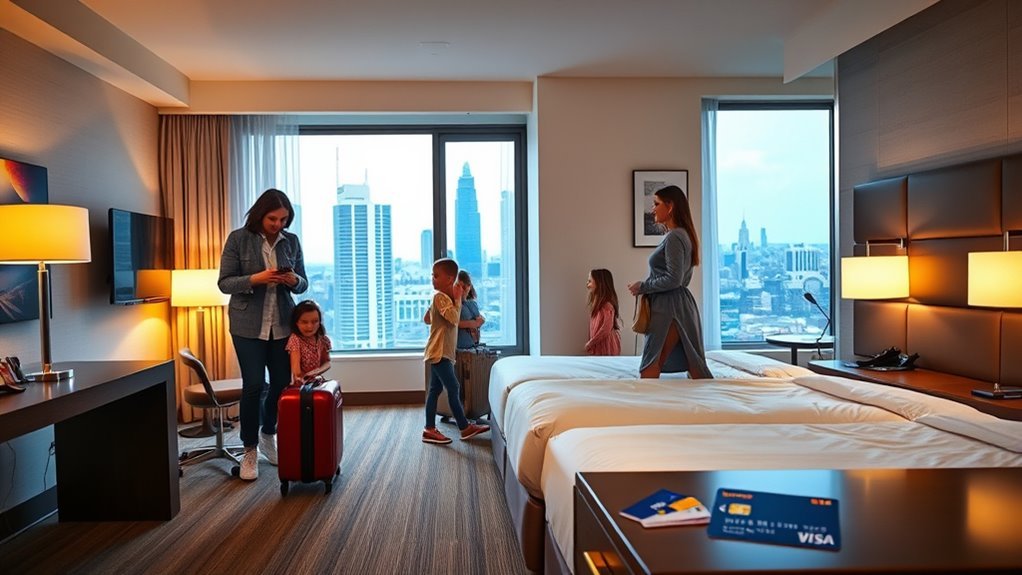
Families often search for adjoining or connecting hotel rooms because two rooms can provide extra beds, privacy, and often a second bathroom. The key is to use precise booking language. Hotels do not always use “adjoining” and “connecting” the same way, and a room request is not automatically a guarantee. For budgeting, start by adding the prices of the two exact room types you need, then review taxes, mandatory charges, and optional extras before paying.
Quick Answer
A useful starting estimate for two hotel rooms is roughly two single-room rates, but connecting pairs can use different room categories. CoStar reported a June 2026 U.S. average daily rate of $173.76; two rooms at that benchmark equal about $347.52 per night in room-rate cost. Actual totals vary by hotel, dates, room types, taxes, and extras.
Key Takeaways
- Ask for connecting rooms with an interior door if your family must move between rooms without entering the hallway.
- Calculate the price by adding the final nightly totals for both rooms, including mandatory hotel fees.
- A request noted on a reservation is not the same as a confirmed connecting-room booking.
- Compare connecting rooms with two-room suites and two-bedroom suites before booking.
- Enter every adult and child accurately so the hotel can apply the correct occupancy limit, bedding, and rate.
Understanding Adjoining and Connecting Hotel Rooms
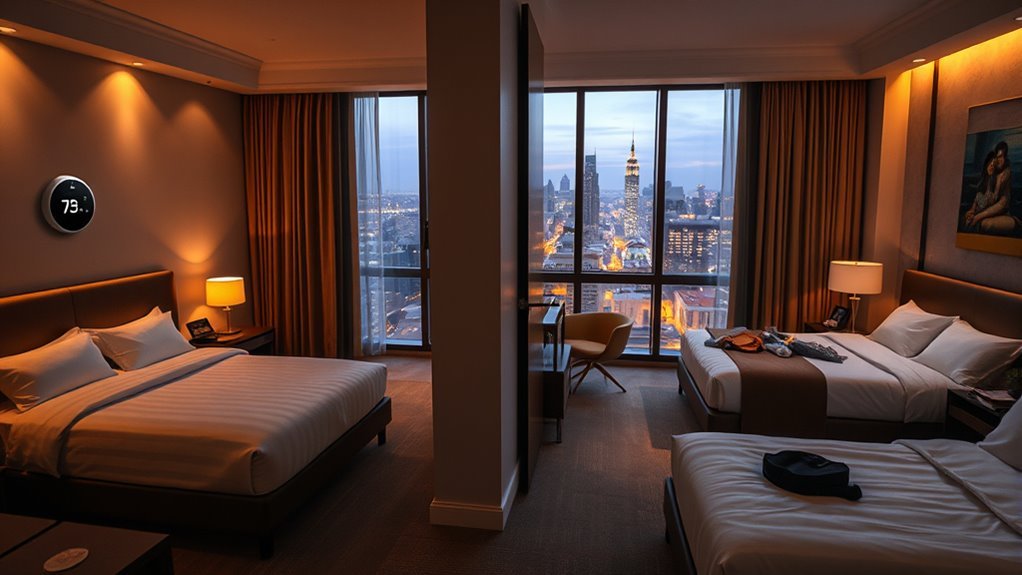
Hotel room terminology is not completely consistent across brands and properties. In common hospitality usage, adjoining rooms may simply share a wall or sit next to one another, while connecting rooms have a private interior door between them. Some hotels use the terms interchangeably.
If the interior door is essential, do not rely on the word “adjoining” alone. Ask the reservations agent to confirm that the rooms are physically connected by a lockable door inside the rooms.
| Term | What it usually means | What to verify |
|---|---|---|
| Connecting rooms | Two separately bookable rooms with an interior door between them | Whether the connection is confirmed or only requested |
| Adjoining rooms | Rooms beside one another; some hotels also use this term for connecting rooms | Whether there is an interior door |
| Adjacent or nearby rooms | Rooms near one another, possibly across the hall or several doors apart | Exact distance, floor, and hallway placement |
| Two-room suite | One hotel unit with separate living and sleeping areas | Number of bathrooms, beds, and private bedrooms |
Note: A locked connecting door normally has a door on each room’s side. Hotel staff may need to unlock or prepare the connection after both rooms are assigned to the same party.
The safest booking phrase is: “We need two rooms that are confirmed to connect through a private interior door.”
Average Cost of Two Adjoining or Connecting Hotel Rooms
There is no single national rate for adjoining or connecting rooms. Hotels usually price each room separately, and the available connecting combination may involve two different room types. A confirmed connecting option can also carry a different rate from an ordinary room selection.
For a current national planning benchmark, CoStar reported a U.S. hotel average daily rate (ADR) of $173.76 for June 2026. ADR is an industry performance metric calculated from room revenue divided by rooms sold; it is not a quote for a particular hotel or a special “connecting-room rate.” Two rooms priced at that benchmark would equal approximately $347.52 per night in room-rate cost. CoStar also noted that June 2026 rate growth was helped by World Cup demand, so use the national figure only as broad context.
| Nightly price per room | Two-room nightly subtotal | Three-night subtotal |
|---|---|---|
| $120 | $240 | $720 |
| $173.76 | $347.52 | $1,042.56 |
| $250 | $500 | $1,500 |
| $350 | $700 | $2,100 |
These examples are calculations, not quoted market ranges. Your actual total may be lower or higher based on the destination, hotel class, exact connecting pair, dates, cancellation terms, taxes, parking, and optional services. When a connecting pair uses two different room categories, add the actual rate for each room rather than simply doubling the cheaper room.
Key Factors Affecting the Price
- Destination and neighborhood: Downtown, resort, airport, suburban, and roadside hotels can have very different rates within the same region.
- Travel dates: School breaks, holidays, weekends, conventions, concerts, tournaments, and major sporting events can increase demand.
- Room combination: A hotel may connect a king room only to a two-queen room, accessible room, suite, or higher-priced category.
- Number and ages of guests: Extra-person charges, breakfast eligibility, bedding, and maximum occupancy can depend on the registered guests.
- Cancellation flexibility: Refundable rates usually provide more flexibility, while prepaid rates may cost less but carry stricter conditions.
- Included amenities: Breakfast, a kitchen, parking, laundry, or a second bathroom can change the real trip cost even when the room rate is higher.
- Length of stay: Extended-stay properties and property-specific promotions may reduce the average nightly rate for longer visits.
Connecting Rooms vs. Family Suites
Two connecting rooms are not automatically the best or least expensive choice. Compare the total price and layout with available suites before booking.
| Option | Advantages | Possible drawbacks |
|---|---|---|
| Two connecting rooms | Usually two bathrooms, more beds, separate entrances, and strong privacy | Requires two room rates and may involve different room categories |
| Two adjacent rooms | Keeps the group close when connecting rooms are unavailable | Guests must enter the hallway to move between rooms |
| Two-room suite | One reservation with separate living and sleeping spaces | May have only one bathroom and one true bedroom |
| Two-bedroom suite | Private bedrooms and a shared living area; kitchens are common at extended-stay hotels | Limited inventory and potentially higher rates |
Family-Friendly Brands and Room Types
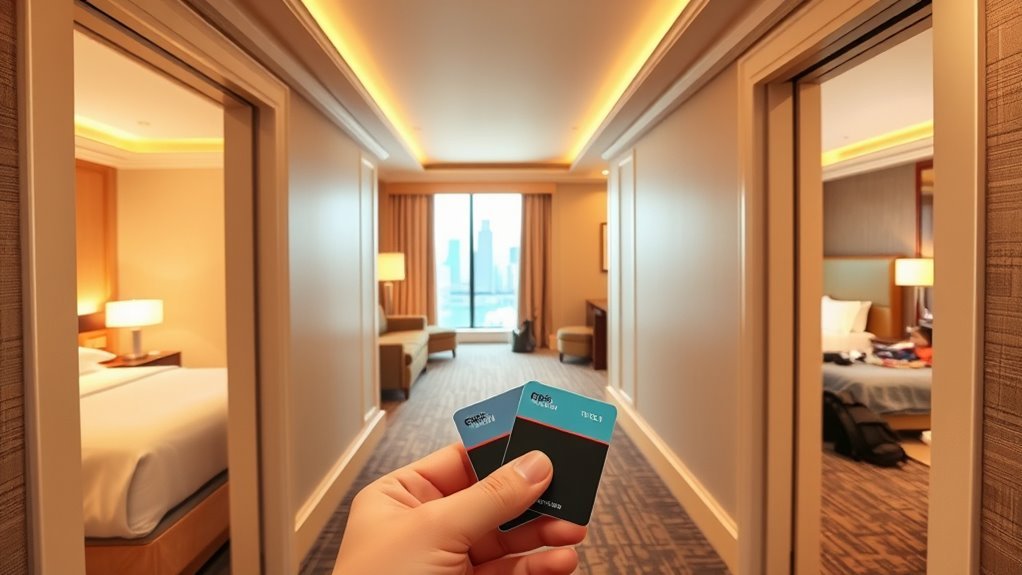
Room layouts differ by property, even within the same brand. Use brand features as a starting point, then verify the exact hotel and room combination.
| Brand or room type | Useful feature | Important limitation |
|---|---|---|
| Participating Hilton hotels | Eligible connecting-room combinations can be confirmed through Hilton’s website, app, or reservations service | Availability and eligible combinations vary; the connecting rate may be higher |
| Embassy Suites by Hilton | Two-room suites with separate living and sleeping areas, breakfast, microwave, and mini-fridge | A two-room suite is one accommodation, not necessarily two connecting guest rooms |
| Homewood Suites by Hilton | Suites with kitchens and free hot breakfast can reduce family meal costs | Bedroom count and connecting-room availability vary by property |
| Residence Inn by Marriott | The brand emphasizes spacious suites with full kitchens; individual hotels may also offer one- or two-bedroom layouts | Bedroom counts and layouts vary by property; verify the exact suite before booking |
| Hyatt Centric Times Square New York | Its FAQ lists selected room types with internal connections and others with external connections through a shared vestibule | This is a property-specific example; other Hyatt hotels can use different layouts and confirmation rules |
Must-Have Features in Family-Friendly Hotels
Square footage alone does not show whether a room setup will work for your family. Review the full layout and included services.
- Interior connecting door: Confirm that family members can move between rooms without entering the public hallway.
- Bed configuration: Check whether the combination is king-to-king, king-to-two-queen, suite-to-standard-room, or another layout.
- Maximum occupancy: Verify the permitted number of adults and children in each room.
- Number of bathrooms: Two connecting rooms usually offer two bathrooms, while a suite may have only one.
- Kitchen facilities: Determine whether the room includes only a mini-fridge and microwave or a full kitchen with cookware.
- Breakfast terms: Confirm whether breakfast is included for every registered guest or only a limited number of people.
- Cribs and rollaway beds: Ask about availability, permitted room types, and any added charge.
- Laundry: On-site laundry can be valuable during longer trips with children.
- Pool and recreation rules: Review operating hours, seasonal closures, age restrictions, and adult-supervision requirements.
- Accessibility: Ask for the exact accessible features and whether the accessible room connects to the second room you need.
Save With Loyalty Programs and Direct Booking
Loyalty programs can provide useful rates and benefits, but they do not automatically guarantee a connecting layout.
| Strategy | Potential benefit | What to check |
|---|---|---|
| Member rate | May reduce the price of each room | Cancellation terms and whether both rooms qualify |
| Points redemption | Can cover one or both rooms where eligible | Whether connecting combinations are available with points |
| Free breakfast | May reduce daily meal costs | Number of registered guests covered |
| Property-specific family offer | May discount a second room for children | Participating property, child age, dates, room types, and availability |
| Elite benefits | Possible breakfast, points, late checkout, or space-available upgrade | An upgrade could separate the rooms, so approve room changes carefully |
A co-branded hotel credit card may earn points or benefits, but compare its annual fee and terms with the value you realistically expect to receive.
How to Book Connecting Hotel Rooms
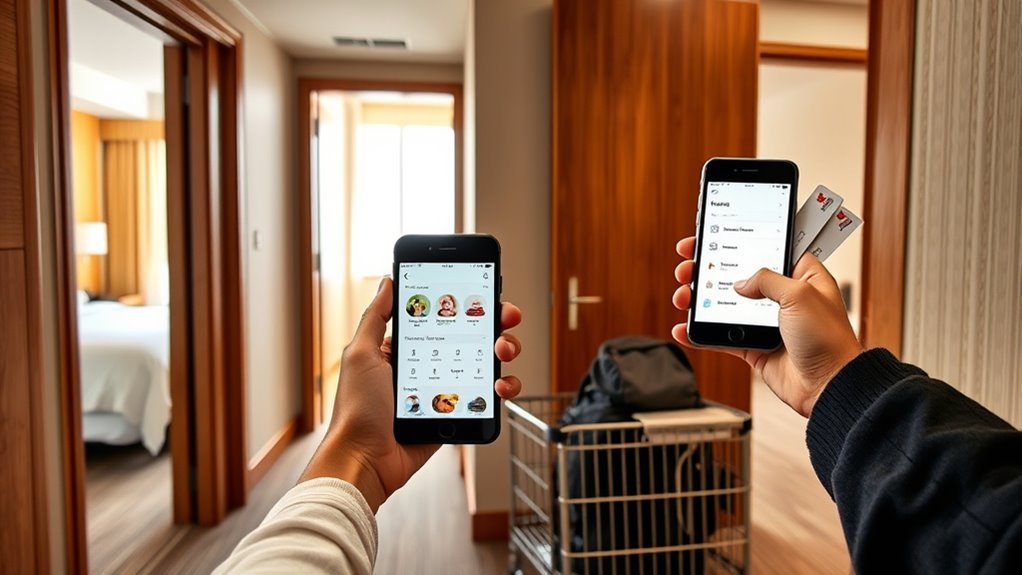
- Enter the complete guest count. Include every adult and child, along with children’s ages when requested.
- Search for two rooms. Review both the nightly room price and the final stay total.
- Look for a connecting-room option. Some booking systems let you select and confirm an eligible room pair.
- Use precise language. Ask for “two rooms connected by a private interior door,” not merely rooms that are close together.
- Check the room combination. Confirm bed types, maximum occupancy, bathrooms, accessible features, and whether a crib or rollaway is permitted.
- Ask whether the arrangement is guaranteed. Determine whether your confirmation explicitly lists connecting rooms or only records a preference.
- Keep both confirmation numbers. If the rooms are on separate reservations, ask the hotel to link them.
- Reconfirm before arrival. When the arrangement is only a request, contact the property a few days before check-in and again on the arrival day.
Warning: A note saying “connecting rooms requested” is not a guarantee. If the connection is essential for supervision, accessibility, or safety, do not rely on a standard request alone; confirm the room arrangement and the hotel’s occupancy or adult-supervision rules before arrival.
Pro Tip: Ask which room types physically connect before selecting your rate. Changing from two identical rooms to a king-and-two-queen combination may improve availability.
What to Confirm in Writing Before You Pay
- The two room types and bed configurations
- Whether the rooms have a private interior connecting door, a shared vestibule, or are only adjacent
- Whether the connection is confirmed or merely requested
- The registered guest count and maximum occupancy for each room
- The final price and cancellation terms for both rooms
- Whether changing or upgrading either room could break the connecting pair
- Both confirmation numbers when the rooms are booked separately
If the hotel confirms the arrangement by phone, ask whether the reservation notes or confirmation email can reflect the specific room relationship you need. This gives you a clearer record than a generic “nearby rooms” request.
Check the Complete Booking Price
The displayed hotel price should be evaluated as a complete stay total, not only as a nightly headline rate. For two-room bookings, compare the final amount for both rooms together and make sure the rate terms match your needs.
Mandatory Hotel Fees
The FTC’s Rule on Unfair or Deceptive Fees, effective May 12, 2025, requires businesses advertising short-term lodging prices to display the total price including mandatory charges that they know and can calculate upfront.
The rule does not prohibit mandatory destination or resort fees. It requires those charges to be included in the prominently displayed total rather than added only near the end of checkout.
Taxes and Optional Costs
Under the FTC rule, government taxes or charges and optional goods or services do not have to be included in the upfront total price, but they must be disclosed before payment when applicable. Also review property-specific deposit and incidental-hold policies. Before paying, check for:
- State and local lodging taxes
- Parking or valet charges
- Pet charges
- Optional breakfast packages
- Rollaway-bed or crib charges
- Early check-in or late-checkout charges
- Optional internet or premium-service packages
- Incidental deposits or credit-card holds, which can affect the amount temporarily available on your card
Cancellation and Change Terms
Connecting-room reservations can be harder to modify than an ordinary single-room reservation. For example, Hilton states that changes to its confirmed connecting-room bookings may require cancellation and rebooking or assistance from the hotel.
Before booking, verify:
- The cancellation deadline for each room
- Whether the rate is prepaid or refundable
- Whether changing one room cancels the connecting combination
- Whether both rooms use the same confirmation number
- Whether no-show penalties apply separately to each room
Seasonal and Event-Based Price Trends
There is no nationwide “cheapest hotel month.” Demand patterns depend on the destination. A ski town, beach resort, theme-park market, business district, and national-park gateway can have completely different peak seasons.
| Demand period | Common causes | Booking approach |
|---|---|---|
| High demand | School holidays, festivals, conventions, tournaments, concerts, and major sporting events | Book early with flexible cancellation and confirm the connection in writing |
| Shoulder period | Weeks between a destination’s peak and low seasons | Compare several arrival dates and weekday combinations |
| Lower demand | Destination-specific weather, fewer events, or reduced business travel | Look for multi-night offers, suites, and refundable member rates |
Check the destination’s school calendar, convention calendar, local event schedule, and weather before choosing dates. Moving a trip by one or two nights can sometimes change both price and connecting-room availability.
How to Maximize Comfort and Convenience
- Choose the right sleeping layout: Confirm who will use each bed, sofa bed, crib, or rollaway before booking.
- Prioritize two bathrooms when needed: This can save time for larger families even when two rooms cost more than a suite.
- Ask about the connecting-door lock: Confirm that adults can control access and that the hotel will unlock the connection for your party.
- Request a quiet location: Rooms away from elevators, ice machines, vending areas, and event spaces may be more comfortable for light sleepers.
- Review food options: A refrigerator, microwave, kitchen, or included breakfast may reduce dining costs and simplify mornings.
- Confirm laundry access: This is especially useful for longer trips, outdoor vacations, and travel with infants.
- Plan for accessibility: The ADA requires lodging reservation systems to identify accessible room features in enough detail for travelers to assess their needs. Ask how the accessible room connects to the second room.
- Check arrival logistics: Ask whether both rooms will be ready at the same time and whether one adult must be registered in each room.
What to Do If Connecting Rooms Are Unavailable
Connecting-room inventory is limited because only certain room pairs have interior doors. Consider these alternatives:
- Book a two-bedroom suite: This may provide private bedrooms, a living area, and a kitchen under one reservation.
- Choose a two-room suite: A separate bedroom and living room can work for a smaller family, although bathroom and bed counts may be limited.
- Request rooms in a shared vestibule: Some hotels place two rooms behind an additional outer door, providing more privacy without a direct interior connection.
- Ask for adjacent rooms: Rooms beside one another may work for groups of adults or older travelers who can safely use separate entrances.
- Request rooms across the hall: This is less convenient but can keep the group close when side-by-side rooms are unavailable.
- Try different room types: A king room may connect to a two-queen room even when two identical rooms do not connect.
- Compare another nearby property: A hotel with the correct layout may be more useful than a slightly cheaper hotel that cannot meet your family’s needs.
Frequently Asked Questions
What is the average cost of two hotel rooms in the United States?
CoStar reported a U.S. hotel average daily rate of $173.76 for June 2026. Two rooms priced at that benchmark equal about $347.52 per night in room-rate cost. ADR is an industry performance metric, not a guaranteed price for connecting rooms or a specific destination.
What is the difference between adjoining and connecting hotel rooms?
The terms are used inconsistently. Adjoining often means rooms beside one another, while connecting means the rooms have a private interior door. Ask the hotel to confirm an interior connecting door if that feature is essential.
How do you book a hotel with connecting rooms?
Search for two rooms, select a confirmed connecting-room option when available, and review the exact room combination. If the booking system records only a request, call the property and ask whether the connection can be guaranteed. Keep both confirmation numbers and reconfirm before arrival.
Are connecting hotel rooms guaranteed?
Not always. A preference or request may remain subject to availability until check-in. A booking is stronger when the confirmation explicitly identifies the rooms as connecting. Hilton currently offers confirmed connecting-room bookings at participating hotels through its direct channels.
Do connecting rooms cost more?
They can. You normally pay for both rooms, and the available connecting pair may include a higher-priced room category. Some hotels may also display a different rate for a confirmed connecting combination. Compare the complete two-room total with suite options.
Can three people stay in a hotel room booked for two?
Only when the room’s maximum occupancy and hotel policy allow it. Enter all adults and children accurately when booking. Adding a guest can change the room type, bedding, breakfast eligibility, or price, and some rooms have lower maximum-occupancy limits.
Can an accessible hotel room connect to another room?
Some accessible rooms connect to standard or accessible rooms, but availability varies by building and room type. Ask the reservations team to describe the accessible features, bed configuration, bathroom, doorway, and exact connection before booking.
Is a shared-vestibule room the same as a connecting room?
Not exactly. A true internal connecting pair lets guests move through a private door between the two rooms. A shared-vestibule setup places separate room entrances behind an additional outer door. It can provide extra privacy, but guests still leave one guest room before entering the other.
Conclusion
Adjoining or connecting hotel rooms can give families more beds, privacy, storage, and bathroom space, but the arrangement needs careful booking. Ask specifically for rooms connected by a private interior door when that feature matters, enter the correct guest count, compare the combined two-room cost with suite options, and determine whether the connection is confirmed or merely requested. Before paying, review the exact room pair, final price, occupancy rules, accessibility needs, and cancellation terms so the setup matches your family’s needs at check-in.
Sources
- CoStar: U.S. Hotel Performance for June 2026 — provides the latest published monthly U.S. hotel ADR used for the planning benchmark.
- Federal Trade Commission: Rule on Unfair or Deceptive Fees FAQs — explains upfront total-price requirements and permitted exclusions for short-term lodging.
- Hilton: Confirmed Connecting Rooms — explains confirmed connecting-room booking, direct channels, modifications, and possible rate differences.
- Embassy Suites by Hilton Fact Sheet — supports the description of two-room suites, breakfast, microwave, and mini-fridge.
- CoStar STR Benchmark Glossary — defines average daily rate (ADR) and how it is calculated.
- ADA.gov: Title III Regulations — supports accessible lodging reservation and room-feature guidance.