
Last updated: August 10, 2026
Welding school in Minnesota costs about $4,357 for Anoka Technical College’s 17-credit certificate, while current diploma examples run from about $8,403.21 to $16,601.60 depending on the school and what its estimate includes. Your real budget can be higher after books, PPE, tools, certification testing, transportation, food, and housing.
Quick Answer
Current 2026–27 examples range from $4,357 for Anoka Technical College’s 17-credit welding certificate to $11,597.60–$16,601.60 for Saint Paul College’s 48-credit diploma. Books, PPE, lab charges, certification tests, transportation, and housing can raise your total beyond the school’s published program price.
Key Takeaways
- A short Minnesota welding certificate may have published tuition and fees near $4,357, while current diploma examples range from about $8,403.21 to $16,601.60.
- Published prices are not directly comparable because some include tools or course fees while others cover only tuition and standard fees.
- Your full budget should include books, PPE, consumables, certification testing, food, housing, transportation, and personal expenses.
- File the FAFSA and check Minnesota grants, North Star Promise, scholarships, veteran benefits, workforce funding, and employer assistance before borrowing.
- Confirm that the exact certificate or diploma is eligible for the financial aid you plan to use.
At a Glance
| Lowest Example in This Comparison | $4,357 for Anoka Technical College’s 17-credit certificate, based on 2026–27 tuition and fees |
| Diploma Examples | $8,715 for Anoka’s 34-credit diploma; $11,597.60–$16,601.60 for Saint Paul College’s 48-credit diploma |
| All-In Diploma Example | $8,403.21–$8,753.31 at Northland Community & Technical College, including tuition, books, writing kit, tools, and listed college fees |
| First-Year Academic Example | About $11,166 at Alexandria Technical & Community College when 36 credits, books, course fees, and listed other costs are combined |
| Common Extra Costs | Books, helmet and PPE, hand tools, consumables, test fees, transportation, food, housing, and personal expenses |
How these figures were checked: This guide uses official 2026–27 school cost pages and keeps each estimate in its published scope. Tuition-only figures are not treated as equivalent to totals that already include books, tools, or course fees.
How Much Does Welding School Cost in Minnesota in 2026–27?

There is no single statewide price for welding school. Current official examples show that direct academic costs vary by credential, credit load, school, and what the published estimate includes.
- Anoka Technical College: The school lists a 17-credit welding certificate at $4,357 and a 34-credit welding diploma at $8,715 for 2026–27. These estimates are based on tuition and fees, so you should ask separately about books, PPE, tools, and certification testing.
- Saint Paul College: Its 48-credit Welding Diploma is estimated at $11,597.60–$16,601.60. That total includes an estimated $500 for special supplies and tools but tells students to budget separately for books and class materials.
- Alexandria Technical & Community College: The school lists 36 first-year credits, $725 for books, $1,924 in course fees, and $235 in other expenses. At its published 2026–27 on-campus tuition-and-fee rate of $230.06 per credit, the estimated first-year direct academic total is about $11,166.16.
- Northland Community & Technical College: Its Welding Technology Diploma cost page estimates $8,753.31 with a welding-hood toolkit or $8,403.21 without the hood. Those totals include $6,658.20 in tuition plus books, a writing kit, tools, and listed college fees.
Current school examples span roughly $4,357 to $16,601.60 in published program estimates, but those figures do not all include the same expenses.
Note: Treat every published cost as an estimate for a specific academic year. Tuition, differential rates, fees, tool lists, and course sequences may change before you enroll.
Create a term-by-term budget instead of relying on one headline number. List tuition, standard campus fees, course or lab fees, books, tools, PPE, testing, transportation, and living expenses. Then subtract grants and scholarships to find your estimated net price.
Tuition and Fees Breakdown by Program Type
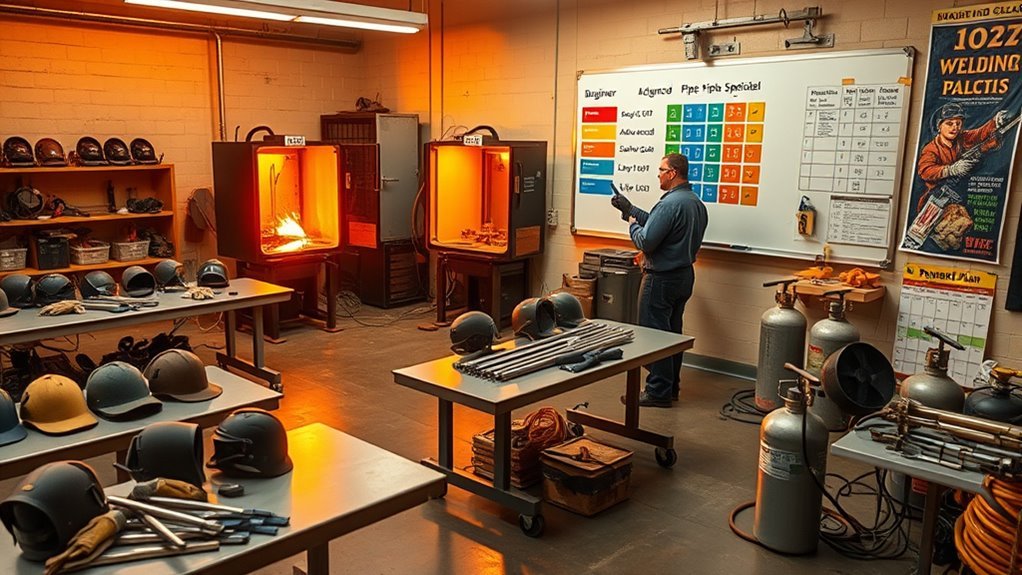
Minnesota schools offer several welding credentials. The cheapest option is not always the best value, so compare the skills taught, lab time, credits, and employment goal along with the price.
Short Welding Certificates
A certificate usually concentrates on selected processes or entry-level skills. Anoka Technical College’s current basic certificate is 17 credits and has a published tuition-and-fee estimate of $4,357. A certificate may help you enter the workforce sooner, but it may cover fewer processes and less blueprint reading, metallurgy, fabrication, or general education than a longer program.
Confirm that the exact certificate is eligible for federal and state aid. Since July 1, 2026, Workforce Pell can extend Federal Pell Grant access to qualifying students in approved short-term workforce programs, but eligibility is program-specific. A short welding course is not automatically eligible just because the school participates in federal aid.
Welding Diplomas
A diploma generally provides more lab time and broader training than a short certificate. Anoka’s 34-credit diploma is listed at $8,715 in tuition and fees, while Saint Paul College’s 48-credit diploma has a published total of $11,597.60–$16,601.60 before books.
The higher price may cover additional welding positions, processes, fabrication work, blueprint reading, or preparation for performance tests. Review the course sequence rather than judging a program only by its credential name.
Associate Degrees
An Associate of Applied Science degree normally adds general education and technical coursework. For example, Anoka lists its 66-credit welding AAS at $16,916 in 2026–27 tuition and fees. An AAS can be useful if you want broader technical knowledge or future advancement, but it also requires more time and may create higher living and transportation costs.
| Anoka Certificate — 17 credits | $4,357 in published 2026–27 tuition and fees; confirm books, tools, PPE, and testing separately |
| Anoka Diploma — 34 credits | $8,715 in published 2026–27 tuition and fees; confirm other required costs |
| Northland Welding Technology Diploma | $8,403.21 without a welding-hood toolkit or $8,753.31 with the hood; estimate includes tuition, books, writing kit, tools, and listed college fees |
| Saint Paul Diploma — 48 credits | $11,597.60–$16,601.60, including an estimated $500 for supplies and tools; books are additional |
| Anoka AAS — 66 credits | $16,916 in published 2026–27 tuition and fees; additional attendance expenses may apply |
Additional Expenses: Tools, Books, and Supplies

Tuition is only one part of your welding-school budget. Before enrolling, ask for a written list of every required item and whether you must purchase it from the school.
Books and Digital Materials
Alexandria Technical & Community College estimates first-year welding books at $725, based on the highest-cost new-book option. Used books, rentals, and digital editions may cost less when permitted.
Tools and Personal Protective Equipment
Your list may include a welding helmet, safety glasses, gloves, flame-resistant clothing, work boots, pliers, chipping tools, soapstone, measuring tools, and a lock for tool storage. Saint Paul College estimates $300–$650 for student supplies on its program-details page, while its main cost table uses a $500 estimate.
Do not buy equipment before receiving the school’s current specifications. Some programs require a particular shade range, boot type, clothing material, or tool configuration.
Course and Lab Fees
Course fees can cover metal, gas, electrodes, wire, test plates, consumables, equipment maintenance, or specialized lab use. Alexandria lists $1,924 in first-year course fees, but that number applies to its program and should not be treated as a statewide average.
Certification and Performance-Test Costs
A school diploma or certificate is an academic credential. An industry qualification may require a separate hands-on test using a specific process, material, position, and code. The AWS Certified Welder program, for example, uses a performance-based test at an accredited testing facility.
Ask whether tuition includes test plates, laboratory inspection, destructive or nondestructive testing, facility fees, documentation, and retests. Do not assume that finishing the program automatically gives you every qualification an employer may request.
Housing, Food, Transportation, and Personal Expenses
Full cost of attendance can be much higher than the amount billed for classes. Alexandria Tech’s general 2026–27 nine-month cost-of-attendance estimate is $22,340 when tuition and fees, books and supplies, food and housing, transportation, personal expenses, and estimated federal loan fees are combined. That figure is not specific to welding, but it shows why living costs belong in your budget.
Warning: Do not compare one school’s tuition-only figure with another school’s full program or cost-of-attendance estimate. First identify exactly what each number includes.
Financial Aid, Scholarships, and Veteran Benefits
Start by submitting the Free Application for Federal Student Aid. Filing the FAFSA does not guarantee an award, but schools use it to determine eligibility for many federal, state, and institutional programs.
Federal Pell Grants
The maximum Federal Pell Grant is $7,395 for the 2026–27 award year. Your actual award depends on eligibility, enrollment intensity, program length, remaining lifetime eligibility, and the school’s cost of attendance.
Workforce Pell for Short-Term Training
Effective July 1, 2026, Federal Pell Grants can also support qualifying students enrolled in certain short-term eligible workforce programs. Approval is program-specific: the state must certify the program and the institution must obtain U.S. Department of Education approval. Ask the financial-aid office whether your exact welding program has been approved before counting on Workforce Pell.
Federal Direct Loans
Federal student loans are called Direct Subsidized and Direct Unsubsidized Loans. For a first-year dependent undergraduate, the usual combined annual limit is $5,500, with no more than $3,500 subsidized. For a first-year independent undergraduate, the combined limit is generally $9,500, with no more than $3,500 subsidized.
A loan is borrowed money that must normally be repaid with interest. Compare grants, scholarships, earnings, and payment plans before accepting the full amount offered.
Minnesota Grants and North Star Promise
The Minnesota State Grant helps eligible low- and moderate-income Minnesota residents attending approved colleges.
The North Star Promise may cover remaining tuition and required fees at eligible Minnesota public colleges and Tribal Colleges for qualifying Minnesota residents with family adjusted gross income below $80,000. Other grants and scholarships are applied first, and the program does not necessarily cover books, tools, housing, transportation, or every course-related expense.
Note: As of this August 10, 2026 update, the Minnesota Office of Higher Education lists June 1, 2026 as the North Star Promise application deadline for 2026–27, so that deadline has passed. File the FAFSA anyway and ask the school about other aid, any available late options, and future-year deadlines.
Scholarships, Workforce Funding, and Employer Help
Check the school foundation, local manufacturers, trade associations, unions, community foundations, and the AWS Foundation for scholarships. You can also contact Minnesota CareerForce to ask whether you qualify for workforce training assistance.
Some employers pay for welding courses, certification tests, or continuing education in exchange for a work commitment. Ask whether the employer pays the school directly, reimburses you after completion, or requires a minimum grade or employment period.
Veteran Education Benefits
Veterans, service members, and eligible family members can use the GI Bill Comparison Tool to check approved schools and estimate how benefits may apply. Contact both the VA and the school’s certifying official before enrolling because benefit amounts depend on the program, enrollment level, eligibility, and remaining entitlement.
Compare the net price after grants and scholarships—not just the amount a school lists before aid.
Comparing Costs Across Minnesota Colleges
Use the same checklist for every school so you are comparing equivalent costs and training outcomes.
Apples-to-apples formula: estimated net school-year cost = tuition + mandatory fees + course/lab fees + required books/tools/PPE/testing + living and transportation costs − grants and scholarships.
- Confirm the credential and credits. A 17-credit certificate should not be compared directly with a 48-credit diploma or 66-credit AAS.
- Check the academic year. Use 2026–27 figures for a 2026 start rather than an older catalog or search result.
- Identify what the price includes. Separate tuition, campus fees, course fees, books, tools, PPE, tests, and living expenses.
- Verify financial-aid eligibility. Ask about the exact program code, not just whether the college accepts federal aid.
- Compare hands-on training. Review lab hours, welding processes, materials, positions, blueprint reading, fabrication, and employer partnerships.
- Ask about testing. Find out which performance tests students can attempt and whether test materials and retests cost extra.
- Calculate net price and total time. Include grants, scholarships, commuting, housing, childcare, and income you may give up while attending.
Pro Tip: Ask each school for a written 2026–27 cost sheet, current tool list, course sequence, aid-eligibility confirmation, and list of included certification tests. Written answers make comparisons much easier.
Program Length, Hands-On Training, and Certification
Price is only one part of a welding program’s value. Employers often care about whether you can read a drawing, set up equipment safely, prepare a joint, control distortion, and pass a process-specific weld test.
An online course can teach welding theory, terminology, symbols, metallurgy, and safety concepts. It cannot provide the same supervised arc time or physical performance testing as a properly equipped lab. A hybrid program should clearly state where and how students complete its hands-on requirements.
Also separate safety training from welding qualification. The OSHA Outreach Training Program, including OSHA 10, is voluntary at the federal level and is not a certification, although an employer, union, municipality, or job site may require a course-completion card. AWS D1.1 is a structural welding code, not a general safety certificate.
Registered apprenticeships are another path, but Minnesota does not assign one universal length to every welding-related apprenticeship. Training hours, classroom instruction, competencies, wages, and entry requirements are set by the sponsor. Review current opportunities through the Minnesota Department of Labor and Industry.
Frequently Asked Questions
How much does welding school cost in Minnesota in 2026–27?
Current official examples in this guide range from $4,357 for Anoka Technical College’s 17-credit certificate to $16,601.60 at the high end of Saint Paul College’s 48-credit diploma estimate. Northland’s Welding Technology Diploma is estimated at $8,403.21–$8,753.31 with books, tools, and listed college fees included, showing why you must compare what each school’s price covers.
Can Workforce Pell pay for short welding training?
It can if you are eligible and the exact short-term welding program has been approved as an eligible workforce program. Workforce Pell took effect July 1, 2026, but approval is program-specific, so do not assume every short welding course qualifies. Ask the school’s financial-aid office to confirm the program status before enrolling.
Does North Star Promise cover welding school in Minnesota?
It may cover remaining tuition and required fees for an eligible degree, diploma, or certificate at a Minnesota public college or Tribal College when the student meets North Star Promise rules. It is a last-dollar program, so other grants and scholarships are applied first, and it does not necessarily cover books, tools, housing, food, or transportation. The listed 2026–27 application deadline was June 1, 2026.
Are online welding certificates accepted by Minnesota employers?
There is no statewide yes-or-no rule. Online study can support theory and safety knowledge, but welding jobs commonly require hands-on ability and an employer or code-specific performance test. Choose a program with documented lab training or a clear local hands-on component.
How long does a welding apprenticeship last in Minnesota?
There is no single statewide duration for every welding-related apprenticeship. The sponsor sets the required on-the-job learning, classroom instruction, competencies, wage progression, and completion standards. Verify the terms of the specific registered apprenticeship before applying.
What safety certifications are required before welding?
Schools normally require lab orientation, PPE, and instruction on their equipment and hazards. OSHA 10 is voluntary under federal OSHA and is a course-completion program rather than a certification, although some employers or work sites require it. AWS D1.1 and AWS Certified Welder testing concern welding performance, not general safety certification.
Can out-of-state students get lower tuition rates in Minnesota?
Sometimes. Wisconsin residents attending Minnesota public institutions and North Dakota residents attending Minnesota public institutions can qualify for tuition reciprocity, while Manitoba residents can qualify at Minnesota public colleges and universities. Iowa has no statewide agreement; its reciprocity arrangement is limited, and some Minnesota colleges separately charge the same tuition rate to students from any state. The Minnesota–South Dakota agreement ended after 2023–24. Check the exact college and the Minnesota Office of Higher Education before assuming a rate.
Are background checks required for welding program enrollment?
A background check is not a universal requirement for every Minnesota welding program. One may be required for a particular internship, employer-sponsored placement, union, government facility, customer site, or safety-sensitive job. Ask admissions and the program coordinator about requirements that apply to your course sequence.
Can FAFSA aid pay for a short welding certificate?
It may, but only when you meet the aid rules and the exact program is eligible. Filing the FAFSA does not make every short course, noncredit class, or certificate eligible. Give the financial-aid office the program name and code and request written confirmation before enrolling.
Are welding certification exams included in tuition?
It varies by school and test. Ask whether tuition covers the testing facility, test coupons, consumables, inspection, documentation, and retests. Also ask which code, process, material, thickness, and position each available test covers.
Sources
- Saint Paul College Welding Costs & Tuition — 48-credit diploma tuition, fees, supplies, aid, and exclusions
- Anoka Technical College Welding Programs — 2026–27 certificate, diploma, and AAS costs and credit totals
- Alexandria Technical & Community College Welding Technology Tuition — per-credit rate, books, course fees, and other first-year costs
- Northland Community & Technical College Welding Technology Diploma Costs — tuition, books, toolkits, college fees, and estimated program totals
- Federal Student Aid: Pell Grants and Direct Loan Limits — current federal grant maximum and undergraduate borrowing limits
- Federal Student Aid: Workforce Pell Effective Dates — July 1, 2026 effective date and program-approval framework
- Minnesota Office of Higher Education: North Star Promise — income threshold, eligible institutions, tuition coverage, and 2026–27 deadline
- Minnesota Office of Higher Education: Tuition Reciprocity — current participating states and jurisdictions
- American Welding Society: Certified Welder Program — performance-based testing and accredited testing facilities
- OSHA Outreach Training Program — OSHA 10/30 program status and course-completion cards
- Minnesota Department of Labor and Industry: Apprenticeship FAQs — sponsor-defined apprenticeship terms and registered training structure
- U.S. Department of Veterans Affairs: GI Bill Comparison Tool — approved schools and education-benefit planning
Conclusion
Current official examples in this comparison place Minnesota welding-program costs from about $4,357 for a short certificate to $16,601.60 for a longer diploma, while Northland’s $8,403.21–$8,753.31 diploma estimate shows how totals can change when books, tools, and fees are already included. Compare the same cost categories at every school, confirm aid eligibility for the exact program, and choose the option that gives you the hands-on training you need at a manageable net price.