
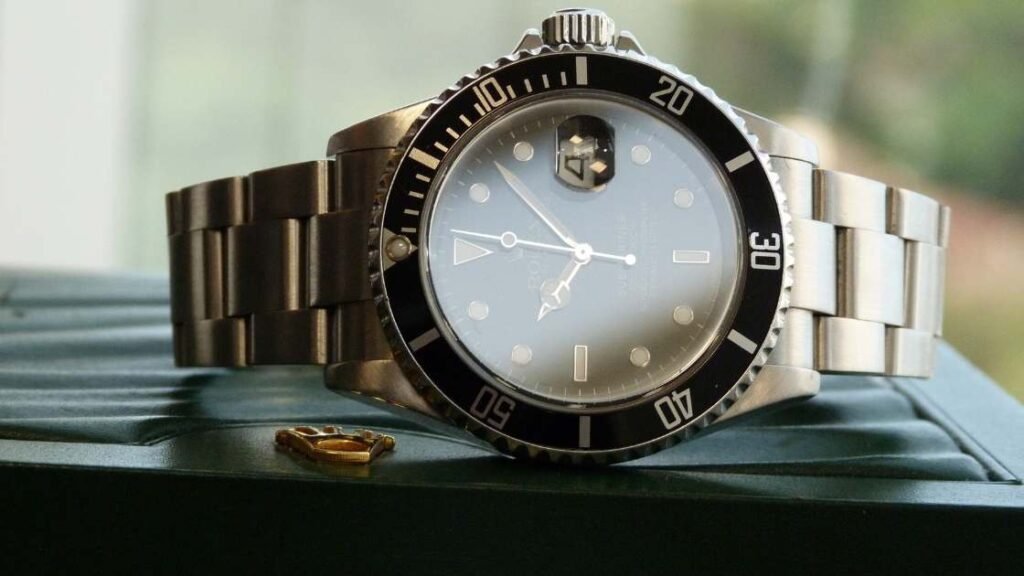
While Rolex SA does not publish official factory accounting, Swiss watch industry financial models estimate that the direct manufacturing cost of a stainless steel Rolex is roughly $800 to $1,300—approximately 12% to 18% of its official retail price. For an entry-level Oyster Perpetual ($6,200 to $7,050 MSRP), the remaining 82% to 88% accounts for authorized dealer wholesale margins (~35% to 40%), in-house movement development, specialized alloy foundries, automated precision machining, Superlative Chronometer testing, and the global brand equity of the Hans Wilsdorf Foundation.
By: Horology & Luxury Goods Research Team | Last updated: August 24, 2026
Editorial Disclosure: This guide is independently researched using official Rolex technical specifications, Swiss watch industry market analyses (including Morgan Stanley and LuxeConsult data), and horological manufacturing benchmarks. It contains no sponsored brand placements.
Quick Summary: Rolex Manufacturing Cost vs. Retail Price
- Estimated Factory Production Cost: ~$800–$1,300 for base Oystersteel models; $2,500–$6,000+ for 18 kt gold and platinum models.
- Authorized Dealer (AD) Margin: Authorized jewelers typically purchase inventory at a ~35% to 40% wholesale discount off official MSRP.
- Current Entry-Level Retail Price: In the U.S. catalog, the Oyster Perpetual Oystersteel line starts at $6,200 (28 mm) up to $7,050 (41 mm).
- Ownership Structure: Owned by the non-profit Hans Wilsdorf Foundation, allowing high capital reinvestment into Swiss facilities without public shareholder pressure.
Key Takeaways
- No Public Unit Cost: Rolex operates as a private entity and does not release per-watch factory ledgers; all unit cost figures represent industry financial estimates based on Swiss export data and luxury supply chains.
- Vertical Integration: Rolex manufactures its cases, bracelets, movements, and dials across four dedicated Swiss facilities (Acacias, Bienne, Plan-les-Ouates, and Chêne-Bourg).
- Material Superiority: The brand casts its own 18 kt gold alloys in-house and uses corrosion-resistant 904L Oystersteel, which requires heavier, specialized machining tooling than industry-standard 316L steel.
- Superlative Chronometer Standards: Every cased watch is tested to an internal standard of −2/+2 seconds per day, double the official COSC precision threshold.
- MSRP vs. Secondary Market: Retail price reflects production, testing, distribution, and warranty overhead; secondary market pricing fluctuates independently based on collector demand and supply constraints.
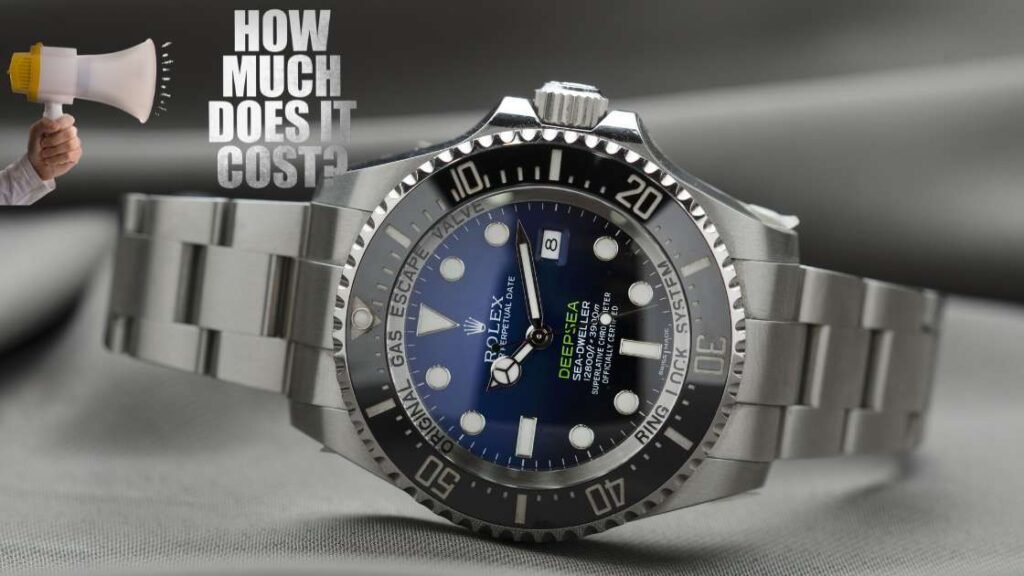
According to Rolex’s watchmaking documentation, the company creates, manufactures, assembles, and tests all of its timepieces in Switzerland, employing more than 9,000 specialists across its production network. Its headquarters at Acacias (Geneva) directs design and final assembly; Bienne produces in-house mechanical calibres; Plan-les-Ouates houses the central foundry for proprietary gold alloys and produces cases and bracelets; and Chêne-Bourg develops dials, gemmology, and Cerachrom ceramic bezels. This extensive vertical integration grants Rolex total control over quality, but it also creates a multi-layered cost structure far beyond simple metal stamping.
How Much Does It Cost Rolex To Make One Watch?
Because Rolex SA is owned by the private Hans Wilsdorf Foundation, it has no legal obligation to publish balance sheets or individual product costs. However, horological analysts, watchmakers, and luxury equity researchers estimate that the Bill of Materials (BOM) and direct labor for an entry-level stainless steel Rolex represent approximately 12% to 18% of its retail MSRP.
On a $7,050 Oyster Perpetual 41, the estimated direct factory cost sits around $850 to $1,250. The remaining retail value is distributed across authorized distribution, Swiss industrial facilities, amortized movement research, rigorous testing, and brand value.
| Cost Layer | Estimated Share of MSRP | Estimated Dollar Allocation ($7,050 OP 41) | Key Operational Drivers |
|---|---|---|---|
| Direct Production & Materials (BOM) | 12% – 18% | $850 – $1,270 | 904L Oystersteel, sapphire crystal, calibre parts, Parachrom hairspring, dial luminous markers. |
| Hand Assembly, Testing & Swiss Labor | 8% – 12% | $560 – $850 | Watchmaker movement regulation, casing by hand, Superlative Chronometer testing (−2/+2 sec/day). |
| R&D, Tooling & Facility Overhead | 15% – 20% | $1,050 – $1,410 | Multi-axis CNC tooling, metallurgy research, cleanroom facilities, 5-year guarantee reserves. |
| Brand Marketing & Sponsorships | 10% – 15% | $700 – $1,050 | Global sporting partnerships (tennis, motorsport, golf, exploration), arts, cultural ambassadors. |
| Authorized Retailer (AD) Margin | 35% – 40% | $2,450 – $2,820 | Official Rolex Jeweler boutique overhead, sales commission, display fixtures, local service support. |
Manufacturing Cost vs. Retail Price vs. Secondary Market Value
Understanding luxury watch economics requires distinguishing between three distinct pricing concepts:
| Cost Term | What It Covers | Publicly Verifiable? |
|---|---|---|
| Manufacturing Cost (COGS) | Raw alloys, movement machining, hand regulation, cleanroom assembly, quality control rejects, and Swiss factory labor. | No. Kept strictly confidential by Rolex SA. |
| Official Retail Price (MSRP) | The manufacturer’s suggested retail price set for Official Rolex Jewelers, including wholesale margin, 5-year warranty, and corporate taxes. | Yes. Listed publicly on Rolex.com for current production references. |
| Secondary-Market Price | The transaction price for pre-owned or unworn watches traded on the open market, driven strictly by buyer demand and scarcity. | Yes. Tracked via secondary marketplace platforms and watch auctions. |
Why Does Rolex Heritage and Corporate Structure Impact Price?
Rolex’s pricing power is uniquely reinforced by its corporate foundation. In 1944, following the death of his wife, founder Hans Wilsdorf transferred 100% of Rolex ownership to the Hans Wilsdorf Foundation, a private non-profit trust based in Geneva. Because Rolex has no commercial shareholders demanding dividend payouts or quarterly earnings growth, the company routinely reinvests substantial capital back into its manufacturing infrastructure, tooling, and proprietary metallurgy.
Key Horological Milestones That Established Brand Equity
Rolex built its reputational equity through practical timing innovations rather than fragile high complications:
- 1905: Hans Wilsdorf established the business in London with an uncompromising focus on wristwatch precision.
- 1910 & 1914: Rolex received the first wristwatch chronometer certificate from the Official Watch Rating Centre in Bienne, followed by a Class “A” precision certificate from Kew Observatory in Britain.
- 1926: Rolex introduced the Oyster case, featuring a screw-down bezel, case back, and winding crown—the world’s first hermetically sealed waterproof wristwatch case.
- 1931: Rolex patented the Perpetual rotor, a free-turning 360-degree self-winding mechanism that became the foundation for modern automatic watches.
- 1953: Release of the Submariner (reference 6204), the first divers’ watch guaranteed waterproof to 100 meters (330 feet).
- 1985: Rolex became the first watchmaking manufacturer to transition entirely to corrosion-resistant steel from the 904L family (branded as Oystersteel).
The Three Pillars of Rolex Construction
| Component | Engineering & Materials | Cost & Longevity Impact |
|---|---|---|
| Case and Bracelet | Milled from solid blocks of 904L Oystersteel, 18 kt gold alloys (Yellow, White, Everose), 950 platinum, or Rolesor bi-metal. | 904L steel requires specialized high-pressure tooling and extensive polishing cycles to achieve a lustrous, satin finish that resists harsh chemical corrosion. |
| In-House Calibre | Mechanical calibres (e.g., Calibre 3230 / 3235) equipped with Chronergy escapements, blue Parachrom hairsprings, and Paraflex shock absorbers. | Paramagnetic alloys and high-efficiency escapements deliver a 70-hour power reserve and resistance to magnetic fields and daily shocks. |
| Dial & Bezel Finishing | Brass or gold dial bases coated in lacquer or electroplating; Cerachrom ceramic bezel inserts with PVD platinum/gold graduations. | Cerachrom bezels are virtually scratch-proof and immune to UV fading, requiring laser deposition of precious metals into ceramic engravings. |
What Materials Are Used In Rolex Manufacturing?
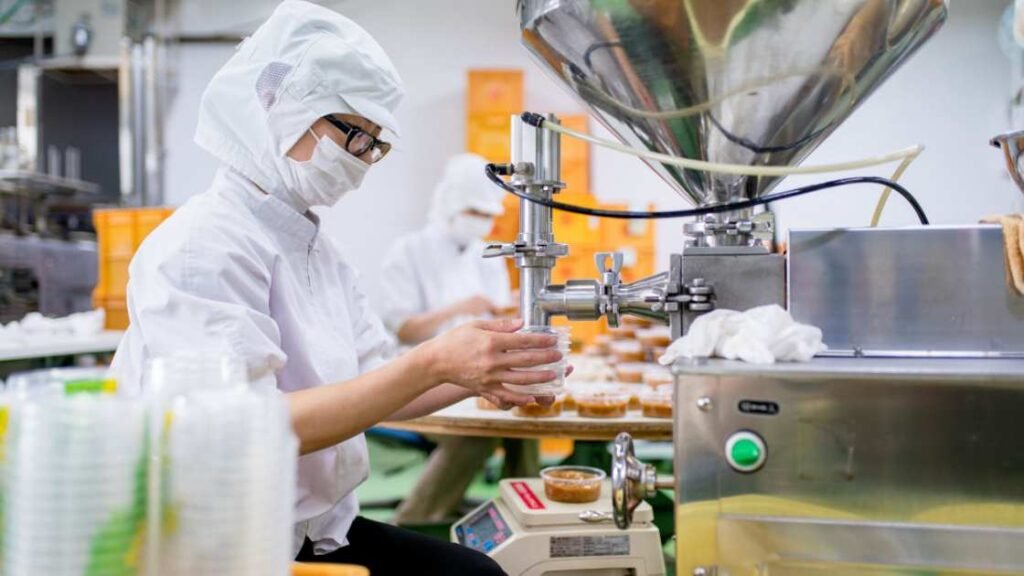
Material selection is a primary driver of production expenses. A stainless steel sports watch and an 18 kt gold or diamond-set model share fundamental mechanical architecture, but their raw material acquisition and processing costs differ drastically.
| Material | Manufacturing Process | Direct Impact on Cost |
|---|---|---|
| Oystersteel (904L) | Superalloy steel with higher chromium, molybdenum, and nickel content. | Harder to machine than standard 316L stainless steel, requiring custom carbide tooling and slower machining speeds. |
| In-House 18 kt Gold | Cast in Rolex’s proprietary foundry at Plan-les-Ouates using pure 24 kt gold alloyed with copper, silver, or platinum. | Direct precious metal commodity expense; proprietary Everose formulation prevents chlorine and UV discoloration. |
| 950 Platinum | Composed of 950‰ (parts per thousand) platinum, alloyed with ruthenium. | Extremely dense and abrasive on cutting tools, requiring extensive hand-polishing and specialized diamond tooling. |
| Precious Gemstones | Diamonds, rubies, and sapphires inspected by certified in-house gemmologists. | Every gemstone is hand-set into gold collets by master gem-setters, adding dozens of labor hours per piece. |
How Is A Rolex Made? Step-by-Step Production
Every Rolex watch passes through an integrated Swiss manufacturing pipeline across four specialized sites before reaching an Authorized Retailer:
- 1. In-House Foundry & Case Stamping (Plan-les-Ouates): Raw metals and precious alloys are cast, rolled, and stamped into solid mid-case blanks before undergoing CNC multi-axis milling to microscopic tolerances.
- 2. Movement Machining & Regulation (Bienne): Hundreds of movement components—including base plates, bridges, gears, escape wheels, and Parachrom hairsprings—are micro-machined, electroplated, assembled, and oiled.
- 3. Dial Creation & Gem-Setting (Chêne-Bourg): Dials are crafted from brass or gold, lacquered, sunray-brushed, or gem-set. Ceramic Cerachrom bezels are sintered at over 1,500°C to achieve extreme surface hardness.
- 4. Hand Final Assembly (Acacias, Geneva): Skilled watchmakers case the movement, secure the dial and hands, mount the sapphire crystal, and screw down the case back and Twinlock/Triplock crown.
- 5. Superlative Chronometer Testing: After casing, the complete watch undergoes proprietary automated testing in hyperbaric chambers to verify waterproofness, self-winding efficiency, and a daily timing rate within −2/+2 seconds.
Rolex’s Superlative Chronometer standard applies a tolerance of −2/+2 seconds per day to the fully cased watch, which is more than twice as stringent as the official Swiss Chronometer Testing Institute (COSC) requirement (−4/+6 seconds per day for an uncased movement).
For an in-depth look at production costs for Rolex’s most famous diving model, explore our complete analysis on the cost to make a Rolex Submariner.
Why Are Rolex Watches So Expensive?
The gap between raw manufacturing cost and final retail price is shaped by five major economic factors:
- Swiss Skilled Labor Costs: Switzerland has some of the highest manufacturing wage structures globally. Specialized micro-engineers, polishers, and master watchmakers represent substantial recurring operating expenditure.
- Authorized Dealer Network Margins: Official Rolex Jewelers operate high-end retail locations that require a ~35% to 40% margin on retail sales to cover boutique leases, security, staff, and inventory holding costs.
- Industrial Capital Expenditure: Building and maintaining vertically integrated Swiss facilities—including an upcoming multi-billion production campus in Bulle, Switzerland—requires continuous capital investment.
- Controlled Scarcity vs. Global Demand: Rolex manufactures an estimated 1.15 to 1.2 million watches annually. Global demand for steel sports references consistently exceeds authorized supply, sustaining pricing power.
- Five-Year International Guarantee & Service Infrastructure: Every new Rolex includes a 5-year guarantee, backed by an international network of certified service centers maintaining parts availability for up to 35 years after a reference is discontinued.
What Does A New Rolex Cost in 2026?
Rolex MSRPs range from accessible stainless steel everyday models to high-complication and gem-set precious metal references. Below are current official U.S. catalog retail prices for the core Oyster Perpetual lineup:
| Model & Case Size | Reference Number | Material | Movement | Current U.S. Retail MSRP |
|---|---|---|---|---|
| Oyster Perpetual 28 | 276200 | Oystersteel | Calibre 2232 | $6,200 USD |
| Oyster Perpetual 31 | 277200 | Oystersteel | Calibre 2232 | $6,300 USD |
| Oyster Perpetual 34 | 124200 | Oystersteel | Calibre 2232 | $6,400 USD |
| Oyster Perpetual 36 | 126000 | Oystersteel | Calibre 3230 | $6,750 USD |
| Oyster Perpetual 41 | 124300 | Oystersteel | Calibre 3230 | $7,050 USD |
At the top of the standard production catalog, models such as the Day-Date 36 in 950 Platinum with diamond-set bezel (ref. 128396TBR) command $130,400 USD, demonstrating how precious metal mass and hand gemmology scale retail prices independently of base movement timing.
What Is The True Cost of Owning a Rolex?
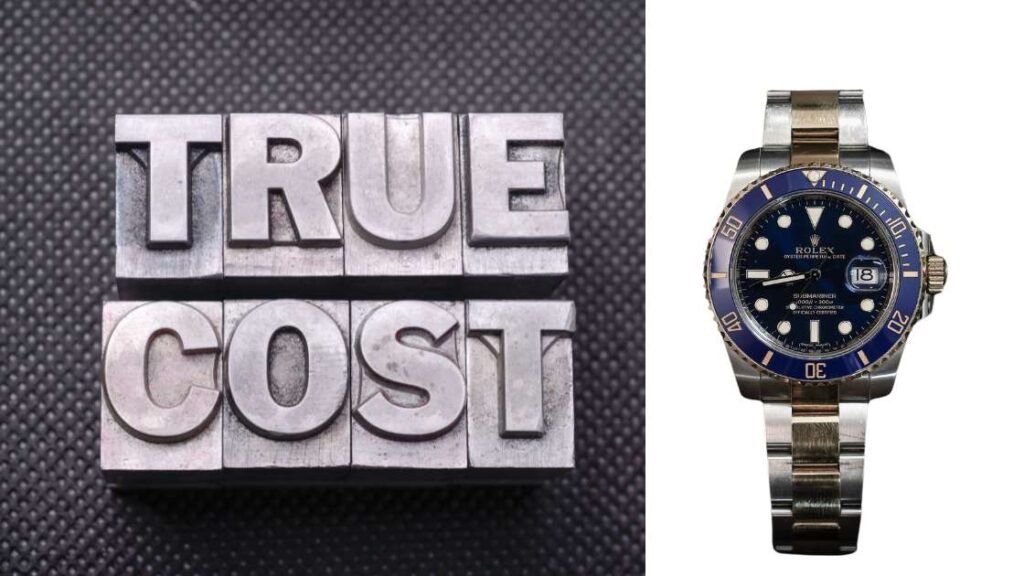
The total cost of ownership extends beyond the initial retail invoice. Buyers should factor in long-term maintenance, insurance, and wear considerations over a multi-decade lifecycle:
- Routine Servicing (Every 10 Years): Rolex recommends complete overhaul servicing approximately every 10 years. An official service by Rolex Authorised Service Centres typically ranges from $800 to $1,400+ depending on calibre complexity, replacement parts, and case refinishing.
- Insurance Coverage: Specialized luxury jewelry insurance generally costs between 1% and 2% of the watch’s appraised replacement value annually ($70 to $150/year for entry-level models).
- Warranty Protection: All new purchases from Official Rolex Jewelers come with an international 5-year guarantee covering mechanical defects and timing adjustments.
- Resale Retention vs. Appreciation: While steel sports references (e.g., Submariner, GMT-Master II, Daytona) have historically retained strong value on the secondary market, appreciation is subject to macroeconomic cycles, reference popularity, condition, and full original box-and-papers provenance.
Frequently Asked Questions
How much does it cost Rolex to make one watch?
Rolex does not publicly disclose internal manufacturing costs. However, Swiss horology financial analyses estimate that direct production (Bill of Materials, in-house movement machining, and hand assembly) accounts for roughly $800 to $1,300 for an entry-level stainless steel watch retailing between $6,200 and $7,050.
What is Rolex’s profit margin on a watch?
While Rolex SA publishes no official financial reports, industry estimates from Morgan Stanley and LuxeConsult suggest Rolex operates at an estimated wholesale gross margin around 60% and an estimated operating profit margin of approximately 30% to 34% at the corporate level, with all post-tax profits managed by the Hans Wilsdorf Foundation.
What is the cheapest new Rolex in 2026?
Based on the current official U.S. catalog, the lowest-priced new model is the Oyster Perpetual 28 in Oystersteel (Reference 276200), retailing for $6,200 USD before local sales tax.
Why are Rolex watches so expensive compared to the raw metal cost?
Raw metal is only a fraction of the final price. The retail MSRP reflects multi-million dollar R&D, specialized 904L steel tooling, proprietary gold foundry operations, in-house calibre production, hand assembly, Superlative Chronometer testing, a 5-year warranty, authorized dealer distribution margins (~35%–40%), and global brand prestige.
Are all Rolex watches made entirely in Switzerland?
Yes. Rolex designs, fabricates, assembles, and tests all watches exclusively in Switzerland across four specialized facilities: Acacias (headquarters and assembly), Bienne (movements), Plan-les-Ouates (foundry and cases/bracelets), and Chêne-Bourg (dials and ceramic components).
Is buying a Rolex a guaranteed investment?
No. While certain popular stainless steel sports references historically retain strong secondary market value, market prices can rise, plateau, or drop based on supply cycles, collector sentiment, reference rarity, and physical watch condition.
Conclusion
While the precise factory accounting of Rolex SA remains protected inside the private Hans Wilsdorf Foundation, the economic reality behind a Rolex watch is transparent: direct manufacturing accounts for an estimated $800 to $1,300 of a base $7,000 retail model, with the remaining balance funding Swiss precision engineering, specialized metallurgy foundries, stringent −2/+2 second Superlative Chronometer testing, a 5-year warranty, and an authorized worldwide dealer network. When evaluating the cost of a Rolex, look past raw materials and consider the total lifecycle value, build quality, and lasting horological craftsmanship.
Sources
- Rolex Oyster Perpetual Models — Official U.S. retail price and technical specifications catalog.
- Rolex Watchmaking: A Unique Approach — Official documentation on Swiss production facilities, Bienne movement manufacturing, and Superlative Chronometer testing.
- Rolex History & Milestones — Official archives on Hans Wilsdorf, the Oyster waterproof case, and 904L steel integration.
- The Rolex Guarantee — Official 5-year international warranty and quality control standards.
- Rolex Day-Date 36 (Reference 128396TBR) — Official U.S. pricing reference for 950 platinum and gem-set models.

2 thoughts on “How Much Does It Cost to Make a Rolex? (2026 Guide)”
Pingback: How Much Does It Cost To Make A Rolex Submariner?
Pingback: How Much Does It Cost To Build A Tunnel Car Wash?