
The cost of living in Romania in 2026 runs about 4,100–4,800 lei (~$855–$1,000) a month for a single person renting a one-bedroom in a regional city such as Timișoara or Iași, and about 5,700–6,900 lei (~$1,190–$1,440) for a comfortable single life in Bucharest or Cluj-Napoca. A couple in Bucharest should plan on roughly 7,800–8,900 lei (~$1,630–$1,860), and a family of four on about 13,500–15,900 lei (~$2,820–$3,320) before international school fees. These figures use the European Central Bank reference rates of October 7, 2026, which work out to about 4.79 lei per US dollar (5.35 lei per euro). Rent is the biggest swing factor. A one-bedroom outside the center averages about 1,660 lei (~$345) nationally, while central Bucharest averages close to 3,240 lei (~$675). Prices are still low by EU standards, but inflation has been the highest in the EU for much of 2026, so older guides understate what you will pay.
Quick Answer
- Single person: 4,100–4,800 lei (~$855–$1,000) in a regional city; 5,700–6,900 lei (~$1,190–$1,440) in Bucharest or Cluj-Napoca.
- Couple: 7,800–8,900 lei (~$1,630–$1,860) a month in Bucharest.
- Family of four: about 13,500–15,900 lei (~$2,820–$3,320) before private school fees.
- Rent, one-bedroom: 1,710–2,490 lei (~$360–$520) outside the center; 2,570–3,280 lei (~$535–$685) in the center, depending on the city.
- Utilities: about 740–925 lei (~$155–$195) a month for an 85 m² apartment; internet adds about 42 lei (~$9).
- Bucharest transit: 80 lei a month for buses, trams, and trolleybuses; 160 lei including the metro.
- Minimum wage: 4,325 lei gross (~$905) since July 1, 2026, or about 2,700 lei net (~$565).
Exchange Rate, Inflation, and Wages in 2026
Three numbers shape what Romania costs you this year.
The exchange rate. Romania uses the leu (plural lei, code RON). On October 7, 2026, the European Central Bank reference rates put the euro at 5.3528 lei and at $1.1177. That makes one US dollar worth about 4.79 lei. The leu has weakened against the euro this year. In early September a euro bought about 5.25 lei, so euro and dollar earners get slightly more for their money than a month ago.
Inflation. Annual inflation fell to 6.17% in August 2026, down from 8.16% in July, according to the National Institute of Statistics (INS) data reported by Alba24. The mix matters for budgets. Food prices rose only 2.62% over the year, but services rose 11.28%. Restaurant meals, repairs, and other labor-heavy costs are climbing fastest.
Wages. The gross minimum wage rose from 4,050 lei to 4,325 lei on July 1, 2026, under Government Decision 146/2026. That is about 2,699 lei net, according to a StartupCafe breakdown of the new minimum wage. The average net wage was 5,820 lei (~$1,215) in July 2026, with an average gross wage of 9,709 lei (~$2,025), per INS figures published by Ziarul Profit.
The average net wage of 5,820 lei sits right at the low end of what a single person spends in Bucharest. Many local households manage by sharing housing or living with family.
Cost of Living by City
Rents vary more between cities than any other expense. The table uses crowd-sourced averages from Numbeo (updated October 2–7, 2026). Bucharest and Cluj-Napoca have the most price reports. Brașov has far fewer, so treat its figures as a rough guide.
| City | 1-Bed, City Center | 1-Bed, Outside Center | Basic Utilities (85 m²) | Monthly Transit Pass |
|---|---|---|---|---|
| Bucharest | 3,237 lei (~$675) | 2,157 lei (~$450) | 924 lei (~$195) | 80–160 lei |
| Cluj-Napoca | 3,020 lei (~$630) | 2,493 lei (~$520) | 740 lei (~$155) | about 146 lei |
| Timișoara | 2,569 lei (~$535) | 1,714 lei (~$360) | 807 lei (~$170) | about 160 lei |
| Iași | 2,600 lei (~$545) | 2,020 lei (~$420) | 872 lei (~$180) | about 130 lei |
| Brașov* | 3,278 lei (~$685) | 2,233 lei (~$465) | 852 lei (~$180) | about 110 lei |
| Romania average | 2,239 lei (~$470) | 1,657 lei (~$345) | 757 lei (~$160) | about 110 lei |
*Brașov’s figures come from fewer reports, and tourist demand pushes central rents up.
A few patterns stand out:
- Bucharest has the highest central rents and the largest gap between central and outer districts, about 1,080 lei a month. Living near a metro line outside the center saves real money without a long commute.
- Cluj-Napoca is expensive everywhere. Tech and university demand keep outer rents close to central ones, so sharing a flat saves more than moving a few districts out.
- Timișoara has the lowest outer rents among the big cities, at about 1,710 lei.
- Iași is mid-priced, with a small premium for central apartments.
- Brașov rivals Bucharest in the center because of tourism and short-term rentals.
Housing: Rent and Moving In
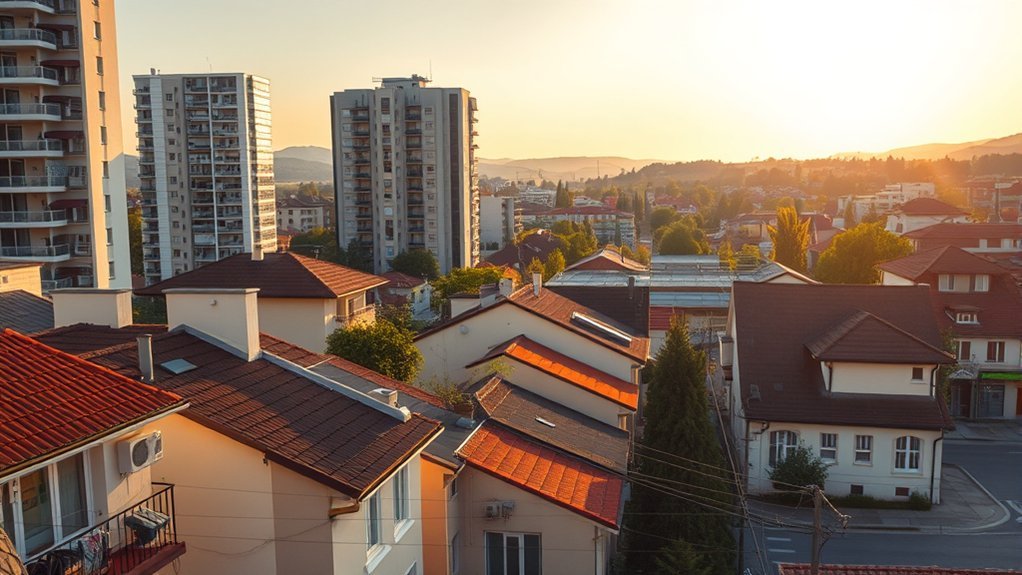
Families need more space. Crowd-sourced averages for a three-bedroom apartment in October 2026 look like this:
| Area | 3-Bed, City Center | 3-Bed, Outside Center |
|---|---|---|
| Bucharest | 5,195 lei (~$1,085) | 3,417 lei (~$715) |
| Cluj-Napoca | 5,462 lei (~$1,140) | 3,905 lei (~$815) |
| Timișoara | 4,006 lei (~$835) | 2,918 lei (~$610) |
| Iași | 4,193 lei (~$875) | 3,190 lei (~$665) |
| Romania average | 3,740 lei (~$780) | 2,754 lei (~$575) |
Many landlords quote rent in euros and take payment in lei at the day’s rate. If the leu weakens, your rent in lei goes up even when the lease does not change. Ask which currency the contract uses before you sign.
Moving-in costs. Expect to pay the first month’s rent plus a deposit, usually one or two months. If an agency found the apartment, its fee is often around half a month’s rent to one full month. Check the lease for who pays the building maintenance fee (întreținere), which in older blocks can include heating and water. Record the meter readings and the apartment’s condition on move-in day.
Do not send a deposit for an unusually cheap listing you have not seen. Verify the owner or agent, the written contract, and who receives the money.
Utilities, Internet, and Phone
Basic utilities (electricity, heating, water, and garbage) for an 85 m² apartment average about 757 lei (~$160) a month nationwide, with Bucharest near 924 lei (~$195). A smaller one-bedroom usually runs 450–650 lei. Bills swing with the season. Winter heating from a district network or a gas boiler can double a summer bill in an older, poorly insulated block.
Electricity got more expensive after the government price cap for households ended in mid-2025. A September 2026 Bugetul report estimated that a two-room apartment using 150–200 kWh a month pays about 180–250 lei, up from 120–150 lei a year earlier. Homes that heat with electricity or heat pumps can reach 600–800 lei a month in winter.
Other monthly connections are cheap:
- Home internet (60+ Mbps): about 42 lei (~$9). Fiber is widespread and fast, even in smaller cities.
- Mobile plan with 10 GB+ of data: about 38 lei (~$8).
- Building maintenance fee: varies widely by block. Ask the landlord for the last few winter bills.
Food: Groceries and Dining Out

A single person who cooks most meals spends about 1,000–1,300 lei (~$210–$270) a month on groceries. A couple should plan on about 2,000–2,200 lei, and a family of four around 3,000–3,500 lei. Most food is taxed at the reduced 11% VAT rate, which keeps staples cheaper than imports and alcohol.
Average national prices in October 2026:
| Item | Typical Cost (lei) | Approx. USD |
|---|---|---|
| Milk (1 liter) | 7.13 | $1.49 |
| White bread (500 g) | 5.67 | $1.18 |
| Rice (1 kg) | 7.47 | $1.56 |
| Eggs (12) | 15.40 | $3.22 |
| Chicken fillets (1 kg) | 30.38 | $6.34 |
| Beef (1 kg) | 49.23 | $10.28 |
| Local cheese (1 kg) | 39.26 | $8.20 |
| Apples (1 kg) | 5.64 | $1.18 |
| Mid-range bottle of wine | 30.00 | $6.26 |
Local markets (piețe) are the best place for seasonal fruit, vegetables, and cheese. Discount supermarkets beat convenience stores on staples.
Eating out costs more than it used to, because services inflation runs above 11%. Typical prices:
- Meal at an inexpensive restaurant: about 50 lei (~$10.45) nationally; about 70 lei (~$14.60) in Bucharest
- Three-course dinner for two at a mid-range restaurant: about 200 lei (~$42) nationally; about 270 lei (~$57) in Bucharest
- Fast-food combo meal: about 35 lei (~$7.30)
- Cappuccino: about 13 lei (~$2.75)
- Domestic draft beer (pint): about 11 lei (~$2.30)
Many restaurants offer a weekday lunch menu (meniul zilei) with soup and a main course for well under the price of an à la carte meal.
Transportation and Getting Around
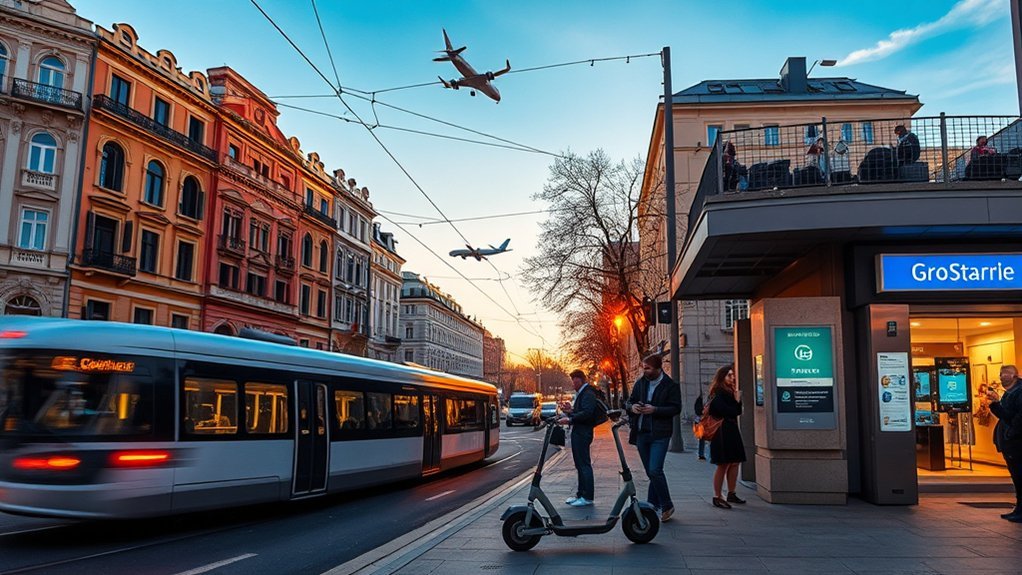
Public transit is one of Romania’s cheapest everyday costs. In Bucharest, the STB fare table lists these prices:
| Bucharest Ticket | Price (lei) | Approx. USD |
|---|---|---|
| Single trip, surface (90 minutes) | 3 | $0.63 |
| 24-hour pass, surface only | 8 | $1.67 |
| 24-hour pass, surface + metro | 18 | $3.76 |
| Monthly pass, surface only | 80 | $16.70 |
| Monthly pass, surface + metro | 160 | $33.40 |
A metro-only monthly pass from Metrorex costs about 100 lei. In other cities a monthly pass runs about 110–160 lei, according to crowd-sourced averages.
Other transport costs:
- Taxis: about 3.75 lei to start and 3.50 lei per kilometer (~$0.73) on standard tariffs. Ride-hailing apps are common in big cities.
- Gasoline: about 8.63 lei per liter (~$1.80 per liter, or about $6.80 per gallon).
- Cars: add insurance, parking, inspections, winter tires, and Bucharest’s heavy traffic. Most newcomers in the capital skip owning one.
- Intercity travel: trains are cheap but slow. Buses and domestic flights often save time between Bucharest, Cluj-Napoca, Timișoara, and Iași.
Healthcare and Insurance Costs

Romania’s public health system is funded by the health contribution called CASS.
- Employees: pay 10% of gross salary as CASS through payroll, which gives access to the public system.
- People without insured income: eligible residents can opt in by paying CASS on a base of six minimum wages. For 2026 that is 2,430 lei (~$505) a year, based on the 4,050 lei minimum wage in force on January 1. You declare it through ANAF’s Single Declaration (Declarația unică).
- Public coverage limits: not every drug, test, or dental treatment is free, and waits for specialists can be long.
Private options. Many residents pay for faster care on top of public coverage. Private clinic networks sell subscriptions that cover checkups and specialist visits within their own clinics. These are not full insurance, so read the exclusions. Full private health insurance is priced by age, history, and coverage area, so get written quotes. Long-stay visa applicants also need health insurance that covers them in Romania.
Schools and Childcare
Families face the widest cost range, because school choice matters so much.
| Expense | Romania Average | Notes |
|---|---|---|
| Private preschool, full day | 2,276 lei/month (~$475) | higher in Bucharest; meals and hours vary |
| International primary school | 41,049 lei/year (~$8,570) | top Bucharest schools charge far more, plus enrollment fees |
| Public school | free tuition | taught in Romanian; budget for supplies and activities |
For a family with two children in an average international school, tuition alone adds about 6,840 lei (~$1,430) a month.
Taxes: VAT and Income Tax
- VAT (TVA): the standard rate is 21% and is included in shelf prices. A reduced 11% rate applies to most food, medicines, water supply, books, and restaurant and hotel services, according to PwC’s Romania tax summary. Alcohol and high-sugar foods are taxed at 21%.
- Income tax: a flat 10% on most income, per PwC’s personal income tax summary.
- Social contributions: employees pay 25% of gross pay for pension (CAS) and 10% for health (CASS) before income tax. That is why a 9,709 lei average gross wage becomes about 5,820 lei net.
- Tax residency: staying more than 183 days in a 12-month period generally makes you a Romanian tax resident, taxed on worldwide income. Check your home country’s rules and any tax treaty before you move.
Visas and Residence Costs
Romania joined the Schengen Area fully in 2025. US, Canadian, UK, and Australian citizens can visit for up to 90 days in any 180-day period, and time in other Schengen countries counts toward that limit. Living longer requires a long-stay (D) visa for a set purpose, such as work, study, family, or remote work, followed by a residence permit.
Fees: the Ministry of Foreign Affairs visa fee page lists a long-stay visa fee of €300 (~1,605 lei, ~$335) for applications filed through the e-Visa portal since April 27, 2026, up from €120. Short-stay Schengen visas cost €90. The residence permit carries a separate fee.
Digital nomad route: remote workers must show income of at least three times Romania’s average gross salary. With the 2026 reference wage of 9,192 lei set by the state social insurance budget law, that is about 27,576 lei (~$5,760) a month, according to Remote Work Europe’s guide to the visa. That bar is far higher than in many nearby countries.
| Item | 2026 Cost or Requirement | Notes |
|---|---|---|
| Short-stay Schengen visa | €90 | not needed by US, UK, Canadian, or EU citizens |
| Long-stay (D) visa | €300 (~$335) | e-Visa applications since April 27, 2026 |
| Digital nomad income floor | 27,576 lei/month (~$5,760) | 3x the 2026 average gross salary of 9,192 lei |
| Optional CASS (no insured income) | 2,430 lei/year (~$505) | gives access to public healthcare |
EU and EEA citizens do not need a visa. They register their residence with the immigration office after three months. Rules change often, so confirm the current requirements with a Romanian consulate before you apply.
Salary vs. Cost of Living
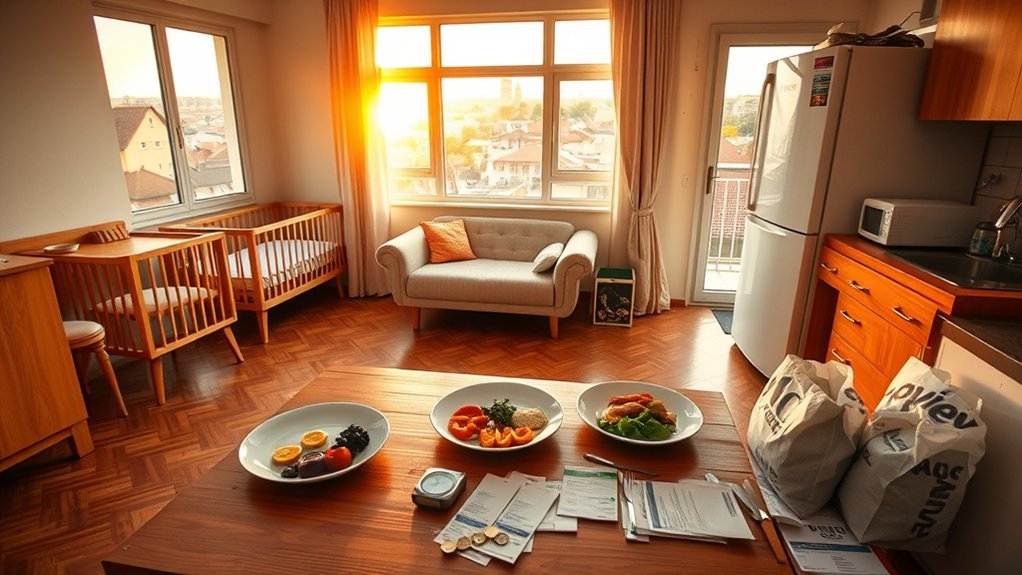
Local pay explains why Romania feels cheap to foreigners but tight to many residents.
- Minimum wage earners take home about 2,700 lei. That barely covers rent on a one-bedroom outside the center in Bucharest or Cluj-Napoca.
- Average earners take home 5,820 lei. A central Bucharest one-bedroom eats about 56% of that.
- Tech workers earn much more. IT programming and consultancy averaged about 13,464 lei net in July 2026, which is why Cluj-Napoca and Bucharest rents are so high.
- Foreign earners on a US or Western European salary have strong buying power. $3,000 a month is about 14,370 lei, more than double the national average wage.
One-Time Setup Costs
Budget for these before your first month:
- Visa fee: €300 (~$335) for a long-stay visa, plus the residence permit fee.
- Rental deposit: usually one or two months’ rent, so about 2,000–6,500 lei in Bucharest.
- Agency fee: often half a month to one month of rent when an agent is involved.
- Furnishing basics: linens, cookware, and small appliances for a furnished flat cost roughly 1,500–2,500 lei (~$315–$520). Fully furnishing an empty apartment costs far more.
- Temporary housing: a short-term rental while you view apartments, often for two to four weeks.
- Health coverage gap: private or travel insurance until public coverage or a private plan starts.
Sample Monthly Budgets
These budgets combine the averages above. Regional rents use Timișoara and Iași; big-city rents use Bucharest and Cluj-Napoca. Health costs assume public coverage through payroll, so add private insurance if you need it.
| Expense (lei) | Single, Regional City | Single, Bucharest/Cluj | Couple, Bucharest | Family of Four |
|---|---|---|---|---|
| Rent | 1,700–2,000 (1-bed) | 2,200–3,200 (1-bed) | 2,200–3,200 (1-bed) | 2,750–3,420 (3-bed, outside center) |
| Utilities | 500–650 | 600–800 | 750–900 | included in costs below |
| Internet + mobile | 80 | 80 | 120 | included in costs below |
| Groceries | 1,000–1,200 | 1,300 | 2,200 | included in costs below |
| Eating out + leisure | 400 | 800 | 1,200 | included in costs below |
| Transport | 110–160 | 160 | 320 | included in costs below |
| Gym | — | 190 | 380 | — |
| Personal and other | 300 | 400 | 600 | — |
| Living costs without rent | — | — | — | 10,710–12,450 |
| Total (lei) | 4,100–4,800 | 5,700–6,900 | 7,800–8,900 | 13,500–15,900 |
| Total (USD) | $855–$1,000 | $1,190–$1,440 | $1,630–$1,860 | $2,820–$3,320 |
Family of four: crowd-sourced averages put a family’s monthly costs without rent at about 10,710 lei nationally and 12,450 lei in Bucharest. Adding a three-bedroom outside the center gives the total above. International school for two children pushes it to roughly 20,300–22,700 lei (~$4,250–$4,750).
Sharing saves the most. A room in a shared flat can cut a single person’s budget by 800–1,500 lei a month in Bucharest or Cluj-Napoca.

Money-Saving Tips
- Choose your city carefully. A one-bedroom outside the center in Timișoara costs about 780 lei less than one in Cluj-Napoca.
- Live near a metro or tram line. In Bucharest, outer districts with good transit save over 1,000 lei a month on rent.
- Ask for winter utility bills. Insulation and heating type matter more than the building’s age.
- Pay rent in lei if you can. Euro-linked leases rise when the leu weakens.
- Shop at markets and discount chains. Local produce, dairy, and bread are cheap; imports are not.
- Use monthly transit passes. Bucharest’s 80 lei surface pass costs less than 27 single trips.
- Eat the weekday lunch menu. It is usually the cheapest way to eat out.
How Romania Compares With Nearby Countries
Romania is one of the cheaper places to live in the EU, but not the cheapest. Compare it with the cost of living in Bulgaria, its southern neighbor, which adopted the euro in January 2026 and has slightly lower rents outside Sofia. To the west, the cost of living in Hungary is higher in Budapest than in Bucharest, though household energy there is cheaper. Outside the EU, the cost of living in Serbia is similar, with Belgrade rents close to Bucharest’s. Expats weighing Central Europe often look at the cost of living in Poland and the cost of living in the Czech Republic, where Prague in particular costs well above Bucharest.
Frequently Asked Questions
How much money do you need to live in Romania per month?
A single person needs about 4,100–4,800 lei (~$855–$1,000) a month in a regional city such as Timișoara or Iași, and about 5,700–6,900 lei (~$1,190–$1,440) in Bucharest or Cluj-Napoca. A couple in Bucharest should budget about 7,800–8,900 lei (~$1,630–$1,860).
Is $1,000 a month enough to live in Romania?
Yes, in a regional city. At about 4.79 lei per dollar, $1,000 is roughly 4,790 lei. That covers a one-bedroom outside the center in Timișoara or Iași, utilities, groceries, and transit. It is tight in Bucharest or Cluj-Napoca unless you share a flat.
How much is rent in Bucharest in 2026?
A one-bedroom averages about 3,237 lei (~$675) a month in the city center and about 2,157 lei (~$450) outside it. A three-bedroom averages about 5,195 lei in the center and 3,417 lei outside it.
Which Romanian city is cheapest to live in?
Among the large cities, Timișoara has the lowest average rent outside the center, at about 1,714 lei (~$360) for a one-bedroom. Iași is also mid-priced, while Bucharest, Cluj-Napoca, and Brașov have the highest central rents.
What is the minimum wage in Romania in 2026?
The gross minimum wage is 4,325 lei a month (~$905) since July 1, 2026, up from 4,050 lei. That is about 2,699 lei (~$565) net.
What is the average salary in Romania in 2026?
The average net salary was 5,820 lei (~$1,215) a month in July 2026, and the average gross salary was 9,709 lei (~$2,025). Pay in IT and energy is more than double the average.
How much income do you need for Romania’s digital nomad visa?
You must show income of at least three times Romania’s average gross salary. With the 2026 reference wage of 9,192 lei, that is about 27,576 lei (~$5,760) a month. The long-stay visa fee is €300.
Conclusion
Romania is still affordable by US and Western European standards, but 2026 has pushed costs up. Inflation spent much of the year as the highest in the EU, VAT is now 21%, and electricity costs more since the price cap ended. A single person can live comfortably for about $1,190–$1,440 a month in Bucharest or Cluj-Napoca, or closer to $1,000 in Timișoara or Iași. Pick your city and neighborhood first, since rent drives most of the difference, check the winter utility bills, and budget in lei with a buffer for currency swings.
Sources
- European Central Bank – euro reference exchange rates, October 7, 2026
- Alba24 – INS inflation data, August 2026
- Ziarul Profit – INS average wages, July 2026
- StartupCafe – minimum wage from July 1, 2026 (HG 146/2026)
- Numbeo – Romania, Bucharest, Cluj-Napoca, Timișoara, Iași, Brașov (crowd-sourced averages, October 2026)
- Bugetul – household electricity bills, September 2026
- STB – Bucharest public transport fares
- ANAF – Declarația unică 2026
- PwC Worldwide Tax Summaries – Romania VAT
- PwC Worldwide Tax Summaries – Romania personal income tax
- Romanian Ministry of Foreign Affairs – visa fees
- Remote Work Europe – Romania digital nomad visa requirements