The cost of living in Grenada in 2026 is about EC$3,100–EC$4,000 (~US$1,150–US$1,480) a month for a single person living simply outside the St. George’s tourist belt, and about EC$5,000–EC$6,800 (~US$1,850–US$2,520) for a comfortable single life near Grand Anse with air conditioning and a car. A couple should plan on roughly EC$6,650–EC$8,850 (~US$2,465–US$3,280). The East Caribbean dollar is fixed at EC$2.70 per US dollar, so these conversions do not drift. Rent and imported food drive most of the cost. A one-bedroom outside the main towns averages about EC$1,340 (~US$495) a month, while one near St. George’s or Grand Anse often costs EC$1,800–EC$3,070 (~US$670–US$1,135). Below you’ll find rents, utilities, grocery prices, transport, healthcare, taxes, residency costs, and sample budgets.
Quick Answer
- Single person: EC$3,100–EC$4,000 (~US$1,150–US$1,480) on a lean budget; EC$5,000–EC$6,800 (~US$1,850–US$2,520) for a comfortable one.
- Couple: EC$6,650–EC$8,850 (~US$2,465–US$3,280) a month in a one-bedroom.
- Family of four: about EC$12,900–EC$13,500 (~US$4,780–US$5,000) on an expat-style budget, including a three-bedroom.
- Rent, one-bedroom: EC$1,180–EC$1,340 (~US$440–US$495) outside the center; EC$1,800–EC$3,070 (~US$670–US$1,135) in or near St. George’s.
- Utilities: about EC$620–EC$680 (~US$230–US$250) a month for an 85 m² apartment with air conditioning; internet adds about EC$130 (~US$48).
- Bus fare: about EC$3 (~US$1.10) for a short minibus ride.
- VAT: 15%, included in most shelf prices.
Currency, Inflation, and the Economy in 2026
The currency. Grenada uses the East Caribbean dollar (EC$), which the Eastern Caribbean Central Bank has kept at EC$2.70 per US dollar since 1976. That peg means US dollar earners face no exchange-rate risk. Many landlords, schools, and real estate agents quote prices in US dollars, while shops and buses use EC dollars. All conversions in this guide use EC$2.70 = US$1.
Inflation. The IMF’s latest projections put Grenada’s 2026 consumer price inflation at about 1.3% and real GDP growth at about 3.1%. Price rises are modest, but the starting level is high because Grenada imports most of its food, fuel, and building materials.
Hurricane recovery. Hurricane Beryl struck in July 2024 and devastated Carriacou and Petite Martinique. The IMF’s 2025 Article IV report, published in January 2026, describes growth driven by tourism and reconstruction. Rebuilding has kept demand for builders, materials, and rental housing high, especially on the sister islands.
Because the EC dollar is pegged, a US$1,500 budget buys the same EC$4,050 it did a year ago. What changes is the local price of rent and imports, not the exchange rate.
Cost of Living by Area
Grenada has only about 125,000 people, so price data is thin. The table uses crowd-sourced averages updated in October 2026. The national figures come from about 115 price reports and the St. George’s figures from only about 50, so treat them as rough guides and check current listings.
| Area | 1-Bed, Center | 1-Bed, Outside Center | 3-Bed, Outside Center | Basic Utilities (85 m²) |
|---|---|---|---|---|
| St. George’s area | EC$3,067 (~US$1,136) | EC$1,183 (~US$438) | EC$1,900 (~US$704) | EC$679 (~US$251) |
| Grenada average | EC$1,816 (~US$673) | EC$1,340 (~US$496) | EC$2,478 (~US$918) | EC$624 (~US$231) |
How the main areas differ:
- Grand Anse, Morne Rouge, and True Blue sit near the beach, the airport, and St. George’s University. Students, medical faculty, and expats compete for furnished units here, so rents are the highest on the island.
- St. George’s town has older apartments and family homes at mixed prices. Hills and narrow roads make a car or regular bus use important.
- Lance aux Épines and Westerhall are upscale residential areas with villas, sea views, and prices to match.
- Grenville, Gouyave, and rural St. Andrew or St. Patrick have the lowest rents, but fewer shops, clinics, and jobs, and longer trips to town.
- Carriacou and Petite Martinique are quieter and still rebuilding after Hurricane Beryl. Housing is limited, and many goods arrive by ferry from the main island.
Housing: Renting and Buying
Renting
Most newcomers rent a furnished apartment first. Rents rise near the university and beaches, and some landlords set prices around the semester calendar. Ask whether the rent includes water, internet, yard work, and security, since these are often bundled in furnished units.
Expect to pay one month’s deposit plus the first month in advance. Check that the home has hurricane shutters or impact windows, a water tank, and a backup water pump, because power and water cuts happen after storms. If you are comparing a short stay first, our comparison of US and Caribbean hotel prices shows what a few months in a hotel or guesthouse might cost before you sign a lease.
Buying Property
Asking prices vary widely. Simple homes outside the main towns sell for far less than sea-view villas in Lance aux Épines or Grand Anse, which can reach several million US dollars. The typical mortgage rate reported locally is about 6.8%, and most foreigners pay cash.
Foreign buyers who are not citizens usually need an Alien Landholding License from the government. The license fee is commonly cited at about 10% of the property value, which can make a purchase much more expensive. Buyers through an approved citizenship-by-investment project are generally exempt.
Before you buy, hire a local attorney to check the title, survey, license fee, and closing costs. A low asking price can hide boundary disputes or major hurricane damage.
Utilities, Internet, and Phone
Utilities are one of the biggest surprises in Grenada. Basic utilities (electricity, water, and garbage) for an 85 m² apartment average about EC$624 (~US$231) a month nationally and about EC$679 (~US$251) around St. George’s. Electricity comes from the national utility, GRENLEC, and is mostly generated from imported diesel, so power is expensive and the bill rises with fuel prices.
Air conditioning is the main reason bills climb. A small apartment with fans and one bedroom unit running at night can cost far less than a villa cooled all day. Ask the landlord for the last few electricity bills before you sign.
Other monthly connections:
- Home internet (60+ Mbps): about EC$130–EC$138 (~US$48–US$51).
- Mobile plan with data: about EC$55–EC$89 (~US$20–US$33), depending on the plan.
- Water: billed separately by the national water authority; a tank and pump help during outages.
Food: Groceries and Dining Out
A single person who cooks most meals spends about EC$900–EC$1,300 (~US$335–US$480) a month on groceries. A couple should plan on EC$1,900–EC$2,300 (~US$705–US$850). The gap between local and imported food is large. Fruit, vegetables, fish, and spices from the market in St. George’s cost much less than imported dairy, meat, and packaged goods in the supermarkets.
Average national prices in October 2026 (crowd-sourced):
| Item | Typical Cost (EC$) | Approx. USD |
|---|---|---|
| Milk (1 liter) | 11.38 | $4.21 |
| Bread (1 lb loaf) | 5.24 | $1.94 |
| Eggs (12) | 12.22 | $4.53 |
| Chicken (1 lb) | 12.96 | $4.80 |
| Beef (1 lb) | 22.05 | $8.17 |
| Meal at an inexpensive restaurant | 20–25 | $7.40–$9.25 |
| Cappuccino | 9.26 | $3.43 |
| Domestic beer (bar) | 5.50–10 | $2.05–$3.70 |
Milk is a good example of the import premium. Most of it is imported UHT milk, so a liter costs more than three times the typical US price. Local staples such as breadfruit, callaloo, plantains, rice, and fresh fish keep bills down.
Eating out ranges widely. A plate of local food from a roadside stall or small restaurant costs about EC$20–EC$25. Dinner for two at a mid-range or resort restaurant can cost EC$150–EC$370 (~US$55–US$135), especially in Grand Anse.
Shopping at the market for produce and fish, and buying imported items only when needed, can cut a grocery bill by a third or more.
Transportation and Getting Around
Privately run minibuses are the cheapest way to get around. They run numbered routes from the St. George’s bus terminal across the island.
- Minibus fare: about EC$3 (~US$1.10) for a short trip; longer routes to Grenville or Sauteurs cost more.
- Monthly bus spending: about EC$150–EC$175 (~US$56–US$64) for a regular commuter.
- Taxis: fixed-rate fares are much higher than buses, and a trip between the airport and Grand Anse or St. George’s costs many times the bus fare. Agree on the price before you get in.
- Gasoline: about EC$3.72–EC$3.77 per liter (~US$5.20 per gallon). Fuel prices are set by the government and change periodically.
- Cars: imported cars carry heavy duties, so even used cars cost more than in the US. Add insurance, licensing, and repairs on steep, winding roads.
- Ferries: the ferry between St. George’s and Carriacou is the main link to the sister islands.
Most expats outside Grand Anse end up buying or renting a car. If you live on a bus route and work nearby, you can skip it and save several hundred EC dollars a month.
Healthcare and Insurance Costs
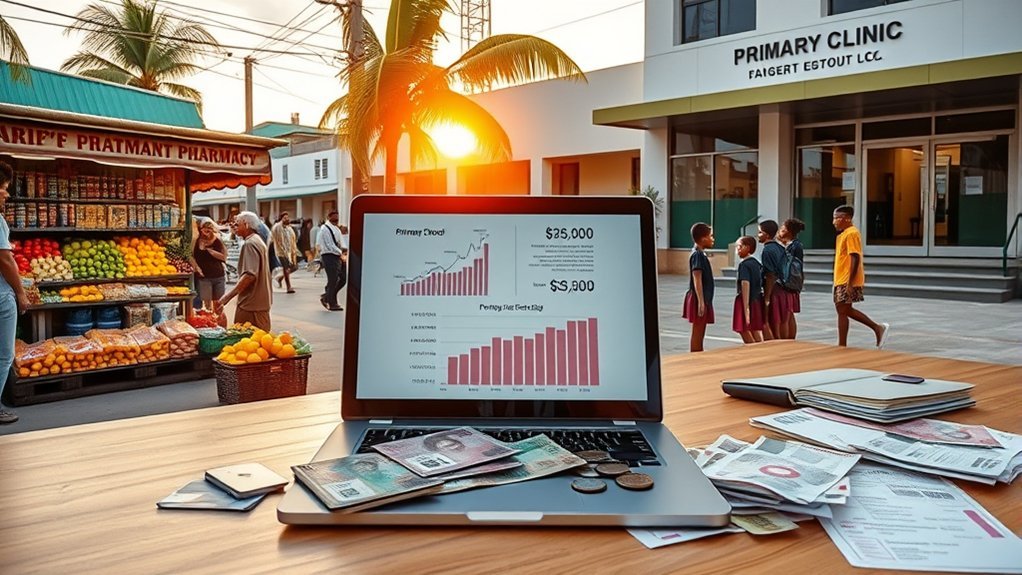
Grenada has public health centers in each parish and the General Hospital in St. George’s, plus private doctors and clinics. Care for routine problems is available, but complex treatment often means travel to Trinidad, Barbados, or the US.
The US State Department’s Grenada page notes that hospitals expect payment up front and strongly recommends insurance that includes medical evacuation. In practice that means:
- Private health insurance: international plans that cover the Caribbean and evacuation are the norm for expats. Premiums depend on age, deductible, and whether US treatment is included, so get quotes for your own age.
- Doctor visits: private consultations are paid in cash and are affordable by US standards. Prescription medicines are often imported and can cost more.
- Emergencies: an air ambulance flight off the island can cost tens of thousands of US dollars without coverage.
Schools and Childcare
- Public schools: education is free and compulsory for children aged about 5 to 16, taught in English.
- Private preschool: about EC$583 (~US$216) a month, full day.
- Private or international primary school: about EC$7,400 (~US$2,740) a year per child on average, plus uniforms, books, and transport. A few schools charge much more.
- University: St. George’s University, a large private medical and veterinary school, brings thousands of international students to the True Blue area.
School fees in Grenada are lower than in many Caribbean countries, but places at the most popular private schools fill early.
Taxes: VAT and Income Tax

- VAT: the standard rate is 15% and is included in most prices. Some basic foods are zero-rated. The government also holds VAT-free shopping days; the Ministry of Finance set them for October 2–3, 2026.
- Personal income tax: Grenada uses two rates, 10% and 28%, on income above a tax-free threshold. Confirm the current threshold with the Inland Revenue Division.
- Corporate tax: about 28% for most companies.
- Import duties: high duties on cars, alcohol, and many consumer goods are a big reason shelf prices are high.
- Home-country taxes: US citizens must keep filing US returns while abroad. Get advice on how Grenadian and US rules interact before you move.
Salaries vs Cost of Living
The average monthly net salary is about EC$2,083 (~US$772) nationally and about EC$2,500 (~US$926) around St. George’s, based on crowd-sourced data. A single person’s costs before rent average about EC$3,060 (~US$1,133) on an expat-style budget. That gap shows why local households rely on family land, shared homes, and local food rather than imports and air conditioning.
For newcomers with foreign income, Grenada is easier to afford. A remote worker or retiree with US$2,500 a month can live comfortably, while someone earning a local salary needs a very simple lifestyle.
Visas, Residency, and Citizenship by Investment
US, Canadian, UK, and EU citizens can visit Grenada without a visa. According to the US State Department, US citizens need no visa for stays of 90 days or less, and passports must be valid for six months beyond arrival. To stay longer, apply to the Immigration Department for an extension before your permitted stay ends.
Long-term options include:
- Work permit: needed for any job with a Grenadian employer. The employer usually applies.
- Permanent residence: available after a period of legal residence or through marriage or investment. Application and certificate fees apply.
- Citizenship by Investment (CBI): applicants can make a donation to the National Transformation Fund or buy into a government-approved real estate project. Minimums start in the hundreds of thousands of US dollars, plus government processing and due-diligence fees per family member. Program rules have changed several times since 2024 under regional agreements, so confirm current amounts on the Government of Grenada portal or with a licensed agent.
Safety and Hurricane Planning
The US State Department rates Grenada at Level 2, “Exercise Increased Caution,” because of crime (advisory issued January 5, 2026). Most visits are trouble-free, but break-ins and robberies happen. Budget for window grilles, good locks, and in some areas a security service.
Hurricane season runs from June to November. Beryl showed how much damage one storm can do. Add these to your costs:
- Home and contents insurance with windstorm cover, which can be expensive or hard to get for older buildings.
- Storm supplies: water storage, a generator or battery backup, and shutters.
- An emergency fund for evacuation flights and temporary housing.
One-Time Setup Costs
- Deposit and first month’s rent: about EC$2,700–EC$6,100 (~US$1,000–US$2,270) for a one-bedroom.
- Car: a reliable used car often costs more than in the US because of import duties.
- Furnishing: most rentals come furnished. Buying appliances locally costs more than in the US because they are imported.
- Insurance: health insurance with evacuation cover, paid upfront.
- Paperwork: extension, work permit, or residency fees, plus police certificates and document translations if needed.
- Storm preparation: water containers, batteries, and a backup power source.
Sample Monthly Budgets
These budgets combine the averages above. The lean column assumes a one-bedroom outside the Grand Anse belt, buses, and local food. The comfortable and couple columns assume Grand Anse or St. George’s, air conditioning, and a car or regular taxis.
| Expense (EC$) | Single, Lean | Single, Comfortable | Couple |
|---|---|---|---|
| Rent (1-bed) | 1,200–1,400 | 1,800–2,500 | 1,800–2,500 |
| Utilities | 350–500 | 600–700 | 650–750 |
| Internet + mobile | 185–220 | 220 | 310 |
| Groceries | 900–1,100 | 1,100–1,300 | 1,900–2,300 |
| Eating out + leisure | 200–300 | 500–700 | 800–1,100 |
| Transport | 150–200 | 400–800 | 600–900 |
| Health insurance + personal | 150–250 | 300–500 | 600–1,000 |
| Gym | — | 105 | — |
| Total (EC$) | 3,100–4,000 | 5,000–6,800 | 6,650–8,850 |
| Total (US$) | $1,150–$1,480 | $1,850–$2,520 | $2,465–$3,280 |
Family of four: crowd-sourced estimates put an expat-style family’s costs at about EC$11,000 (~US$4,080) a month before rent. Add a three-bedroom outside the center (EC$1,900–EC$2,480) and the total is about EC$12,900–EC$13,500 (~US$4,780–US$5,000). Families who eat mostly local food, use one car, and limit air conditioning can spend considerably less.
Retirees: a retired couple living outside Grand Anse, with one car and private insurance, should plan near the low end of the couple column. Health insurance with evacuation cover rises steeply with age and is the cost to price first.
Money-Saving Tips
- Live outside the university belt. Rents in Grand Anse and True Blue follow student demand. Areas a short bus ride away cost much less.
- Buy local. Market produce, fish, and local brands cost far less than imported dairy and packaged goods.
- Control air conditioning. Use fans and cool only the bedroom at night.
- Use minibuses. At about EC$3 a ride, they cost a fraction of taxis.
- Shop on VAT-free days. Save larger household purchases for the government’s VAT holidays.
- Rent long-term. Ask for a 12-month rate rather than a semester or holiday price.
How Grenada Compares With Nearby Countries
Grenada sits in the middle of the range for the Eastern Caribbean. Rents are lower than in Barbados, but utilities and imported food cost about the same across the region. If you’re comparing islands, see our guide to the cost of living in Saint Vincent and the Grenadines, Grenada’s closest neighbor to the north, and our breakdown of living costs in Trinidad and Tobago, where fuel and groceries are cheaper. For other English-speaking islands, compare the Barbados cost of living guide and what it costs to live in Saint Lucia.
Frequently Asked Questions
How much money do you need to live in Grenada per month?
A single person needs about EC$3,100–EC$4,000 (~US$1,150–US$1,480) a month for a simple life outside the main tourist area, and about EC$5,000–EC$6,800 (~US$1,850–US$2,520) for a comfortable one near Grand Anse. A couple should budget about EC$6,650–EC$8,850 (~US$2,465–US$3,280).
How much is rent in Grenada?
A one-bedroom outside the center averages about EC$1,180–EC$1,340 (~US$440–US$495) a month. Near St. George’s and Grand Anse, one-bedrooms often cost EC$1,800–EC$3,070 (~US$670–US$1,135), especially furnished units near the university.
Is Grenada cheaper than the United States?
Rent is usually cheaper than in most US cities, but groceries, electricity, cars, and imported goods often cost more. Crowd-sourced data put everyday expat-style costs, excluding rent, slightly above the US average. A local lifestyle with market food and little air conditioning costs much less.
How long can a US citizen stay in Grenada?
US citizens can stay up to 90 days without a visa. To stay longer, apply for an extension with Grenada’s Immigration Department before your permitted stay ends, or apply for a work permit or residence.
What is the average salary in Grenada?
Crowd-sourced data put the average monthly net salary at about EC$2,083 (~US$772) nationally and about EC$2,500 (~US$926) around St. George’s. Pay is higher in tourism management, medicine, and professional jobs.
What currency does Grenada use?
Grenada uses the East Caribbean dollar, fixed at EC$2.70 per US dollar. US dollars are widely accepted in tourist areas, but change is usually given in EC dollars.
Conclusion
Grenada is not a bargain island, but it can be affordable if you live like a local. Rent outside the Grand Anse belt is reasonable, the currency peg removes exchange-rate risk, and inflation is low. Electricity, imported food, cars, and insurance push costs up quickly. A single person can live simply on about US$1,150–US$1,480 a month or comfortably on about US$1,850–US$2,520. Price your exact neighborhood, get insurance quotes with evacuation cover, and plan for hurricane season before you commit.
Sources
- Eastern Caribbean Central Bank – EC dollar peg
- IMF – Grenada country data and 2026 projections
- IMF – Grenada 2025 Article IV Consultation (January 2026)
- Numbeo – Grenada and St. George’s (crowd-sourced prices, October 2026)
- US Department of State – Grenada international travel information
- Trading Economics – Grenada sales tax rate
- Ministry of Finance, Grenada – VAT-free days 2026
- Inland Revenue Division, Grenada
- Government of Grenada