In the United States, a realistic 2026 planning budget is about $24,000–$30,000 for a private helicopter pilot certificate and roughly $70,000–$90,000 to go from zero flight time to a commercial helicopter certificate. A career-focused package that adds instrument and instructor training can approach or exceed $100,000, depending on the aircraft, school, location, and how many hours you actually need.
Last updated: August 10, 2026. This update separates FAA minimum hours from typical training hours, distinguishes total program cost from incremental rating cost, and replaces unsupported regional and salary estimates with current regulatory and market sources.
The FAA sets experience and training requirements, not flight-school prices. Under Part 61, a private rotorcraft-helicopter certificate requires at least 40 flight hours, while a commercial rotorcraft-helicopter certificate requires at least 150 total flight hours. Many students need more than the legal minimum, so your final bill depends heavily on proficiency, training frequency, aircraft hourly rate, weather, and aircraft availability.
How Much Does It Cost to Become a Helicopter Pilot in 2026?
For budgeting, separate three numbers: the FAA minimum, the hours students commonly need, and the all-in price quoted by a school. Mixing those numbers is the main reason helicopter-training cost estimates can look contradictory.
| Training Goal | Regulatory Baseline | Useful 2026 Planning Figure |
|---|---|---|
| Private Pilot Certificate — Helicopter (PPL-H) | 40 hours minimum under Part 61 | About $24,000–$30,000; current guides commonly plan for roughly 50–60 hours |
| Zero Time to Commercial Pilot — Helicopter (CPL-H) | 150 total hours minimum under Part 61 | About $70,000–$90,000 total in current 2026 market estimates |
| Instrument Helicopter Rating | Separate instrument-experience and training requirements apply | One current 2026 planning guide estimates about $18,000–$22,000 for this training phase; hours may overlap with other experience requirements |
| CFI-H Training | Requires the underlying commercial privileges and instructor-certificate requirements | One current 2026 planning guide estimates roughly $12,000–$15,000 for this phase |
These figures are not meant to be added line by line. Flight time accumulated for one stage can count toward later experience requirements. For example, Pilot Institute’s March 2026 cost guide estimates $24,000–$30,000 for private training and $70,000–$90,000 total from zero time through commercial. A current published school benchmark from ETL Aviation lists $28,650 for a 60-hour private course and $72,825 for a commercial package that includes private, instrument, and commercial ratings. ETL also lists a $97,500 professional program; its site currently states that it is not accepting new clients, so its rates are best used as a pricing benchmark rather than an enrollment recommendation.
Sources: Pilot Institute’s 2026 helicopter cost guide, ETL Aviation’s published helicopter pricing, and the current 14 CFR § 61.109 private-pilot requirements and 14 CFR § 61.129 commercial-pilot requirements.

This daily devotional helps parents pray purposefully for their children through a full year of Scripture readings, reflections, and guided prayer prompts. Written to encourage faithful family discipleship, it offers practical, biblically grounded support for parents who want to shape their prayers around God's Word. A foreword by Sinclair B. Ferguson adds trusted theological insight and encouragement.

Die With Zero offers a fresh perspective on personal finance by encouraging readers to use money intentionally to create memorable life experiences instead of simply accumulating wealth. Written by Bill Perkins, this book combines practical guidance with a motivating philosophy to help readers align spending, saving, and life goals for a more fulfilling future.

Stay organized with a durable 1-subject notebook set designed for school, note-taking, and digital study support. The college ruled pages resist ink bleed, tear out cleanly, and work with the Five Star Study App to create flashcards and sync notes to Google Drive. Tough pockets, a water-resistant cover, and Spiral Lock wire help protect your work throughout the year.
From Private Pilot to Professional Training
A common civilian path starts with a private helicopter certificate, then builds experience toward commercial privileges. Many career-oriented students also add an instrument-helicopter rating and flight-instructor training because those qualifications can broaden training and employment options.
- Private Pilot — Helicopter (PPL-H): Lets you fly under private-pilot privileges after meeting the applicable knowledge, experience, medical, and practical-test requirements.
- Instrument — Helicopter: Adds instrument-flight privileges after meeting the instrument-rating requirements. It is a separate rating, not simply a fixed number of extra helicopter hours.
- Commercial Pilot — Helicopter (CPL-H): Allows you to exercise commercial-pilot privileges when all applicable operating rules and employer requirements are met.
- CFI-H / CFII-H: Instructor certificates are common next steps for pilots who want to teach and continue building experience. Employer requirements still vary.
If you are comparing aviation paths, keep the training bill separate from the cost of owning an aircraft. Our guide to how much a helicopter costs covers the ownership side.
Realities of a Helicopter Pilot Career
A commercial certificate is an important milestone, but it is not a guarantee of immediate access to every helicopter job. Employers can require far more experience than the FAA certificate minimum, especially for specialized work. Entry paths often include flight instruction and tours, while higher-experience roles may include utility, charter, air ambulance, public safety, offshore, or other specialized operations.
- Flight instruction: A common way for qualified instructors to build experience while teaching new pilots.
- Tour and charter operations: Requirements depend on the operator, aircraft, insurance, and applicable operating rules.
- Air ambulance and public-safety work: These are specialized roles that normally demand substantial experience and operator-specific qualifications.
- Utility and external-load work: Specialized skills, aircraft experience, and additional training may be required.
Before borrowing for training, ask schools how graduates typically progress from a commercial certificate to their first paid flying role and what experience their hiring partners actually require. That question is more useful than assuming the certificate alone guarantees a job.
Initial Considerations for Aspiring Helicopter Pilots
Before paying a large deposit, confirm that you can meet the certification and medical requirements for the privileges you want. Also decide whether you want to fly recreationally or pursue paid helicopter work, because the budget and training sequence are very different.
What Qualifications Should You Check First?
- Age: FAA rules generally require you to be at least 17 for a private pilot certificate and at least 18 for a commercial pilot certificate.
- English: Applicants must be able to read, speak, write, and understand English, subject to regulatory exceptions.
- Medical eligibility: A third-class medical is generally associated with student/private operations that require a medical, while exercising commercial-pilot privileges generally requires a second-class medical. Confirm the exact requirement for your operation.
- Training readiness: Consistent scheduling, study time, and enough cash flow to avoid long gaps can reduce relearning and unnecessary flight hours.
The FAA explains the medical-certificate process and current standards through its Medical Certification guidance. If you are training for a career, it is sensible to resolve medical eligibility early instead of discovering a problem after spending heavily on flight time.
How Much Time Does the Training Require?
Under Part 61, the FAA minimum is 40 flight hours for a private helicopter rating and 150 total flight hours for a commercial helicopter rating. The private minimum includes specific instructor, solo, cross-country, night, and practical-test-preparation experience. The commercial requirement also has category, pilot-in-command, cross-country, instrument, night, and preparation components.
| Training Structure | Private Helicopter Baseline | Commercial Rotorcraft Baseline |
|---|---|---|
| Part 61 | 40 total flight hours minimum | 150 total flight hours for a commercial rotorcraft-helicopter rating |
| Approved Part 141 course | 35 hours of flight training in the approved private rotorcraft course | 115 hours of training in the approved commercial rotorcraft course |
Do not treat the Part 141 numbers as a simple discount against Part 61. Part 141 uses an FAA-approved curriculum with its own enrollment, stage, and course-completion requirements. Compare the school’s full syllabus, expected completion hours, aircraft rate, ground instruction, stage-check fees, and what happens if you exceed the quoted hours.
Regulatory sources: Part 141 Appendix B — Private Pilot Certification Course and Part 141 Appendix D — Commercial Pilot Certification Course.
Breaking Down Helicopter Training Costs
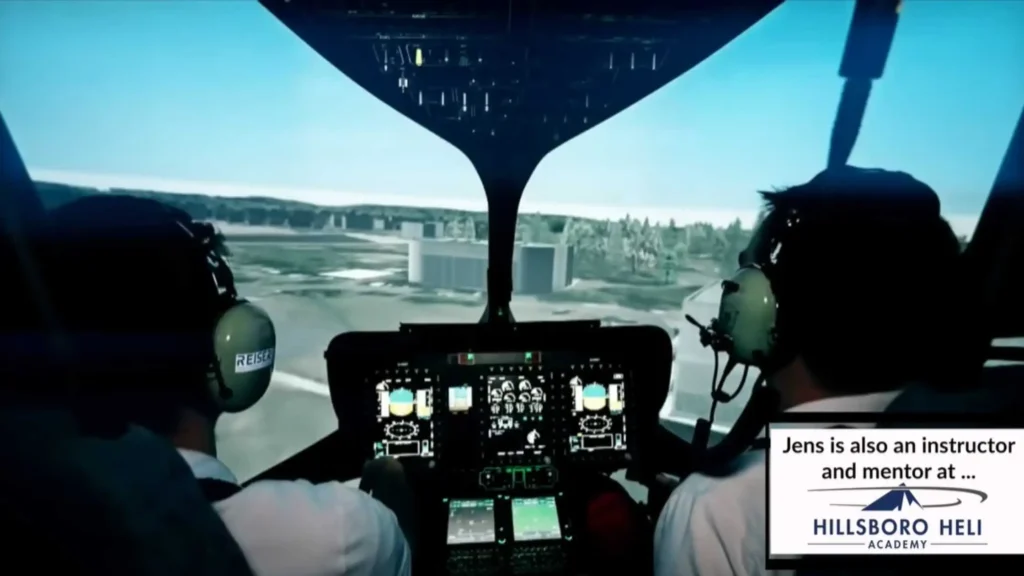
Most of the budget goes to aircraft and instructor time. The safest way to compare schools is to request an itemized quote that shows the aircraft rate, whether that rate is wet or dry, instructor charges, ground school, simulator or training-device charges, stage checks, written tests, practical tests, insurance-related fees, and taxes or surcharges.
Flight School Expenses
| Cost Area | 2026 Planning Benchmark | How to Read It |
|---|---|---|
| Private helicopter training | About $24,000–$30,000 | A market planning range, not an FAA-set price |
| Zero time through commercial | About $70,000–$90,000 total | Total pathway estimate; do not add it on top of the private cost |
| Instrument-helicopter training phase | About $18,000–$22,000 | Can overlap with time-building; school syllabus matters |
| CFI-H training phase | About $12,000–$15,000 | Usually pursued after commercial training |
Hourly aircraft pricing varies widely by helicopter type and school. One current 2026 market guide puts helicopter flight time broadly around $350–$700 per hour. ETL Aviation currently publishes block or fixed-course rates around $465–$480 per hour and a pay-as-you-go rate of $495 per hour; its published terms show why the details matter, because prepaid blocks can have use-by and refund conditions.
When comparing a low advertised hourly rate with a higher all-inclusive rate, ask whether both include the same things. A lower aircraft rate can stop being cheaper if the instructor, fuel surcharge, ground briefing, insurance, or required minimum blocks are billed separately.
Additional Training Fees
- Knowledge tests: Testing-center charges can change. A current 2026 helicopter cost guide budgets about $175 per FAA knowledge test, but confirm the actual fee when you schedule.
- Practical test / checkride: FAA inspectors do not charge for the practical test, but FAA-designated pilot examiners set and collect their own fees. You also need an appropriate aircraft for the practical test, which can create additional rental cost.
- Medical examination: The FAA does not set a universal AME exam price, so ask the examiner for the current fee before booking.
- Books, charts, apps, headset, and supplies: Include these in the all-in budget instead of treating tuition as the only cost.
The FAA’s practical-test guidance confirms that an FAA inspector does not charge for the practical test, while a designated pilot examiner does. It also states that the FAA does not charge to issue the original pilot certificate.
How Do Flight Hours Affect the Cost?
Flight hours are the biggest cost driver because each additional hour can include aircraft rental, fuel, instructor time, and sometimes ground briefing. The regulatory minimum is therefore a poor budget ceiling. A student who is checkride-ready near the minimum will spend much less than a student who needs dozens of additional hours.
Minimum Hours vs. Typical Hours
For a private helicopter certificate under Part 61, the legal minimum is 40 hours, but current 2026 planning guides commonly use roughly 50–60 hours for budgeting. For commercial helicopter training under Part 61, the rule requires 150 total flight hours, and some career programs plan beyond that level to combine additional ratings, instructor preparation, and experience building.
This is why a school that advertises only a 40-hour private-pilot quote may not be the cheapest school in practice. Ask for the school’s recent average completion time for students training on a schedule similar to yours, and ask exactly which charges continue after the quoted package hours are used.
Ways to Control Flight-Hour Costs
- Train consistently: Long gaps can force you to spend paid flight time relearning previously covered skills.
- Compare all-in hourly cost: Ask whether the aircraft rate includes fuel and whether instructor time is included in flight and ground billing.
- Check aircraft availability: A cheaper helicopter is not useful if maintenance downtime repeatedly breaks your training schedule.
- Use approved training devices where allowed: FAA rules permit limited simulator or flight-training-device credit in specific circumstances. Confirm that the device and syllabus qualify before assuming it will reduce aircraft time.
- Do not buy a large prepaid block without reading the terms: Compare refund rules, expiration dates, transferability, and what happens if the aircraft becomes unavailable.
| Question to Ask the School | Why It Changes the Real Cost |
|---|---|
| What is the recent average PPL-H completion time? | Shows whether a 40-hour quote is realistic for that program |
| Is the aircraft rate wet or dry? | A dry rate can leave fuel outside the advertised price |
| Is instructor time included during flight? | Separate instructor billing can materially change the hourly total |
| What happens after package hours are used? | Extra-hour pricing may differ from the package rate |
| Are prepaid hours refundable and do they expire? | Protects you if your plans or the school’s aircraft availability change |
Part 61 vs. Part 141 Helicopter Training: Which Path Fits Your Budget?
Part 61 and Part 141 are two regulatory structures for pilot training. Neither is automatically cheaper. Part 61 can offer more scheduling flexibility, while Part 141 schools use FAA-approved curricula and formal course structures. Your least expensive option is the one that gets you proficient with the fewest unnecessary hours and fees while fitting your schedule.
Civilian Flight Training
| Decision Factor | Part 61 | Part 141 |
|---|---|---|
| Curriculum | Training must meet Part 61 certification requirements; scheduling can be more flexible | Uses an FAA-approved school curriculum with defined course requirements |
| Private helicopter baseline | 40 total flight hours minimum | 35 hours of flight training in the approved private course |
| Commercial rotorcraft baseline | 150 total flight hours for the helicopter rating | 115 hours of training in the approved commercial rotorcraft course |
| Best budget comparison | Expected hours × all-in hourly rate + ground/test/gear costs | Total program quote + stage/course fees + overage policy |
Ask each school to quote the same end goal. Comparing a Part 61 private-only package with a Part 141 career package is not meaningful. Put the ratings, expected hours, aircraft, instructor time, tests, and supplies side by side.
Military Pathways
Military aviation can provide flight training as part of military service, but it should not be described as simply “free helicopter school.” Selection is competitive, medical and service standards apply, and the service obligation depends on the branch and program. If military aviation is your goal, use the current official recruiting and service documentation for the exact commitment rather than relying on a civilian cost comparison.
The financial trade-off is therefore different from civilian training: you are not buying hours from a flight school, but you are accepting military service requirements, assignments, and obligations in exchange for training and a military career path.
Why Do Helicopter Training Costs Vary by Geography and School?
There is no reliable national price table that says one state always costs a fixed amount more than another. A school’s real price is driven by its aircraft, fuel and maintenance costs, instructor supply, local operating environment, insurance, weather, demand, and how efficiently students can schedule lessons.
Regional Cost Differences
| Cost Driver | How It Can Affect Your Budget |
|---|---|
| Aircraft type | Larger or more expensive helicopters usually carry higher operating and rental costs |
| Fuel and maintenance | Higher operating costs are normally reflected in the hourly rate |
| Weather | Frequent cancellations can lengthen training and increase relearning |
| Aircraft and instructor availability | Limited availability can create long gaps between lessons |
| Local cost of living | Housing, transportation, and food matter if you relocate for an accelerated program |
| Airspace and airport environment | Training location can affect how much paid time is spent reaching practice areas or waiting on the ground |
Choosing the Right School for Your Budget
Ask at least three schools for a written, itemized estimate based on the same training goal. A useful quote should show more than tuition.
- Ask which helicopter model you will use and the wet or dry hourly rate.
- Ask how instructor flight time and ground instruction are billed.
- Ask what number of hours the quote assumes and the recent average completion hours for similar students.
- Ask whether knowledge tests, checkrides, stage checks, books, headset, supplies, taxes, and surcharges are included.
- Ask about aircraft availability, maintenance downtime, cancellation rules, prepaid-block expiration, and refunds.
- If relocating, add housing, transportation, food, and lost-income costs to the comparison.
The cheapest advertised package is not necessarily the lowest total cost. The best value is a program with transparent pricing, reliable aircraft access, consistent instruction, and a training schedule you can actually maintain.
Additional Costs Beyond Flight Training
Aircraft and instructor time dominate the budget, but smaller expenses can still add thousands of dollars over a full career-training path. Include them before deciding how much cash or financing you need.

This hardcover edition by Eric Metaxas offers a compelling look at the origins of the United States during the Colonial Period. It blends historical narrative with engaging storytelling, making it appealing for readers interested in American history, early nation-building, and the ideas that shaped the country. A strong choice for history enthusiasts, students, and anyone exploring the foundations of the nation.

The Armor All AA255W wet/dry utility vac delivers strong 2 peak HP suction in a compact, portable design for quick cleanup of wet and dry messes. Its 2.5-gallon tank, wheel base, top handle, and built-in storage make it easy to move, organize, and use around the garage, car, or jobsite. It also converts to a blower and comes with multiple accessories for versatile cleaning tasks.

Post-it Super Sticky Easel Pads are designed to keep ideas visible and organized during meetings, training sessions, brainstorming, and project planning. The large premium paper resists marker bleed-through and sticks securely to many surfaces, then repositions without surface damage. A sturdy backcard and portable handle make them easy to move between rooms and use with most easel stands.
Equipment and Supplies
- Headset: Entry-level and premium aviation headsets vary widely in price. Ask whether the school provides one before buying.
- Books and test preparation: Some schools bundle ground-school materials; others bill them separately.
- Charts, apps, and subscriptions: Digital navigation or weather tools may have recurring costs.
- Flight bag and basic supplies: Logbook, kneeboard, flashlight, charging accessories, and other school-required items can add to the setup cost.
Do not buy expensive gear before the school gives you its required-equipment list. A headset or app that works for one program may not be the school’s preferred setup.
Examination, Medical, and Certification Fees
| Fee | What to Budget | Important Detail |
|---|---|---|
| FAA knowledge test | One current 2026 helicopter cost guide uses about $175 per test; confirm when scheduling | Testing-provider pricing can change |
| DPE practical test | Examiner-set fee plus any aircraft rental | FAA-designated examiners set their own fees; an FAA inspector does not charge for the practical test |
| FAA medical exam | AME-set fee | The FAA does not set one universal examination price |
| Original FAA pilot certificate issuance | $0 from the FAA | The FAA states that it does not charge to issue the original pilot certificate |
The practical-test and certificate-fee distinction matters. A checkride can be expensive because of the examiner and aircraft, but that is different from an FAA “license application fee.” The FAA’s own practical-test page confirms that the original certificate itself is issued without an FAA charge.
Financing Options for Helicopter Pilot Training
Because helicopter training can cost tens of thousands of dollars, financing deserves the same scrutiny as the flight-school quote. Compare the total amount financed, interest rate, fees, repayment start date, deferment terms, cosigner requirements, and the realistic income path after training.
Scholarships and Grants
Aviation associations, rotorcraft organizations, flight schools, local aviation groups, and charitable foundations periodically offer scholarships. Programs and eligibility can change from year to year, so treat a scholarship as confirmed funding only after you have an award notice.
- Search by training stage: Some awards support initial training; others are limited to instrument, instructor, maintenance, safety, or professional-development courses.
- Check membership rules: Association scholarships may require active membership before the application deadline.
- Confirm what the award pays: Some awards pay a school directly or cover only a named course rather than unrestricted tuition.
Do not build a training budget around a scholarship that has not been awarded. Apply broadly, but keep a separate plan for the amount you may still need to fund yourself.
Loan Programs and Payment Plans
Private education and career-training lenders can finance qualifying flight programs, but school eligibility matters. For example, Sallie Mae currently advertises an Airline Career Loan for qualifying professional pilot programs and a separate undergraduate flight-school loan path for degree-granting institutions. That does not mean every helicopter school qualifies, so verify your specific school and program before applying.
Current lender information: Sallie Mae flight-school loan options.
| Funding Method | Potential Advantage | Main Risk to Check |
|---|---|---|
| Savings / pay as you go | Avoids loan interest | Training gaps can increase if cash flow is inconsistent |
| School payment plan | Can spread cash flow | Read refund, cancellation, and expiration terms |
| Private career-training loan | May fund a qualifying program up front | Interest and repayment can continue long after training |
| Scholarship or grant | Can reduce out-of-pocket cost | Competitive, limited, and often restricted to specific training |
| Eligible college program aid | May provide education-aid options not available to a standalone school | Eligibility depends on the institution and program |
Before taking a large loan, model the payment using the actual loan terms and a conservative early-career income assumption. A high headline salary from a broad national occupation category should not be used as if it were guaranteed first-year helicopter-pilot pay.
Return on Investment: Helicopter Pilot Careers and Pay
Helicopter pilot pay varies by experience, employer, aircraft, region, schedule, and type of operation. National BLS data can provide context, but it does not publish a clean helicopter-only salary figure in the broad commercial-pilot summary used here.
Job Market for Helicopter Pilots
The U.S. Bureau of Labor Statistics says airline and commercial pilots fly airplanes, helicopters, and other aircraft. Its projections combine airline and commercial pilots, so the national outlook should not be treated as a helicopter-only forecast. BLS projects overall employment for airline and commercial pilots to grow 4% from 2024 to 2034.
For a helicopter-specific career decision, supplement national data with current job postings from the operators and regions you want to work in. Record required total time, helicopter time, turbine time, instrument qualifications, instructor certificates, schedule, and offered pay. That shows the real experience gap between earning a commercial certificate and qualifying for a target job.
Potential Earnings and Career Growth
| BLS Metric | Published Figure | Limitation |
|---|---|---|
| Commercial pilots — median annual wage | $122,670 in May 2024 | Broad commercial-pilot category; not helicopter-only |
| Commercial pilots — mean annual wage | $146,080 in May 2025 | Broad national OEWS category; not an entry-level helicopter salary |
| Airline and commercial pilots — projected employment growth | 4% from 2024 to 2034 | Combined occupational outlook, not a helicopter-only projection |
Sources: BLS Occupational Outlook Handbook — Airline and Commercial Pilots and BLS May 2025 national occupational wage data.
Career growth can include instructor, tour, utility, charter, EMS, public-safety, chief-pilot, training, or management roles, but each employer sets its own experience and qualification thresholds. Compare those thresholds with your planned training path before deciding whether the education cost is financially reasonable for you.
Budgeting Tips for Prospective Helicopter Pilots
A useful helicopter-training budget is a cash-flow plan, not just a tuition number. It should show when each payment is due and what happens if you need extra hours, repeat a stage, wait through maintenance, or delay a checkride.
Saving Strategies
- Get an itemized quote before saving toward a target: Use the school’s realistic completion estimate, not only the FAA minimum hours.
- Save enough to train consistently: Starting too early and then taking long financial breaks can increase relearning costs.
- Apply for scholarships before taking private debt: Award timing can affect when you should start a course.
- Keep a contingency reserve: Extra hours, examiner availability, weather, and maintenance can change the planned total.
Expense Tracking and Planning
| Budget Category | What to Record |
|---|---|
| Aircraft | Model, wet/dry rate, package rate, extra-hour rate, fuel surcharge |
| Instruction | Flight instruction, ground briefing, ground school, simulator/device time |
| Testing | Knowledge tests, DPE fees, aircraft rental for checkrides, retest risk |
| Medical and documents | AME exam and any required supporting evaluations |
| Gear | Headset, books, charts/apps, logbook, flight bag, school-required supplies |
| Living costs | Housing, transportation, food, and lost income if relocating or training full time |
| Contingency | Extra training hours, delays, price changes, or repeat training |
Update the budget after every 10–20 flight hours. Compare actual spending and progress with the original estimate, then revise the amount needed to finish. That gives you an early warning if your training pace or hourly costs are pushing the total above plan.
Frequently Asked Questions About Helicopter Pilot Training Costs
How Long Does It Take to Become a Qualified Helicopter Pilot?
There is no single FAA calendar-time requirement. A private certificate can take a few months for a student who trains frequently, while a zero-to-commercial or professional program can take much longer. Weather, aircraft availability, training frequency, your proficiency, and the ratings included all affect the timeline.
Is It Worth Getting a Helicopter License?
It can be worth it if the training cost fits your finances and the certificate serves a clear recreational or career goal. For a career path, compare total training debt with the experience required for your target jobs and the pay shown in current job postings before committing.
Do Helicopter Pilots Make Good Money?
Some experienced helicopter pilots earn strong salaries, but pay varies widely. BLS reports a $122,670 May 2024 median for the broad commercial-pilot category, which includes pilots of helicopters and other aircraft; it is not a helicopter-only or entry-level salary figure.
How Hard Is It to Become a Helicopter Pilot?
The training is demanding because you must meet knowledge, flight-experience, proficiency, medical, and practical-test requirements. Cost also creates pressure: inconsistent training can make proficiency harder to maintain and can increase the number of paid hours needed.
What Is the Cheapest Way to Become a Helicopter Pilot?
There is no single cheapest school or regulatory path. The lowest total cost usually comes from comparing all-in rates, training consistently, using an appropriate lower-cost training helicopter when available, avoiding unnecessary gaps, and choosing a school with reliable aircraft and instructor availability. Scholarships can reduce out-of-pocket cost, but they should not be counted until awarded.
Is Part 61 or Part 141 Cheaper for Helicopter Training?
Neither is automatically cheaper. Part 61 has a 40-hour private minimum and a 150-hour commercial helicopter experience requirement, while approved Part 141 curricula can use lower course minimums, including 35 hours for the private rotorcraft course and 115 hours for the commercial rotorcraft course. The real winner is the school and structure that gets you proficient with the lowest all-in cost.
Do I Need an Instrument Rating to Become a Commercial Helicopter Pilot?
An instrument-helicopter rating is a separate rating rather than a universal prerequisite to hold a Part 61 commercial helicopter certificate. However, career programs often include instrument training, and employers may value or require instrument qualifications for particular jobs. Check the jobs you want before deciding where the instrument rating belongs in your training plan.
Sources Used for This 2026 Update
- eCFR 14 CFR § 61.109 — Private pilot aeronautical experience
- eCFR 14 CFR § 61.129 — Commercial pilot aeronautical experience
- eCFR Part 141 Appendix B — Private Pilot Certification Course
- eCFR Part 141 Appendix D — Commercial Pilot Certification Course
- FAA — Practical-test and original-certificate fee guidance
- FAA — Medical certification process
- BLS — Airline and Commercial Pilots Occupational Outlook Handbook
- BLS — May 2025 national occupational wage data
- Pilot Institute — 2026 helicopter-pilot cost benchmarks
- ETL Aviation — Published helicopter training rates and package pricing
Conclusion
For a U.S. civilian path in 2026, use $24,000–$30,000 as a practical private-helicopter training range and roughly $70,000–$90,000 as a zero-to-commercial planning range, then expect a broader career package with instrument and instructor training to cost more. Treat those as planning benchmarks, not guaranteed school quotes.
Before enrolling, get your medical questions resolved, collect at least three itemized school quotes, compare Part 61 and Part 141 on the same end goal, and budget for extra hours, tests, gear, and living costs. If your goal is paid flying, compare the training path with current job requirements before taking on debt. That gives you a much clearer answer than choosing a school from its advertised hourly rate alone.

These Rawlings practice baseballs are built for young players ages 8 and under, offering an easy grip and consistent feel for recreational play. Each ball features a synthetic leather cover with a solid cork and rubber center, plus official size and weight for reliable training. The set includes a durable bucket for convenient storage and transport, making it a smart choice for coaches, parents, and teams.

This bestselling Christian devotional by Rick Warren helps readers explore life’s meaning through practical, faith-centered guidance. With thoughtful daily reflections and scripture-based insights, it encourages spiritual growth, purpose, and a deeper relationship with God. Its approachable format makes it a trusted choice for personal devotion or group study.

This heartfelt memoir blends laugh-out-loud honesty with tender reflections on love, loneliness, and the unexpected healing power of rescue dogs. Isabel Klee shares her journey fostering pups in the city while navigating dating and self-discovery, offering an intimate, relatable story for readers who enjoy emotional, character-driven narratives. It is a warm, engaging read about opening your heart and finding connection in surprising places.