
Best Brake Bleeder Kits: What To Know First
As an Amazon Associate we earn from qualifying purchases. This post contains affiliate links; if you buy through them, we may earn a commission at no extra cost to you.
You handle most of your vehicle maintenance yourself, and bleeding brakes is one of those jobs that traditionally required a second pair of hands. Choosing the right brake bleeder kit can make fluid changes cleaner, more controlled, and easier to handle as a one-person job.
This guide compares hand-vacuum, manual-pressure, and pneumatic bleeders so you can match the tool to your vehicle, service frequency, and garage setup. Always follow your vehicle service manual, use the correct DOT brake fluid, verify adapter fit before pressurizing the system, and stop if the brake pedal does not firm up after bleeding.
Last reviewed: September 9, 2026
Top Pick
The Mityvac MV6840 is the best overall brake bleeder kit for frequent DIYers and small-shop users because it combines pressure bleeding, a large reservoir, a clear gauge, and a broad adapter set for steady one-person work.
Key Takeaways
- Choose a pressure bleeder like the Mityvac MV6840 or Motive Power Bleeder if you want faster, steadier one-person brake bleeding.
- Pick a hand vacuum pump like OEMTOOLS or HTOMT for occasional jobs, clutch bleeding, bench bleeding, and basic vacuum checks.
- Use the Four Uncles pneumatic kit only if you already have a compatible compressor and can control air pressure carefully.
- Adapter fit matters more than brand name. A poor seal can waste fluid, pull air into the hose, or make the job messy; the Orion pick is specifically for matching older rectangular reservoirs.
- For ABS systems, check your service manual because some vehicles need a scan tool to cycle the ABS module.
A brake bleeder kit is only as good as its seal, pressure control, and cleanup routine. Match the tool to your vehicle before you open the first bleeder screw.

This hardcover cookbook offers fast, approachable recipes designed for busy days and low-energy nights. Caroline Chambers focuses on simple, flavorful meals that help you get dinner on the table without overthinking it. It's a practical pick for home cooks who want quick weeknight inspiration and minimal-fuss cooking.

This two-in-one kitchen cleaning tool helps keep countertops and sinks tidy by handling both wet and dry messes with ease. One side works as a squeegee to push spills into the sink, while the other uses nylon bristles to sweep up crumbs and debris. Its ergonomic, balanced design is comfortable to hold, easy to store, and simple to clean in the dishwasher.

The DEWALT TSTAK Mobile Storage unit delivers a spacious, stackable solution for organizing and transporting tools with ease. Its telescopic handle, durable 7-inch wheels, and bi-material top handle make moving loads more comfortable, while rust-resistant metal latches and side latches support secure stacking with other TSTAK units. Built for convenience and mobility, it is ideal for professionals and DIY users who need dependable on-the-go storage.
Top Picks
|
Category |
Product |
Best For |
|---|---|---|
|
🏆 Best Overall |
Frequent brake and clutch service |
|
|
🔰 Best Multi-Vehicle Pressure |
Mixed-vehicle pressure bleeding |
|
|
🚀 Best Pneumatic |
Fast pneumatic vacuum bleeding |
|
|
⭐ Best for Older Domestic Vehicles |
Older rectangular-cap master cylinders |
|
|
💰 Best Budget Hand Pump |
Occasional bleeding and vacuum checks |
|
|
🎯 Best Entry-Level Kit |
Portable, light-duty DIY use |
Quick Comparison
| Product | Best For | Key Feature |
|---|---|---|
| Mityvac MV6840 | Frequent brake and clutch bleeding | Pressure reservoir with gauge and adapter set |
| Motive Power Bleeder | Universal pressure bleeding | Pump-driven reservoir for steady solo flow |
| Four Uncles Bleeder | Compressor-assisted flushes | 2L extractor, 1L refill bottle, and 13 adapters |
| Orion Pressure Bleeder | Older domestic rectangular-cap reservoirs | 2.5L tank with 4.25 x 6.75 in. rectangular adapter |
| OEMTOOLS Vacuum Pump | Budget hand-pump jobs | Hand vacuum pump with gauge and clear hose |
| HTOMT Vacuum Pump | Entry-level portable kits | Compact case with adapters for light DIY use |
Warning: Never let the master cylinder reservoir run dry while bleeding brakes. Air can enter the system, and some ABS systems may then require a scan tool or professional procedure.
Before You Buy
- Confirm the pressure-cap or vacuum-hose connection fits your vehicle before ordering.
- Check the vehicle service information for the required brake-fluid specification and bleed sequence.
- If the ABS hydraulic unit has been opened or filled with air, verify whether a scan-tool bleed procedure is required.
- Choose a pneumatic kit only if your compressor and regulator match the tool requirements.
Selection Criteria
You want a bleeder kit that makes a one-person job predictable and safe. We prioritized one-person operation, reliable seals, and clear pressure control or vacuum measurement so you can purge air without guesswork.
Reservoir size and adapter variety are critical because they determine whether the kit fits your vehicle and how often you need to stop and top up. Build quality and serviceability affect long-term value, so the comparison gives extra weight to documented reservoir design, connection hardware, replaceable wear parts, and clear pressure or vacuum feedback.
Price matters, but a cheap kit that leaks or fails will cost you more in time and additional tools. We balanced cost against design, maintenance needs, cleanup, adapter coverage, and how often you are likely to use the tool. Where exact fitment or current listing details are uncertain, the guidance stays conservative.
How To Choose A Brake Bleeder Kit
Start with the type of job you do most. A hand vacuum pump is affordable and portable, but it takes more hand effort and may pull air around loose bleeder screw threads. A pressure bleeder usually gives steadier flow because it pushes clean fluid from the master cylinder through the system. A pneumatic bleeder works quickly if you already own an air compressor, but it adds noise, setup time, and pressure-control risk.
Next, check adapter fit. The cap or adapter must seal well on your master cylinder. If it leaks, you may lose pressure, spill fluid, or mistake bubbles from a poor seal for air inside the brake system. If your vehicle has an unusual reservoir, confirm adapter compatibility before buying.
Finally, think about cleanup. Brake fluid can damage paint, and used fluid should not go down a drain; follow your local hazardous-waste or automotive-fluid collection rules. Use the brake-fluid type listed in your owner’s manual and follow FMVSS 116 brake-fluid classification guidance when comparing DOT fluid types.
Pro Tip: Before adding fluid, test-fit the adapter, pump the tool lightly, and watch whether pressure holds. A dry pressure test helps you catch cap leaks before brake fluid is in the tank.
Review note: Customer-feedback summaries below describe recurring themes captured in the source material. Live star ratings and review counts are intentionally omitted because they can change.
OEMTOOLS Vacuum Pump

You want a simple tool that gets brake fluid changed without dragging a helper into the garage. This OEMTOOLS kit gives you a hand vacuum pump with a gauge, a small fluid reservoir, clear tubing, and multiple adapters for brake bleeding, siphoning, and vacuum-related diagnostic work.
It works well for bench-bleeding a master cylinder, one-person brake or clutch bleeding, and basic vacuum diagnostics around the engine. Expect a practical tool for occasional DIY jobs; with careful setup, clean hoses, and checked seals, you can avoid many common leaks.
What People Say
Customers commonly point out that the kit delivers strong value for home mechanics and that the vacuum gauge and clear hoses make the process more predictable. People often use it for bench-bleeding a master cylinder and small vacuum tests, while a notable share mention seals or tank fittings needing attention after repeated use.
Source-Summary Sentiment: Neutral

Ease Of Use
|
Feature |
Ease Level |
|---|---|
|
Setup |
Easy |
|
Pump Action |
Moderate |
|
Vehicle Fitment |
Good |
|
Maintenance |
Moderate |
Safety
The kit keeps brake fluid in a dedicated reservoir and uses tight-fitting adapters to reduce spills, and the hand-powered design avoids compressed-air hazards. You should still clean hoses after each use, check seals, and protect painted surfaces from fluid contact.
Key Benefits
- You can bleed brakes solo using the hand vacuum and gauge
- You monitor fluid visually through transparent hoses as you pump
- You get multiple adapters for common vacuum, siphoning, and brake-bleeding connections
- You avoid compressed air systems by using a hand-powered tool
✔ Pros
- Affordable choice for occasional DIY work
- Useful for brake, clutch, and basic vacuum tests
- Gauge and clear hose make flow easier to monitor
✘ Cons
- Hand pumping takes more effort than pressure bleeding
- Seals and fittings need regular inspection
- Not ideal for frequent full-system flushes
Check Product Details on Amazon
HTOMT Vacuum Pump

You get a compact, beginner-friendly bleeder that’s built for simple one-person jobs. The HTOMT kit lives in a molded case with adapters so you can tackle brake and clutch bleeding, vacuum checks, and small fluid transfers without hauling out heavy gear. It’s suited to occasional garage maintenance and portable tool storage when you want a basic hand-vacuum setup.
If you need something lightweight that covers multiple basic tasks, this kit is a practical pick to keep in your garage or trunk. It is best for light use, not for a shop that bleeds brakes every week.
What People Say
Customers tend to like the kit’s versatility and the convenience of the carry case, noting it handles basic brake, clutch and vacuum tasks well. Many users mention the adapters fit common fittings, while some report inconsistent build condition or that the pump requires more hand strength than expected.
Overall people see it as useful for occasional DIY work but not a heavy-duty shop solution.
Source-Summary Sentiment: Neutral

Ease Of Use
|
Feature |
Ease Level |
|---|---|
|
Setup |
Easy |
|
Pump Action |
Moderate |
|
Vehicle Fitment |
Good |
|
Portability |
Easy |
Safety
Hand-powered operation avoids compressed-air hazards and the kit’s enclosed hoses limit spills during use. Inspect seals before each job and clean hoses after bleeding to prevent contamination or leaks.
Key Benefits
- You can perform one-person brake and clutch bleeding with a compact hand pump
- Protective case keeps adapters and hoses organized and portable
- Versatile enough for basic vacuum tests and small fluid transfer jobs
- Lightweight kit that’s easy to store and bring to jobs
✔ Pros
- Good starter kit for basic brake and clutch work
- Carry case keeps small fittings together
- Compact enough to store in a trunk or garage drawer
✘ Cons
- Not built for heavy professional use
- Pump effort can feel tiring on longer jobs
- Quality control may vary by kit
Check Product Details on Amazon
Mityvac MV6840

You’re looking at a pro-grade bleeder that turns a two-person chore into a predictable solo task. The Mityvac MV6840 combines a pressurized reservoir with a clear pressure gauge and a broad adapter set so you can pressurize the master cylinder, move freely to each bleed screw, and monitor flow without juggling bottles. It’s built for frequent use in a home shop or small professional environment and handles brake and clutch jobs as well as some fluid-handling tasks.
Expect solid performance as long as you clean the hose, tank, and fittings after each session. Its main advantage is control: you can work at each wheel without returning to pump the brake pedal.
What People Say
Owners frequently praise the MV6840 for its reliability and the convenience of the pressure reservoir and adapters, saying it makes solo bleeding fast and consistent. Users appreciate the clear gauge and quick-connect fittings, while common cautions point to the need to clean hoses after use and to watch seals and the quick-disconnect for wear over time.
Source-Summary Sentiment: Positive

Ease Of Use
|
Feature |
Ease Level |
|---|---|
|
Setup |
Easy |
|
Pressure Control |
Easy |
|
Adapter Selection |
Good |
|
Hands-Free Operation |
Easy |
|
Cleanup |
Moderate |
Safety
The pressure gauge lets you limit PSI for safer bleeding and the reservoir contains fluid to reduce spills; quick-relief and sealed connections help reduce accidental over-pressurization. Still check seals and fittings before use and clean hoses to avoid hardened fluid or leaks.
Key Benefits
- You get one-person pressure bleeding from a 5L reservoir with a pressure gauge and relief valve
- Seven master cylinder adapters increase the chance of a proper seal on many vehicles
- Quick-change connections speed up wheel-to-wheel work so you don’t waste time
- Durable, shop-oriented design that holds up to repeated use when maintained
✔ Pros
- Best overall pick for frequent brake service
- Gauge and pressure relief make control easier
- Broad adapter set helps with multi-vehicle garages
✘ Cons
- More tool than a casual user may need
- Cleanup takes time after every job
- Adapter seals still need routine inspection
Check Product Details on Amazon
Four Uncles Bleeder
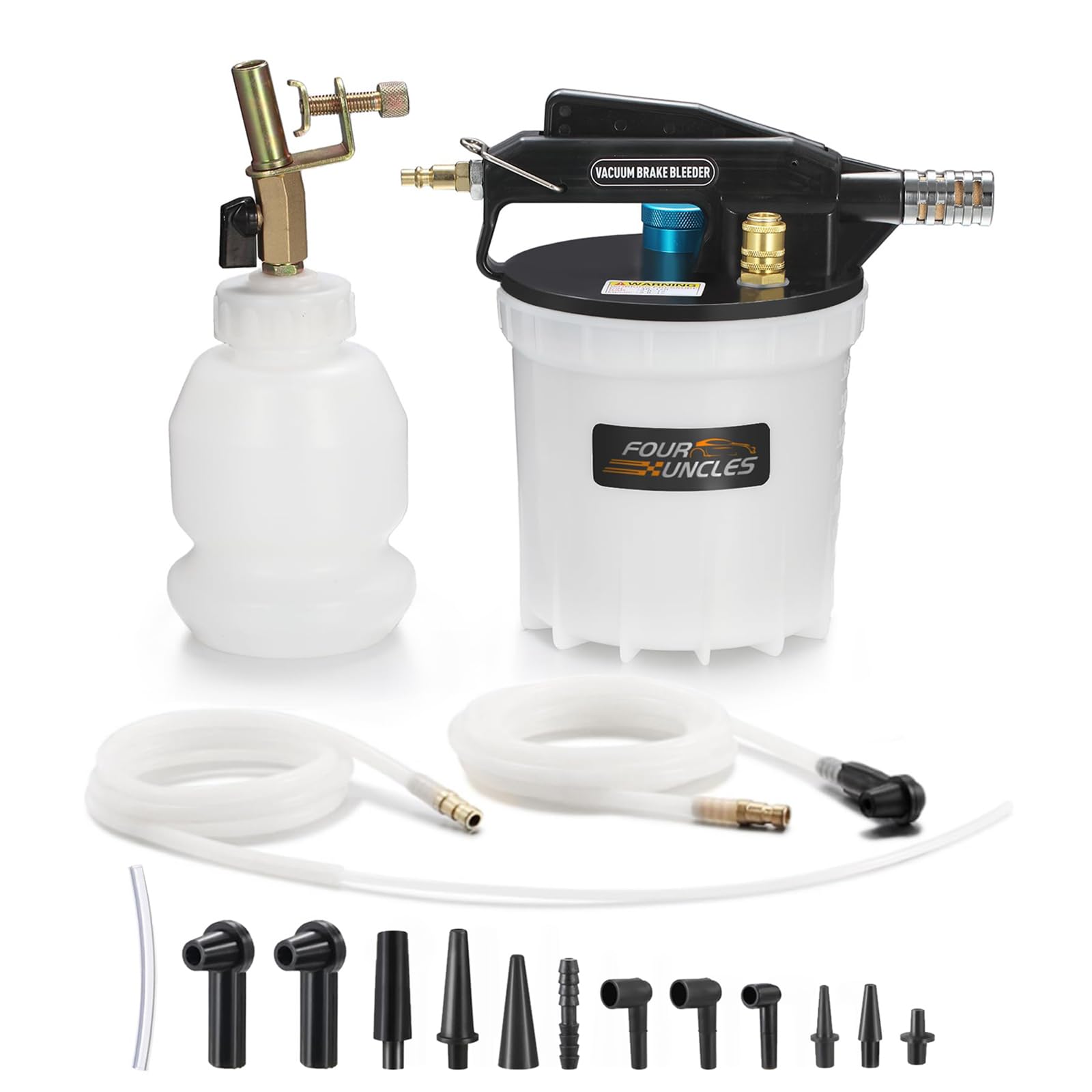
You’ll notice the difference if you’re used to hand pumps: this pneumatic vacuum bleeder uses your air compressor to draw fluid from the bleeder screw. The current B081GVKXLN configuration pairs a 2L extractor tank with a 1L refill bottle, 13 adapters, and two long bleed hoses, which can reduce interruptions during a flush. It’s designed for full-system flushes and routine maintenance when you already have a suitable regulated air source.
Bring it out for regular service days or when you’re doing multiple vehicles, and keep your compressor pressure dialed in so the kit runs smoothly. A built-in silencer helps at the tool, but compressor noise and setup still make it less quiet and less simple than a hand-pump system. Once dialed in, it can be efficient for repeated bleeding work.

This daily devotional helps parents pray purposefully for their children through a full year of Scripture readings, reflections, and guided prayer prompts. Written to encourage faithful family discipleship, it offers practical, biblically grounded support for parents who want to shape their prayers around God's Word. A foreword by Sinclair B. Ferguson adds trusted theological insight and encouragement.

The Armor All AA255W wet/dry utility vac delivers strong 2 peak HP suction in a compact, portable design for quick cleanup of wet and dry messes. Its 2.5-gallon tank, wheel base, top handle, and built-in storage make it easy to move, organize, and use around the garage, car, or jobsite. It also converts to a blower and comes with multiple accessories for versatile cleaning tasks.

This Milwaukee SHOCKWAVE socket adapter set is designed to convert drill and impact driver output for use with sockets, making it a versatile addition to any tool kit. Built for durability and repeated use, the adapters are engineered to deliver reliable performance on demanding fastening tasks. The compact 3-piece set covers common drive sizes for everyday repair and maintenance work.
What People Say
People commonly praise the kit for cutting bleeding time and holding a lot of fluid, which means fewer trips back to the master cylinder. Users also note it feels well built for the price and works reliably when you adjust air flow properly.
Common cautions mention the kit is loud and that you need a compatible compressor and some patience tuning the pressure.
Source-Summary Sentiment: Positive

Ease Of Use
|
Feature |
Ease Level |
|---|---|
|
Setup |
Moderate |
|
Operation |
Easy |
|
Tank Management |
Good |
|
Cleanup |
Moderate |
Safety
The closed tank design keeps used brake fluid contained to reduce spills, and you should use a regulated air source and adjust pressure to avoid over-pressurizing. Inspect hoses and fittings before each use and wear eye protection when working with pressurized systems.
Key Benefits
- 2L extractor tank, 1L refill bottle, 13 adapters, and two long bleed hoses support full-system service
- Compressor-powered operation speeds up bleeding compared with hand pumps
- Sturdy fittings and a refill bottle make repeated jobs more convenient
- Portable enough to use in a home shop and robust enough for regular use
✔ Pros
- Fast choice if you already own an air compressor
- Larger tank helps with full flushes
- Good option for multi-vehicle service days
✘ Cons
- Requires a compatible compressor
- Can be louder than manual tools
- Needs careful pressure adjustment
Check Product Details on Amazon
Motive Power Bleeder
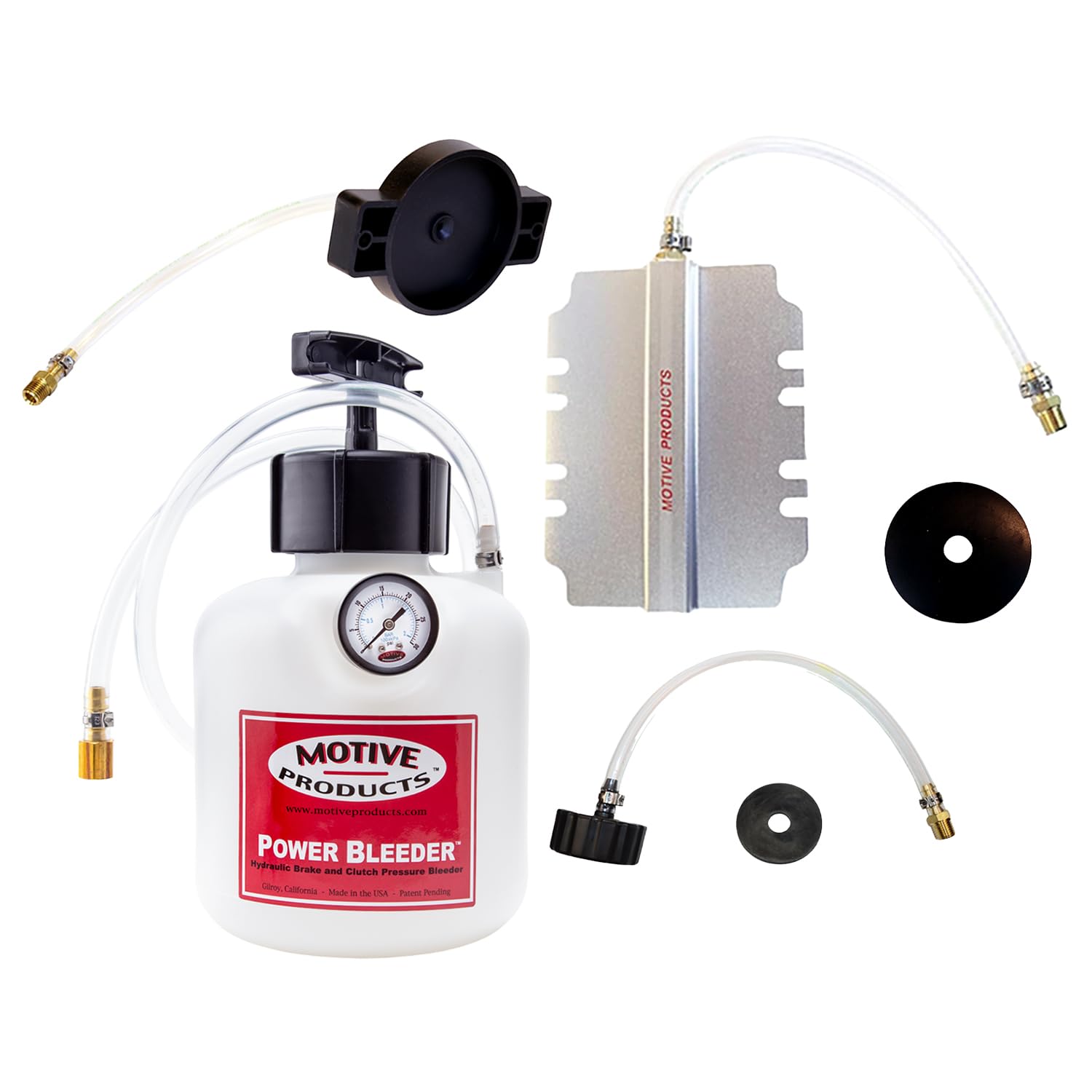
You want a dependable tool that turns a fiddly, two-person job into a straightforward solo task. The Motive Products 0250 uses a 2-quart hand-pumped pressure tank with a gauge and three included master-cylinder adapters, allowing one-person bleeding when the correct adapter seals properly. It’s useful for mixed-vehicle maintenance, full-system flushes, and hydraulic clutch work where the reservoir connection is compatible.
If you do brake jobs regularly and prefer a portable, pump-driven solution that behaves like a shop tool, this one earns a spot in your toolbox. The key is getting the cap or adapter sealed before you add fluid.
What People Say
Buyer feedback is broadly positive about the one-person pressure-bleeding workflow and the usefulness of having several master-cylinder adapters in one kit. The main buying caution is still fitment: confirm the correct adapter for your reservoir before filling or pressurizing the tank.
Source-Summary Sentiment: Positive

Ease Of Use
|
Feature |
Ease Level |
|---|---|
|
Setup |
Easy |
|
Operation |
Easy |
|
Adapter Selection |
Good |
|
Fitment Verification |
Required |
|
Cleanup |
Moderate |
Safety
The pressurized reservoir contains fluid to reduce spills and the pump includes pressure control so you can avoid over-pressurizing. Always confirm clamps and seals before use, relieve pressure before opening the tank, and wear eye protection while working with brake fluid.
Key Benefits
- Hands-free bleeding with a pressurized 2-quart reservoir
- Three included adapters cover common European, round-universal import, and older rectangular domestic master-cylinder cap profiles
- Portable and pump-driven for faster, more consistent flow than hand pumps
- Versatile for brake, clutch and some fluid-handling tasks
✔ Pros
- Strong universal pressure-bleeder choice
- Portable tank is easy to store
- Good for routine brake fluid changes
✘ Cons
- Adapter clamping can require extra attention
- Cleanup is still required after every use
- ABS bleeding may need a vehicle-specific procedure
Check Product Details on Amazon
Orion Motor Tech 2.5L Pressure Bleeder
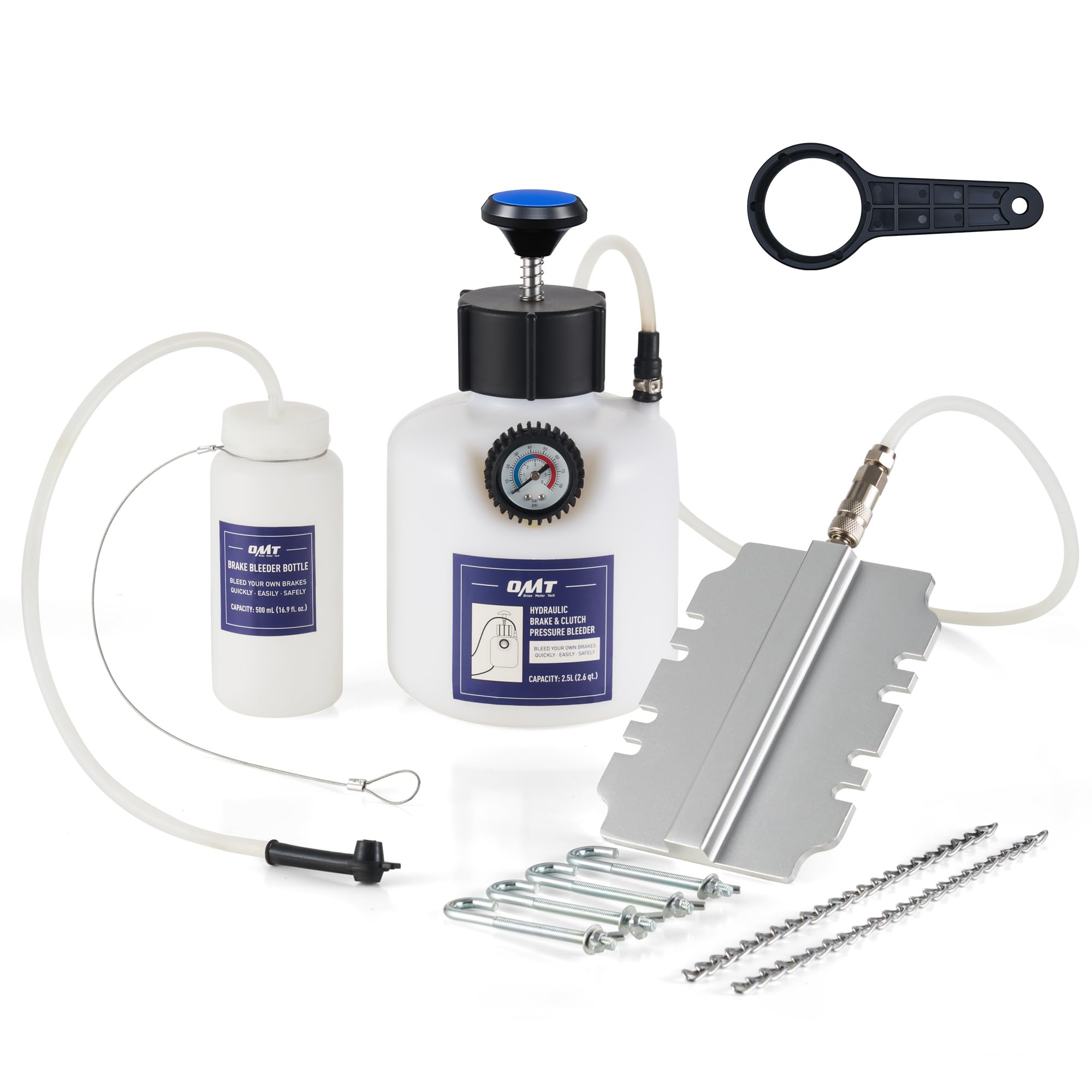
If you work on an older vehicle with a rectangular master-cylinder reservoir, this Orion Motor Tech kit is a more targeted option than a universal-style bleeder. The current B0FHB1GF41 listing uses a 2.5L pressure reservoir, a 500mL catch bottle, and a 4.25 x 6.75 in. rectangular adapter intended for many AMC, Buick, Cadillac, Chevrolet, GMC, Chrysler, Dodge, and Jeep applications from roughly 1967 through the mid-1980s.
That narrow fitment is both its strength and its limitation: it can be convenient when your reservoir matches the rectangular adapter, but it is not the best choice for a mixed-vehicle garage. Confirm the master-cylinder cap dimensions and vehicle application before ordering, use only the pressure specified by the vehicle and tool instructions, and check the seal before adding brake fluid.
What People Say
Buyer feedback emphasizes easier one-person bleeding and useful reservoir capacity. The most important buying caution is compatibility: this ASIN is built around a rectangular adapter, so stop and re-check fitment if the cap will not seat securely or the system will not hold pressure.
Source-Summary Sentiment: Neutral

Ease Of Use
|
Feature |
Ease Level |
|---|---|
|
Setup |
Easy |
|
Pressure Control |
Good |
|
Vehicle Fitment |
Verify First |
|
Portability |
Good |
|
Cleanup |
Moderate |
Safety
The pressurized reservoir keeps fluid contained and the system lets you limit PSI to avoid over-pressurizing. Always relieve pressure before opening the tank and inspect seals to prevent leaks.
Key Benefits
- You get a large 2.5L reservoir so you can bleed a whole system with fewer interruptions
- Pressurized flow reduces the effort and lets you work solo at each bleed screw
- The included 4.25 x 6.75 in. rectangular adapter targets many older domestic master-cylinder reservoirs
- A 500mL catch bottle is included for collecting expelled fluid at the bleeder screw
✔ Pros
- 2.5L tank reduces refill stops
- Manual pressure operation supports one-person bleeding
- Good fit for supported older rectangular-cap reservoirs
✘ Cons
- Rectangular adapter has narrow vehicle fitment
- Not a universal choice for modern or mixed-vehicle garages
- Cap seal still needs careful setup before filling the tank
Check Product Details on Amazon
Brake Bleeder Kit Buying Guide
Pressure Bleeder Vs Vacuum Pump
A pressure bleeder pushes clean fluid from the master cylinder through the brake lines. This often gives steadier flow and reduces pedal pumping. A vacuum pump pulls fluid from the bleeder screw side. It is cheaper and more portable, but it can also pull air around bleeder screw threads, which may make bubbles harder to interpret.
Reservoir Size
Small hand-pump bottles work for single wheels and small jobs. Larger pressure tanks help during full-system flushes because you stop less often. Bigger tanks also take longer to clean, so choose capacity based on how often you service brakes.
Adapter Fit
Adapter fit is the difference between a smooth job and a messy one. A universal kit is useful, but “universal” does not mean perfect for every cap shape. Dry-fit the cap first, add light pressure, and check for leaks before filling the tank with brake fluid.
ABS And Clutch Systems
Most hydraulic clutch systems can be bled with the same basic tools. ABS systems need more care. If air enters the ABS hydraulic control unit, your vehicle may require a scan tool to cycle valves and pump motors. Follow the service manual instead of guessing the sequence.
Note: Brake fluid condition changes over time. Use fresh fluid from a sealed container and follow the replacement interval and fluid type specified for your vehicle.
Brake Bleeder Kit Use & Maintenance
Which Bleeder Is Right For You?
Think about how often you’ll bleed brakes and what vehicles you work on. If you do occasional DIY jobs and value portability, a hand vacuum pump is versatile and lets you perform basic vacuum tests, bench-bleed master cylinders, and handle clutch jobs, though it takes more hand effort and can show seal wear over time.
If you work on brakes regularly or want faster, hands-free flow, a pressurized or compressor-driven reservoir gives steady pressure for full-system flushes and is easier to use wheel-to-wheel. Prioritize frequency and vehicle compatibility, and check that the kit includes or can accept adapters that match your master cylinder and bleed nipples.
How Do You Prevent Leaks And Maintain The Kit?
Routine inspection and cleaning make the biggest difference. Always check O-rings, seals and quick-connect fittings before use, relieve pressure before disassembly, and never leave brake fluid sitting in hoses or the tank.
After each job, flush hoses and fittings with a method allowed by the tool maker and dry them before storage. Replace hardened hoses or worn O-rings as needed. A light coat of compatible seal lubricant can help on some hand pumps, and using thread sealant only where the manufacturer recommends it can improve sealing.
Store the kit dry and keep used fluid contained. Dispose of used brake fluid through a local program that accepts it, not a drain. The EPA’s household hazardous waste guidance is a good starting point for safe disposal rules.
Can You Use These Kits With ABS Or Clutch Systems?
You can handle most hydraulic clutch systems and many brake systems with these kits, but ABS modules are a special case. A pressure or power bleeder will move fluid through the lines, yet if air has entered the ABS pump or module you usually need a manufacturer procedure or a scan tool to cycle the ABS unit and expel trapped air.
For clutch work a hand vacuum or pressure reservoir will typically work fine; for ABS-related bleeding plan on following the vehicle-specific sequence and be prepared to use a scan tool or professional service if the pedal doesn’t firm up after bleeding.
Which Bleeder Type Fits Your Use?
Choose a hand pump like the OEMTOOLS or HTOMT when portability, simple setup, and basic vacuum diagnostics matter most. Move to a manual pressure bleeder such as the Mityvac MV6840 or Motive 0250 when you want steadier one-person flow for more frequent service. Choose the Orion B0FHB1GF41 only when its 4.25 x 6.75 in. rectangular adapter matches your older master-cylinder reservoir, and choose the Four Uncles pneumatic vacuum kit when you already have a suitable compressor and prefer faster extraction at the bleeder screw.
Frequently Asked Questions
Is a pressure brake bleeder better than a vacuum bleeder?
A pressure bleeder is usually better for full brake-fluid flushes because it pushes steady fluid from the master cylinder. A vacuum bleeder is cheaper, smaller, and useful for occasional jobs, but it takes more hand effort and can pull air around loose bleeder screw threads.
Can one person bleed brakes with these kits?
Yes. All six kits are designed to help one person move fluid through the system. You still need to monitor the master cylinder level, keep the adapter sealed, and follow the correct wheel sequence for your vehicle.
Do you need a scan tool to bleed ABS brakes?
Sometimes. If air only entered the wheel lines, a normal bleeding sequence may work. If air entered the ABS module, many vehicles require a scan tool or manufacturer-specific procedure to cycle the ABS valves.
How much pressure should you use with a brake bleeder?
Use the pressure range recommended by your vehicle and tool instructions. Do not guess at a universal PSI. Use the range specified by the vehicle and bleeder instructions, and stop if the cap leaks, the reservoir deforms, or fluid sprays.
How should you dispose of used brake fluid?
Keep used brake fluid in a sealed, labeled container and take it to a local hazardous-waste or accepted automotive-fluid collection program. Do not pour it onto the ground or into a drain; use the disposal method required by your local waste program.
Wrapping Up
If you want reliability and a tool that performs like a pro, choose the Mityvac MV6840 for its robust pressure reservoir, wide adapter set, and precise gauge. If you need a universal, shop-grade solution that works across many vehicles, the Motive Power Bleeder combines ease of use with strong performance.
Use a compressor-fed kit like the Four Uncles model when you already have compressed air and want faster fluid movement. For occasional DIY jobs or tighter budgets, the OEMTOOLS vacuum pump and the HTOMT kit offer portable hand-powered operation, while pressure systems are usually easier for repeat full-system service. Match the kit to how often you will use it, the connection your vehicle requires, and the service procedure in the repair information; verify pedal feel and system integrity before driving.
Detailed Product Comparison
| Product Name | Image | Type | Best For | Key Capacity / Feature |
|---|---|---|---|---|
| OEMTOOLS 25136 Automotive Tune-Up and Brake Bleed Kit |
|
Hand vacuum | Occasional DIY bleeding and vacuum diagnostics | Small collection reservoir, gauge, tubing, and multiple adapters |
| HTOMT 2 in 1 Brake Bleeder Kit |
|
Hand vacuum | Portable, entry-level DIY work | Carry case, gauge, hoses, and adapters |
| Mityvac MV6840 Hydraulic Brake and Clutch Pressure Bleeding System |
|
Manual pressure | Frequent brake and clutch service | 5L reservoir, gauge, relief valve, and seven adapters |
| FOUR UNCLES Brake Bleeder Vacuum Pump Kit |
|
Pneumatic vacuum | Compressor-assisted fluid extraction | 2L extractor tank, 1L refill bottle, and 13 adapters |
| Motive Products 0250 Universal Power Bleeder |
|
Manual pressure | Mixed-vehicle garages | 2-quart tank with gauge and three master-cylinder adapters |
| Orion Motor Tech Brake Bleeder Kit |
|
Manual pressure | Older domestic vehicles with matching rectangular reservoirs | 2.5L tank, 500mL catch bottle, 4.25 x 6.75 in. rectangular adapter |
Sources
- eCFR 49 CFR 571.116 — federal brake-fluid classification and labeling standard.
- U.S. EPA Household Hazardous Waste — general household hazardous-waste handling and local-program guidance.
- OSHA Eye and Face Protection — eye-protection guidance for splash and pressurized-work hazards.
- Mityvac — MV6840 product configuration, 5L reservoir, gauge, relief valve, and seven master-cylinder adapters.
- Motive Products 0250 Universal Brake Bleeder Kit — 2-quart tank, gauge, adapter set, and one-person pressure-bleeding design.
- FOUR UNCLES Brake Bleeders — current 2L pneumatic brake-bleeder configurations and refill-bottle options.
- OEMTOOLS 25136 Manual — vacuum-pump specifications, 4.5 oz. reservoir, adapters, and one-person brake-bleeding use.
- Orion Motor Tech 2.5L Rectangular-Adapter Pressure Bleeder — 2.5L reservoir, 500mL catch bottle, and 4.25 x 6.75 in. rectangular adapter for supported older domestic applications.

The ANCEL AD310 is a compact OBD II scanner designed to quickly diagnose check engine light issues by reading and clearing emission-related trouble codes. It also provides live data, freeze frame, I/M readiness, and vehicle information, making it a practical tool for drivers and home mechanics. With broad compatibility across many 1996 and newer OBD2 vehicles, it is a simple, fast, and portable way to check engine problems.

The Veepeak OBDCheck BLE is a Bluetooth OBD-II scanner designed for iOS and Android users who want an easy way to read and clear check engine light codes. It supports generic diagnostics such as freeze frame data, I/M readiness, and live sensor readings through compatible third-party apps. Built for most 1996+ vehicles in the US, it connects over Bluetooth LE and works with popular apps for everyday vehicle troubleshooting and monitoring.

Seven Minerals Aloe Vera Gel is made from freshly cut organic aloe grown in Southern Texas for a pure, high-quality skincare solution. It absorbs quickly without a sticky residue thanks to a natural agar thickener, making it ideal for soothing sunburn, shaving burn, cuts, rashes, and daily face, skin, and hair care.