
Quick Answer
As an Amazon Associate we earn from qualifying purchases. This post may contain affiliate links, at no extra cost to you.
Product details verified: September 9, 2026. Manufacturer specifications can change, and Amazon listing details such as price, ratings, review counts, and availability may change at any time.
Top Pick
Lucas Oil 10115 Semi-Synthetic 2-Cycle Motor Oil is the best overall pick in this roundup for many air-cooled small-engine users because Lucas lists it for oil-injection systems or premix up to 50:1, uses a low-ash formula, and identifies JASO FD and ISO GD performance. If your engine specifically requires NMMA TC-W3 marine oil, choose a verified TC-W3 product instead.
You depend on two-stroke engines for lawn care, boating, powersports, and seasonal work, so the right oil matters. A good two-stroke oil should lubricate well, control deposits, and match the exact specification in your engine manual. Marine TC-W3 oils and air-cooled JASO/ISO oils are not automatically interchangeable.
The safest choice is not always the most expensive oil. Match the oil to the engine type first, then compare smoke control, deposit control, bottle size, and whether your engine uses premix or oil injection.
Key Takeaways
- Lucas Oil is the best all-around choice here for many air-cooled small engines when the manual calls for JASO FD, ISO GD, API TC, or a compatible manufacturer specification.
- Pennzoil Marine XLF is the best dedicated marine pick for seasoned or frequently used outboards; Pennzoil identifies it as TC-W3 and NMMA lists Pennzoil Marine XLF in its 2026 TC-W3 registry.
- Red Line is the premium pick for riders and racers who prioritize film strength and low-residue performance.
- Valvoline 2-Cycle is the best multi-purpose pick for mixed equipment because Valvoline lists air-cooled and water-cooled, premix and injection applications, including engines that call for NMMA TC-W3.
- Quicksilver Premium is the best OEM-style marine option for compatible Mercury, Mariner, and other lower-horsepower two-stroke applications that call for TC-W3.

LIQUI MOLY Cera Tec is a ceramic-based engine oil additive designed to reduce friction and wear in petrol and diesel engines. It mixes easily with compatible motor oils, helps protect against metal-to-metal contact, and can improve smoother engine performance while supporting lower fuel consumption. Suitable for engines, transmissions, pumps, and compressors, it is built to handle extreme temperatures and long service intervals.

This mix-and-match stacking toy lets toddlers build four cute animals or create silly new combinations for imaginative play. It helps support fine motor skills, hand-eye coordination, color recognition, and early problem-solving through hands-on sorting and stacking. Made with child-safe materials and non-toxic paint, it offers a fun and developmentally friendly play experience for little learners.

Grampa's Weeder is the classic stand-up weed puller designed to remove weeds and roots without bending, kneeling, or harsh chemicals. Its long handle and 4-claw head make it especially effective in softer soil after watering or rain, helping protect your back and knees while keeping lawns and gardens tidy. Built for simple, durable use, it's a trusted manual weeding tool for homeowners who want an easier way to maintain outdoor spaces.
Top Picks
|
Category |
Product |
Why It Fits |
|---|---|---|
|
🏆 Best Overall |
Low-ash; JASO FD / ISO GD; premix or injection up to 50:1 |
|
|
🎯 Best for Seasoned Outboards |
TC-W3 synthetic blend for seasoned or frequently used outboards |
|
|
🚀 Best For Performance |
Premium ester-based racing formula with strong film strength and low residue |
|
|
🧰 Best Multi-Purpose |
Broad air-/water-cooled, premix/injection compatibility; TC-W3 use cases |
|
|
🔰 Best OEM Marine |
Current TC-W3 OEM-style marine formula from Mercury/Quicksilver |
Best Two-Stroke Oil Comparison
| Product | Best For | Key Feature |
|---|---|---|
| Lucas Oil 10115 Semi-Synthetic 2-Cycle Motor Oil | Many air-cooled small-engine users | Low-ash semi-synthetic formula; JASO FD / ISO GD; premix or injection up to 50:1 |
| Pennzoil Marine XLF Extended Life Formula Engine Oil | Older or frequently used outboards | TC-W3 synthetic blend for oil-injected or premix outboards |
| Red Line 40605 Two-Stroke Oil Racing Synthetic | Performance riding and racing-style use | Synthetic formula aimed at strong film strength and low residue |
| Valvoline 2-Cycle Multi-Purpose TC-W3 Motor Oil | Mixed air- and water-cooled equipment | TC-W3 multi-purpose formula for premix or injection; manufacturer-listed ratios from 11:1 to 100:1 when the engine maker specifies them |
| Quicksilver Premium 2-Stroke Engine Oil | Lower-horsepower OEM-style marine maintenance | NMMA TC-W3 formula for compatible outboards, PWC, snowmobiles, motorcycles, and small engines |
Selection Criteria
You want oils that keep combustion clean, resist deposit formation, and protect rings, ports, and piston surfaces. Low-ash or ashless additive packages matter because two-stroke oil is mixed or metered with fuel and then burned during engine operation. There is no single specification that is best for every two-stroke engine, so compatibility comes before brand or price.
Certifications and fitment are practical checks. For marine outboards, the NMMA TC-W3 oil program is a key standard because it uses bench tests and engine tests for issues such as fluidity, miscibility, rust, ring sticking, and piston carbon buildup.
For handheld tools and powersports engines, check whether your manual asks for JASO FD, an ISO two-stroke specification, API TC, TC-W3, or a brand-specific oil. The required standard matters more than brand. Then compare bottle size, premix versus injection compatibility, smoke and deposit control, and how often the equipment runs under heavy load.
Warning: Do not assume every two-stroke oil fits every two-stroke engine. Marine TC-W3 oils are designed around water-cooled outboard use, while many air-cooled tools call for JASO, ISO, or manufacturer-specific oil. Always follow the engine manual.
Pro Tip: Before you buy, check three things on the bottle: the oil standard, whether it works for premix or injection, and the mix ratio your engine requires.
Lucas Oil

You want an oil that keeps compatible air-cooled small engines running clean and predictable, and Lucas Oil 10115 is the strongest all-around pick here for that use. Lucas lists this semi-synthetic 2-cycle oil for oil-injection systems or premix up to 50:1, with applications such as snowmobiles, weed eaters, leaf blowers, chainsaws, and similar two-stroke gear.
The formula uses mineral oil, synthetic oil, and a low-ash additive package. That makes it a practical garage staple when you want low-smoke operation and deposit control across compatible seasonal equipment.
Compatibility Note: Lucas currently lists JASO FD, ISO GD, and air-cooled-engine suitability for this product. Do not assume that makes product #10115 a substitute when your marine engine manual specifically requires NMMA TC-W3 oil.
What People Say
The sentiment graphic indicates generally positive feedback, but its review sample, collection date, and analysis method are not documented. Treat it as a directional snapshot rather than independent proof of performance.
Overall Sentiment: Positive

Performance and Maintenance Notes
|
Impact |
Benefit |
|---|---|
|
Reduced Visible Smoke |
The smokeless-style formula can reduce visible exhaust when mixed correctly and used in a healthy engine. |
|
Fewer Combustion Deposits |
Low-ash detergents help limit carbon buildup on rings, ports, and piston surfaces. |
|
Cleaner Operation |
Cleaner plugs and ports can reduce troubleshooting during seasonal use. |
|
Storage Support |
Lucas notes rust protection during storage, which helps equipment sit between seasons. |
Engine Protection Notes
The low-ash detergent inhibitor package helps limit spark plug fouling, pre-ignition, ring sticking, and combustion chamber deposits. It is also listed by Lucas as meeting ISO GD and JASO FD and exceeding API TC.
Key Benefits
- Best overall balance of versatility, low smoke, and deposit control
- Compatible with premix and injection systems up to 50:1
- Useful across many common small engines and powersports tools
- One-gallon size is practical for multi-tool owners
✔ Pros
- Strong fit for general yard and seasonal equipment
- Works with premix or oil injection systems
- Low-ash formula helps reduce deposits
✘ Cons
- Not the most specialized racing oil
- You still need to verify the required oil spec in each engine manual
- Gallon size may be more than occasional users need
Check Product Details on Amazon
Pennzoil Marine
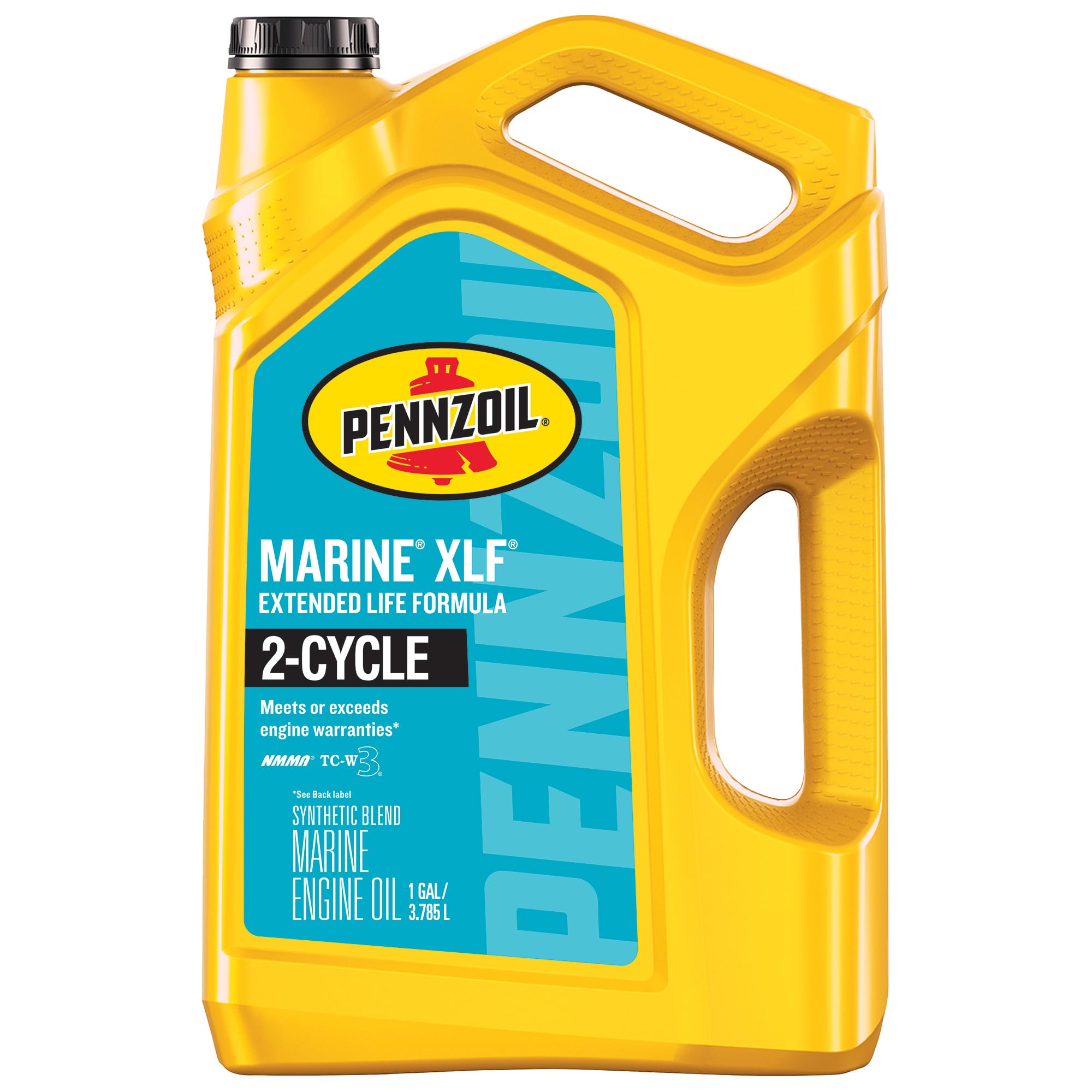
You want a TC-W3 outboard oil with a strong fit for seasoned engines without making maintenance complicated, and Pennzoil Marine XLF fits that role. Pennzoil positions this synthetic-blend formula for marine two-stroke use and specifically highlights seasoned engines, while also listing compatibility with many newer high-displacement carbureted or direct-injection outboards.
Use this pick when marine compatibility matters more than all-purpose yard-tool flexibility. Pennzoil identifies XLF as TC-W3, and NMMA lists Pennzoil Marine XLF in its 2026 TC-W3 registry. You should still follow your outboard manual for the required oil type, fuel-to-oil ratio, and injection or premix procedure.
What People Say
The sentiment graphic indicates generally positive feedback, but its sample, date, and method are not documented. Base the buying decision on engine compatibility and the verified TC-W3 specification rather than sentiment alone.
Overall Sentiment: Positive

Performance and Maintenance Notes
|
Impact |
Benefit |
|---|---|
|
Cleaner Combustion |
A marine-focused two-stroke oil can help reduce visible smoke when used at the correct ratio. |
|
Lower Deposit Formation |
Deposit control helps keep ports and piston tops cleaner over time. |
|
Wear Protection |
Pennzoil states that the formula helps protect against piston scuffing and wear when used in a compatible engine. |
|
Better Seasonal Reliability |
Cleaner plugs and ports can make spring startup and regular boating less frustrating. |
Engine Protection Notes
This is the best fit here for buyers focused on seasoned or frequently used marine outboards. It is currently presented by Pennzoil as TC-W3 and appears in NMMA’s 2026 TC-W3 registry, but the engine manual still controls the required oil and mixing procedure.
Key Benefits
- Strong choice for older or regularly used outboards
- Synthetic-blend formulation for marine-style two-stroke use
- Good fit when deposit control matters more than racing performance
- One-gallon size works well for boat owners who use oil regularly
✔ Pros
- Good marine-focused value for outboard owners
- Useful for older engines that need steady deposit control
- Gallon size is convenient for frequent boat use
✘ Cons
- Less ideal if your tool manual calls for a non-marine JASO or ISO oil
- Marine-focused formula is less useful for tools that require JASO/ISO air-cooled oil
- Not the most performance-focused option in this list
Check Product Details on Amazon
Red Line

You’re looking for a premium two-stroke oil, and Red Line Two-Stroke Racing Oil is the performance-minded pick in this roundup. Red Line describes it as an ester-based synthetic formula for demanding two-stroke use, with high film strength, high-temperature stability, and low carbon residue.
Choose it for motorcycles, snowmobiles, racing-style use, or other compatible high-rev two-stroke engines where film strength and deposit control matter. Red Line suggests 50:1 for many uses and notes that the oil works in both premix and injection systems. If your marine engine specifically requires TC-W3, use a TC-W3-certified oil instead of assuming this racing formula qualifies.

This stand-up weed puller makes it easy to remove dandelions, thistles, and other invasive weeds without kneeling, bending, or using harsh chemicals. Its long aluminum shaft, offset handle, and viewing window improve comfort and control, while the four serrated stainless steel claws grip weeds and roots for clean, permanent extraction. An easy-eject mechanism and reinforced foot platform help speed up garden cleanup with less strain.

This heartfelt memoir blends laugh-out-loud honesty with tender reflections on love, loneliness, and the unexpected healing power of rescue dogs. Isabel Klee shares her journey fostering pups in the city while navigating dating and self-discovery, offering an intimate, relatable story for readers who enjoy emotional, character-driven narratives. It is a warm, engaging read about opening your heart and finding connection in surprising places.

HERITAGE STORE USDA Organic Castor Oil is a versatile beauty and wellness oil designed to support healthier-looking hair, brows, lashes, and skin. Cold pressed and rich in omegas and ricinoleic fatty acids, it helps nourish dry areas while promoting softer, fuller-looking hair with regular use. It also works as a castor pack for targeted wellness routines and comes in earth-friendly dark glass packaging to help preserve oil quality.
What People Say
The sentiment graphic indicates generally positive feedback, but the underlying review sample and methodology are not documented. Use it only as a directional signal; the verified product specification is more important.
Overall Sentiment: Positive

Performance and Maintenance Notes
|
Impact |
Benefit |
|---|---|
|
Low Carbon Residue |
A low-residue oil can reduce decarbonizing needs when the engine is tuned and mixed correctly. |
|
Low Visible Smoke |
Low carbon residue can help reduce visible smoke and plug fouling. Never operate a combustion engine in an enclosed area because exhaust gases remain hazardous. |
|
Performance Consistency |
Strong lubrication helps maintain smoother running under load. |
|
Longer Component Life |
Better film strength can help protect pistons, rings, and cylinders when the oil matches the engine requirement. |
Engine Protection Notes
This is the premium performance pick, but it is not the automatic choice for every engine. Check your manual for the required oil standard and mix ratio before using it in a small tool, outboard, or powersports engine.
Key Benefits
- Premium synthetic choice for performance-focused users
- Designed for low residue and strong lubrication
- Useful for motorcycles, snowmobiles, and demanding recreational use
- Good choice when plug fouling and carbon control are top concerns
✔ Pros
- Best performance-oriented oil in this roundup
- Strong fit for high-rev and demanding use
- Low-residue focus helps reduce plug and port issues
✘ Cons
- More specialized than most homeowners need
- Gallon size may sit unused for low-hour engines
- Check compatibility before using it in marine outboards
Check Product Details on Amazon
Valvoline 2-Cycle
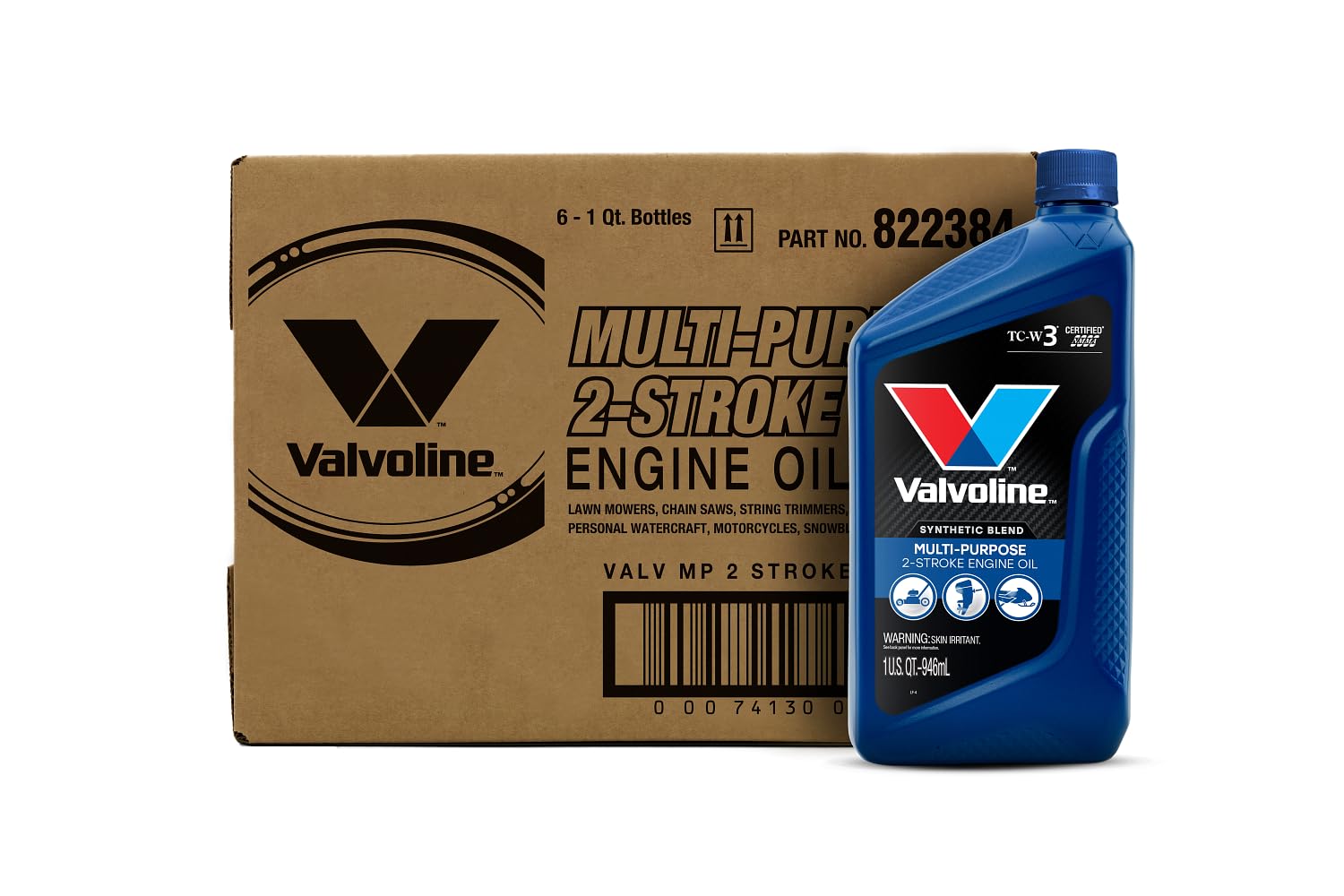
You need an oil that is simple to keep on hand across a range of equipment, and Valvoline Multi-Purpose 2-Stroke is the broadest multi-purpose pick here. Valvoline lists it for many air-cooled and water-cooled two-stroke engines, including premix, oil-injection, and applications that call for NMMA TC-W3.
Use it only when your engine manual and the product specification agree. Valvoline states that it can be used where manufacturers specify fuel-to-oil ratios from 11:1 to 100:1, but that range is not permission to choose your own ratio—the engine maker’s ratio still controls.
What People Say
The sentiment graphic indicates generally positive feedback, but how the sentiment was calculated is not documented. Use it as a directional summary, not as a substitute for checking your engine manual.
Overall Sentiment: Positive

Performance and Maintenance Notes
|
Impact |
Benefit |
|---|---|
|
Lower Visible Smoke |
A correctly matched and mixed oil can reduce visible smoke compared with poor-quality or incorrect oil. |
|
Reduced Deposits |
Deposit control helps keep engines cleaner between service intervals. |
|
Cleaner Components |
Ashless detergent and dispersant additives help keep spark plugs and exhaust ports cleaner. |
|
Rust and Corrosion Protection |
Valvoline states that the formula helps protect internal parts against rust and corrosion, including during periods when equipment is not in use. |
Engine Protection Notes
This is a sensible multi-purpose option, not a specialty racing oil. Valvoline states that it uses ashless detergent/dispersant additives, supports premix and injection applications, and meets manufacturer requirements where NMMA TC-W3 is specified.
Key Benefits
- Best multi-purpose pick for mixed two-stroke equipment
- Good fit for homeowners and small crews
- Practical for premix or injection use when compatible
- Simple choice for common seasonal engines
✔ Pros
- Simple multi-purpose choice
- Useful for frequent maintenance across several machines
- Good fit for practical, non-racing use
✘ Cons
- Less specialized than Red Line or marine OEM-style oils
- Official spec details should be checked on the current label
- Not ideal if your engine requires a different listed standard
Check Product Details on Amazon
Quicksilver

You need a marine-grade oil with OEM-style backing, and Quicksilver Premium is the best match here. Mercury lists Quicksilver Premium 2-Stroke Marine Engine Oil as an NMMA TC-W3 oil for outboards, PWC, motorcycles, snowmobiles, and small engines, and NMMA includes it in the 2026 TC-W3 registry.
It is made for buyers who prefer a Mercury/Quicksilver maintenance path and want an oil suited to routine boating, seasonal prep, and compatible two-stroke equipment. Mercury also lists 16 oz, 32 oz, 1 gallon, and 2.5 gallon sizes for this product family.
What People Say
The sentiment graphic indicates generally positive feedback, but its review sample and methodology are not documented. Give more weight to the verified TC-W3 registration and Mercury/Quicksilver application guidance.
Overall Sentiment: Positive

Performance and Maintenance Notes
|
Impact |
Benefit |
|---|---|
|
Reduced Visible Smoke |
Mercury describes it as reducing exhaust smoke when used properly in compatible engines. |
|
Deposit and Corrosion Control |
Its ashless dispersant formula helps control deposits and corrosion in combustion, intake, and exhaust areas. |
|
Wear Protection |
Correct lubrication helps protect compatible outboards and small engines from wear and fouling. |
Engine Protection Notes
Quicksilver Premium is a strong OEM-style pick for marine users. Mercury recommends it for premix applications in lower-horsepower carbureted engines. Higher-horsepower, oil-injected, EFI, or DFI applications may call for a different Mercury/Quicksilver two-stroke oil, so follow the engine manual.
Key Benefits
- Best OEM-style marine pick in this roundup
- NMMA TC-W3 oil for compatible outboards and small engines
- Helps control exhaust smoke and deposits
- Good fit for Mercury, Mariner, and similar maintenance routines
✔ Pros
- Official Mercury/Quicksilver marine product family
- TC-W3 oil for compatible two-stroke applications
- Good choice for OEM-style maintenance
✘ Cons
- Best suited to marine-style use, not every handheld tool
- Small bottle size may not be ideal for high-volume users
- Premium Plus may fit harder marine use better than standard Premium
Check Product Details on Amazon
How to Choose the Best Two-Stroke Oil
Match the Oil to the Engine Type
Start with the engine manual. Outboards often require NMMA TC-W3 oil, while many air-cooled tools and powersports engines may call for JASO, ISO, API TC, or a brand-specific oil. Do not treat TC-W3 and JASO/ISO labels as automatically interchangeable just because both products are marketed for two-stroke engines.
Check Premix or Injection Compatibility
Some engines require you to mix oil with fuel before filling the tank. Others use oil injection. Choose an oil that clearly supports your system, then measure the fuel-to-oil ratio exactly.
Consider Smoke and Deposit Control
Low-smoke and low-ash formulas can reduce visible exhaust and plug fouling. They work best when the carburetor, spark plug, fuel, and oil ratio are already correct.
Choose the Right Bottle Size
A gallon makes sense if you maintain several tools or use a boat often. A smaller bottle is better if your engine runs only a few hours per season, because opened oil should be sealed and stored cleanly.
Do Not Ignore Storage
Store two-stroke oil in a cool, dry place away from sunlight. Keep the cap tight, label premixed fuel clearly, and rotate older stock first.
Note: Poor fuel, old premix, dirty plugs, or incorrect carburetor settings can still cause smoke and fouling even when you use a good two-stroke oil.
Quick Decision Guide
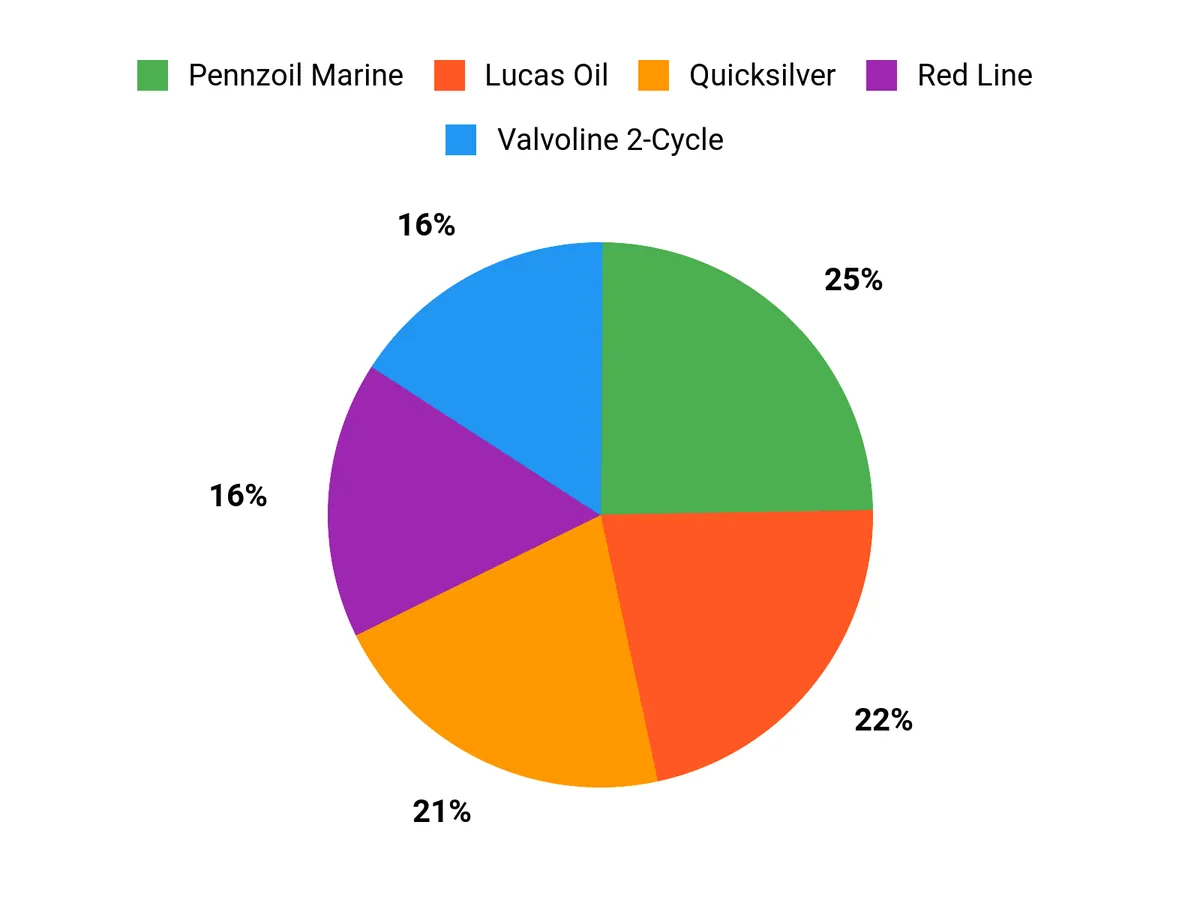
Choose by specification first, then by use case. Lucas is strongest for many air-cooled small engines; Pennzoil XLF is the dedicated seasoned-outboard pick; Red Line is the performance-focused choice; Valvoline is the broad multi-purpose option; and Quicksilver is the OEM-style marine pick. The chart below is a directional visual summary, not a substitute for your engine manual.
Wrapping Up
If you need a dependable, low-smoke all-around oil for many compatible air-cooled small engines, Lucas Oil 10115 is the best overall pick here. If you operate a seasoned or frequently used outboard that calls for TC-W3, Pennzoil Marine XLF is the more appropriate marine-focused choice.
When performance, film strength, and low carbon residue matter most, Red Line is the premium pick. For mixed air- and water-cooled equipment where the required specification matches, Valvoline Multi-Purpose 2-Stroke is the practical all-around choice.
If you prefer an OEM-style marine product with Mercury/Quicksilver backing, Quicksilver Premium is a strong match for compatible lower-horsepower applications. Match the oil standard, premix or injection requirement, and fuel-to-oil ratio to the engine manual before you buy.
| Product Name | Image | Best For | Liquid Volume | Vehicle Service Type | Formulation Type | Amazon |
|---|---|---|---|---|---|---|
| Lucas Oil 10115 Semi-Synthetic 2-Cycle Motor Oil – 1 Gallon |
|
Air-cooled small engines | 1 Gallon (128 fl oz) | Snowmobiles, Weed Eaters, Leaf Blowers, Chain Saws | Semi-Synthetic | Check Details |
| Pennzoil Marine XLF Extended Life Formula Engine Oil, 1 Gallon |
|
Seasoned/frequently used outboards | 1 Gallon (128 fl oz) | Marine Outboard Motors | Synthetic Blend | Check Details |
| Red Line 40605 Two-Stroke Oil Racing Synthetic – Gallon |
|
Performance and racing-style use | 1 Gallon (128 fl oz) | Snowmobiles, Motorcycles, Marine | Synthetic | Check Details |
| Valvoline 2-Cycle Multi-Purpose TCW-3 Motor Oil 1 QT, Case of 6 |
|
Mixed two-stroke equipment | 1 Quart (32 fl oz) per bottle; verify Amazon package quantity | Lawn equipment, outboards/PWC, motorcycles, generators, snow blowers | Ashless Multi-Purpose | Check Details |
| Quicksilver Premium 2-Stroke Engine Oil – Outboards, PWCs, Snowmobiles and Motorcycles – 1 Pint |
|
OEM-style marine maintenance | 1 Pint (16 fl oz) | Outboards, PWCs, Snowmobiles | Ashless | Check Details |
Frequently Asked Questions
Which two-stroke oil should I choose?
Choose the oil that matches your engine manual first. Pick Lucas Oil for many air-cooled small engines, Pennzoil Marine XLF for seasoned or frequently used TC-W3 outboards, Red Line for performance-style use, Valvoline for broad multi-equipment use when the required specification matches, and Quicksilver for OEM-style TC-W3 marine maintenance.
Is TC-W3 oil always the best choice?
No. TC-W3 is important for many two-stroke marine outboards, but some air-cooled tools and powersports engines require JASO, ISO, API TC, or manufacturer-specific oil. Always check the manual.
How should I mix and store two-stroke oil?
Follow the ratio in your engine manual, measure carefully, and mix fuel and oil thoroughly before filling the tank. Store oil in a sealed container in a cool, dry place away from direct sunlight.
Will the right oil reduce smoke and deposits?
It can. A correctly specified low-smoke or low-ash oil may help reduce visible smoke, carbon buildup, and plug fouling, but results also depend on fresh fuel, correct mixing, engine tuning, and regular maintenance.
Can I use marine two-stroke oil in a chainsaw or trimmer?
Only use it if your chainsaw or trimmer manual allows that oil standard. Many air-cooled handheld tools require a different two-stroke oil specification than marine outboards.
Sources
- Lucas Oil Semi-Synthetic 2-Cycle Oil — product #10115, premix/injection compatibility, low-ash formulation, JASO FD / ISO GD, and API TC claims.
- Pennzoil Marine XLF Extended Life Formula Engine Oil — TC-W3 synthetic-blend outboard positioning, premix/injection guidance, and deposit-control claims.
- Red Line Two-Stroke Racing Oil — performance positioning, premix/injection compatibility, suggested ratios, available sizes, film-strength, and low-residue claims.
- Valvoline Multi-Purpose 2-Stroke Motor Oil — air-/water-cooled compatibility, premix/injection use, TC-W3 applications, ashless additives, and manufacturer-listed ratio range.
- Mercury Marine Quicksilver Premium 2-Stroke Marine Engine Oil — TC-W3 status, sizes, applications, low-horsepower premix guidance, and OEM positioning.
- NMMA TC-W3 Two-Stroke Oil Certification Program — testing requirements and the current 2026 registry used to verify Pennzoil Marine XLF, Valvoline Multi-Purpose 2-Cycle Engine Oil, and Quicksilver Premium 2-Stroke Engine Oil.

The COWAY Mighty air purifier is designed to help clean large home spaces with a four-stage filtration system that captures fine particles, allergens, smoke, odors, and VOCs. Its real-time air quality monitor, auto mode, eco mode, timer, and filter alerts make it easy to maintain fresher indoor air with less effort. The washable pre-filter and HEPA filtration help support long-term performance for bedrooms, living rooms, and other busy areas.

Nature Made Burp Less Fish Oil provides omega-3 support for heart health in easy-to-take softgels designed to help reduce fish burps. Each serving delivers concentrated EPA and DHA from purified fish oil sourced from wild-caught ocean fish, with no artificial colors, flavors, or preservatives. This gluten-free, dairy-free supplement is a trusted daily option for adults looking to support overall cardiovascular wellness.

The COOK'S CHOICE XL Better Breader Bowl makes coating chicken, fish, vegetables, and more fast, tidy, and consistent. Its extra-long tray helps prevent overcrowding, while the integrated sifter promotes even coverage with less waste. Designed for easy cleanup and convenient storage, it is a practical choice for home cooking, air frying, frying, and outdoor meal prep.