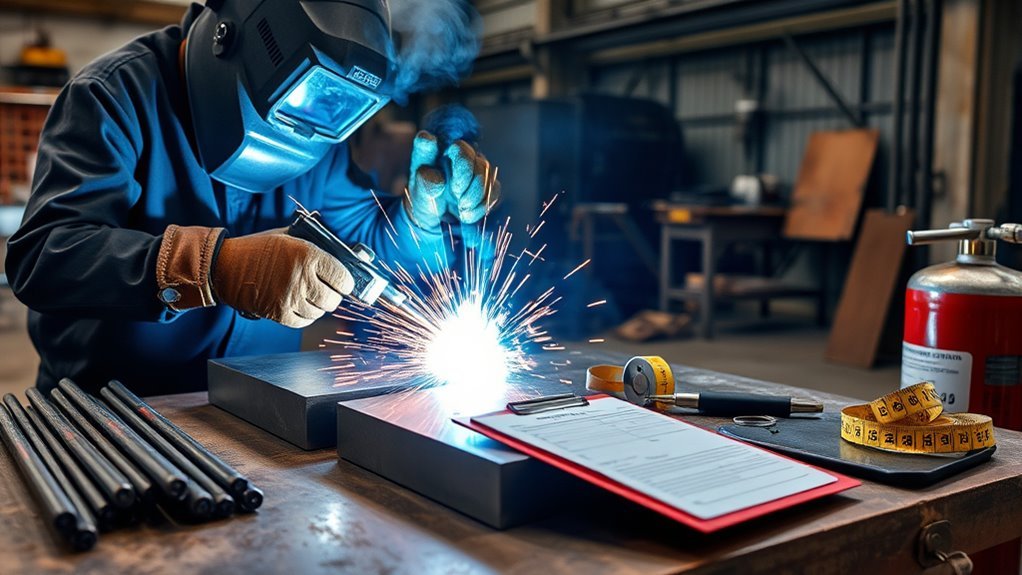
Welding costs depend on more than the time spent running a bead. A welder may also charge for travel, setup, cutting, fit-up, grinding, materials, gas, permits, and cleanup. Current national cost guides place many professional welding services between $60 and $125 per hour, but small repairs, custom fabrication, and structural work can produce very different totals.
Quick Answer
Professional welding usually costs about $60 to $125 per hour in 2026. Small residential projects may total roughly $123 to $483, while broader home projects often fall between $250 and $900. Mobile service, specialty metals, detailed fabrication, structural requirements, and rush work can raise the final price.
Key Takeaways
- Most welders bill by the hour, by the project, or by the length or weight of the finished work.
- A one- or two-hour minimum can make a quick repair cost more than the actual welding time suggests.
- Aluminum, stainless steel, TIG work, difficult access, and code-qualified structural work often cost more than basic mild-steel repairs.
- The best quote separates labor, materials, preparation, travel, finishing, permits, and possible change-order costs.
How Much Does Welding Cost?
For a useful 2026 budget, start with a broad range instead of one “national average.” HomeAdvisor’s June 2026 cost guide reports a typical project range of $123 to $483, with an average near $300. Angi’s May 2026 guide uses a wider range of $250 to $900, averaging about $500 for many home projects.
The difference does not mean one source is necessarily wrong. Welding jobs vary greatly in size, and each cost guide uses its own project mix and data method. Treat these figures as planning ranges, then compare written local quotes for your exact job.
| Pricing measure | Typical range | What it usually covers |
|---|---|---|
| Hourly service rate | $60–$125 per hour | Labor, equipment, and business overhead; materials may be separate |
| Smaller residential project | $123–$483 | Short repairs and straightforward home welding jobs |
| Broader home-project range | $250–$900 | Repairs, gates, furniture, decorative work, and moderate fabrication |
| Minimum service charge | Often 1–2 labor hours | Travel, setup, equipment unloading, consumables, and cleanup |
Note: A welder’s billed service rate is not the same as the worker’s wage. The U.S. Bureau of Labor Statistics May 2025 data lists a mean wage of $27.29 per hour and a median wage of $25.84 for welders, cutters, solderers, and brazers. Customer rates are higher because they also cover vehicles, equipment, insurance, administration, downtime, and other overhead.
Typical Welder Hourly Rates
General professional welding commonly falls within the $60 to $125 per hour range. The process, work setting, and skill requirement can move the price up or down. Shop work is often less expensive than mobile work because the welder does not need to transport heavy equipment and set up at your property.
Current HomeAdvisor estimates also show different planning ranges by welding method. These are not fixed national prices, but they help explain why two welders may quote the same project differently.
| Welding method | Planning range | Why pricing differs |
|---|---|---|
| Stick welding | $50–$75 per hour | Portable and practical for many outdoor or heavy-steel repairs |
| MIG welding | $65–$95 per hour | Fast production on suitable steel and fabrication work |
| TIG welding | $75–$125 per hour | Slower, precise work often used for stainless steel, aluminum, and visible joints |
Structural, pressure-pipe, code-qualified, or highly specialized welding may exceed these consumer-project ranges. Those jobs can require approved procedures, documented welder qualifications, inspection, engineering details, or special access equipment. Ask for a project quote rather than relying on a generic specialty hourly rate.
The arc-on time may be short, but the bill also reflects travel, setup, fit-up, preparation, inspection, finishing, and cleanup.
What Changes Welding Prices?
Several factors can push welding prices up or down:
- Metal and thickness: Thick plate needs more heat, filler metal, passes, and preparation. Aluminum, stainless steel, cast iron, and specialty alloys may require extra cleaning, heat control, or a different welding process.
- Joint preparation: Removing rust, paint, grease, old welds, or damaged metal adds time before welding begins.
- Access: Overhead work, tight spaces, ladders, vehicle underbodies, and remote sites slow production and may require extra safety controls.
- Design complexity: Curves, decorative details, tight tolerances, repeated parts, and custom fixtures increase layout and fit-up time.
- Shop versus mobile service: On-site work can include travel, equipment loading, generator use, and a service-call minimum.
- Structural or code requirements: Load-bearing work may require permits, drawings, inspections, qualified procedures, or a welder qualified for the required process and position.
- Finish: Grinding, polishing, painting, rust protection, powder coating, and cleanup may be priced separately.
- Urgency: After-hours and rush work can carry a premium because the welder must rearrange scheduled work.
Pro Tip: Send each welder the same photos, dimensions, metal type, location, access details, and finish requirements. Quotes are much easier to compare when every bidder prices the same scope.
Material Costs for Welding Jobs
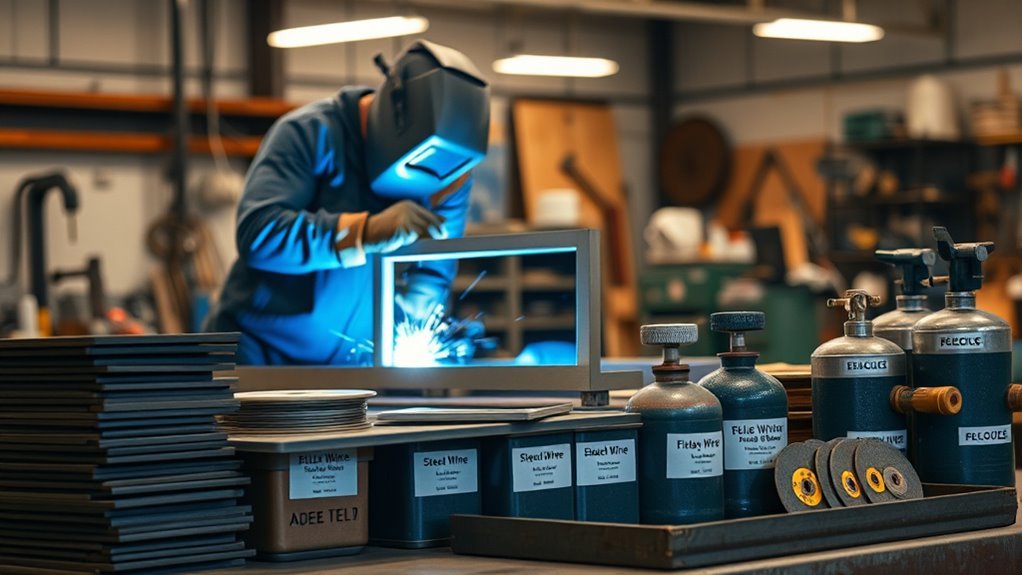
Materials can be a small part of a quick repair or the largest part of a custom build. HomeAdvisor places the combined material budget for many welding projects at about $140 to $230, but that figure can include base metal, wire or rods, flux or gas, and abrasives. It should not be described as the cost of consumables alone.
Angi’s 2026 guide lists the following broad metal-price examples. Actual supplier prices change with alloy, shape, quantity, market conditions, cutting fees, and local availability.
| Material | Example price | Cost considerations |
|---|---|---|
| Mild steel | $1–$3 per pound | Usually economical and widely available |
| Stainless steel | $3–$8 per pound | Alloy grade, clean tooling, shielding, and finish affect cost |
| Aluminum | $4–$10 per pound | Requires careful cleaning, fit-up, and heat control |
| Cast iron | $2–$5 per pound | Repair procedure may require preheat and slow cooling |
A welder may also add waste, supplier delivery, cutting fees, and a material markup. That markup covers ordering time, pickup, storage, and the risk of purchasing the wrong quantity. Supplying your own metal may save money, but confirm the alloy, dimensions, and condition with the welder before buying it.
Common Welding Repair and Fabrication Costs
Project totals vary more than hourly rates because the scope can range from one cracked bracket to a complete gate or structural frame. The ranges below combine current HomeAdvisor and Angi planning figures.
| Project | Typical total | Main price drivers |
|---|---|---|
| Small repair under 1 foot | $100–$250 | Minimum charge, access, cleaning, and one or more short welds |
| Fence repair | $150–$350 | Rust, broken posts, replacement sections, and finish matching |
| Metal furniture repair or fabrication | $250–$800 | Disassembly, thin metal, alignment, grinding, and refinishing |
| Pipe repair | $200–$1,000 | Pipe material, pressure service, access, damage, and testing |
| Gate fabrication or installation | $400–$1,200 | Size, hinges, posts, latch, finish, decoration, and site work |
| Structural steel welding | $500–$2,500 | Load requirements, drawings, access, permits, inspection, and steel quantity |
| Sheet-metal fabrication | $750–$2,500 | Cutting, forming, fixtures, seam length, finish, and assembly |
- Lower-cost repairs can restore function quickly when the surrounding metal is still sound.
- Complex damage, widespread corrosion, or poor access can make replacement more economical.
- Custom fabrication can provide a better fit than an off-the-shelf replacement, but design and finishing add labor.
- Emergency and after-hours service can add pressure to the schedule and the price.
Extra Fees That Can Change the Final Bill
A quote that lists only an hourly rate may leave out important charges. Ask whether these items are included:
| Extra cost | Common planning range | When it applies |
|---|---|---|
| Surface preparation | $50–$200 | Rust, coatings, grease, old welds, or damaged metal must be removed |
| Mobile travel fee | $25–$100 | The welder transports equipment to your site |
| Permits or inspections | $50–$300 | Local rules require review of structural, exterior, or other regulated work |
| Rush or after-hours service | Often 10%–30% more | The job interrupts the normal schedule or requires immediate response |
| Finishing or coating | Quoted separately | Grinding, polishing, paint, powder coating, or weather protection is requested |
These are broad planning figures, not guaranteed fees. Permit and inspection requirements are local, so a structural project should be checked with the building department before work begins.
How to Estimate Welding Costs
A reliable estimate starts with a defined scope. Use this formula:
Estimated total = labor + materials + preparation + travel/setup + finishing + permits/inspection + applicable tax
- Describe the finished result. Include measurements, metal type, thickness, location, load, and desired finish.
- Estimate labor. Count layout, cutting, fit-up, tacking, welding, grinding, finishing, setup, and cleanup—not only arc time.
- Price materials. Include base metal, filler wire or rods, shielding gas, abrasives, fasteners, hinges, and waste.
- Add job-specific costs. Include travel, equipment rental, permits, inspection, coating, and removal of the old part.
- State assumptions. A quote should explain whether hidden corrosion, damaged base metal, design changes, or extra site work will trigger a change order.
For example, a small mobile repair could be estimated as follows:
| Line item | Example calculation | Amount |
|---|---|---|
| Labor | 2.5 hours × $90 | $225 |
| Metal and consumables | Plate, wire, gas, abrasives | $85 |
| Travel and setup | Local mobile service | $60 |
| Estimated subtotal | Before tax, permit, or unexpected repair work | $370 |
This example shows the method, not a promised market price. Your local labor rate, minimum charge, and material needs may produce a different total.
How to Compare Welding Quotes
Compare at least two or three written estimates when the project is large enough to justify it. The lowest number is not automatically the best value. Check that each quote answers these questions:
- Is the price fixed, hourly, or a not-to-exceed estimate?
- Does it include materials, travel, setup, grinding, coating, cleanup, and tax?
- Who is responsible for permits, drawings, engineering, and inspections?
- What welding process and filler metal will be used?
- Will the work be completed in a shop or at the site?
- What defects, corrosion, or scope changes could increase the price?
- Is the welder insured, and is any required local license current?
- Does the welder hold a qualification that matches the process, material, position, and code required for the job?
The American Welding Society Certified Welder program uses performance testing and allows welders to earn qualifications for different procedures and industries. You can also use the AWS certification verification tool when a contractor presents an AWS credential. A credential is helpful, but it does not replace insurance, references, local licensing, or a job-specific qualification when the project requires one.
Warning: Welding can expose people to fire, electric shock, ultraviolet radiation, hot metal, and hazardous fumes. OSHA’s welding standard addresses fire prevention, eye and body protection, ventilation, confined spaces, and other controls. Use a qualified professional for structural work, fuel tanks, pressure systems, unknown coated metals, and any job beyond your training.
Should You Repair or Replace the Metal Item?
Repair usually makes sense when the crack or failed joint is local, replacement parts are hard to find, and the surrounding metal still has enough thickness and strength. A repair can also preserve a custom gate, railing, machine part, or piece of furniture that would be expensive to replace.
Replacement may be the better choice when corrosion is widespread, the base metal is paper-thin, the item has failed repeatedly, or the repair cannot restore the required load capacity. For a structural or safety-critical item, ask the welder or engineer to explain whether the proposed repair returns the part to its intended strength and service condition.
How to Save on Welding Costs
- Bring portable items to the shop. This can reduce travel and mobile setup charges.
- Combine small jobs. Several repairs completed during one visit may spread the minimum charge across more work.
- Provide clear measurements and photos. Better information reduces estimating uncertainty and repeat visits.
- Choose standard shapes and finishes. Common tubing, plate, hinges, and simple designs usually cost less than one-off decorative parts.
- Clear safe access before arrival. Move vehicles, stored items, and nonhazardous obstacles so the welder can set up efficiently.
- Do not perform unsafe prep. Leave unknown coatings, tanks, pressure vessels, electrical hazards, and structural disassembly to trained professionals.
- Schedule nonurgent work normally. Avoid after-hours or rush premiums when the repair can wait.
Frequently Asked Questions
What is the average cost of welding per hour?
Most professional welding services cost about $60 to $125 per hour in 2026. Small jobs may still be billed at a one- or two-hour minimum, and mobile, structural, TIG, code-qualified, or rush work can cost more.
Do welders charge a minimum service fee?
Yes. Many welders charge a minimum equal to one or two labor hours to cover travel, equipment setup, shielding gas, consumables, cleanup, and business overhead. Bringing a portable item to a shop can reduce or avoid a mobile service fee.
How do you quote welding work?
Estimate labor hours, then add base metal, filler wire or rods, shielding gas, cutting and fit-up, grinding, finishing, travel, equipment, permits, inspections, and applicable tax. The quote should state what is included, what could change the price, and whether the price is fixed or estimated.
How much do private welders charge per hour?
Independent welders commonly bill within the same broad $60 to $125 hourly range as small welding businesses. Their price depends on location, insurance, equipment, travel, certification or code requirements, and whether the work is completed in a shop or on-site.
Does aluminum or stainless steel cost more to weld?
Usually. Aluminum and stainless steel often cost more than mild steel because the metal can cost more and the job may require tighter cleaning, fit-up, heat control, shielding, and finishing. The exact premium depends on alloy, thickness, process, and local material prices.
Is it cheaper to repair or replace a welded item?
Repair is often cheaper when the damage is local and the surrounding metal is sound. Replacement may be safer or more economical when corrosion is widespread, the item is load-bearing, replacement parts are inexpensive, or the repair cannot restore the required strength.
Sources
- HomeAdvisor: How Much Does Welding Cost in 2026? — project totals, hourly rates, materials, welding methods, and common repair costs.
- Angi: How Much Does Welding Cost? 2026 Data — broader project ranges, metal price examples, travel fees, preparation, permits, and rush charges.
- U.S. Bureau of Labor Statistics: May 2025 National Wage Data — employee wage data used to explain the difference between wages and customer billing rates.
- OSHA Standard 29 CFR 1910.252 — welding fire prevention, protective equipment, ventilation, and confined-space requirements.
- American Welding Society Certified Welder Program — performance-based welder qualifications and credential scope.
Conclusion
Most professional welding services cost about $60 to $125 per hour, but the hourly rate is only one part of the bill. Materials, preparation, travel, minimum charges, welding method, access, finishing, and structural requirements can change the total quickly. Use current ranges to set a budget, then compare detailed written estimates that describe the same scope. A clear quote and a properly qualified, insured welder give you the best chance of avoiding surprises and getting a safe, durable result.