A Pennsylvania fishing license costs $27.97 for most residents and $60.97 for nonresidents in 2026. Residents age 65 or older can buy an annual license for $14.47 or a lifetime license for $86.97. Trout and Lake Erie fishing may require additional permits, so your final cost depends on where and what you plan to fish.
Quick Answer
For 2026, a Pennsylvania resident annual fishing license is $27.97, a senior resident annual license is $14.47, and a nonresident annual license is $60.97. Add $14.97 for a Trout Permit, $9.97 for a Lake Erie Permit, or $20.97 for the combination permit.
Key Takeaways
- Most people age 16 or older need a valid Pennsylvania fishing license.
- A resident license plus annual Trout Permit costs $42.94 in 2026.
- A resident license plus the combination Trout/Lake Erie Permit costs $48.94.
- One-day resident and tourist licenses cannot be used from March 15 through April 30.
- Licenses may be carried in printed or digital form and must be shown to an officer on request.
- Fees, seasons, and permit rules can change, so verify current requirements before fishing.
Last updated: July 28, 2026. Prices shown include the issuing-agent fee and electronic transaction fee listed by the Pennsylvania Fish and Boat Commission.
Who Needs a Pennsylvania Fishing License?

A valid Pennsylvania fishing license is generally required for anyone age 16 or older who fishes or angles in Pennsylvania or boundary waters. The requirement applies whether you are trying to catch gamefish, baitfish, fish bait, or certain amphibians and reptiles covered by state fishing laws.
You do not have to display the license on your clothing. However, you must keep it with you and provide it in printed or digital form when requested by a Waterways Conservation Officer or another authorized officer.
The Pennsylvania Fish and Boat Commission licensing FAQ explains the general requirement and several exemptions.
Children Under 16
Children age 15 and younger do not need a standard Pennsylvania fishing license. They must still follow seasons, size limits, creel limits, tackle rules, and other fishing regulations.
An unlicensed adult may help a child by baiting hooks, removing fish, netting fish, preparing a rod, or untangling a line. The adult may also help with casting or retrieving when the child remains within arm’s reach and is actively involved. An adult who begins fishing independently needs the appropriate license.
Who Qualifies as a Pennsylvania Resident?
A resident license is available only to a bona fide Pennsylvania resident. In general, this means Pennsylvania is your permanent home and you are not claiming residency in another state for licensing purposes.
An issuing agent may ask for positive proof of residency, such as:
- A valid Pennsylvania driver’s license
- A valid Pennsylvania non-driver photo identification card
- A qualifying Pennsylvania state or local income-tax record
- Another form of identification accepted by the Commission
Out-of-state students attending a Pennsylvania college do not automatically become residents. However, a qualifying full-time nonresident student can buy the discounted Non-Resident Pennsylvania Student license.
Note: License and permit rules are legal requirements that may change. Check the current Pennsylvania Fishing Summary and water-specific regulations before every trip.
2026 Pennsylvania Fishing License Prices
The following prices are from the official Pennsylvania Fish and Boat Commission 2026 license and permit table. Listed prices include the $1 issuing-agent fee and $0.97 electronic transaction fee.
| License or Permit | Eligibility | 2026 Price |
|---|---|---|
| Resident Annual | Ages 16–64 | $27.97 |
| Senior Resident Annual | Age 65 or older | $14.47 |
| Senior Resident Lifetime | Age 65 or older | $86.97 |
| One-Day Resident | Age 16 or older | $14.47 |
| Disabled Veteran Reduced Resident | Qualifying resident | $2.97 |
| Disabled Veteran Resident Annual | Qualifying resident ages 16–64 | $0.00 |
| POW Resident Annual | Qualifying resident ages 16–64 | $2.97 |
| Nonresident Annual | Age 16 or older | $60.97 |
| Non-Resident Pennsylvania Student Annual | Qualifying student age 16 or older | $27.97 |
| One-Day Tourist | Age 16 or older | $31.97 |
| Three-Day Tourist | Age 16 or older | $31.97 |
| Seven-Day Tourist | Age 16 or older | $39.47 |
| Voluntary Youth Fishing License | Under age 16 | $2.97 |
| Mentored Youth Permit | Under age 16 | Free |
| Trout Permit | Age 16 or older | $14.97 |
| Lake Erie Permit | Age 16 or older | $9.97 |
| Senior Lifetime Lake Erie Permit | Senior lifetime license holder | $9.97 |
| Combination Trout/Lake Erie Permit | Age 16 or older | $20.97 |
One-Day and Tourist License Restrictions
The One-Day Resident and One-Day Tourist licenses are not valid from March 15 through April 30. A one-day license issued for March 14 expires at 11:59 p.m. that day.
The One-Day Tourist license includes trout and Lake Erie permit privileges. A One-Day Resident license does not automatically replace required trout or Lake Erie permits, so residents must add the permit that applies to their trip.
Common License and Permit Totals
Many anglers need more than the base license. These totals show what common 2026 combinations cost:
| Package | Total |
|---|---|
| Resident license only | $27.97 |
| Resident license plus Trout Permit | $42.94 |
| Resident license plus Lake Erie Permit | $37.94 |
| Resident license plus combination permit | $48.94 |
| Nonresident license only | $60.97 |
| Nonresident license plus Trout Permit | $75.94 |
| Nonresident license plus Lake Erie Permit | $70.94 |
| Nonresident license plus combination permit | $81.94 |
A Pennsylvania resident who wants statewide trout and Lake Erie privileges will usually pay $48.94 for the annual license and combination permit in 2026.
Multi-Year License Options and Savings
Pennsylvania offers three-, five-, and ten-year products for anglers who do not want to renew every year. The savings come mainly from avoiding repeated issuing-agent and transaction fees.
| Product | 3 Years | 5 Years | 10 Years |
|---|---|---|---|
| Resident License | $79.97 | $131.97 | $261.97 |
| Nonresident License | $178.97 | $296.97 | $591.97 |
| Senior Resident License | $39.47 | $64.47 | Not listed |
| Trout Permit | $40.97 | $66.97 | $131.97 |
| Lake Erie Permit | $25.97 | $41.97 | $81.97 |
| Combination Trout/Lake Erie Permit | $58.97 | $96.97 | $191.97 |
A three-year resident license averages about $26.66 per year. The five-year option averages about $26.39 per year, and the ten-year license averages about $26.20 per year.
A multi-year base license does not force you to buy a matching multi-year permit. You can add a one-year Trout, Lake Erie, or combination permit in a later year when needed.
How Long Are Multi-Year Licenses Valid?
For products purchased for the 2026 license year, the official 2026 Fishing Summary states that:
- A three-year license is valid through 2028.
- A five-year license is valid through 2030.
- A ten-year license is valid through 2035.
Multi-year licenses reduce renewals, but they do not override future changes to fishing seasons, creel limits, size limits, or water-specific regulations.
Trout, Lake Erie, and Combination Permits
The base fishing license does not cover every fishing situation. You may also need a Trout Permit, Lake Erie Permit, or combination permit.
When Is a Trout Permit Required?
A current Pennsylvania Trout Permit costs $14.97 annually and is printed as a privilege on your fishing license. According to the official Pennsylvania fishing permit guidance, a permit is required when an angler:
- Takes, kills, or possesses a trout while fishing in Pennsylvania or boundary waters
- Fishes in waters covered by special trout regulations
- Fishes in Class A Wild Trout Waters or Wilderness Trout Streams or their tributaries
- Fishes in designated Stocked Trout Waters during the regulated spring period stated in the current Fishing Summary
This means a person may need the permit because of the water being fished, not only because the person says trout is the intended target.
When Is a Lake Erie Permit Required?
The annual Lake Erie Permit costs $9.97. It is required in Pennsylvania waters of:
- Lake Erie
- Presque Isle Bay
- Lake Erie tributaries
- Waters flowing into those tributaries
A Lake Erie Permit is not required for the East and West Basin ponds, also known as the Waterworks Ponds, at Presque Isle State Park. It is also not required solely because you are fishing an inland pond, lake, or reservoir elsewhere in Erie County.
When the Combination Permit Is Better
The annual Combination Trout/Lake Erie Permit costs $20.97. Buying the permits separately would cost $24.94, so the combination saves $3.97 when you need both privileges.
The following anglers generally do not need a Trout or Lake Erie Permit:
- People under age 16
- People who are legally exempt from the fishing-license requirement
- People authorized to fish through an institutional license
- One-Day Tourist license holders
Warning: A license or permit does not allow fishing during a closed season or in a closed water. Always check the current season, water designation, size limit, and creel limit before fishing.
Senior Lifetime License Permit Rules
A Senior Resident Lifetime Fishing License does not automatically provide lifetime trout privileges. Most lifetime-license holders who fish for trout must continue to buy an annual or multi-year Trout Permit.
A senior lifetime-license holder can buy a Senior Lifetime Lake Erie Permit for $9.97. Some older licenses and permits purchased before specific historical cutoff dates may have different privileges, so long-time license holders should verify their record with the Commission.
Special Permits for Charter Boats, Guides, and Commercial Activities
A person operating a charter boat or working as a paid fishing guide on Pennsylvania or boundary waters must obtain the appropriate charter boat/fishing guide permit.
The 2026 annual prices are:
- Resident charter boat/fishing guide permit: $101.97
- Nonresident charter boat/fishing guide permit: $401.97
These prices include the issuing-agent and transaction fees. Application instructions are available on the official charter boat and fishing guide permit page.
A charter boat is a commercial operation that carries paying passengers for fishing. A fishing guide is a person who accepts compensation to guide or lead others while fishing.
Commercial fishing is a separate category. Commercial nets, gear, fish dealing, regulated fishing lakes, cast nets, tournaments, and other activities may require their own licenses or permits. A charter or guide permit does not automatically authorize every commercial fishing activity.
Operators should keep permits and required business records available for inspection and renew the authorization when required. The 2026 Fishing Summary lists the Bureau of Law Enforcement contact number for charter and guide questions as 717-705-7861.
Discounts, Exemptions, and Free Licenses
Pennsylvania has reduced-fee licenses, free licenses, and limited exemptions for qualifying residents. Eligibility and documentation vary by program.
Disabled Veterans
A Pennsylvania resident with a 100% service-connected disability certified by the U.S. Department of Veterans Affairs may qualify for a free fishing license. A qualifying veteran may also receive a Combination Trout/Lake Erie Permit without charge.
A Pennsylvania resident with a 60%–99% service-connected disability may qualify for a reduced-fee resident license. The permit price is not reduced for this group.
The initial application and eligibility verification must be completed through a county treasurer, the PFBC Harrisburg office, or a regional law-enforcement office. Documentation requirements are explained on the official disabled-veteran fishing license page.
People Who Are Blind or Have Severe Impairments
A person who is totally blind or has a qualifying severe physical or mental impairment may fish without a standard license under limited conditions. The exemption generally applies when the person cannot cast or retrieve a line, bait a hook, or remove a fish and uses only one legal fishing device within the required distance.
An attendant helping the qualifying person may also be exempt while providing that assistance. Because the legal test is specific, anglers should verify eligibility rather than assuming every disability qualifies.
Landowners Fishing Their Own Property
A landowner and family members who live on the land throughout the year may fish on that land without a license.
This exemption does not automatically apply to an individual homeowner or member simply because a pond or lake is owned by a homeowners association, private club, or similar group.
A separate reduced-fee landowner license may be available to qualifying Pennsylvania farm owners or lessees who meet acreage, public-access, water, and conservation-plan conditions.
Military Personnel
Military personnel generally need a fishing license. A person stationed in Pennsylvania under qualifying permanent-change-of-station orders for six months or longer may qualify for resident pricing.
A limited exemption may apply to a bona fide Pennsylvania resident who is on active duty, stationed outside Pennsylvania, and home on authorized leave. The angler must carry proof of residency, military status, assignment, and leave while fishing.
Institutional and Educational Programs
Residents of certain medical, rehabilitation, veterans, or juvenile institutions may be covered by an institutional license. Qualifying educational field studies, angler-education programs, and therapeutic programs may also apply for special exemptions.
These programs do not remove seasons, size limits, creel limits, or other fishing rules.
Voluntary Youth Licenses and Mentored Youth Fishing
Children under age 16 do not need a standard fishing license for ordinary fishing. Pennsylvania also offers two youth products for participation in Mentored Youth Trout Day:
- Mentored Youth Permit: Free
- Voluntary Youth Fishing License: $2.97
Voluntary Youth Fishing License
The Voluntary Youth Fishing License provides the same Mentored Youth Trout Day access as the free permit, but its purchase helps the Commission qualify for additional federal reimbursement that supports youth fishing, education, and outreach programs.
The license must be issued in the child’s name. A parent or guardian may need to create or access the youth’s HuntFishPA customer account using the child’s identifying information.
Mentored Youth Trout Day
Pennsylvania’s 2026 Mentored Youth Trout Day was held on March 28, 2026, from 8 a.m. to 7:30 p.m. Current-year dates should always be checked on the PFBC Mentored Youth Program page.
For the 2026 event:
- The youth had to be under age 16.
- The youth needed a current Mentored Youth Permit or Voluntary Youth Fishing License.
- The youth had to be accompanied by a properly licensed adult angler.
- The adult needed a current fishing license and Trout Permit.
- No more than one licensed adult could fish for each actively fishing mentored youth.
- The youth could keep two trout of combined species, each at least seven inches long.
- Adult mentors could fish but could not possess trout.
- Special-regulation areas were not included in the program.
The adult should remain close enough to supervise, teach safe fishing practices, and help the child follow all regulations.
Fish-for-Free Days
Pennsylvania scheduled two Fish-for-Free Days in 2026: May 24 and July 4. On those dates, residents and nonresidents could fish without a fishing license, Trout Permit, or Lake Erie Permit.
All other fishing regulations still applied, including seasons, size limits, daily limits, tackle rules, and restrictions for specific waters.
How to Buy, Renew, or Replace a License
You can purchase a Pennsylvania fishing license online through HuntFishPA or in person from an authorized licensing agent, county treasurer, or Pennsylvania Fish and Boat Commission office.
Information to Have Ready
Depending on the product and your customer record, you may need:
- Your legal name and date of birth
- Your home address
- Your Social Security number
- A valid email address
- Positive proof of Pennsylvania residency
- Documentation for a discount or exemption
- Your existing HuntFishPA customer number, when available
Buying Online
- Sign in to your HuntFishPA account or create an account.
- Select the option to buy licenses or permits.
- Open the Fish section.
- Choose the correct resident, nonresident, senior, tourist, or youth product.
- Add any required Trout, Lake Erie, or combination permit.
- Review the dates and privileges before paying.
- Complete payment and open the receipt and license documents.
- Print the license or save a digital copy to your phone.
Auto-renew may be available for selected products. Review the authorization carefully before enabling it.
Buying In Person
An authorized licensing agent can issue a printed license and help you select the proper product. Bring identification, proof of residency, and any documents needed for a discount.
Payment methods vary by agent. Confirm accepted payment types before visiting when possible.
Lost Licenses and Reprints
A license can be reprinted through HuntFishPA without charge. A licensing agent can also issue a replacement for a fee. Previously purchased permits and privileges should appear on the replacement license.
Pro Tip: Save the license PDF or a clear digital copy directly on your phone before leaving home. This makes it available even when the fishing area has weak mobile service.
Gift Vouchers
A license voucher can be purchased for another person and redeemed through an issuing agent or the licensing system. The voucher itself is not a fishing license and cannot be used as proof of licensing while fishing.
Vouchers are generally nonrefundable and expire on the date shown. Multi-year vouchers may also be available.
Rules for Carrying and Presenting Your License
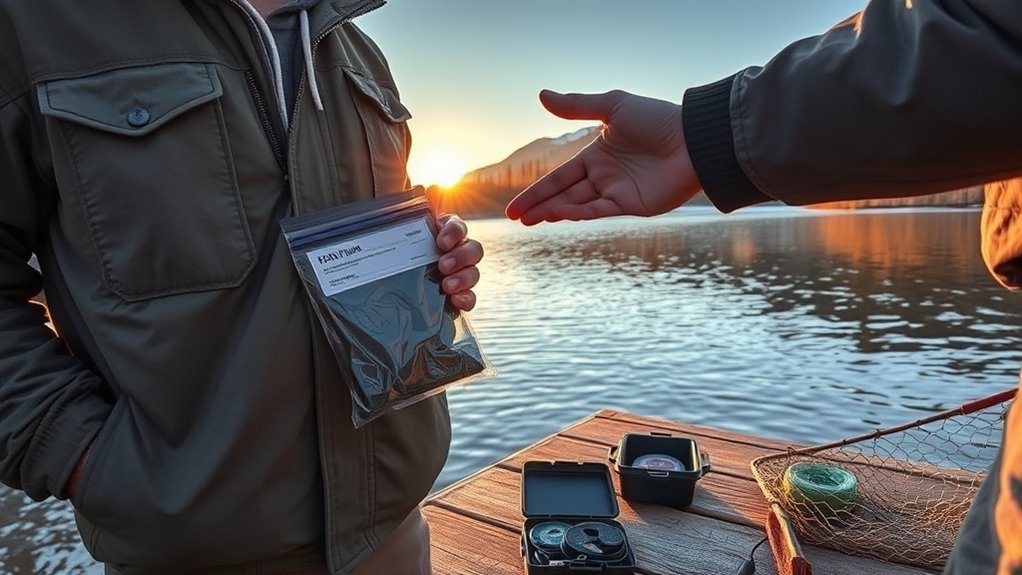
Keep your license with you whenever you fish. You may carry a printed copy or display the license on a digital device.
You do not need to wear the license on the outside of your clothing. When an authorized officer requests it, provide the license promptly and be prepared to show additional identification if requested.
For a printed license, use a waterproof sleeve or sealed pocket. For a digital license, keep your phone charged and store the file where it can be opened without depending on a live internet connection.
Do not alter, borrow, lend, or transfer a fishing license. Pennsylvania law prohibits using a license issued to another person.
Fishing without a required license or permit can result in a citation. Depending on the violation, unlawful fish or fishing equipment may be seized as evidence, and fishing privileges may be suspended or revoked.
How License Fees Support Conservation and Fisheries Management
Fishing license and permit revenue helps the Pennsylvania Fish and Boat Commission manage public fishing resources. The money supports work that benefits both fish populations and anglers.
Habitat Restoration
Habitat projects may include streambank stabilization, in-stream structures, riparian planting, water-quality improvements, and work that protects spawning and nursery areas.
- Stable streambanks can reduce sediment entering the water.
- In-stream structures can create shelter and varied current.
- Vegetated buffers can shade streams and filter runoff.
Stocking and Hatcheries
License revenue also supports hatchery facilities, fish production, stocking equipment, staff, and evaluation of stocking results.
| Program | Purpose | Benefit |
|---|---|---|
| Hatchery operations | Raise fish for approved programs | Maintains stocking supply |
| Stocking | Release fish into selected waters | Supports recreational fishing |
| Monitoring | Measure survival and population results | Improves future decisions |
| Facility maintenance | Maintain raceways, buildings, and equipment | Keeps programs operating reliably |
Research, Education, and Enforcement
Fees help fund fish-population surveys, tagging, habitat assessments, regulation development, officer patrols, permit checks, and angler education.
Population data can guide stocking plans, harvest rules, habitat priorities, and special regulations. Enforcement helps protect those investments by addressing unlicensed fishing, illegal harvest, pollution, and other violations.
Sources
- Pennsylvania Fish and Boat Commission: Buy a Fishing License or Permit — official 2026 annual and multi-year prices.
- Pennsylvania Fish and Boat Commission: Buy a Fishing Permit — Trout, Lake Erie, combination permit, and exemption rules.
- Pennsylvania Fishing Licenses and Regulations FAQ — residency, private-land, replacement, military, and license-carrying guidance.
- Pennsylvania Mentored Youth Program — youth permit, mentor, harvest, and event requirements.
- Disabled Veteran Fishing License Application — free and reduced-license eligibility.
- Charter Boat Operator and Fishing Guide Permit — permit fees and application requirements.
Frequently Asked Questions
Do Pennsylvania fishing license fees change every year?
Not automatically. License and permit fees may remain unchanged for several years or be revised through the state’s legal and regulatory process. Always use the current Pennsylvania Fish and Boat Commission fee table rather than assuming last year’s price still applies.
Can I transfer my Pennsylvania fishing license to another person?
No. An ordinary recreational fishing license is issued to the named customer. Pennsylvania law prohibits altering, borrowing, lending, or transferring it. To give someone a license, purchase a gift voucher that the recipient can redeem in their own name.
What happens if I fish without a required license?
You may receive a citation and face penalties based on the violation. Illegal fish or equipment may be seized as evidence, and repeated or serious violations can affect fishing privileges. Exact consequences depend on the offense and current law.
Do I need a fishing license for a private pond in Pennsylvania?
A landowner and family members who live on the property year-round may fish on that land without a license. Other guests normally need a license. Members are not automatically exempt merely because a pond is owned by a homeowners association or private club.
Does a child under 16 need a Pennsylvania fishing license?
No standard license is required for a child under 16. However, a current Mentored Youth Permit or Voluntary Youth Fishing License is required for the child to participate in Mentored Youth Trout Day.
How long is a Pennsylvania annual fishing license valid?
A license is valid for the license year printed on it and may also be valid during December of the preceding year. The 2026 licenses sold beginning December 1, 2025, were valid immediately and expire December 31, 2026. One-day and tourist products are valid only for their specified dates.
Do fishing license purchases support habitat restoration?
Yes. License and permit revenue supports Pennsylvania fisheries programs that include habitat work, hatcheries, stocking, research, education, access, and enforcement.
Conclusion
A standard Pennsylvania resident fishing license costs $27.97 in 2026, but the correct total depends on your age, residency, trip length, fishing location, and whether you need trout or Lake Erie privileges. A resident license with a Trout Permit costs $42.94, while a resident license with the combination permit costs $48.94.
Choose a multi-year license if you fish regularly and want fewer renewals. Before heading out, save a printed or digital copy of your license, confirm that every required permit appears on it, and review the current rules for the water you plan to fish.