
You’ll typically pay about $20–$35 for a short-term (7‑day or similar) fishing license, though rates vary by state and whether you’re a resident. Some states charge around $30 for a nonresident 3‑day or 7‑day option; others offer 1‑ or 2‑day passes. Expect extra permits for trout or saltwater in some places. Purchase online or from agents with card payment; reduced fees may apply for seniors or veterans. Read on for state specifics and add‑ons.
Resident and Nonresident Weekly License Eligibility
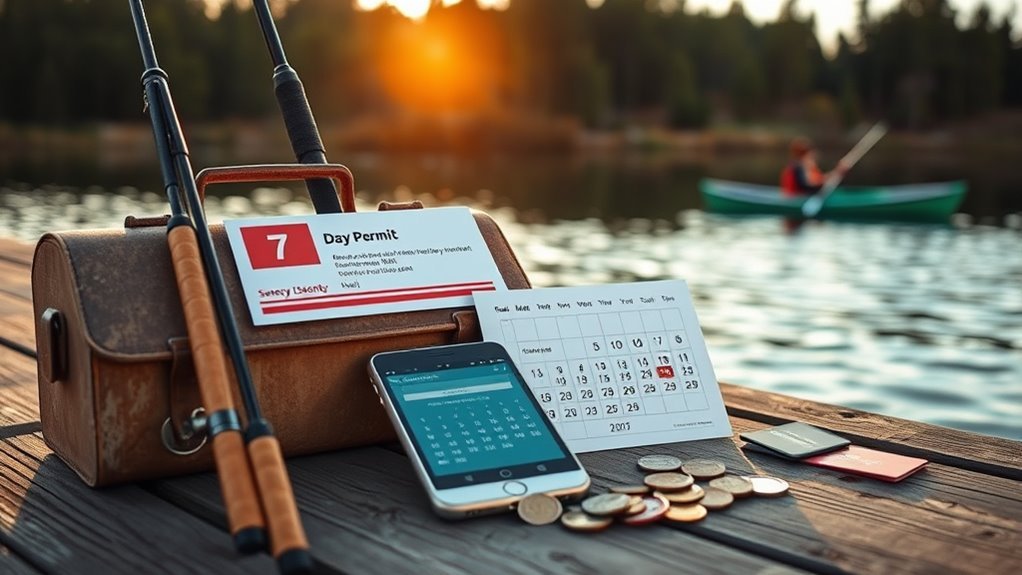
While Texas doesn’t generally offer weekly fishing licenses, you can still get short-term coverage: nonresidents can buy a Nonresident 3-Day Trip Fishing License for $30 to fish for three days (note that trout retention in certain waters also requires a trout permit).
While Texas lacks weekly licenses, nonresidents can buy a $30 Nonresident 3-Day Trip license—trout retention may need a permit.
You’ll need to understand resident eligibility versus nonresident criteria before you go.
For resident eligibility, anyone 16 and older must hold a valid fishing license to fish in public waters; those under 17 are exempt. Make sure your license covers the full period you’ll be fishing to stay compliant.
For nonresident criteria, nonresidents also need a license with the same under-17 exemption, but certain seniors are exempt: Louisiana and Oklahoma residents 65+ don’t need one.
If you’re a nonresident planning a short trip, the 3-Day Trip license fills the gap where weekly options aren’t offered. Always confirm permit requirements like the trout permit for specific waters.
State-by-State Weekly Fishing License Prices
Curious how short-term fishing coverage varies by state? You’ll find prices and rules differ enough that a quick license comparison matters before you travel.
Texas and Arkansas both offer nonresident 3-day trip licenses at $30; Arkansas may also require a trout permit for certain waters, so check state regulations before you fish.
Louisiana’s nonresident 3-day option sits around $30 and covers fresh and saltwater, making it practical if you plan to switch environments.
California’s short-term choices are pricier per day: a two-day sport fishing license is $31.58 and a one-day is $20.52, useful for coastal trips.
Florida provides a convenient 7-day freshwater nonresident license for about $30, a solid value if you want a full week on inland waters.
Use these examples to compare costs and regulatory details; confirming current fees and any special permits will keep you compliant and focused on fishing, not paperwork.
Short-Term License Types and What They Cover
If you’re planning a short trip, a one-week license gives you seven consecutive days of legal fishing in state waters so you can time your outing without committing to a full season.
Check whether the short-term option covers freshwater, saltwater, or both, and what species or gear endorsements—like trout permits or surf-fishing privileges—are included.
Remember licenses are usually non-transferable and non-refundable, so pick the exact area and water type you’ll fish before buying.
Products Worth Considering

PREMIUM QUALITY: Give your vehicle a new look and more personality with our high quality 100% heavy duty insert metal license plate frame that will last for years.

FISHING LICENSE HOLDER W/ZIP CLOSURE
One-Week Coverage Specifics
A 7-day fishing license gives you week-long access to public waters so you can fish with standard sport tackle during that period, but it’s non-transferable and non-refundable so it only covers the person who bought it.
You’ll get clear license duration — seven consecutive days — and you must follow local fishing regulations throughout.
You can often buy the license online or at authorized vendors before you fish.
Note a non-resident 3-day trip license costs $30 and covers sport tackle for that shorter period if that fits your plans better.
Check whether an additional trout permit is required for retaining trout or for specific waters during your week.
Keep your license on you while fishing and review limits, seasons, and area rules beforehand.
Species and Gear Included
Wondering what a short-term fishing license actually covers?
You’ll generally get permission to fish with standard sport tackle—rods, reels, bait—in designated state waters, and it often applies to freshwater and saltwater depending on the license type.
Check for gear restrictions: some areas ban certain nets, traps, or spearfishing even with a short-term license.
Species limits still apply; daily bag and size limits remain in force and specific species (for example, trout) may require an additional permit to retain.
A 7-day option is cost-effective for short trips, but you’re responsible for following local regulations and any special-season rules.
Always confirm state-specific rules before you fish to avoid fines.
Area and Water Types
Having covered what gear and species rules short-term licenses generally include, let’s look at where those permits let you fish.
You’ll find short-term licenses cover specific water types and locations, but they vary by state and species rules, so always check local fishing guides and water regulations before heading out.
- Non-resident 3-Day Trip Fishing License ($30) — lets you fish public waters in Texas with sport tackle; trout retention may need extra permits.
- Non-transferable terms — the license is for you only and non-refundable, so plan your dates carefully within the three-day validity.
- Alternatives — consider a $60 annual non-resident license for year-round fishing in Arkansas waters if you’ll fish repeatedly.
Add‑On Endorsements and Permits for Weeklong Trips
If you’re buying a 7-day license for a weeklong trip, check whether you also need a trout retention permit to keep trout where required.
You can usually add saltwater endorsements for an extra fee if you plan to fish coastal species. Both are sold separately, non-transferable, and often available online or at the point of purchase.
Trout Retention Permit
For weeklong or short non-resident trips, remember that the $30 Non‑Resident 3‑Day Trip Fishing License only lets you fish — it doesn’t let you keep trout; you must buy a separate Non‑Resident Trout Permit to legally retain trout or fish designated waters, and that permit carries its own limits, rules, and non‑transferable, non‑refundable conditions.
You’ll need the trout permit to comply with trout fishing regulations and avoid fines. Check local season, water-specific rules, and posted trout retention limits before you fish.
Consider these steps:
- Confirm whether the water requires a trout permit and note retention limits.
- Buy the Non‑Resident Trout Permit separately; it’s non‑transferable and non‑refundable.
- Follow all trout fishing regulations during your license period.
Saltwater Endorsements
When you plan a weeklong trip that includes saltwater fishing, add a saltwater endorsement to your license — it’s a small extra fee (varies by license type) that legally lets residents and non‑residents fish public saltwater in Texas and helps fund coastal conservation.
You’ll pay a nominal add‑on to your base 7‑day license so you can access bays, estuaries, and nearshore areas. The endorsement is required for saltwater public waters and guarantees you comply with state rules while contributing to conservation efforts in saltwater habitats.
Check area-specific regulations before you go—some waters have extra restrictions or permits. Buy the endorsement when you buy your weekly license or renew online, and carry it while you fish.
Purchasing Options and Payment Methods

Wondering how to buy a 7‑Day Fishing License and pay for it? You’ve got straightforward options that balance license purchasing convenience with payment flexibility.
You can buy online for instant issuance or visit designated license agents and offices if you prefer in‑person help. Remember licenses are non‑transferable and non‑refundable, and they cover a specific seven‑day period.
- Online purchase — fast, available anytime; add trout or other required permits during checkout.
- Agent/office purchase — useful if you need assistance; check whether cash is accepted at that location.
- Payment methods — most sellers accept debit/credit cards (Visa/Mastercard), checks, or money orders; some locations don’t take cash.
You’ll want to confirm permitted payment types before you go, and add any additional permits you need while buying.
Keep your receipt; it ties the license to you and clarifies the valid dates.
Products Worth Considering

Realistic head and body design


Age, Veteran, and Disability Reduced‑Fee Policies
Although eligibility rules vary, you’ve got several reduced‑fee and no‑fee options based on age, military status, or disability.
If you’re 65 or older, you can buy a Lifetime Fishing License for $10.50, a practical senior discounts option that removes renewal worries. Residents aged 16 and older may qualify for other reduced‑fee licenses depending on age, disability status, or military service, so check specific age brackets and rates where you live.
Disabled veterans with 100% service‑connected disability can obtain a reduced‑fee 3‑year disability fishing license for $10.50; bring documentation to prove qualification and access these veteran benefits.
Active‑duty military personnel get resident fishing license privileges regardless of duty station, letting you fish without extra fees. Permanently mobility‑impaired individuals can get a Mobility‑Impaired Access Permit at no charge, improving access to fishing sites.
Confirm exact requirements and documentation with your state agency before purchasing to verify you get the correct reduced‑fee or no‑fee credential.
Reporting Requirements and Required Validations
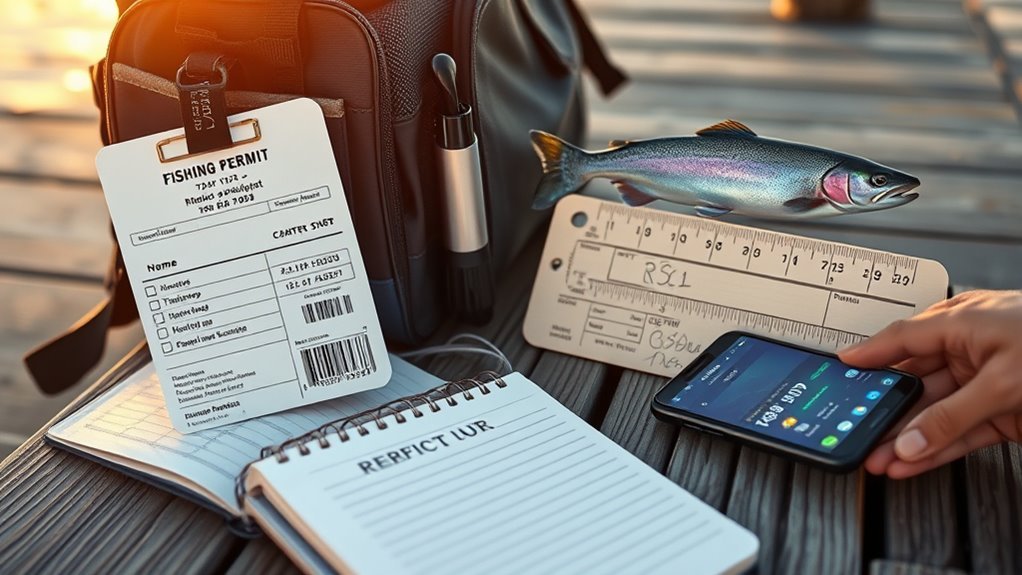
Because you’ll need to keep current records and carry the right credentials, make sure you have a valid fishing license on you if you’re 16 or older and know when additional permits apply (for example, a trout permit for certain waters or validations like Ocean Enhancement or Second Rod for specific gear or areas).
Carry a valid fishing license at 16+, and buy required permits/validations (trout, Ocean Enhancement, Second Rod) before fishing.
You must present your license on request and follow online reporting procedures for harvested species.
- Know deadlines: online reporting deadlines vary by species — missing them can lead to penalties and late-reporting fees.
- Confirm validations: buy required validations (Ocean Enhancement, Second Rod) before using covered gear or areas; validation fees apply separately from your license.
- Trout rules: trout waters often require a trout permit in addition to your license; check specific water rules and any reporting deadlines tied to trout harvests.
Keep receipts and digital confirmations accessible.
Failing to carry proper credentials, complete required reporting, or purchase needed validations can result in fines or citation.
Tips for Choosing Between Weekly and Annual Licenses
Looking to save money or just simplify your outings? Decide based on how often and when you fish. If your fishing habits are occasional or seasonal, a 7-day license gives the license benefits you need at a lower cost and avoids paying for months you won’t use.
If you fish frequently, an annual license usually delivers better value because it often costs only slightly more than several short-term permits combined and removes the hassle of repeat purchases.
Also check state rules: some species require extra permits or have seasonal restrictions that could make a weekly license insufficient. Factor convenience: an annual license delivers uninterrupted access and fewer transactions, which helps if you fish spontaneously.
Compare total annual costs of anticipated short trips versus an annual fee. Finally, weigh flexibility against simplicity—choose a weekly license for short, planned trips and an annual license if your fishing habits include regular or varied outings and you want the full range of license benefits.
Products Worth Considering

Enough to Use: you will receive 6 pieces of fishing license holders, and 6 pieces of safety pins, abundant in quantity, enough for you to choose and replace, can meet your different needs; You can also share them with your friends

How-to where-to guide for catching fly fishing's toughest fish!

Max ID size fits: 2.63"X4" ID Front Pocket Wallet Mini Minimalist Slim Wallet Small case for credentials with two viewing windows
Frequently Asked Questions
Do Weekly Licenses Cover Fishing From a Boat Versus Shore Differently?
Yes — you can fish from a boat or shore with most weekly licenses, but some waters or activities (commercial, special permits, or specific species) may need extra endorsements, so check local regulations before you go.
Can I Upgrade a 7-Day License to a Season Pass Mid-Trip?
Usually you can’t upgrade a 7-day license mid-trip, but rules vary by state. Check the agency’s online system or call them; if permitted, they’ll process upgrading licenses and explain any prorated fees under fishing regulations.
Are There Refunds if Weather Cancels My Planned Fishing Days?
Refunds depend on refund policies; you’ll usually not get refunds for lost days due to weather conditions, though some agencies offer prorated or exception options. Check the issuing agency’s policy and contact them promptly to request review.
Do Weekly Licenses Allow Fishing in Neighboring State Waters?
Imagine cartoon state lines wearing tiny life vests. You’ll usually need to check interstate fishing regulations and license reciprocity agreements; don’t assume weekly licenses cross borders, so confirm rules and carry proper permits before casting.
Is Proof of Catch Limits or Logbook Required With a Weekly License?
No — you typically won’t need to carry catch reporting or a logbook just because you bought a weekly license, but you must follow local licensing requirements and report catches if regulations or specific fisheries mandate reporting.
Conclusion
Whether you’re after a quick getaway or testing a new fishing spot, a 7-day license can save time and money — and sometimes you’ll find the weekly rate nearly matches a single-day fee, so you’re lucky if plans change. Check resident rules, add‑ons, and reduced‑fee policies before you buy, and keep required validations with you. Buy online or at an agent to avoid surprises, and pick the option that fits how often you’ll fish.
