
North Carolina’s Coastal Recreational Fishing License (CRFL) costs as little as $8 for a resident 10-day license and goes up to $630 for a nonresident adult lifetime license. Most anglers age 16 or older need a CRFL when recreationally taking finfish in North Carolina’s coastal waters. Your final total may also include a transaction fee charged by the online system or sales agent.
Quick Answer
A North Carolina CRFL costs $8 for a resident 10-day license, $14 for a nonresident 10-day license, $19 for a resident annual license, and $38 for a nonresident annual license. Adult lifetime licenses cost $315 for residents and $630 for nonresidents. Most anglers age 16 or older need one.
Key Takeaways
- The CRFL covers recreational finfish harvest in North Carolina coastal waters and also works in joint waters.
- A basic CRFL does not cover inland-only waters, commercial sales, or every type of commercial-style fishing gear.
- Anglers must check current seasons and limits before each trip because coastal rules can change by proclamation.
- Harvest of red drum, spotted seatrout, striped bass, weakfish, and flounder must be reported after the trip.
At a Glance
| Resident 10-Day License | $8 |
| Nonresident 10-Day License | $14 |
| Annual License | $19 resident; $38 nonresident |
| Adult Lifetime License | $315 resident; $630 nonresident |
North Carolina Coastal Recreational Fishing License Prices
The North Carolina Division of Marine Fisheries offers 10-day, annual, and lifetime CRFL options. The correct choice depends on your residency, age, fishing frequency, and whether you also need inland fishing privileges.
Products Worth Considering

FISHING LICENSE HOLDER W/ZIP CLOSURE

【MATERIAL】: oFloral License plate frame is made from premium quality aluminum, which can provide long-lasting protection from corroding, rusting and aging, durability for long lasting usage.Personalized Car Frame Can Perfect to Put on Your Front of Car or for Decorative Purposes Around the House Like in Your Bedroom, Garage, Basement, Ect.

Durable Material: Car license plate is crafted from high-quality ETP (electrolytic tinplate) with 2 layers of clear epoxy lacquer coating making the car tag water-proof, rust-proof, and weather-resistant
Short-Term and Annual CRFL Fees
- Resident 10-day CRFL: $8
- Nonresident 10-day CRFL: $14
- Resident annual CRFL: $19
- Nonresident annual CRFL: $38
A 10-day license is valid for 10 consecutive days. An annual CRFL is normally valid for 12 months from its purchase date, rather than ending automatically at the end of a calendar year.
Lifetime CRFL Fees
- Adult age 12 or older: $315 resident or $630 nonresident
- Youth age 1 through 11: $189 for residents and nonresidents
- Infant younger than age 1: $126 for residents and nonresidents
- Qualifying resident senior: $19
- Qualifying resident disabled veteran: $14
- Qualifying totally disabled resident: $14
Residents born on or before August 1, 1953, qualify for the senior lifetime license at age 65. Residents born after that date generally qualify when they turn 70.
Unified Inland and Coastal License
A basic CRFL covers coastal and joint fishing waters but not inland-only waters. A North Carolina resident who fishes in both freshwater and saltwater can instead purchase an annual Unified Inland/Coastal Recreational Fishing License for $49. It includes inland, coastal, joint, and qualifying trout-water privileges.
Note: Posted license prices may not include a transaction or agent fee. Review the complete charge before submitting an online or in-person purchase.
Choosing a Short-Term, Annual, or Lifetime License
The 10-day license normally offers the best value for a single vacation or one short fishing trip. The annual license becomes more economical when you expect to fish during three or more separate 10-day periods.
For example, three resident 10-day licenses would cost $24, compared with $19 for an annual resident CRFL. Three nonresident 10-day licenses would cost $42, compared with $38 for an annual nonresident CRFL.
At the current base prices, both adult resident and adult nonresident lifetime licenses cost about the same as 17 annual licenses. A lifetime license may make sense when you expect to fish in North Carolina for many years and prefer not to renew annually.
Pro Tip: Choose the unified license instead of separate coastal and inland privileges when you regularly fish both freshwater lakes or rivers and North Carolina coastal waters.
Products Worth Considering

【Material】Our License Plate Frame Is Made Of Stainless Steel, Strong And Durable.


Quality Material: License plate frames are made of high quality aluminum, which makes our license plate frame stronger than cheap plastic license plate frames. License plate holder can be used with confidence in any bad weather conditions, will not be damaged and rusted. used with confidence in any bad weather conditions, will not be damaged and rusted.
Who Needs a North Carolina CRFL?
Anyone age 16 or older generally needs a CRFL to recreationally take finfish in North Carolina’s designated coastal fishing waters. In joint waters, either a CRFL or a qualifying inland fishing license can satisfy the basic license requirement.
The license requirement applies to common recreational methods such as hook and line, gigs, spears, small seines, landing nets, cast nets used to take finfish, and other qualifying recreational gear.
Fishing From a Beach, Pier, or Private Boat
- Beach and surf fishing: Anglers age 16 or older generally need an individual CRFL.
- Public or private pier: You need an individual license unless the pier holds a blanket license that covers its fishing customers.
- Private boat: Each angler age 16 or older generally needs an individual license. The boat owner’s personal CRFL does not automatically cover passengers.
- Charter or headboat: Ask the operator whether the trip is covered by a blanket for-hire license. Otherwise, passengers may need individual licenses.
What the CRFL Covers
The CRFL authorizes recreational finfish harvest for personal consumption. Fish taken under it cannot be sold, bartered, or exchanged for anything of value. The license also does not override species seasons, size limits, possession limits, area closures, or gear restrictions.
A CRFL is not required solely to harvest oysters, clams, or crabs recreationally. However, shellfish and crustaceans have separate seasons, area closures, size limits, possession limits, and gear rules that still apply.
Harvest Reporting, Gear, and Additional Permits

North Carolina does not require California’s Ocean Enhancement Validation, Second Rod Validation, California recreational crab-trap validation, or California species report cards. Those charges should not be added to the cost of a North Carolina CRFL.
Mandatory Recreational Harvest Reporting
Beginning December 1, 2025, recreational anglers must report harvested red drum, spotted seatrout, striped bass, weakfish, and flounder to the Division of Marine Fisheries. Reports can be filed through the state’s mandatory harvest-reporting system.
The individual angler is responsible for reporting. An adult may include fish harvested by minor children in the same report. Keeping the confirmation number can help document that the report was submitted.
Warning: A valid license does not guarantee that a species is open for harvest. Check the current North Carolina recreational size and bag limits immediately before fishing because seasons, limits, and closures can change.
Commercial-Style Gear and Federal Permits
Anglers using limited types of commercial fishing equipment for personal harvest may need a separate Recreational Commercial Gear License. That license still does not authorize the sale of the catch.
Fishing for certain highly migratory species—including regulated tunas, billfish, swordfish, and sharks—may also require a federal permit. A state CRFL does not replace permits issued through the NOAA Highly Migratory Species permit system.
Revenue from North Carolina CRFL sales is directed to marine resource funds used to manage, protect, restore, and enhance the state’s coastal resources.
Free and Reduced-Fee License Programs
North Carolina provides exemptions, free waivers, and reduced lifetime licenses for several groups. Eligibility and documentation rules differ by program.
- Children younger than 16: No individual fishing license is required.
- July 4 free fishing day: No hook-and-line fishing license is required in public waters, although all seasons, limits, and other rules still apply.
- Resident subsistence waiver: Qualifying residents receiving Medicaid, Food and Nutrition Services, or Work First Family Assistance may obtain a free annual Unified Inland/Coastal waiver through their county Department of Social Services.
- Legally blind residents: A qualifying Unified Inland/Coastal lifetime license is free.
- Qualifying adult-care-home residents: A Unified Inland/Coastal lifetime license is free.
- Resident senior lifetime CRFL: $19 for qualifying residents.
- Resident disabled-veteran lifetime CRFL: $14 for a veteran rated at least 50% disabled by the U.S. Department of Veterans Affairs.
- Resident totally-disabled lifetime CRFL: $14 with qualifying disability certification.
Because disability-related licenses require supporting documentation, applications may need to be submitted by mail or in person. Current applications and eligibility details are available through the NC Wildlife disabled-license program.
Note: A fishing event for qualifying groups may be eligible for a CRFL Exemption Permit. The organizer must normally submit the completed request at least 30 days before the event.
Products Worth Considering

North Carolina Pride: Showcase your love for North Carolina with this eye-catching License Plate Magnet, featuring the state's iconic design.

4 Universal slots for easy mounting.
NORTH CAROLINA STATE FLAG DESIGN: Features a textured, raised North Carolina flag design for an authentic, high-end look and feel.
How and Where to Purchase Your License
Before buying, confirm whether your fishing location is classified as coastal, joint, or inland water. The official North Carolina CRFL purchase guide explains the water classifications and provides access to the state’s fishing-area map.
- Choose the license term. Select a 10-day, annual, lifetime, or unified license based on your trip length and where you plan to fish.
- Gather your identification. The licensing system may use your date of birth, last name, WRC ID, driver’s license, state ID, military ID, college ID, or another accepted identifier.
- Buy online. Use the authorized Go Outdoors North Carolina licensing system.
- Buy from an agent. Search the official license-agent locator for a nearby seller.
- Buy through a state office. Most CRFL types are also available through participating Division of Marine Fisheries offices.
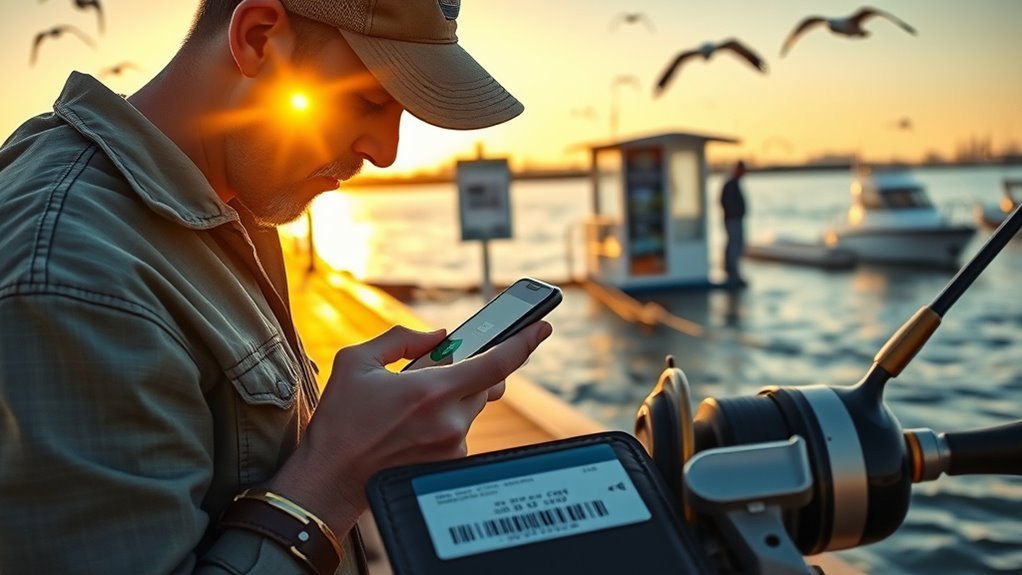
The online system emails a digital copy of the license, and that digital license is valid. You can also log back into your account to view or reprint it.
Pro Tip: Save the digital license and harvest-reporting page to your phone before leaving shore. Coastal cell service can be unreliable, especially around remote ramps and beaches.
Frequently Asked Questions
Do I need a fishing license to shorecast from a North Carolina beach?
Yes. An angler age 16 or older generally needs a CRFL when recreationally taking finfish from a beach or shoreline in designated coastal waters. The usual exemptions, including the under-16 exemption and July 4 free fishing day, may apply.
Do nonresidents have different size or bag limits?
No. Nonresidents pay higher annual and adult lifetime CRFL fees, but recreational size, season, and possession limits generally depend on the species, water, gear, and current proclamation—not the angler’s residency.
Can I sell fish caught under a CRFL?
No. A CRFL authorizes recreational finfish harvest for personal consumption. Fish taken under the license cannot be sold, bartered, or exchanged for anything of value.
What happens if I fish without a required license?
Under North Carolina law, fishing without a required license is punishable as an infraction. A citation can lead to a fine and court costs. Separate violations involving closed seasons, prohibited gear, excess possession, false licenses, or illegal sales may carry more serious penalties.
Can I transfer my CRFL to another person?
No. North Carolina fishing licenses are issued to a named person and cannot lawfully be sold, lent, borrowed, assigned, or otherwise transferred to someone else.
Does my CRFL cover other people fishing from my private boat?
No. Each angler age 16 or older generally needs an individual license unless a specific exemption or qualifying vessel license applies. A boat owner’s personal CRFL does not automatically cover family members or guests.
Do I need a CRFL to catch crabs, oysters, or clams?
Not solely for recreational crab or shellfish harvest. The CRFL applies to finfish, but separate shellfish, crab, area-closure, season, size, possession, and gear regulations still apply.
Can I use a CRFL in North Carolina inland waters?
A basic CRFL covers coastal and joint waters but does not cover inland-only waters. Residents who want statewide inland and coastal access can purchase a Unified Inland/Coastal Recreational Fishing License.
Conclusion
For most North Carolina saltwater anglers, the main choice is simple: pay $8 or $14 for a short trip, $19 or $38 for a year, or consider a lifetime license for long-term use. Before fishing, confirm the water classification, current season and possession limits, any federal permit requirement, and whether your catch must be reported. Buying the correct license helps fund the management and conservation of North Carolina’s coastal resources.
Sources
- North Carolina Division of Marine Fisheries — Recreational Fishing Licenses — current CRFL fees, license terms, coverage, and exemptions
- NC DEQ — Purchase a North Carolina Coastal Recreational Fishing License — water classifications and purchasing methods
- NC DEQ — Recreational License FAQs — shore, pier, vessel, shellfish, transfer, and exemption rules
- NC DEQ — Electronic Mandatory Harvest Reporting — covered species and reporting procedure
- NC DEQ — Recreational Size and Bag Limits — current coastal seasons, limits, closures, and measurement rules
- North Carolina Wildlife Resources Commission — Disabled Licenses — qualifications and application requirements for disability-related licenses
