A Washington resident fishing license costs $39.95 for annual freshwater fishing, $40.71 for annual saltwater fishing, or $74.37 for the annual combination license. Residents age 16 and older generally need the appropriate license, while salmon, steelhead, sturgeon, halibut, and Puget Sound Dungeness crab also require a catch record card. The 2026–27 license year runs from April 1, 2026, through March 31, 2027.
Last updated: August 11, 2026. Fees and 2026–27 licensing rules were rechecked against current Washington Department of Fish and Wildlife guidance.
Quick Answer
For most residents age 16–69, the main annual choices are $39.95 freshwater, $40.71 saltwater, and $74.37 combination. A one-day combination license costs $14.90, while the Fish Washington package costs $101.88. Catch record cards and location- or species-specific endorsements may still be required.
Key Takeaways
- A fishing license is generally required for residents age 16 and older.
- A resident annual combination license costs $74.37 and covers freshwater, saltwater, shellfish, razor clams, and seaweed; it is $6.29 less than buying the $39.95 freshwater and $40.71 saltwater annual licenses separately.
- Residents age 70 and older receive reduced prices, including $28.83 for an annual combination license.
- Salmon, steelhead, sturgeon, halibut, and Puget Sound Dungeness crab require a catch record card, even for fishers younger than 16.
- You can choose paper or mobile licensing for the 2026–27 license year.
- Always check current seasons, emergency rules, limits, and endorsements before fishing.
At a Glance
| Buying Options | MyWDFW or Fish Washington app, WDFW online licensing, phone, or an authorized license dealer. |
| License Year | April 1, 2026, through March 31, 2027. |
| Information Needed | Identity and residency information, Social Security number if age 16 or older, payment method, and WILD profile access for online or app purchases. |
| Cost | Adult resident licenses start at $14.90 for one day. Annual products range from $17.44 to $101.88 before any separately required products. |
Who Needs a Resident Fishing License in Washington?
Under current Washington rules, fishers age 16 and older must purchase the appropriate fishing or shellfishing license before taking or possessing fish, shellfish, or seaweed for personal use. The rule applies to residents and nonresidents.
The license year begins April 1 and ends the following March 31. A 2026–27 annual license is therefore valid from April 1, 2026, through March 31, 2027, even if you purchase it later in the license year.
Washington’s general licensing threshold is age 16, but younger fishers may still need a catch record card when targeting salmon, steelhead, sturgeon, halibut, or Puget Sound Dungeness crab.
Exceptions and Special Situations
You generally do not need a fishing license if you are younger than 16, fishing for bullfrogs, or collecting relic shells. Washington also holds a Free Fishing Weekend each year, but licenses are still required for salmon, steelhead, sturgeon, halibut, and all shellfish. The two-pole endorsement and Vehicle Access Pass are waived for otherwise eligible Free Fishing Weekend fishing. Check the current WDFW Free Fishing Weekend rules before relying on the exemption.
Owning a license does not guarantee that a water or species is open. You must still follow current seasons, emergency closures, daily limits, size limits, gear rules, and catch-reporting requirements. The WDFW fishing regulations page and Fish Washington app provide current rule information.
Warning: Fishing without a required license or catch record card is unlawful. Keep your valid paper or electronic documents available for inspection whenever you fish or harvest shellfish.
How Much Does a Washington Resident Fishing License Cost?
Washington offers separate licenses for freshwater, saltwater, shellfish, razor clams, and mixed fishing activities. The following prices are WDFW’s current published totals for the 2026–27 license year. WDFW states that displayed prices include applicable fees and that purchasing multiple items in one transaction may reduce the final total.
| Annual product | Resident adult Age 16–69 |
Resident senior Age 70+ |
Approved resident reduced fee |
|---|---|---|---|
| Fish Washington package | $101.88 | $49.85 | $47.98 |
| Combination | $74.37 | $28.83 | $12.89 |
| Freshwater | $39.95 | $9.59 | Not separately listed |
| Saltwater | $40.71 | $10.35 | Not separately listed |
| Shellfish/Seaweed | $21.58 | $13.99 | Not separately listed |
| Razor Clam | $17.44 | $17.44 | Not separately listed |
Confirm prices before buying through the official WDFW fishing license types and fees page.
What Each Annual License Covers
Combination license: Covers freshwater fishing, saltwater fishing, shellfish harvesting, razor clams, and seaweed. It is usually the best value for residents who participate in more than one type of fishing or harvesting.
Freshwater license: Covers freshwater fishing only. Choose it if you fish lakes, rivers, and streams and do not need saltwater or shellfish privileges.
Saltwater license: Covers saltwater fishing only. It does not replace a shellfish/seaweed license.
Shellfish/Seaweed license: Covers legal recreational harvest of clams, mussels, oysters, shrimp, crab, squid, seaweed, and other listed species. Puget Sound Dungeness crab also requires a crab endorsement and catch record card.
Razor Clam license: Covers razor-clam harvesting only. You do not need a separate razor-clam license if you already hold a combination or shellfish/seaweed license.
Fish Washington package: Includes an annual combination license, a two-pole endorsement, a Puget Sound Dungeness crab endorsement, a Columbia River salmon and steelhead endorsement, and a Vehicle Access Pass. It is most useful when you expect to use most of those privileges.
Cost comparison: Buying freshwater ($39.95) and saltwater ($40.71) annual licenses separately totals $80.66, so the $74.37 combination license saves $6.29 and adds shellfish, razor-clam, and seaweed privileges. Buying the combination license plus the two-pole ($20.23), annual Puget Sound crab ($11.89), and Columbia River salmon and steelhead ($8.75) endorsements separately totals $115.24; the $101.88 Fish Washington package saves $13.36 if you need all four included privileges.
Note: The combination, freshwater, saltwater, and Fish Washington products include a Vehicle Access Pass for WDFW-managed lands. A Vehicle Access Pass is not the same as a Discover Pass, which may still be required at state parks or other state-managed properties.
Short-Term and Specialty Resident Licenses
Short-term licenses work well for occasional fishing trips or visitors who qualify for resident rates but do not expect to fish throughout the year.
| Short-term product | Resident price | Coverage |
|---|---|---|
| One-day combination | $14.90 | One selected day |
| Two-day combination | $20.98 | Two consecutive days |
| Three-day combination | $25.53 | Three consecutive days |
| Three-day Razor Clam | $11.79 | Razor-clam harvesting for three consecutive days |
One- to three-day combination licenses provide the same basic freshwater, saltwater, shellfish, and seaweed privileges as the annual combination license during the selected period. They do not automatically include every endorsement.
For example, harvesting Puget Sound Dungeness crab with a temporary combination license requires the temporary crab endorsement. Fishing for Columbia River salmon or steelhead also requires the applicable Columbia River endorsement.
Pro Tip: Compare the cost of several temporary licenses with an annual product before buying. Three separate three-day combination licenses would cost more than $76, making the $74.37 annual combination license the better value before considering convenience or included access privileges.
Catch Record Cards and Fishing Endorsements
A fishing license alone may not provide every document you need. Washington uses catch record cards and endorsements to manage specific fisheries.
Catch Record Cards
You need a catch record card in your possession when fishing for:
- Salmon
- Steelhead
- Sturgeon
- Halibut
- Puget Sound Dungeness crab
This requirement applies even to anglers younger than 16. Standard catch record cards are generally issued without an additional fee with eligible fishing licenses. A catch record card that includes halibut currently costs $7.59.
Paper catch record cards must be returned by the applicable deadline even when you did not catch anything. Fish catch cards are due April 30 after the license year; summer Puget Sound crab cards are due October 1, and winter crab cards are due February 1. Mobile-license customers record covered catches electronically through MyWDFW or Fish Washington, with entries uploaded when the device reconnects if service is unavailable. Review the current WDFW catch record card requirements before fishing.
Common Endorsements
- Columbia River salmon and steelhead endorsement: Required for anglers age 15 and older when fishing for salmon or steelhead in covered Columbia River waters. The total cost is $8.75 for resident anglers age 16–69 and $7.10 for 15-year-olds and resident seniors age 70+.
- Two-pole endorsement: $20.23 for resident adults and $8.09 for resident seniors. It may be used only on waters where two-pole fishing is authorized.
- Puget Sound Dungeness crab endorsement: $11.89 when used with an annual license or $5.05 with a temporary combination license. Crabbers age 14 and younger still need the endorsement and catch record card, but WDFW does not charge them the endorsement fee.
See the official WDFW fishing endorsement guide for current coverage and restrictions.
Warning: There is no general recreational “sturgeon endorsement” in Washington’s current product list. Sturgeon anglers need the appropriate fishing license and catch record card and must follow the current sturgeon season and reporting rules.
Residency Requirements and Eligibility for Discounts
To qualify for a Washington resident fishing license, you generally must maintain a permanent place of abode in Washington for at least 90 days immediately before applying and provide formal evidence that you intend to continue living in the state.
The main forms of proof are:
- A Washington driver’s license issued at least 90 days before the application.
- A Washington identification card issued at least 90 days before the application if you do not drive.
- A valid military ID plus orders, billeting documents, or other evidence that you are stationed at a Washington military installation on more than temporary duty.
If you cannot establish residency through one of those documents, WDFW may review other evidence, such as voter registration, a Washington lease or deed, utility bills, resident tuition records, public-assistance records, or a Washington address used for federal tax purposes.
You must not be licensed to fish or hunt as a resident of another state while claiming Washington resident status. Review the complete requirements in WAC 220-220-050.
Military Members Stationed in Washington
A member of the armed forces stationed at a Washington installation, other than on temporary duty, may qualify to purchase resident fishing licenses after presenting military identification and proof of the Washington assignment. This eligibility is not limited to short-term licenses.
Senior, Veteran, and Disability Discounts
Washington residents age 70 and older receive the published senior prices without needing to qualify under the separate disability program.
Reduced-fee combination licenses may also be available to approved applicants in categories that include:
- An honorably discharged resident veteran with a service-connected disability rating of at least 30%.
- An honorably discharged resident veteran age 65 or older with a service-connected disability.
- A resident who permanently uses a wheelchair.
- A resident who is blind or visually impaired under the applicable rules.
- A resident with a qualifying developmental disability and required medical documentation.
You must apply and receive WDFW approval before purchasing a reduced-fee product. Start with the veteran reduced-fee requirements or the other reduced-fee eligibility requirements.
Note: WDFW’s current reduced-fee programs are tied to specific veteran or disability qualifications. The agency does not list a general low-income fishing-license waiver in its standard resident fee programs.
How to Choose the Right Washington Fishing License
Use your planned waters and activities to narrow the choices:
- Freshwater lakes, rivers, and streams only: Buy the $39.95 annual freshwater license.
- Saltwater fishing only: Buy the $40.71 annual saltwater license.
- Freshwater and saltwater: The $74.37 combination license is $6.29 less than buying the $39.95 freshwater and $40.71 saltwater annual licenses separately, and it also adds shellfish, razor-clam, and seaweed privileges.
- Shellfish but no rod-and-reel fishing: Buy the $21.58 shellfish/seaweed license.
- Razor clams only: Choose the $17.44 annual or $11.79 three-day razor-clam license.
- One short trip: Choose a one-, two-, or three-day combination license.
- Frequent mixed fishing, crabbing, and two-pole use: The $101.88 Fish Washington package is $13.36 less than buying the $74.37 combination license and its three included paid endorsements separately, if you need all of them.
Also consider whether you need a catch record card, Puget Sound crab endorsement, two-pole endorsement, Columbia River salmon and steelhead endorsement, or parking pass. These extra requirements can change which package offers the best value.
How and Where to Buy or Replace a Resident License
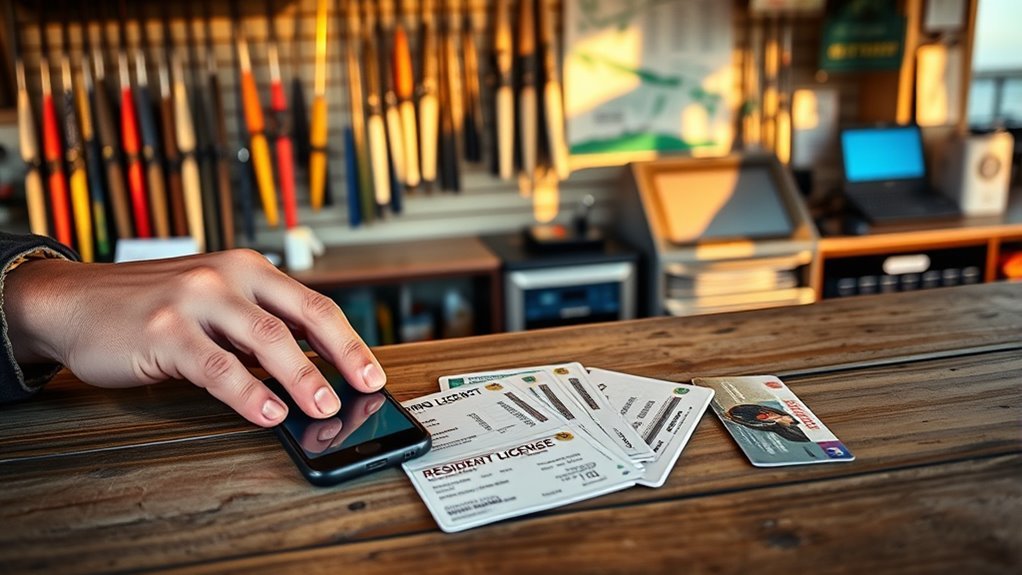
You can buy a Washington resident fishing license through the official WDFW fishing and shellfishing license page, by calling 360-902-2464, through an authorized license dealer, or through the MyWDFW and Fish Washington mobile apps.
Federal and state law require license buyers age 16 and older to provide a Social Security number. You will also need your WILD account information, residency details, and payment method.
Paper Versus Mobile Licensing
For the 2026–27 license year, you may choose paper or mobile licensing before completing your first eligible purchase.
- Mobile licensing: Your active privileges appear in MyWDFW or Fish Washington, and electronic catch record cards are available for covered fisheries. Once you select mobile licensing and purchase a product, you generally cannot switch back to paper until the next license year.
- Paper licensing: You receive printable paper documents. WDFW no longer uses its former waterproof, tear-resistant license stock, so protect printed licenses and catch cards from water. A paper customer may switch to mobile during the license year only if physical tags or catch record cards have not been used and any issued physical documents are handled as WDFW requires.
Review the official WDFW mobile and paper licensing guide before making your selection.
Buying Online or by Phone
Mailed paper licenses may take approximately 10–15 days to arrive. If your WILD account has an email address, WDFW can send a temporary license authorization while you wait. Temporary catch record cards and tags are not issued with mailed paper orders.
If you need to fish for a species requiring a catch record card immediately, choose the mobile option with an eligible electronic catch record card or purchase from a license dealer that can issue the required documents.
Replacing a Lost or Damaged License
A duplicate paper license currently costs $9.70. Contact WDFW or an authorized dealer and provide the requested identifying information.
A lost catch record card is a separate issue. You remain responsible for reporting required harvest information by the deadline, even if the card is lost. Contact WDFW promptly for the correct replacement or reporting process.
Pro Tip: Before leaving home, confirm that your license, endorsements, and catch record card are visible in the app or packed with your fishing gear. Mobile customers should update and log in to the app before leaving service and keep the device charged because officers may require you to display valid privileges and recorded harvest information.
Frequently Asked Questions
How much is a Washington resident fishing license in 2026–27?
For residents age 16–69, an annual freshwater license is $39.95, an annual saltwater license is $40.71, and an annual combination license is $74.37. A one-day combination license is $14.90, and the Fish Washington package is $101.88.
Can I fish without a license during Washington Free Fishing Weekend?
Yes, for many species, but not all. Licenses are still required for salmon, steelhead, sturgeon, halibut, and all shellfish. Other fishing rules, seasons, limits, and closures still apply.
Do military members stationed in Washington qualify for resident rates?
Yes. A member of the armed forces stationed at a Washington military installation, other than on temporary duty, may qualify for resident licenses after providing valid military identification and evidence of the Washington assignment.
Are there low-income or disability fishing-license waivers?
Washington offers reduced fees to approved residents in specific veteran and disability categories. WDFW does not list a general low-income waiver in its standard recreational fishing-license programs. Applicants must submit the required documentation and receive approval.
Does Washington offer a lifetime resident fishing license?
WDFW’s current recreational fishing fee schedule does not list a standard lifetime resident fishing license. Annual licenses expire at the end of the license year, which runs from April 1 through March 31.
Can I get a refund if I buy the wrong fishing license?
Not automatically. A dealer may refund a transaction within 60 minutes when the dealer made an error or issued the wrong product. WDFW may approve refunds for verified department, dealer, or licensing-system errors and certain other situations defined by rule. Contact the dealer or WDFW immediately.
Do I need a separate sturgeon endorsement?
Washington does not list a general recreational sturgeon endorsement. You need the appropriate freshwater, saltwater, temporary, or combination license and a catch record card. You must also follow current sturgeon seasons, area rules, limits, and reporting requirements.
Does a 15-year-old need a Washington fishing license?
A 15-year-old generally does not need a standard fishing license under the current age rule. However, the angler must carry a catch record card when fishing for salmon, steelhead, sturgeon, halibut, or Puget Sound Dungeness crab and must obtain any applicable endorsement.
Can I show my Washington fishing license on my phone?
Yes, if you selected mobile licensing for the license year and use MyWDFW or Fish Washington. The apps can display active privileges for enforcement checks and support electronic catch reporting for eligible fisheries.
Conclusion
Most Washington residents age 16 and older need a valid fishing license, but the best product depends on where they fish and what they plan to harvest. The $39.95 freshwater and $40.71 saltwater licenses are the simplest single-water choices. If you need both, the $74.37 combination license saves $6.29 versus buying them separately and also covers shellfish, razor clams, and seaweed. Seniors and approved residents with qualifying disabilities or veteran status may pay reduced fees.
Before buying, check whether you also need a catch record card, Puget Sound crab endorsement, two-pole endorsement, Columbia River salmon and steelhead endorsement, or separate parking pass. Purchase through WDFW, an authorized dealer, or an approved mobile app, and confirm current seasons and emergency rules before every trip.
Sources
- Washington Department of Fish and Wildlife — Fishing License Types and Fees — current license products, resident prices, endorsements, and duplicate fees.
- Washington Department of Fish and Wildlife — Fishing and Shellfishing Licenses — age requirements, buying options, Social Security number rules, and catch record cards.
- Washington Administrative Code, Chapter 220-220 — license-year, age, residency, possession, and refund rules.
- Washington Department of Fish and Wildlife — Catch Record Cards — 2026–27 electronic and paper catch record card requirements, reporting, and deadlines.
- Washington Department of Fish and Wildlife — Fishing License Endorsements — crab, two-pole, and Columbia River endorsement requirements.
- Washington Department of Fish and Wildlife — Essential Apps — mobile licensing, electronic catch cards, and paper-versus-mobile rules.