
California anglers often search for a trout stamp because many other states require one. California’s 2026 fishing-license system is different: the state does not list a separate trout stamp for ordinary trout fishing. Most anglers age 16 or older need a valid sport fishing license, while extra documents apply only to specific activities such as fishing for steelhead or using a second rod.
Quick Answer
California does not require or sell a separate trout stamp for ordinary trout fishing. Anglers age 16 or older generally need a valid California sport fishing license. Extra documents apply only in specific cases, especially a Steelhead Report Card when fishing for steelhead in inland waters.
Key Takeaways
- California has no separate trout stamp fee for ordinary trout fishing in 2026.
- Most residents and nonresidents age 16 or older need a California sport fishing license.
- A Steelhead Report Card is required when fishing for steelhead in inland waters, including for anglers who do not otherwise need a license.
- Annual sport fishing licenses are valid for 365 days from the purchase date, not only through December 31.
- Always check the rules for the exact lake, river, or stream because seasons, limits, and gear restrictions vary.
At a Glance
| California Trout Stamp | Not required; no separate 2026 trout-stamp fee |
| Resident 365-Day License | $64.54 in 2026 |
| Nonresident 365-Day License | $174.14 in 2026 |
| One-Day License | $21.09 for residents or nonresidents |
| Steelhead Report Card | $10.29 when fishing for steelhead in inland waters |
| Second-Rod Validation | $20.26 when two rods are legal on the water being fished |
Do You Need a Trout Stamp in California?
No. The California Department of Fish and Wildlife’s 2026 list of sport fishing licenses, validations, and report cards does not include a trout stamp. For ordinary trout fishing, the main statewide document is a valid sport fishing license for anglers age 16 or older.
The confusion is understandable because nearby states and many other jurisdictions use trout stamps or endorsements. California also offers items with similar names, but they serve different purposes:
- Steelhead Report Card: A required report card for anyone fishing for steelhead in inland waters.
- Golden Trout Warden Stamp: An optional $5 decal that supports wildlife-officer equipment and training; it is not a fishing permit.
- California Fishing Passport stamps: Recognition stamps used to document species caught; they do not replace a fishing license.
Warning: Do not buy an unofficial “California trout stamp” from a third-party site. Use CDFW’s official license system or an authorized license agent, and verify the exact requirements for your fishing location.
Products Worth Considering

1.25" x 3.25" Stamp Block
Approximate Size: 3/4" x 2"
1" x 2.5" Stamp Block
California Trout Fishing License Costs for 2026
There is no separate California trout stamp cost. Instead, anglers pay for the sport fishing license that matches the length of their trip. The following fees are listed by CDFW for 2026:
| License or Item | 2026 Fee | What It Covers |
|---|---|---|
| Resident sport fishing license | $64.54 | 365 days from purchase |
| Nonresident sport fishing license | $174.14 | 365 days from purchase |
| One-day sport fishing license | $21.09 | One specified day; resident or nonresident |
| Two-day sport fishing license | $32.40 | Two consecutive days; resident or nonresident |
| Ten-day nonresident license | $64.54 | Ten consecutive days for nonresidents |
Most listed fees include a 5% license-agent handling fee and a 3% nonrefundable application fee. Fees can change from year to year, so check the official CDFW fee page before buying.
For ordinary trout fishing, the added California trout-stamp cost is $0 because the state does not list a separate trout endorsement.
Products Worth Considering

Fishing Silicone Stamps: Our fishing silicone stamps are designed with 16 patterns, including 6 different species of fishes, a fishing rod, several different fishing equipment and 3 greeting words and phrases. These patterns are perfect for making cards to record your fishing memories or adding to your stamps collection.

EDUCATIONAL: Ideal for STEAM curriculum, this fish can be used to introduce students or an entire classroom to a traditional Japanese fish printing technique. Learn how to make gyotaku (that's Japanese for 'fish print') by using a realistic fish replica made of rubber. It is an excellent interdisciplinary project that will stimulate discussion about Japanese culture, different species of fish, other types of nature printing, fish anatomy, and more.
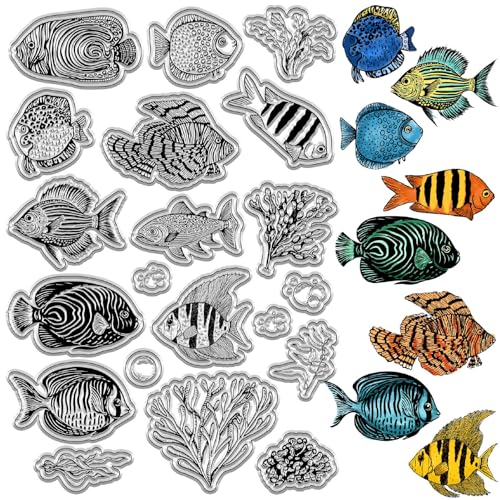
TROPICAL FISH CLEAR STAMP: This clear stamp features tropical fish. The stamp features a variety of tropical marine fish. The stamp has smooth lines and a clear design.
How Trout Fishing Relates to Sport Fishing Licenses

Under California Fish and Game Code Section 7145, a person age 16 or older generally must have a valid sport fishing license before taking or attempting to take fish. That statewide license covers ordinary trout fishing unless a location-specific rule requires something more.
Anglers age 15 or younger generally do not need a sport fishing license, but they must still follow seasons, bag limits, size limits, gear rules, and any report-card requirement that applies to the species being targeted.
Ordinary Trout Versus Steelhead
California does not require a general trout report card. Steelhead are treated differently: CDFW requires a Steelhead Report Card for every person fishing for steelhead in inland waters. The 2026 fee is $10.29.
The report-card rule applies even to people who are not otherwise required to hold a sport fishing license, including children under 16 and anglers fishing on a Free Fishing Day. CDFW’s mobile app may show proof that a report card was purchased, but that proof does not replace the physical report card that must be carried while fishing.
When a Second-Rod Validation Is Needed
A Second-Rod Validation costs $20.26 in 2026 and allows an angler to use two rods or lines in inland waters where two-rod fishing is legal. It does not override water-specific restrictions. CDFW states that the validation does not authorize two rods in waters limited to artificial lures or barbless hooks.
Note: Catch-and-release is still fishing. A license is generally required for anglers age 16 or older because California’s definition of “take” includes attempting to catch a fish.
Where and How to Buy a California Fishing License

You do not need to search for a separate trout stamp. Buy the appropriate sport fishing license and add only the report cards or validations required for your planned activity.
- Choose the license length. Select a 365-day, one-day, two-day, or eligible nonresident ten-day license.
- Buy from an official source. Use CDFW Online License Sales, an authorized license agent, a CDFW license sales office, or the authorized telephone sales line.
- Add required items. Purchase a Steelhead Report Card if you will fish for steelhead in inland waters. Add a Second-Rod Validation only if you plan to use two rods where allowed.
- Keep proof with you. Carry the physical license or display an eligible license through the CDFW License App. Physical report cards must remain in your immediate possession.
- Check the water-specific rules. Review the latest regulations before fishing, even if you have fished the same location before.
CDFW’s License and Revenue Branch and regional license counters do not accept cash. Those offices accept checks, money orders, and debit or credit cards carrying the Visa or Mastercard logo. Payment rules at independent license agents may differ.
Pro Tip: Refresh the CDFW License App while you have internet service so eligible licenses and validations are saved for offline display. Carry a charged phone or a physical backup.
Products Worth Considering

Fishing Theme: Transparent silicone stamp in various fishing design includes different patterns, such as fishes, hat, fishing rod, barrel, fishing man. The fishing pattern clear stamps is very suitable for fishing enthusiasts, enjoying the fun of the cards making and decoration.

deep etched and wood mounted.

PACKAGE INCLUDES: one wooden rubber stamp
Reduced-Fee and Free Sport Fishing Licenses
California’s assistance programs apply to the sport fishing license, not to a trout stamp. Eligible anglers may qualify for a reduced-fee or free license, but separate report cards and validations may still have to be purchased at the regular price.
| Program | 2026 Fee | Basic Eligibility |
|---|---|---|
| Disabled veteran reduced-fee license | $10.04 at CDFW offices; $10.54 at license agents | Honorably discharged veteran with a service-connected disability rating of 50% or more; prequalification required |
| Recovering service member reduced-fee license | $10.04 at CDFW offices; $10.54 at license agents | Qualifying service member receiving treatment, recuperation, or therapy; prequalification required |
| Low-income senior reduced-fee license | $10.04 | California resident age 65 or older receiving SSI or CAPI; annual verification required |
| Free sport fishing license | No fee | Qualifying blind, mobility-impaired, or developmentally disabled anglers, and qualifying low-income Native American residents |
How to Apply
Review the eligibility instructions on the official CDFW fishing-license page. Disabled veterans and recovering service members must prequalify by submitting identification and eligibility documents. Low-income seniors must provide current SSI or CAPI verification. First-time free-license applicants may need to apply through the CDFW License and Revenue Branch before later renewals become available through other channels.
Keep copies of all approvals and verification documents. Do not send sensitive records through ordinary email when CDFW directs you to use its secure upload process.
Trout Regulations, Report Cards, and Other Requirements
A fishing license does not guarantee that a water is open or that the same limits apply statewide. CDFW advises anglers to check the exact lake, river, or stream because opening dates, closures, bag limits, size limits, and tackle rules vary.
Many California lakes, rivers, and streams use a general limit of five trout per day and ten in possession, but numerous waters have special rules. Use the current CDFW freshwater regulations and the CDFW Fishing Guide to confirm the rules and locate fish-planting information.
| Situation | What You Need |
|---|---|
| Ordinary trout fishing, age 16 or older | Valid sport fishing license; no separate trout stamp or general trout report card |
| Fishing for steelhead in inland waters | Steelhead Report Card for every angler, plus a sport fishing license when otherwise required |
| Using two rods in inland waters | Second-Rod Validation, but only where the water’s rules allow two rods |
| Fishing on a 2026 Free Fishing Day | No sport fishing license, but all regulations and required report cards still apply |
Catch-and-Release Trout Fishing
Releasing every fish does not remove the license requirement for an angler age 16 or older. You must also follow any zero-bag, artificial-lure, barbless-hook, seasonal, or area-specific rule. When fishing for steelhead, the report-card requirement still applies even if you intend to release the fish.
California Free Fishing Days in 2026
CDFW’s 2026 Free Fishing Days are Saturday, July 4, and Saturday, September 5. Anyone may fish without buying a sport fishing license on those dates, but bag limits, size limits, gear restrictions, fishing hours, stream closures, and report-card rules remain in force.
Warning: A stocking notice is not proof that a water is open or that standard limits apply. Check the current regulation for the exact water before casting.
Keeping License Records and Replacing a Lost License
Because there is no California trout stamp, your recordkeeping should focus on your sport fishing license, GO ID, validations, and any required physical report cards.
- Save the purchase confirmation, transaction number, and GO ID in a secure place.
- Use the CDFW License App to display eligible licenses and validations.
- Keep physical report cards protected and in your immediate possession while fishing.
- Refresh the app before traveling to a place with weak cellular service.
- Check the expiration date of each license or validation; most annual licenses and validations run for 365 days from purchase, while report-card seasons may follow different dates.
A duplicate sport fishing license costs $14.30 in 2026 and may be purchased online, through a license agent, or at a CDFW license sales office. CDFW also advises anglers not to heat-laminate a paper license because heat can damage the license stock.
Pro Tip: Store a screenshot of your purchase receipt for reference, but remember that a screenshot is not automatically a valid substitute for the license or physical report card required in the field.
Frequently Asked Questions
Is a trout stamp required in California?
No. California’s 2026 fishing-license list does not include a separate trout stamp for ordinary trout fishing. Anglers age 16 or older generally need a valid sport fishing license.
How much is a California trout stamp in 2026?
The separate trout-stamp cost is $0 because California does not require or list that permit. A 2026 resident 365-day sport fishing license costs $64.54, while a nonresident 365-day license costs $174.14.
Is the Golden Trout Warden Stamp a fishing permit?
No. The 2026 Golden Trout Warden Stamp is an optional $5 decal that raises money for wildlife-officer equipment, protective gear, and training. It does not authorize trout fishing.
Do I need a Steelhead Report Card?
Yes, when fishing for steelhead in California inland waters. The 2026 Steelhead Report Card costs $10.29 and is required for every person fishing for steelhead, including anglers who are under 16 or fishing on a Free Fishing Day.
Can a nonresident buy a one-day trout permit?
California does not sell a one-day trout permit, but residents and nonresidents may buy a one-day sport fishing license for $21.09 in 2026. The license covers the specified day, subject to all species and water-specific regulations.
Do license rules apply when I only catch and release trout?
Yes. Anglers age 16 or older generally need a sport fishing license even when they release every fish. The Steelhead Report Card is also required when fishing for steelhead, regardless of whether the fish will be kept.
Can I show my California fishing license on my phone?
Yes. The CDFW License App can display most sport fishing licenses and validations. However, proof of a report-card purchase in the app does not replace the physical report card required while fishing.
Can I fish for trout without a license on California Free Fishing Days?
Yes. California’s 2026 Free Fishing Days are July 4 and September 5. No sport fishing license is required on those dates, but all other regulations and required report cards remain in effect.
Conclusion
California does not require a separate trout stamp for ordinary trout fishing. For most anglers age 16 or older, the key purchase is the correct sport fishing license. Add a Steelhead Report Card or Second-Rod Validation only when your target species, gear, and location require it. Before every trip, confirm the current rules for the exact water and keep all required documents in your immediate possession.
Sources
- CDFW Sport Fishing Licenses and Report Cards — 2026 license fees, validations, report cards, reduced-fee programs, and duplicate fees.
- CDFW: Trout Season 2026 — trout-license reminder, general limits, and the need to check water-specific regulations.
- CDFW Fishing Regulations — current freshwater regulation booklet and interactive map.
- CDFW License App — electronic display rules for licenses and validations and physical report-card requirements.
- CDFW Free Fishing Days — 2026 dates and continuing regulation and report-card requirements.
- CDFW Warden Stamp — confirms the optional 2026 Golden Trout Warden Stamp is a fundraising decal, not a fishing permit.
