
Indiana makes fishing simple for young anglers: residents and nonresidents who are 17 or younger generally do not need a fishing license or a trout/salmon stamp. There is no $7 Indiana youth fishing license. Young anglers may fish public waters at no license cost, but seasons, size limits, bag limits, property rules, and other fishing regulations still apply.
Quick Answer
An Indiana fishing license costs $0 for anglers under 18. Both resident and nonresident youths are exempt from the fishing-license and trout/salmon-stamp requirements. Once an angler turns 18, the normal adult licensing rules apply unless another exemption covers that person.
Key Takeaways
- No youth license is required: Indiana anglers age 17 and younger may fish without buying a fishing license.
- No youth trout/salmon stamp is required: The under-18 exemption covers both the fishing license and the trout/salmon stamp.
- Fishing rules still apply: Young anglers must follow seasons, size and bag limits, legal-method rules, and property-specific restrictions.
- Adult rules begin at 18: A resident annual fishing license is $23 for the 2026–27 license year; a trout/salmon stamp is $11 when required.
At a Glance
| Who Is Exempt? | Residents and nonresidents under age 18 |
| Youth License Cost | $0 |
| Youth Trout/Salmon Stamp | Not required for anglers under 18 |
| What to Check | Current regulations, water-specific rules, access hours, and owner permission |
Who Needs a Youth Fishing License in Indiana?

No one needs to buy a separate Indiana youth fishing license. According to the Indiana Department of Natural Resources, a fishing license and trout/salmon stamp are not required for anyone under age 18.
This exemption applies to both Indiana residents and nonresidents. A 17-year-old visiting from another state receives the same fishing-license exemption as a 17-year-old Indiana resident.
For Indiana fishing-license purposes, “under 18” means the angler is 17 or younger. The license cost is $0, including when fishing for trout or salmon.
Note: The exemption removes the license and stamp requirement only. It does not remove seasons, bag limits, size limits, legal-method rules, fish-consumption guidance, or property restrictions.
Products Worth Considering

Premium Finish: Matte black coating provides a sleek, modern appearance that resists fingerprints and complements any vehicle style

Made of chrome metal with a durable finish that resists the elements
Indiana Youth Fishing License and Trout/Salmon Stamp Costs
The correct cost for an angler under 18 is $0. Indiana does not list a youth fishing license among its fishing-license products, and the under-18 exemption also covers the trout/salmon stamp.
| Angler or License Type | 2026–27 Cost |
| Resident or nonresident under 18 | $0 |
| Resident annual fishing license, age 18 or older | $23 |
| Nonresident annual fishing license, age 18 or older | $60 |
| Trout/salmon stamp for a licensed adult | $11 |
| Resident one-day fishing license, including trout/salmon | $10 |
| Nonresident one-day fishing license, including trout/salmon | $15 |
These adult prices are listed on the official Indiana DNR license-fee page and apply to licenses valid during the 2026–27 license year.
Warning: Do not buy a hunting license for a young angler merely because the child is a nonresident. Hunting-license rules are separate from fishing-license rules, and the under-18 fishing exemption covers residents and nonresidents.
Products Worth Considering

Product Material: Our license plate frame is made of premium quality aluminum, which ensures that the plate frame will never wear out. Corrosion resistant, Personalized Car Frame Can Perfect to Put on Your Front of Car,Decorate your car to make it look more beautiful and unique.


1.25" x 3.25" Stamp Block
Where and How to Buy a License When the Angler Turns 18
An angler under 18 has no youth fishing license to purchase. Once the person turns 18, the under-18 exemption ends, so the angler should obtain the required adult license before the next fishing trip unless another legal exemption applies.
Indiana offers several purchase methods through its Licenses and Permits portal:
- Online: Buy through the Go Outdoors Indiana licensing system.
- Smartphone app: Use the GoOutdoorsIN app.
- In person: Visit an authorized license retailer or participating DNR property.
- By mail: Send the required information and payment to the DNR Customer Service Center; allow about two weeks for delivery.
Adults who buy online or through the app pay a $3 technology fee per license plus a nonrefundable credit-card processing fee. Purchases by mail, at a DNR property, or at a retailer have a $1 technology fee per license. Fees can change, so confirm the total before checkout.
Pro Tip: Mark an angler’s 18th birthday on the calendar. The under-18 exemption is based on the person’s current age, not the start of the fishing-license year.
Products Worth Considering
Officially licensed product

INDIANA STATE FLAG DESIGN: Features the bold dark blue and gold colors of the Indiana state flag with full embossed detail.

Made of zinc alloy metal
Age and Residency Rules for Young Anglers
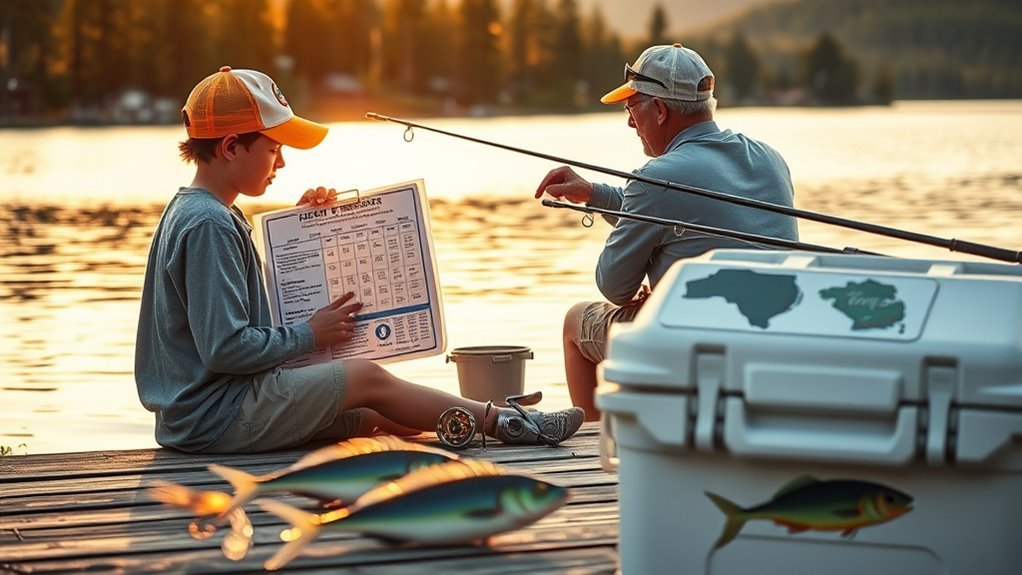
The age rule is straightforward: anglers 17 or younger are exempt from both the fishing license and the trout/salmon stamp. Residency does not change that youth exemption.
Age Eligibility Limit
- Ages 0–17: No Indiana fishing license or trout/salmon stamp is required.
- Age 18 and older: A fishing license is generally required for public waters unless the person qualifies for another exemption.
- Turning 18: Buy the appropriate license before fishing after the birthday.
The current 2026–27 Indiana Fishing Regulations Guide should be checked before each trip because water-specific rules and annual dates can change.
Resident vs. Nonresident
Both resident and nonresident anglers under 18 receive the same fishing-license exemption. Residency becomes important when the angler turns 18 because adult license prices differ.
For adult license pricing, Indiana generally treats a person as a resident after the person has established a true, fixed, permanent home and primary residence in Indiana for 60 consecutive days and does not claim fishing, hunting, or trapping residency elsewhere.
Note: Fishing and hunting use different license rules. A requirement that applies to a nonresident youth hunter does not automatically apply to a nonresident youth who is only fishing.
Exemptions and Special Cases for Young Anglers
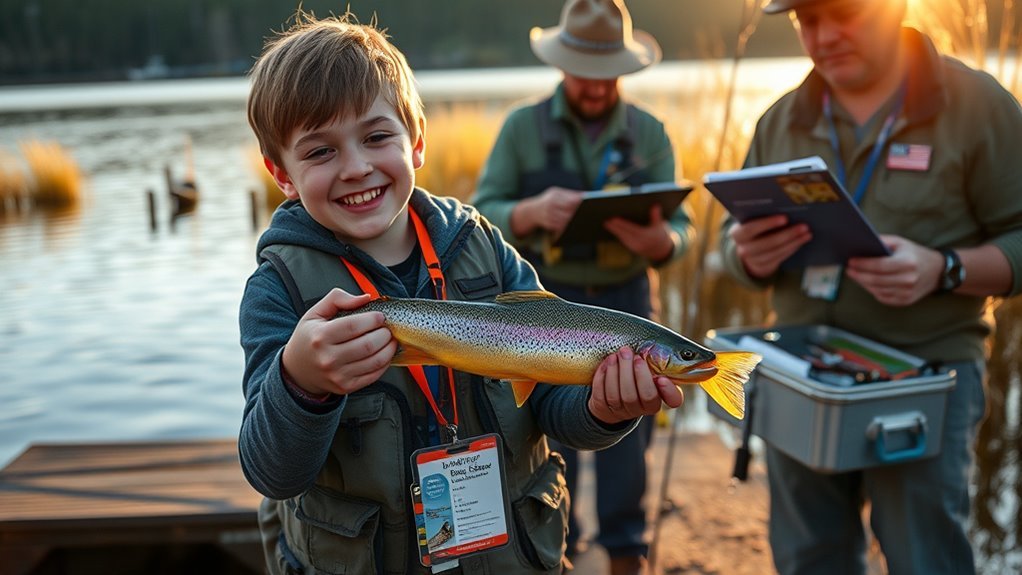
The under-18 exemption is broad, but young anglers should still understand where Indiana’s public-water rules apply.
Public Waters
Indiana fishing regulations generally apply to fish taken from public lakes, streams, rivers, tributaries, and boundary waters. The license exemption does not create an exemption from seasons, size limits, bag limits, endangered-species protections, legal fishing methods, or posted access rules.
Private Ponds
A fishing license is not required on a private pond that does not allow fish to enter from or leave for public waters, provided the angler has the property owner’s permission. Fish that originate in public waters can remain subject to public-water regulations even if they move into private water.
2026 Free Fishing Days
Indiana’s 2026 Free Fishing Days are May 10, June 6–7, and September 26. On those dates, Indiana residents may fish public waters without a fishing license or trout/salmon stamp. This mainly helps adults because anglers under 18 are already exempt throughout the year. All other fishing rules still apply.
Other License Exemptions
Indiana also lists exemptions for certain adults, including qualifying legally blind residents, residents of specified facilities participating in covered activities, some farmland owners and family members, and Indiana residents born before April 1, 1943. Review the current DNR rules rather than assuming that one person’s exemption covers the whole group.
What Young Anglers Still Need to Know Before Fishing

Fishing without a license does not mean fishing without rules. Before leaving home, check the current regulations for the water and species you plan to fish.
- Seasons and limits: Confirm open seasons, daily bag limits, possession limits, and minimum or maximum lengths.
- Property rules: Check opening hours, restricted areas, boat rules, and whether a park or access site charges an entrance or launch fee.
- Fish identification: Release a fish safely when you cannot identify it or confirm that keeping it is legal.
- Responsible handling: Keep release time short, support the fish’s body, and consider single barbless hooks for catch-and-release fishing.
- Consumption guidance: Check the Indiana Fish Consumption Guidelines before eating fish from public waters.
Warning: Wear a properly fitted life jacket when fishing from a boat, kayak, dock, steep bank, or ice. Never assume ice is safe; Indiana DNR advises, “When in doubt, don’t go out.”
Young anglers can also use Indiana DNR’s fishing best-practices guidance to learn safe fish handling, line disposal, fishing etiquette, and fish identification.
License Reprints, Technology Fees, and Proof of License
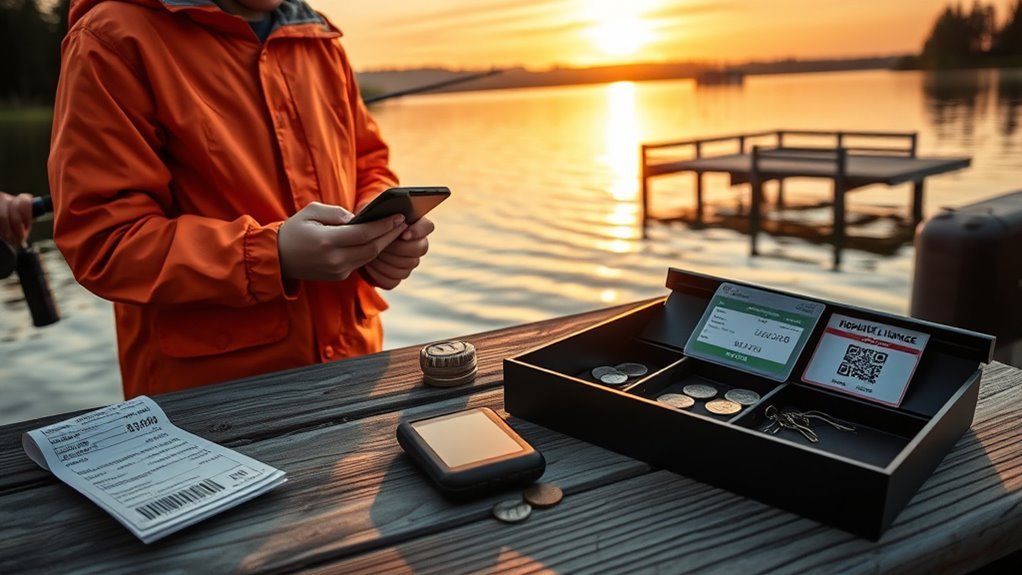
These costs apply only when someone actually needs and purchases a license. They do not create a fee for an exempt angler under 18.
| Item | Current Charge or Rule |
| Online or app technology fee | $3 per license plus card-processing fee |
| Retailer, DNR property, or mail technology fee | $1 per license |
| Retailer duplicate or reprint | $3 per license |
| Online reprint after purchase | Free for up to five days after purchase |
| Proof for a licensed adult | Signed paper or acceptable electronic copy while fishing |
An exempt child has no youth license to print, reprint, sign, or display. A licensed adult must be able to present the license to a conservation officer or other authorized law-enforcement officer upon request.
How Fishing License Revenue Supports Indiana Conservation
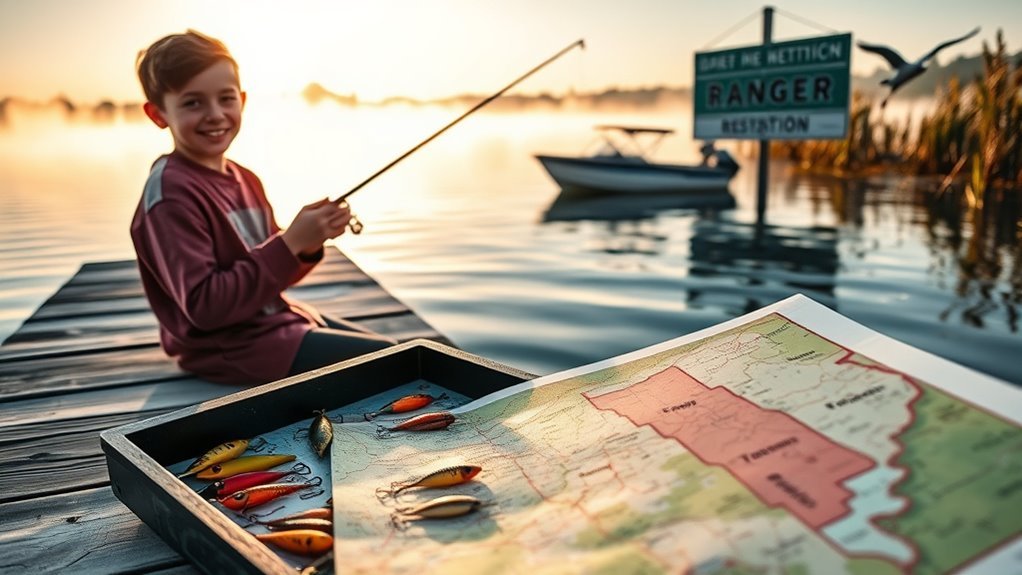
Because anglers under 18 do not buy a fishing license, there is no separate stream of “youth license revenue.” However, adult hunting, fishing, and trapping license sales are a major state funding source for Indiana fish and wildlife management.
The Indiana DNR explains that license revenue supports fish and wildlife research, habitat restoration, public access, education, facilities, and operations. License money also helps Indiana qualify for federal Wildlife and Sport Fish Restoration funding generated through excise taxes on fishing equipment, boats, and some fuel.
Families that want to contribute voluntarily can purchase an adult license when required, buy fishing equipment from lawful retailers, volunteer, attend DNR programs, or donate through an official Indiana conservation fund.
Frequently Asked Questions
Does a 17-year-old need an Indiana fishing license?
No. Indiana residents and nonresidents under age 18 are exempt from the fishing-license requirement. The angler must still follow all fishing regulations and property rules.
Does a youth need an Indiana trout/salmon stamp?
No. The under-18 exemption covers both the fishing license and the trout/salmon stamp. A licensed adult generally needs the $11 stamp when fishing for or taking trout or salmon from public waters, unless the adult license already includes that privilege.
Can a youth fish on a private pond?
Yes, with the property owner’s permission. Indiana’s private-pond license exemption applies when the pond does not allow fish to enter from or leave for public waters. Public-water fish that move into private water can remain subject to public-water regulations.
Are night fishing hours allowed for young anglers?
The youth license exemption does not create separate statewide fishing hours. Night fishing may be allowed where the water, park, access site, and target species permit it. Check posted closing times and water-specific regulations before staying after dark.
Can a youth go ice fishing without a license?
Yes, an angler under 18 remains license-exempt while ice fishing. All ice-fishing regulations and property rules still apply. Wear a life jacket, carry ice-rescue tools, fish with an experienced adult, and stay off uncertain ice.
Can a youth use live bait?
Live bait is allowed in many situations, but bait, gear, species, and water-specific restrictions can vary. Check the current Indiana fishing guide before using live bait, transporting bait, or fishing waters with special rules.
Is catch-and-release always required?
No. Catch-and-release is not a universal condition of the youth exemption. It may be required for a protected species, a particular water, or a fish outside the legal size or season. Release any fish you cannot legally keep.
What happens when a young angler turns 18?
The under-18 exemption ends. Before fishing again, the new adult should buy the appropriate Indiana fishing license and any required stamp unless another exemption applies.
Conclusion
Indiana anglers 17 and younger can fish without buying a fishing license or trout/salmon stamp, whether they are residents or visitors. The correct youth license cost is $0. Before each trip, check the current fishing guide, water-specific limits, access rules, safety conditions, and fish-consumption guidance. Once the angler turns 18, buy the required adult license before fishing again unless another exemption applies.
Sources
- Indiana DNR Customer Service Center and FAQs — confirms that people under 18 need neither a fishing license nor a trout/salmon stamp.
- 2026 Indiana Fishing Licenses and Fees — lists current fees, purchase methods, residency rules, proof requirements, and exemptions.
- 2026–27 Indiana Fishing Regulations Guide — provides current statewide and water-specific fishing rules.
- Indiana DNR Licenses and Permits — explains purchase channels, technology fees, and mail delivery.
- Indiana Free Fishing Days — confirms the 2026 dates and that all other fishing regulations remain in effect.
- Indiana Division of Fish and Wildlife Funding — explains how license revenue and federal excise-tax funding support conservation.
