
California sport fishing license prices increased for 2026, and the amount you pay depends on your residency and how long you plan to fish. A resident 365-day license costs $64.54, while a nonresident 365-day license costs $174.14. Short-term licenses, special validations, report cards, and reduced-fee options may change your total.
Quick Answer
In 2026, a California 365-day sport fishing license costs $64.54 for a resident and $174.14 for a nonresident. One-day and two-day licenses cost $21.09 and $32.40. Some anglers also need a species report card or area validation, so check the rules for the water and species before fishing.
Key Takeaways
- Most people age 16 or older need a valid California sport fishing license.
- The 2026 resident and nonresident 365-day fees are $64.54 and $174.14.
- One-day and two-day licenses are available to residents and nonresidents; the 10-day license is for nonresidents only.
- Children, public-pier anglers, and people fishing on a Free Fishing Day may still need species report cards.
- Fees and regulations can change, so verify current rules with the California Department of Fish and Wildlife before each trip.
Who Needs a Sport Fishing License in California?
Under California Fish and Game Code Section 7145, most people age 16 or older must have a valid California sport fishing license when attempting to take fish, shellfish, reptiles, or amphibians for noncommercial purposes. The rule applies to residents and visitors, including customers fishing with a guide or from a charter boat.
You must keep the license in your immediate possession while fishing. CDFW now allows eligible licenses and validations to be displayed through the CDFW License App, but physical report cards generally must still be carried when required.
Who Can Fish Without a Sport Fishing License?
A sport fishing license is generally not required in these situations:
- Children under 16: They may fish without a sport fishing license, although species report cards can still be required.
- Qualifying public piers: Recreational anglers may fish without a license from a legally defined public pier in California ocean waters.
- Free Fishing Days: California’s 2026 Free Fishing Days are July 4 and September 5.
- Certain private ponds: A narrow exemption applies to qualifying offstream lakes or ponds wholly enclosed by private property under the conditions in Fish and Game Code Section 7145.
- Eligible free-license holders: Some qualifying anglers may receive a no-fee license after CDFW approves their application.
Warning: Fishing without a license does not remove other rules. Seasons, closures, gear restrictions, size limits, bag limits, marine protected areas, and report-card requirements still apply.
What Counts as a Public Pier?
Not every dock, seawall, jetty, or marina is a public pier. CDFW generally defines a public pier as a publicly owned structure connected to the mainland or a charted island, with free and unrestricted public access, that was built or functions primarily for fishing. Certain publicly owned jetties and breakwaters also qualify when they form the seaward protective boundary of a harbor. Review CDFW’s public-pier guidance before relying on this exemption.
California Annual Fishing License Costs for 2026
California’s standard sport fishing licenses are valid for 365 days from the purchase date. They no longer expire automatically at the end of the calendar year. The official 2026 fees listed by CDFW are:
| License | 2026 Fee | Who Can Buy It | Validity |
|---|---|---|---|
| Resident sport fishing | $64.54 | California residents age 16+ | 365 days from purchase |
| Nonresident sport fishing | $174.14 | Nonresidents age 16+ | 365 days from purchase |
CDFW notes that most displayed fees include a 3% nonrefundable application fee and a 5% license-agent handling fee. Confirm the checkout total before paying.
Resident License Pricing and Residency Rules
A resident 365-day sport fishing license costs $64.54 in 2026. For licensing purposes, CDFW generally treats a person as a resident after that person has lived continuously in California for at least six months immediately before applying. Active-duty members of the U.S. Armed Forces and certain Job Corps enrollees may also qualify under the statutory definition.
Simply owning property, attending school, or receiving mail in California does not necessarily establish resident-license eligibility. Use accurate information when creating your CDFW customer record.
Nonresident License Fees
A nonresident 365-day sport fishing license costs $174.14 in 2026. A nonresident can also choose a one-day, two-day, or 10-day license when those options better match the trip length.
- The 365-day nonresident license runs for 365 consecutive days from purchase.
- The license must be in the angler’s immediate possession while fishing.
- Required validations and species report cards are separate purchases.
- A fishing license issued by another state generally does not replace a California license.
- A limited exception allows a valid Arizona or California sport fishing license on the boundary portion of the Colorado River between the two states.
Reduced-Fee and Lifetime Options
Eligible anglers can reduce long-term costs through reduced-fee, free, or lifetime licenses. The main 2026 options are summarized below.
| License Type | 2026 Fee | Main Eligibility |
|---|---|---|
| Disabled veteran reduced-fee license | $10.04 at CDFW offices; $10.54 from license agents | Honorably discharged veteran with a service-connected disability rating of at least 50% |
| Recovering service member reduced-fee license | $10.04 at CDFW offices; $10.54 from license agents | Qualifying recovering U.S. service member |
| Low-income senior reduced-fee license | $10.04 | California resident age 65+ receiving SSI or CAPI |
| Lifetime license, ages 0-9 | $709.00 | California resident |
| Lifetime license, ages 10-39 | $1,160.25 | California resident |
| Lifetime license, ages 40-61 | $1,045.00 | California resident |
| Lifetime license, ages 62+ | $709.00 | California resident |
The optional 2026 Lifetime Fishing Privilege Package costs $478.75 and includes lifetime privileges for a second rod, ocean enhancement, North Coast salmon report card, and steelhead report card. New future requirements may not be included.
Short-Term Sport Fishing Licenses and Fees
Short-term licenses work well for visitors, occasional anglers, and people trying fishing before committing to a full year.
- One-day sport fishing license: $21.09 for one specified day; available to residents and nonresidents.
- Two-day sport fishing license: $32.40 for two consecutive days; available to residents and nonresidents.
- Ten-day nonresident sport fishing license: $64.54 for 10 consecutive days; available only to nonresidents.
The one-day and two-day licenses are exempt from the Ocean Enhancement Validation. The 10-day license is not listed as exempt, so an angler using it may need the validation when fishing in applicable southern ocean waters.
Pro Tip: Compare the trip length before buying. For a nonresident, the 10-day license costs the same as the 2026 resident annual license, but it remains valid for only 10 consecutive days.
Products Worth Considering

Enough to Use: you will receive 6 pieces of fishing license holders, and 6 pieces of safety pins, abundant in quantity, enough for you to choose and replace, can meet your different needs; You can also share them with your friends

FISHING LICENSE HOLDER W/ZIP CLOSURE

Omni-Shade UPF 30 sun protection
Which California Fishing License Is the Best Value?
- Fishing for one day: Buy the one-day license.
- Fishing for a weekend: The two-day license is usually the simplest option.
- Nonresident fishing for three to 10 consecutive days: Consider the 10-day nonresident license.
- Fishing several times during the next year: Compare the 365-day license with the combined cost of multiple short-term licenses.
- California resident who expects to fish for many years: Review lifetime-license pricing by age.
Validations and Report Cards: Additional Requirements
A basic sport fishing license does not cover every location, fishing method, or species. Depending on where and how you fish, you may need a validation or report card in addition to the license.
2026 Validation Types and Fees
| Validation | 2026 Fee | When It Is Needed |
|---|---|---|
| Ocean Enhancement Validation | $7.30 | Fishing in ocean waters south of Point Arguello, except under a one-day or two-day license |
| Second Rod Validation | $20.26 | Using two rods or lines in inland waters where two rods are allowed |
| Recreational Crab Trap Validation | $2.98 | Taking crab with qualifying crab traps; not required for hoop nets or crab loop traps |
Beginning January 1, 2026, anglers fishing for crab with crab traps from a Commercial Passenger Fishing Vessel are no longer required to possess the Recreational Crab Trap Validation. Other crab regulations still apply.
Required Species Report Cards
Report cards are required for every person fishing for designated species, including children under 16, anglers on public piers, and people fishing on Free Fishing Days.
- Steelhead Report Card: $10.29 in 2026; required when fishing for steelhead in inland waters.
- North Coast Salmon Report Card: $9.21; required for salmon in the Smith River System and Klamath-Trinity River System.
- Spiny Lobster Report Card: $12.70; required for anyone taking spiny lobster.
- Sturgeon Fishing Report Card: Required for anyone fishing for white sturgeon in California waters. The 2025-26 season card was free and covered October 1, 2025, through June 30, 2026. The 2026-27 card costs $8.13 and is scheduled to become available August 15, 2026.
- Abalone Report Card: Not currently available because the recreational red abalone fishery remains closed.
Note: White sturgeon fishing is catch-and-release only. Green sturgeon are protected, and take is prohibited. Check the current sturgeon rules before targeting either species.
Reporting Requirements and Deadlines
Buying a report card is only the first step. You must record fishing activity as directed and submit the card or report online by the applicable deadline, even when you did not catch or keep a fish.
- Spiny lobster: Report by April 30 after the season. Failure to report can trigger a $21.60 non-return fee when buying the next season’s card.
- Steelhead and North Coast salmon: Report by January 31 following the card year.
- Sturgeon: For the season-based card, report by July 31 after the June 30 season close.
Follow the instructions printed on the physical report card because entry timing and recording rules differ by species. CDFW’s license and report-card page provides current fees and reporting windows.
Free and Reduced-Fee Sport Fishing Licenses
CDFW offers reduced-fee licenses to qualifying disabled veterans, recovering service members, and low-income seniors. It also offers free sport fishing licenses to certain people who are blind, developmentally disabled, severely mobility impaired, or qualifying low-income Native American residents.
Reduced-Fee License Eligibility
- Disabled veteran: Honorably discharged from the U.S. Armed Forces with a service-connected disability rating of 50% or greater.
- Recovering service member: A qualifying service member receiving outpatient treatment, recuperation, or therapy for a serious service-related injury or illness.
- Low-income senior: A California resident age 65 or older who receives Supplemental Security Income or Cash Assistance Program for Aged, Blind, and Disabled Legal Immigrants benefits.
Low-income senior eligibility must be verified annually, and that license is available only through CDFW License Sales Offices.
Free License Eligibility
A free license may be available to a person who meets CDFW’s specific legal and certification requirements for blindness, developmental disability, severe mobility impairment, or low-income Native American status. The first license normally requires an application and supporting documentation. Additional validations and report cards are not automatically free.
How to Apply for a Reduced-Fee or Free License
The application path depends on the benefit category, but the process generally follows these steps:
- Confirm the exact eligibility rule. Review CDFW’s current free and reduced-fee license criteria.
- Create or locate your CDFW customer record. You may need your GO ID and identity information.
- Collect supporting documents. Examples include a VA Benefit Summary Letter, a letter from a commanding officer or military doctor, SSI or CAPI verification, medical certification, or tribal documentation.
- Submit the application through the allowed channel. Depending on the category, CDFW may accept an online secure upload, mail, fax, or in-person submission.
- Wait for eligibility approval before purchasing. CDFW advises allowing up to 15 business days for review of free-license applications.
- Renew through the approved channel. Some categories can renew online or through agents after initial approval; low-income seniors require annual in-person verification at a CDFW office.
Do not email sensitive documents as ordinary attachments. CDFW provides a secure-upload process for documents that need electronic submission.
Products Worth Considering

Enough to Use: you will receive 6 pieces of fishing license holders, and 6 pieces of safety pins, abundant in quantity, enough for you to choose and replace, can meet your different needs; You can also share them with your friends

Enough to Use: you will receive 6 pieces of fishing license holders, and 6 pieces of safety pins, abundant in quantity, enough for you to choose and replace, can meet your different needs; You can also share them with your friends

Durable Material: Car license plate is crafted from high-quality ETP (electrolytic tinplate) with 2 layers of clear epoxy lacquer coating making the car tag water-proof, rust-proof, and weather-resistant
Where to Purchase a California Fishing License
You can purchase a standard California sport fishing license through several authorized channels:
- Online: Use CDFW’s Online License Sales and Services.
- License agents: Authorized sporting-goods stores, discount stores, bait shops, and tackle shops may sell licenses.
- CDFW offices: Select CDFW License Sales Offices sell licenses and process categories that require in-person verification.
- Telephone: CDFW lists an authorized telephone sales agent at 800-565-1458.
CDFW’s License and Revenue Branch and regional counters do not accept cash. They accept checks, money orders, and eligible Visa or Mastercard debit or credit cards.
Products Worth Considering

PREMIUM QUALITY: Crafted from high-grade materials, our License Plate is built to withstand the elements and maintain its vibrant appearance over time. It is resistant to fading, cracking, and peeling, ensuring long-lasting performance.
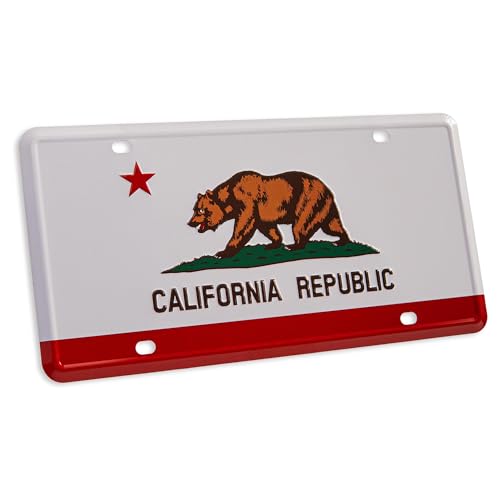
CALIFORNIA STATE FLAG DESIGN: Features a textured, raised California flag design for an authentic, high-end look and feel.

【MATERIAL】: oFloral License plate frame is made from premium quality aluminum, which can provide long-lasting protection from corroding, rusting and aging, durability for long lasting usage.Personalized Car Frame Can Perfect to Put on Your Front of Car or for Decorative Purposes Around the House Like in Your Bedroom, Garage, Basement, Ect.
Can You Carry a California Fishing License on Your Phone?
Many 365-day and short-term licenses and validations can be displayed electronically in the CDFW License App. However, proof of purchase in the app does not replace a required physical report card. Carry the physical card in your immediate possession unless a regulation provides a specific exception.
Replacement Licenses and Associated Fees
A duplicate 2026 sport fishing license costs $14.30 and can be purchased online, from an authorized license agent, or at a CDFW License Sales Office. Duplicate validation fees differ:
- Second Rod or Ocean Enhancement Validation replacement: $3.81.
- Recreational Crab Trap Validation replacement: $2.98.
- Lost report card: Replacement procedures vary. A duplicate sturgeon report card must be obtained from a CDFW License Sales Office and requires an affidavit.
Do not heat-laminate a paper license. Heat can darken or destroy the printing. A discolored license may remain valid if the text and signature are readable, but replacing a damaged license before a trip can prevent enforcement problems.
Fishing Regulations and Compliance
A license gives you the privilege to fish; it does not guarantee that a species, area, method, or season is open. California regulations can vary by water, date, species, gear, and management area. Ocean rules may also change during the season.
Pre-Trip Compliance Checklist
- Confirm that your license will be valid on the fishing date.
- Carry the license electronically or physically as permitted.
- Buy and carry every required validation and physical report card.
- Check current freshwater or ocean regulations for the exact location.
- Review seasons, closures, bag limits, possession limits, minimum sizes, and gear rules.
- Check marine protected areas, health advisories, and emergency or in-season changes.
- Record report-card activity immediately when the applicable rule requires it.
CDFW recommends checking its current fishing regulations page because downloadable booklets may be revised during the year.
Report Card Compliance
Report cards are personal and nontransferable. The angler must complete entries in legible, indelible ink and follow the species-specific timing rules. A card may need an entry before fishing begins, after moving locations, after a catch, or at the end of the trip. The physical card must normally remain in the angler’s immediate possession.
Penalties for Fishing Without a License
Fishing without the license required by Fish and Game Code Section 7145 is an infraction. Under Fish and Game Code Section 12002.2, a first offense carries a statutory fine range of $100 to $1,000. A second qualifying conviction within five years carries a range of $250 to $1,000.
If the angler actually held a valid license at the time but failed to have or display it as required, the court may reduce the fine to $25 when the other statutory conditions are met. Separate violations involving seasons, limits, protected species, report cards, or unlawful gear can add penalties.
Warning: Do not rely on an old screenshot, blog post, or last year’s regulation booklet. Verify the exact water and date through CDFW before fishing because emergency and in-season changes can take effect.
Benefits of Having a Fishing License
A valid fishing license keeps your trip legal and helps fund fishery management, hatcheries, habitat work, public access, education, data collection, and enforcement. Report-card information also helps biologists measure fishing effort and monitor species such as steelhead and sturgeon.
A fishing license is more than permission to cast a line: its fees and reporting requirements support the management of California’s fish and aquatic habitats.
The 365-day format also gives anglers a full year of use from the purchase date. That flexibility can make the annual license a better value for people who fish across multiple seasons.
Frequently Asked Questions
Can I fish without a license in California?
Most anglers age 16 or older need a California sport fishing license. Major exceptions include fishing from a qualifying public pier in ocean waters, fishing on an official Free Fishing Day, and certain qualifying private-pond situations. Other regulations and report-card requirements still apply.
Are California fishing licenses transferable?
No. Licenses, validations, and report cards are issued to a specific person and are not transferable. Someone buying for another angler must provide the required customer information or purchase an eligible gift voucher.
What happens if I lose my fishing license?
You can buy a duplicate online, through an authorized license agent, or at a CDFW office. The 2026 duplicate sport fishing license fee is $14.30. Report-card replacement rules differ, so contact CDFW promptly if a required card is lost.
Can I fish in California with an out-of-state license?
Generally, no. You need a valid California license to fish in California. A limited reciprocal rule allows anglers with a valid Arizona or California sport fishing license to fish from either shore of the California-Arizona boundary portion of the Colorado River.
Do children need a fishing license in California?
Children under 16 do not need a sport fishing license. They must still follow all fishing regulations and obtain the appropriate report card when fishing for a report-card species such as steelhead, sturgeon, North Coast salmon, or spiny lobster.
Does a California fishing license expire at the end of the year?
No. A standard resident or nonresident sport fishing license is valid for 365 days from the purchase date. Species report cards follow their own seasons and reporting periods, which may not match the license expiration date.
Can I show my fishing license on my phone?
Many licenses and validations can be displayed in the CDFW License App. Required report cards are different: proof of purchase in the app generally does not replace the physical report card, which must be carried as required by regulation.
Conclusion
For 2026, California’s 365-day sport fishing license costs $64.54 for residents and $174.14 for nonresidents. Short-term licenses can lower the cost for brief trips, while reduced-fee, free, and lifetime options help eligible anglers. Before fishing, verify the current rules for your location and species, buy any required validation or report card, and keep the required documents with you.
Sources
- California Department of Fish and Wildlife: Sport Fishing Licenses and Report Cards — 2026 license, validation, report-card, lifetime, reduced-fee, and duplicate fees.
- California Department of Fish and Wildlife: Fishing Regulations — current freshwater and ocean regulation resources.
- California Department of Fish and Wildlife: Free Fishing Days — 2026 dates and continuing regulation requirements.
- California Department of Fish and Wildlife: Sturgeon Report Card — season dates, reporting rules, and catch-and-release requirements.
- California Legislative Information: Fish and Game Code Section 7145 — license requirement and possession rules.
- California Legislative Information: Fish and Game Code Section 12002.2 — statutory penalty range for fishing without the required license.
