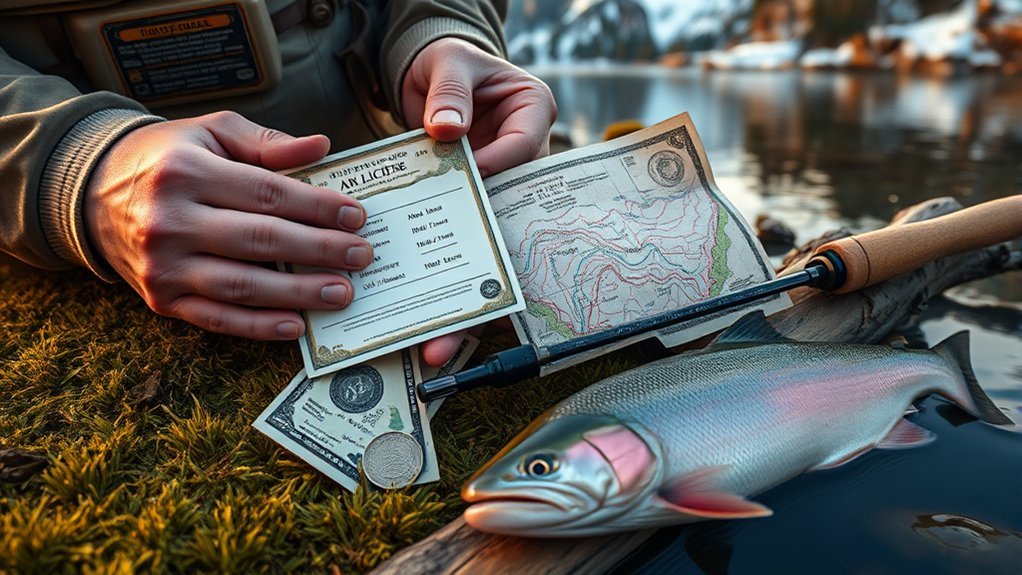
Alaska does not issue a separate freshwater-only fishing license. Instead, an Alaska sport fishing license covers sport fishing in both fresh and marine waters. Your total cost depends on whether you are a resident, how long a nonresident trip lasts, and whether you plan to fish for king salmon.
Quick Answer
A resident annual Alaska sport fishing license costs $20. Nonresident licenses cost $15 for one day, $30 for three days, $45 for seven days, $75 for 14 days, or $100 annually. A separate king salmon stamp may be required, and some fisheries also require permits or immediate harvest recording.
Key Takeaways
- Alaska’s sport fishing license covers fresh and marine waters; there is no separate freshwater license.
- Residents age 18 or older and nonresidents age 16 or older generally need a license.
- A king salmon stamp is normally required when fishing for king salmon, except in stocked lakes and for certain exempt anglers.
- A signed paper license, valid digital copy, eSigned license, or license displayed in the ADF&G mobile app may be used.
- Buying a license does not replace area regulations, permits, harvest records, bag limits, or emergency orders.
Note: The fees below reflect the current Alaska Department of Fish and Game product-price table. Always confirm the official fee page before purchasing because the state may change prices or available products.
Who Needs an Alaska Sport Fishing License?
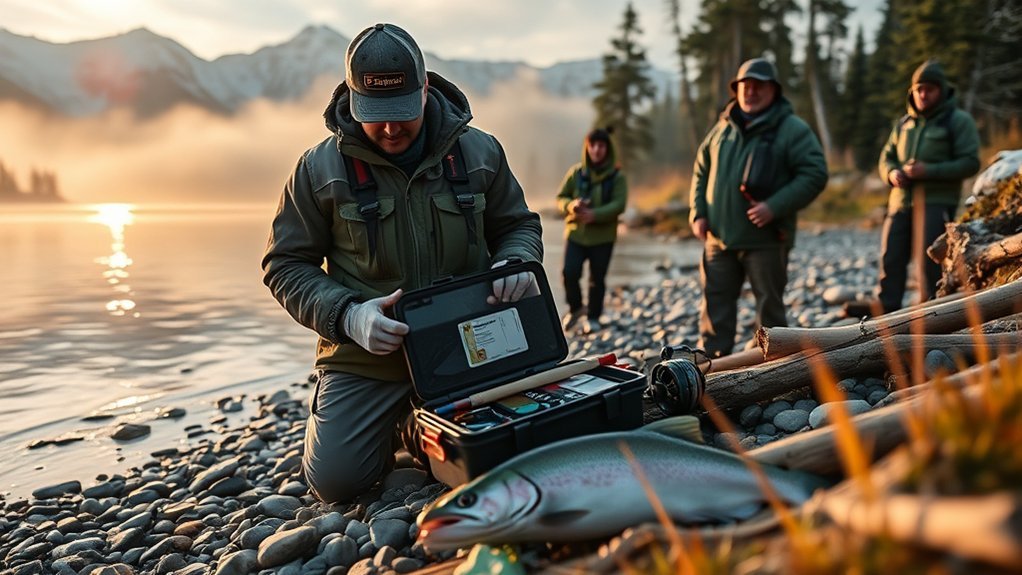
You generally need an Alaska sport fishing license if you are:
- An Alaska resident age 18 or older
- A nonresident age 16 or older
The same license applies when sport fishing in Alaska’s freshwater rivers and lakes or its marine waters. It may also serve as the basic license required for certain resident personal-use fisheries, although an additional permit may be required.
Alaska residents under 18 and nonresidents under 16 generally do not need a sport fishing license. These age exemptions still apply when the child is fishing with a guide or charter.
Age-exempt anglers may still need to record fish when a species has an annual harvest limit. A free Sport Fishing Harvest Record Card is available for anglers who do not have a license on which to record the catch.
Who Counts as an Alaska Resident?
Simply owning property, working seasonally, or having an Alaska mailing address does not automatically make you a resident for licensing purposes. In general, you must have maintained your Alaska domicile for the previous 12 consecutive months, intend to remain in Alaska, and not claim residency benefits in another state or country.
Military members, Coast Guard members, and dependents have additional rules. Review the official ADF&G residency definition before buying a discounted resident product.
Resident License Types and Costs
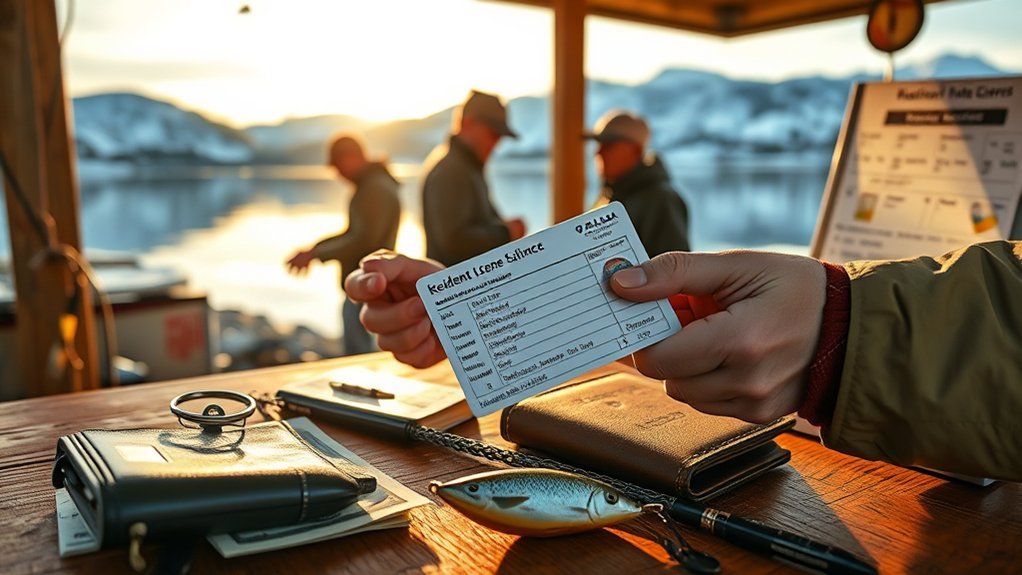
Most Alaska residents age 18 or older need the regular annual sport fishing license. Reduced-cost or complimentary products are available to qualifying low-income residents, blind anglers, seniors, and disabled veterans.
| Resident product | Current fee | Important detail |
|---|---|---|
| Annual sport fishing license | $20 | Standard license for most residents age 18 or older |
| Annual king salmon stamp | $10 | Required for most licensed residents fishing for king salmon |
| Low-income fishing, hunting, and trapping license | $5 | Income-qualified combined license; proof of eligibility may be requested |
| Sport fishing license for the blind | $0.50 | Special resident product |
| Senior Permanent Identification Card | No charge | For qualifying Alaska residents age 60 or older |
| Disabled Veteran License or ID | No charge | For qualifying resident veterans certified at least 50% disabled |
A regular resident who plans to fish for king salmon would normally pay a total of $30: $20 for the annual sport fishing license and $10 for the annual king salmon stamp.
The $5 low-income product is not merely a reduced fishing license. It is a combined annual fishing, hunting, and trapping license. Eligibility is based on Alaska residency and household income under the applicable poverty guideline. Review the current ADF&G low-income licensing requirements before applying.
Nonresident License Options and Pricing
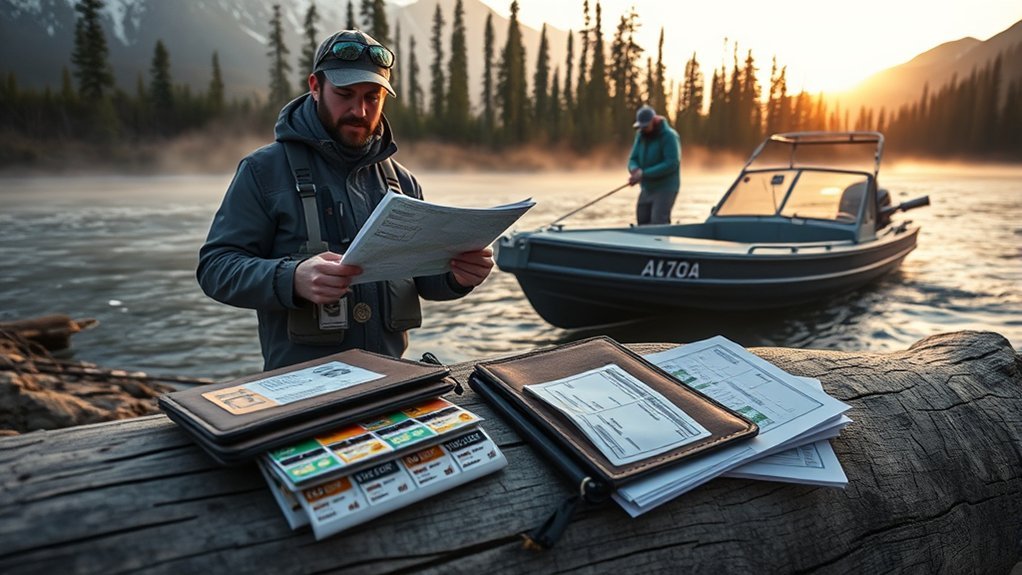
Nonresidents can choose a short-term license that matches their fishing dates or buy an annual license. The license is valid for sport fishing in both fresh and marine waters during the period printed on it.
| Duration | Sport fishing license | King salmon stamp | Total when both are required |
|---|---|---|---|
| 1 day | $15 | $15 | $30 |
| 3 days | $30 | $30 | $60 |
| 7 days | $45 | $45 | $90 |
| 14 days | $75 | $75 | $150 |
| Annual | $100 | $100 | $200 |
You only need the king salmon stamp if you will fish for king salmon and no exemption applies. A nonresident fishing for trout, grayling, coho salmon, sockeye salmon, or another species would normally pay only the sport fishing license fee, subject to local regulations and permits.
Short-Term License Choices
Choose a license that covers every day on which you may fish. A three-day license can be more economical than buying several separate one-day licenses, while a seven- or 14-day license may work better when weather could shift your plans.
Check the dates printed on the license before leaving the vendor or completing the online transaction. Do not assume that an extra travel or weather day is covered.
Annual and Specialty Products
The annual nonresident sport fishing license costs $100 and remains valid through December 31 of the license year. It can be useful for repeat trips or visits lasting more than two weeks.
Active-duty military members, Coast Guard members, and qualifying dependents permanently stationed in Alaska for less than 12 months may be eligible for a special nonresident military annual sport fishing license for $20. The annual military king salmon stamp costs $30.
Eligible Yukon Territory residents may also qualify for reciprocal annual products. Confirm the current price and eligibility on the official ADF&G product-price page.
King Salmon Stamps and When They Apply
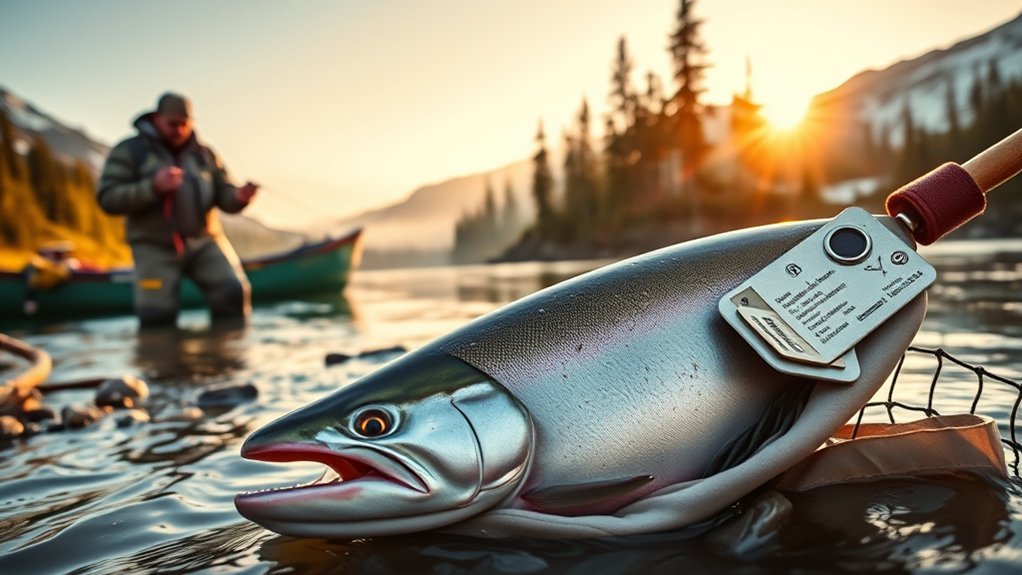
A king salmon stamp is normally required when you fish for king salmon, also called Chinook salmon. The stamp is required in addition to the sport fishing license, not instead of it.
The main exceptions are:
- King salmon fishing in stocked lakes
- Alaska residents under age 18
- Nonresidents under age 16
- Qualifying senior and disabled-veteran identification card holders
A resident annual king salmon stamp costs $10. Nonresident stamp prices match the available license durations: $15 for one day, $30 for three days, $45 for seven days, $75 for 14 days, or $100 annually.
Warning: A king salmon stamp does not guarantee that king salmon fishing is open. Seasons, retention rules, size limits, annual limits, and gear restrictions may change by waterbody or emergency order.
When a king salmon or another regulated species has an annual harvest limit, record the fish immediately after landing and retaining it. Depending on the license format, you may record it on the license, a nontransferable harvest record, or through the ADF&G mobile app.
A license and stamp allow you to participate, but the current area regulations and emergency orders decide where, when, and how you may fish.
Where and How to Buy Your License
You can purchase an Alaska sport fishing license through the ADF&G online store, the ADF&G mobile app, participating license vendors, or a Fish and Game office.
Online Purchase Options
The ADF&G online store allows you to purchase a license before your trip. You will need to provide identity and residency information and select the correct license year and customer category.
Every license must be signed or eSigned to be valid. When purchasing a license for yourself through an ADF&G account, you can eSign it and save it to your mobile device. You may also print the license and carry the signed paper copy.
If another person buys your license, that person cannot sign it for you. You must sign or eSign your own license before fishing.
An online or eSigned license can generally be downloaded again from your account if you lose the file. A $5 duplicate fee may apply when a replacement license must be issued, including replacement of certain carbon-copy licenses.
In-Person Vendors
Many sporting-goods stores, tackle shops, hardware stores, local businesses, and ADF&G offices sell licenses. Vendor participation and opening hours can change, so confirm availability before making a special trip.
Bring accurate identification and residency information. A vendor cannot give you a resident price merely because you are staying or working temporarily in Alaska.
Licenses may be issued as printed or electronic documents, eSigned licenses, or carbon-copy licenses. Check the license for the correct name, residency category, dates, products, and signature before leaving.
Charter and Package Deals
Some charters, lodges, and guides help guests complete an ADF&G purchase, but a fishing license is not automatically included in every package. Ask the operator whether the quoted price covers:
- The sport fishing license
- A king salmon stamp
- Any required personal-use or area permit
- Harvest-record materials
Even when an operator assists with the transaction, the license belongs to the named angler. You must verify the details and sign or eSign it yourself.
Pro Tip: Save the license to your phone before traveling into an area with weak service. Carry a charged power bank or a signed paper backup if your phone will be your only proof of licensing.
Special Licenses for Seniors, Military Members, Low-Income Residents, Blind Anglers, and Disabled Veterans
Alaska offers several reduced-cost and complimentary products. Eligibility is based on more than age or occupation, so submit the required application and supporting documents before relying on an exemption.
Senior Residents
Alaska residents age 60 or older who meet the state residency definition may apply for a free Senior Permanent Identification Card. The holder may sport fish without buying the standard license or king salmon stamp.
The senior card remains valid only while the holder remains an Alaska resident. Senior residents must be physically present in Alaska when applying and may still need permits and harvest records.
Disabled Veterans
A qualifying Alaska resident veteran certified as at least 50% disabled may apply for a complimentary Disabled Veteran License or identification card. The card replaces the regular sport fishing license and king salmon stamp, but it does not replace permits, harvest records, annual limits, or area rules.
Low-Income Residents
The $5 annual low-income license combines sport fishing, hunting, and trapping privileges. Applicants must qualify as Alaska residents and meet the household-income rules. Household income generally includes income received by all household members, including applicable dividends.
Blind Anglers
A qualifying Alaska resident who is blind may purchase a special annual sport fishing license for $0.50. Other stamps, permits, or recording requirements may still apply depending on the fishery.
Nonresident Military Members and Dependents
Active-duty military and Coast Guard members, along with qualifying dependents, who are stationed in Alaska but have not yet completed the resident-qualification period may be eligible for special military products at resident-level prices. The current annual sport fishing license is $20, and the annual king salmon stamp is $30.
License Validity, Harvest Records, and Compliance
A regular annual license is valid from its purchase date through December 31 of the license year. Short-term nonresident licenses are valid only for the 1-, 3-, 7-, or 14-day period printed on the license.
You must carry or display a valid signed license while fishing. Acceptable formats include:
- A signed printed license
- A signed digital copy stored on a mobile device
- An eSigned license downloaded from an ADF&G account
- A license displayed in the official ADF&G mobile app
- A valid carbon-copy license
The ADF&G mobile app can display licenses and stamps, provide regulations, and record certain fishing harvests. If you depend on a phone, you are responsible for keeping it charged and making the license available to an officer.
When a Harvest Record Is Required
Anglers of any age must record a retained fish when an annual harvest limit applies. Examples may include king salmon, rainbow trout, lingcod, or certain rockfish fisheries, depending on the area.
Record the species, date, and fishing location immediately after landing and retaining the fish. Do not wait until you return to a vehicle, lodge, or home.
Licensed anglers may have a harvest-record area on their license or use an approved electronic method. Anglers who are exempt from buying a license, including young anglers and qualifying senior or disabled-veteran card holders, can obtain a free Sport Fishing Harvest Record Card when needed.
Check Regulations and Emergency Orders
Alaska is divided into sport fishing regions, and each region has its own regulation summary. Rules may differ by drainage, lake, stream, marine area, species, date, fish size, residency status, and fishing method.
Emergency orders can close a fishery or change bag limits, annual limits, bait rules, gear restrictions, or retention requirements after a printed booklet has been published. Check the official Alaska sport fishing regulations and current emergency orders immediately before fishing.
Sport Fishing, Personal-Use Fishing, and Subsistence Fishing
These terms are not interchangeable:
- Sport fishing generally means taking or attempting to take fish for personal use with legal sport-fishing gear. The standard sport fishing license applies.
- Personal-use fishing is available only to qualifying Alaska residents. A valid sport fishing license or equivalent is generally required, and a separate permit may also be necessary.
- Subsistence fishing follows separate state or federal eligibility, area, gear, and permitting rules. A sport fishing license does not automatically authorize subsistence fishing.
Before using a dip net, fish wheel, pot, net, or another nonstandard method, identify the fishery category and obtain every required permit.
Frequently Asked Questions
Can I purchase an Alaska fishing license online before entering the U.S.?
You can generally purchase through the ADF&G online store before traveling. Select the correct nonresident or nonresident-alien category, provide accurate identity details, and sign or eSign the license before fishing. Contact ADF&G Licensing if the store cannot process your identification or payment method.
Do I need to carry a paper fishing license?
No. You may carry a valid signed paper copy, signed digital copy, eSigned license, or license displayed in the ADF&G mobile app. You must be able to display it when requested, so keep your device charged or carry a paper backup.
Do children need a license when fishing with a guide?
The normal age rules still apply on guided trips. Alaska residents under 18 and nonresidents under 16 generally do not need a sport fishing license or king salmon stamp. They may still need a free harvest record when fishing for a species with an annual limit.
Are baitfish or crayfish covered by the same license?
Do not assume that a sport fishing license alone authorizes every baitfish or crayfish activity. Species, collection methods, transport, possession, and area rules may apply. Alaska also prohibits using live fish as bait for sport fishing in freshwater. Check the current statewide and regional regulations before collecting or using bait.
Can I transfer my fishing license to another person?
No. The license is issued to the named angler and cannot be shared or transferred. A person may help buy a license for someone else, but the named license holder must verify the information and sign or eSign it personally.
Is there a separate Alaska freshwater fishing license?
No. Alaska sells a sport fishing license that covers legal sport fishing in both fresh and marine waters. Separate stamps, permits, harvest records, and area regulations may still apply.
Does a fishing charter include my license and king salmon stamp?
Not automatically. Some operators help guests purchase licenses or include the cost in a package, while others require each guest to buy one separately. Confirm the license, stamp, permit, and harvest-record arrangements with the charter before departure.
Sources
- Alaska Department of Fish and Game: Sport Fishing Licenses, King Salmon Stamps, IDs, and Harvest Records — age requirements, stamp exemptions, purchasing methods, and harvest records
- Alaska Department of Fish and Game: Product Prices — current resident, nonresident, military, stamp, and replacement fees
- Alaska Department of Fish and Game: Online Purchase and eSignature FAQ — signatures, digital copies, eSigned licenses, and license formats
- Alaska Department of Fish and Game: General License Information — validity periods, age rules, and general licensing requirements
- Alaska Department of Fish and Game Mobile App — digital license display, regulations, permits, and harvest recording
- Alaska Department of Fish and Game: Sport Fishing Regulations — regional rules, emergency orders, limits, seasons, and gear restrictions
Conclusion
Most Alaska residents age 18 or older need a $20 annual sport fishing license, while nonresidents age 16 or older can choose a $15 one-day, $30 three-day, $45 seven-day, $75 14-day, or $100 annual license. Add the matching king salmon stamp when required.
Buy through the ADF&G store, mobile app, an authorized vendor, or a Fish and Game office. Sign or eSign the license, carry a valid copy, record regulated harvest immediately, and check the current area regulations and emergency orders before every trip.