
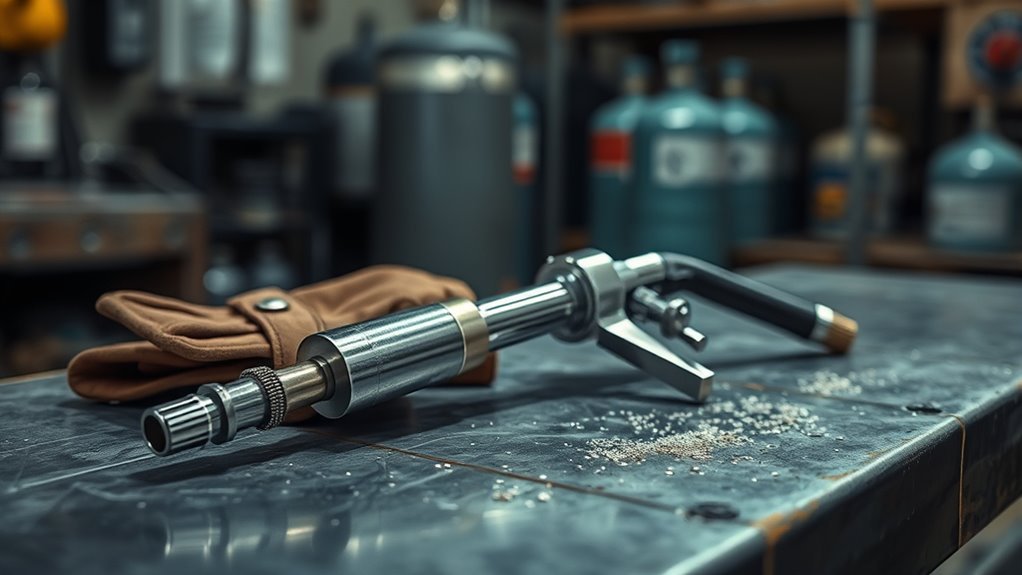
A standard replacement MIG gun usually costs far less than an industrial aluminum push-pull gun, so a single price range can be misleading. Your final cost depends on the welding process, amperage, duty cycle, cooling method, cable length, connector, wire size, and included parts. Prices below are representative U.S. online prices checked on July 29, 2026 and may change.
Quick Answer
Most buyers pay about $160–$700 for a standard replacement MIG gun. Aluminum spool guns commonly run about $550–$1,750, while industrial push-pull aluminum guns can cost roughly $4,000–$5,100. A standalone TIG torch package may cost about $50–$700. Compatibility, amperage, cooling, duty cycle, and cable length drive the final price.
Key Takeaways
- A normal replacement MIG gun and an industrial push-pull gun are different products with very different prices.
- Confirm the machine model, power pin, trigger plug, wire range, liner, gas connection, and duty-cycle rating before ordering.
- Spool guns suit occasional or short-run aluminum work, while push-pull guns are designed for smoother feeding over longer cables and higher production.
- Consumables, adapters, wire, shielding gas, PPE, and maintenance can matter as much as the gun’s purchase price.
- Published prices should be treated as dated examples rather than guaranteed national averages.
At a Glance
| Standard Replacement MIG Gun | About $160–$700 for many aftermarket and branded air-cooled models |
| Aluminum Spool Gun | About $550–$1,750 for representative branded models |
| Industrial Push-Pull Aluminum Gun | About $4,000–$5,100 for current street-price examples; longer cables may cost more |
| Standalone TIG Torch Package | About $50–$700; a water cooler, power source, remote, and consumables may be separate |
Note: Prices are representative U.S. online examples checked on July 29, 2026. Dealer discounts, cable length, connector configuration, freight, taxes, and availability can change the amount you pay.
What Counts as a Welding Gun?
In everyday shop language, a welding gun usually means a MIG or flux-cored gun that feeds wire through the cable and contact tip. A TIG torch carries current to a non-consumable tungsten electrode and supplies shielding gas, but it does not feed filler wire through the torch.
A spool gun is a type of MIG gun that holds a small wire spool near the handle. A push-pull gun uses the welder’s feeder to push wire while a motor in the gun pulls it. Both designs help feed soft aluminum wire, but push-pull systems are generally intended for longer cables and higher production.
The gun or torch is also separate from the welding power source. A low-priced replacement gun will not turn an incompatible machine into an aluminum or high-amperage welder.
Products Worth Considering

Direct replacement for Miller Millermatic M-25 Mig Welding Gun Torch Stinger 15ft 250 Amp,Replace Miller Part # 169598

This gun is 8 ft long (Longer than the OEM Gun), and has 2 trigger wires, gas hose, wire liner and power cable all running up the inside of the hollow plastic hose. Generally speaking, these guns connect to a plastic wire feeder.

COMPATIBILITY: Designed for Lincoln Magnum 100L (K530 series) and Tweco Mini/#1 welding torches. This kit is also a direct fit for YESWELDER FLUX-135PRO Old Version/MIG-140DS PRO/YWM-160/MIG-165DS PRO/MIG-185DS PRO/MIG-205DS PRO/MIG-250PRO/MCT-520.
Types of Welding Guns and Typical Price Ranges
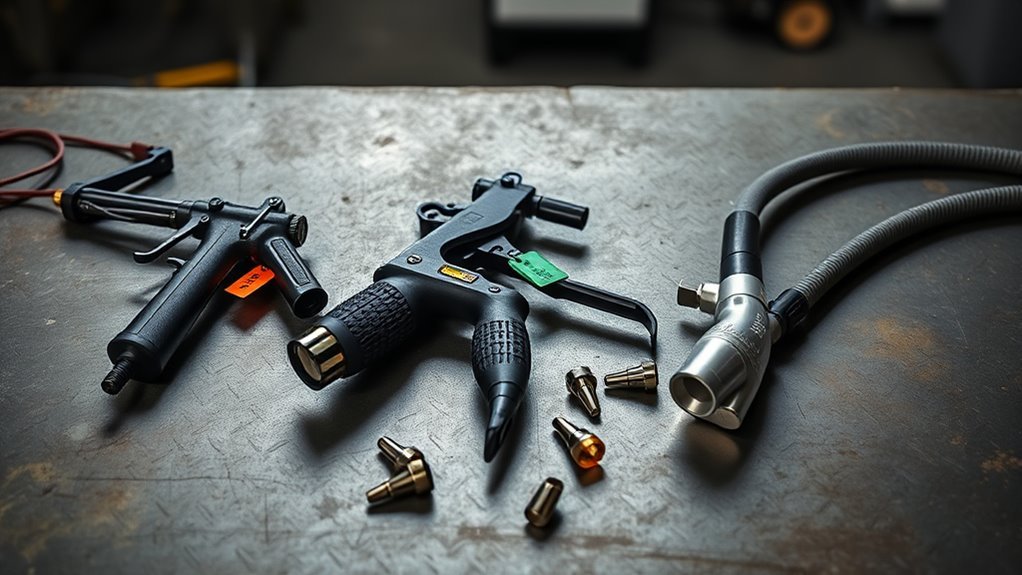
The most useful price comparison separates ordinary replacement guns from specialized aluminum-feeding equipment.
Products Worth Considering

WIDE USAGE: This cold air gun is used for cooling plastic, metal or wood processing, welding, bonding, heat sealing, sewing needles, processing, etc.

【Effortless One-Handed Operation】With the flame regulator and flame lock button easily in reach of your thumb, adjust and lock the flame with just one hand. Never again do you need to free up the other hand to assist.

【Main Function】This cold air dry cooling gun can only use compressed air to lower the air temperature to produce low temperature airflow. It can instantly cool down and you can quickly adjust the temperature through the valve. It is a portable cold air source, widely used in mechanical drying or cooling process.
Standard Replacement MIG Guns
Many aftermarket and branded air-cooled replacement MIG guns fall between roughly $160 and $700. For example, current listings include aftermarket 250-amp guns near the lower end and a Lincoln Magnum PRO Curve 400 package near $671. Cable length, amperage, rear connector, and included consumables can move the price up or down.
Light-duty guns are commonly used with compact welders and small wire. Higher-amperage production guns use larger conductors, stronger strain relief, heavier front-end parts, and higher-capacity consumables.
Spool Guns
Representative branded spool guns currently range from about $550 to $1,750. Examples include the Lincoln Magnum PRO 100SG around $567, the Lincoln 150SG around $760, and the Miller Spoolmate 200 around $1,733. These prices do not mean that every spool gun will work with every welder.
A spool gun is often the most practical aluminum upgrade for occasional fabrication, auto repair, marine repair, or small-shop work when the welding machine already supports the required gun and control connection.
Push-Pull Aluminum Guns
Industrial push-pull guns sit at the top of the price range. Current Lincoln Magnum PRO AL FC 225 street-price examples run from approximately $3,982 for a 15-foot version to more than $5,000 for some 50-foot versions. Lincoln identifies the product as a 225-amp, 60% duty-cycle, fixed-conduit push-pull gun for aluminum and cored wire.
That price reflects the built-in drive system, long cable, controls, industrial construction, and smoother feeding of soft wire. It should not be used as the upper limit for an ordinary replacement MIG gun.
The cheapest compatible gun is usually a better value than the cheapest gun overall. An incorrect connector, wire range, or duty-cycle rating can turn a bargain into an unusable purchase.
TIG Torches
Standalone TIG torch packages can start below $100 for a basic air-cooled assembly and rise to several hundred dollars for premium air-cooled or water-cooled packages. A current Weldcraft 375-amp water-cooled package, for example, is listed in the mid-$600 range.
A complete water-cooled TIG setup may also require a compatible cooler, hoses, power cable, adapter, remote control, tungsten, cups, collets, and gas lenses. Those added parts can cost more than the torch itself.
Key Features That Drive Welding Gun Prices

Products Worth Considering
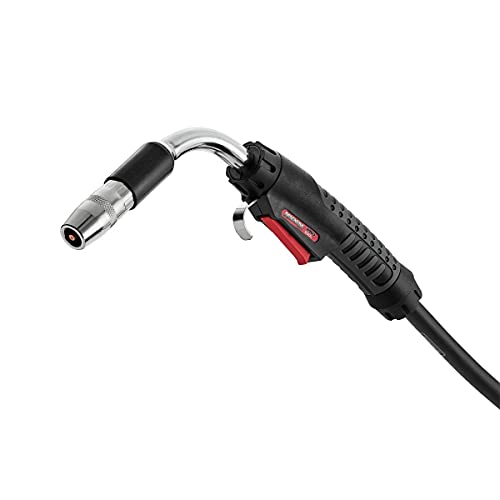
100% Duty Cycle - The 250L runs at 100% duty cycle using mixed gas, helping it withstand tough jobs

Superior Performance: Experience superior performance with our A brand new replacement Tweco #2 Mig gun with Euro connection. Featuring a 10-foot (3m) cable,ensuring seamless integration into your welding setup.

Wires diameter :0.6-1.0mm(0.023‘’-0.04‘’)
Machine and Connector Compatibility
Compatibility is the first buying test. The gun must connect mechanically and electrically to the welder or wire feeder. Check all of the following:
- Welder and feeder model: Use the compatibility list in the manufacturer’s manual or product page.
- Power pin or rear connector: Miller, Lincoln, Tweco, Euro-style, and other connections are not automatically interchangeable.
- Trigger plug: Confirm the pin count and control wiring.
- Wire diameter: Match the liner, drive rolls, contact tip, and gun rating to the wire.
- Shielding-gas path: Make sure the connector and seals support the required gas.
- Spool-gun controls: Some machines require an adapter, control box, or specific receptacle.
Pro Tip: Before ordering, photograph the machine data plate, gun connector, trigger plug, and existing consumable part numbers. Compare those details with the manufacturer’s compatibility chart instead of relying on amperage alone.
Material and Build Quality
Higher-priced guns often use stronger cable jackets, reinforced strain relief, durable triggers, plated or replaceable necks, and front-end parts made for repeated heat cycles. These features can extend service life in production work.
Build quality matters most at common failure points:
- The cable-to-handle connection
- The rear connector and gas seals
- The trigger and control wires
- The gun neck, diffuser, and contact-tip threads
- The liner and wire-feed path
A heavy gun is not automatically more durable, and a light gun is not automatically weak. Compare the rated output, duty cycle, cable construction, replaceable parts, and manufacturer support.
Cooling and Duty Cycle
Duty cycle describes how long a gun or torch can operate at its rated load during a 10-minute test period without overheating. A 60% rating normally means six minutes of welding followed by four minutes of cooling under the stated test conditions.
Read the complete rating rather than the percentage alone. The Miller M-100, for example, is rated at 100 amps with a 100% duty cycle when using carbon dioxide and 60% with mixed shielding gas. The gas, amperage, cable length, and test standard can affect the published rating.
Air-cooled guns use shielding gas and surrounding air to remove heat. Water-cooled guns and TIG torches circulate coolant through the cable and torch, allowing a smaller handle or higher continuous output. They cost more because they require extra hoses, seals, fittings, and a cooler.
Cable Length, Ergonomics, and Controls
Longer cables improve reach but can add weight, wire drag, resistance, and cost. A 10- or 12-foot gun is often easier to manage in a small shop, while a 15- to 25-foot gun may be useful around large workpieces.
Ergonomic features that can justify a higher price include:
- A smaller or better-balanced handle
- Low trigger force
- A flexible cable near the handle
- A rotatable or replaceable neck
- Front and rear trigger options on push-pull guns
- Remote amperage or wire-speed controls where supported
High-frequency TIG starting is a function of the welding power source or starter system, not a premium feature created by the torch itself.
Brand Comparisons: Budget vs. Professional Models

Budget replacement guns can work well for hobby projects, occasional repairs, and light fabrication when they have the correct connector and rating. Professional guns cost more because they are designed for higher arc-on time, easier servicing, consistent feeding, and ready access to replacement parts.
Compare brands by specifications rather than logo alone:
| Buying Level | Best Fit | What to Check |
|---|---|---|
| Budget or aftermarket | Home use, occasional repairs, low arc-on time | Connector, parts supply, liner availability, cable quality |
| Mid-range branded | General fabrication and regular shop work | Duty cycle, consumable family, neck options, warranty |
| Industrial or specialized | Production, high amperage, long aluminum runs | Feeder integration, cooling, serviceability, control system |
Miller, Lincoln, Bernard, Tweco, Weldcraft, and CK Worldwide all sell equipment across more than one performance level. The correct model is the one that matches your machine and workload while using parts you can obtain locally or online.
Accessories, Consumables, and Their Cost Impact

Contact Tips, Nozzles, Diffusers, and Liners
Contact tips and nozzles are inexpensive compared with the gun, but frequent replacement can create a meaningful operating cost. Price depends on the brand, gun series, package quantity, material, thread, bore, and nozzle style.
- Contact tips: Replace tips with an enlarged, burned, or irregular bore.
- Nozzles: Clean spatter and replace cracked, distorted, or heavily blocked nozzles.
- Gas diffusers: Inspect damaged threads, clogged ports, and loose connections.
- Liners: Replace a dirty, kinked, worn, or incorrectly sized liner when wire feeding becomes erratic.
- O-rings and seals: Replace damaged seals that cause gas leaks.
Genuine parts provide a dependable starting point, but the part number must still match the exact gun series and wire size. Some aftermarket consumables work well when their manufacturer clearly lists the compatible gun models.
Welding Wire Types and Current Price Examples
Package size changes the apparent price. To compare wire fairly, divide the listed package price by its weight:
Price per pound = package price ÷ package weight
| Wire Example | Representative Package Price | Approximate Price per Pound |
|---|---|---|
| ER70S-6 solid steel MIG wire, 2 lb. | $10.99 | $5.50 |
| ER70S-2 mild-steel TIG rod, 3 lb. | $40.70 | $13.57 |
| ER4043 aluminum MIG wire, 16 lb. | $162.50 | $10.16 |
| E71T-11 flux-cored wire, 10 lb. | $104.50 | $10.45 |
| 308LSi stainless MIG wire, 10 lb. | From $115.50 | From $11.55 |
These are dated retail examples, not fixed market averages. Bulk packages may reduce the price per pound, while small spools, uncommon diameters, specialty alloys, and premium brands may increase it.
Shielding Gas, Safety Gear, and Maintenance
A complete budget may also include shielding gas, cylinder rental or ownership, a regulator or flowmeter, gloves, jacket, helmet, safety glasses, hearing protection, respirator controls where required, and fire-prevention equipment.
PPE is not a consumable belonging to one gun, but it is a necessary project cost. OSHA identifies welding fumes, ultraviolet and infrared radiation, burns, eye damage, electrical shock, and other hazards that require suitable work practices, ventilation, and protective equipment.
Warning: Do not use a gun with cracked insulation, exposed conductors, leaking coolant, a damaged trigger, loose electrical connections, or severe overheating. Follow the gun and welder manuals, receive proper training, provide suitable ventilation, wear the required PPE, and keep flammable materials away from the work area.
Specialized Guns: Spool Guns, Push-Pull Guns, and TIG Torches for Aluminum
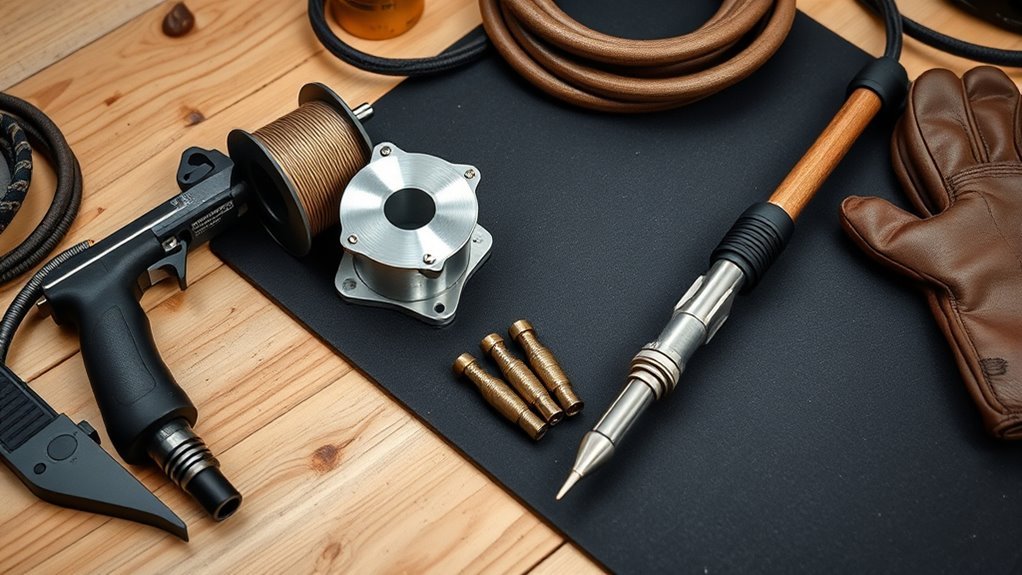
Soft aluminum MIG wire can buckle or tangle when pushed through a long conventional liner. A spool gun shortens the feed path by placing a small spool close to the drive rolls in the handle. It is a practical choice for occasional aluminum work when the welder supports it.
A push-pull gun uses the machine’s feeder and a second drive system in the gun. The two systems work together to move aluminum wire through a longer cable. This setup costs much more but supports larger spools, longer reach, and higher production.
A TIG torch does not feed aluminum wire. The welder adds filler rod by hand while using the tungsten electrode to control the arc. TIG is slower but offers precise heat control for thin material, visible joints, repairs, and detailed fabrication.
| Option | Best Use | Main Tradeoff |
|---|---|---|
| Spool gun | Occasional aluminum MIG welding and short runs | Small spool adds weight at the hand |
| Push-pull gun | Frequent aluminum work, long cables, and production | High purchase and service cost |
| TIG torch | Precise, clean, or intricate aluminum joints | Slower process and greater operator skill |
Long-Term Ownership Costs: Maintenance and Consumables
The purchase price is only one part of the cost. A useful first-year estimate is:
First-year cost = gun or torch + adapter or control equipment + initial consumables + wire and gas + required PPE + expected maintenance
High-volume work increases contact-tip, nozzle, liner, wire, gas, and repair costs. A gun that uses common consumables may cost less to own than a cheaper model with hard-to-find parts.
- Record the gun model, cable length, wire size, and consumable part numbers.
- Inspect the cable, trigger, neck, gas seals, and rear connector regularly.
- Keep the liner clean and avoid sharp cable loops that increase wire drag.
- Use the correct drive-roll tension instead of overtightening it.
- Buy commonly used tips and nozzles in practical package quantities.
- Stop and diagnose repeated overheating rather than treating it as normal.
When to Repair or Replace a Welding Gun
Many feeding and arc problems do not require a complete new gun. Start with the lowest-cost wear parts and setup checks.
Repair May Be Enough When
- The contact tip is burned, enlarged, or the wrong size.
- The nozzle or diffuser is clogged with spatter.
- The liner is dirty, kinked, worn, or cut to the wrong length.
- The trigger, neck, O-rings, or rear connector parts are available separately.
- Wire-feed tension or drive-roll selection is incorrect.
Replacement May Be Safer or Cheaper When
- The cable jacket is cracked, burned, or exposing conductors.
- The power cable repeatedly overheats at normal rated output.
- The gun has internal coolant leaks or severe conductor damage.
- The handle, trigger housing, or rear connector cannot be repaired safely.
- Replacement consumables and service parts are no longer available.
- The gun is undersized for the work and regularly exceeds its rating.
Common Problems and Likely Causes
| Problem | Check First |
|---|---|
| Erratic wire feed | Tip size, liner condition, drive rolls, cable bends, spool brake, and drive tension |
| Gun becomes unusually hot | Amperage, duty cycle, loose connections, conductor damage, cable size, and cooling flow |
| Frequent burnback | Tip condition, wire-feed speed, voltage, burnback control, and work distance |
| Porosity or weak shielding | Gas supply, flow rate, hose leaks, nozzle blockage, wind, and gun seals |
| Rapid tip wear | Tip quality, wire size, loose tip, excessive heat, poor feeding, and incorrect setup |
Where to Buy: New, Refurbished, and Used Options
New guns from the manufacturer or an established welding supplier normally offer the clearest compatibility information, warranty terms, and parts support. Ask the seller to confirm the exact welder model, connector, wire range, and cable length in writing.
Refurbished guns can offer useful savings when the seller documents the inspection, replaced parts, return period, and remaining warranty. Check the condition of the cable, liner, trigger, neck, connector, motor, and seals.
Used guns can be inexpensive, but photos may not reveal damaged conductors, internal wire-feed problems, coolant leaks, or nonstandard modifications. Verify that replacement liners, tips, diffusers, nozzles, triggers, and drive components remain available.
Rental can make sense for a short project. Some rental companies list wire-feed guns and welding accessories, but complete welder rentals are more common than gun-only rentals. Local inventory, connectors, leads, consumables, insurance, and training requirements vary.
Matching Your Welding Gun to Your Budget and Projects
Choose the product class before comparing brands or prices:
- Occasional steel or stainless work: Use a compatible standard MIG gun with enough amperage and duty cycle for the machine.
- Regular general fabrication: Choose a serviceable mid-range gun with common consumables and local parts support.
- Occasional aluminum MIG work: Confirm that the welder supports a spool gun and the required shielding gas.
- High-production aluminum work: Compare push-pull systems, feeder integration, cable length, and service support.
- Precise TIG work: Select an air- or water-cooled torch based on amperage, arc-on time, mobility, and whether a cooler is available.
Before paying, confirm these final details:
- Exact welder and feeder model
- Rear connector and trigger-plug configuration
- Rated amperage and duty cycle with the gas you use
- Supported wire types and diameters
- Cable length and neck style
- Included liner, tip, nozzle, diffuser, adapter, and control parts
- Replacement-part availability
- Return policy and exact warranty duration
- Estimated shipping date and stock status
Frequently Asked Questions
Do welding guns come with manufacturer warranties?
Many do, but coverage varies by manufacturer, model, country, and component. Lincoln’s current U.S. warranty document places many MIG, TIG, plasma torches, spool guns, and cable assemblies in a 90-day category, while consumables may have shorter or no coverage. Read the exact warranty statement before purchasing.
Are there safety certifications I should look for?
Do not rely on a UL, CSA, CE, or similar mark as the only buying test. Confirm the manufacturer, model identification, amperage and duty-cycle rating, approved machine compatibility, intact insulation, and an available manual. Follow the complete welder’s listing information and all workplace safety requirements.
Can I rent a welding gun instead of buying one?
Sometimes. Certain industrial rental locations offer wire-feed guns and related accessories, but complete welding systems are more widely available than gun-only rentals. Confirm the connector, leads, consumables, shielding-gas requirements, rental protection, and local availability.
How quickly will an online welding-gun order arrive?
Delivery depends on stock, seller location, destination, cable configuration, and shipping method. Use the delivery estimate shown at checkout and confirm whether the item is in stock, special-order, configured to order, or shipped by freight.
Are replacement parts and service centers available locally?
Major welding brands commonly support authorized distributors and replacement parts, but local stock varies. Search by the exact gun model and consumable part number, then call the distributor before traveling. Confirm that liners, tips, nozzles, diffusers, necks, triggers, and connector parts remain available.
Can any MIG gun be used with any MIG welder?
No. The gun must match the welder or feeder’s power pin, trigger connection, gas path, wire range, output, and control requirements. An adapter may solve some mechanical connections, but it does not automatically make an unsupported spool gun or push-pull system work.
Sources
- Miller — Top Factors and Considerations for MIG Gun Selection — compatibility, duty cycle, amperage, ergonomics, and gun selection.
- Miller MIGmatic M-Series Specification Sheet — M-100 output and shielding-gas-dependent duty-cycle ratings.
- Lincoln Electric — Magnum PRO AL FC 225 — push-pull gun classification, amperage, duty cycle, and aluminum-wire application.
- CK Worldwide — Air-Cooled vs. Water-Cooled TIG Torches — cooling choices and high-amperage applications.
- OSHA — Welding, Cutting, and Brazing Hazards and Solutions — fumes, radiation, burns, electrical hazards, PPE, and safe work practices.
- Lincoln Electric Warranty Statements — current warranty categories and product-specific coverage.
Conclusion
A standard replacement MIG gun may cost a few hundred dollars, while a specialized aluminum push-pull gun can cost several thousand. Start with compatibility, then compare amperage, duty cycle, cooling, cable length, consumables, and service support. Include adapters, wire, gas, PPE, and maintenance in your budget. The best value is a correctly rated gun that fits your machine, workload, and available parts—not simply the lowest advertised price.
